There’s a moment every dog guardian knows: you wake up at 3 a.m. and realize your dog has glued their back to your spine, almost like a furry shield. It can feel oddly intentional, as if they’ve decided to stand guard while you sleep. Many people brush it off as simple cuddling, but modern veterinary neuroscience and behavior research suggest there’s a lot more going on under that warm pile of fur.
While the exact claim that dogs are literally sensing invisible threats for you is still being explored and debated, we do know this: dogs are expert readers of the environment, masters at body language, and wired by evolution to protect their social group. When a dog chooses to sleep with its back pressed firmly against you, it almost never happens by accident. It reflects a deep mix of attachment, safety-seeking, vigilance, and yes, in many cases, a protective stance that works like an overnight security system made of muscle, fur, and loyalty.
The Science of a Dog’s Night Brain: Hyper-Aware Even in Deep Sleep

It feels like your dog is out cold when they snore beside you, but their brain does not ever fully clock out the way ours tends to do. Sleep studies on dogs show that, like humans, they cycle through light sleep, deep sleep, and REM dreaming, but their sensory systems stay unusually tuned to their surroundings. Their hearing and sense of smell never really stop sampling the environment, even when their body is limp and relaxed. That is part of why a tiny noise in the hallway wakes your dog instantly while you’re still struggling to figure out what day it is.
This constant low-level monitoring means that when a dog chooses to sleep pressed against you, they are effectively positioning themselves as both participant and sentinel. Their back against you lets them feel your movements and breathing while keeping their ears and nose aimed toward the room, the door, or potential entry points. It is like putting one hand on the person you love while facing the world. That posture reflects an evolved balance between rest and readiness, safety and surveillance, comfort and caution.
Packed With Instinct: How Wolves Taught Your Dog to Guard the Den

Modern dogs are not wolves, but their brains still carry a lot of wolf software. In wild canids, sleeping is a group activity with built-in survival logic. Individuals position themselves around the den entrance, backs touching packmates, so that threats are detected quickly and everyone can respond as a unit. Physical contact is not just about warmth; it’s about forming a living alarm system where one body’s tension or jerk can alert the others in a heartbeat. Your bed and bedroom have quietly become that den.
So when your dog sleeps with their back pressed against you, they may be recreating that pack formation pattern on a smaller, domestic scale. They slot their body so they can both feel you and face the potential “outside.” There may not be predators lurking in your hallway, but to a dog’s ancestral brain, strangers, sudden noises, and unfamiliar scents all get lumped into the general category of “possible threat.” Their instinct says: protect the vulnerable member of the group, stay close enough to feel them breathe, and be the first one to stand between them and whatever appears.
Attachment, Oxytocin, and Why Your Dog Treats You Like Family
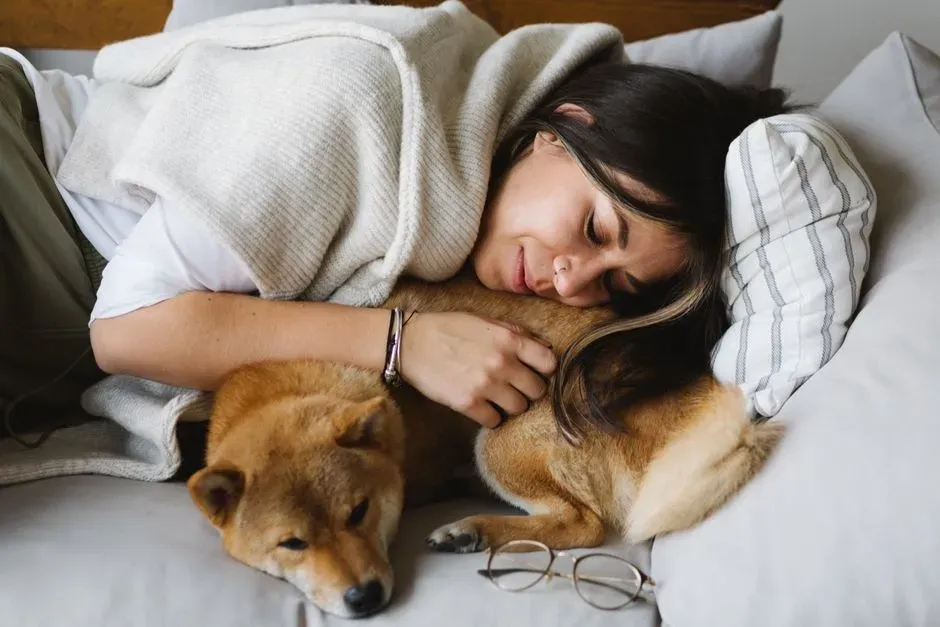
We know from modern research that when dogs and humans interact positively, both species experience a rise in oxytocin, the same hormone that deepens bonding between human parents and infants. Over time, many dogs start to treat their humans like their primary social anchor. Sleeping in close contact is one of the strongest expressions of that bond. Pressing their back against you is not random; it signals trust, a sense of belonging, and a preference to rest within your personal bubble. To put it simply, they want to sync their nervous system with yours.
But here’s the twist that most people overlook: intense attachment does not just make dogs clingy, it makes them protective. If you are the emotional center of their world, anything that could disturb, scare, or separate you from them becomes important. Sleeping like a living barrier fulfills two emotional needs at once. Your dog gets the comfort and security of body contact, and they place themselves in a position where they can respond first if something feels off. It is part love, part security detail, and it often feels as natural to them as breathing.
Super Senses at Work: Smell, Sound, and Signals You Never Notice

From a purely sensory standpoint, dogs live in a different universe than we do. Their hearing can pick up frequencies we do not detect, and they can notice the softest footsteps or faintest mechanical hums far earlier than we ever could. Their sense of smell can detect tiny chemical traces in the air that might indicate another animal walking by outside, a storm rolling in, or a stranger lingering near the building. What you experience as a peaceful silent night might actually be an entire symphony of background signals to your dog.
When they sleep with their back against you, your dog is essentially placing their highly tuned sensor array right at the edge of your sleeping zone. If something shifts in the environment – an unusual scent drift, a sudden change in ambient noise, the creak of a stair – they are in the best possible position to notice it fast. You might not perceive a threat at all, but your dog’s brain is constantly categorizing these signals into “harmless” or “worth watching.” That does not mean they know there is a specific danger every time, but it does mean they are running a silent night watch that you benefit from without even realizing it.
Body Position as Silent Language: Back-to-You Means Front-to-World

Dogs speak volumes with their bodies. Where they place their paws, how they angle their head, the direction of their tail – all of it is communication. Sleeping posture falls into this same category of silent language. When your dog turns their back to you, a lot of people assume it means disinterest, but in canine terms it often signals trust and strategic positioning. They are saying, more or less, that they feel safe enough not to watch you and would rather aim their senses at everything else.
Back pressed against you essentially becomes a two-way message: “I trust you completely” and “I will face whatever comes.” If you watch carefully, you may notice that in this position, your dog’s ears are tilted toward the room and the rest of their body points toward the door, hallway, or window. They are not just flopping wherever they land; they are arranging the night in a way that keeps both of you in their zone of awareness. In my own life, I have noticed my dog will always align this way in unfamiliar places, like hotels or new apartments, as if mapping the threat landscape and putting himself between me and the unknown.
Anxiety, Security, and When Protection Becomes Overprotection
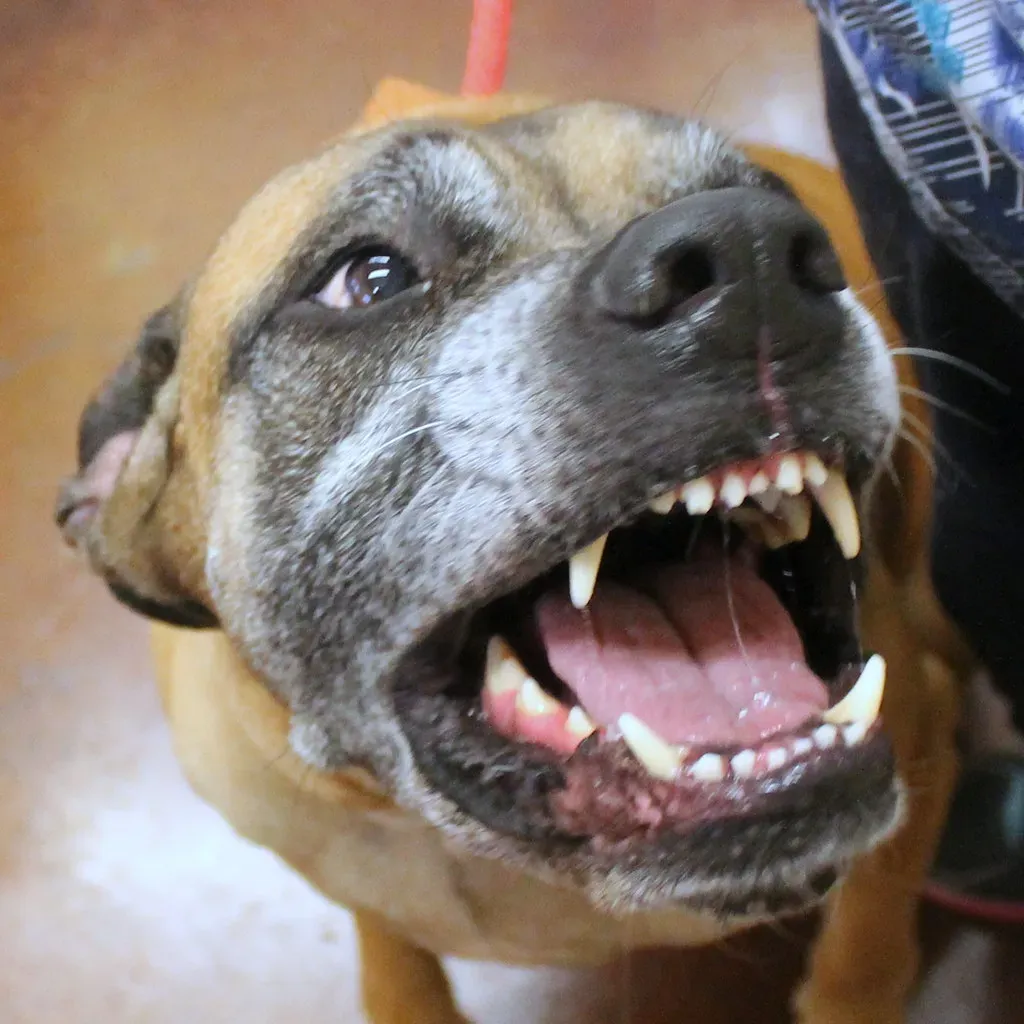
Of course, not every dog who presses against you at night is calmly guarding the realm like a medieval knight. For some dogs, this behavior is also tied to anxiety, separation issues, or a heightened sense of vulnerability. If your dog cannot settle unless they are glued to you, startles at every tiny noise, or seems constantly on edge, their “protective” sleep posture may be a coping mechanism rather than a relaxed, confident stance. They are still acting like a protector, but it is coming from a place of worry rather than calm vigilance.
In those cases, the same neuroscience that explains protective behavior also teaches us about stress. A dog whose brain is always on high alert can struggle to truly rest, and long term, that is not healthy for their body or mind. Helping them feel safer – through training, predictable routines, desensitization to sounds, and sometimes professional behavior support – can gradually shift the motivation behind that back-pressed posture. Ideally, it transitions from “I am scared and must cling to you to keep us safe” to “I feel secure, and I chose this spot because I like you and have your back.” The pose might look the same, but the emotional engine behind it is very different.
Do They Really Sense Threats You Cannot, or Is That Just Romanticizing It?
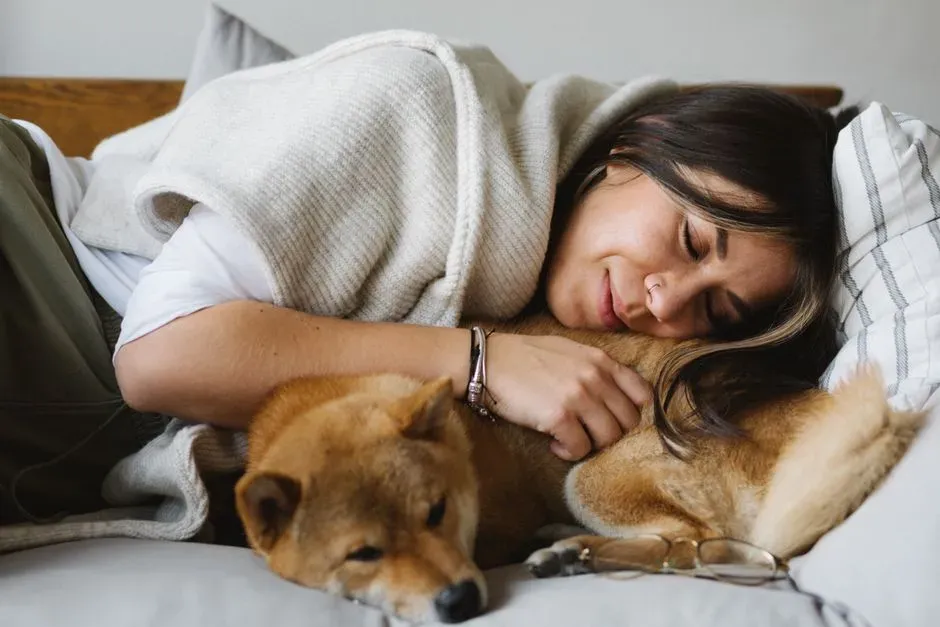
This is where we have to be honest and a little bit skeptical, even as dog lovers. The headline idea that dogs always sleep against you because they sense a threat you cannot is both appealing and partially true, but it is not the full story. Yes, dogs do detect sounds and smells long before we notice them. Yes, they are wired to protect their group and may position themselves accordingly. But that does not mean there is a specific lurking danger every time your dog presses into you at night. Sometimes they are just comfortable, affectionate, and following ancient habits that once helped their ancestors survive.
Still, dismissing the protective piece entirely would be just as inaccurate. If you look at the behavior through the lens of neuroscience, attachment, and evolution, it is fair to say that many dogs are combining comfort and protection in that single, simple choice of where to sleep. They might not be consciously thinking in human terms about “threats you cannot sense,” but their superior senses and instinctive scanning of the environment absolutely add a layer of early warning that you benefit from. The romantic story is not totally wrong; it is just a poetic translation of something more nuanced and deeply wired.
Conclusion: A Living Shield, a Soft Pillow, and the Truth in Between

In my view, when a dog sleeps with their back pressed against you, it is one of the purest examples of how messy and beautiful animal behavior really is. It is not just protection, and it is not just cuddling. It is a layered act shaped by evolution, honed by neuroscience, and deepened by years of shared life between you and this other species that somehow decided you are worth guarding. There is comfort, there is trust, and yes, there is a quiet kind of watchfulness that runs like background software while you dream.
So the next time you wake up pinned to the edge of the mattress by a warm, snoring body whose back is firmly locked against yours, see it for what it likely is: a dog choosing to rest in the one spot where they can feel you safe and keep an eye on the world. Are they always protecting you from a specific hidden threat? Probably not. But are they, in their own way, standing guard over your shared little den, using senses and instincts you barely understand? That, I think, is very hard to deny – and maybe that quiet, invisible protection is the real magic you have been feeling all along.