If someone told you that more than two thousand years ago people were building steam-powered gadgets, using analog computers to track the cosmos, or performing skull surgery that patients actually survived, you’d probably assume it was science fiction. Yet scattered across ruins, shipwrecks, and old manuscripts are very real clues that ancient engineers and thinkers regularly punched far above what we imagine their “primitive” technology could do. The past turns out to be a lot less simple than the stories we grew up with in school.
What makes these inventions so gripping is not just their technical brilliance, but the mindset behind them: people experimenting without modern tools, without formal labs, sometimes without even a shared scientific language, and still managing to achieve breakthroughs that feel wildly ahead of schedule. As you go through these ten examples, try to picture the world through their eyes – no electricity, no internet, no industrial machines – and then look at what they built anyway. It forces an uncomfortable but exciting question: how much human potential are we still underestimating today?
1. The Antikythera Mechanism: The Analog Computer Lost to the Sea
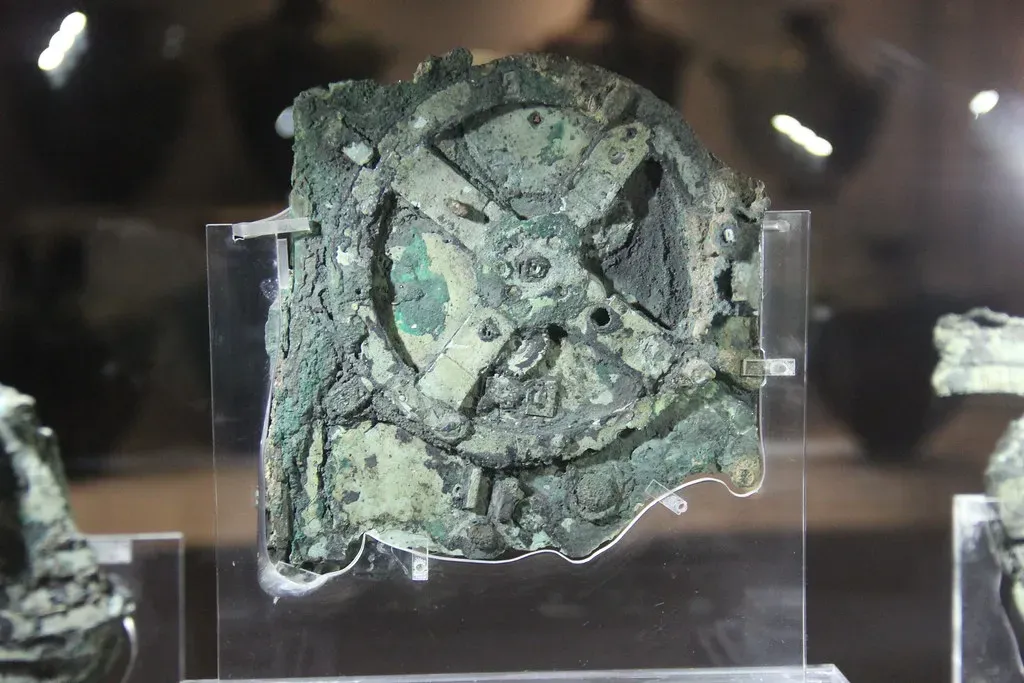
When divers first pulled up a corroded lump of bronze from a shipwreck off the Greek island of Antikythera in the early twentieth century, it looked like junk. Only later, with careful cleaning and modern scanning, did researchers realize they were looking at a machine with a maze of finely cut gears, some with tooth counts so precise they could only have been made by a very skilled craftsperson. This device, now called the Antikythera mechanism, is widely considered the earliest known analog computer, built around the second or first century BCE to predict astronomical positions and eclipses.
What makes it feel almost impossible for its time is the sheer complexity of the gearing and the fact that nothing close to it would appear again in Europe for more than a thousand years. Imagine a wooden box the size of a thick book that could show the movements of the sun, moon, known planets, and even the timing of ancient athletic games by turning a crank. That level of mechanical abstraction suggests a fusion of astronomy, mathematics, and precision engineering that we usually associate with much later clockmakers. To me, the most unsettling part is this: if one such machine survived, how many others were lost or melted down, and how much scientific progress quietly vanished with them?
2. Roman Concrete: Building Materials That Outlived Empires

Walk around the ruins of Rome and you’re looking at a construction material that has outperformed many modern buildings: Roman concrete. Structures like the Pantheon dome and sea walls in ancient harbors are still standing nearly two millennia later, even after constant waves, salt, and earthquakes. For centuries, people knew the Romans had some sort of special recipe, but the exact reasons for its long-term durability only started to become clearer when scientists began examining it closely with modern tools.
Instead of using the same Portland cement formula we rely on today, Roman builders mixed volcanic ash, lime, and rock fragments to create a material that actually gets tougher over time as it reacts with water and minerals. Some samples show tiny mineral crystals forming inside microcracks, essentially allowing the concrete to “heal” itself slowly rather than crumble. Considering that we still struggle with crumbling bridges and buildings that need major repairs after just a few decades, it feels almost ironic that a civilization without steel rebar or modern labs cracked part of this puzzle so early. The uncomfortable takeaway is that our “advanced” methods are not always strictly better, just different – and sometimes less wise over the long run.
3. The Baghdad Battery: Ancient Curiosity or Early Electricity?
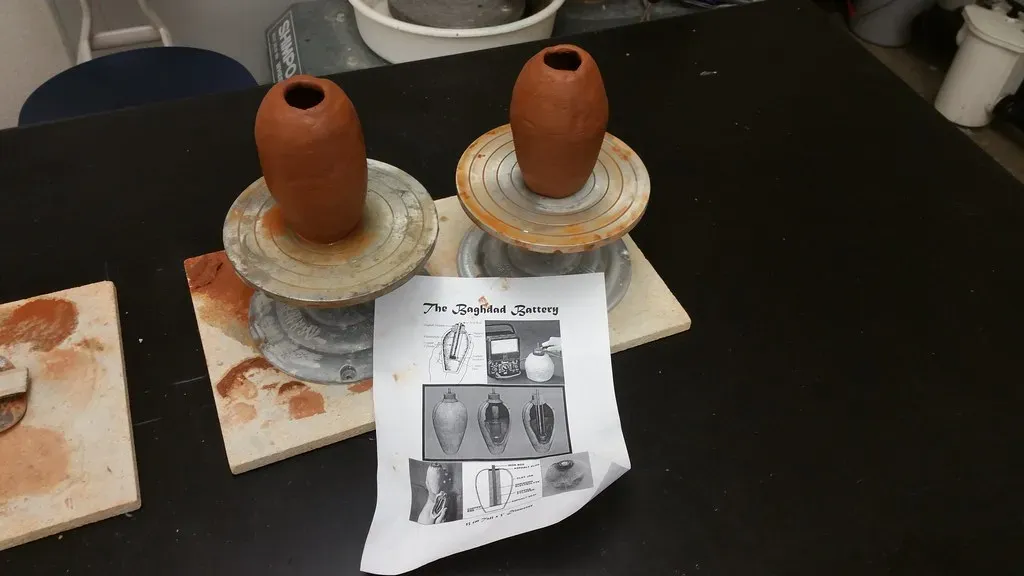
In the early twentieth century, archaeologists near modern-day Baghdad uncovered small ceramic jars containing an iron rod surrounded by a copper cylinder, with traces of acidic substances like vinegar or wine. When these so-called Baghdad batteries are reconstructed, they appear capable of generating a small electrical potential, similar to a very weak modern battery. The objects are often dated to the first centuries BCE or CE, which would place them long before the scientific explanation of electricity.
Here’s where things get tricky and fascinating. No one can say with certainty what these devices were for, and serious scholars are cautious about dramatic claims. Some theories suggest they might have been used for electroplating small objects with a thin layer of metal, while others argue they were simply containers repurposed in ways we misunderstand. Even with that uncertainty, the idea that people in the ancient Near East may have stumbled across and harnessed electricity for practical use, without a grand theory or vocabulary for it, is deeply humbling. It reminds me that discovery rarely looks like a clean, straight line; sometimes it’s more like someone playing with clay pots and metal rods and accidentally bumping into a new force of nature.
4. The Archimedes Death Ray and Ancient Greek War Tech
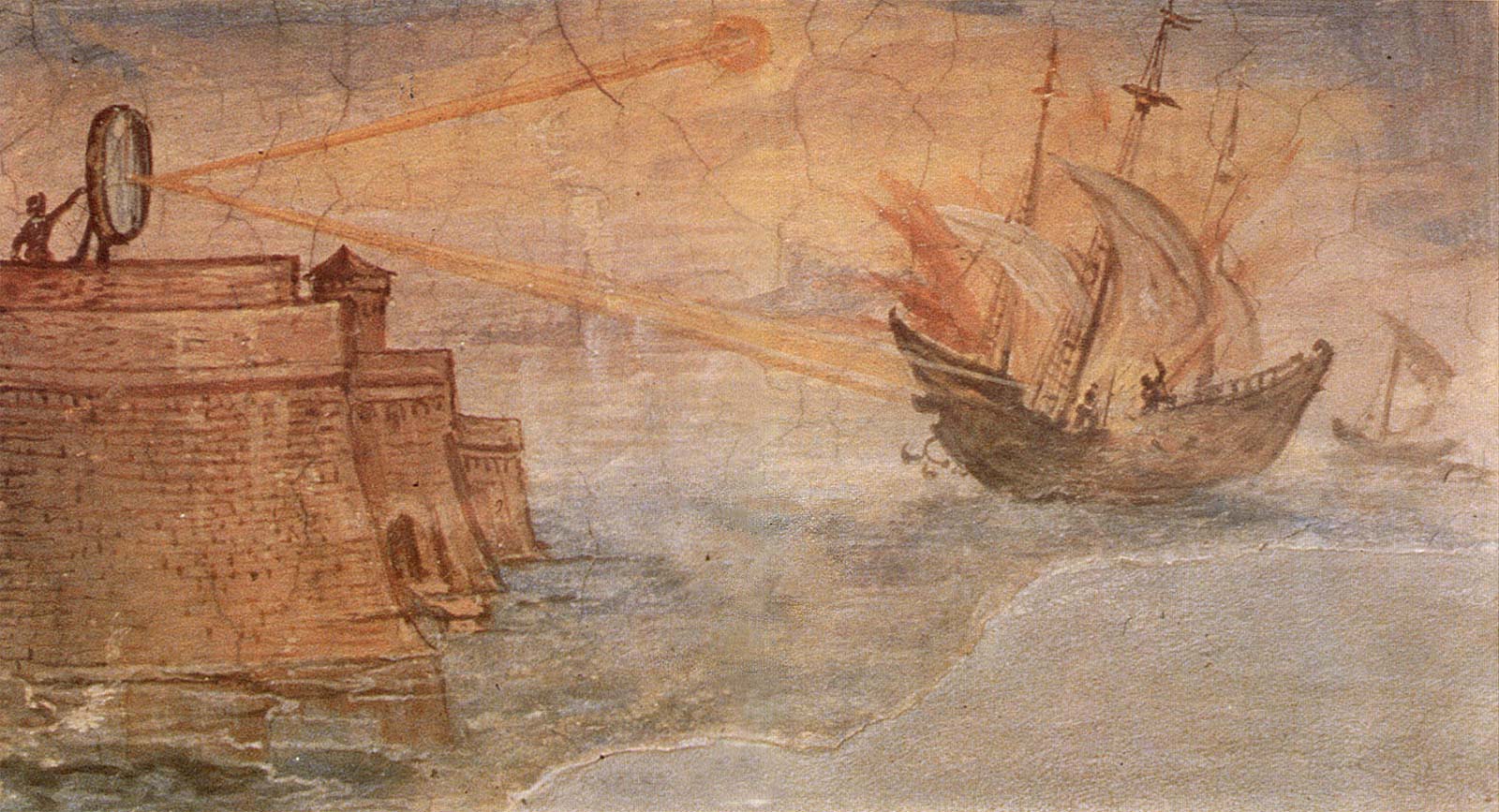
Stories from later writers describe the mathematician Archimedes helping defend the city of Syracuse in the third century BCE with strange weapons, including cranes that could flip ships and an alleged “death ray” made of mirrors focusing sunlight to burn enemy vessels. The death ray in particular sounds so outrageous that it has become a favorite for modern myth-busting experiments, with tests over the years reaching mixed conclusions about whether it would have actually worked in real battle conditions.
Even if the mirror weapon is more legend than literal history, it sits in the middle of a very real pattern: Greek engineers of that era were pushing the limits of mechanics and optics in ways that feel surprisingly modern. Archimedes is credited with understanding levers, pulleys, buoyancy, and complex siege engines at a time when most people were still farming with basic tools. The idea that a mathematician could stand on a wall and direct machines powerful enough to yank ships out of the water says a lot about how theory and warfare have always been painfully intertwined. For me, the enduring value of the death-ray story is less about whether it scorched any sails and more about how willing people were to try wild, almost science-fiction ideas under real pressure.
5. Ancient Brain Surgery: Trepanation and Surprising Survival Rates

The thought of someone drilling or scraping a hole in a living person’s skull without modern anesthesia is enough to make most of us flinch, yet archaeological evidence shows that trepanation – the removal of a piece of skull – was practiced in many ancient cultures across the world. What is truly shocking is not just that they tried it, but that many patients survived. Healed bone around the openings in skulls is a clear sign that people lived weeks, months, or even years after the procedure.
We still do not fully understand every reason they performed these operations. Some cases seem tied to head injuries, where relieving pressure might have helped, while others may have been driven by spiritual or ritual beliefs about releasing evil forces or restoring balance. From a modern medical perspective, it is easy to dismiss this as crude or reckless, but that misses something important: these societies had observed that in some situations, intense intervention could change the course of illness or behavior. They were experimenting directly on the boundary between life and death without sterile instruments or pain control, and yet they achieved outcomes that required real skill. As uncomfortable as it is, trepanation shows that serious medical innovation did not begin in clean hospitals; it began in huts and temples, with people who were determined enough to try the unthinkable.
6. The Chinese Seismograph: Feeling Earthquakes from Afar
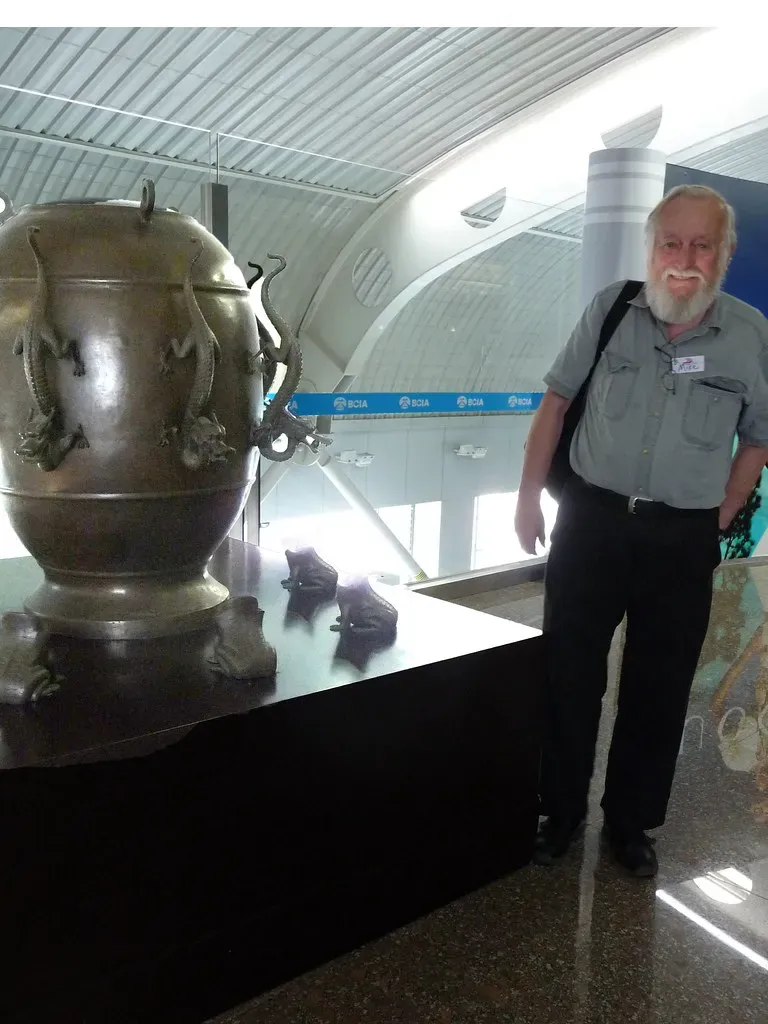
In the second century CE, during the Eastern Han dynasty, a Chinese polymath reportedly built a device that could detect distant earthquakes even when they were not felt locally. Descriptions of this early seismoscope talk about a large bronze vessel with dragon heads around the outside and small balls that would drop into the mouths of carved frogs to indicate the direction of the quake. While modern reconstructions vary in how exactly it worked, the basic idea is still astonishing: a mechanical instrument designed to sense and display a natural event happening far away.
Think about what that means intellectually. Without digital sensors, without standardized units, someone looked at the problem of earthquakes and thought, in effect, that the invisible force shaking the earth might leave a detectable trace if you built the right kind of machine. The leap from “the ground is angry” to “the ground is moving in a way we can mechanically capture and interpret” is gigantic. I find it especially impressive that this device was not just a toy for scholars but reportedly used for imperial administration, helping officials know where to send help after disasters. For a premodern bureaucracy to rely on something so abstract and technical says a lot about how seriously they took engineering as a tool of governance.
7. The Greek Steam Engine: Heron’s Aeolipile
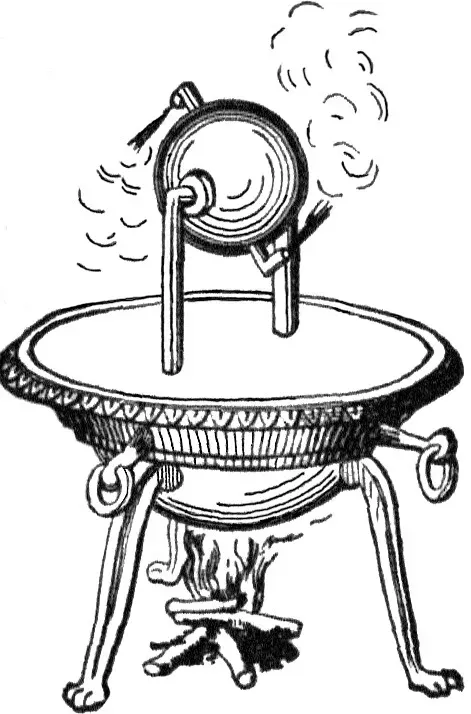
Picture a hollow metal sphere mounted so it can spin, with bent tubes that let steam escape, causing the whole thing to rotate like a primitive jet engine. This is the basic design of Heron’s aeolipile, described in Roman-era Alexandria nearly two thousand years ago. It was a small device, likely used as a temple curiosity or demonstration of pneumatic principles, not as a practical machine. But the core idea – steam pressure driving rotary motion – is exactly what would later power the industrial revolution.
The almost painful part of this story is the gulf between the concept and its adoption. The ancients clearly understood that heated water produced a forceful vapor and that this vapor could do work, yet they never scaled it into transportation or industry the way eighteenth-century engineers eventually did. That gap invites a lot of armchair speculation: was it culture, economics, available materials, or simply a lack of interest in replacing cheap human and animal labor? To me, Heron’s steam engine is a reminder that having a brilliant idea is not enough. It has to collide with the right social and economic conditions before it can change the world, and sometimes, history just shrugs and walks past a breakthrough for centuries.
8. The Nazca Lines: Monumental Designs Best Seen from the Sky
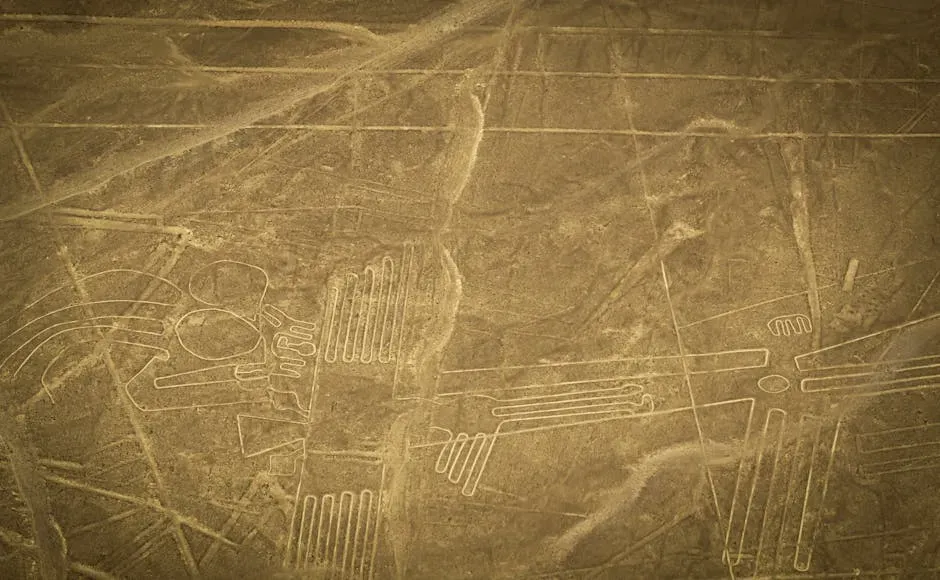
On the arid coastal plain of southern Peru lie enormous geoglyphs etched into the ground, forming lines, shapes, and stylized animals that stretch for hundreds of meters. These Nazca Lines were created roughly between the first centuries BCE and CE by removing dark surface stones to reveal lighter soil beneath. From ground level, many of the lines look like simple paths or low contrasts in the landscape, but from above – whether a nearby hillside or an aircraft – they resolve into massive figures that seem intended for a high vantage point.
The mystery that has captivated so many is how and why a culture without aircraft or satellites made designs of such scale and geometric precision. Researchers have demonstrated that with careful planning, stakes, ropes, and simple surveying techniques, people could create large, accurate shapes without needing to see them all at once from the air. Explanations for their purpose range from ritual pathways and water-related ceremonies to markings linked to astronomy. While wild theories tend to grab headlines, the more grounded reality is already astonishing on its own: a society investing tremendous labor into artworks that only truly “appear” when viewed from the sky. It feels like an ancient reminder that not all meaning is meant for everyday eyes; sometimes, the intended audience might be gods, spirits, or simply the horizon itself.
9. The Lighthouse of Alexandria: A Megastructure Guiding the Ancient World
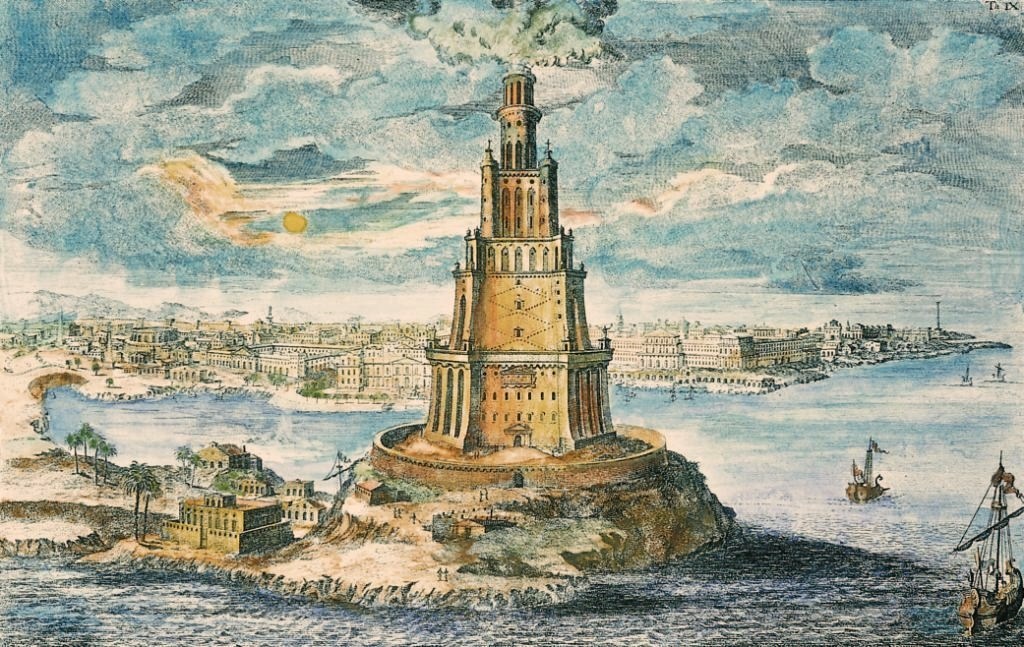
The Lighthouse of Alexandria, built on the island of Pharos in the third century BCE, was one of the tallest man-made structures of the ancient world, possibly standing over a hundred meters high. Even without exact measurements, historical descriptions make it clear that this was not just a big tower but a carefully engineered navigational beacon visible far out at sea. It combined massive masonry with reflective surfaces and, according to some accounts, fire or other light sources at the top, magnified by mirrors to guide ships safely into one of the Mediterranean’s busiest harbors.
Constructing something of that scale on a small island, able to withstand storms and earthquakes for centuries, required coordination, money, and technical skill that rival major modern infrastructure projects. It functioned both as a practical tool for merchants and as a statement piece for the ruling dynasty: a glowing symbol of power and sophistication. When I think about ancient sailors steering by a light that rose higher than any building they had ever seen, it feels almost like something out of speculative fiction. Yet it was real enough that, even long after it crumbled, its image set the template for how we imagine lighthouses and towers of knowledge in stories and art.
10. Archimedes’ Screw and Ancient Water Engineering
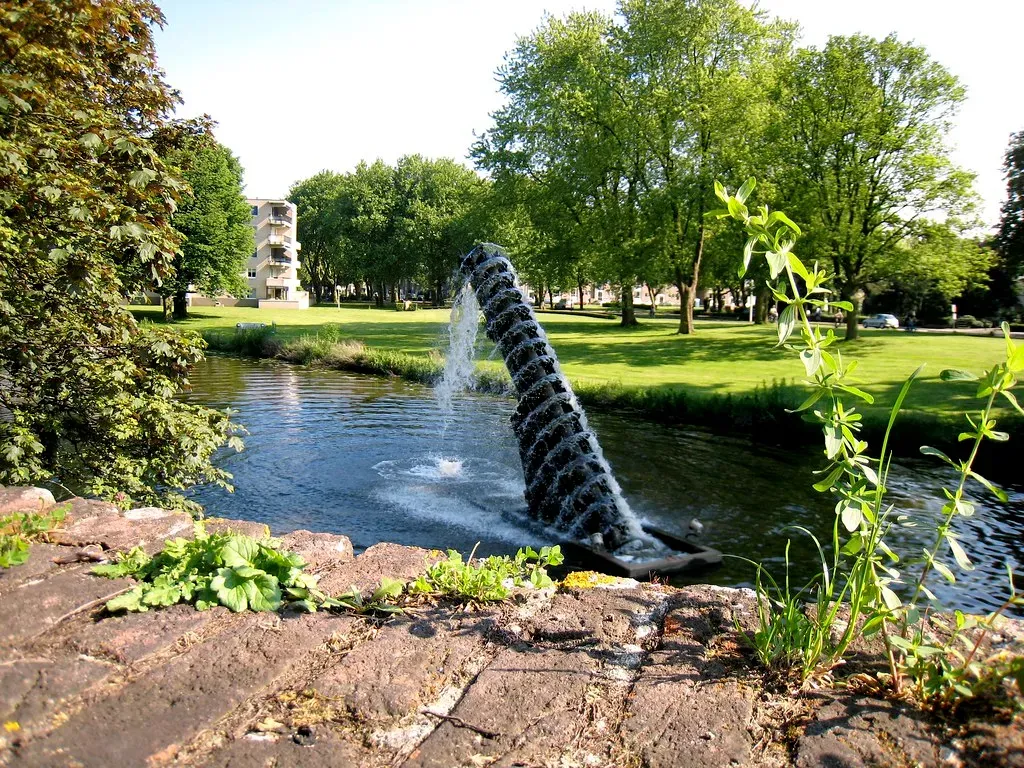
Another invention traditionally linked to Archimedes is the screw pump: a helical surface wrapped around a central shaft inside a cylinder, which can lift water when turned. Simple versions of this device could move water from lower to higher ground using relatively little effort, making irrigation and drainage more manageable in places where buckets and manual carrying had dominated. The concept seems so straightforward once you see it that it is easy to forget how non-obvious it must have been the first time someone imagined twisting a spiral inside a tube to coax water uphill.
What really highlights its brilliance is how long the basic design stayed useful. Variants of the screw pump continued to be used for centuries, and in some regions you can still find similar mechanisms operating today. In an era without electric motors, the ability to turn rotational motion into steady, controlled lifting of fluids was a game changer for agriculture and infrastructure. I think of it as an early example of “appropriate technology” – something robust, understandable, and repairable by ordinary people, not just specialists. It might not be as flashy as an analog computer or a giant lighthouse, but in terms of actual everyday impact on ancient lives, the screw pump was quietly revolutionary.
Conclusion: Ancient Genius and Our Modern Blind Spots
Looking across these inventions, a pattern emerges that is hard to ignore: people in the ancient world regularly brushed up against ideas and devices we like to think of as firmly modern. Analog computation, advanced construction materials, early experiments with electricity, seismic sensing, steam power – they are all there in seed form, scattered across different cultures and centuries. The fact that some of these threads fizzled out or were forgotten for long stretches does not make them less impressive; if anything, it underlines how fragile technological progress really is.
Personally, I find this both inspiring and a little unsettling. Inspiring, because it proves that human curiosity and creativity have always been capable of leaps far beyond the apparent limits of their time. Unsettling, because it forces us to admit that our own era probably has blind spots just as big as those of the ancients, and that some of today’s half-finished ideas may look like obvious, missed opportunities to people in the future. Maybe the real lesson from these “impossible” inventions is that civilization is not a straight staircase of progress, but a messy web of insights, forgettings, and rediscoveries. The question that lingers for me is simple: which of our current experiments will future generations shake their heads at and say, they had the idea right there – why did they stop?