

If you’ve ever nodded off while staring at a tough problem and then felt secretly guilty about it, you might be misreading what your brain is trying to do. You are not just “checking out” or being lazy; you may be handing the job over to a powerful, behind-the-scenes system that only switches on when you stop forcing things. In other words, that drowsy moment over your laptop could be less about failure and more about your brain quietly saying: step aside, I’ve got this.
Modern neuroscience suggests that when you fall asleep in the middle of learning or problem-solving, your brain starts consolidating and reorganizing information you were just working on. Instead of you consciously pushing symbols or ideas around, networks deep in your brain replay, filter, and strengthen what matters. The twist is that many people interrupt this process – by powering through with caffeine, doom-scrolling, or dragging themselves to yet another task – right when their brain is trying to do its most important long-term work.
You Think You’re Zoning Out, But Your Brain Is Entering “Offline Mode”

That heavy-lidded feeling in the middle of a hard problem can feel like your brain failing you, but, biologically, it is more like a system notification: maintenance scheduled, please log off. When you keep staring at the same equation, slide, or paragraph and it starts to blur, your brain is reaching a saturation point. It has taken in enough raw data that consciously pushing harder leads to diminishing returns and more frustration than insight.
In that moment, if you let yourself drift into sleep, your brain shifts from “online” focused processing into “offline” background processing. Instead of just dropping the problem, your nervous system starts replaying recent neural activity patterns and sorting through what deserves to be kept, connected, or discarded. You may feel like you did nothing but close your eyes, yet your brain has quietly moved the work from the loud, effortful workspace into deeper, quieter systems built for long-term storage and pattern-finding.
Memory Consolidation: What Your Brain Actually Does While You Sleep

When you fall asleep after wrestling with a concept, your brain does not simply power down; it begins a multi-stage process called memory consolidation. In broad strokes, fresh experiences and facts are first held in a temporary, fragile form, and then, during sleep, they get reactivated and stabilized. You can think of your waking brain as scribbling notes on sticky pads, and your sleeping brain as carefully filing those notes into the right folders and cross-referencing them with everything else you know.
Different stages of sleep contribute to this in slightly different ways. Deep non–rapid eye movement sleep tends to support the stabilization of facts, vocabulary, and procedures, while rapid eye movement sleep seems especially important for integrating ideas and making more distant associations. When you let yourself fall asleep mid-problem, you are giving your brain a chance to move information out of its “inbox” and into the long-term architecture where genuine understanding and future insight become possible.
Why Falling Asleep After Struggle Can Lead to Sudden Insights
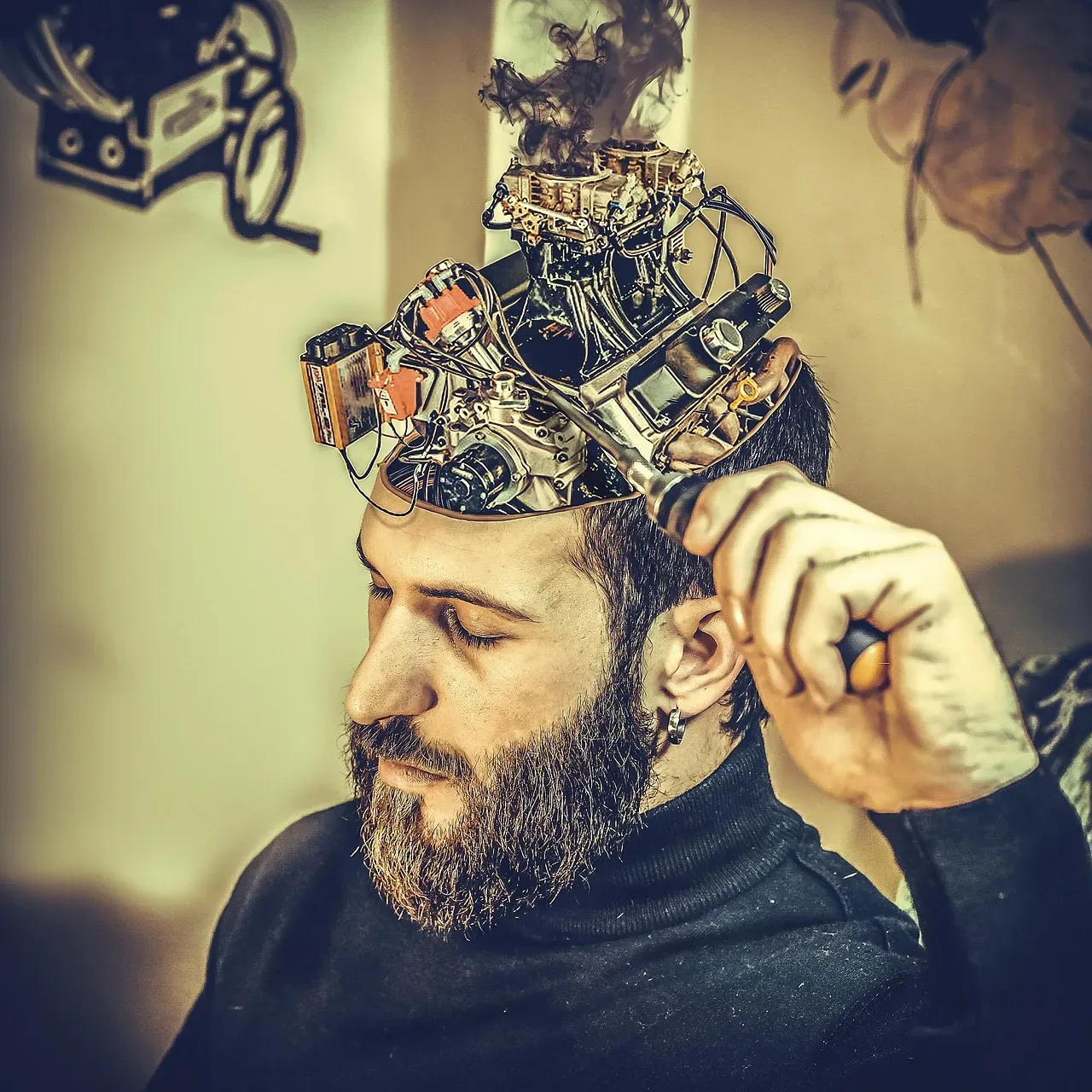
You might have had the eerie experience of waking up with a solution that felt almost obvious, even though you could not get there the night before. When you step away and sleep, your brain is free to explore combinations you would never consciously try, because it is not limited by your usual habits, assumptions, or anxieties. It replays the problem in a looser, more associative way, quietly testing variations and linking pieces that did not seem connected when you were awake.
This is why “sleeping on it” really can make you smarter the next morning. You are offloading some of the heavy lifting to background processes that are exceptionally good at pattern detection and re-framing. Mid-problem sleep can allow your brain to move from narrow, tunnel-vision thinking into a broader, more creative search through your mental library. The insight feels sudden to you, but under the hood, your brain has been running the computation while you were off the clock.
Most People Interrupt the Process Without Realizing It

Here’s the catch: the modern world trains you to override your own biology. When you feel sleepy over a problem set or a big project, your first instinct is often to fight it – grab a coffee, scroll your phone, turn on a bright light, or open yet another tab. From your brain’s perspective, that is the equivalent of slamming the file drawer shut halfway through sorting and then shaking the cabinet. You keep inputting more stimulation while the system is trying to quietly organize what it already has.
By refusing to rest, you interrupt the very process that could make your studying, coding, or planning pay off. Instead of your brain consolidating the day’s work, you keep flooding it with new, unstructured information and random distractions. Over time, that habit leaves you with a pile of shallow impressions rather than deep, connected knowledge. You wind up working longer hours with less to show for it, all because you treated rest as the enemy instead of the partner of serious thinking.
Short Sleep, Big Gains: How Even Brief Naps Help You Learn

You do not need a full night’s sleep every time you hit a wall; even short naps can give your memory systems a measurable boost. When you drift off for a brief period after intense focus, your brain can still run quick consolidation cycles and clear out some of the mental clutter. It is like hitting a fast save button instead of walking away from the game and hoping your progress will be there later.
In practical terms, that means a twenty- or thirty-minute nap after a dense study session, language practice, or design sprint can make the material stick far better than powering through another hour of tired repetition. You may wake up feeling a little groggy, but your recall and understanding often jump noticeably. The key is timing your nap soon after the learning so your sleeping brain has fresh material to work with, rather than random leftovers from earlier in the day.
Using Sleep Strategically When You Study or Work

If you think of sleep as part of your learning toolkit rather than a passive break, you start planning it more deliberately. Instead of cramming until you collapse, you chunk your work so that deep focus is followed by genuine rest, not half-distracted scrolling. You front-load your most important or difficult material earlier, then allow a nap or an early night to help lock it in, instead of pushing past the point where your brain is only pretending to pay attention.
One simple way to do this is to treat your day like a series of learning–sleep–learning loops, even on a small scale. You tackle a challenging block of material, take a walk, then lie down for a short sleep if you can. Later, you do a quick review, which tells your brain that information really matters. Rather than feeling guilty for closing your eyes, you treat that moment as the second half of the job: gather the pieces while you are awake, then let sleep assemble the puzzle.
When Falling Asleep Mid-Problem Might Signal Something Else

Of course, not every mid-problem crash is a sign of clever memory consolidation. If you find yourself constantly nodding off over basic tasks, struggling to stay awake while reading even light material, or feeling totally unrefreshed after sleep, your body might be telling you something more serious. Chronic sleep debt, disrupted sleep cycles, or underlying medical issues can all show up as extreme daytime sleepiness that has little to do with smart problem-solving.
It is important to distinguish between occasional, timing-linked drowsiness after intense concentration and a pattern of overwhelming exhaustion. If you are always fighting to stay awake, unable to function without heavy stimulation, or waking up more tired than when you went to bed, it is worth taking that seriously and seeking professional advice. Using sleep as a tool works best when your sleep is fundamentally healthy; if the foundation is shaky, the first step is fixing that, not simply reframing every nap as productivity magic.
Practical Ways to Let Your Brain Finish What You Started

You do not have to overhaul your entire life to stop interrupting this process; a few small shifts can make a big difference. You might start by noticing the moment when your focus turns from engaged to foggy and giving yourself permission to rest instead of pushing with resentment. That could mean taking a short nap, going to bed earlier, or at least stepping away from bright screens and intense stimulation so your brain can wind down.
You can also make your pre-sleep time a little more intentional. Instead of scrolling or jumping into unrelated tasks right after studying or working on a hard problem, you could do a quick recap in your own words, jot a few key points, and then let yourself drift off. That simple ritual acts like telling your brain, this is the stuff we care about, please keep it. Over time, you start to trust that closing your eyes does not mean abandoning the work; it means handing the baton to a different, quieter part of you that is very good at finishing the race.
Rethinking Laziness: Why Rest Can Be a Form of Discipline

It is easy to label yourself lazy when you get sleepy over a tough task, especially in a culture that glorifies late nights and endless hustle. But if you look at what your brain actually needs to store information and solve complex problems, deliberate rest starts to look less like weakness and more like discipline. You are choosing to work with your biology instead of against it, even when your ego would rather grind just to feel virtuous.
Reframing sleep as an active phase of learning changes how you talk to yourself in those drowsy moments. Instead of beating yourself up, you can say: I have pushed this as far as my waking brain can; now I am going to let the rest of my brain do its job. That shift does not excuse avoidance – you still show up, you still struggle – but it honors the reality that lasting progress is built as much in the hours you are unconscious as in the ones when you are staring at the screen.
Conclusion: Let Your Sleeping Brain Help You Out

The next time you feel yourself drifting off in the middle of a stubborn problem, you do not have to see it as defeat. You can recognize that your brain may be trying to move from noisy, conscious effort into quiet, behind-the-scenes consolidation that you usually do not notice. Instead of reflexively fighting it, you can experiment with giving that process a little space and then noticing what changes in your recall, your understanding, and your ability to see new angles.
When you stop interrupting your own memory systems, learning feels less like dragging a boulder uphill and more like working in rhythm with something deeper and smarter than your surface thoughts. You still need focus, repetition, and hard work, but you also need to let your sleeping brain do what it is built to do. The real question is not whether rest makes you weaker, but how much sharper you might become if you let sleep finish the problems you start – what might you wake up finally able to see?