

You know that weird chill you sometimes get for no obvious reason, right before something goes wrong? Maybe you felt an urge not to get in the car, or you suddenly felt uncomfortable around someone who turned out to be bad news. It is easy to write those moments off as superstition or anxiety, but modern biology is quietly suggesting something more interesting: your body might be picking up invisible chemical signals that your conscious mind never notices. You may not think of yourself as particularly intuitive, but your nose and nervous system could be running quiet background checks on the world long before you have time to think.
Instead of imagining a mystical sixth sense, you can think of this as a very old first sense: smell. Your brain evolved in a world full of subtle odors, stress hormones, and metabolic by-products constantly floating through the air. Even when you do not notice any scent at all, you’re still inhaling a complex chemical story about the people and situations around you. If you sometimes feel sudden dread or tension for no clear reason, you might be responding to those chemical messages, especially if you’re more sensitive than the average person.
The Hidden Alarm System You Carry In Your Nose

When you walk into a room, you usually focus on what you see and hear, but your nose is already working in the background like a silent security system. With every breath, you pull in tiny airborne molecules from people, surfaces, and even your own body. Your olfactory receptors, which number in the hundreds of different types, act like microscopic locks that certain odor molecules can fit into, setting off electrical signals that race toward your brain. You only notice a small fraction of those as distinct smells like coffee or perfume.
The rest of the time, your brain is still receiving chemical information, it just does not bother to tell you. Instead, those signals tap into older, deeper areas such as your limbic system, which helps control emotion, fear, and memory. That is why a place can suddenly feel off before you can explain why, similar to how you might feel uneasy hearing a distant growl in the dark. You are not imagining those jolts of dread; you are reacting to data your brain filed under “urgent, but not verbal.”
How Stress And Fear Change Your Scent Before Anything Happens

Your body has a signature chemical smell that shifts with your internal state, even when you are freshly showered and wearing deodorant. When you feel fear, anxiety, or pain, your nervous system triggers sweat glands, stress hormones, and metabolic changes that subtly alter your odor. You do not need to be visibly shaking or crying for this to happen; the process kicks in as soon as your brain registers a possible threat. You start broadcasting a kind of invisible status update about your emotional state.
Other people around you, including you yourself at a different moment, can unconsciously detect those changes. You might find yourself feeling uneasy in a crowd without knowing that several people nearby are stressed, angry, or in pain, and their bodies are releasing that tension into the air. If you have ever felt unexpected dread right before someone starts an argument, gets hurt, or reveals really bad news, you may have picked up on their chemical stress signals a few seconds or minutes before events caught up.
Why Some People Are Natural “Emotional Detectors”

You have probably noticed that some people seem to sense tension in a room long before anyone speaks up. There is growing evidence that sensitivity to emotional and social cues varies quite a lot from person to person, and a part of that difference may live in the nose and the brain circuits behind it. Genetic variations in olfactory receptors, combined with differences in brain wiring, can make your system more or less responsive to faint chemical shifts. If you are someone who often says you “just knew” something was wrong, your biology may be running on higher gain.
Life experience adds another layer. If you have gone through trauma, lived in unpredictable environments, or had to read people carefully for your own safety, your brain learns to treat subtle signals as important. That means your body may react strongly to tiny whiffs of stress chemicals long before your thinking mind can explain why you suddenly feel sick to your stomach. What can look like overreacting from the outside may simply be a nervous system that has become finely tuned to warning signs most people tune out.
Emotional Contagion: When Other People’s Fear Becomes Your Dread

You have likely felt emotions spread through a group like a wave: one person panics, and within seconds everyone else feels on edge. Part of that contagion comes from seeing facial expressions, hearing voice changes, and picking up on body language. But there is also a quieter layer, where chemical signals from sweat and breath help synchronize emotional states in a crowd. Your brain is constantly combining all of that input into a fast judgment about whether to relax or brace for impact.
When you feel sudden dread that seems to come from nowhere, you might actually be echoing someone else’s fear before you even know they are upset. Maybe you are standing near a driver who is about to make a risky mistake, a partner who is about to confess something painful, or a stranger who just got bad news on their phone. Your nervous system notices their rapid breathing, slight tremor, and change in body odor, and it updates your internal threat meter accordingly. By the time you consciously think, “Something feels wrong,” your biology has been whispering it for a while.
Gut Feelings, The Vagus Nerve, And That Drop In Your Stomach
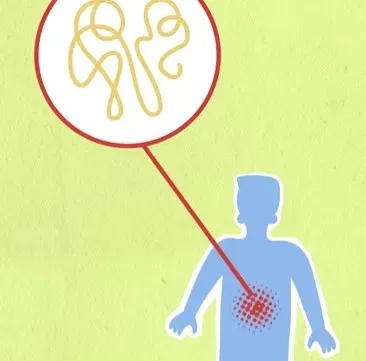
When dread hits, you rarely say, “My olfactory system has processed a warning signal.” You say, “My stomach dropped” or “I had a bad feeling in my gut.” That is because your brain does not keep fear neatly in your head; it sends the news through your whole body. A huge nerve highway called the vagus nerve connects your brainstem to your heart, lungs, and digestive system. When your brain senses a threat, even a faint or uncertain one, it can change your heart rate, tighten your chest, or slow your digestion almost instantly.
If you are especially sensitive to interoception, the awareness of what is happening inside your body, you will feel those shifts more clearly than most people. You might notice your palms get damp, your breathing turn shallow, or your stomach twist before any logical reason appears. If at the same time you are picking up subtle, smell-based warning cues, those body sensations can combine into a powerful “Nope” signal. You may not be able to articulate that you are reacting to stress hormones or volatile compounds in the air, but your body acts as if it has already seen the ending.
When Sensitivity Crosses Into Anxiety Or Hypervigilance

Being able to pick up on danger early can be valuable, but it also comes with a cost if your system is always on high alert. If you live with anxiety, panic attacks, or post-traumatic stress, even small shifts in your surroundings can feel like sirens. A faint whiff of alcohol, a sudden silence in a room, or a tiny change in someone’s scent might trigger flashbacks or catastrophic thoughts. Your brain is trying to protect you, but it can start to see threats everywhere and drown you in waves of dread that never fully make sense.
It helps to remember that sensitivity is not the enemy; it is your body’s way of saying it really wants you safe. You can work with this by learning to label what you feel, grounding yourself in the present, and checking your predictions against reality over time. If your dread frequently turns out to be false alarms, it might be less about mystical premonition and more about a nervous system that needs more care and regulation. And if your warnings often prove accurate, you can respect that skill while still making room for calm, so your life is not ruled by fear.
How To Respect Your Dread Without Letting It Control You

When that heavy sense of dread hits you out of nowhere, you do not have to choose between dismissing it or letting it dictate everything. You can treat it as a useful notification: “Something in my body thinks there might be a problem.” In that moment, you might step back, slow your breathing, and quietly scan your surroundings. Are you near someone acting erratically, driving too fast, or clearly distressed? Does anything in the environment look off, like an exit blocked or a situation escalating?
If you do not see an obvious threat, you can still honor the message by giving your nervous system what it needs to settle. You might move to a safer-feeling space, call a friend, or simply leave a situation that feels wrong, even if you cannot fully explain why. Over time, you can track when your dread lines up with real problems and when it does not, building a more nuanced trust with your body. You are not strange or broken for feeling things other people miss; you are just running a more sensitive detection system that deserves both respect and boundaries.
When You Should Take That Sudden Dread Seriously

Not every shiver of anxiety means disaster is coming, but it is wise not to ignore your body when it screams instead of whispers. If you suddenly feel intense dread in a specific situation, especially one that objectively carries risk, like getting into a car with someone who has been drinking or walking down a dark, isolated street, it makes sense to listen. Your senses may be catching subtle cues of anger, intoxication, or instability that your conscious mind has not yet pieced together. In those moments, stepping away is not being dramatic; it is taking your biology’s alarm seriously.
It is also worth paying attention if your dread keeps showing up right before similar kinds of events: recurring conflicts, health crashes, or financial mistakes. That pattern suggests your body has learned to anticipate trouble from a cluster of small signals you tend to overlook. You cannot control everything that happens, but you can use that sensitivity as a warning light on your dashboard. If you pause when it flares, ask what might be wrong, and act with a bit more caution, you may find that your so‑called bad feelings are not curses at all, but early messages trying to keep you safe.
In the end, your sudden dread is not proof that you can see the future, and it is not just irrational panic either. It sits in the messy, fascinating middle, where biology, experience, and environment blend together into a sense you feel more than you can explain. You will never catch every chemical signal or decode every uneasy moment, but you can learn to treat those feelings with curiosity instead of shame. The next time your stomach drops for no clear reason, you might pause and ask yourself: is this fear lying to me, or is my body smelling something my mind cannot yet see?