

If you have ever walked into a room, felt your stomach drop for no obvious reason, and then thought, “What is wrong with me?”, you are not alone. That quiet surge of dread, the hair-raising feeling that something is off, can feel irrational or even embarrassing. Yet modern neuroscience is increasingly suggesting that these strange, hard-to-explain moments are not random glitches in your personality. Instead, they often reflect your brain picking up subtle patterns and risks that your conscious mind cannot yet put into words.
In other words, that uneasy feeling you dismiss as anxiety or overthinking may actually be your nervous system doing exactly what it evolved to do: scan the environment for danger using fast, automatic processes long before your slower, logical thinking catches up. The science here is still developing, and it is easy to oversell it, but the core idea is both simple and powerful: your brain is a prediction machine. Sometimes, when its predictions quietly flag a threat, what you experience on the surface is dread. Understanding how that works can change how you relate to your own “bad vibes” – and maybe stop you from gaslighting yourself when your body is trying to warn you.
The Brain As a Silent Prediction Machine
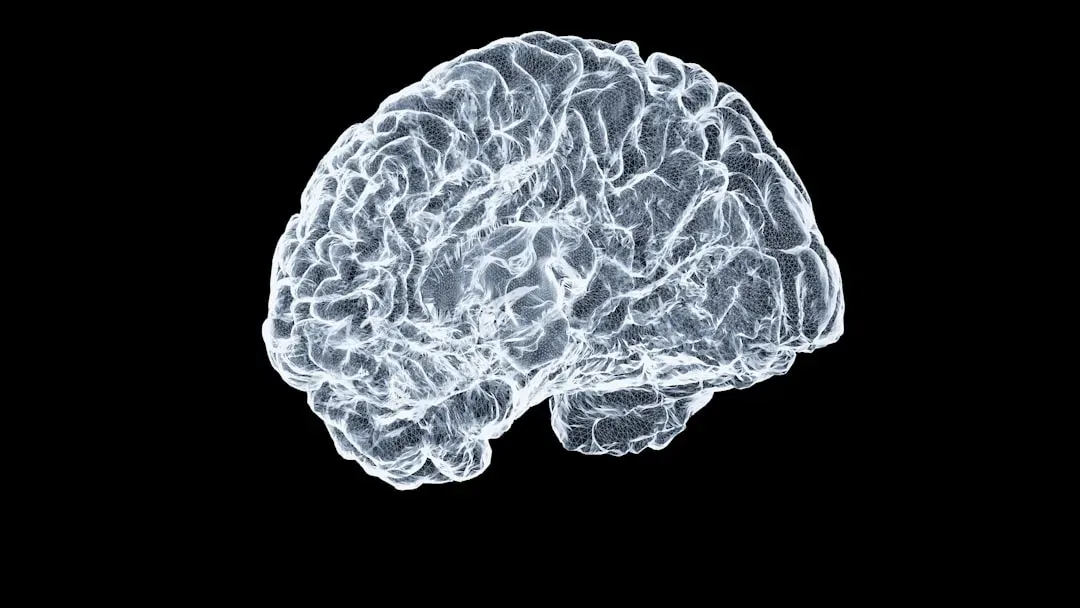
One of the most influential ideas in neuroscience today is that the brain is less like a camera and more like a prediction engine. It is constantly guessing what will happen next based on past experience, current context, and incoming sensory data. Instead of waiting passively for information, your brain is always comparing what it expects to what actually happens, updating its internal model of the world on the fly. When those predictions fail or something does not quite fit, you feel it – sometimes as confusion, sometimes as curiosity, and sometimes as a flicker of dread.
What makes this so interesting is that most of this heavy lifting happens outside of conscious awareness. You do not consciously track every shift in tone in a conversation or every change in ambient noise on a street at night. But your brain does. When it detects a pattern that has historically signaled trouble – a sudden silence, a subtle change in someone’s posture, an odd mismatch between words and facial expressions – it can register that mismatch as an “error” and flag it as potentially dangerous. That alarm may show up not as a clear thought, but as a sinking feeling in your chest that you struggle to explain.
How Fear Circuits Work Faster Than Conscious Thought

The sense of dread is closely tied to the brain’s fear and threat-detection circuitry, particularly regions like the amygdala and parts of the midbrain. These structures are built to prioritize survival over reflection. They receive raw, partially processed sensory information and can trigger rapid bodily reactions – like a racing heart, shallow breathing, or muscle tension – before your conscious mind has fully figured out what is going on. This “low road” to fear is an evolutionary shortcut: it is safer to react first and analyze later than the other way around.
That is why you might flinch at a sudden movement in your peripheral vision only to realize a second later it was just a harmless shadow. In more complex situations, the same rapid system can react to subtler patterns – say, the atmosphere in a bar turning strangely tense or the way someone closes distance a bit too quickly. Your conscious mind might still be catching up, thinking, “I guess everything is fine,” while your deeper circuits are effectively shouting, “Something is off.” What you experience is a free-floating dread that feels overblown, when in fact it may be your fastest neural systems doing their job.
Unconscious Pattern Detection: When “Gut Feelings” Are Data

Psychologists and neuroscientists have long documented that humans can learn and respond to patterns they cannot consciously describe. In some experiments, people can make above-chance predictions about which images will follow others or which options are safer without being able to explain how they know. Their brains have absorbed statistical regularities – tiny cues that repeat over time – while their conscious minds remain clueless. This is often labeled implicit learning, and it is a strong candidate for what sits underneath a lot of those eerie “I just know something is wrong” moments.
When you get a bad feeling walking down a dimly lit street, that dread is not necessarily mysticism; it may be years of lived experience and subtle environmental data quietly adding up. The angle of parked cars, the absence of normal traffic sounds, the posture of someone leaning against a wall – all of that can feed into unconscious models about safety and risk. You are not manually doing the math, but your brain is. The result arrives as a nudge in your gut rather than a neat sentence in your head, and if you are used to dismissing your feelings, it is easy to miss that this nudge is built on very real information.
Why Dread Shows Up in the Body Before the Mind

People often describe dread as a bodily sensation first: a tight chest, heavy limbs, swirling stomach, or a strange hollow feeling behind the ribs. This is not just poetic language – it reflects how closely the brain’s threat systems are wired into the body. The autonomic nervous system, which regulates heart rate, digestion, and breathing, responds quickly to subtle signs of danger, shifting you toward a fight-or-flight mode. You may feel restless, wired, or oddly fatigued long before you can point to a specific external cause.
Researchers increasingly talk about interoception, which is your brain’s ability to sense and interpret the internal state of your body. Some people are especially sensitive to these internal signals and can feel shifts in heart rate, temperature, and muscle tension very clearly. If your predictive brain is flagging the environment as “not quite right,” your body may mirror that assessment through discomfort, and you experience it as dread. This can be confusing because it feels as if the feeling appears “out of nowhere,” when in reality it is emerging from a very old and very physical survival system.
When Dread Is Accurate – and When It Is Just Old Wiring

Here is where it gets tricky: unexplained dread is not always a reliable signal about the present moment. The same systems that help you detect real environmental patterns also store the imprint of past experiences, including trauma, chronic stress, or long periods of instability. Your brain can become highly tuned to certain cues that used to mean danger, even if they no longer do. A particular smell, tone of voice, or type of room can reactivate those old maps, triggering dread that feels current but is actually a memory echo.
This does not mean the feeling is fake. It is very real and rooted in your nervous system, but it may be more about what happened before than about what is happening now. That is why two people can walk into the same situation and have opposite reactions: one feels perfectly calm, while the other is on edge without knowing why. Understanding this dual nature – that dread can be a quiet, useful signal or a reflex from outdated wiring – is important. It keeps you from blindly trusting every twinge of fear, but it also stops you from shaming yourself for having them in the first place.
Anxiety Disorders: When the Pattern Detector Goes into Overdrive

For some people, especially those living with anxiety disorders, the brain’s pattern-detection and threat systems are turned up too high, too often. The circuitry that is supposed to detect rare, meaningful anomalies starts flagging almost everything as suspicious. Everyday noises, normal social ambiguity, or minor bodily sensations are misread as signs of serious danger. The sense of dread becomes less a targeted warning and more a constant background hum, which is exhausting and can be deeply disruptive to daily life.
Neuroscientific studies suggest that in conditions like generalized anxiety, post-traumatic stress, and certain phobias, there can be heightened reactivity in fear-related regions and changes in the networks that regulate and calm those responses. That means the person is not choosing to “overreact” – their system is literally more sensitive and quicker to jump to worst-case scenarios. So while it is true that people often pick up environmental patterns their conscious mind misses, it is equally true that mental health influences how often those alarms go off and how loud they feel. That nuance matters: respecting your dread does not mean assuming it is always perfectly calibrated.
Learning to Listen Without Letting Fear Run the Show

The practical question is: what do you do with unexplained dread? One useful approach is to take it seriously as data without treating it as a verdict. Instead of immediately dismissing or obeying it, you pause and ask, “What might my brain be picking up on?” You slow down, scan the environment, notice details: lighting, exits, the emotional tone of people around you, your own physical state. That simple act of turning curiosity toward the feeling can transform it from something mysterious and overwhelming into a potential source of information.
At the same time, it helps to notice patterns in your dread itself. Does it show up mostly in specific kinds of places, around certain people, or in situations that remind you of past stress? If so, it may be more about your history than your current surroundings, and that is something therapy, nervous-system regulation, and self-compassion can really help with. The sweet spot is learning to respect your body’s alarms without letting them run your life. You do not have to choose between being the hyper-rational person who ignores every feeling and the hyper-reactive one who treats every twinge as prophecy. You can be the person who says, “My dread is telling me something – let me find out what, and then decide what to do.”
Conclusion: Dread as a Signal, Not a Sentence

I think we have been taught to see unexplained dread as a personal flaw – proof that we are too sensitive, too dramatic, or just wired wrong. Neuroscience paints a different, more respectful picture. It suggests that, more often than we realize, those dark flutters are the surface-level experience of an incredibly fast, incredibly complex pattern-detection system trying to keep us alive. Sometimes it is spot on. Sometimes it is echoing old pain. But it is almost never meaningless noise.
To me, the most empowering stance is this: treat your dread as a signal, not a sentence. Let it make you curious rather than ashamed. Let it prompt a closer look at your surroundings and your own history, instead of a knee-jerk reaction in either direction. In a world that often pushes us to override our instincts in the name of convenience or politeness, reclaiming that inner warning system – while also tempering it with reflection and support – might be one of the most quietly radical things you can do. The next time that unexplained heaviness rolls in, will you write it off, or will you ask what your brain has noticed before you?