
If you have ever looked up at the night sky and felt a strange mix of awe and unease, you are already halfway to modern cosmology. The wild part is not just that the universe is big; it is that the piece we can see might be only a tiny, biased sample of a much grander reality that follows rules we have never experienced. Our telescopes reach out across billions of light-years, yet they may be skimming the surface of something far stranger and more diverse than our familiar physics classroom suggests.
In the last few decades, cosmologists have quietly arrived at a deeply unsettling conclusion: “the universe” and “the observable universe” are not the same thing. What we see is limited by the speed of light, by the history of cosmic expansion, and possibly by features of our own cosmic neighborhood. Beyond that horizon, there could be regions where the constants of nature differ, where time behaves differently, or where even the concept of a “law of physics” is more flexible than we have dared to imagine. The question is no longer whether there is more out there, but how radically different “out there” might be from everything we know.
Why the Observable Universe Is Only Our Cosmic Bubble
Here is the first shocking twist: when cosmologists say “observable universe,” they mean a sphere around us with a radius of tens of billions of light-years, defined not by how far we can travel, but by how far light has had time to reach us since the Big Bang. Because the universe has been expanding the whole time light has been traveling, the edge of this sphere is much farther away than the universe’s age in years would suggest. It is not a physical wall or a boundary in space; it is more like the edge of a fog of information determined by time and expansion.
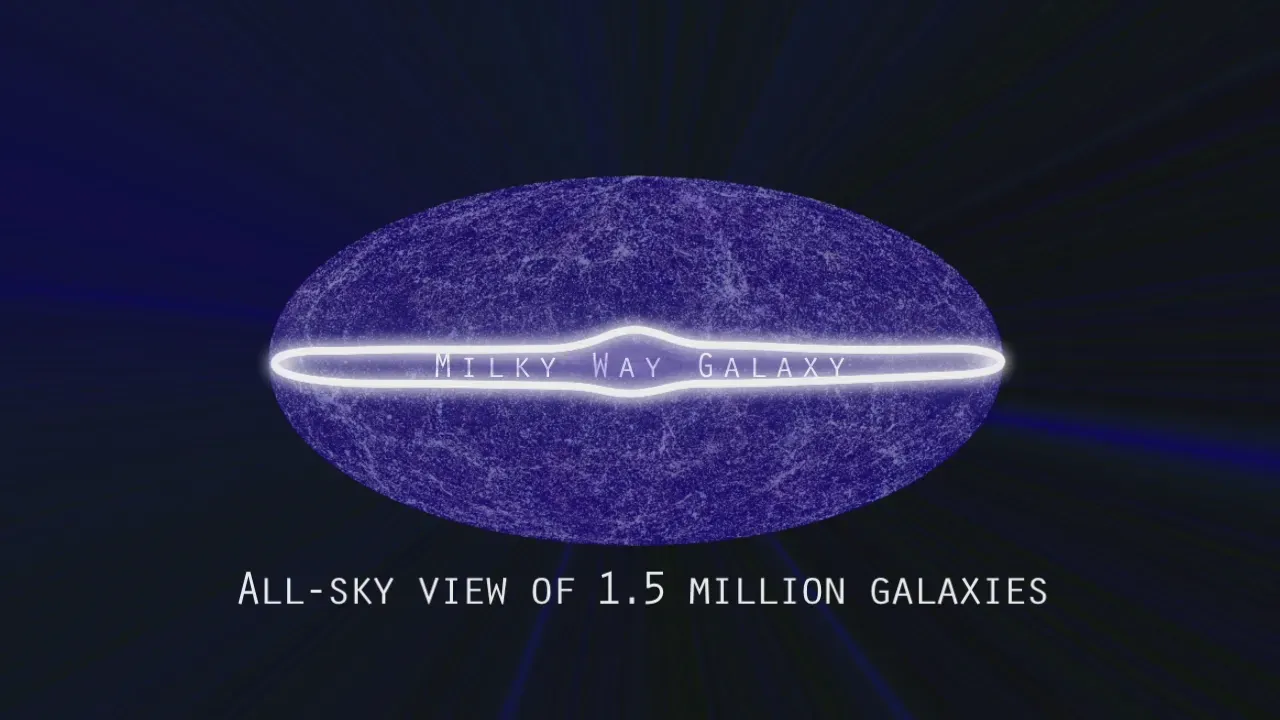
The crucial point is this: that sphere is centered on us purely because we are the ones doing the observing, not because we are cosmically special. Every galaxy, every alien scientist in some distant cluster, has its own observable universe centered on them, with a different slice of reality visible inside. That alone should tell us there is more “universe” beyond our particular bubble. The unsettling implication is that the true universe could be vastly larger – possibly even infinite – while everything we argue about in physics comes from one local sample that might be as parochial as one neighborhood in a city we have never walked across.
The Cosmic Horizon: A Physics Version of “Here Be Dragons”
The edge of the observable universe is often called a “cosmic horizon,” and the name is more literal than it sounds. Just as a ship at sea cannot see beyond Earth’s horizon because light from further ships has not yet reached its eyes over the curve of the planet, we cannot see beyond our cosmic horizon because light from beyond simply has not had time to get here. This horizon is not made of matter or energy; it is made of the finite age of the universe and the finite speed of light, which act together like a hard cap on what we can directly observe.
What lies beyond that horizon is, by definition, out of direct reach, and this is where things start to feel like an old map with “here be dragons” scribbled at the edges. We can model what might exist based on the laws of physics we know, but that modeling assumes those laws continue to hold. The uncomfortable question is whether that assumption is justified. Are we seeing universal truths or just local rules that happen to apply in our patch of space-time, the way certain weather patterns only apply in one climate zone and fail completely somewhere else?
Inflation and the Mind-Bending Idea of a Multiverse
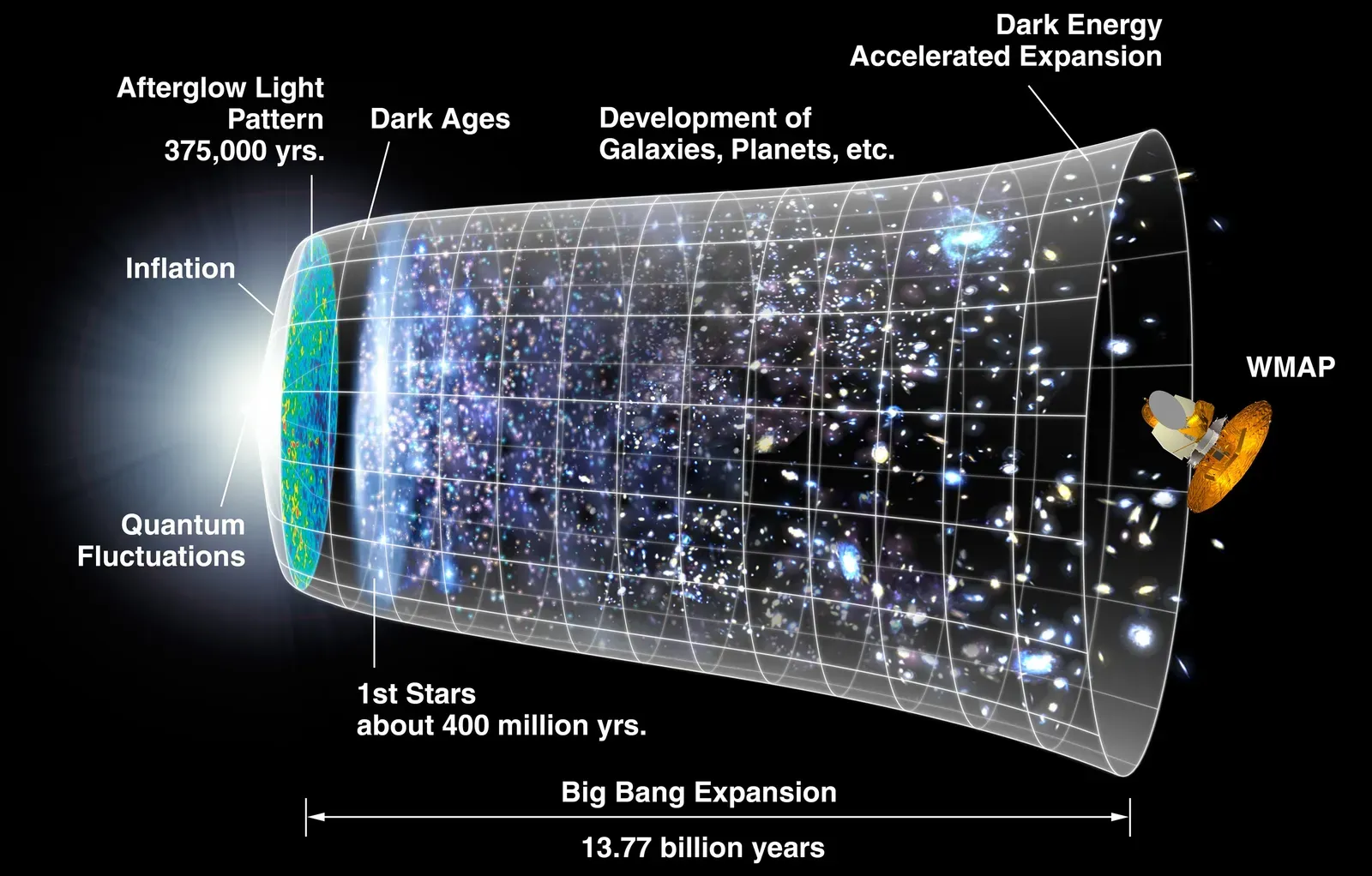
To understand why many physicists now take “other universes” seriously, you have to look at cosmic inflation, the theory that the very early universe went through an unimaginably rapid expansion. According to this idea, a minuscule region of space ballooned faster than light (which general relativity allows space itself to do), stretching quantum fluctuations into the seeds of all galaxies and structures we see today. Inflation explains several puzzling facts, like why space looks so uniform on large scales and why the geometry of the universe appears nearly flat rather than curved like a sphere or a saddle.
But here is the twist no one ordered and yet inflation almost naturally delivers: in many models, inflation never stops everywhere at once. Instead, it ends locally in “pockets” of space that cool down and become universes like ours, while inflation continues elsewhere, spawning more pockets forever. This picture, often called eternal inflation, leads naturally to something like a multiverse – a vast patchwork of bubble universes, potentially with different physical conditions. Our observable universe would then be just one bubble in a violently growing foam, and what we call “laws of physics” might be more like local bylaws in our particular district.
Could the Laws of Physics Vary Beyond Our Cosmic Patch?

On paper, physics looks clean and absolute: there are fundamental constants, like the strength of gravity or the charge of the electron, and they simply are what they are. Yet some theories that try to unify gravity with quantum mechanics, such as certain versions of string theory, naturally produce many possible “vacua” or configurations, each with its own set of physical constants and effective laws. In that picture, the values we measure might not be uniquely determined by logic; they might be environmental, like the temperature and humidity in a particular city on a particular day.
If inflation is populating a multiverse of regions with different configurations, it is not crazy to imagine that other patches beyond our observable universe could have different effective laws. Gravity could be stronger or weaker, dark energy could act differently, or entirely new types of fields and particles could dominate their physics. Some regions might be so hostile that complex structures never form; others might be wildly creative, birthing exotic objects we do not even have names for. From this perspective, our familiar physics looks less like the single rulebook of reality and more like one volume in a very large, very messy library.
What Observations Actually Tell Us – and What They Do Not
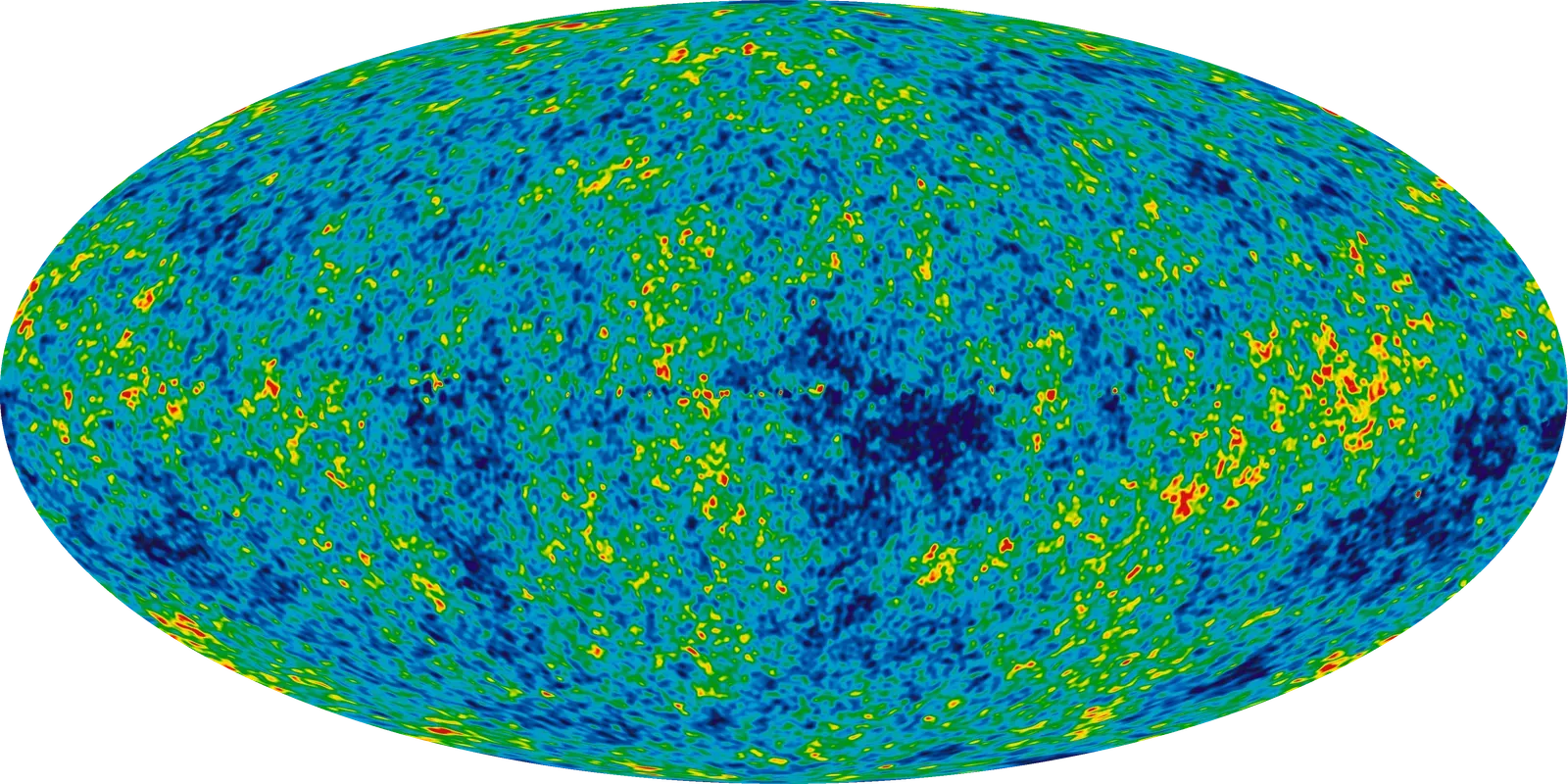
It is tempting to get carried away and declare the multiverse a done deal, but this is where we need to hit the brakes and be honest about evidence. Observationally, we have incredibly strong support for a hot Big Bang, for cosmic expansion, for dark matter and dark energy, and for a nearly flat, nearly uniform universe on large scales. We also have indirect hints that something inflation-like happened in the early universe, based on patterns in the cosmic microwave background. All of this paints a coherent, powerful picture of our observable patch and its history.
What we do not have is direct empirical access to regions beyond our cosmic horizon or to other “bubbles” with different physics. The data we collect – from the faint afterglow of the Big Bang to the distribution of galaxies – is all filtered through our one local set of laws and constants. Some features, like potential subtle anomalies in the cosmic microwave background or unusual gravitational effects, have been proposed as possible signs of interactions with other regions, but so far nothing is conclusive. In simple terms, the case for varying laws of physics beyond our edge is a mix of theoretical elegance, mathematical necessity, and philosophical curiosity, rather than hard observational proof.
How Cosmologists Try to Test Ideas About the Unseen
So how do you study realms you can never directly see? Cosmologists have gotten surprisingly clever about this, and I find that deeply appealing. One strategy is to take theories that predict a multiverse or variations in physical laws and push them to make indirect, testable predictions about the part we can observe. If a theory says inflation should leave a certain detailed fingerprint in the cosmic microwave background, or that tiny fluctuations in density should follow a certain pattern, we can look for those signatures with satellites and telescopes. If the predictions fail in our observable region, the theory loses credibility, even if we never see beyond the horizon.
Another approach is to look for statistical oddities that might hint at a larger ensemble. For example, some researchers explore whether the values of certain constants, like the cosmological constant that drives cosmic acceleration, are more naturally explained if we live in one of many possible regions, selected because they allow galaxies and observers to exist. This is sometimes called an anthropic perspective, and it is controversial because it feels uncomfortably close to saying “we are here because we can be.” Still, when multiple lines of reasoning point toward a larger, more varied reality, it is hard not to at least entertain the idea, even if it offends our preference for neat, universal laws.
How It Changes Our Place in the Cosmos – and Why I Think That Is Healthy
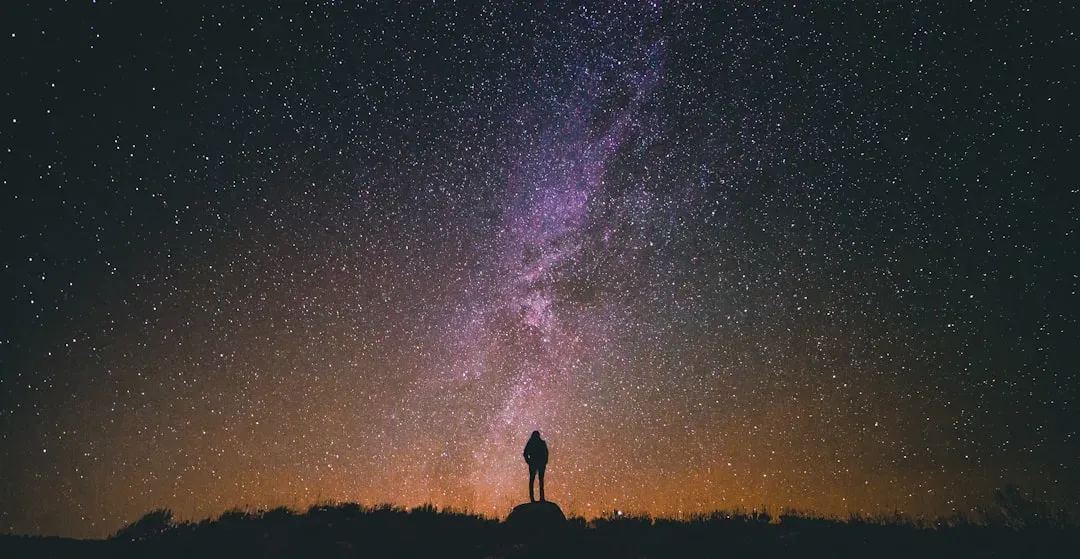
For centuries, humans have had to swallow one humbling truth after another: Earth is not the center of the solar system, the Sun is not the center of the galaxy, and our galaxy is not a particularly special one. The idea that even our observable universe is just one region in a vastly larger, possibly law-diverse whole is simply the next step in that long pattern. Emotionally, it can feel like a gut punch. If even our laws of physics are local, does anything about our existence truly matter, or are we just one random outcome in a cosmic lottery with near-infinite tickets?
Personally, I think this perspective is oddly liberating rather than diminishing. If reality is bigger, stranger, and more varied than our patch suggests, then our tiny corner becomes even more precious, not less. The fact that our local laws allow stable atoms, long-lived stars, and self-aware beings capable of asking these questions is astonishing. It is like living in a small town on the edge of an enormous, wild continent: knowing there is more out there does not erase the meaning of home; it sharpens it, and it invites us to keep exploring with better maps, sharper tools, and a deeper sense of humility.
Conclusion: Beyond the Edge, I Suspect the Universe Refuses to Be Simple
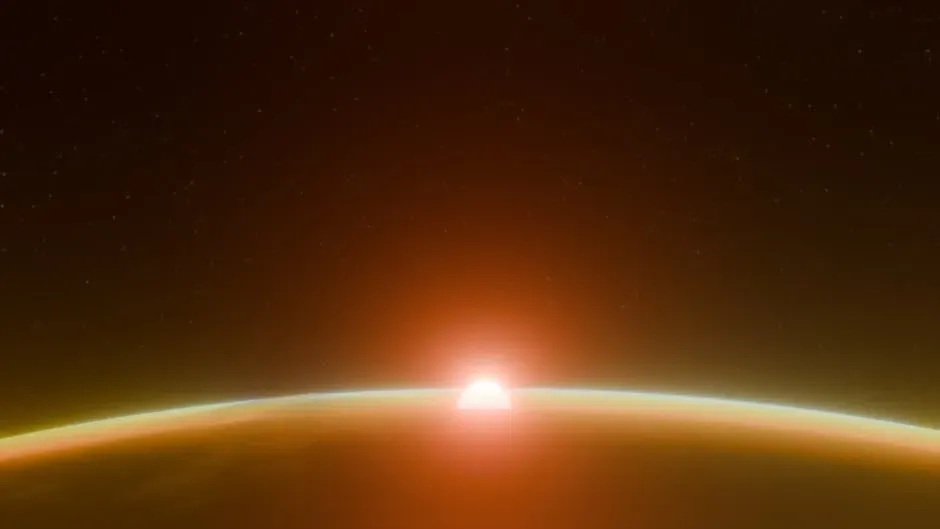
When I look at the state of cosmology today, I see a field cautiously circling a radical idea: that the observable universe is a parochial slice of a far grander reality, and that the neat, elegant laws we prize might be only one chapter in a much more chaotic anthology. The sober truth is that we do not yet know whether the laws of physics truly vary beyond our horizon, or whether our patch is representative after all. But the combination of inflationary models, theoretical landscapes with many possible configurations, and the sheer arbitrariness of some constants makes me lean toward a universe that is bigger and messier than we once hoped.
If that is right, then our job is not to cling to the comforting idea that there is a single, final rulebook written in stone, but to accept that physics might be more like cartography: we map what we can reach, we infer what lies beyond, and we stay open to the possibility that the terrain keeps surprising us. In that sense, the edge of the observable universe is not a wall but an invitation – to refine our theories, to sharpen our observations, and to accept that reality may be more diverse than our limited vantage point suggests. And really, would you rather live in a universe that is small and simple, or one that is vast, unruly, and still full of secrets waiting just beyond the horizon?