
When you picture messages from deep space, you probably imagine a dramatic burst of radio noise, a strange repeating pattern, or a sudden spike in a graph that makes scientists sit up straight. What you almost never think about is the quiet in between. Yet in modern astrophysics, those stretches of nothingness are not really nothing. They are data. They are structure. And some researchers are starting to treat that silence less like a blank page and more like ink you just do not yet know how to read.
If that sounds a little unsettling, that is because it is. You live in a universe that talks mostly in whispers and pauses, and you are equipped to notice only the loudest shouts. The big question underneath this new way of thinking is simple but radical: what if at least part of what you call “cosmic silence” is actually a kind of communication, encoded in a way your technology and your assumptions are currently blind to?
The Universe Is Already Talking to You in Radio
You might be surprised by how noisy the universe actually is when you tune in at radio wavelengths. Your galaxy, the Milky Way, glows in radio light from vast clouds of gas, from magnetic fields wrapped around stars, and from explosive events like supernovas. On top of that background hum, you also get intense, short-lived bursts such as fast radio bursts and pulsars that tick away like incredibly precise cosmic lighthouses.
When you look at this radio sky, you are not staring at a calm void. You are staring at a dynamic network of signals that change on timescales ranging from milliseconds to millions of years. The remarkable thing is that your instruments already filter and compress that chaos, deciding what looks meaningful and what looks like noise. Buried in that judgment is a hidden bias: you tend to treat anything that does not repeat cleanly or line up with your expectations as irrelevant silence, even though that “silence” is made of real, measurable structure.
Silence as a Deliberate Part of a Signal
In your everyday life, you already use silence as part of communication. Think about how you pause in a sentence to make a point land, or how a musician uses a moment of quiet before a chorus to build tension. In digital communication, the entire system is built on patterns of presence and absence: ones and zeros, pulses and gaps. The gap is not a mistake; it is part of the code. If you ignore the gaps, you literally destroy the message.
Now imagine you are trying to interpret a signal from another technology, another biology, or even another way of thinking. If that signal uses long stretches of apparent nothingness as part of its structure, your first instinct might be to erase those gaps in your data processing. You might compress them, average them, or throw them away as background. In doing so, you could be wiping out the very pattern that would have revealed the presence of intent. The silence becomes meaningful only if you choose to pay close attention to it.
How Astrophysics Filters Can Hide Patterns
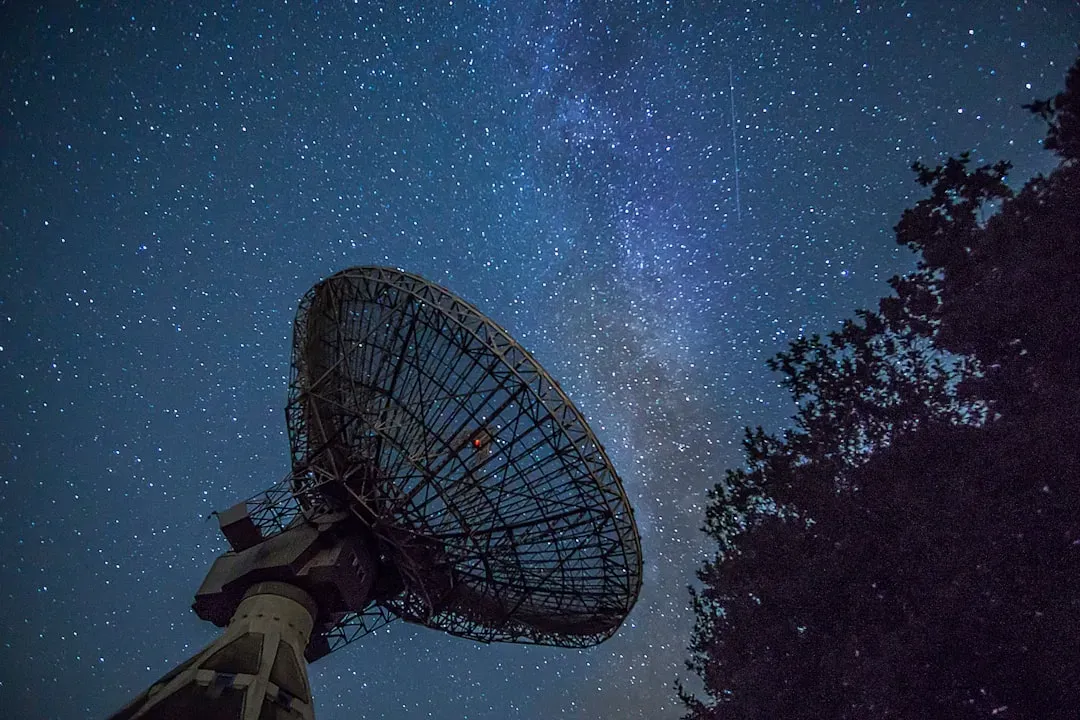
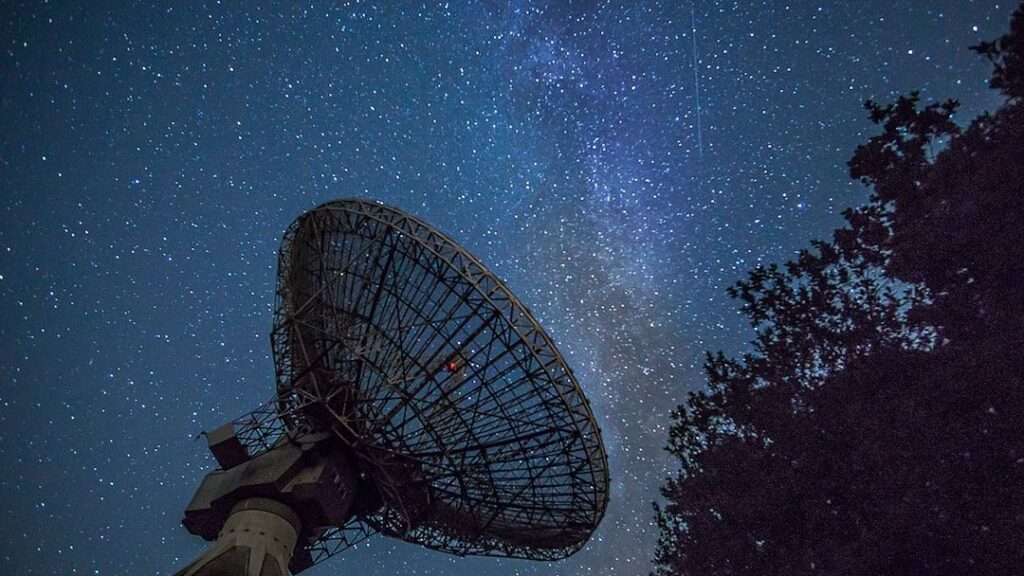
Modern radio telescopes are incredibly powerful, but they are also ruthless editors. To make sense of huge inflows of data, scientists use algorithms that smooth, bin, and clean the signals. You remove interference from human-made sources, you subtract known background patterns from our galaxy, and you often focus on relatively short time windows. All of this is sensible if you expect the message to look like a crisp spike or a neat repeating pulse.
But if you assume the message should be loud and obvious, you quietly train your tools to overlook anything subtle and slow. Imagine reading a book while skipping every blank space and punctuation mark; the text would turn into a continuous, unreadable block. In radio astronomy, long quiet intervals, irregular patterns, or extremely low-level variations can get averaged out the same way. You end up with a smoothed signal that looks empty, not because nothing was there, but because your own processing buried any possible structure beneath your convenience.
Time Scales: When “Nothing Happening” Is Just You Being Impatient
Your sense of time is shaped by human life: seconds, minutes, years. Cosmic processes laugh at that scale. A civilization might encode a message not over milliseconds or hours but over centuries, or even longer. If you only observe a region of sky for a few hours or days, everything you see could look unchanging and silent, even if, over thousand-year spans, it is performing an intricate dance of on and off, bright and dim.
Astrophysics already deals with very slow signals. Think of stars whose brightness changes over years, or clouds of gas that evolve over millions of years. Yet, when you hunt for artificial signals, you often narrow your search to what you could reasonably detect in the timeframe of a single project, grant, or career. There is a quiet bias toward timescales that match your patience. The consequence is that any communication that plays out glacially – using silence across decades as part of its “syntax” – will look indistinguishable from emptiness to you.
Information Theory Says Absence Can Carry Meaning
If you zoom out from telescopes and think in terms of information theory, you find a clear rule: any predictable pattern, or even any deviation from randomness, can carry information. That includes the presence and absence of a signal, the timing between pulses, and the way silence is distributed. A simple example is Morse code, where long and short pauses between beeps are as important as the beeps themselves. If you only recorded the beeps and ignored the timing of the gaps, you would end up with useless fragments.
Now apply that idea to deep-space radio data. If, say, the intervals between bursts of natural-looking noise follow some non-random pattern, the information might be stored not in the burst content but in their spacing in time. You could be staring at a sequence of apparent “no events” that, when taken together, form a structure as rich as language. To even notice that, you would have to analyze silence as a first-class citizen in your data, not as something you strip away before the real analysis begins.
Natural Phenomena vs. Intentional Silence

Here is where you need to be careful: the universe naturally produces all kinds of gaps and quiet patches without any intent behind them. Stars blink behind interstellar dust, radio sources flare and fade, and plasma clouds can scatter signals so that they arrive smeared-out or delayed. There is no need to invoke alien communication to explain the vast majority of cosmic silence. If you start seeing purpose in every lull, you fall into the trap of wishful thinking masquerading as science.
At the same time, the line between “natural” and “intentional” is not always obvious, especially when you only have indirect measurements. You rely on models to predict how a galaxy or a magnetized cloud should behave, then you compare those predictions with your data. If the actual pattern of silence and activity departs from what physics alone would suggest, you have a puzzle. It does not automatically mean someone is talking to you – but it could be a hint that you should look closer instead of shrugging and filing it under emptiness.
New Tools That Treat Quiet as Data, Not Dead Space
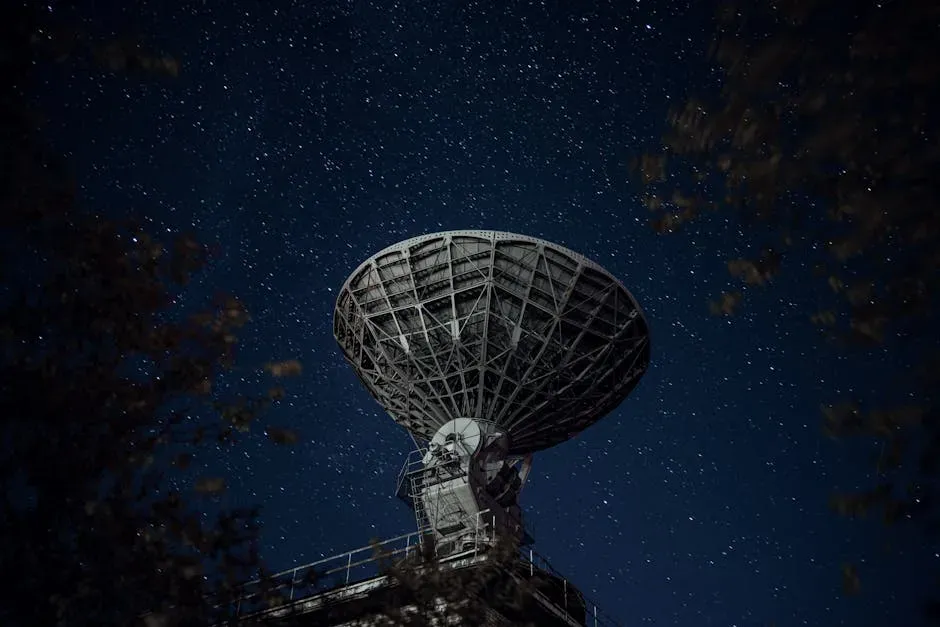
One of the most promising shifts in astrophysics is the rise of data techniques that do not assume you know what the signal should look like. Machine learning, for instance, can scan enormous sets of radio observations and flag unusual patterns, including strange distributions of gaps and pauses that would be hard to spot by eye. Instead of searching only for obvious beacons, you start training algorithms to notice “weird silence” as aggressively as they notice “weird noise.”
Some projects are also focusing on long-term monitoring of the same regions of sky, building up time-series data across years. When you have that kind of baseline, you can ask richer questions: Are those quiet intervals really random? Do they cluster in ways that defy simple natural explanations? You, as an observer, move from fast, snapshot-style judgments to a more patient, narrative style of listening, where you track how the quiet evolves over time, not just how the loud bits flare and fade.
What This Means for How You Think About Cosmic “Aloneness”

If you absorb this idea fully – that silence might be part of a message, not proof of its absence – it gently undercuts the easy comfort of saying the universe is obviously empty because you have not heard a clear hello. It suggests that your current way of listening might be like standing outside a foreign opera with noise-canceling headphones on, then concluding there is definitely no music. You are listening, but on your own terms, and your terms may be far too narrow.
This does not mean you should jump to the conclusion that the quiet parts of the radio sky are packed with hidden conversations. It does mean you should carry a bit more humility about what “nothing” actually is, especially at cosmic scales. The space between signals might be blank, or it might be writing in an alphabet you have not learned to see. Either way, taking silence seriously – as data to be analyzed, not empty air to be skipped – pulls you into a more curious, less complacent relationship with the universe you inhabit.
Conclusion: Learning to Listen to the Quiet
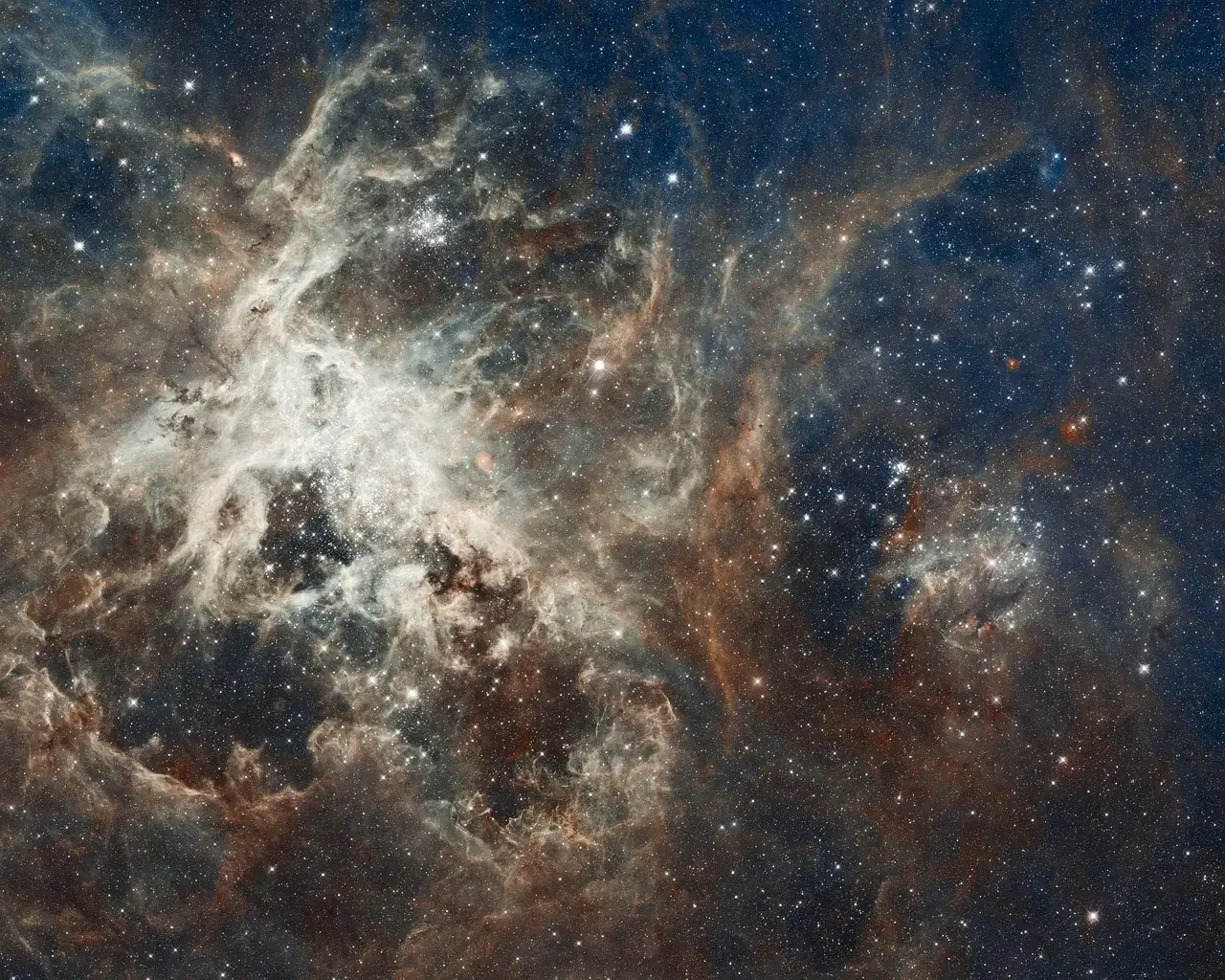
When you step back, the big shift is simple: instead of treating silence as a lack, you start treating it as a possibility. Astrophysics already shows you that the universe is more subtle than your instincts. From dark matter you cannot see to gravitational waves you feel only with delicate instruments, reality keeps reminding you that absence-of-obvious is not the same as absence. The same might be true for the quiet between radio signals, where the pauses could be part of a grander pattern that your tools are only just starting to be able to notice.
I find this personally grounding. It reminds you that your role, standing on this small planet, is less like a broadcaster demanding a reply and more like a careful listener slowly learning the language of the sky. Whether or not there is deliberate communication hidden in the quiet, you benefit from acting as if the silence deserves respect and attention. It sharpens your science, deepens your sense of wonder, and keeps you honest about what you really know. The next time you hear about “nothing detected” in a deep-space survey, you might ask yourself: are you sure you already know what nothing looks like?