
There is something quietly terrifying about wondering what it actually feels like to fade out of existence. Not the movie version with dramatic last words, but the real, biological, moment‑by‑moment unwinding of a mind that has spent a lifetime saying “I am me.” What happens to that “me” in the final hours before you never wake up again? Does your sense of self sharpen, blur, or simply slip away so gently you hardly notice?
Modern neuroscience, hospice reports, and personal accounts sketch a picture that is far more nuanced than pure horror or peaceful lights. The end of consciousness is not a single switch being flipped but a process: brains slowing down, networks disconnecting, memories loosening their grip, and oddly, sometimes, brief windows of startling clarity. In this article, we’ll walk right up to that edge, carefully but honestly, and look at what we actually know about how your sense of self unravels when time is almost up.
The Brain’s Slow Dimmer Switch: How Consciousness Fades

In the final hours of life, the brain rarely shuts down like a light turning off; it behaves more like a dimmer switch sliding steadily toward darkness. Blood flow drops, oxygen delivery falters, and the brain begins to prioritize the most basic survival functions over the more sophisticated parts that build your personality, your memories, and your inner narrative. The networks that let you reflect on yourself, remember your past, and plan your future are metabolically expensive, and they are usually the first to be compromised when the body starts to fail.
From the outside, this can look like confusion, drifting attention, or long pauses where the person seems to be somewhere else entirely. From the inside, many people describe earlier phases of serious illness as feeling foggy, slow, or as if their thoughts are happening underwater. Slowly, the coherent “story of me” becomes harder to hold onto, replaced by fragments, sensations, and brief islands of clarity. The self does not instantly vanish; it thins out around the edges, as if the spotlight of awareness is losing power one notch at a time.
Self as Story: When the Inner Narrator Starts to Fall Silent
One powerful way to think about the self is as a story you tell yourself: a running, mostly invisible narration that says, “This is what’s happening, this is who I am, this is what it means.” This narrative self depends heavily on memory, language, and attention, all of which sit in brain regions that are vulnerable when the body is failing. As these regions lose fuel, the constant commentary that once tied your experiences together into a coherent identity begins to fray. Sentences trail off, thoughts do not quite connect, and time can feel distorted.
In late stages of illness, people often shift from future‑oriented thoughts (“next year,” “when I get better”) to very short‑range concerns and simple memories. You might hold on to a few core pieces of identity – your name, a loved one’s face, a familiar song – even as the broader story dissolves. The loss of the inner narrator can sound terrifying, but it is also a kind of relief from constant self‑evaluation and worry. The self that obsessed over work deadlines or social impressions simply does not have the bandwidth anymore, and what remains is a smaller, sometimes gentler sense of “me” that lives moment to moment.
Fragmented Reality: Confusion, Delirium, and Shifting Selves

As the body approaches its limits, many people experience delirium: a fluctuating state of consciousness characterized by confusion, disorganized thinking, and shifting perception. In this state, your sense of self can become strangely elastic. You may recognize your own name but be convinced you are in a different decade, or you might mix up the roles of people around you, calling a nurse by a sibling’s name. It is not that the self disappears entirely, but rather that it startles and reshapes itself around faulty inputs.
From a first‑person perspective, delirium can feel like slipping in and out of dream logic while awake. Time may warp; minutes can feel like hours, or entire days vanish into a blur. The boundaries between “inside my head” and “outside in the room” soften, which can be frightening if you see threatening visions, but can also be oddly comforting if you encounter beloved faces from the past. In these moments, the self is still present, but its anchor points – where you are, when it is, who is here – keep drifting, and the result is a sense of self that is unstable, like a reflection on rippling water.
The Body’s Final Messages: Pain, Comfort, and Shrinking Awareness

As systems fail, the brain becomes increasingly preoccupied with the body. Pain, breathlessness, or other intense sensations can dominate awareness, pulling attention away from abstract worries about identity. With good symptom control, especially in hospice care, these signals can be softened, and many people slip into a state where physical comfort and fatigue gently crowd out more complex thoughts. The self becomes smaller, more tightly wrapped around basic experience: this breath, this touch, this warmth, this relief.
When pain is not well controlled, the self can feel hijacked, shrunk down to a single point of suffering where it is hard to think about anything else. That is one reason end‑of‑life medicine emphasizes comfort so strongly; reducing physical distress frees up mental space for connection, meaning, and even peace. In either case, awareness usually narrows: the noisy mental background of finances, reputation, and long‑term plans fades, and what is left are immediate sensations and the emotional tones that accompany them. The self is still there – just no longer sprawled across a lifetime, but compressed into a few intense experiences at the edge.
Relationships as Mirrors: How Others Hold Your Self Together
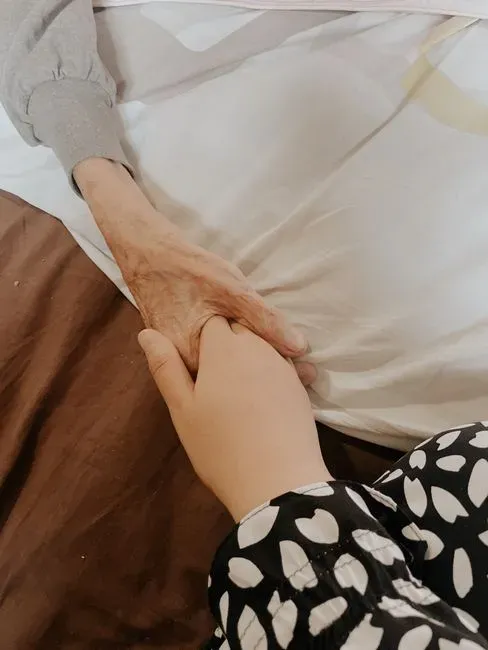
In the last stretch of life, your sense of self is not only in your brain; it is also reflected back by the people around you. When someone holds your hand, calls you by your name, reminds you of a shared memory, they are helping stabilize a self that is increasingly fragile. Even when speech is minimal or absent, the familiar cadence of a loved one’s voice, a favorite song, or a ritual like prayer or storytelling can briefly pull the pieces of identity into focus. In that moment, you may not articulate it, but some deep recognition can flicker: this is who I have been with you.
There is a strange reversal here: earlier in life, you built your identity partly through independence and personal achievements; in the final hours, your identity is more often sustained by connection. I remember sitting with a dying relative who drifted in and out of recognition but always relaxed when her granddaughter entered the room. Her words were jumbled, but the emotional response was unmistakable; some part of her self still knew that bond. These shared moments suggest that the self is not purely an internal construct; it is also a web of relationships, and as your own cognitive capacities wane, those external mirrors do more of the work of holding “you” in place, at least for a while.
Last Flashes of Clarity: Terminal Lucidity and the Mystery of the Mind

One of the most haunting phenomena reported near the end of life is so‑called terminal lucidity: when someone who has been confused, minimally responsive, or deeply demented suddenly becomes strikingly clear and engaged for a brief period. Families describe patients recognizing relatives, holding coherent conversations, expressing emotions or wishes that had seemed out of reach for weeks or months. Then, often within hours or a day, the person slips back into unresponsiveness and dies. Neurologically, this is not fully understood, and researchers are cautious about drawing firm conclusions.
From the standpoint of the self, though, terminal lucidity is powerful. It suggests that the intricate patterns that underlie identity can sometimes reassemble themselves right before the end, as if the mind is making one last, concentrated effort to show up as “itself.” I find this both comforting and unsettling. Comforting, because it means that the person you love might still be in there, even after long decline, and may get a chance to “come back” briefly. Unsettling, because it reminds us of how much we still do not know about the brain’s capacity to reorganize under extreme stress. Whatever the mechanism, these episodes show that the end of self is not always a smooth fade; sometimes, it is a final flare.
Does the Self Experience Dying as Peaceful or Terrifying?

When people talk about death, they usually focus on the fear of annihilation: the idea that the self will suddenly face a wall of nothingness. But the evidence we have from hospice care, patient reports, and observed behavior suggests a quieter reality. As the brain’s capacity for complex thought and vivid fear declines, so does the ability to sustain horror at the idea of nonexistence. Many people near the end seem less preoccupied with cosmic questions and more with immediate comforts, small regrets, or simple pleasures. The big existential dread that can dominate healthy adults often fades because the machinery that sustains it is literally shutting down.
This does not mean dying is automatically peaceful; there can be anxiety, restlessness, or agitation, especially if symptoms are poorly controlled or there is unresolved psychological distress. Still, when I look at the balance of reports, I see a trend: the dramatic, cinematic terror we imagine is usually a projection from the living, not a faithful description of the dying mind. The self that agonized over the meaning of life might not have the energy to keep doing that in the final hours. Instead, it may experience a kind of narrowing and softening, where the sharp edges of fear dull, and awareness turns toward more immediate, tangible things – a familiar hand, the sound of breathing, the rhythm of a favorite song.
What Remains at the Edge: A Personal Take on the Final Self

So what actually happens to your sense of self in those final hours before you lose consciousness forever? To me, the most honest answer is that the self loosens its grip gradually, like a fist unclenching one finger at a time. First go the distant plans and elaborate identities – job titles, social roles, long‑term projects. Then the more detailed storylines: how exactly events unfolded, who said what, the subtle games of status and pride. What tends to stick around longest are the emotional cores of your life: love, fear, comfort, attachment, and a few deep‑rooted memories that have been rehearsed countless times.
My opinion, looking at the science and listening to many end‑of‑life stories, is that the final self is smaller but not necessarily emptier. It is stripped down, more raw, less defended. In those last hours, the brain simply cannot maintain the sprawling empire of identities we spent decades constructing, so it keeps only what matters most or what is most deeply wired. That may be why so many deathbed moments revolve around simple phrases, gestures, and silent presence rather than grand speeches. If anything, this makes me think we should build lives where the core of our self – the part that still shows up when everything else is gone – is something we are not ashamed to meet at the end. When your own story is finally falling quiet, what do you want to remain in that last, fading sense of “me”?