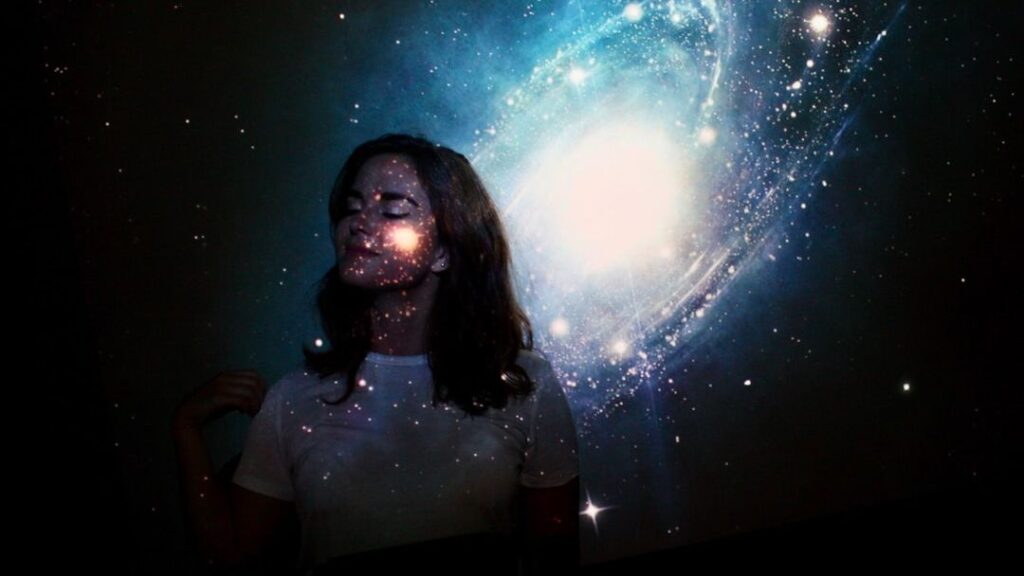
You know that strange mix of awe and vertigo you feel when you hear that there are hundreds of billions of galaxies, each with hundreds of billions of stars? It almost feels wrong, like your mind is trying to look over the edge of a cliff that has no bottom. That sense that the universe is just too big to be real is not you being bad at science; it may be your brain doing exactly what it evolved to do – then getting pushed far beyond its design limits.
Cosmology has become incredibly good at describing the size, age, and structure of the universe. At the same time, neuroscience has become much better at understanding how your brain handles numbers, space, and abstraction. When you put these two together, an intriguing picture emerges: your feeling that the cosmos is impossibly vast may not be a deep metaphysical insight, but a very human neurological response to scales your ancestors never needed to grasp. In other words, your brain is doing its best in a universe that is wildly out of proportion to what it evolved to handle.
The Human Brain Evolved for Forests and Villages, Not Galaxies

If you imagine the world your distant ancestors lived in, you can already see the problem: they had to judge the distance to a fruit tree, the size of a hunting party, or how long it would take to reach the next river. They never had to worry about what was happening billions of light‑years away. Your neural circuitry for space and number grew out of that environment, so it’s tuned for the scale of bodies, rooms, hills, and maybe horizons – not galaxy clusters and cosmic webs.
Researchers studying perception and cognition find that your brain is very good at dealing with small to medium scales that you can walk, throw, or build. Once you go beyond what you can directly experience, you quickly shift into using metaphors and rough comparisons: you picture Earth as a marble, the Sun as a beach ball, or the Milky Way as a city of stars. Those are coping strategies, not natural abilities. Cosmology asks you to leap from kilometers to light‑years to billions of light‑years, and your brain just was not built for that kind of jump.
Why Your Intuition Breaks Down Beyond a Few Orders of Magnitude
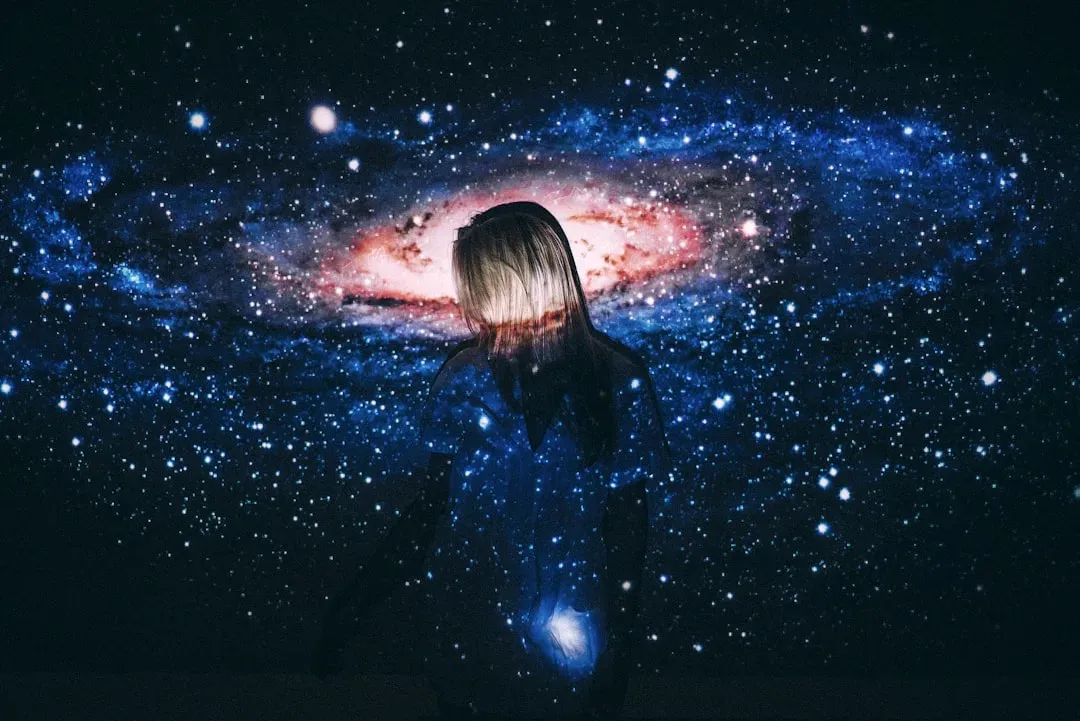
Deep down, you probably feel comfortable with numbers like ten, a hundred, maybe a few thousand. Beyond that, things start to blur into “a lot.” Studies in psychology show that your sense of number and size is roughly logarithmic: you notice the difference between ten and twenty much more sharply than between one billion and one billion and ten. When you’re told there are roughly about one hundred billion stars in the Milky Way, your brain mostly translates that as “too many to imagine,” which is more of an emotion than a measurement.
Cosmology forces you into ranges that stack orders of magnitude like floors on a skyscraper: ten thousand, a million, a billion, a trillion, and beyond. Yet your intuitive sense hits a ceiling very quickly. You might intellectually follow the arithmetic, but your gut never really “feels” the difference between a galaxy and a cluster of thousands of galaxies. The result is a kind of cognitive saturation point, where every larger scale stops feeling meaningfully different and just becomes impossibly huge. That’s your neurology waving a white flag.
Cosmic Distance: Light‑Years, Curved Space, and the Limits of Mental Maps
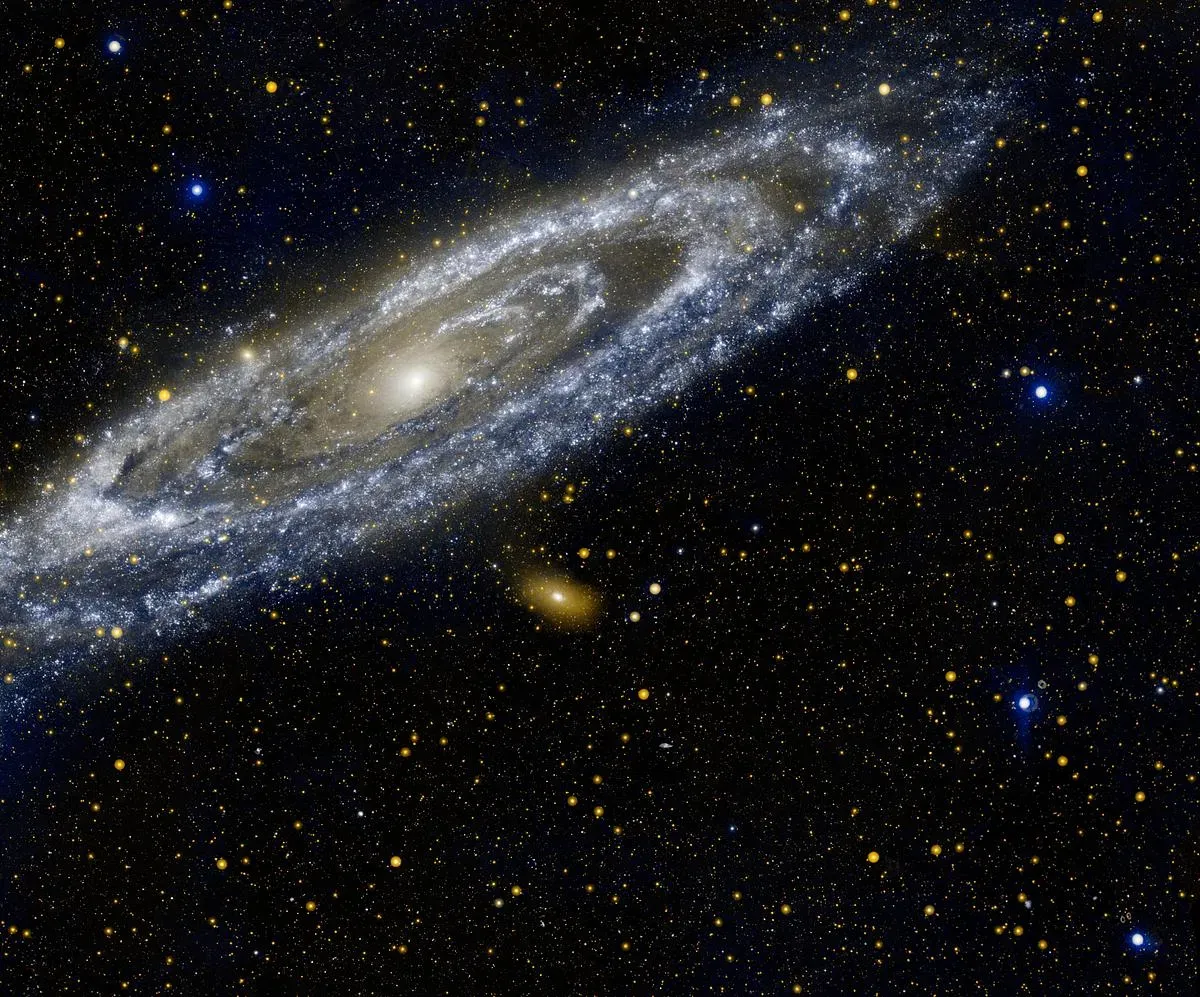
You instinctively picture space as a static, three‑dimensional room you could, in principle, walk across. Cosmology, however, tells you that the universe is expanding, that space itself can curve, and that distances are often described in light‑years – how far light travels in a year. Light itself moves so quickly that it circles Earth many times in a single second, so even one light‑year is already far beyond what your inner map can grasp. When you then hear that the observable universe is tens of billions of light‑years across, your mental picture stops being a picture and turns into a fuzzy symbol.
Your brain uses something like an internal GPS, involving regions such as the hippocampus and parts of the parietal cortex, to build maps of your surroundings. These systems evolved to track caves, paths, rivers, and maybe coastlines, not a universe where space can stretch and time is tangled up with distance. When cosmologists talk about comoving distances or space expanding faster than light can travel over vast scales, your internal map has nothing to lock onto. The only honest reaction it can produce is that “this is too big to be real” feeling.
The Overwhelming Sublime: Awe as a Built‑In Safety Valve
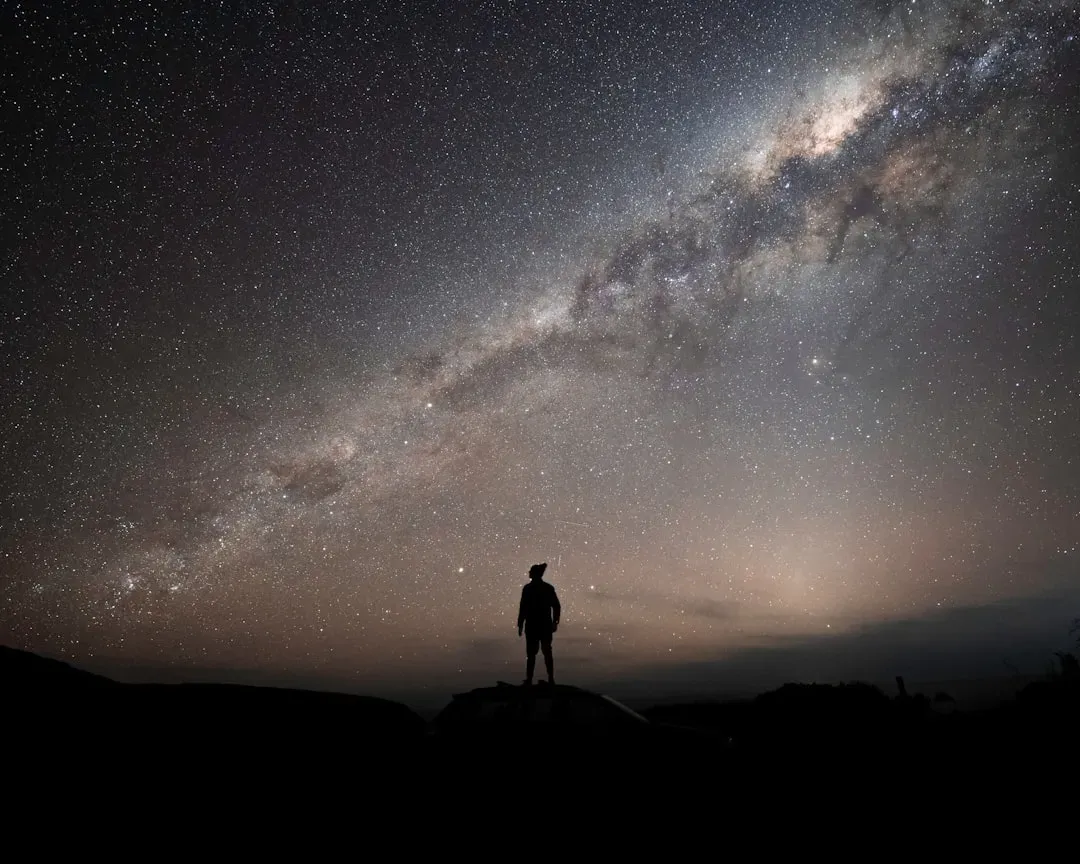
When you stand under a truly dark sky and see the Milky Way, you might feel tiny, exposed, or strangely uplifted all at once. Philosophers and psychologists sometimes call this the experience of the sublime: something so vast or powerful that it almost overwhelms your ability to comprehend it. Your reaction to the scale of the universe fits this pattern perfectly. That rush of awe, tinged with fear or disbelief, may be your mind’s way of handling input that threatens to overload its normal sense‑making routines.
Instead of trying to calculate or visualize every detail, your brain seems to flip modes. It stops attempting to fully “grasp” the universe and instead pushes you toward emotion, reverence, or existential reflection. This may be a kind of psychological safety valve: you trade the impossible task of truly conceptualizing the whole cosmos for a powerful, simplified feeling about it. You are not failing at understanding; you are experiencing a built‑in emotional response that helps you live with the fact that some scales are far beyond you.
Time Is Just as Hard as Space: Thirteen‑Plus Billion Years in a Three‑Second Brain
The age of the universe can feel just as impossible as its size. Your moment‑to‑moment awareness works on timescales of seconds; your memory stretches back decades at most. Even recorded human history only covers a few thousand years. When cosmology tells you the universe has been around for more than thirteen billion years, you’re being asked to imagine a timeline that makes all of civilization look like the last flicker at the end of a movie. Your brain has no built‑in template for that.
To cope, you tend to compress deep time into metaphors: you might picture the entire history of the universe as a single year, with humans appearing in the last seconds of December 31. That kind of analogy helps, but it also reveals the gap. Your brain keeps trying to reduce billions of years into something it can feel, like a calendar or a day or a lifetime. The stubborn fact remains: you are a creature whose mental machinery was tuned for short stories living in a universe that has been running an epic saga for eons.
The Emotional Side Effects: Insignificance, Meaning, and Perspective
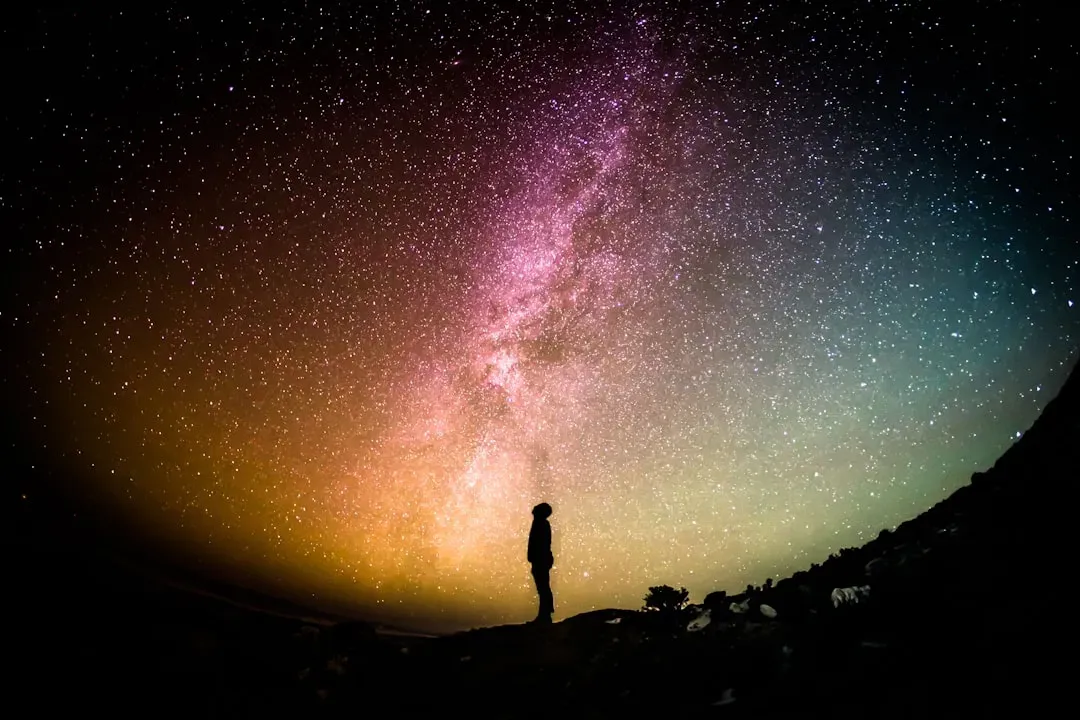
When you confront the sheer scale of the universe, you might feel uncomfortably small, even pointless. It’s common to think that in a cosmos this big, your life cannot possibly matter. That, too, may be a side effect of your brain’s struggle with scale. You intuitively associate size with importance because, in everyday life, a towering tree, a huge storm, or a massive crowd does have a bigger impact on you than a pebble or a raindrop. When you apply that same instinct to the universe, everything personal starts to look trivial.
But your feelings about significance do not have to be chained to physical size. You can flip the perspective: in a universe where so much is cold, empty, and indifferent, the fact that you can feel anything at all becomes remarkable. Instead of seeing yourself as negligible dust, you can see yourself as part of the small, rare pockets where the universe wakes up enough to ask questions about itself. Your brain may panic when it tries to wrap itself around the whole cosmos, but it is perfectly capable of finding deep meaning in the tiny slice of reality it actually touches.
Learning to Live with a Universe Your Brain Wasn’t Built For
Once you recognize that your sense of the universe being impossibly large is probably a neurological response, not a cosmic verdict, something liberating happens. You can stop expecting your intuition to keep up with cosmology. You can let the numbers stay abstract when they need to, lean on models and diagrams, and accept that a certain amount of vertigo is normal. Your mind was not designed for this job, yet here you are, using it to study galaxies, dark matter, and the afterglow of the Big Bang.
Instead of treating that uncomfortable feeling as a problem to fix, you can treat it as a sign you’ve reached the edge of what your built‑in machinery can handle. Beyond that edge, you rely on tools, teamwork, and patient imagination. You might never feel what a billion light‑years truly “is” in your bones, but you can still work with the idea, much like a musician can work with notes their voice will never sing alone. In that sense, the universe is not just bigger than you were designed to perceive; it is also an invitation to stretch in ways your ancestors could never have imagined.
Conclusion: Awe as Evidence of Your Reach
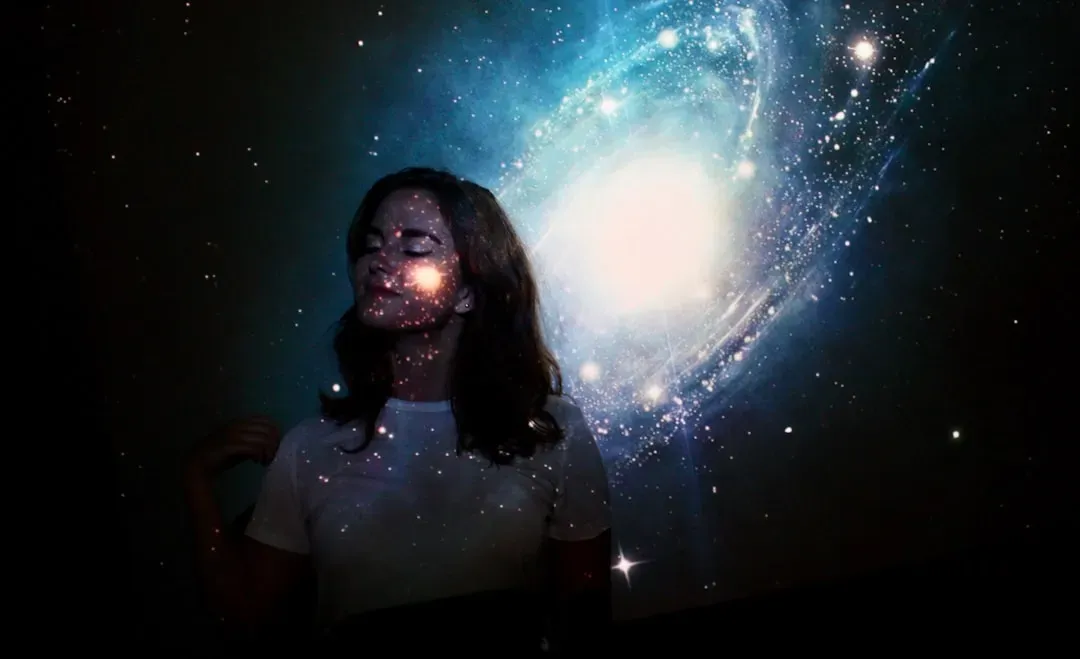
When you feel that the universe is impossibly large, you are bumping into a kind of built‑in limit, the place where evolution stopped because it had no reason to go further. Your ancestors never needed to picture galaxy clusters or cosmic background radiation to survive, so your brain grew up excellent at hunting, building, and storytelling, and only secondarily press‑ganged into doing cosmology. The dizziness you feel at cosmic scale is not a flaw; it is the natural strain of a system being asked to operate far outside its original specifications.
Yet that very strain is a sign of something extraordinary: you are using a brain shaped for forests and villages to understand a universe of unimaginable size and age. You may never carry a fully intuitive picture of it in your head, but with symbols, models, and shared effort, you still manage to reach far beyond your native limits. The next time the cosmos feels impossibly huge, you might take that sensation as quiet proof of how far you’ve stretched – both as an individual and as a species. Did you expect your own sense of smallness to be one of the clearest signs of how astonishingly far your mind has come?