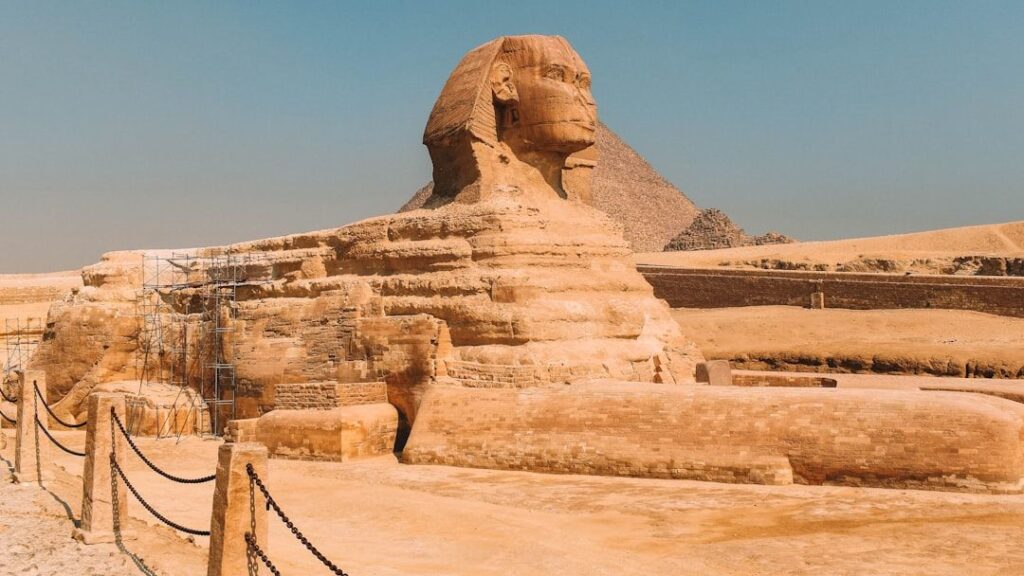

You stand in front of the Great Sphinx of Giza, baking in the desert sun with thousands of other visitors, and yet the strangest part of the monument is something you will never see. Beneath the paws, under the enclosure floor, threaded through the bedrock of the plateau, instruments have repeatedly hinted at cavities, tunnels, and chambers that remain officially off-limits. You are told the Sphinx is “well understood,” yet you keep stumbling onto whispers of sealed doors, blocked shafts, and surveys that found something and then went quiet.
If you follow those whispers, you quickly discover a fascinating tension. On one side, you have careful, by‑the‑book archaeology that admits a few known passages and a handful of “anomalies” in the rock. On the other, you have decades of rumors about a hidden library, forbidden access, and political turf wars over what can be dug and what can even be mentioned. Somewhere in between those extremes is where you, as a curious outsider, have to live: balancing what is firmly documented with what is strongly suggested, all while knowing there are literal, physical spaces down there that you are not allowed to explore.
The Known Shafts And Tunnels You’re Never Shown On A Postcard
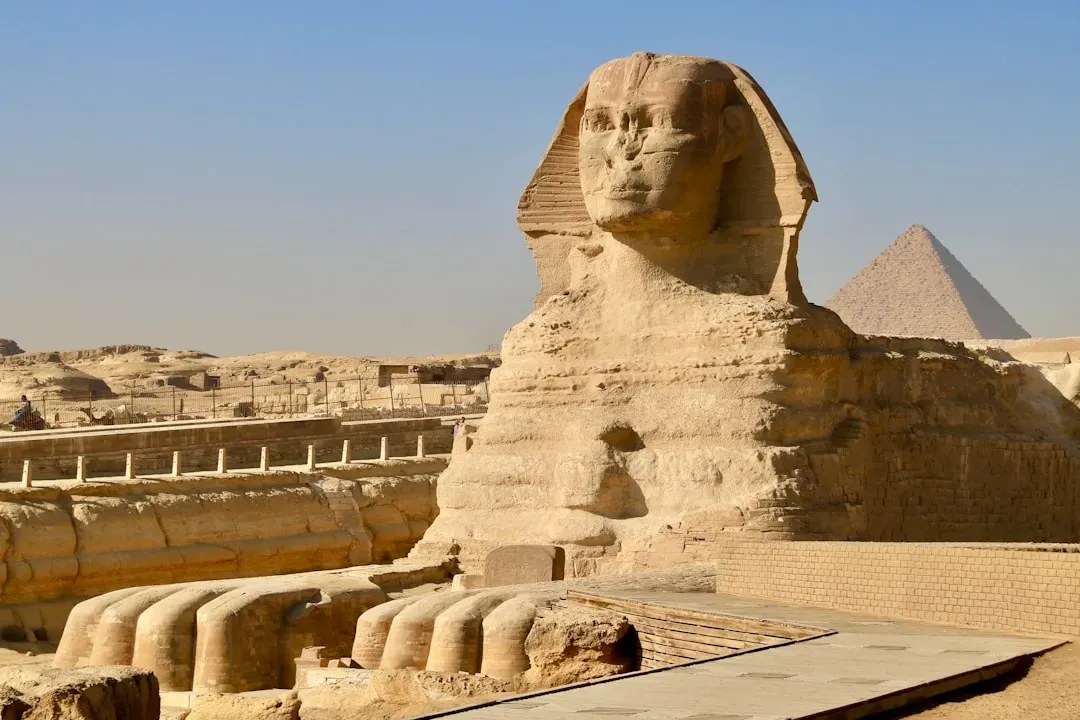
When you first start looking into the Sphinx, you might assume it is just a solid block of limestone with a carved outer shell. Then you learn there is a tunnel near the tail, a shaft in the back, and cut features and openings in the enclosure walls that have been entered and documented over the last two centuries. Early explorers like Henry Salt and later restorers in the twentieth century reported cavities in the body and fissures in the back that were large enough for a person to enter. In modern surveys and technical reports, these are often reduced to simple labels: “shaft,” “cavity,” “old tunnel,” as if they were trivial details.
What may surprise you is how rarely you hear about these features in mainstream tourist narratives or simple history summaries. You are told about the missing nose, the possible face of Khafre, and the erosion patterns, but you are not walked through the internal and subsurface architecture in the same detail. When you dig deeper into specialist resources, you discover diagrams showing small passages leading down from the rump, up into the body, and down from a cut in the enclosure floor near the hind paw. Many of these end in bricked‑up walls, bedrock, or cement from old restoration work, but the cumulative picture is clear: the Sphinx is not just a statue; it is also a node in a network of man‑made and natural spaces beneath the plateau.
The Seismic “Anomalies” Under The Paws That No One Has Properly Excavated
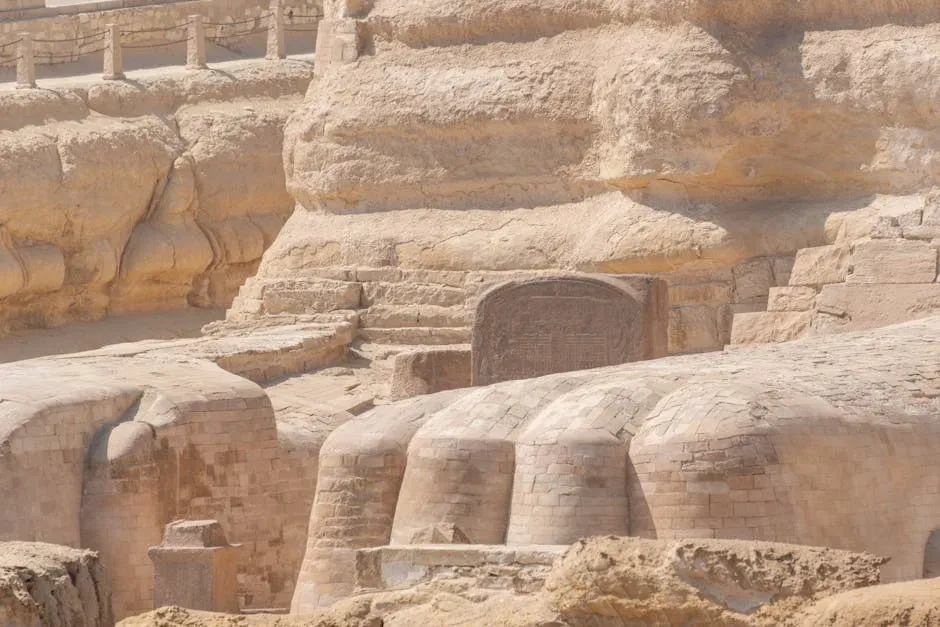
If you strip away the legends and focus only on data, you still end up facing something uncomfortable: geophysical surveys have detected voids under and around the Sphinx that have never been fully explored. In the early 1990s, seismic work around the monument showed zones beneath the enclosure floor that did not behave like solid, uniform limestone. One area in particular, roughly under or in front of the paws, produced signals consistent with a rectangular cavity at depth; even conservative write‑ups acknowledge that subsurface weathering and density changes are not uniform there. Later ground‑penetrating radar and electromagnetic work also found “anomalies” in similar locations, suggesting that you are not dealing with just a single fluke reading.
When you hear the word “anomaly,” it is easy to imagine something mysterious and supernatural, but in practice it simply means the rock does not match the expected pattern. As a curious observer, you have every right to ask why such a promising target has never been the focus of a carefully published excavation. Instead, you find brief mentions in technical papers, occasional press interviews hinting at cavities, and then long periods of silence. You are left in a strange position: you know that instruments have effectively drawn a dotted rectangle under the Sphinx’s front zone, but no one in authority has shown you core samples, open shafts, or detailed follow‑up studies explaining exactly what lies there.
The Hall Of Records Myth And The Very Real Political Minefield Beneath It
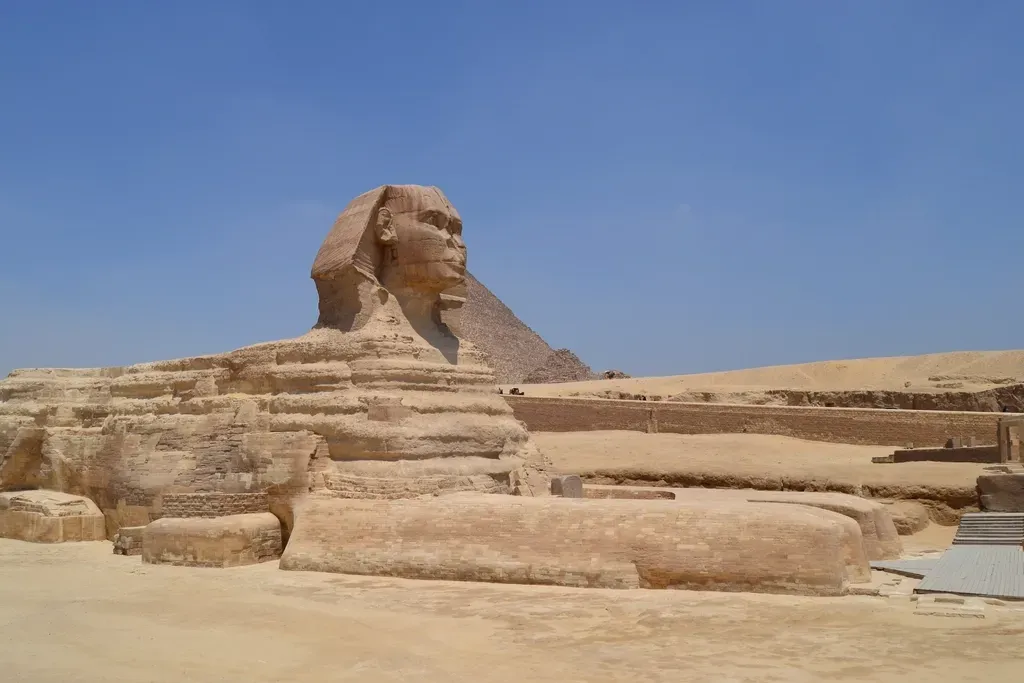
You cannot talk about sealed chambers under the Sphinx without running head‑first into the so‑called Hall of Records. For decades, people have claimed that beneath or near the right paw lies a hidden library from a lost civilization, often tied to Atlantis or some vanished golden age. That idea did not arise from archaeology; it came from twentieth‑century psychic readings and esoteric circles. Yet, once it lodged itself in the popular imagination, it started shaping what you are allowed to discuss about the plateau, because every new cavity or anomaly is immediately dragged into that mythic narrative.
From your perspective, this creates a bizarre feedback loop. On one hand, serious researchers have to distance themselves from anything that sounds like the Hall of Records, or risk being written off as fringe. On the other hand, officials know that the moment they confirm an unexplored cavity under the paws, half the world will scream that the library has been found. So you end up with a heavily charged subject: any talk of sealed chambers is treated as if it automatically endorses the most extreme theories. In that climate, it becomes safer for an Egyptologist to say nothing at all, especially in public, even if the underlying data would normally merit open discussion and careful exploration.
Why Egyptologists Talk Around, Not About, The Sealed Passages
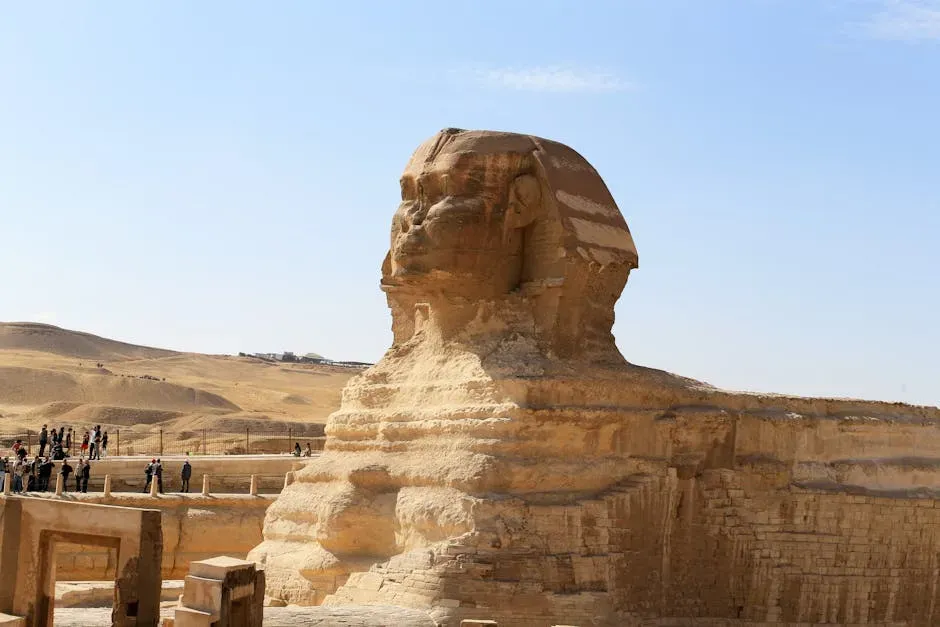
When you listen closely to interviews and read academic work from leading Sphinx specialists, you start noticing what is said and what is not. You will often hear that there is “no evidence” for a giant hidden library or that large, walkable tunnel systems under the Sphinx have not been demonstrated. Those statements are accurate as far as the big, dramatic claims go. But you rarely hear the same people volunteering detailed descriptions of every sealed shaft, blocked door, or radar anomaly that has been documented in archival material, technical appendices, or old field notes. The conversation is nudged toward debunking, not toward fully mapping the unknown.
You have to remember that many Egyptologists work under strict permits from the Egyptian authorities and rely on continued access to sites, funding, and political goodwill. If a topic becomes associated with controversy, nationalism, or conspiracy culture, it can suddenly be career‑limiting to push too hard. From where you stand, that means you do not get the full picture. Scholars prioritize what they can publish safely and what advances their own research goals, not necessarily what satisfies your curiosity about every sealed passage. The result is a sort of selective transparency: you get enough to know there are features there, but not enough to feel that the story has been completely and candidly laid out.
The Role of Conservation, Risk, And “Do No Harm” Archaeology
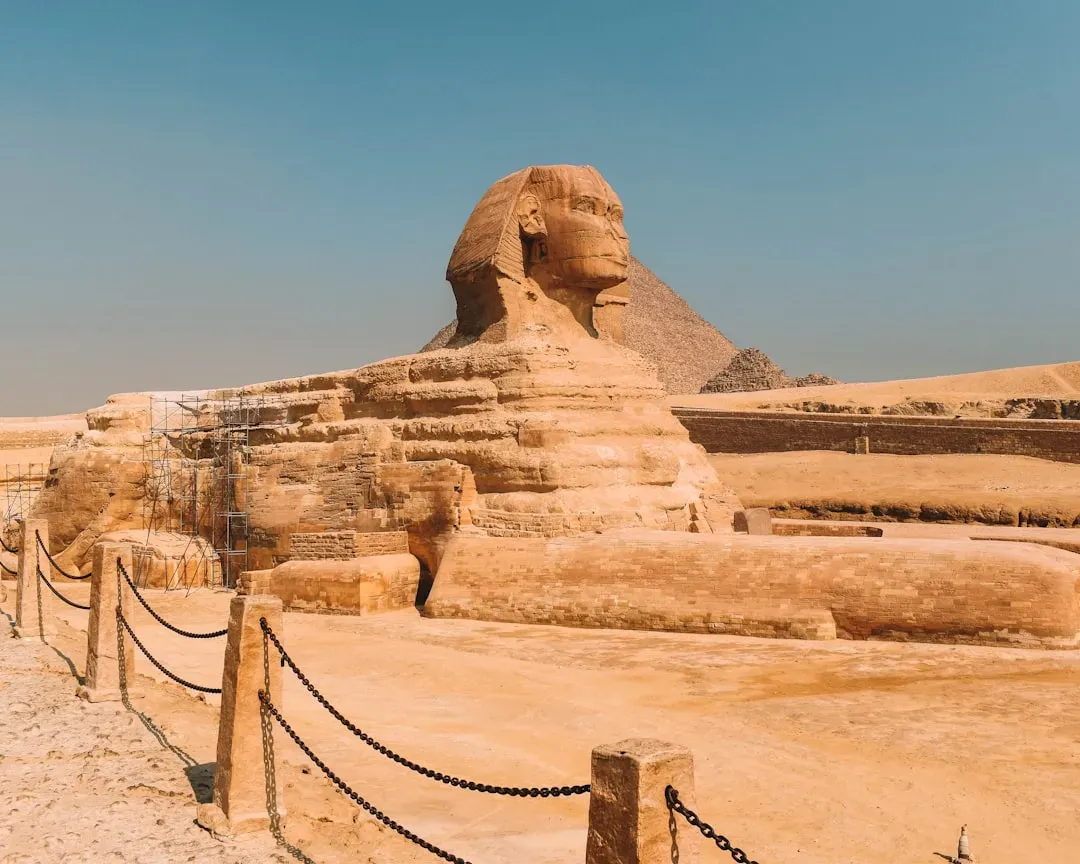
Before you assume that everything is hidden because of secrets, you also have to wrestle with a more mundane reality: the Sphinx is in precarious condition, and modern conservation ethics are cautious to the point of frustration. The monument is carved from layered, weathered limestone that has been attacked by sand, salt, pollution, and previous restoration attempts. Drilling, tunneling, or opening a sealed cavity under its paws is not as simple as just “going down to look.” You would be asking engineers to disturb a structure that has already survived thousands of years of erosion, and a single miscalculation could cause cracking, subsidence, or even permanent damage to the paws and chest.
If you adopt the perspective of a responsible conservator, you quickly see why “leave it sealed” can be the default answer. Many modern archaeologists now follow a principle similar to medical ethics: first, do no harm. That means non‑invasive methods are preferred, and destructive exploration is reserved for cases where the potential knowledge gain clearly outweighs the risks. When you weigh a hypothetical chamber of unknown contents against the stability of one of the world’s most famous monuments, the authorities will almost always choose stability. The frustrating part for you is that you are never really shown those risk calculations in a transparent way; you are just told that access is restricted and expected to accept that as a sufficient answer.
The Underground Giza Hypothesis: How Far Could The Network Extend?
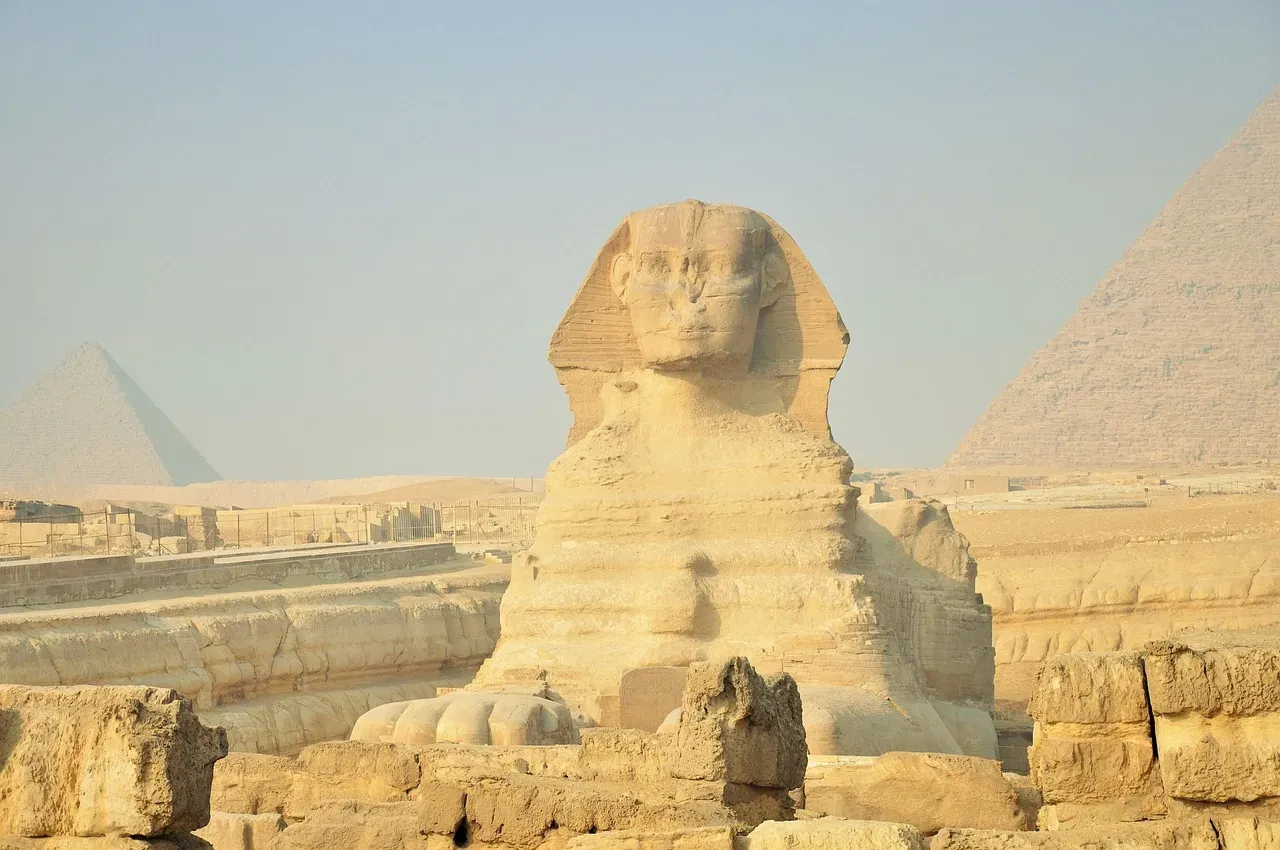
Once you realize the Sphinx is not an isolated statue but part of a larger ritual and architectural landscape, your imagination naturally drifts toward the idea of an interconnected underground Giza. Some researchers have pointed to shafts like the so‑called Osiris complex near the Great Pyramid, multi‑level tombs, and causeways that may have associated underground passages. If you picture the plateau as a vast construction project carried out over centuries, it is not unreasonable to suspect that tunnels, service corridors, and burial spaces could link major monuments, or at least cluster in specific zones. In that view, a sealed cavity under the Sphinx’s paws might be part of a much wider system rather than a standalone mystery box.
At the same time, you need to resist the temptation to turn every pit or anomaly into proof of a vast subterranean city. Many cut shafts are simple tombs, exploratory quarries, or failed projects that were abandoned. Geophysical anomalies might be natural voids, old erosion channels, or pockets of softer rock. Yet the pattern still nudges you toward an uncomfortable conclusion: you are dealing with a plateau that absolutely does contain multiple underground structures, some of which remain partially documented and poorly understood. When officials shut down fresh excavations under the Sphinx, they are not doing so in a void; they are acting in a context where even a small new discovery could reshape how you think about the entire underground landscape.
How Conspiracy Culture Both Helps And Hurts Your Search For The Truth
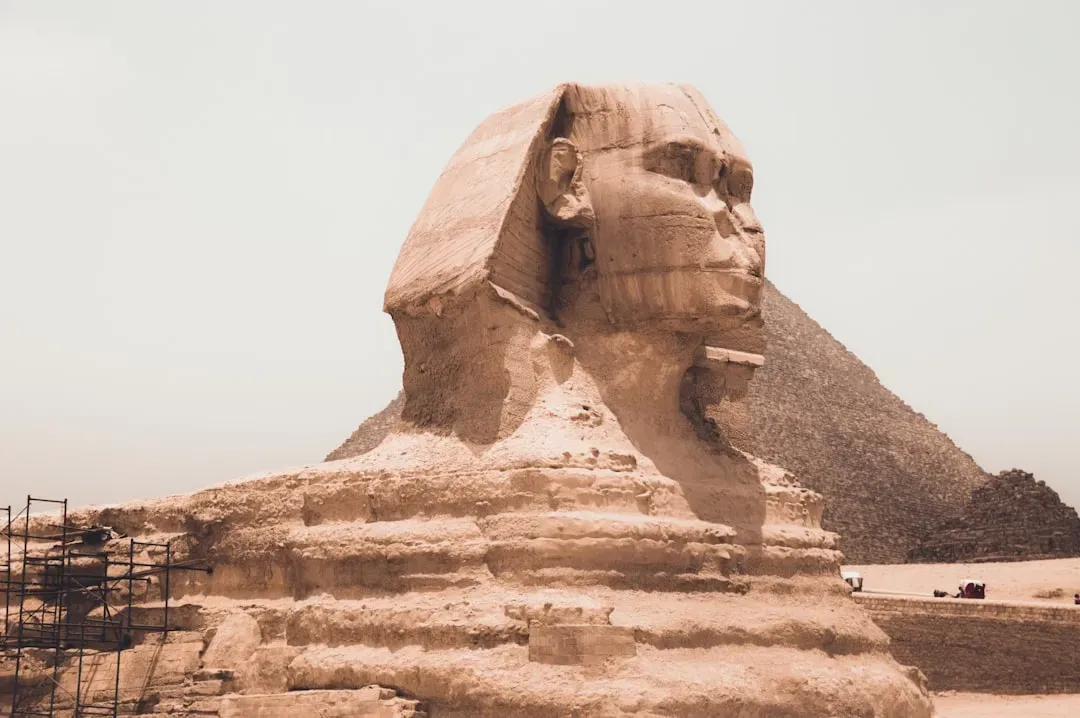
If you are drawn to the idea of forbidden passages beneath the Sphinx, you probably already know how quickly your search can slide into wild territory. Online communities are full of claims that chambers have been fully explored and looted in secret, that artifacts have been hidden away, or that global powers are suppressing evidence of a much older civilization. Most of these stories are long on drama and short on verifiable detail. When you look closely, you often find that they rest on misread press releases, recycled hearsay, or creative reinterpretations of a single photograph or sentence in a decades‑old book.
But dismissing all of that as nonsense would be too easy, and honestly, it would not serve you very well. Those same fringe discussions sometimes spotlight real technical papers, obscure field reports, or old restoration records that mainstream coverage quietly skipped. They remind you that the official story has gaps and that politics and institutional pride can distort what you are told. The challenge for you is learning to separate signal from noise: to hold on to the solid evidence of unexcavated anomalies, sealed shafts, and restricted access, while refusing to leap into elaborate narratives that are not supported by hard data. In that sense, your skepticism needs to run in both directions – toward over‑the‑top theories and toward overly tidy official reassurances.
What You Can Honestly Say You “Know” About The Sealed Passages
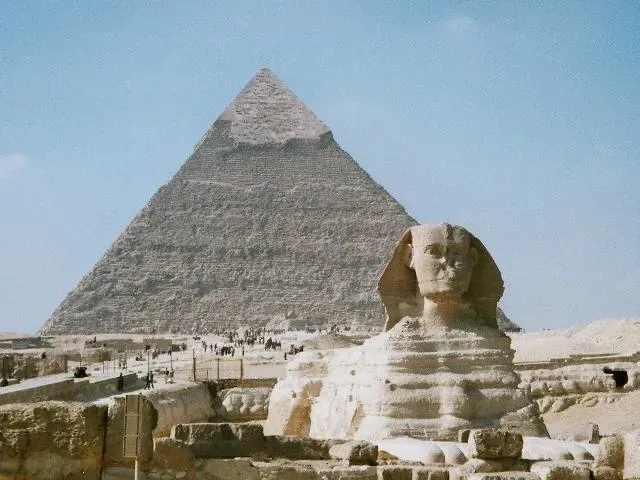
After you sift through reports, maps, rumors, and careful academic language, you are left with a short list of things you can say without stretching the evidence. You know that the Sphinx and its enclosure contain multiple man‑made openings: shafts, tunnels, and cut features, some of which have been sealed by masonry or restoration work. You know that geophysical surveys have repeatedly indicated subsurface anomalies beneath and in front of the monument, especially near the paws, that are consistent with cavities or zones of significantly altered rock. You also know that no fully documented, peer‑reviewed excavation of those specific targets has been published in a way that walks you from surface to chamber with photographs, plans, and artifact inventories.
You also know that high‑level officials have, at various times, asserted that everything important under the Sphinx has been investigated, even as technical details show that some cavities remain unentered or only partially examined. You see that permission to drill or excavate in sensitive areas is tightly controlled, and that scholars who depend on those permits have strong incentives to downplay controversial questions. So you arrive at a sober but still unsettling conclusion: you are justified in saying there are sealed or unexplored passages and cavities associated with the Sphinx, but you are not justified in claiming to know what is inside them. In that narrow, honest space between certainty and speculation, the mystery lives on.
Conclusion: Standing At The Fence, Staring Down Into The Unknown
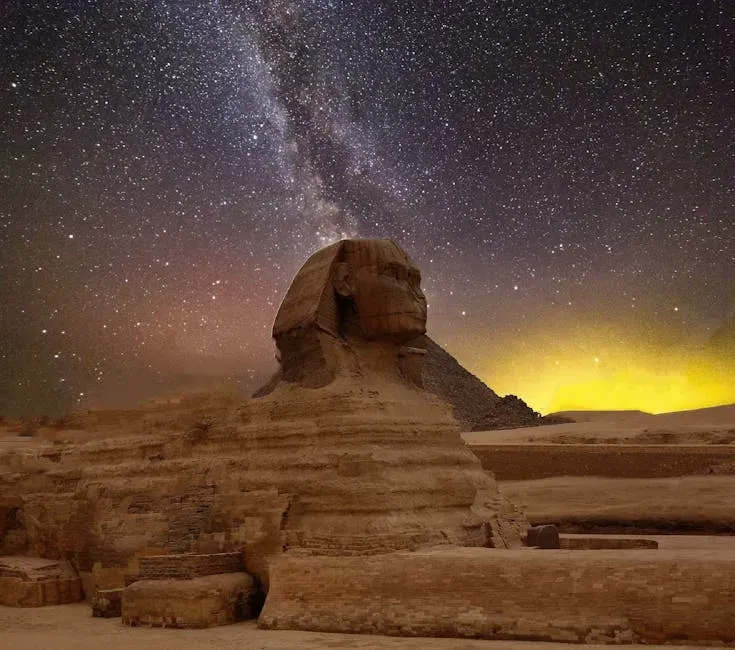
Next time you find yourself in front of the Sphinx, try this: instead of only looking at the face, let your eyes drop to the paws and the ground around them. Imagine the seismic lines, the radar grids, and the quiet technical notes that talk about cavities and anomalies beneath your feet. Picture the old shafts that were opened and later sealed, the arguments over where to dig, and the memos weighing structural risk against scientific curiosity. You are not just looking at a single stone lion with a human head; you are looking at the tip of an architectural iceberg whose true shape remains only partially traced.
In the end, the sealed passages beneath the Sphinx confront you with a kind of disciplined humility. You have enough hard evidence to know that something is there, yet not enough to describe it without slipping into fiction. You are forced to accept that access, politics, conservation, and even professional reputation all shape what the world is allowed to learn. Maybe that is why the mystery feels so alive: it is not just about what lies in the dark under the paws, but about how your own civilization decides which doors to open and which to leave closed. If you were the one holding the keys, would you risk the Sphinx itself to find out what waits below?