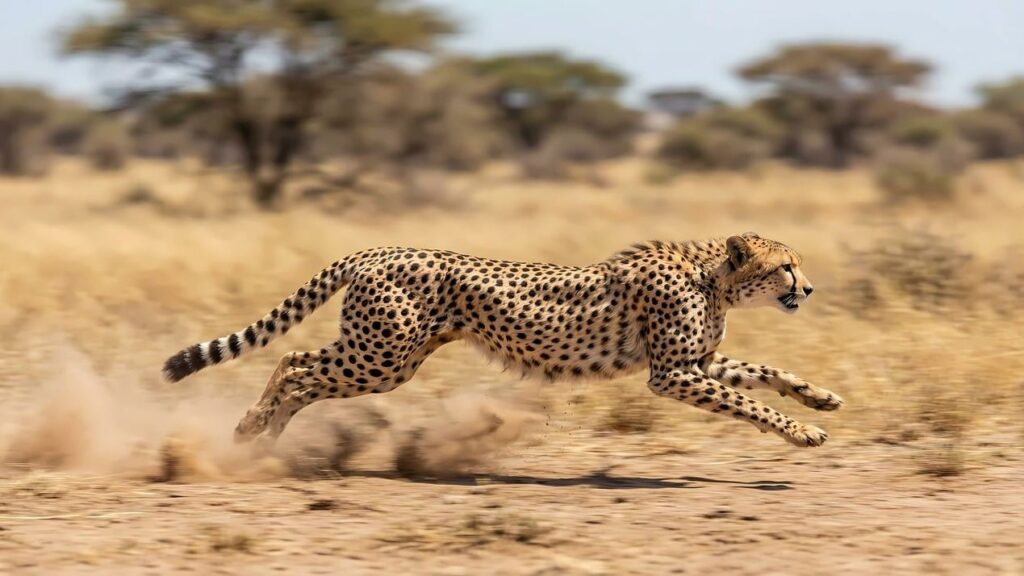

If you could design an animal from scratch with one goal in mind – outrun everything else on land – you’d end up with something that looks a lot like a cheetah. You probably know they’re fast, but when you look closely at how their body works, the details are almost unbelievable. Every bone, muscle, joint, and whisker seems tuned for one explosive purpose: a blisteringly quick sprint that decides life or death in just a few seconds.
As you go through these ten features, you’ll start to see the cheetah less as a “big cat” and more as a living race car, stripped of anything unnecessary and optimized to squeeze out every bit of speed. Other cats are powerful, stealthy, and strong, but they’re not built like this. By the end, you may find yourself rooting for this slim, spotted sprinter every time you see a wildlife clip, because now you’ll know exactly what it’s doing to win the race.
1. A supercharged spine that works like a spring
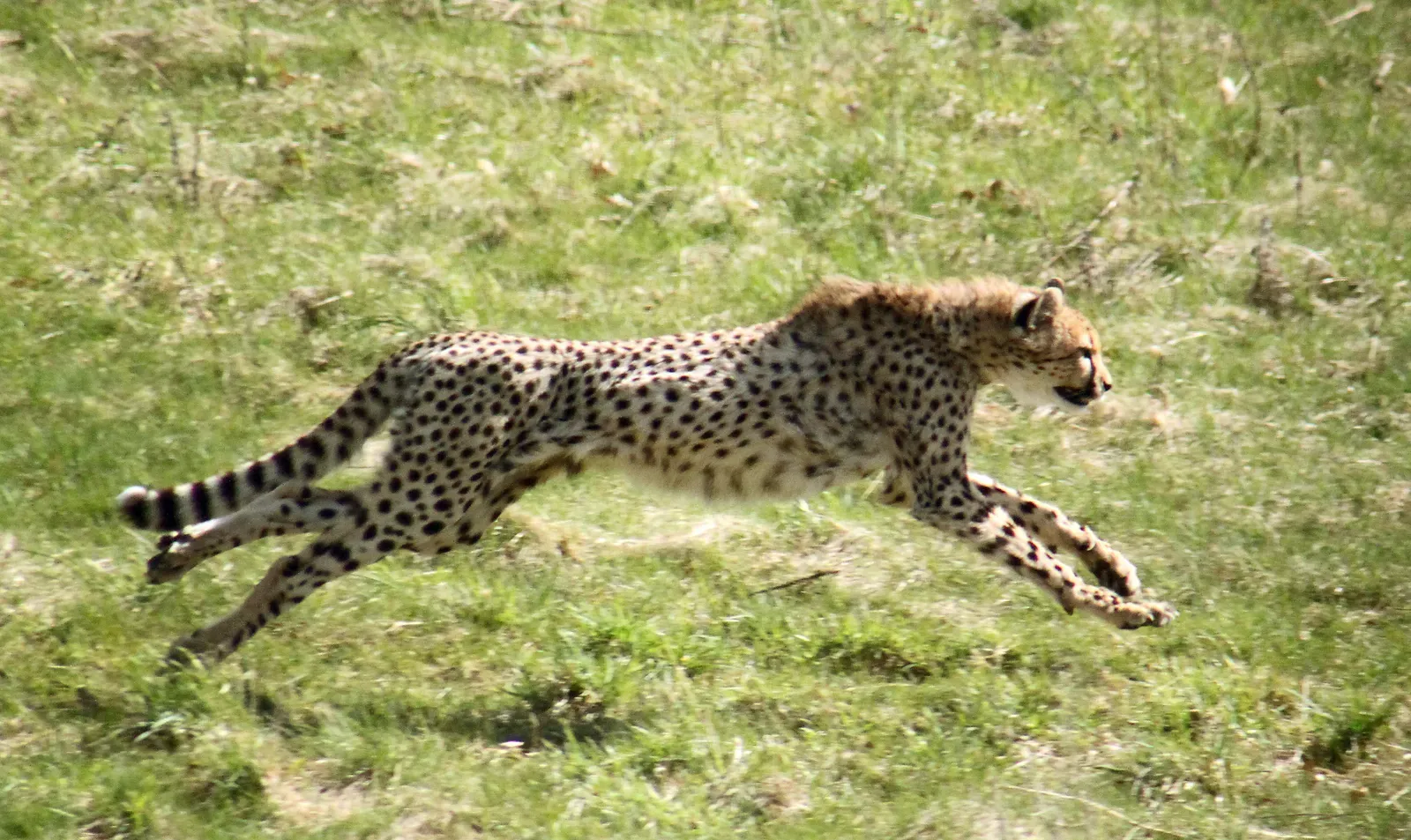
When you watch a cheetah run in slow motion, you can see its entire body stretching and shrinking like a rubber band, and that effect comes from the spine. You’re looking at a long, unusually flexible backbone where the vertebrae act almost like the moving parts of a powerful spring. As the cheetah runs, the spine bends deeply, then snaps back, helping the hind legs reach way forward and then push way back, dramatically increasing how much ground each stride covers.
Other big cats have strong spines, but they’re built more for wrestling prey and climbing than for extreme flex. In a cheetah, the spine is elongated and lightly built, letting you trade some raw strength for incredible range of motion. That trade-off is exactly what you need if your survival depends not on overpowering your prey in a long fight, but on catching it in just a handful of leaps. You can think of the cheetah’s back as the suspension system of a race car, absorbing and releasing energy to keep speed as high as possible.
2. Extra-long legs that turn each step into a giant leap
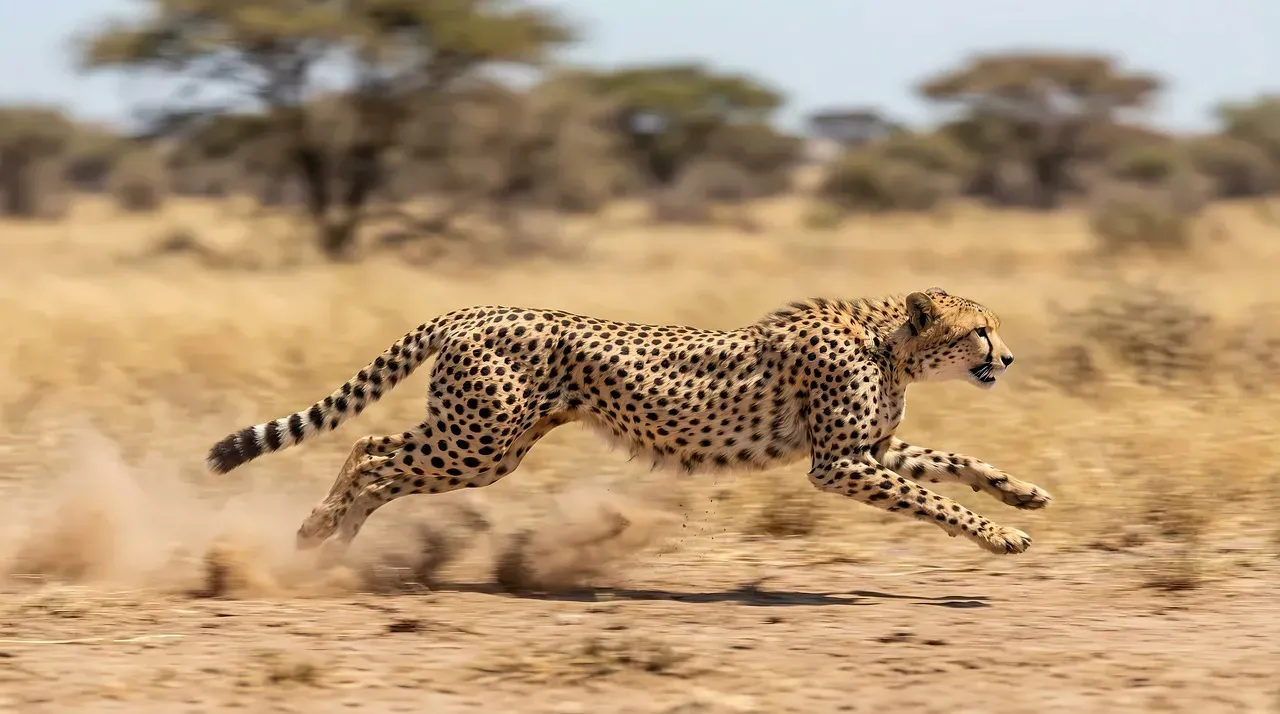
If you compare a cheetah’s legs to its body size, you’ll notice they look almost too long, like a teenager who just had a growth spurt. Those long, slim limbs are one of the big reasons this cat can cover so much ground so quickly. With each stride in a flat-out sprint, a cheetah can travel several human body lengths, and it does this not only because of how fast it moves its legs, but because those legs are physically long enough to stretch over huge distances.
Most other big cats, like lions or tigers, have thicker, more muscular legs built for jumping, grappling, and power, but that bulk adds weight and slows down the stride rate. A cheetah’s legs, in contrast, are lightweight and more like the limbs of a high-level sprinter or marathon runner. You sacrifice some ability to wrestle a large animal to the ground, but you gain the ability to hit breathtaking top speeds in very short bursts, which is exactly the niche the cheetah fills.
3. Non-retractable claws that grip like track spikes
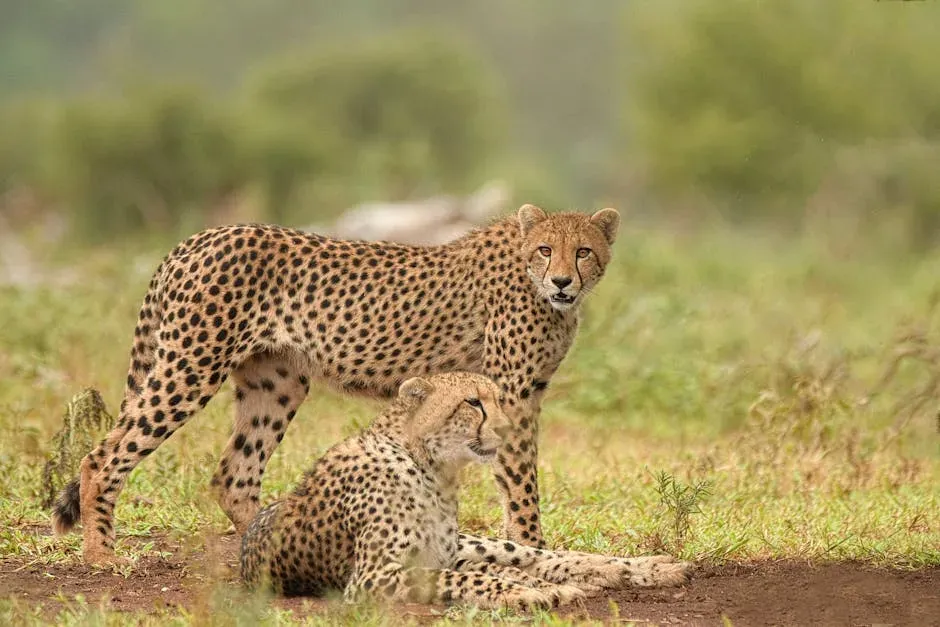
You might be used to thinking of cats as having retractable claws that stay safely hidden until they need them. Cheetahs break that rule. Their claws are semi-retractable to almost non-retractable, meaning they stick out more like the cleats on a sprinter’s shoe. When you see a cheetah accelerate, those claws bite into the ground and give it the traction it needs to launch forward without losing grip.
Other big cats keep their claws sharp for climbing trees or tackling prey, but that design is not ideal for maximum traction during a flat-out sprint. By allowing the claws to stay exposed and slightly blunted, cheetahs turn them into natural running spikes instead of daggers. It’s a subtle shift, but it gives you a big advantage when every fraction of a second matters and a small slip could mean your prey gets away.
4. Oversized nasal passages and lungs that flood the body with oxygen
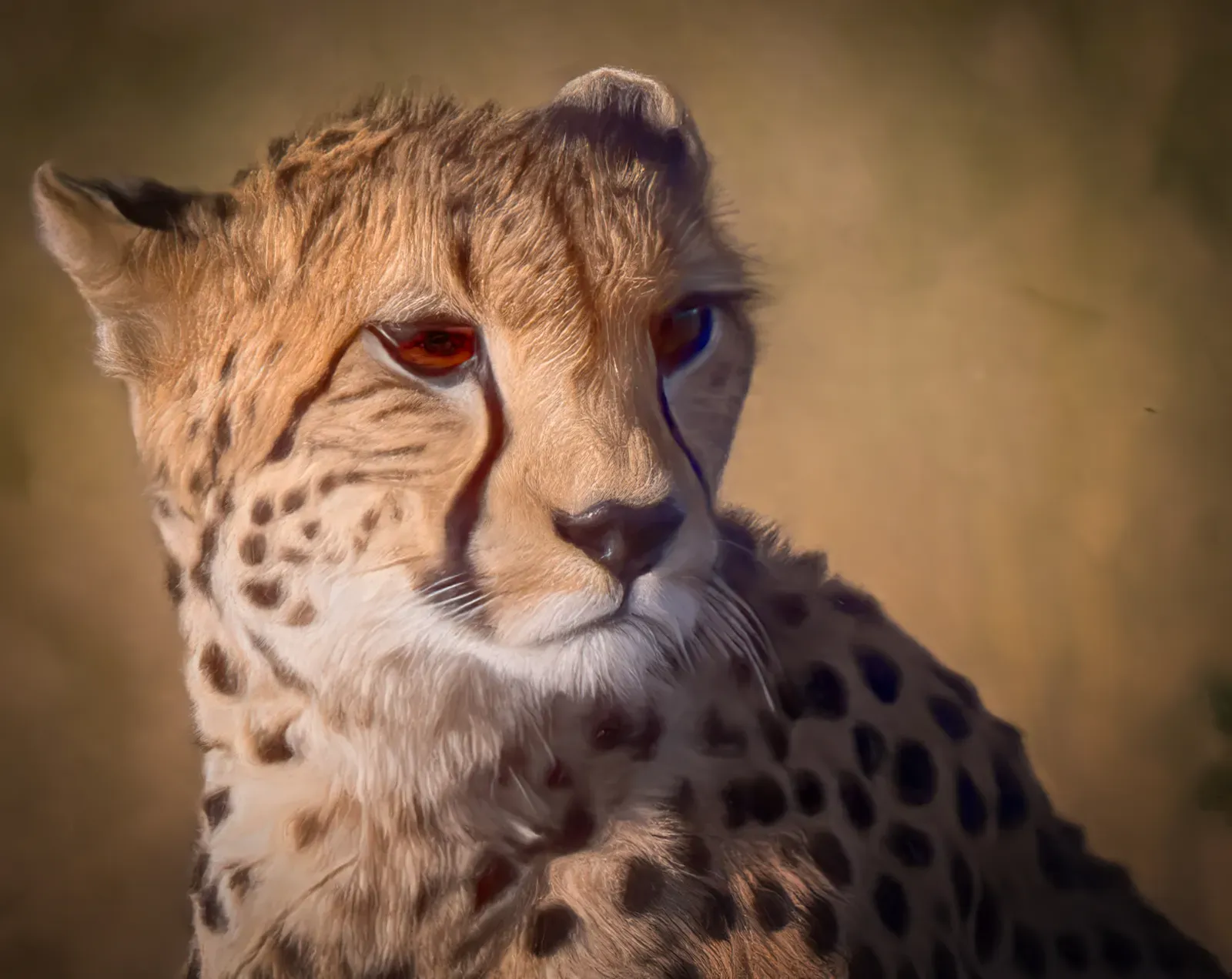
If you look at a cheetah’s face from the front, you’ll notice the surprisingly large nostrils. That’s not a coincidence. Those wide openings feed into a skull and chest that are rearranged to make extra room for large nasal passages, big lungs, and a powerful heart. During a chase, a cheetah’s breathing rate skyrockets, and it needs to pull in huge volumes of air to keep its muscles supplied with oxygen.
Other big cats can run and fight hard too, but their entire bodies aren’t tuned to support such intense, short-burst cardio. In the cheetah, the head is somewhat small and aerodynamic, and behind that sleek profile you get more space for the equipment that keeps oxygen flowing. You can imagine your own experience sprinting versus jogging; you know the burning in your chest when you push to your limit. The cheetah’s body is built to manage that feeling for just long enough to catch a gazelle before it has to stop.
5. A lightweight, aerodynamic frame made for sprinting, not wrestling
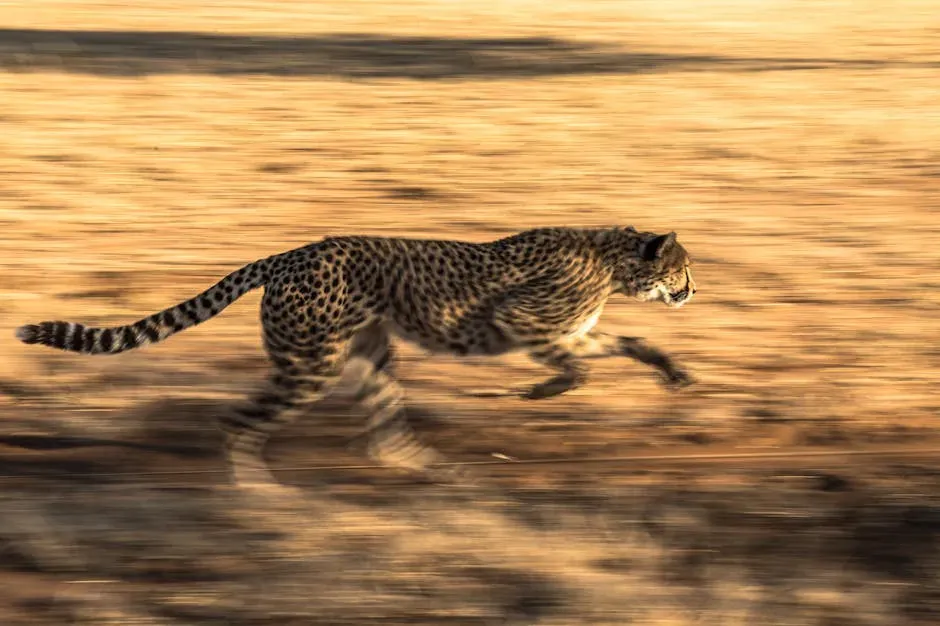
When you picture a lion or tiger, you probably think of a bulky, muscular animal, like a heavyweight fighter. A cheetah, by contrast, looks more like a lean track athlete. Its bones are lighter, its muscles are slimmer, and even its head is shaped to reduce drag and weight. You essentially get a body that gives up sheer strength in favor of being as light and streamlined as possible.
This matters because every extra kilogram you carry makes it harder to accelerate and maintain top speed. By keeping its body narrow, the chest deep but not overly broad, and the shoulders slim, the cheetah reduces the effort needed to launch forward. You see fewer big, bulging muscles and more long, efficient ones that can fire rapidly without weighing you down. Compared to other big cats, you’re not built to win a sumo match; you’re built to win a 100-meter dash.
6. A long, muscular tail that works like a high-speed steering rudder
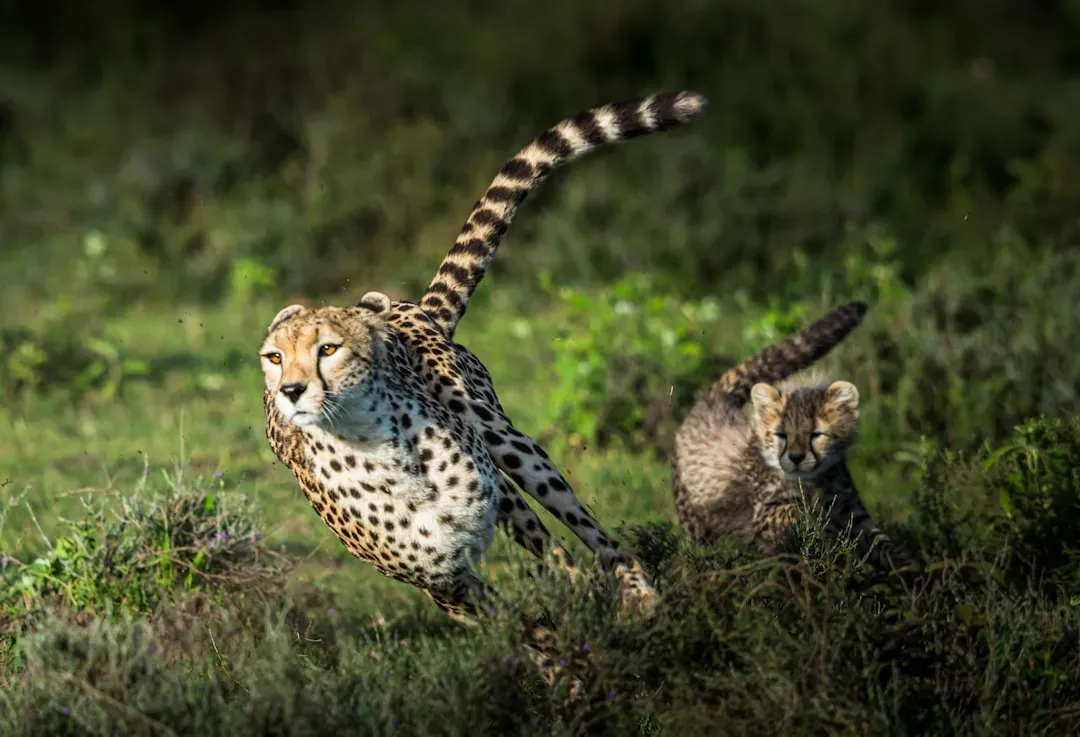
One of the coolest details you notice when you watch a cheetah hunt is how the tail behaves. It doesn’t just trail behind; it whips side to side, twists, and adjusts mid-air like a balancing pole. That long, thick tail acts as a counterweight and steering tool, helping you keep control when you’re changing direction at high speed or when your prey suddenly zigzags.
Other cats use their tails for balance too, especially when climbing, but they’re not racing across open plains at extreme speeds. When you run as fast as a cheetah does, any sharp turn could send you skidding or tumbling, and the tail helps prevent that. By swinging it to one side, you can shift your body’s center of mass and stabilize your path, a bit like how a tightrope walker uses a long pole to stay upright. On a flat grassland with nowhere to hide, that ability to “steer” while sprinting can decide whether you eat or go hungry.
7. Specialized muscles and flexible joints for rapid acceleration
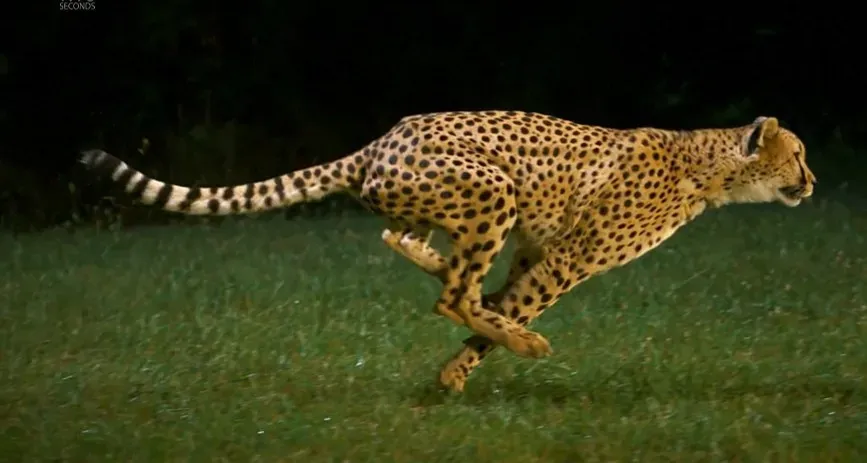
Speed is not just about how fast you are at your peak; it’s also about how quickly you can get there. A cheetah’s muscles and joints are tuned for explosive acceleration, letting you go from a standstill to a full-speed chase in just a couple of seconds. The hip and shoulder joints have a wide range of motion, allowing the legs to swing far forward and back, while the muscles around them contract rapidly to drive each stride.
Other big cats do have powerful muscles, but theirs are often optimized for strength and stamina in fights or long stalks rather than sudden, blistering takeoffs. In a cheetah, you see more of the fast-twitch muscle fibers that deliver quick bursts of energy rather than sustained power. It’s the difference between a powerlifter and a sprinter: both are strong, but in very different ways. For the cheetah, the priority is clear – you need to reach your target before it even understands what just happened.
8. Large eyes and dark facial markings that sharpen focus at high speed
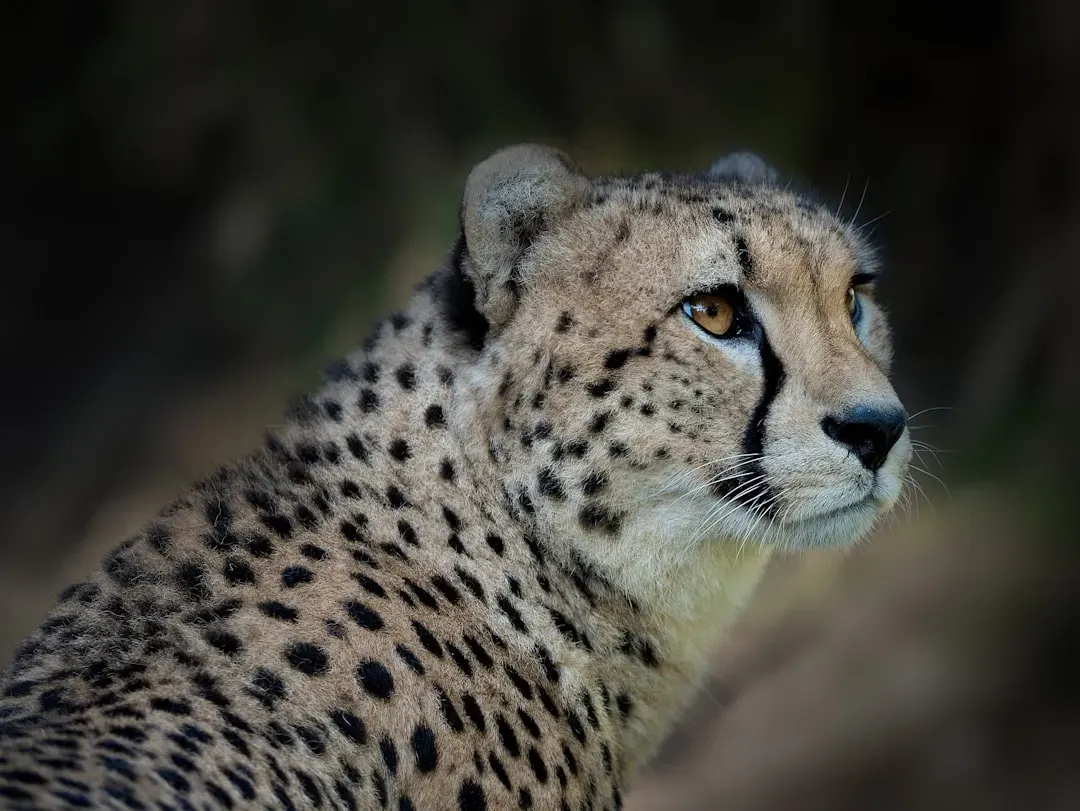
At first glance, the dark tear-like lines running from a cheetah’s eyes down to its mouth just look like part of its pattern, but they serve a practical purpose. These markings help reduce glare from the sun, much like the eye black athletes sometimes wear, letting you focus better on fast-moving prey across bright, open landscapes. Paired with large, forward-facing eyes, this gives the cheetah sharp vision that helps track subtle movements even while everything is rushing past.
Compared to many other big cats that often hunt in thicker cover or lower light, a cheetah spends a lot of time scanning sunny, open savannas. When you’re sprinting flat out, you can’t afford any hesitation or fuzzy sight. Your eyes need to lock onto a specific animal in a herd and keep it in focus as both of you weave and dodge. Those facial stripes, combined with strong eyesight, help you stay locked in, like a runner staring down a finish line through harsh stadium lights.
9. A high-speed nervous system and reflexes that keep you upright
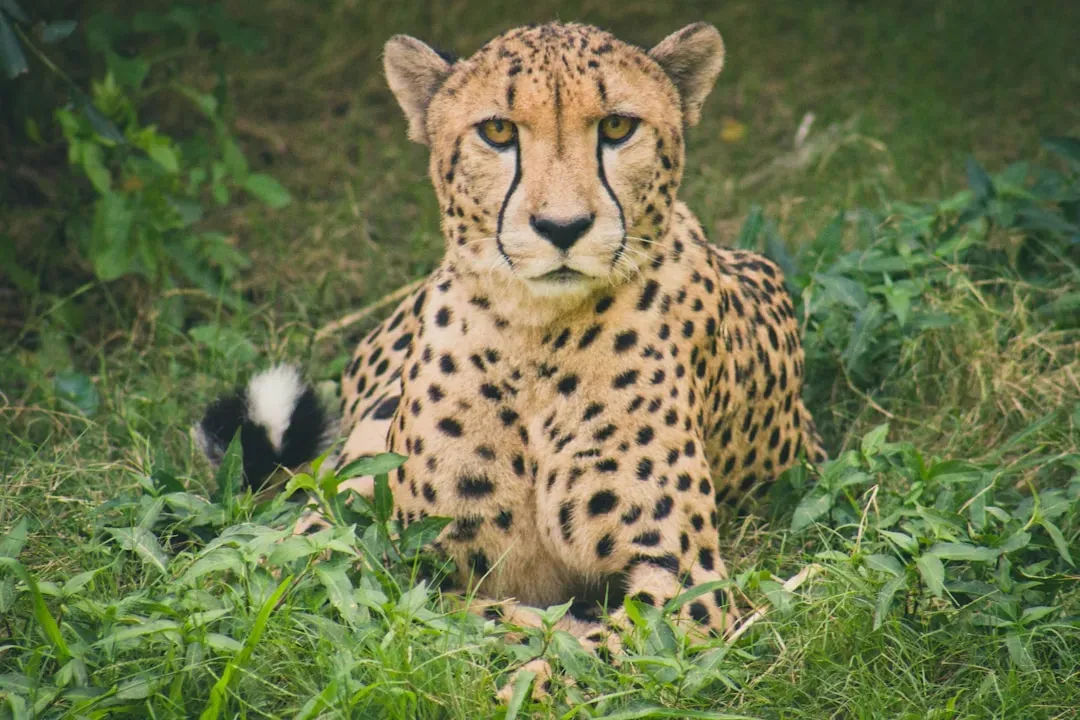
Running as fast as a cheetah does is not just a physical challenge; it’s a mental and neurological one. Your brain and nerves have to process a flood of information in real time: the angle of your legs, the position of your prey, the texture of the ground, the sudden appearance of obstacles. Cheetahs have extremely quick reflexes and coordination, allowing them to constantly adjust their stride length, paw placement, and body angle to avoid falls and sudden injuries during a chase.
Other big cats also have sharp reflexes, but they often rely more on ambush, short jumps, or powerful pounces from cover. The cheetah’s lifestyle, by contrast, demands that you keep fine control over your body at speeds where a single misstep could mean a twisted limb or a dangerous collision. You can think of it like driving at highway speeds versus parking; tiny adjustments that barely matter at low speeds become life-or-death decisions when you’re pushing your limits. The cheetah’s nervous system is effectively wired to run on that edge without crashing.
10. A strategy built around speed, even if it means giving up strength
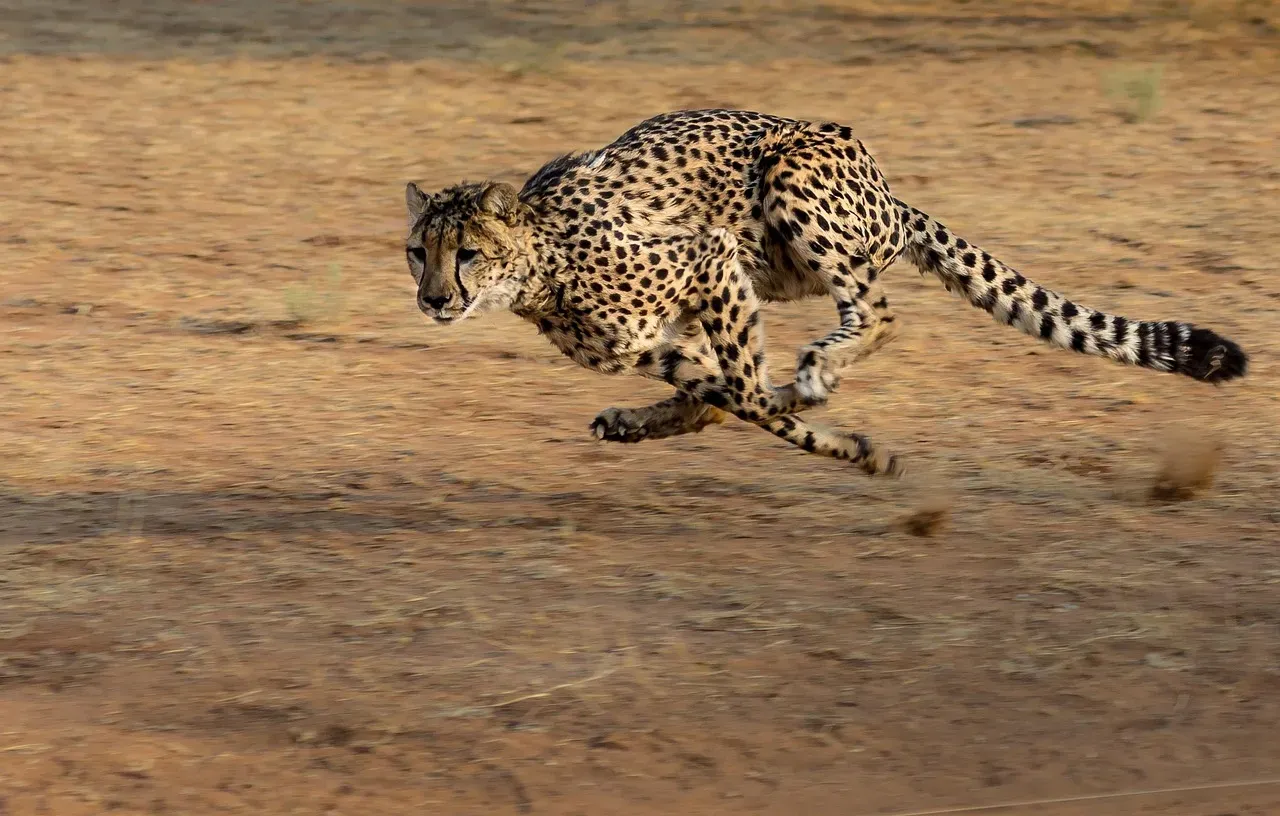
Maybe the most striking thing about the cheetah is not one body part, but the overall strategy you see when you put everything together. Cheetahs have sacrificed a lot of what other big cats rely on: they’re not as muscular, not as powerful in close combat, and not as good at defending themselves against larger predators. Instead, they’ve doubled down on one incredible superpower: the ability to run down prey in open ground faster than anything else on land.
This specialization shows up in behavior too. You tend to hunt during cooler parts of the day to avoid overheating, and your chases are short because your body is pushed to its limits after just a brief burst. Other cats might win if the contest were about brute force or long, grinding endurance. But if the challenge is a flat-out race across open plains, the cheetah’s entire design gives you an edge no other cat can match. It’s a risky way to live, but when it works, it’s one of the most spectacular sights in nature.
Conclusion: A living example of what pure speed looks like
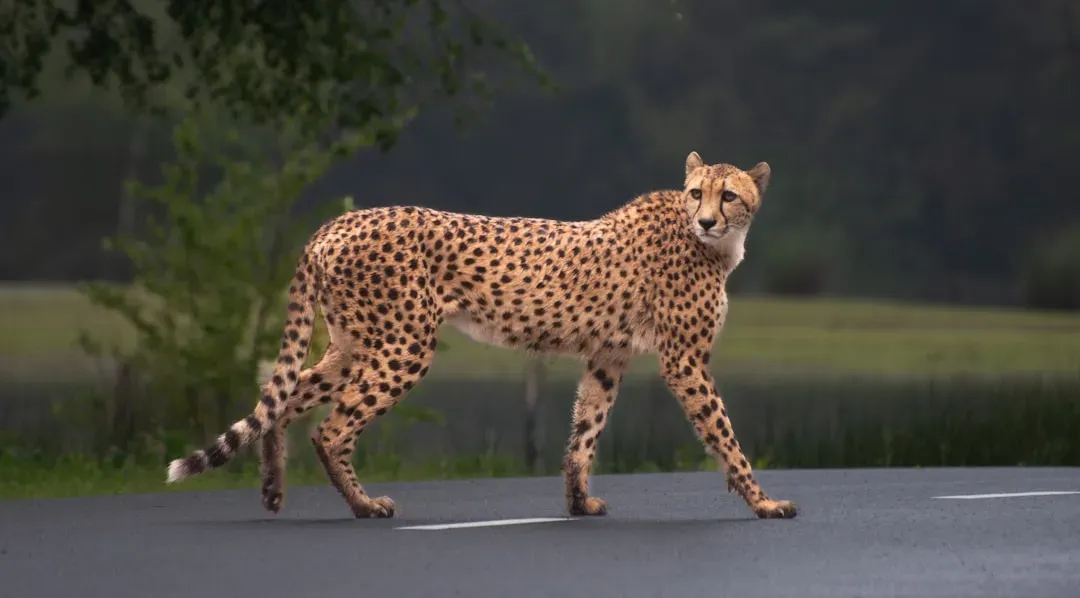
When you step back and look at the cheetah as a whole, you see an animal that has pushed the idea of speed right to the edge of what a mammal’s body can handle. From the spring-loaded spine and long legs to the track-spike claws and steering tail, every part of its anatomy points in the same direction. You’re not looking at a generalist here; you’re looking at a specialist, almost like a custom-built machine that chose speed over everything else.
That choice comes with costs, which is part of why cheetahs can be vulnerable in a world changing around them. But in the moments when one explodes into a sprint across a sunlit plain, you get a glimpse of evolution’s wildest experiment in going fast. Next time you see that streak of spots on a nature documentary, you’ll know exactly what is happening under the skin – and maybe you’ll find yourself holding your breath until the chase is over. Knowing what you now know, would you have guessed that so much engineering could fit into one sleek, spotted body?