

Every so often, reality bends just enough to make you sit up and say, wait, what actually happened there? Most crimes are solved, most events get neat explanations, and most weird stories fall apart under basic fact-checking. But then there are the stubborn outliers: cases so baffling that decades of investigations, new technology, and endless online sleuthing still have not cracked them. They occupy this eerie middle ground between science, history, and folklore, and that is exactly why we cannot stop thinking about them.
I still remember going down my first late-night rabbit hole about one of these mysteries and realizing an uncomfortable truth: sometimes, even with modern tools and global attention, we may never get an answer that feels fully satisfying. That mix of hard evidence, missing pieces, and human imagination is intoxicating. Here are twelve – stories that have resisted closure, sparked serious scientific debate, and still dare us to decide what we think is really going on.
The Dyatlov Pass Incident: Nine Hikers, Infinite Questions
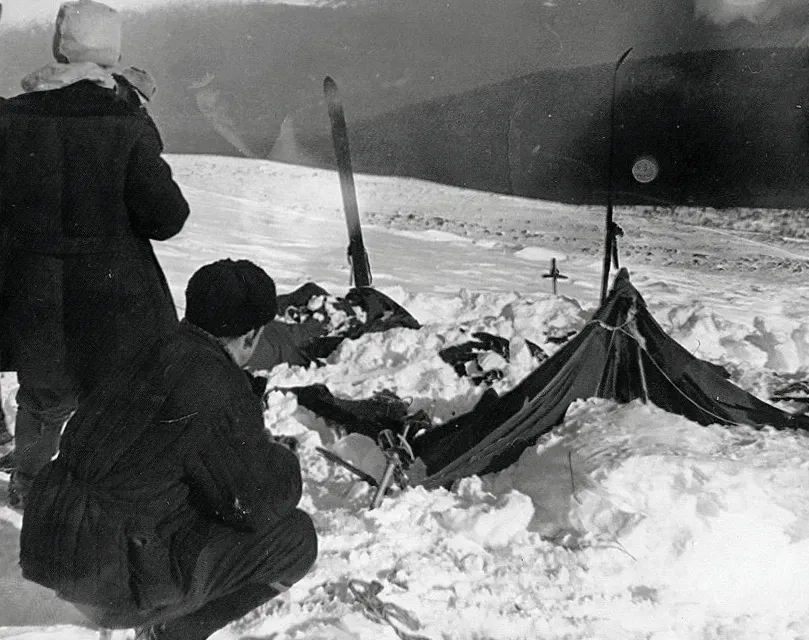
On a frozen mountainside in Russia’s Ural Mountains in 1959, nine experienced hikers from the Ural Polytechnical Institute set out on a winter trek and never came home. Their tent was later found slashed open from the inside, scattered with belongings as if they had fled in a panic into sub-zero temperatures wearing little more than underwear and thin clothing. Over the next weeks, search teams discovered their bodies at varying distances from the campsite, some barefoot in the snow, some with strange injuries, and others partially buried near a ravine.
For decades, this eerie tableau has fueled an entire ecosystem of theories: secret weapons tests, infrasound-induced panic, avalanche or slab collapse, violent argument, even exotic explanations like cryptids and extraterrestrials. More recent scientific work leans toward a form of small slab avalanche combined with hypothermia and disoriented behavior, which explains some – but not all – details, like the pattern of injuries and bizarre decision-making. Personally, I think the most grounded scenario is a messy combination of natural forces and human confusion, but the uncomfortable truth is that no single theory ties every loose end into a perfect bow, and that is exactly why Dyatlov still haunts people in 2026.
The Somerton Man: A Dead Stranger and a Cryptic Phrase

On an Australian beach near Adelaide in 1948, a well-dressed man was found dead, his pockets neatly arranged, no ID, and the labels cut from his clothing. An autopsy could not pinpoint a cause of death, but investigators believed poisoning was likely, even though no clear toxin was detected. The strangest twist surfaced later: a tiny scrap of paper hidden in a pocket, torn from a book of Persian poetry, bearing a single printed phrase meaning something like “ended” or “finished.”
That book was eventually found with a sequence of apparently random letters penciled inside, which many have interpreted as a possible code, and a telephone number linking to a nearby woman who claimed not to know the man. Decades on, new forensic attempts, facial reconstructions, and genealogical investigations have brought us closer to possible identifications, but nothing has reached the level of universally accepted fact. To me, this case feels less like a spy thriller and more like a tragic, very human story wrapped in a few oddly theatrical coincidences – but until we can state who he was and how he died with real confidence, the Somerton Man remains one of the world’s eeriest puzzles.
MH370: A Vanished Jet in the Age of Satellites

In 2014, a modern passenger jet, Malaysia Airlines Flight MH370, disappeared on its way from Kuala Lumpur to Beijing, carrying more than two hundred people. Despite radar data, satellite handshakes, and one of the largest multinational search efforts in aviation history, the main wreckage has never been found; only scattered debris has washed ashore on distant coastlines. The idea that a massive aircraft could simply vanish in an era of constant surveillance is profoundly unsettling.
Official investigations suggest the plane diverted from its planned course and eventually went down in the remote southern Indian Ocean, but whether this was due to a deliberate act, catastrophic failure, or some combination of events is still unresolved. There is enough data to narrow down broad scenarios, yet maddening gaps make it very easy for speculation and conspiracy narratives to rush in. My take is that MH370 shows how fragile our sense of technological certainty really is: we assume everything is trackable, until a real-world edge case proves otherwise and leaves hundreds of families – and the rest of us – stuck with more questions than answers.
The Disappearance of Amelia Earhart: A Legend Lost in the Pacific

In 1937, pioneering aviator Amelia Earhart set out to circumnavigate the globe but vanished with her navigator Fred Noonan over the Pacific Ocean near Howland Island. A massive search followed, using ships and aircraft combing wide stretches of open water, but no confirmed trace of the plane was ever recovered. For a figure whose life symbolized daring modernity and technical progress, disappearing into nothingness made her story feel almost mythic overnight.
Over the years, researchers have pursued multiple lines of evidence: radio messages, reports of possible wreckage, and archaeological findings on isolated islands that might match a castaway scenario. Some hypotheses, like her surviving in secret or being captured, have very little hard backing, while others, such as a crash-and-sink near the intended route or a landing on a remote atoll, are more grounded but still unproven. I lean toward the simplest explanation – a navigation error and subsequent ditching at sea – but I also get why this case grips people: Earhart was not just a pilot, she was a symbol, and losing a symbol without closure invites endless imaginative rewrites of her final chapter.
The Voynich Manuscript: A Book No One Can Read

The Voynich Manuscript looks like something straight out of a fantasy novel: mysterious text in an unknown script, strange plants that do not quite match any known species, intricate diagrams, and naked figures immersed in odd-looking pools or tubes. Radiocarbon dating points to the early fifteenth century, placing it firmly in the real historical record rather than modern forgery. Yet despite cryptographers, linguists, and computer scientists taking repeated stabs at it, the writing has stubbornly resisted definitive decipherment.
Some experts argue that the manuscript encodes a real language or constructed language, while others suggest it could be an elaborate hoax from centuries ago, carefully crafted to mimic meaningful text. Statistical patterns in the symbols resemble natural language in some respects, but no one has convincingly mapped it to any known tongue. Personally, I suspect it sits in a liminal space: probably not a total nonsense hoax, but perhaps a highly idiosyncratic system understood only by a tiny circle of people who never thought it needed to be universal. Until someone finally cracks its code, the Voynich Manuscript stands as a rare reminder that books can still keep secrets even in an age of machine translation and big data.
Jack the Ripper: The Killer Who Defined a Genre of Fear
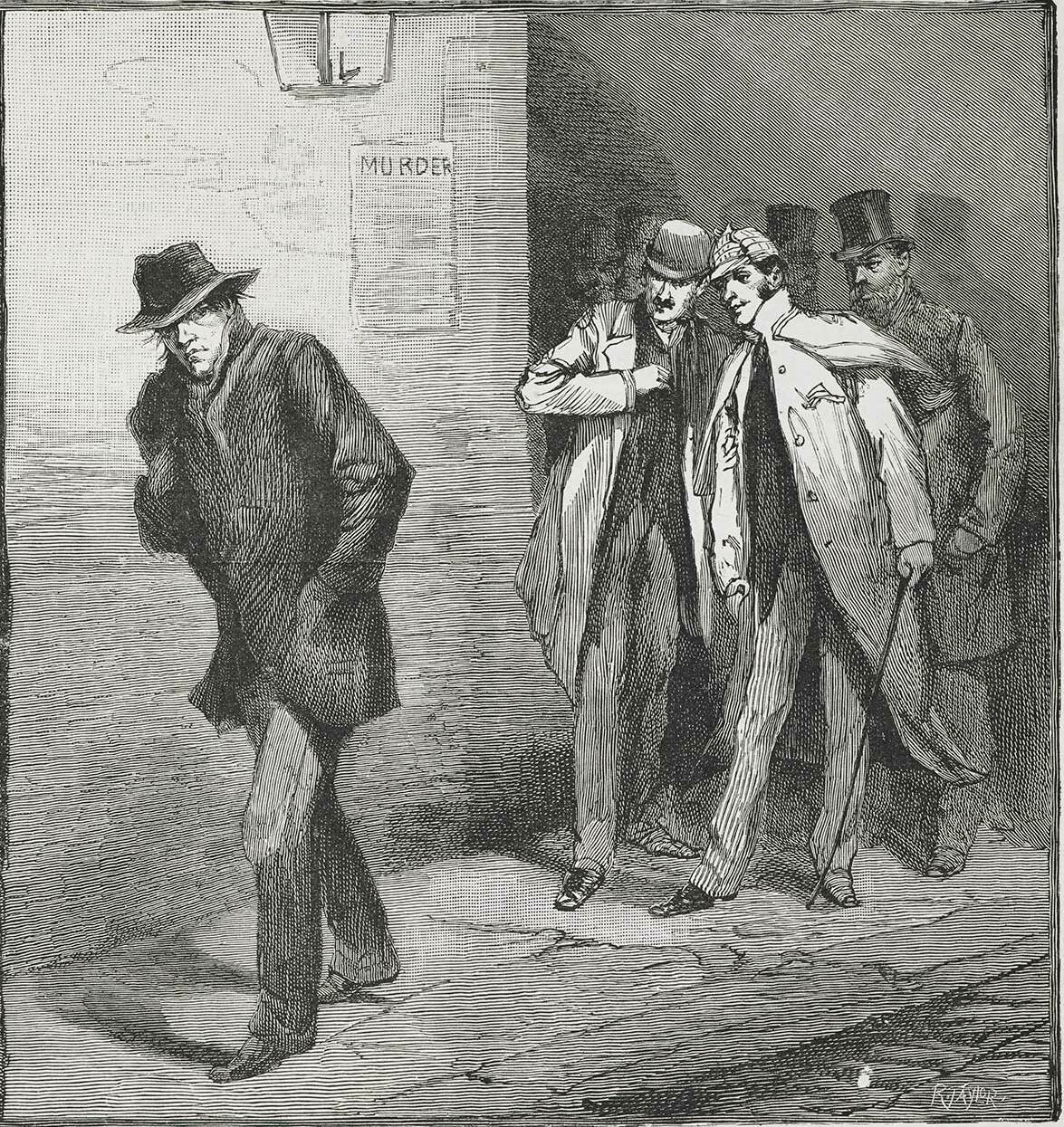
In the late nineteenth century, a series of brutal murders in London’s Whitechapel district introduced the world to a name still whispered today: Jack the Ripper. The killer targeted women, typically sex workers, and the sheer savagery of the attacks, along with taunting letters allegedly sent to the police and newspapers, triggered a media frenzy. Victorian-era detectives used the best tools they had – witness statements, physical clues, and crude forensics – but despite numerous suspects, no one was conclusively identified.
Since then, generations of writers, detectives, and amateur sleuths have tried to solve the case retroactively using modern profiling and, more recently, genetic testing of disputed artifacts. Each new “solution” tends to spark debate, counterarguments, and fresh doubt, because the original evidence is degraded, incomplete, and often contaminated by sensational reporting from the time. In my view, Jack the Ripper has morphed from a single historical criminal into a kind of cultural mirror, reflecting whatever fears, biases, and assumptions each era brings to the table. The real person behind the nickname may be forever lost, but the mystery’s staying power says a lot about our fascination with evil we cannot neatly pin down.
The Wow! Signal: A Cosmic Hello or Just Static?
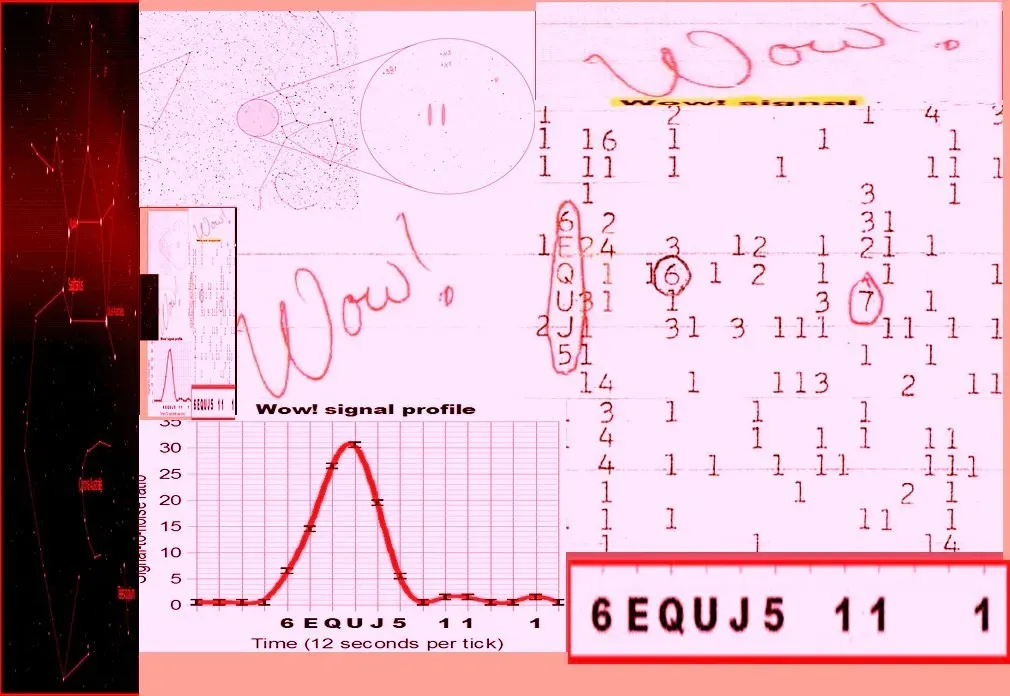
In 1977, a radio telescope in Ohio picked up a brief, unusually strong narrowband radio signal from space that fit what scientists at the time thought a deliberate transmission from another civilization might look like. The astronomer who spotted it circled the data on a printout and wrote an excited note in the margin, which ended up giving the event its famous nickname. The signal came from the direction of the constellation Sagittarius, lasted just over a minute, and has never been detected again despite repeated follow-up observations.
Today, most researchers admit we simply do not know what caused it. Some natural explanations have been proposed, from previously misunderstood astrophysical sources to human-made interference that slipped past filters, but none has completely closed the case. At the same time, treating it as evidence of extraterrestrials stretches far beyond the available data; one weird signal without repetition is not much to build a cosmic contact story on. Personally, I see the Wow! Signal as a kind of scientific ghost story: a single knock on the wall of the universe that may have been nothing more than pipes rattling, but still leaves you wondering who or what might be out there.
The Zodiac Killer: Ciphers, Phone Calls, and a Vanishing Act
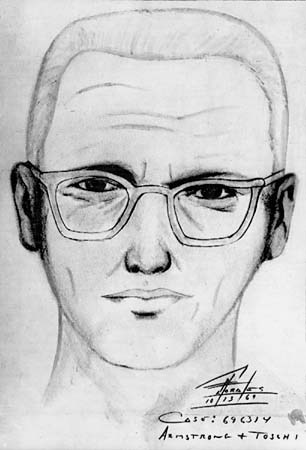
In the late 1960s and early 1970s, an unidentified serial killer who called himself the Zodiac terrorized parts of Northern California. He attacked couples in cars and lovers’ lanes, phoned the police, and mailed letters and complex ciphers to newspapers, demanding publication and threatening more violence. Some of his encrypted messages were solved, revealing taunting, chilling content, but others resisted decryption for decades, and at least one remains genuinely disputed.
Despite multiple suspects, extensive investigations, and modern attempts using DNA and genealogical analysis, there is still no universally agreed-upon identity for the Zodiac. Some older suspects have strong circumstantial cases against them, but they often crumble under closer technical scrutiny or legal standards of proof. New claimed breakthroughs periodically hit headlines, but they usually leave experts divided. My impression is that the Zodiac case has become a cautionary tale about confirmation bias: if you stare at a decades-old puzzle long enough, you can start bending every ambiguous clue to fit whichever suspect you already have in mind, while the real person – whoever they were – fades even further into the shadows.
The Mary Celeste: A Ship Without a Crew
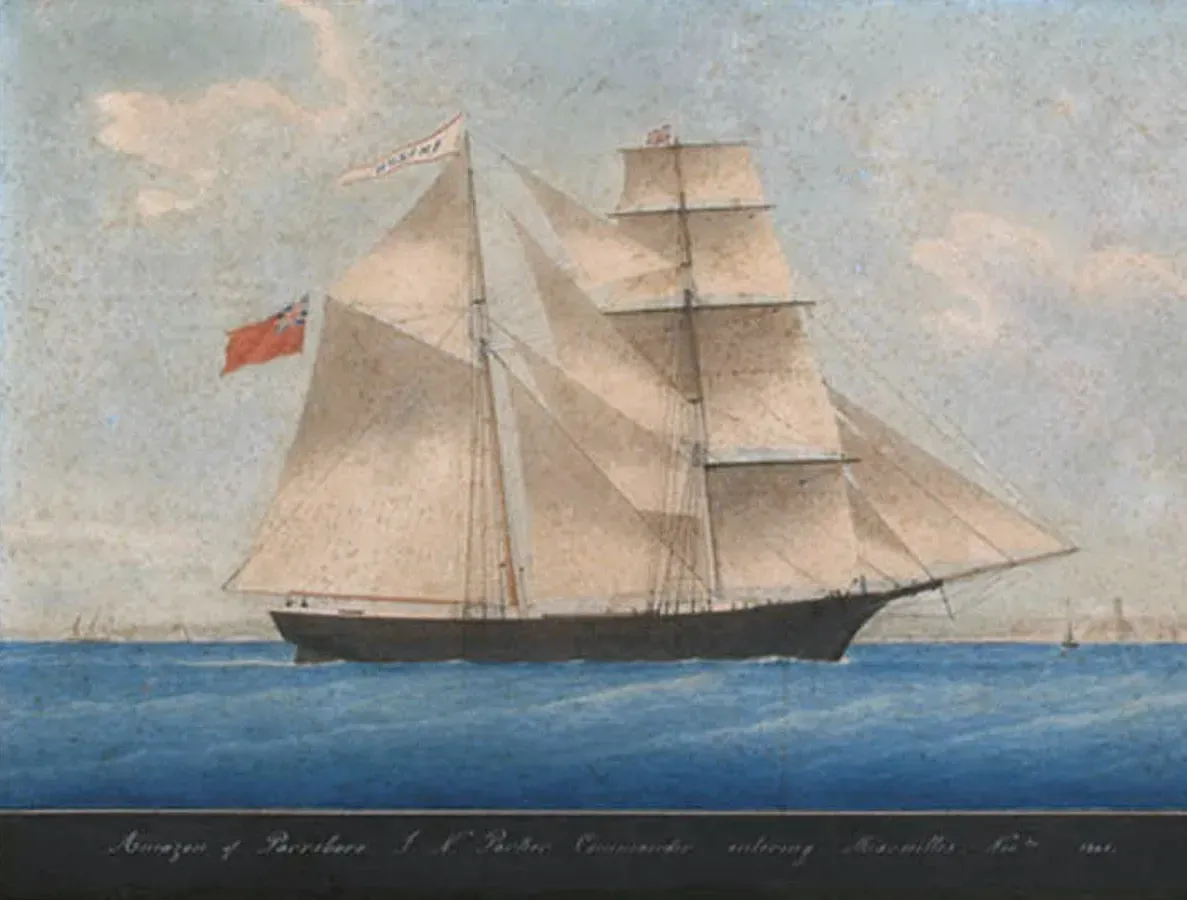
In 1872, the merchant ship Mary Celeste was discovered adrift in the Atlantic Ocean, intact and seaworthy but completely abandoned by its crew. Supplies and personal belongings were still on board, and there were no obvious signs of violent struggle or piracy. The last log entries suggested nothing catastrophically wrong in the hours before everyone disappeared, turning the vessel into a perfect locked-room mystery – except the room was an entire ship on an open ocean.
Hypotheses have ranged from sudden waterspouts and seaquakes to a mistaken fear of explosion after a cargo incident, leading the crew to evacuate in lifeboats and then become lost. Sensational versions involving sea monsters or supernatural forces make for great storytelling but do not match what we know about maritime risks at the time. I find the most convincing ideas to be the most mundane: a frightening but temporary situation, a rushed decision to abandon ship, and then a tragic encounter with rough seas. The reason the Mary Celeste lingers in the public imagination is not because we lack possible explanations, but because no single one can be proven, leaving that haunting image of an empty, drifting ship lodged in our minds.
The Lead Masks Case: Two Men, a Hill, and a Bizarre Scene

In the 1960s in Brazil, two technicians were found dead on a hillside wearing formal suits and strange metal masks that covered their eyes, with a cryptic note nearby about meeting at a specific time and “testing” without any mention of what substance or device was involved. There were no signs of violence or struggle, and toxicology was inconclusive due to decomposition, leaving the cause of death uncertain. The odd combination of attire, masks, and written instructions made the scene feel almost like a ritual.
Some investigators have floated theories involving experimental electronics, spiritualist practices, or the consumption of psychoactive substances as part of an unusual belief system. Others point to the possibility of an accidental overdose or poisoning during a homegrown scientific experiment gone horribly wrong. What makes this case so unsettling is the sharp clash between the everyday – two working technicians, a hillside outside a city – and the surreal details that surround their final hours. To me, it feels like a vivid reminder that people often live private inner worlds of belief and curiosity that outsiders only glimpse when something goes tragically off script.
DB Cooper: The Hijacker Who Jumped Into Legend
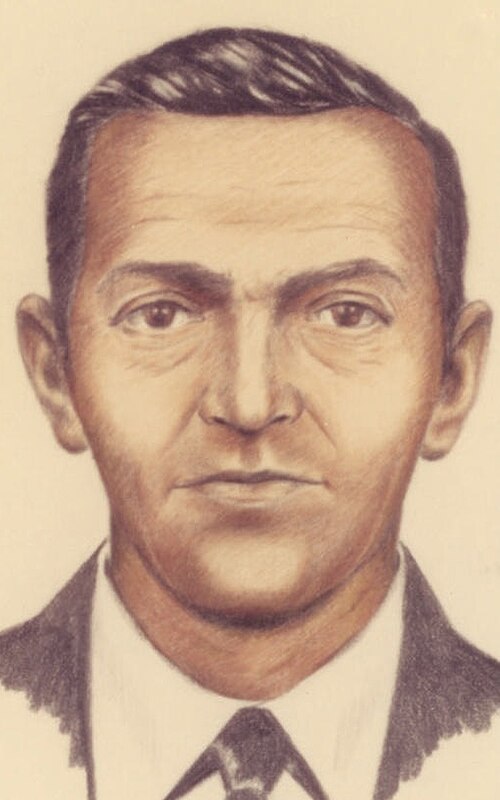
In 1971, a man using the name Dan Cooper hijacked a commercial airliner in the United States, claimed to have a bomb, and demanded cash and parachutes. After receiving a ransom while the plane was on the ground, he ordered the crew to take off again and then jumped out the rear of the aircraft into a stormy night over the Pacific Northwest. No confirmed trace of him has ever been found, although a portion of the ransom money did turn up years later along a riverbank, degraded and partially buried.
The DB Cooper case has become a magnet for amateur detectives, each convinced they have finally identified the mysterious hijacker. Some suspects have intriguing backgrounds in aviation or military training, while others are connected mainly by rumor or loose social ties. The reality is that the jump was extremely dangerous, and the odds he survived the landing are hotly debated. My own view edges toward him not making it out alive, but the lack of a definitive body or wreckage lets the folk-hero version live on. Cooper is a rare criminal figure who slipped through the cracks so completely that the absence of answers has become part of the myth.
The Taos Hum: A Sound Only Some People Hear

In the town of Taos in New Mexico, and in a few other scattered locations around the world, some residents report hearing a persistent low-frequency hum that others nearby cannot detect at all. It is often described as a distant diesel engine idling, just at the edge of perception and nearly impossible to block out. Surveys suggest that only a small fraction of people in affected areas can hear it, yet for those who do, it can be maddeningly intrusive and has been blamed for headaches, insomnia, and anxiety.
Scientific investigations have tried to tie the hum to industrial equipment, traffic, geological phenomena, or even internal ear and nervous system quirks, but no single source has been conclusively identified for all cases. Some researchers suspect a combination of environmental sounds and individual sensitivity, essentially a clash between the outer world and the way certain brains process low frequencies. What makes the Taos Hum especially fascinating to me is that it highlights a basic philosophical question: if only some people can perceive a phenomenon, is it any less real? This mystery blurs the line between objective acoustics and subjective experience in a way that feels strangely modern and deeply human.
Conclusion: Why We Keep Coming Back to the Unexplained

Looking across these twelve mysteries, a pattern emerges that has less to do with ghosts or conspiracies and more to do with missing data, flawed records, and the limits of human perception. In most cases, we can sketch out several plausible explanations using science, history, and psychology; what we lack are the final hard facts that would let us say this is what happened and close the file. That gap between what we know and what we can never quite prove is exactly where imagination takes root, spawning theories that range from beautifully careful to wildly irresponsible.
Personally, I think our obsession with unsolved mysteries says as much about us as it does about the events themselves. They remind us that even in 2026, with our satellites, databases, and forensic labs, the world is still bigger and stranger than our systems can fully capture. They also force us to confront uncertainty, to sit with the discomfort of not knowing instead of rushing to the most exciting or comforting story. Maybe that is the real challenge these cases pose: not to solve every last one, but to learn how to balance curiosity with humility. Faced with the unknown, are you more tempted to chase the wildest theory – or to accept that sometimes, the truest answer may be that we simply do not know yet?