

You know that sharp, hollow knocking in a forest that sounds like someone with a tiny jackhammer? That’s a woodpecker, casually hammering its face into solid wood up to twenty times a second and somehow walking away like it just had a light workout. The more you dig into how they do this, the more it feels like nature quietly built a precision power tool, then wrapped it in feathers and attitude. Their beaks are not just sharp sticks; they’re the front end of a shock‑absorbing, brain‑protecting, bug‑hunting machine.
I still remember the first time I stood under a pine and heard that metallic tap-tap-tap. I half expected to see a person with tools, not a bird the size of my hand drilling perfect holes into a living tree. If you’ve ever wondered how their beaks can take that kind of abuse without cracking – or why they don’t end up with a raging headache or worse – you’re in the right place. Let’s dig into ten incredible, very real facts that explain why woodpecker beaks are so insanely powerful.
1. Woodpecker Beaks Are Built Like Layered Composite Tools
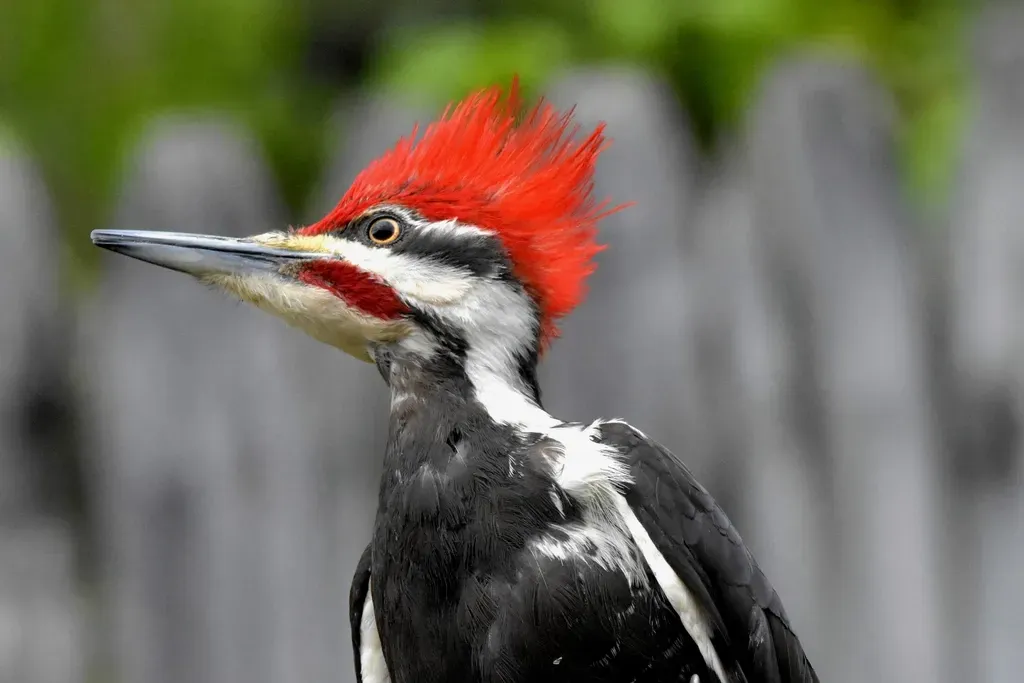
At first glance, a woodpecker’s beak just looks like a pointy spear, but under the surface it’s more like a carefully engineered composite drill bit. The outer layer is made of hard keratin – the same material as your fingernails, but packed more densely – forming a tough, wear‑resistant shell. Beneath that, the bone of the upper and lower beak has a mix of dense and slightly spongy structure, which helps spread and soften the force of impact instead of letting it travel straight back like a rigid rod.
Think of it like a strong hammer with a slightly padded handle: the metal head does the smashing, but the handle makes sure the person using it does not feel the full shock every time. In a similar way, the keratin edge cuts into bark and wood, while the underlying bone and microstructure act as a built‑in shock absorber. This layered design means their beaks wear down slowly but can also regrow over time, staying sharp and effective even after thousands upon thousands of impacts.
2. Their Skulls and Beaks Work Together as a Shock‑Absorbing System
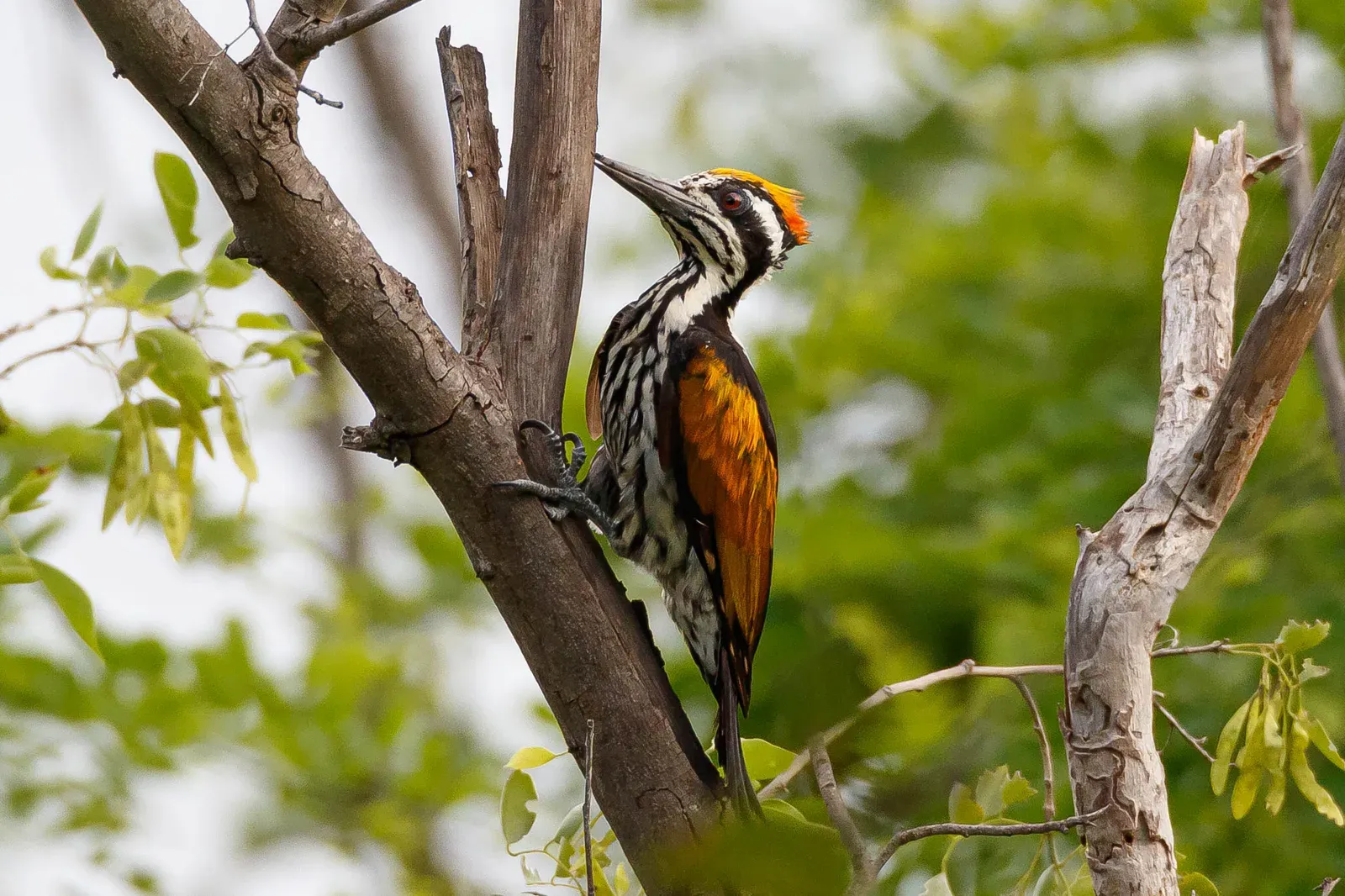
The beak would be uselessly dangerous without a skull that can handle the force behind it, and this is where woodpeckers really start to feel like a bio‑engineering miracle. When a woodpecker strikes a tree, its head is moving fast enough that the deceleration on impact can reach levels that would seriously injure most animals, including us. Instead of focusing all that energy on one point, the bird’s skull, beak, neck muscles, and even its spine share and redistribute the load.
The bones in a woodpecker’s skull are thick but not uniform; areas around the brain case are reinforced, while regions closer to the beak are shaped to deform slightly and spread out the force. The upper and lower parts of the beak are not perfectly symmetrical either, which helps redirect impact energy away from the most delicate structures. It’s like the difference between punching a wall with a bare fist and punching with a perfectly fitted glove that spreads the blow over your whole hand and wrist – same motion, completely different outcome.
3. They Hit the Tree with Their Whole Body, Not Just the Beak
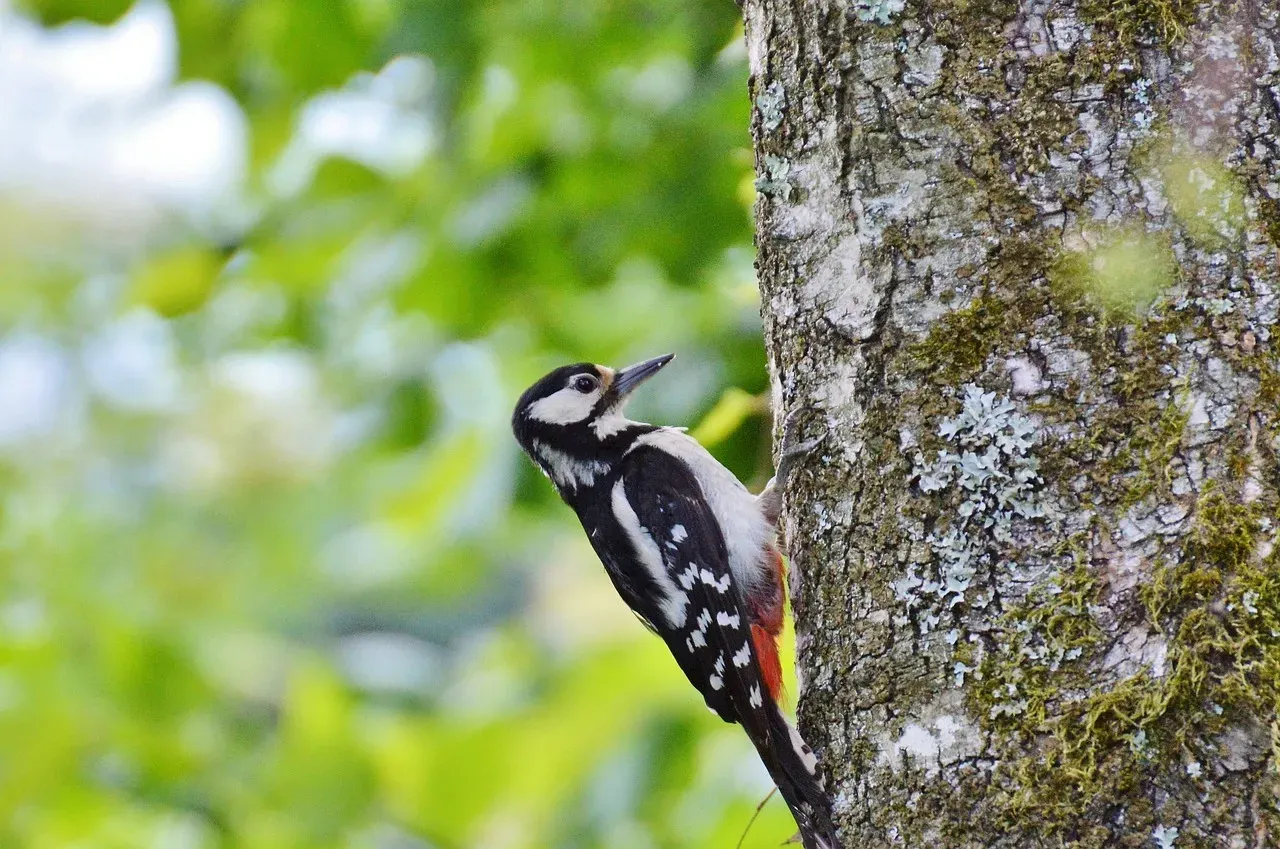
One of the weirdest truths about woodpeckers is that they do not simply “poke” at wood with their faces; they throw their entire body into each strike. Watch slow‑motion footage and you’ll see the bird brace with its feet, tense its tail against the trunk like a third leg, and then pivot from the hips and shoulders as it snaps its head forward. The beak is the point of contact, but the force is generated and controlled by muscles running through the neck, shoulders, and chest.
This full‑body motion matters because it spreads the impact over a larger system instead of dumping it onto the tiny bones of the beak alone. When they pull back between strikes, those same muscles help reset and stabilize the head for the next blow. I like to think of it as the difference between someone jabbing a chisel randomly and a skilled carpenter using their entire stance and posture for every hit: one is chaotic, the other is controlled power channeled through a single tool.
4. Their Tongues Wrap Around the Skull and Help Manage Impact
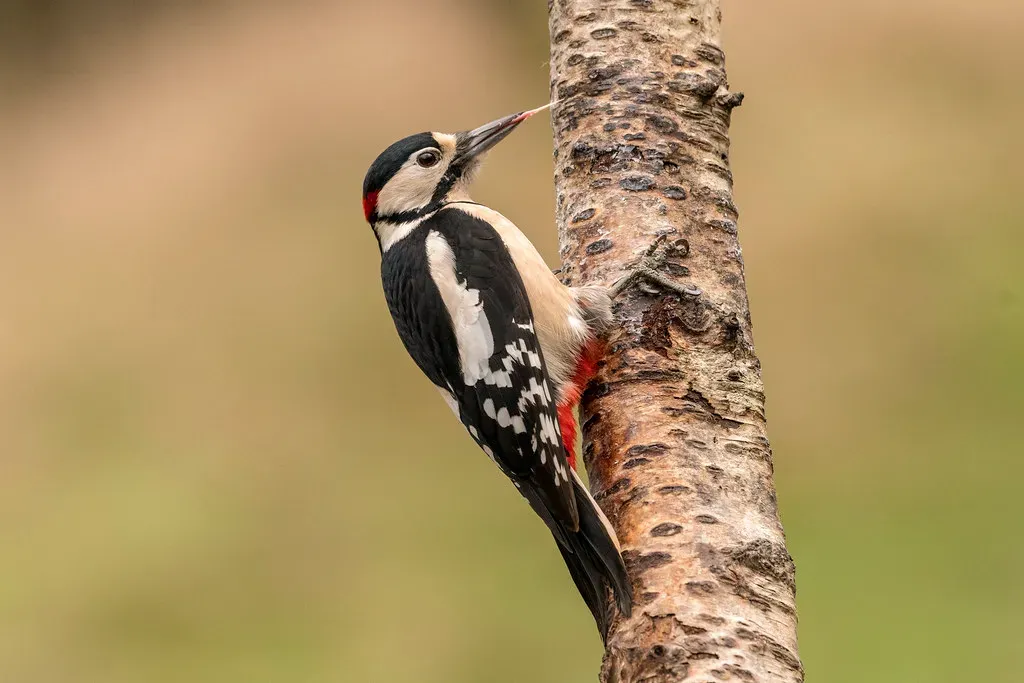
If you want one truly bizarre woodpecker fact to drop into conversation, this is it: their tongue is so long it actually wraps around the back of the skull, over the top, and anchors near the forehead or upper beak area, depending on the species. This extra‑long tongue is supported by a structure called the hyoid apparatus, a flexible set of bones and connective tissue. As strange as it sounds, that loop around the skull is part of what helps manage the shock from constant pecking.
When the bird hammers away, the hyoid system stretches and tenses, acting a bit like an internal safety harness or shock‑absorbing strap around the head. At the same time, the tongue itself is a hyper‑specialized tool designed to reach deep into the tunnels carved by the beak, snagging insects with barbs and sticky saliva. So while it is busy helping cushion each blow, it is also the follow‑up instrument that actually claims the prize hidden inside the wood.
5. They Peck at Speeds and Forces That Would Injure Most Animals
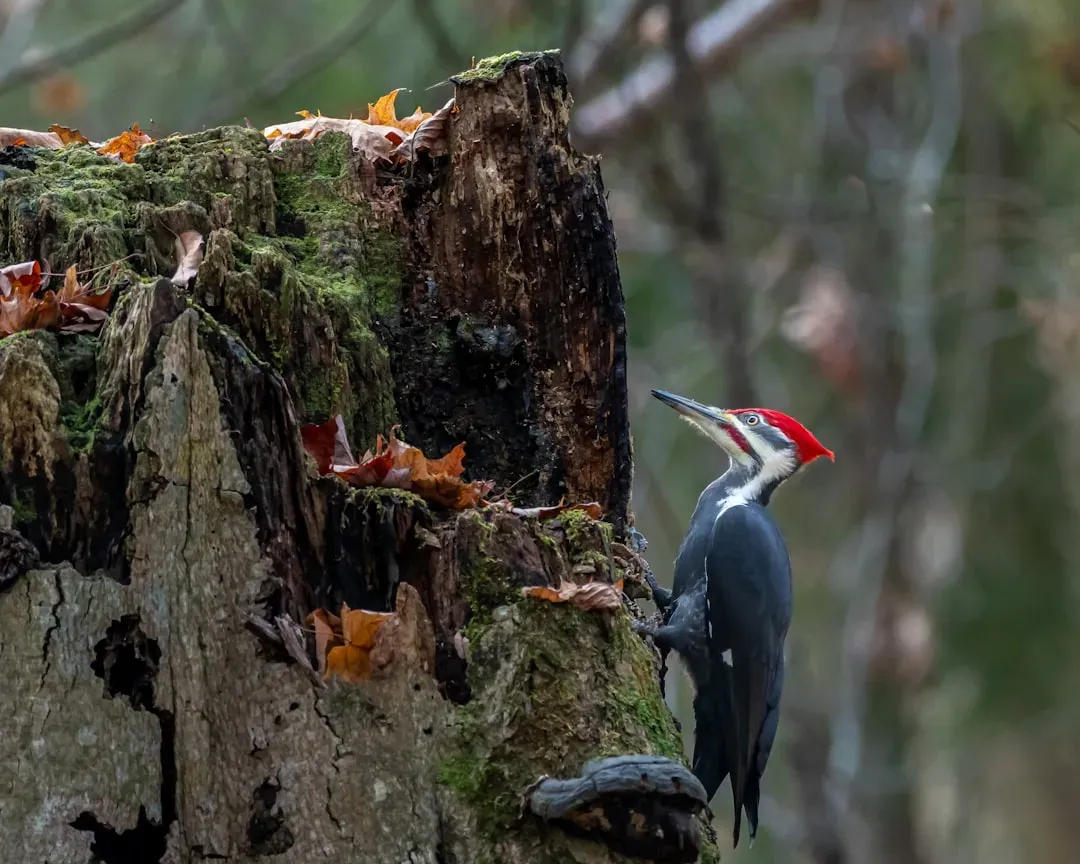
It is easy to underestimate how violent woodpecker pecking really is, because the birds are small and look almost casual about it. In reality, some species deliver dozens of blows in just a few seconds, with head speeds reaching several meters per second before impact. That rapid stop when beak meets bark can generate forces many times their body weight, in bursts repeated thousands of times per day during intense feeding or nesting periods.
For perspective, if a human tried to slam their forehead into a wall even a fraction as hard and as often, they would quickly end up concussed or worse. Yet woodpeckers emerge from a drilling session seemingly unfazed, ready to fly off as if nothing happened. Their beaks and skulls are so well adapted that what would be catastrophic trauma for us is simply “Tuesday afternoon” for them. When you grasp the scale of that, the ordinary sound of tapping in the trees starts to feel almost unreal.
6. They Aim Their Beaks with Surgical Precision to Avoid Injury
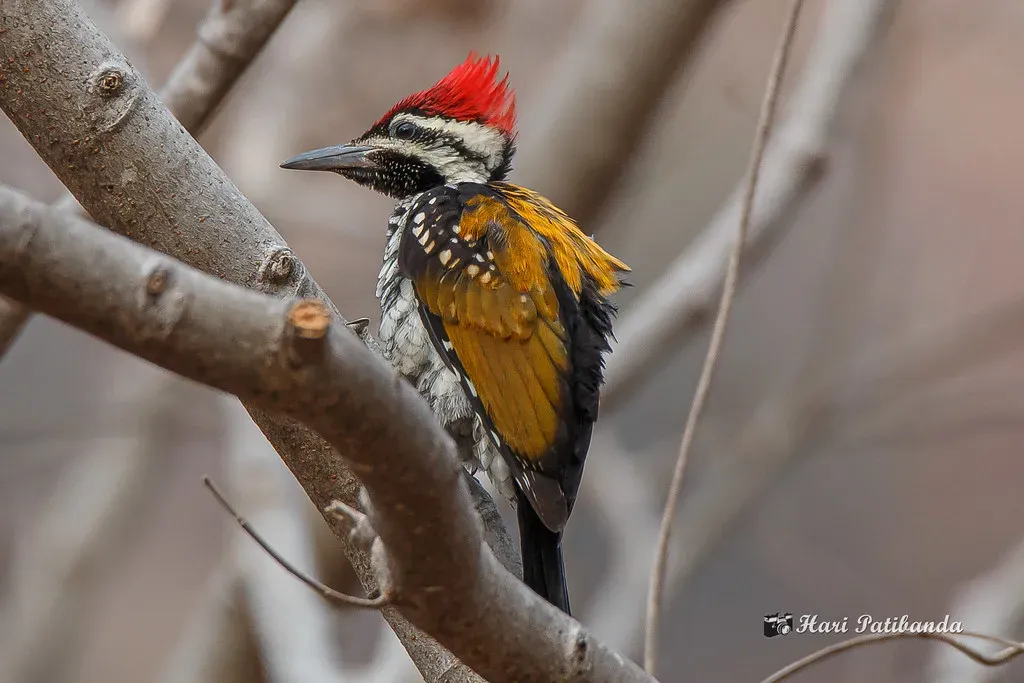
Power alone would be useless without control, and woodpeckers are astonishingly precise with their strikes. They hit the tree almost perfectly straight on, with the beak aligned along the axis of the neck and spine, so force flows in a straight line instead of twisting or bending delicate bones. This straight‑line pecking reduces shear forces that would otherwise crack the beak or damage the skull over time.
That level of accuracy is not accidental; it is built on fine‑tuned coordination between the bird’s eyesight, inner ear balance system, and neck muscles. Before each strike, a woodpecker makes micro‑adjustments in distance and angle, then commits to a rapid, piston‑like thrust. In a way, they behave like tiny, feathered machine tools, lining up for each cut with almost obsessive consistency. Without that precision, even their reinforced beaks and skulls would not save them from cumulative damage.
7. Their Beaks Are Constantly Wearing Down and Regrowing
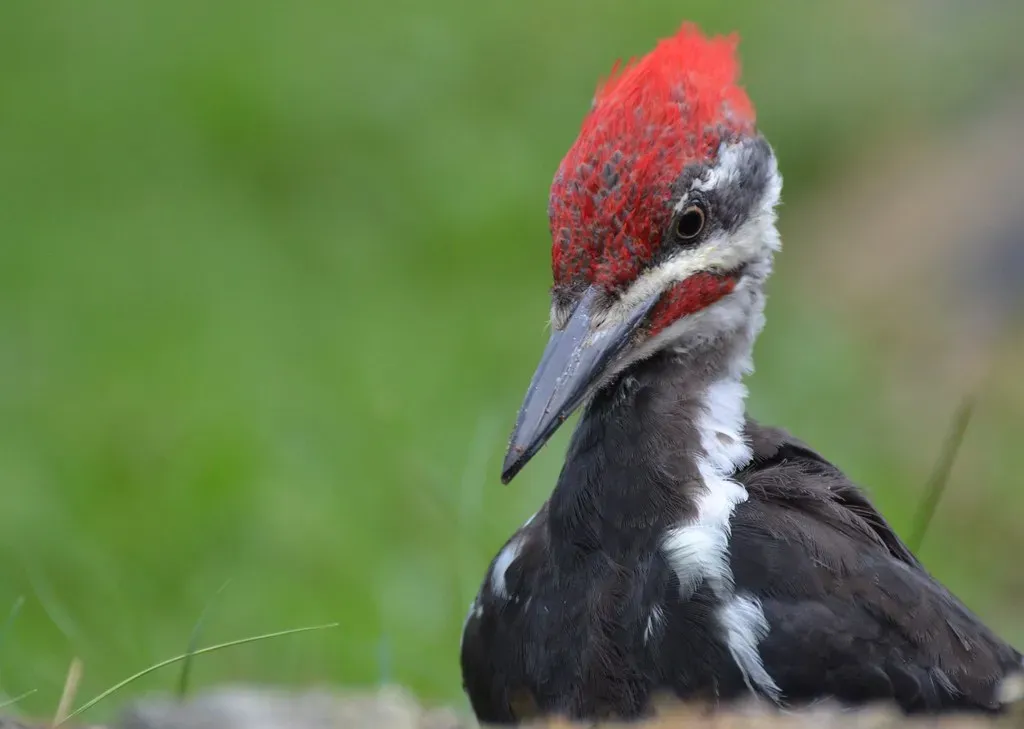
Even the best‑designed tool dulls with heavy use, and woodpecker beaks are no exception. All that pounding against bark, sapwood, and occasionally harder knots in the trunk gradually wears away the keratin tip. Instead of being a problem, this wear is actually part of the plan: woodpecker beaks grow continuously, with new material added at the base to replace what is lost at the front, keeping the overall length and shape functional.
This constant cycle of wear and regrowth means the beak acts more like a self‑renewing cutting edge than a one‑time part. It also allows the bird to maintain a balance between sharpness and strength – too thin and the tip would snap, too thick and it would not penetrate deeply enough. In my mind, it is a bit like owning a knife that quietly sharpens itself every day just from normal use, always staying in that sweet spot where it works perfectly without you thinking about it.
8. Specialized Feet and Tail Feathers Turn the Whole Bird into a Drilling Rig
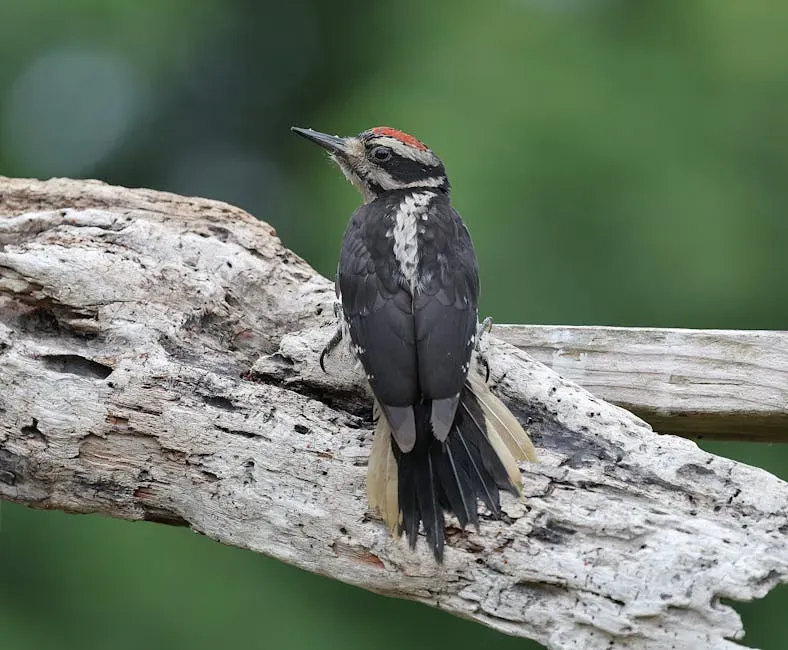
We tend to focus on the beak, but the powerful strikes would be impossible without the rest of the body acting like a built‑in scaffolding system. Woodpeckers have zygodactyl feet – two toes facing forward, two facing backward – that give them a vise‑like grip on vertical trunks. Their stiff tail feathers press against the bark like a third support point, creating a tripod that keeps the bird stable even as its head whips back and forth.
This stable support lets them deliver more force through the beak without slipping or losing balance, much like bracing a ladder before climbing. Without that firm grip, each strike would push them off the tree or waste energy in sideways motion. The beak might be the star of the show, but the feet and tail are the unsung stage crew making sure every hit lands exactly where it needs to, over and over again.
9. Their Brains and Eyes Are Protected by Clever Internal Design
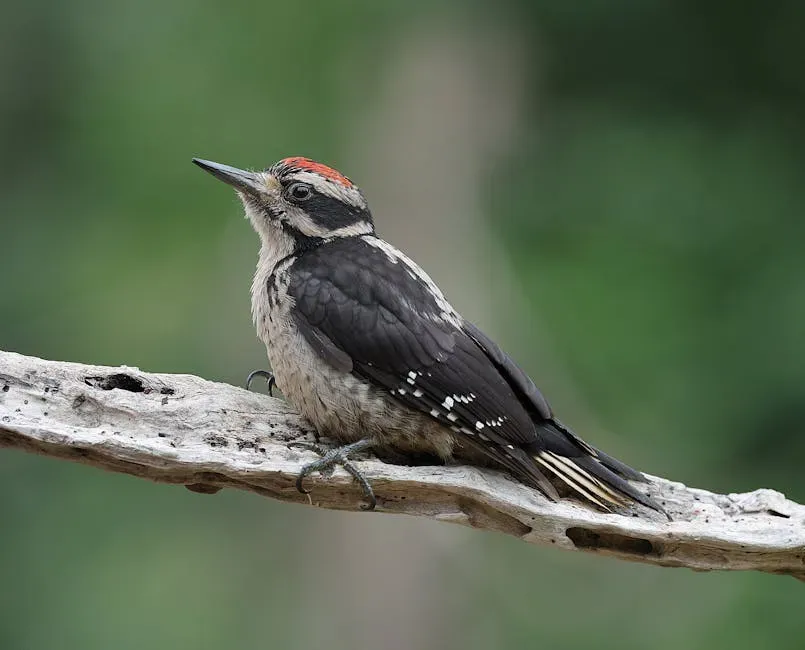
With all this talk of power, it is natural to worry about what is happening inside their skulls every time they slam into wood. Surprisingly, research suggests that woodpeckers may not actually be experiencing the kind of brain‑rattling forces we would endure in the same situation, because their whole head‑and‑beak system is designed to prevent the brain from “sloshing” inside the skull. Short braincases, tight fits, and minimal extra space around the brain reduce internal motion when they strike.
They also have special adaptations around the eyes, including strong muscles that can tighten and a kind of built‑in nictitating membrane that closes just before impact. This protects the eyes from flying debris and from being jarred by sudden jolts. Put together, it means their powerful beak is part of a chain where every link – from the tip of the bill to the brain itself – has been shaped by evolution to handle forces that would be disastrous for most creatures.
10. Their Beaks Shape Forests, Ecosystems, and Even Human Technology
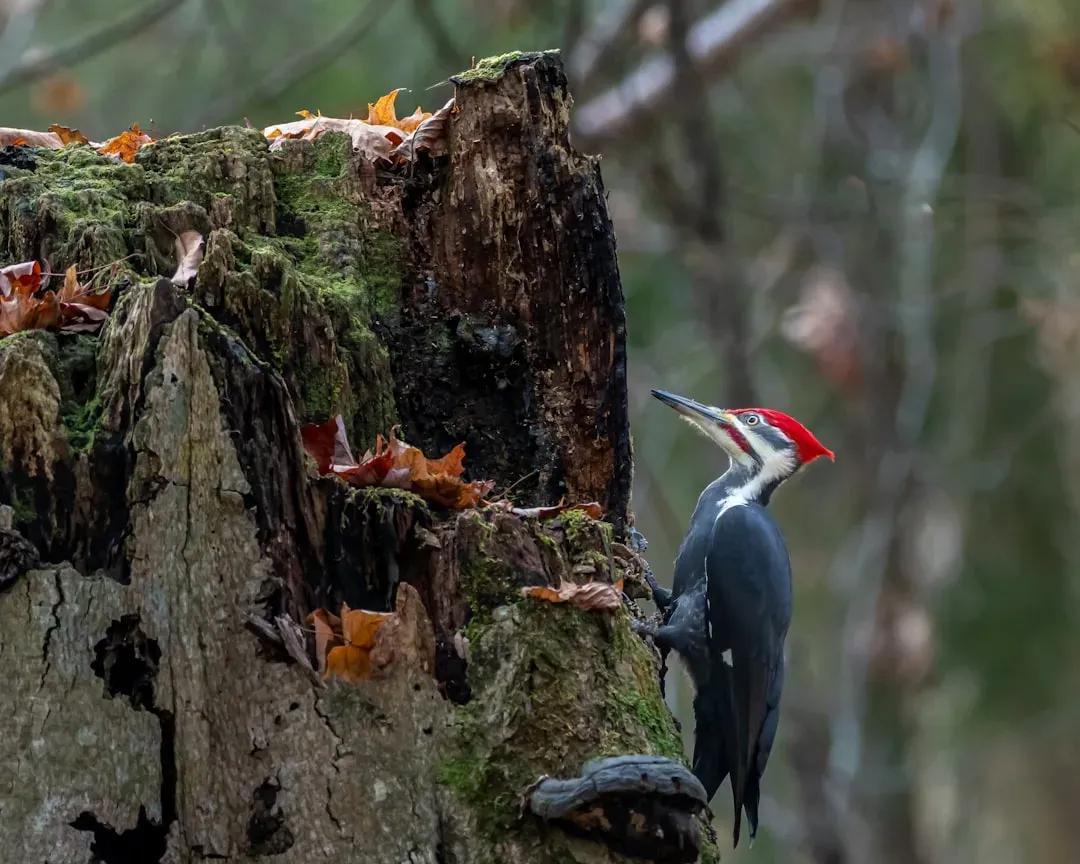
Here is the part I find most inspiring: woodpecker beaks are not just impressive for the birds themselves; they are quietly reshaping the world around them. By drilling into trees, they create nest cavities that later get reused by other animals, from small owls and ducks to squirrels and insects. Their relentless search for hidden larvae also helps control certain insect populations, indirectly influencing tree health and forest dynamics.
On the human side, scientists and engineers have looked closely at woodpecker skulls and beaks to inspire better shock‑absorbing materials and protective gear. Designs for things like improved helmets and impact‑resistant packaging have been influenced by how these birds manage repeated, high‑force hits without apparent harm. It is hard not to form an opinion here: if a bird can hammer its face into a tree thousands of times a day and walk away fine, we would be foolish not to learn something from it.
Conclusion: Woodpeckers Are Nature’s Proof That Power Can Be Smart
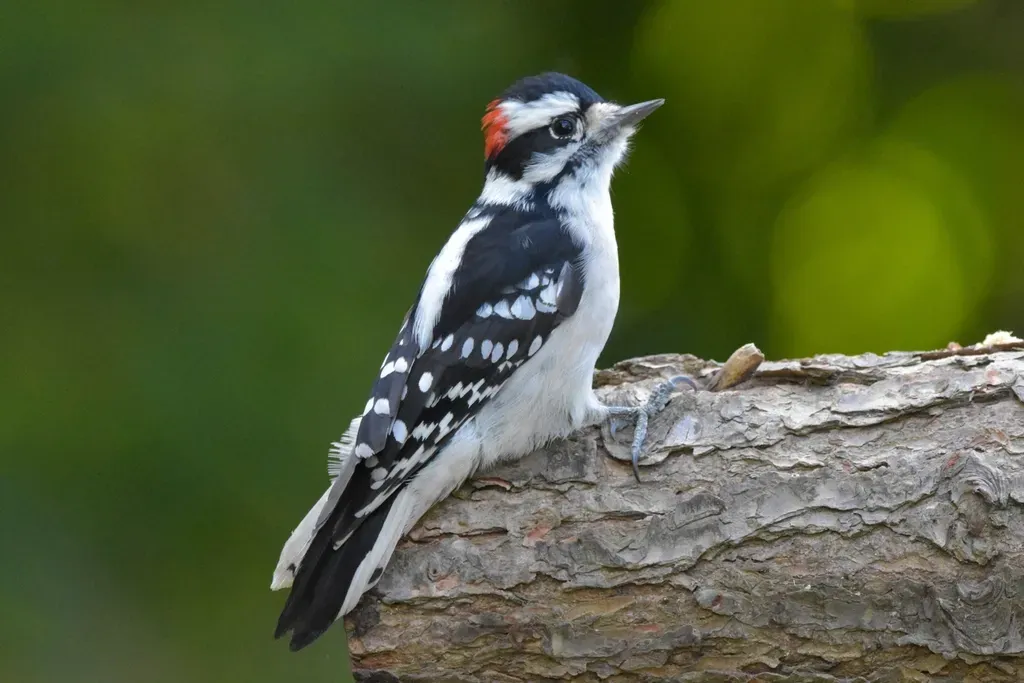
The more you look at woodpecker beaks, the harder it is to see them as just “sharp tools.” They are part of an entire integrated system that combines toughness, precision, flexibility, and protection in a way that frankly puts a lot of human designs to shame. From layered beak structure and shock‑absorbing skulls to weirdly wrapped tongues and tripod‑like stances on tree trunks, everything about these birds says that raw power alone is never enough – you need control, resilience, and smart design behind it.
Personally, I think woodpeckers are one of the best real‑world arguments against underestimating small, ordinary‑looking creatures. We walk past forests hearing that distant tapping and rarely stop to realize we are listening to a kind of living hammer drill that also engineers habitats for others and quietly teaches us how to build safer gear. Next time you hear that rapid knock from the trees, maybe pause for a second and picture the astonishing machinery behind each tiny strike – did you ever imagine something that small could hit that hard, that often, and stay perfectly fine?