
If you grew up thinking physics was all about neat equations and predictable outcomes, the last century or so of discovery is like a plot twist that never ends. Again and again, experiments have forced scientists to admit that the universe is far stranger, messier, and more mind‑bending than anyone expected. The story of modern physics is basically a series of moments where nature looks us in the eye and calmly says: you have no idea how this really works.
What follows is a tour of twelve discoveries that did exactly that – shattered comfortable assumptions and replaced them with ideas that still feel almost offensive to common sense. Some of these you’ve heard of in passing, others quietly reshaped whole fields without ever trending on social media. Together, they paint a picture of a universe that is less a tidy machine and more a surreal, rule‑bound dream. And once you see what physicists have actually found, it’s very hard to look at reality the same way again.
1. Relativity: Time and Space Are Not What You Think
Before the early twentieth century, most scientists pictured time like an invisible conveyor belt, dragging every event forward at the same steady pace, everywhere, for everyone. Then experiments with light and motion backed up a wild idea: the speed of light is the same for all observers, no matter how fast they are moving. This simple fact ripped the floor out from under the old picture and led to special relativity, which says that moving clocks tick more slowly and moving objects shrink along the direction of motion. In other words, how fast time flows and how big things are depends on how you are moving.
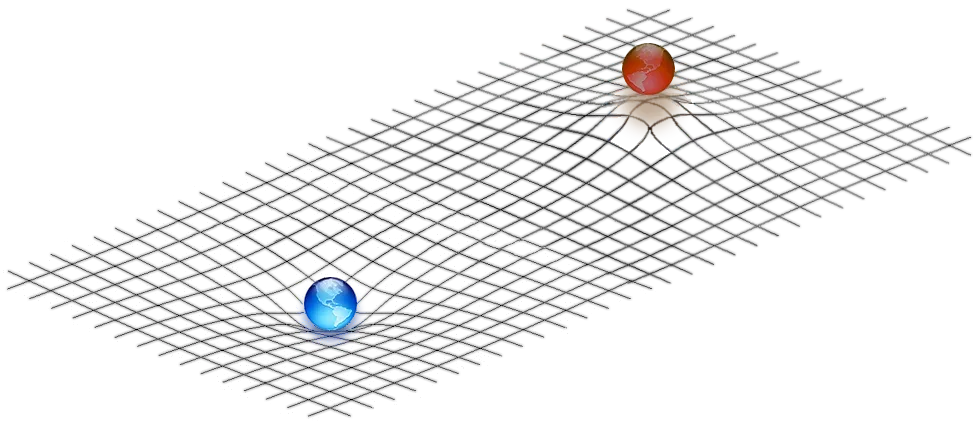
General relativity pushed that shock even further by treating gravity not as a force pulling at a distance, but as the bending of spacetime itself by mass and energy. Massive objects curve the fabric of reality, and free‑falling bodies simply follow the straightest possible paths through this warped geometry. That elegant idea has been confirmed over and over, from the way starlight bends around the sun to the recent detection of gravitational waves. The unsettling part is that there is no single, universal “now” – your present and someone else’s present can genuinely disagree, and both can be right.
2. Quantum Entanglement: “Spooky” Links Across Space
One of the most disturbing discoveries in physics came out of a simple question about how tiny particles share information. Quantum theory predicts that two particles can become entangled so that their properties are linked, even if they are separated by vast distances. Measure one, and you instantly know something about the other. This is not just a matter of hidden details we have not seen yet; very careful tests have shown that no local, classical explanation can reproduce the correlations seen between entangled particles.
For a long time, even some of the founders of quantum theory were convinced something was missing, because this behavior seemed to violate the idea that nothing can influence anything else faster than light. But decades of increasingly sharp experiments closed possible loopholes and confirmed that entanglement is real and does not fit with our old idea of independent, separable objects. The consensus today is that reality at the quantum level is deeply non‑local in a way our everyday language struggles to describe. It does not mean you can send messages faster than light, but it does mean that nature keeps a kind of shared, coordinated book between particles that defies classical common sense.
3. Wave–Particle Duality: Light and Matter as Both Thing and Ripple
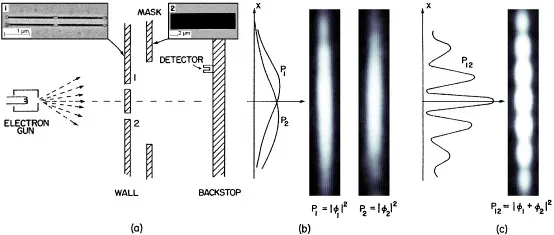
When scientists first studied light in detail, it behaved like a wave: it interfered, diffracted, and produced patterns you’d expect from ripples on a pond. Then experiments like the photoelectric effect showed that light also arrives in discrete packets of energy, which we now call photons. In a different twist, electrons – long thought of as little particles – can produce interference patterns as if they were waves spread out in space. So our neat categories of “particle” and “wave” turned out to be more about our mental filing system than about how nature actually works.
The famous double‑slit experiment drives this point home in a particularly unsettling way. If you fire particles like electrons one at a time through two slits, they slowly build up an interference pattern on the screen behind, as if each particle somehow went through both slits at once. Try to detect which slit an electron went through, and the interference pattern vanishes, replaced by something more particle‑like. It is not that the electron politely chooses a costume; the experiment you choose to do changes the kinds of questions reality will answer, which is a subtle but profound challenge to our idea of an observer‑independent world of little billiard balls.
4. Quantum Uncertainty: Limits to What Can Even Be Known
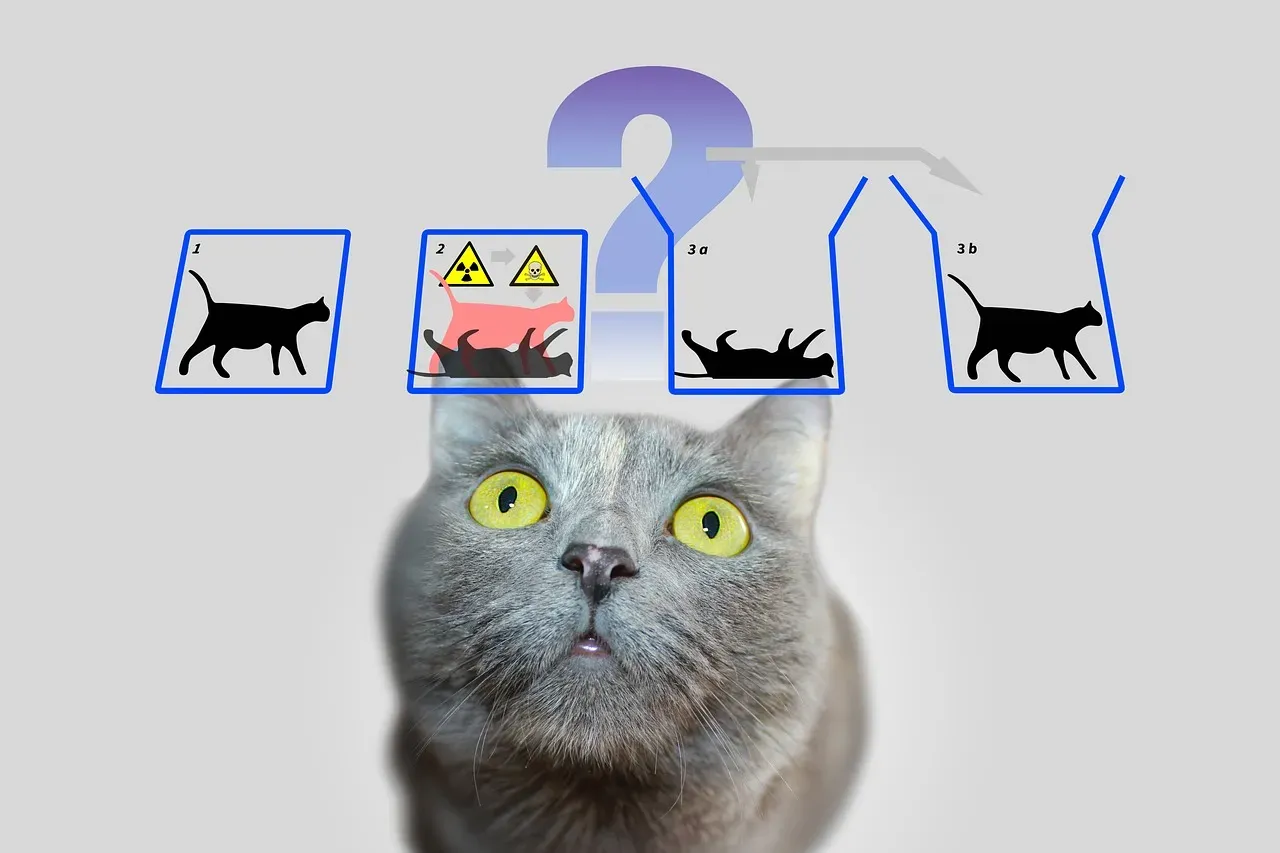
Classical physics quietly assumes that if you knew every detail about a system – the positions and velocities of all its parts – you could predict its future exactly. Quantum mechanics cuts that dream off at the knees. The uncertainty principle states that for certain pairs of properties, like position and momentum, there is a fundamental limit to how precisely they can be known at the same time. This is not a matter of bad instruments or clumsy experimenters; it is built into the mathematical structure of the theory and has been confirmed in many different ways.
The idea that the universe itself refuses to yield complete information, no matter how good your tools, is deeply unsettling if you like the image of a clockwork cosmos. Instead of a definite trajectory, a particle is described by a wave of possibilities, and measurement does not merely reveal a pre‑existing value but is part of what brings a specific outcome into being. The result is a world where probability is not just a measure of ignorance but a core ingredient. That hits a nerve, because it suggests there are hard limits on how “complete” any description of reality can ever be.
5. Quantum Tunneling: Particles Slipping Through the Impossible
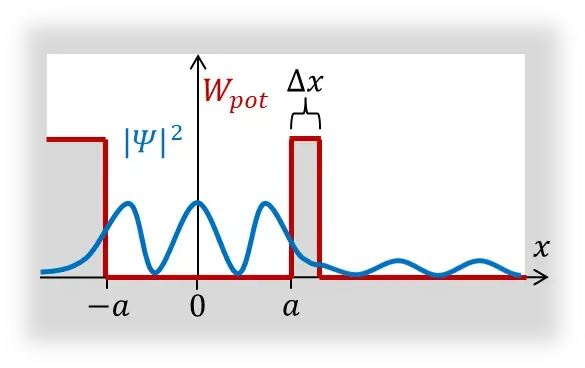
Imagine throwing a ball at a wall that is too high and too solid for it to ever pass through; in ordinary life, there is no mystery about what happens. In quantum physics, particles sometimes manage to appear on the other side of a barrier they do not have enough energy to cross in the classical sense. This effect, known as tunneling, emerges naturally from the wave description of particles: the wave spreads into regions that are “forbidden,” and there is a small but real chance of finding the particle on the other side. That probability can be tiny, but it is not zero.
What started as a strange theoretical prediction turned out to be crucial to real things in the universe and in technology. Nuclear fusion in stars relies on tunneling for particles to get close enough to overcome their electric repulsion, and certain radioactive decays are explained by tunneling through energy barriers. In modern electronics, tunneling devices underpin parts of computer chips and scanning microscopes that can image individual atoms. The unsettling lesson here is that “impossible” in quantum mechanics sometimes really means “very unlikely but still happens,” which is a different sort of reality than the strictly forbidden world many of us instinctively expect.
6. Black Holes: Where Physics Hits a Wall
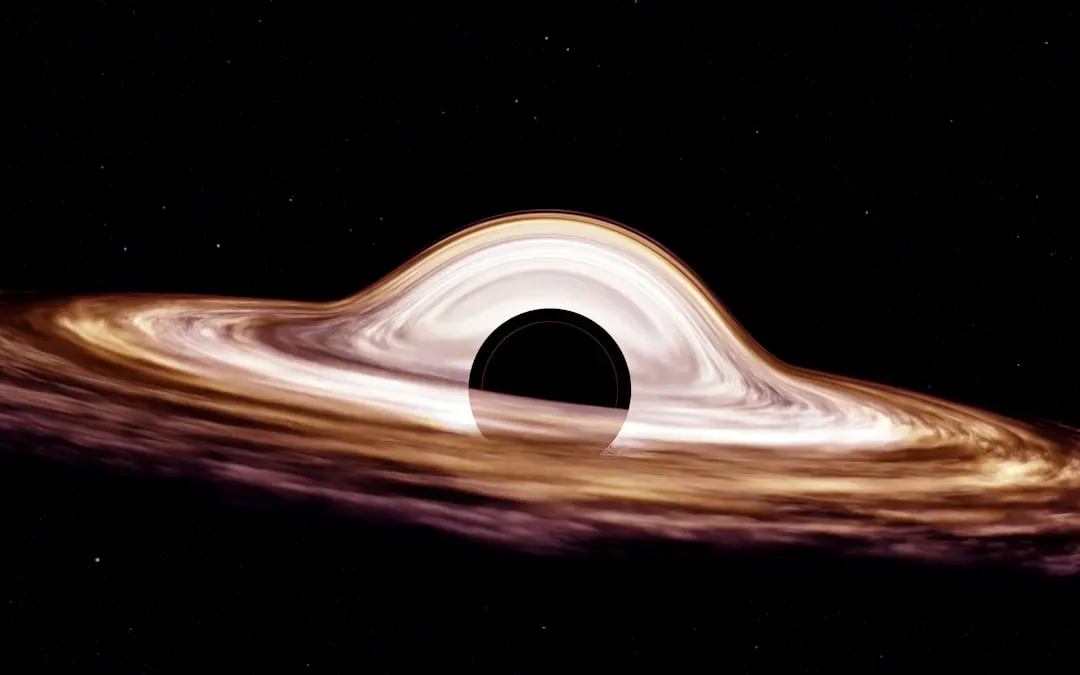
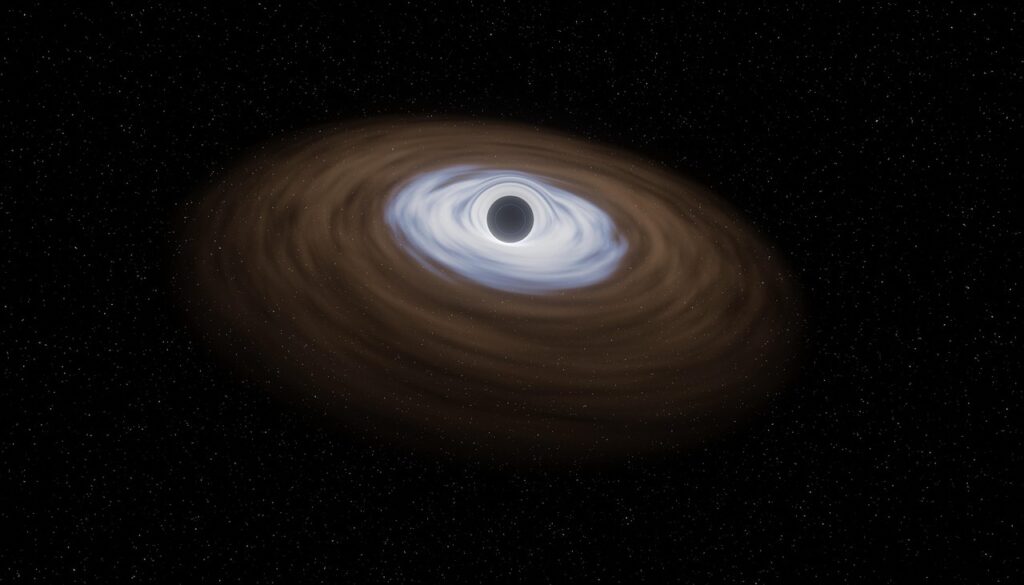
Black holes started as a mathematical curiosity in solutions to the equations of general relativity, hinting at regions where gravity becomes so strong that not even light can escape. For a while they were treated almost like thought experiments, but accumulating astronomical evidence – from the way stars orbit invisible companions to images of glowing material around dark shadows – has made it clear that black holes are real objects in our universe. Inside them, according to the simplest models, matter is crushed toward a singularity where densities and curvatures go beyond what our current laws can handle.
The edge of a black hole, its event horizon, already breaks our intuition about space and time. To a distant observer, objects falling in seem to slow down and freeze, while to the falling object nothing special happens at the crossing point, at least for a large enough black hole. Add in effects like Hawking radiation, which suggests that black holes slowly evaporate and could in principle destroy information, and you get deep conflicts between general relativity and quantum mechanics. Black holes are not just exotic astrophysical beasts; they are places where our best theories disagree so strongly that many physicists think we are glimpsing the limits of our current picture of reality.
7. The Expanding Universe and the Big Bang
For much of history, the universe was assumed to be eternal and static, always more or less the way it is now. That picture started to crumble when astronomers measured light from distant galaxies and noticed that almost all of them appear to be receding from us, with more distant galaxies moving away faster. The most straightforward interpretation is that space itself is expanding, stretching the distances between galaxies over time. Run that expansion backward, and you reach a much hotter, denser state in the past, which we now call the Big Bang.
The reality shift here is not just that the universe has a history; it is that everything we see emerged from an earlier phase where none of our current structures existed. Evidence like the faint cosmic background glow filling the sky and the abundance of light elements backs up this story. The unsettling part is that time, space, and even the physical laws as we know them may have evolved from something more primitive or different at the very earliest moments. We are used to asking what happened before some event, but in this context, “before” the hot early universe might not even be a meaningful question in the way we are used to.
8. Dark Matter: Most of the Mass We Cannot See
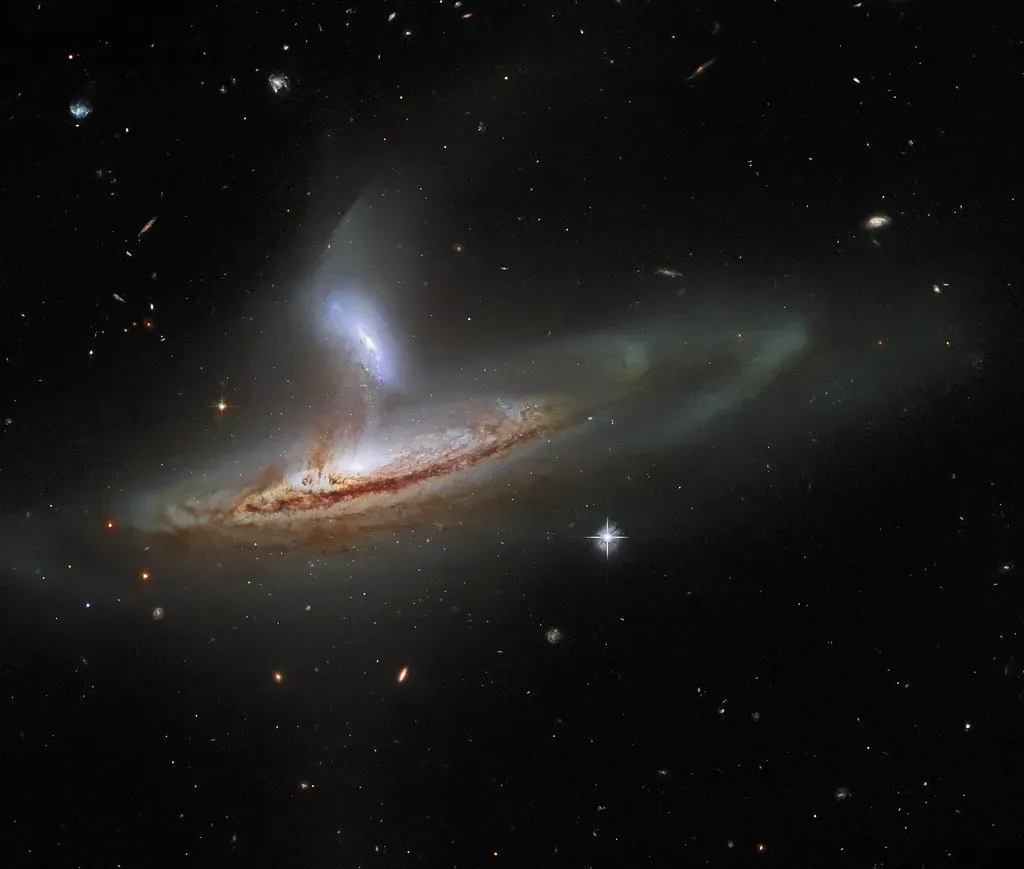
When astronomers carefully measured how stars rotate around the centers of galaxies, something did not add up. Based on the visible matter alone, the outer regions of galaxies should be moving much more slowly than the inner parts, or they ought to be flung off into space altogether. Instead, those outer stars whirl around far too fast, suggesting there is extra mass – a lot of it – providing additional gravitational pull. Similar puzzles appear when looking at how clusters of galaxies hold together and how they bend light from even more distant objects.
The most widely supported explanation is that there is a form of matter that does not emit, absorb, or reflect light, making it effectively invisible to telescopes. This dark matter seems to outweigh ordinary matter by several times and helps shape the large‑scale structure of the universe. Yet, despite intense effort, we still have not directly detected the underlying particles or fully explained what they are. Knowing that most of the matter in the universe is of a kind we cannot see and do not yet understand is a serious blow to any illusion that our current picture is complete.
9. Dark Energy: A Mysterious Push Tearing Space Apart
Just when cosmologists were getting used to an expanding universe, observations of distant exploding stars delivered another surprise: the expansion is speeding up. Instead of gravity gradually slowing the growth of space, something seems to be driving galaxies apart faster and faster on the largest scales. This effect is often attributed to dark energy, a name that mostly reflects our ignorance. Whether it is a property of space itself or something else entirely, it currently accounts for the majority of the total energy content in the universe according to standard models.
The most straightforward mathematical version of dark energy is a small but nonzero vacuum energy that appears in general relativity as a cosmological constant. Yet when physicists try to calculate the vacuum energy from quantum field theory, the naive result overshoots the observed value by an absurd margin. That clash between theory and measurement is sometimes described as one of the biggest unsolved problems in physics. It is hard to feel that we really understand reality when most of the universe’s energy is sitting in a category that boils down to “a subtle, pervasive something we do not know how to explain.”
10. Symmetry Breaking: Order Emerging from Broken Perfection
Many of the deepest theories in physics are built on symmetry – the idea that certain transformations leave the laws unchanged. But the world we observe is full of asymmetries: particles have masses, forces are not all equal in strength, and matter clearly dominates over antimatter. One of the most powerful conceptual shifts came with the realization that the underlying laws can be symmetric while the actual state of the universe is not. This mechanism, called spontaneous symmetry breaking, is central to how some particles acquire mass and to the shapes of phases of matter.
The discovery of the Higgs boson at a large collider was a high‑profile confirmation of this idea in the context of particle physics. The Higgs field is thought to fill all of space, and its nonzero value breaks certain symmetries, giving mass to otherwise massless particles. On a more intuitive level, you can think of a perfectly round hill with a ball perched on top; the hill is symmetric, but once the ball rolls down to a particular side, that symmetry is broken in the actual outcome. The unsettling but exciting message is that much of what we call “structure” may come from the universe settling into one of many possible ways to break a more elegant underlying order.
11. Quantum Vacuum: Empty Space Is Anything but Empty
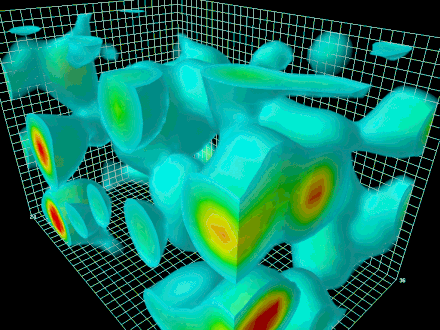
If you picture a vacuum as a perfect void, quantum field theory has news for you: what we call empty space is buzzing with activity. Even in its lowest‑energy state, fields fluctuate, giving rise to short‑lived particle‑antiparticle pairs that appear and vanish too quickly to observe directly. These virtual processes are not just mathematical fiction; they leave measurable fingerprints, such as tiny shifts in atomic energy levels and forces between metal plates placed very close together in a vacuum. In this view, the vacuum is more like a churning sea than a calm blankness.
Accepting that the ground state of “nothing” is a restless, structured something is a serious adjustment to our intuition. It also raises deep questions about what counts as real. If much of what we call empty space is full of seething fields whose effects we only see indirectly, our everyday concept of nothingness simply does not apply at fundamental scales. Some cosmological ideas even suggest that our entire observable universe may have formed as a sort of bubble or fluctuation in a broader vacuum landscape, which is a poetic but disorienting twist on the idea of existence coming from nothing.
12. Quantum Information and the Limits of Reality Itself
In recent decades, a new way of thinking about physics has gained ground: instead of focusing only on particles and fields, look at information itself. Quantum information theory studies how information is stored, transmitted, and processed in systems that obey quantum laws, leading to concepts like qubits and quantum error correction. This perspective has already inspired real technologies, from early quantum communication networks to experimental quantum computers that manipulate superpositions and entanglement as resources. But beyond gadgets, it suggests that the fabric of reality might be better described in terms of information rather than stuff.
This shift becomes especially dramatic when applied to puzzles like black hole evaporation and the apparent loss of information at event horizons. Some approaches propose that spacetime and gravity may emerge from deep patterns of entanglement and information flow, turning our usual hierarchy on its head. Instead of information being an afterthought that rides on physical processes, physical structures might be the visible shadow of more basic informational relationships. That idea is still speculative, and it absolutely should be treated with caution, but it captures a growing suspicion in theoretical physics: to truly understand reality, we may need to accept that what is ultimately “there” is less like a solid object and more like a vast, dynamic web of correlations.
Conclusion: A Universe That Refuses to Be Tamed
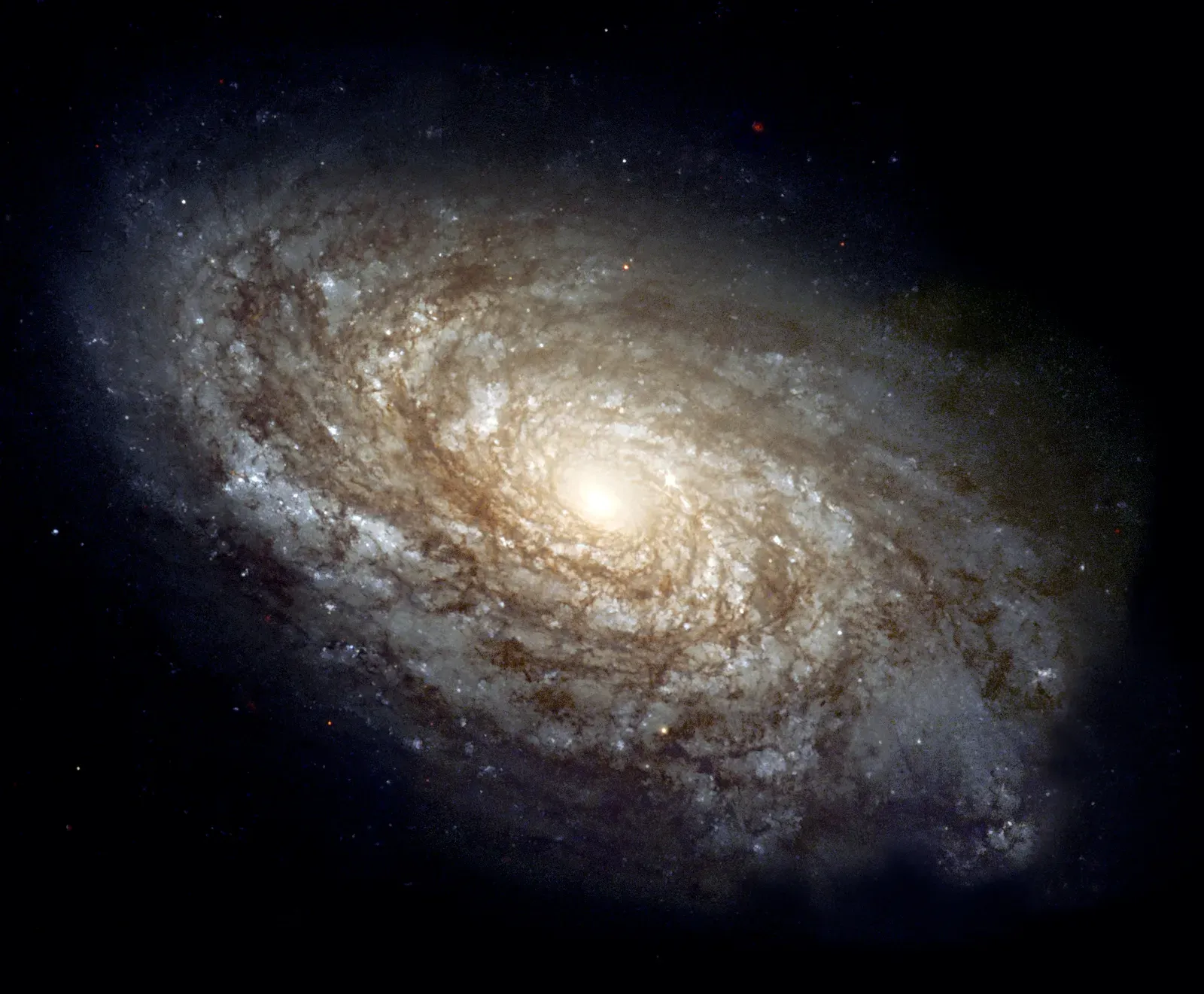
Looking across these discoveries, it is hard to escape a blunt conclusion: our instinctive picture of a solid, objective, fully knowable universe is simply too small. Relativity mangles time, quantum theory blurs cause and effect, black holes mock our best equations, and the bulk of the cosmos hides in dark components we still cannot name with confidence. From my point of view, the most honest stance is that physics has not so much nailed down reality as exposed layer after layer of how alien it really is. Every time we thought we had the final word, the universe calmly revealed another plot twist.
That might sound discouraging, but I think it is the opposite. The fact that nature keeps outsmarting us is a sign that there is still a huge amount left to discover, and that our current stories are stepping stones, not sacred texts. We are probably wrong in important ways today, just as our predecessors were, and that should be thrilling rather than threatening. In the end, these discoveries do not just make ; they invite all of us to hold our beliefs about the world a little more lightly and stay curious. If the universe is this strange already, what buried surprise would you bet we are still missing?