
If you think you understand time because you can read a clock, physics is here to gently ruin that confidence. The deeper you look, the stranger time becomes: it slows down, gets tangled with space, appears to move in only one direction, and might not even be fundamental at all. You live inside time every second, but modern physics keeps suggesting that your everyday sense of it is, at best, an approximation.
As you explore these strange facts, you’ll notice a pattern: what feels obvious in daily life often breaks down under extreme conditions – near the speed of light, inside black holes, or in the very early universe. Physicists agree on many of the equations, yet they’re still arguing fiercely about what time actually is. By the end, you may never look at a second, a memory, or even your future plans in quite the same way.
1. Time Really Does Run At Different Speeds (And Your Head Ages Faster Than Your Feet)

You like to think there’s one universal “now” ticking along for everyone, but nature doesn’t care about that intuition. According to Einstein’s theory of relativity, time runs at different rates depending on how fast you move and how strong gravity is where you are. If you stand upright, your head is farther from Earth’s center than your feet, so gravitational time dilation means your head is aging just a tiny bit faster than your toes.
This isn’t just a cute thought experiment; it has been measured using ultra-precise atomic clocks placed at slightly different heights and speeds. You rely on this weirdness every time you use GPS, because the satellites’ clocks tick differently from clocks on Earth and must be corrected for relativity or your navigation would drift wildly. Physicists agree that time dilation is real, yet they still wrestle with what that means for your sense of a single shared present. When even standing up changes how fast you age, “one universal time” starts to look like a comforting illusion.
2. There’s A Clear “Arrow Of Time” – But The Fundamental Laws Don’t Need One

In your everyday life, time absolutely feels like it flows in one direction: you remember yesterday, not tomorrow; eggs break but never un-break; coffee cools down instead of spontaneously heating up. This sense of the arrow of time is deeply tied to increasing disorder, or entropy. From your kitchen sink to distant galaxies, nearly everything you see follows this one-way trend.
Here’s the strange part: many of the underlying equations of physics are time-symmetric, meaning they work perfectly well if you run them backward. On the microscopic level, the laws don’t seem to prefer past or future, yet your world clearly does. Physicists still debate why the universe started in an extremely low-entropy, highly ordered state that allowed this arrow of time to emerge. In other words, you’re surfing on a cosmic one-way wave of increasing disorder, but the deep reason that wave exists is still an open puzzle.
3. Time Might Be An Illusion Emerging From Something Deeper
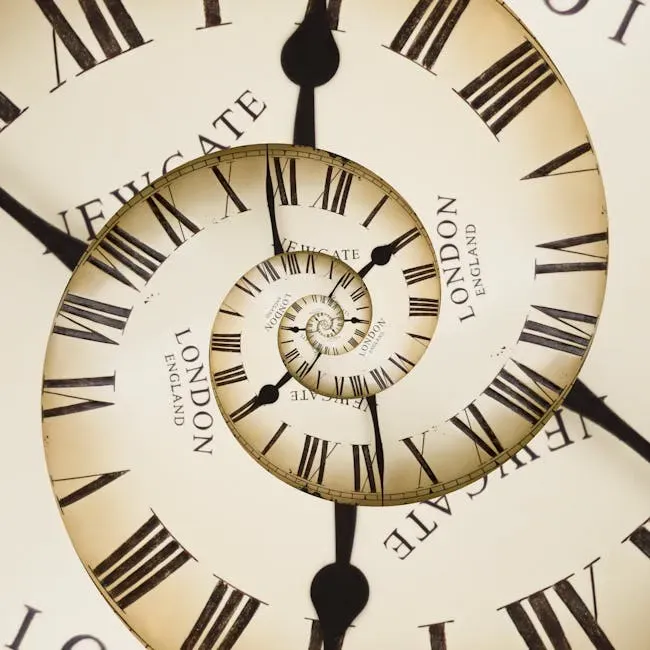
Even though you experience time constantly, some physicists argue it might not be a fundamental ingredient of the universe. Instead, time could emerge from more basic, timeless building blocks, in the same way that temperature emerges from the motion of countless individual particles. From your point of view, that sounds almost absurd: how can something you feel so directly not be basic?
In attempts to unify quantum mechanics and gravity, some approaches suggest that the underlying equations describe a static “block” of possibilities, and what you call time shows up only when you look at large-scale patterns or certain kinds of correlations. In that view, your sense of a flowing moment-to-moment experience is like a story your brain tells while scanning a giant, timeless database. Physicists are far from agreement here, but if they’re right, your everyday feeling that time is fundamental could be as misleading as thinking the Sun literally rises and sets around Earth.
4. Your “Now” Is Not The Same As Someone Else’s “Now”

You instinctively talk as if there’s a single, global “now” that everyone shares: this minute, this day, this year. Relativity shatters that assumption by showing that simultaneity is relative. Two events that you think happen at the same time might not be simultaneous for someone moving quickly relative to you, even if you both agree on all the physical facts.
This leads to one of the weirdest consequences: there is no universally agreed slicing of the universe into past, present, and future. Your “now” is partly a matter of perspective, defined by your motion and position in spacetime. When you picture history as a straight line and place yourself at a single point moving forward, you’re simplifying something much more tangled. Physicists debate what this relativity of simultaneity should mean for concepts like free will, causality, and the idea that the future is still genuinely open from your point of view.
5. The Block Universe Suggests Your Future Already “Exists”
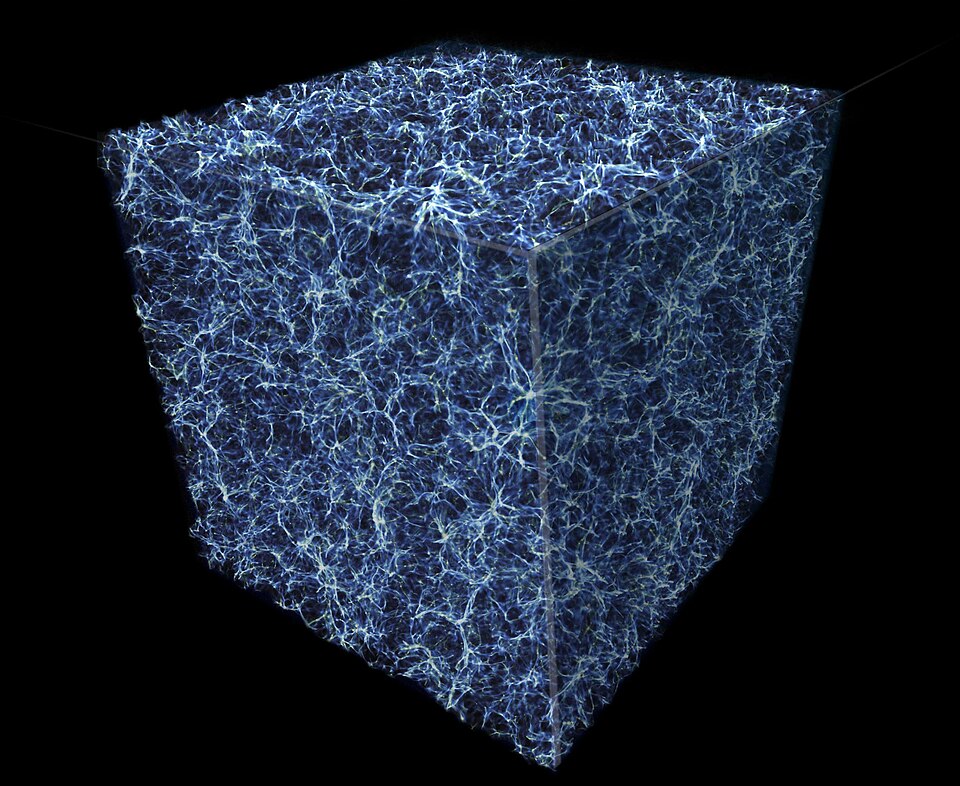
If you take relativity seriously and combine it with the idea that spacetime is a four-dimensional whole, you arrive at the “block universe” picture. In this view, past, present, and future all coexist in a static spacetime block, and what you call the flow of time is just your consciousness moving along a particular path through that block. That means your entire life – birth, middle age, and death – could be laid out like a complete film reel.
From your perspective, this sounds like a direct assault on free will and the feeling that you’re actively shaping your future. Some physicists and philosophers try to reconcile your lived experience with the block universe by arguing that “existence” in spacetime doesn’t automatically fix your choices; others think this picture really does mean everything is, in some sense, already there. When you plan tomorrow’s decisions, you might be walking along a road that, according to this view, is already fully paved – yet you can only see it one step at a time.
6. Quantum Mechanics Muddies What Counts As “Before” And “After”
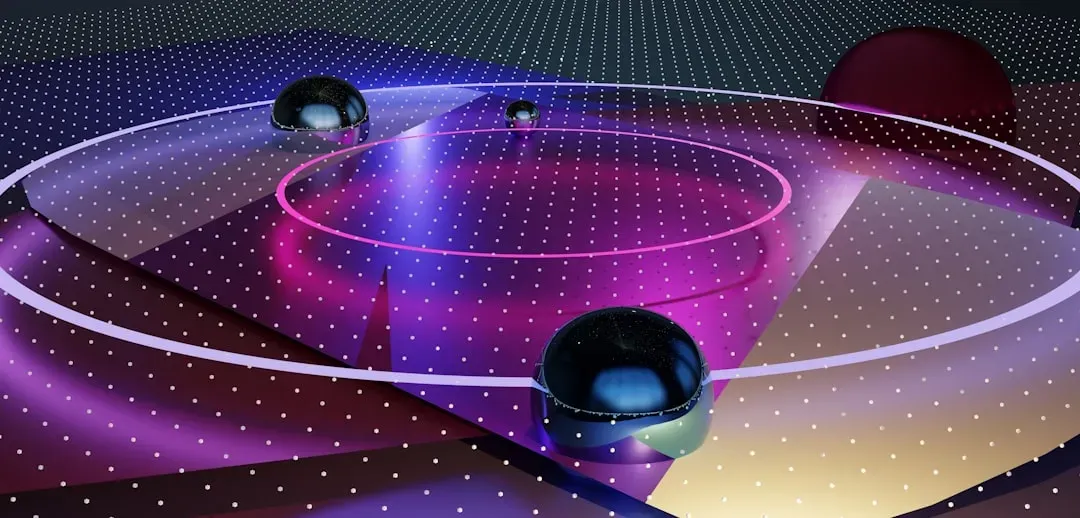
In quantum mechanics, time gets very slippery, especially when you look at entangled particles. You might send two particles to distant locations and measure them at different times, yet still find their results mysteriously linked in ways that seem to ignore ordinary cause-and-effect order. You’d like to say one measurement happens first and influences the other, but different observers may disagree on that ordering.
Experiments in quantum foundations even play with situations where the order of events itself becomes fuzzy, as if A happens before B and B happens before A in a quantum superposition. If that sounds impossible, you are not alone; physicists are actively arguing about how to interpret these results. For you, it means that the neat timeline you imagine – this, then that, then something else – may not match how nature actually organizes events at the deepest level. The familiar idea that cause always comes before effect in a simple, global sequence is under serious pressure.
7. Time Inside A Black Hole May Not Make Sense To You At All
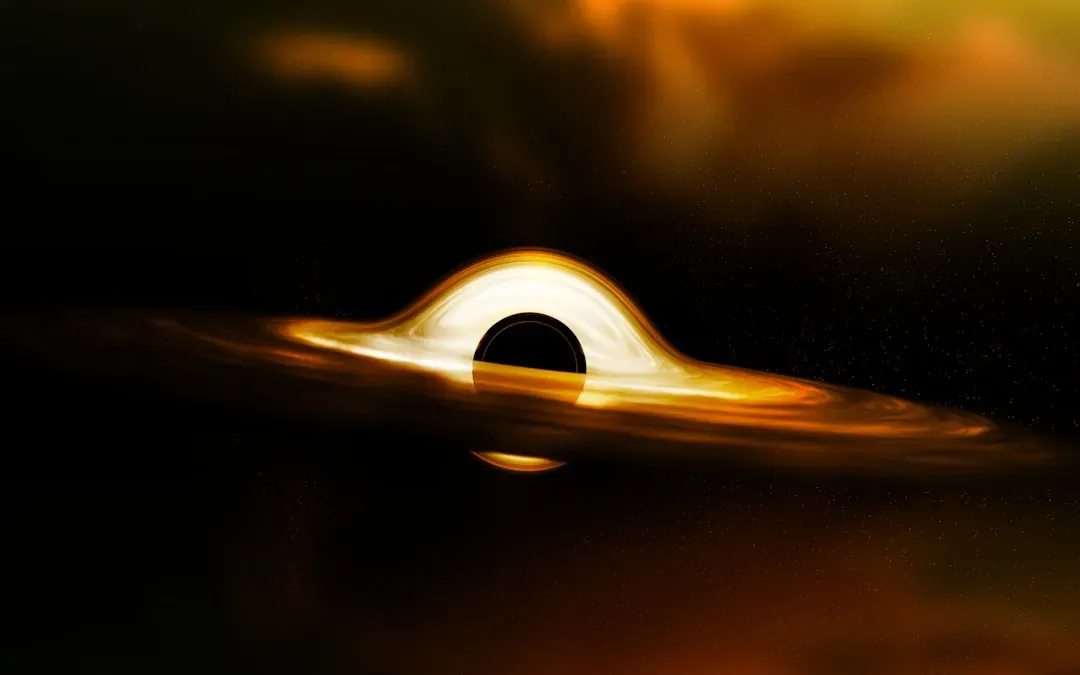
Black holes push your ideas about time to their breaking point. If you fall toward one, someone watching from far away would see your clock slow down and nearly freeze as you approach the event horizon. From your own viewpoint, though, you’d cross the horizon in a finite time and continue toward the center, where the known laws of physics predict a singularity – an end of spacetime as you understand it.
Some theories suggest that once quantum effects are included, the story could change dramatically, perhaps eliminating the singularity or storing information in strange ways. But no matter which version you consider, the notion of time inside a black hole looks radically different from the time you experience on Earth. You can’t even cleanly agree on what “later” means when paths of light and matter get so twisted. Physicists still argue over whether information is destroyed, preserved, or scrambled beyond recognition, and every option forces you to reconsider what time and history really mean.
8. At The Beginning Of The Universe, Time May Have Behaved Differently
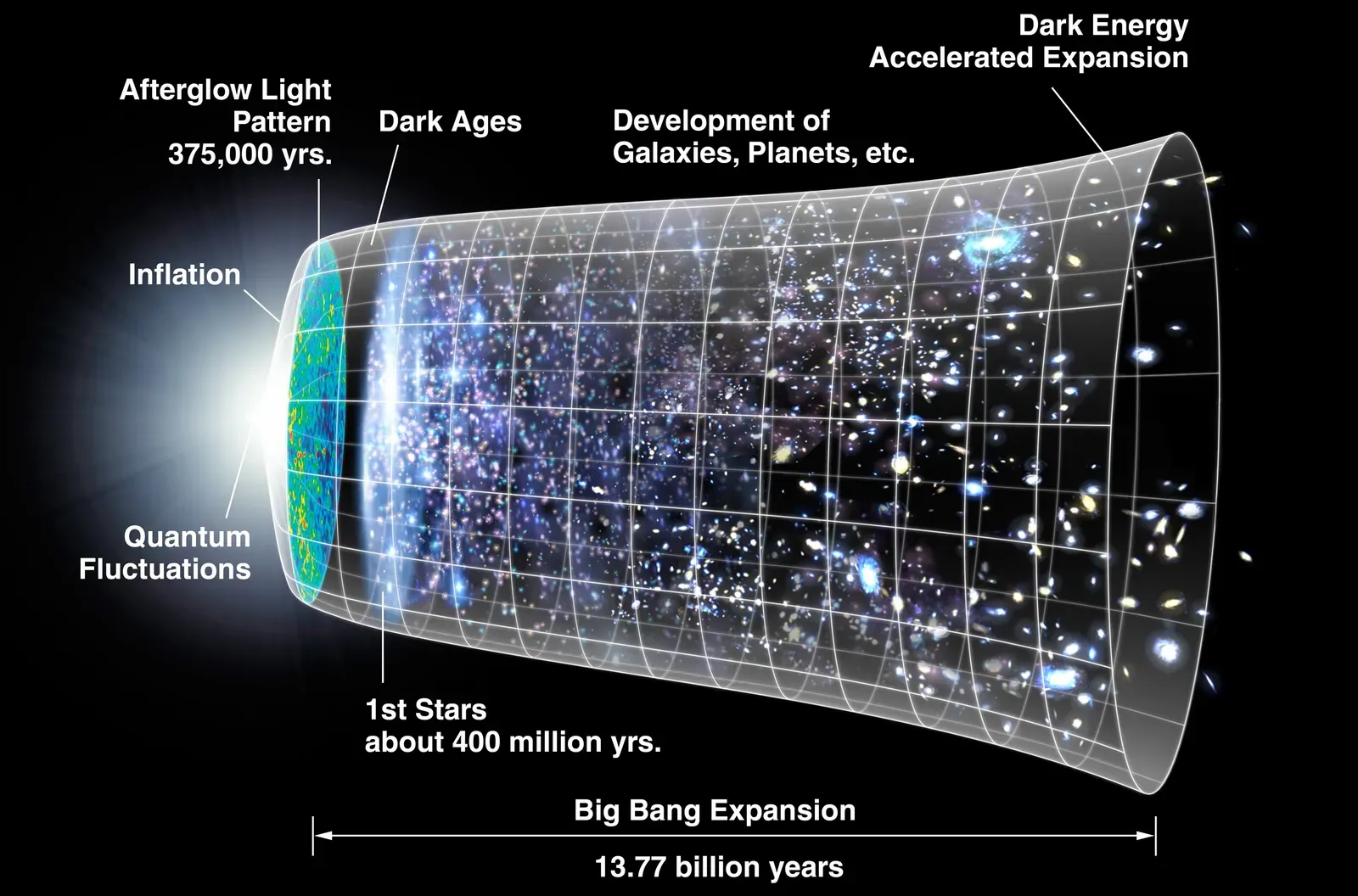
When you think about time, you probably imagine it stretching backward indefinitely, like an endless road. Cosmology suggests a different picture: your observable universe seems to have had a hot, dense beginning often labeled the Big Bang. As you mentally rewind the clock toward that origin, your usual concepts of time and space start to fail under extreme temperatures and densities.
Some models propose that time itself may have emerged from a more primitive state, or that “before the Big Bang” is not even a meaningful phrase. Others suggest a bounce, cycles, or multiple phases where time might reverse or behave in ways you can hardly picture. For your daily routines, it doesn’t matter whether time had a first moment, but for physics, it is a central mystery. When you ask what happened at the very beginning, you’re really asking where time comes from – and so far, you only have incomplete, competing answers.
9. Your Brain Creates A Story Of Flow That Physics Doesn’t Obviously Require

You feel time moving, like a river carrying you from morning to night, but that sense of flow may be more about your brain than about the universe. Neuroscience shows that your perception of time is constructed, stitched together from sensory inputs and memory, with your brain constantly predicting and updating rather than just recording events. You experience a smooth movie, but underneath, your mind might be dealing in scattered frames and edits.
Physics, especially in the block universe or timeless approaches, does not obviously need a flowing present; it only needs relationships between events. That leaves you with a tricky question: if time does not truly “flow” at the fundamental level, why do you feel it so strongly? Some researchers argue that the arrow of time, memory, and thermodynamics combine to build the illusion of movement, while others think that flow hints at something real that current theories are missing. Either way, your inner sense of time is not a neutral window onto reality – it is an active storyteller that may be simplifying a far stranger script.
10. There May Be Many Times In A Multiverse, Or None Like Yours At All
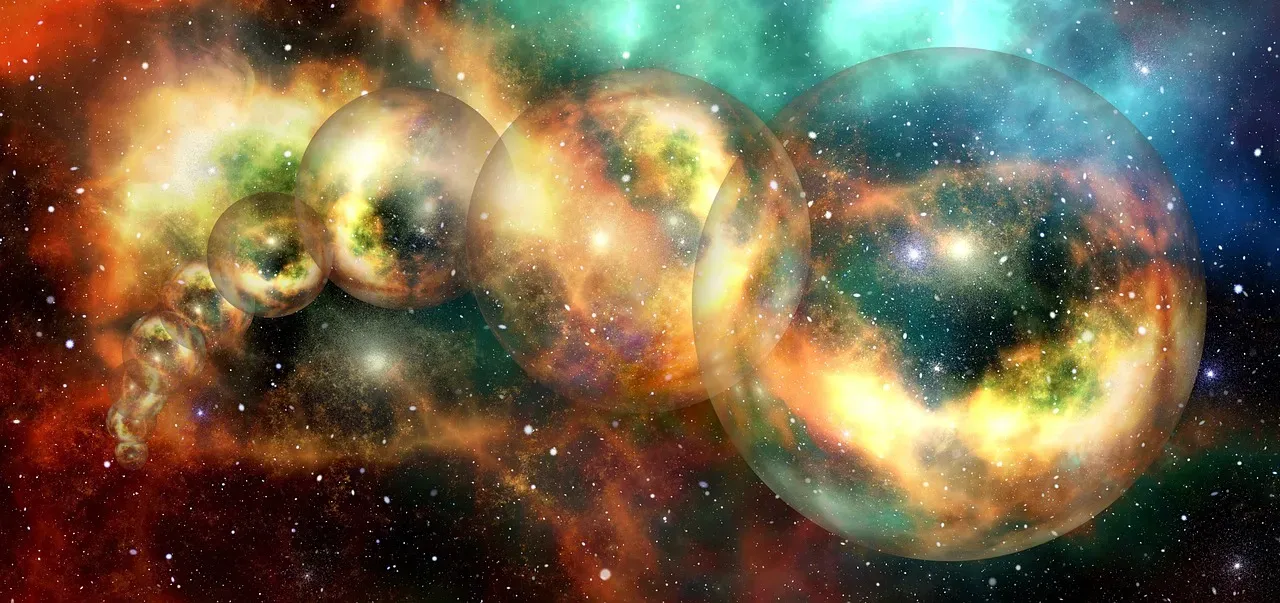
If you consider the possibility that your universe is just one bubble in a vast multiverse, time becomes even less straightforward. Different regions might expand, slow, or evolve with their own internal clocks, making your familiar seconds and minutes a local quirk rather than a universal standard. In some scenarios, there could be patches where time behaves bizarrely compared to what you experience here, or where the very concept of a smooth, continuous time breaks down.
Physicists still debate whether any version of the multiverse is real, testable, or even scientifically meaningful, but the idea keeps arising when they push current theories to their limits. For you, it raises a humbling possibility: the way you slice reality into past, present, and future may be one way among countless others, or just one pattern in a larger, timeless structure. If your universe is only one page in an unimaginably thick book, the kind of time you know might only be a single writing style among many.
Conclusion: Living Inside A Mystery You Can’t Step Outside

When you check the time on your phone, it feels like a simple fact: a number on a screen, a moment you’re living in right now. Yet, from black holes to quantum experiments, from the early universe to your own perception, every layer of physics seems to peel away that simplicity and show you something more unsettling. Time runs at different speeds, refuses to provide a single universal “now,” might be part of a static block of spacetime, and could even be an emergent feature instead of a basic ingredient of reality.
You still have to catch trains, meet deadlines, and age along with everyone else, so you cannot escape time in practice. But you can relate to it differently, with a bit more humility and a sense of wonder that your ordinary day unfolds inside something physicists still don’t fully understand. Maybe the strangest fact is that you, a creature made of atoms and bound to this one arrow of time, can even ask these questions at all. When you glance at the clock later today, will you just see numbers, or will you briefly feel the mystery humming underneath?