Think about the fact that no one else will ever know exactly what it feels like to be you. They can see your face, measure your brain waves, even predict some of your choices, but that inner movie of colors, sounds, memories, and feelings is strictly first‑person access only. That strange gap between what the brain does and what it feels like from the inside is what makes the science of consciousness so fascinating and, at times, deeply unsettling.
Scientists have brain scanners, mathematical models, and huge datasets, yet consciousness still sits there like a riddle we keep circling but never fully solve. The real twist is this: we do not just experience reality; we each construct a slightly different one. Two people can go through the same event and walk away with completely different worlds in their heads – and that is not just personality, but biology, prediction, culture, and memory all tangled together. Once you see how layered that is, it changes how you think about arguments, identity, and even what it means to be “right” about reality.
The Hard Problem: From Brain Matter to Inner Experience
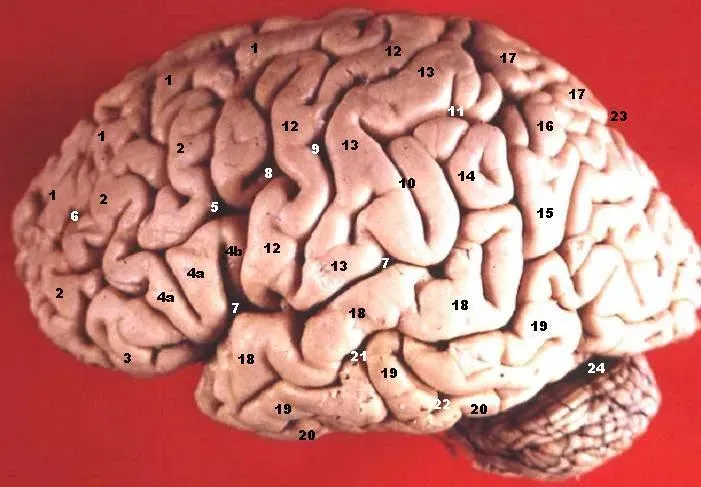
Here is the weirdest part: we can describe the brain in incredible physical detail – neurons firing, chemicals flowing, electrical patterns syncing up – yet that still does not obviously explain why any of it should feel like something from the inside. This tension is often called the “hard problem” of consciousness: how and why do physical processes in the brain give rise to subjective experience, that felt sense of seeing red, tasting coffee, or being embarrassed? You can watch a brain scan light up when someone sees a face, but the glow on the screen is not the experience; it is only a correlating pattern.
Many neuroscientists focus on what they call the “easy problems”: how attention works, how we integrate sensory information, how we control actions. These are not actually easy, but at least in principle they seem solvable with standard science. The hard problem asks a step deeper: even if we map every neuron, why is there a conscious perspective at all instead of just a dark, mindless computation? Some researchers argue that framing might be wrong or misleading, while others see it as the central question. Either way, this debate alone helps explain why your experience of reality feels so mysterious and absolutely central to who you are.
Your Brain as a Prediction Machine: Reality as a Controlled Hallucination
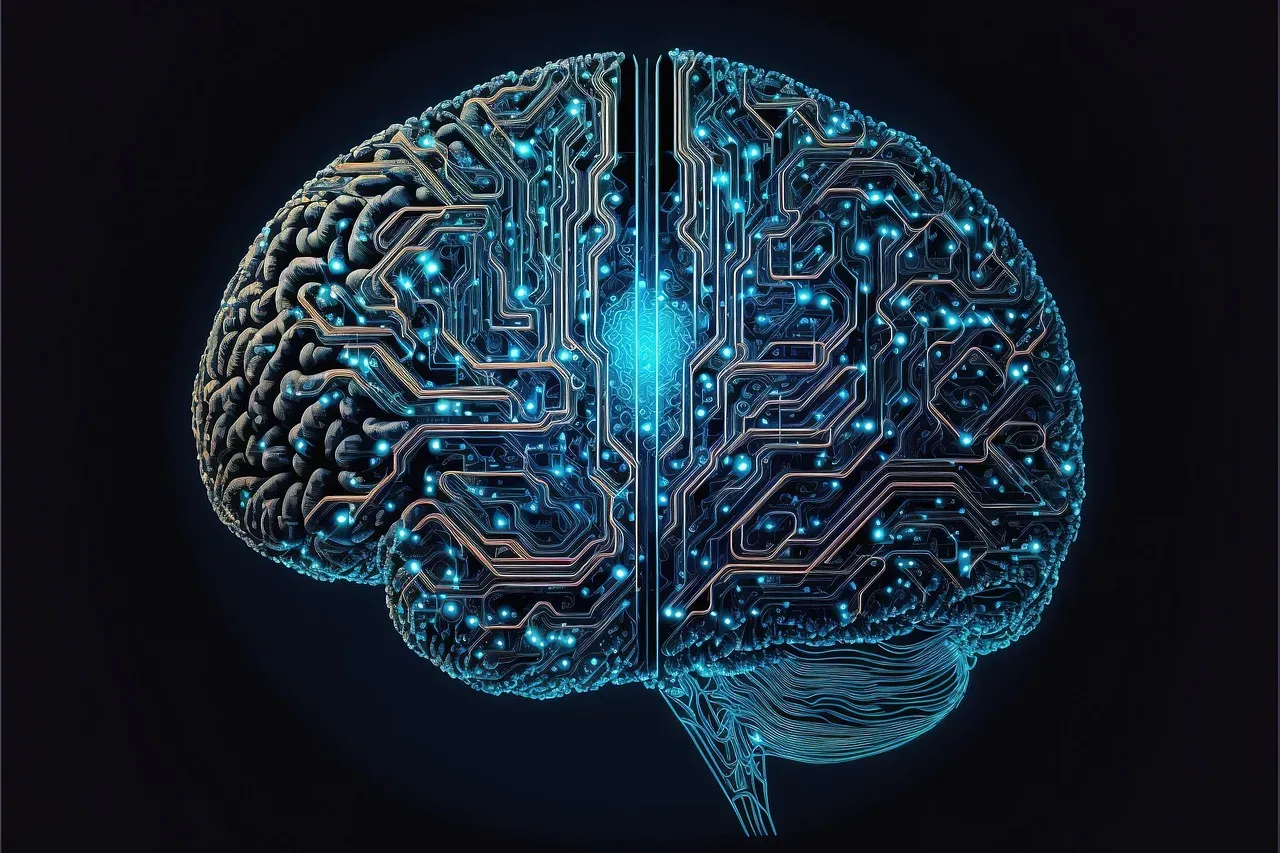
One of the most influential ideas in modern neuroscience is that the brain is not a passive camera recording reality but an active prediction machine. Instead of simply taking in data, it constantly guesses what is out there, then updates those guesses based on incoming signals. In this view, what you experience is your brain’s best ongoing bet about the causes of your sensory inputs, not a direct feed from the outside world. Some scientists go so far as to say that perception is like a controlled hallucination that stays useful because it is kept in check by sensory evidence.
This prediction framework helps explain why humans can experience the same event differently. If two people bring different expectations, past experiences, or emotional states to a situation, their brains will generate different predictions and, therefore, different realities. A crowded party might feel exciting and energizing to one person while feeling suffocating and threatening to another, even if the physical scene is identical. What changes is not the photons hitting their eyes, but the prior models their brains use to interpret those photons. Once you see your perception as active construction rather than passive recording, disagreements about “what really happened” look less like moral failures and more like clashing prediction systems.
Attention, Filters, and Why You Miss Most of What Happens
Another reason is brutally simple: we cannot process everything. Attention acts like a spotlight in a dark room, picking out a few details and leaving the rest in shadow. Experiments have shown that when people focus on one demanding task – like counting passes in a ball game – they can literally fail to see a person in a costume walk through the scene. It is not that the eyes did not receive the information; it is that the brain essentially refused to upgrade it into conscious awareness.
Because our attentional spotlight is shaped by goals, fears, habits, and cultural cues, two people can walk through the same city street and “live” in completely different worlds. One person might notice architecture and colors, another scans for social cues and potential threats, and another is deep in thought and barely registers anything at all. Over time, these patterns of attention reinforce themselves; what you notice becomes what you remember, and what you remember shapes what you expect and look for in the future. So when someone insists that the world is mostly kind, dangerous, unfair, or full of opportunity, they may not just be expressing an opinion – they are reporting the version of reality their attention has been training into existence for years.
Memory and Emotion: How the Past Rewrites the Present
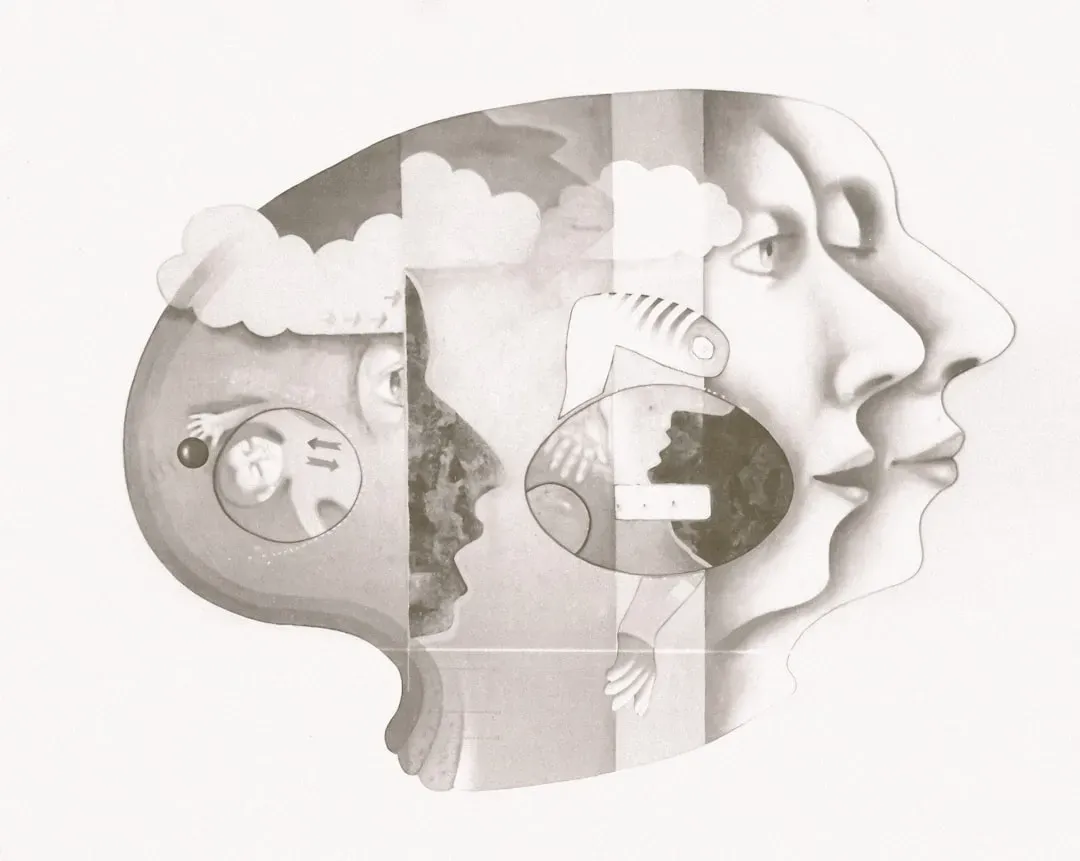
Consciousness is not just about what is happening right now; it is soaked through with memory and emotion. The brain does not store events like a video file but reconstructs them each time, mixing fragments of what actually occurred with current feelings, beliefs, and even slips of imagination. This means that your remembered reality is, in a quiet way, constantly being edited. Two siblings can remember the same childhood very differently, not because one is necessarily lying, but because their brains coded, stored, and reassembled those years through different emotional filters.
Emotion plays a huge role in what becomes conscious in the first place. Threatening or emotionally charged information tends to grab attention more quickly and stick more firmly, shaping your sense of what the world is like. If you are anxious, a neutral facial expression might look disapproving; if you are in love, small signals of affection can feel huge and luminous. Over time, this blending of memory and emotion can create self-reinforcing loops – a person who expects rejection sees it more often and remembers it more clearly, strengthening the belief. When we say that two people are “living in different worlds,” we are not exaggerating; their brains really are constructing different experiential universes on top of the same physical environment.
Culture, Language, and the Social Construction of Reality

Our experience of reality is also profoundly shaped by the cultures and languages we grow up with. Culture teaches us what to pay attention to, what counts as normal, what is dangerous, and what is sacred or trivial. One culture might train children to notice individual achievement, another to prioritize harmony and group obligations. The physical world does not change, but the meanings and emotional tones that fill it can be wildly different, and consciousness is always soaked in those meanings. You do not just see a building; you see status, history, safety, or threat, depending on what you have been taught.
Language adds another layer by carving up reality into concepts and categories. Different languages draw boundaries in different places – for colors, emotions, relationships, even time – and these categories can subtly shape how people experience and remember events. If your language has many words for different shades of a feeling, you might become more attuned to those nuances in yourself and in others. As a result, two people can walk into the same room and have very different inner narratives about what is going on, not only because of biology, but because their social and linguistic training has literally given them different lenses through which consciousness operates.
On top of that, being around other people’s minds changes how your own mind works. Social feedback – approval, rejection, confusion, admiration – acts like an external editing system adjusting what feels true, acceptable, or even thinkable. Shared stories, political narratives, and online communities can create echo chambers where certain versions of reality are amplified and others are ignored or mocked. Conscious experience is still individual, but it is constantly nudged, reinforced, or challenged by the minds around it, which means that “my reality” is never purely mine; it is partly co-authored.
Brains, Bodies, and the Feeling of Self

We often talk about consciousness as if it lives only in the brain, but in practice it is deeply embodied. Your sense of self – of being located somewhere, having a body, owning your thoughts and feelings – depends on a constant flow of signals from muscles, organs, skin, and internal systems. When those signals are disrupted, people can have striking shifts in consciousness, from feeling detached from their body to misidentifying their own limbs. This suggests that part of what you call “I” is basically the brain’s ongoing model of the organism it is tasked with keeping alive.
Different brains generate different self-models, which can make reality feel radically different from one person to the next. Conditions like depersonalization, certain psychiatric disorders, or even the effects of psychedelics can loosen the usual boundaries of self, sometimes making people feel merged with their surroundings or strangely distant from their own thoughts. On the other hand, practices like meditation or certain physical disciplines can sharpen bodily awareness and change how stable and spacious consciousness feels. When you realize that your sense of being a unified, continuous “you” is a dynamic construction rather than a fixed object, questions about identity, free will, and moral responsibility get far more complicated – and far more interesting.
Machines, Animals, and the Question of Other Minds

If consciousness is such a slippery thing in humans, it becomes even trickier when we look at other beings. Many animals show complex behavior, problem‑solving, and social intelligence, and there is growing evidence that at least some non‑human species have rich inner lives, even if their experiences are not organized like ours. The difficulty is that we cannot get inside their perspectives; we can only infer consciousness from behavior, brain structure, and evolutionary logic. That leaves a lingering uncertainty: are we sharing the planet with countless other subjective worlds we can never fully enter?
Artificial systems raise a different kind of puzzle. Modern AI can generate language, recognize patterns, and mimic certain aspects of human conversation, but there is no solid evidence that current machines are conscious in any meaningful sense. They manipulate symbols and data without that inner glow of awareness we know from the inside. Still, as systems become more complex and brain‑inspired models advance, some researchers argue we might eventually build devices that have at least primitive forms of subjective experience. My own stance is cautious: until we have a much better theory of how consciousness emerges from physical processes, claims about conscious machines are mostly speculative storytelling. Yet asking these questions forces us to be clearer about why we think humans experience reality the way we do, and what exactly we believe is so special about that experience.
Conclusion: One World, Billions of Realities
The science of consciousness is slowly chipping away at the illusion that we all share a single, straightforward view of reality. Brains as prediction machines, attention as a ruthless filter, memory and emotion as quiet editors, culture and language as lens makers, and the body as a reference frame for the self – all of these ingredients combine to create a personal world that overlaps with others but never perfectly matches. In my view, the biggest mistake we make is assuming our particular version of that world is the neutral default and that everyone else is somehow distorted. If anything, the science suggests that distortion is the norm; each mind bends the one physical world into its own workable, meaningful shape.
I think the honest takeaway is both humbling and liberating. Humbling, because our private sense of certainty turns out to be built on guesswork, habit, and social scaffolding. Liberating, because once you see that, you get a bit more freedom: to question your own reactions, to treat disagreements as collisions of constructed realities rather than battles over absolute truth, and to be more curious about how other minds assemble their worlds. We may never fully solve the hard problem or build a perfect theory of consciousness, but even partial understanding can change how we argue, empathize, and live together. If one physical universe can host billions of different inner worlds, the real question is not who is right, but how we want those worlds to meet.