If someone described Saturn to you without showing a picture, you’d probably think they were pitching a wild sci‑fi world. A planet that could float in water, wears gigantic rings of ice and rock, and has a moon that looks like a cosmic eyeball? It sounds invented. Yet you live in a universe where this very real oddball orbits your Sun.
As you get to know Saturn a little better, you start to realize just how strange and dramatic it really is. You are looking at a world of super-speed seasons, diamond rain (very likely), and storms bigger than your entire planet. By the time you reach the end of this, you might feel that Earth is almost boring in comparison.
1. You Could Literally Float Saturn in a Giant Cosmic Bathtub
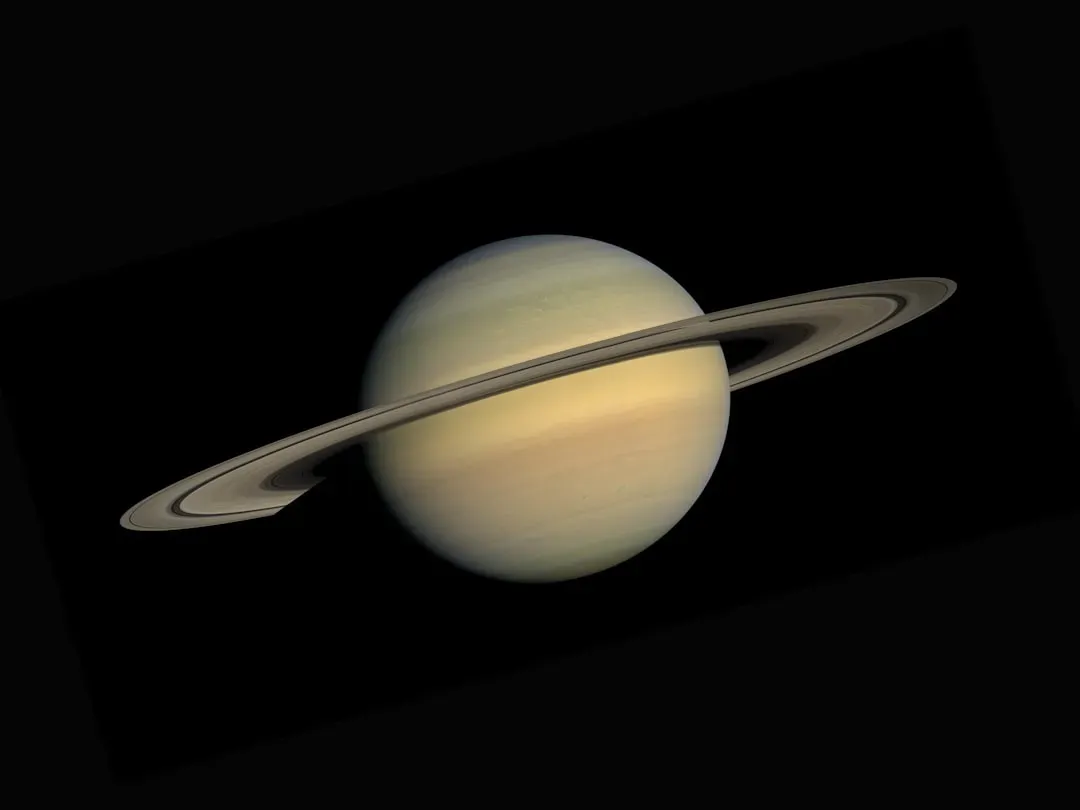
If you could somehow find a bathtub big enough to hold Saturn, you could actually make it float. That sounds ridiculous, but Saturn’s average density is lower than that of water, which means, on paper at least, it would bob like a gigantic, striped beach ball. Compared to Earth, which is much denser rock and metal, Saturn is mostly hydrogen and helium, making it more like a colossal balloon than a heavy planet.
Of course, you will never find an ocean that large, so it stays a thought experiment. Still, this simple comparison gives you a feel for just how light and puffy Saturn really is for its size. When you look at images of that massive globe wrapped in rings, it is bizarre to remember that, in terms of density, it has more in common with the Sun than with the rocky world you stand on.
2. A Day on Saturn Flies By in About 10 Hours
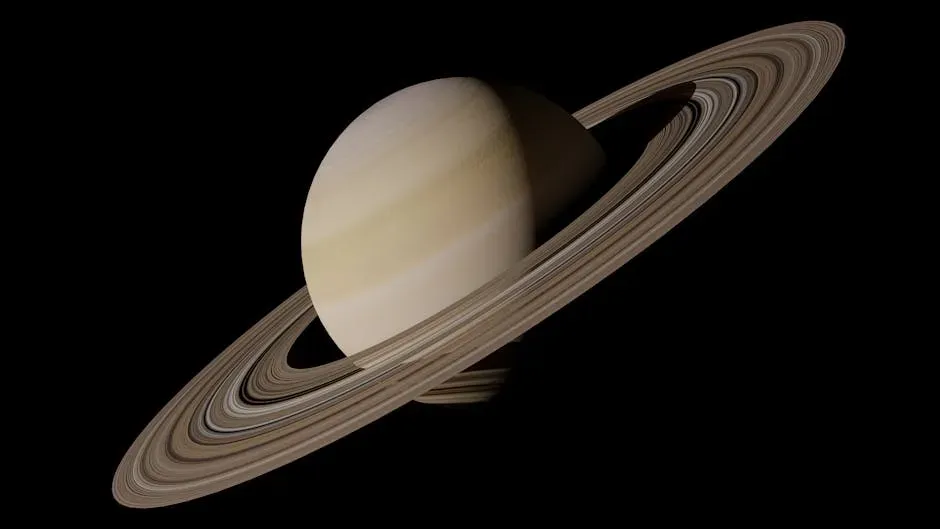
Imagine trying to squeeze your entire workday, commute, meals, and sleep into less than half of an Earth day. On Saturn, the planet spins so quickly that a full rotation takes roughly about ten and a half hours. You would see the Sun rise and set crazily fast, and your sense of time would feel completely scrambled.
This rapid spin stretches Saturn slightly at the equator, making it look a bit squashed, like someone gently pressed down on the top and bottom. You can actually notice this flattening in photos, which is wild when you realize you are seeing the effect of a ten-hour day on a whole planet. If you ever feel like time is rushing by on Earth, Saturn takes that feeling and cranks it up to an extreme.
3. Saturn’s Rings Are Almost Paper-Thin Compared to Their Size
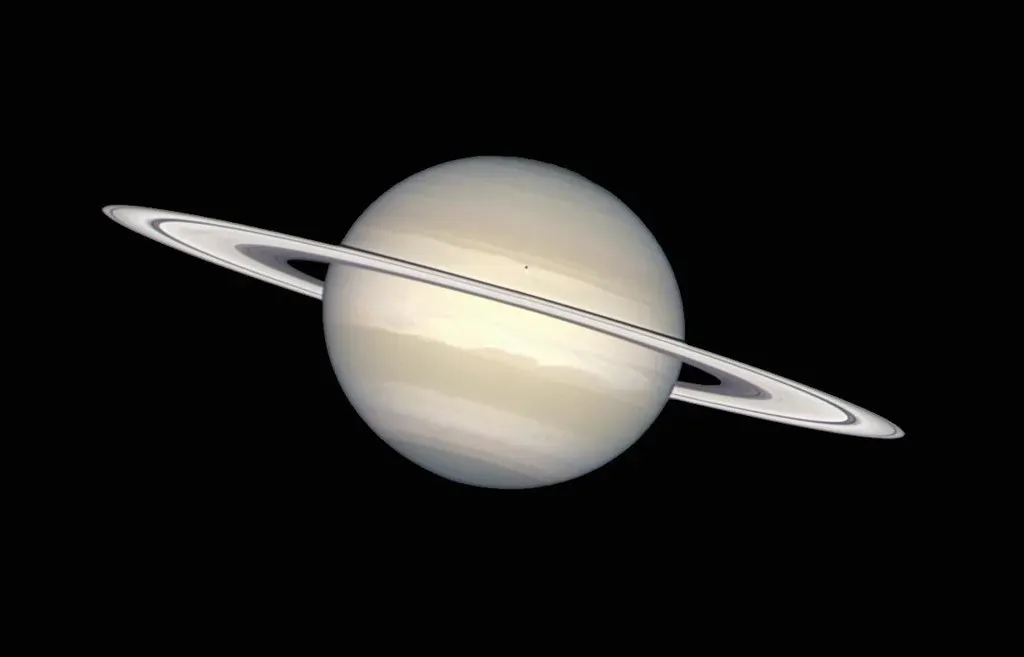
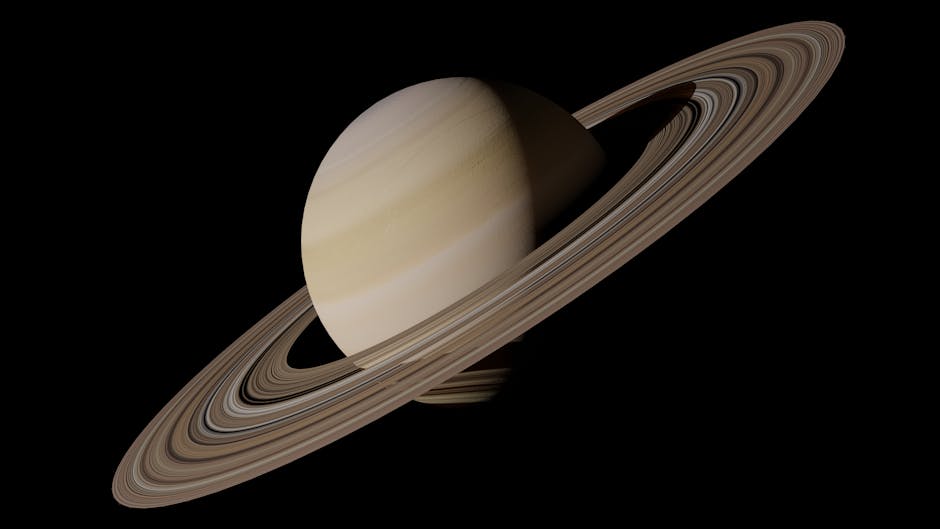
When you look at Saturn’s rings in photos, they seem thick, solid, and towering, like cosmic walls of ice. But if you scale it properly in your mind, you are dealing with something more like a gigantic, delicate sheet. The rings stretch out for hundreds of thousands of kilometers from the planet, yet in many places they are only about as thick as a big city is wide.
If Saturn were shrunk down to the size of a typical classroom globe, the main rings would be as wide as a city but thinner than a sheet of paper. You are basically staring at a massive, nearly flat swarm of ice particles and dust, each one following its own orbit while together they draw a perfect, razor-thin halo. It feels like nature decided to show off how dramatically it can combine vastness and delicacy at the same time.
4. The Rings Might Be Younger Than Many of Earth’s Dinosaurs
If that is true, you live in a lucky slice of cosmic time. There may have been an era when Saturn looked like a fairly plain gas giant from afar, and there might be a future when the rings thin out and disappear as material spirals into the planet. You just happen to exist at a moment when you can look up through a telescope and see this planet wearing its shimmering ice jewelry at its most dramatic.
5. Saturn Has a Giant Hexagon-Shaped Storm at Its North Pole
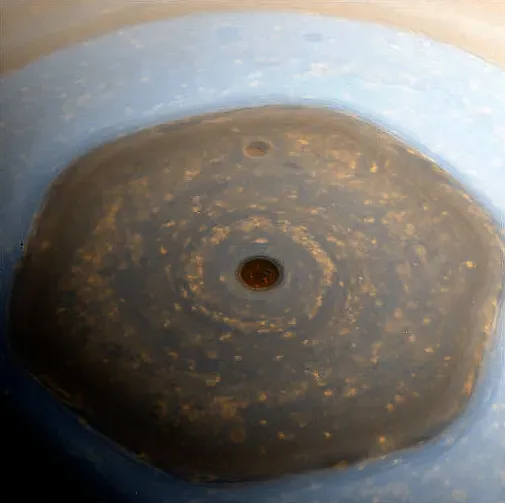
When you think of storms, you probably imagine swirling circles like hurricanes on Earth. On Saturn, the atmosphere decided to break the rules and draw geometry instead. At the north pole, you have a monstrous jet stream structure shaped like a near-perfect hexagon, each side longer than the diameter of your entire planet.
This hexagon is not just an odd cloud pattern; it is a long‑lived, stable feature, spinning around the pole year after year like some haunting symbol carved into the atmosphere. If you were orbiting above it, you would be looking down at a churning, six-sided vortex, with clouds racing around at immense speeds. It feels like something an artist would invent for a futuristic movie, yet you can see real spacecraft images of it today.
6. It’s Likely Raining Diamonds Deep Inside Saturn
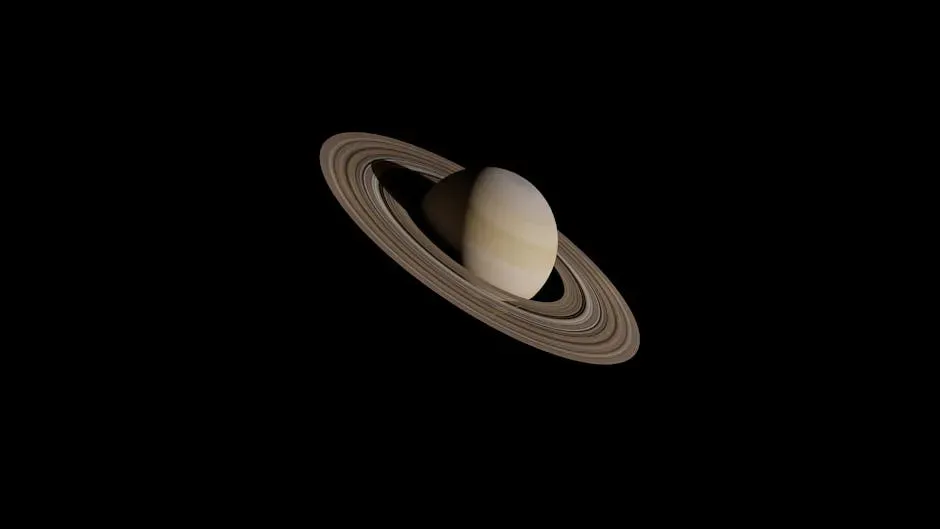
On Saturn, the phrase “precious weather” takes on a whole new level. According to several models, the intense pressure and chemistry in Saturn’s deep atmosphere can turn carbon into solid diamonds that fall like rain. You can picture it: lightning storms breaking apart methane molecules, freeing carbon that gets squeezed into graphite and then into diamond as it sinks.
You will never stand there with an umbrella catching gemstone raindrops, because these diamonds would likely keep dropping toward deeper, hotter layers where they might eventually melt. Still, the idea that, somewhere inside that pale-yellow world, literal diamond storms may be flashing and falling is hard to wrap your head around. It reminds you that the familiar materials you know on Earth can behave in completely unexpected ways when nature turns up the pressure.
7. One of Saturn’s Moons Has Seas of Liquid Methane
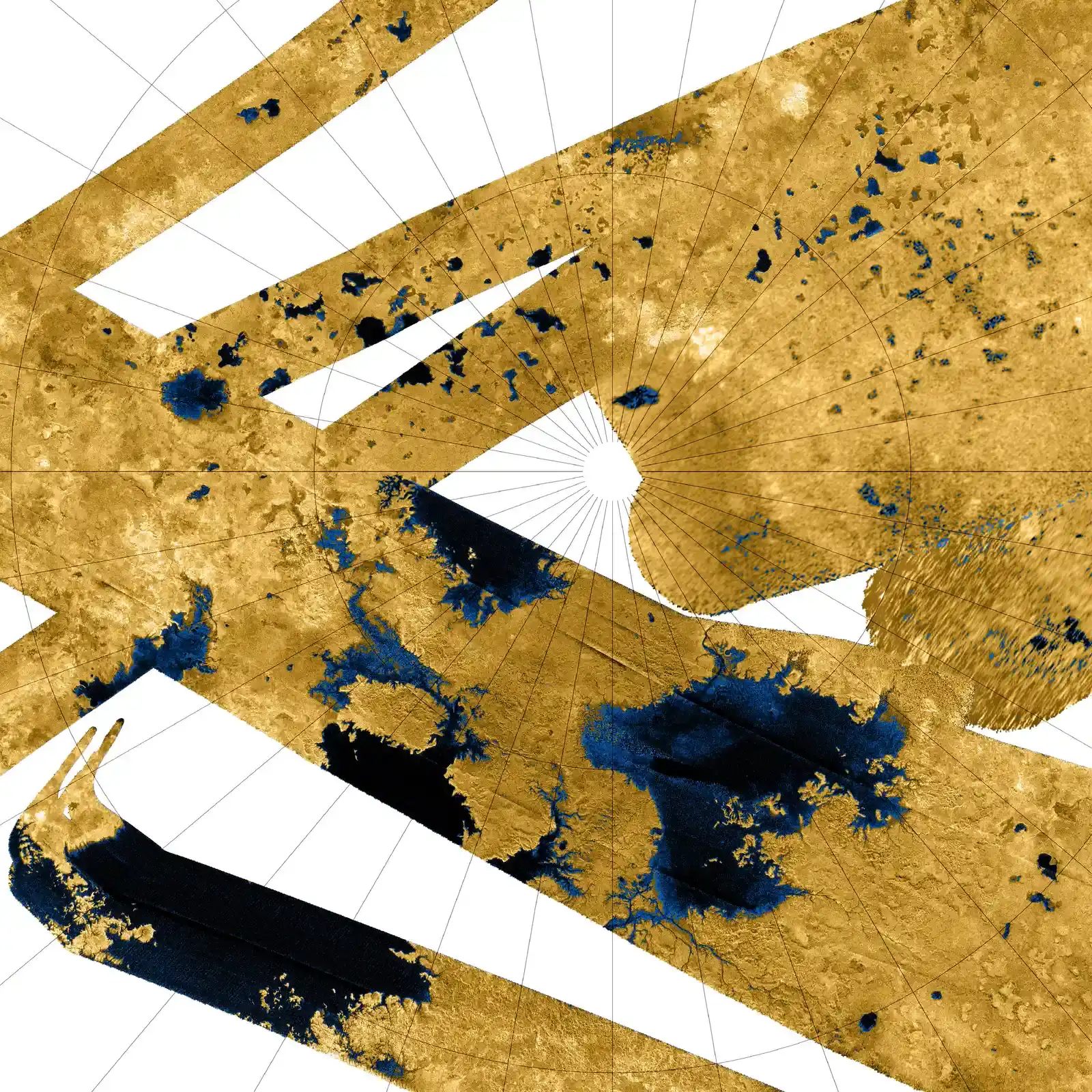
You are used to oceans made of water, with waves crashing on sandy beaches. On Titan, Saturn’s largest moon, you would find lakes and seas not of water but of liquid methane and ethane, chilled in the deep cold of the outer solar system. The temperatures are so low that these hydrocarbons, which you usually know as gases or fuels on Earth, behave like liquids and form entire alien coastlines.
If you could stand there in the hazy orange twilight, you would see smooth, dark seas with small waves, solid ground made of water ice as hard as rock, and perhaps methane rain falling from thick clouds. The whole place feels like a mirror-world version of Earth, with a different set of ingredients swapped in. It forces you to rethink what a “habitable landscape” might look like, because the basics like lakes, rivers, and shores can exist without a single drop of liquid water.
8. Saturn Has Over 100 Moons and Moonlets (and Counting)
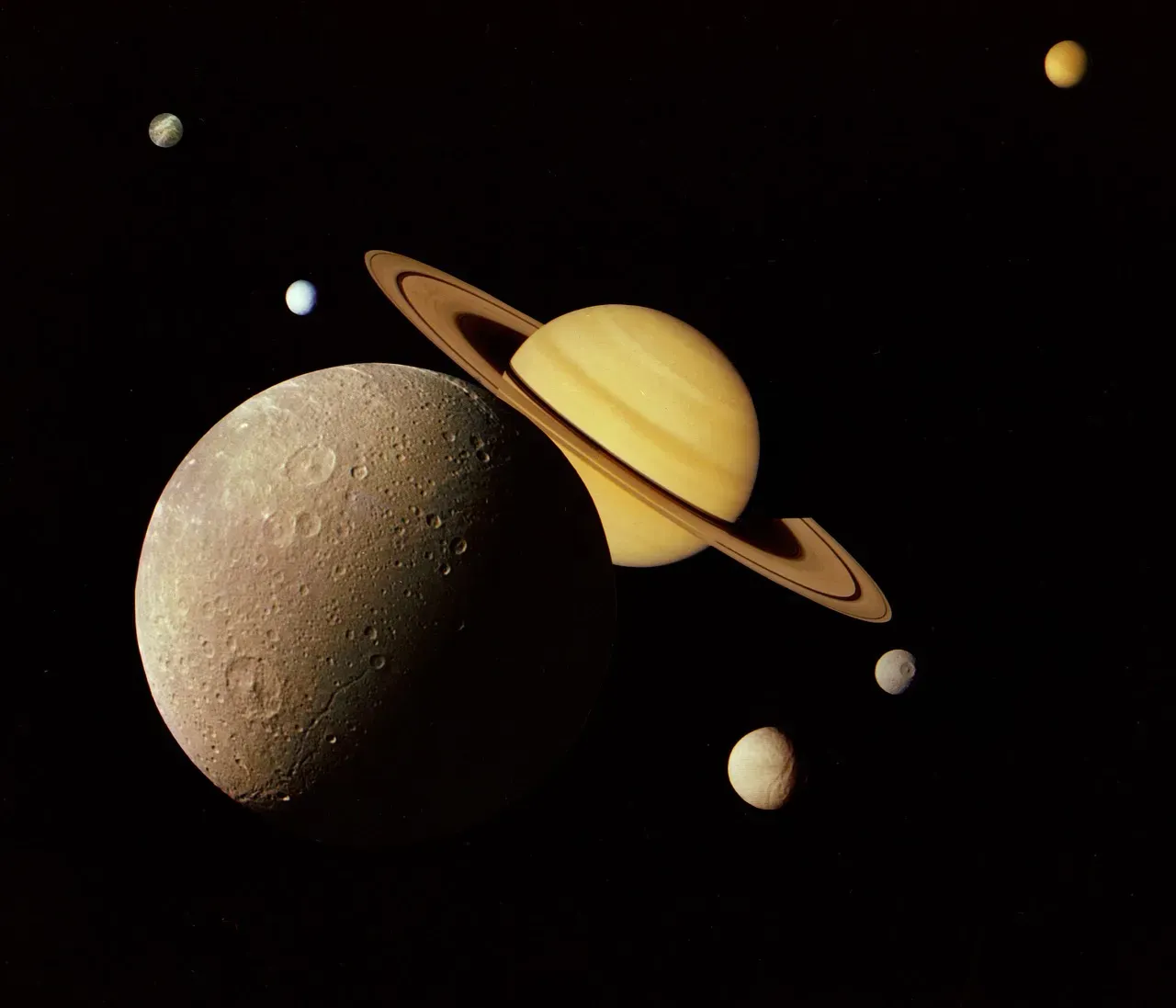
When you think of a planet with many moons, you might picture Jupiter first, but Saturn is a serious contender for the title of ultimate moon hoarder. Observations have revealed well over one hundred confirmed moons and smaller moonlets, and as detection methods improve, you keep finding more. It is like Saturn cannot stop collecting companions, from tiny icy chunks a few kilometers across to substantial worlds like Titan and Enceladus.
If you imagine yourself orbiting Saturn, you would never get the same view twice. New moonlets weave through the rings, some shaping gaps and waves, while larger moons glide farther out. It is closer to a miniature solar system than a simple planet, with each moon having its own story: geysers, thick atmospheres, cratered surfaces, or hidden oceans. You are not just dealing with a planet here; you are dealing with an entire community of worlds.
9. Saturn Is Losing Its Rings Right Now
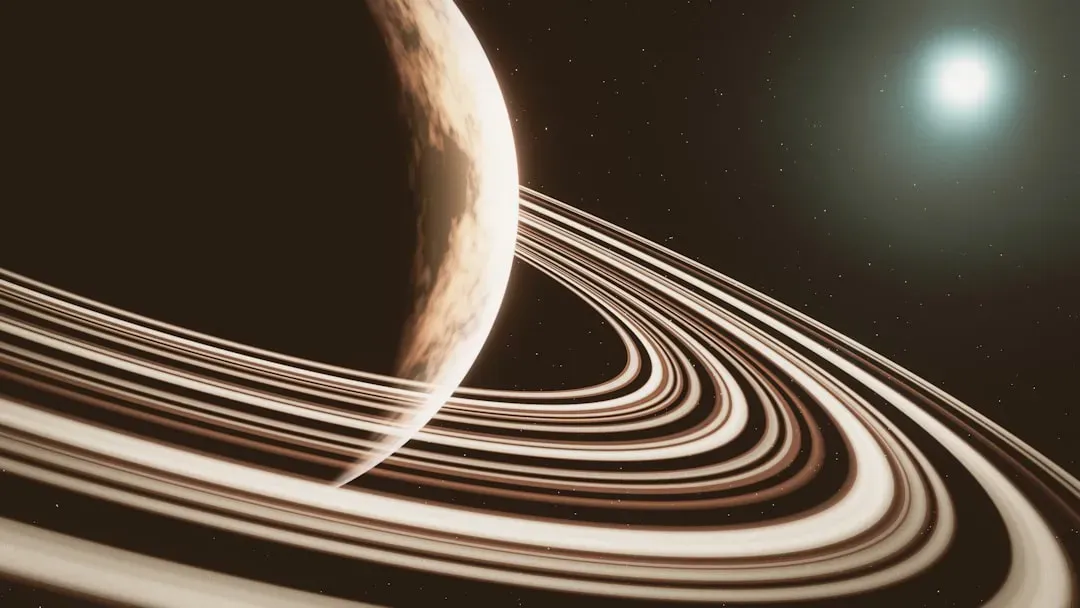
As glorious as Saturn’s rings look, they are not permanent. You live at a time when those rings are gradually raining down onto the planet in the form of icy particles pulled inward by gravity and guided by the planet’s magnetic field. Observations suggest that, on very long timescales, Saturn may eventually lose a large part of its ring system.
For you, this is both a little sad and strangely beautiful. You are witnessing a cosmic structure in mid-life, not at its birth or death, but somewhere in between. Millions of years from now, whatever intelligent eyes might be out there could see a much barer Saturn. Right now, though, you are lucky enough to point a modest backyard telescope at the sky and catch this planet at its most photogenic, in the brief era when its icy halo still dazzles.
10. You Can Never Stand on Saturn, No Matter How Advanced You Get
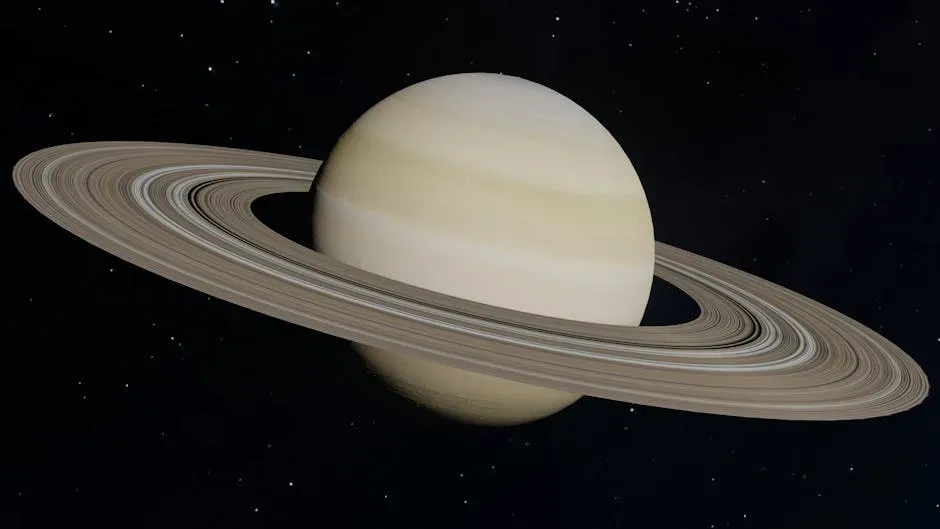
It is tempting to imagine future explorers planting a flag on Saturn the way they did on the Moon. The reality is that Saturn does not have a solid surface like the one you rely on under your feet. As you descended, you would fall through layers of gas that gradually get denser and hotter, until the pressure and temperature become utterly destructive. There is no clear boundary where you could say, “Here, I stand on Saturn.”
Even if your technology somehow let you survive those hostile layers, you would not find bedrock waiting at a comfortable depth. You would be heading toward a deep, crushing interior of metallic hydrogen and possibly a compact core, far beyond where any human or machine could currently endure. Saturn is a world you can orbit, fly by, and study from a distance, but never truly visit in the way you might visit a rocky planet. In a way, that untouchable quality adds to its mystique, turning it into a permanent, unreachable wonder.
Saturn is the kind of place that keeps stretching your sense of what a planet can be: too light for its size, too fast in its spin, wearing impossibly thin rings, and ruling over a wild family of moons and storms. When you zoom out and remember that this is just one of many worlds circling an average star in an ordinary galaxy, it is hard not to feel a mix of awe and humility. The next time you see a tiny picture of Saturn in a textbook or on your phone, you will know you are looking at a world where seas of methane, diamond rain, and hexagon storms are just another day in the neighborhood.
If a single planet in your solar system can be this strange, what else might be waiting out there that you have not even imagined yet?