
Most of us do the same thing when thoughts of death pop up: we quickly change the subject in our heads. We scroll, we work, we talk about anything else. Yet the fear quietly lingers in the background, like a low hum you only notice when the room goes quiet. That alone is fascinating: you can be perfectly safe on your couch and still feel a chill just imagining not existing. Something about death presses on a very old, very sensitive nerve.
I still remember lying awake as a kid, suddenly hit by the realization that one day my parents would die, then I would too. Nothing bad was happening in that moment, but my heart pounded anyway. That gap between present safety and future terror is exactly where the psychology of death anxiety lives. To understand why the fear of death is so deeply wired into us, we have to walk through evolution, brain science, culture, and our own private stories – all of which quietly shape how we relate to the one thing none of us can avoid.
The Evolutionary Roots: Fear as a Survival Feature, Not a Bug
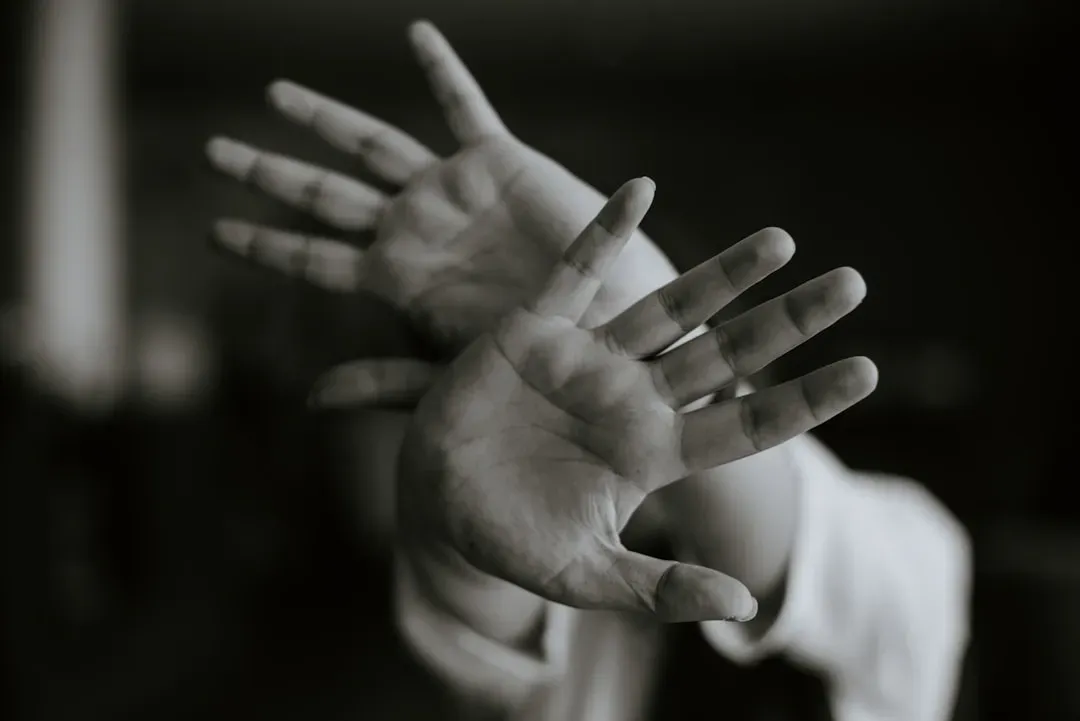
Imagine being one of our early human ancestors, sleeping in the open, hearing a rustle in the dark. The people who shrugged and rolled over were less likely to pass on their genes than the ones who jolted awake, heart racing, ready to run. Over many generations, nervous, hyper-alert humans had a survival advantage. That basic fear system – especially fear of injury, predators, and anything that looked like it could kill you – became baked into our biology. Death is the ultimate loss, so our brains evolved to treat even its shadow as a big red alert.
In that sense, fear of death is like a built‑in alarm system that kept our ancestors alive long enough to have children. It is not some weird flaw or a sign that you are uniquely anxious; it is what successfully reproducing mammals look like. We are descendants of the people for whom the possibility of not surviving tomorrow felt urgent and motivating. The irony is that in the modern world, where many of us are safer than humans have ever been, this same system still fires off, often in situations where we are physically fine but mentally staring at the idea of the end.
Your Brain on Mortality: How the Mind Handles the Unhandleable
Neuroscientists have found that when we are reminded of death, parts of the brain involved in conflict and emotional regulation light up, as if the mind is actively trying to manage something it cannot quite process. Other regions linked to self‑awareness and imagining the future also get recruited. Put simply, the brain has to do a strange dance: it can imagine its own destruction, but it cannot fully comprehend what it means to no longer be there. That mismatch between what we can think about and what we can truly grasp is a major source of existential unease.
So the brain uses a few tricks. It often responds to reminders of mortality by quickly shifting focus back to everyday goals, relationships, and roles. You think about death for a second, then suddenly feel the urge to check messages or plan next week. This is not just distraction for the sake of it; it is a way for the mind to re‑anchor itself in life, identity, and continuity. At the same time, certain people – especially those more prone to anxiety – get stuck in the loop, repeatedly returning to mortality thoughts with a kind of stunned fascination, like poking at a bruise they know will hurt.
From Instinct to Meaning: Terror Management and the Stories We Tell

Psychologists have proposed that once humans became self‑aware enough to realize we will die one day, we needed more than just reflexive fear to cope with that knowledge. Instead of only running from predators, we had to run from the psychological terror of knowing that, no matter how careful we are, our story ends. This is where beliefs, values, and worldviews come in. People lean on cultural systems – religion, nationalism, moral codes, family traditions – to feel like they are part of something larger and more enduring than their individual body.
When our sense of meaning or worldview feels threatened, anxiety about death tends to spike in the background. You can see this in how people sometimes get more defensive, rigid, or hostile when their core beliefs are challenged. Underneath the debate about politics or morality, there is often a quieter struggle: the fear that if my worldview is wrong or meaningless, then my life might be, too. The fear of death then is not just about bodies stopping; it is about the possibility that nothing we care about ultimately matters, and our cultures work very hard to protect us from feeling that directly.
Culture, Religion, and the Many Ways We Deny the End

Every culture has invented ways to soften the blow of mortality. Some promise an afterlife, others emphasize reincarnation, ancestral presence, or the idea that your essence continues through descendants or community. Even in more secular societies, people talk about living on through their work, creative projects, or the impact they leave behind. These are all different versions of the same psychological move: turning a hard stop into a softer transition, or at least stitching the individual life into a longer story so it does not feel like a pointless blip.
At the everyday level, we practice quieter forms of denial. We joke about death, use euphemisms, and design our lives to avoid confronting old age, illness, and loss until we are forced to. We keep death out of sight in hospitals and institutions, and we praise youth and productivity as if they were permanent states. None of this fully removes the fear, of course, but it pushes it just far enough to the edges so most people can function. When those cultural buffers crack – through a pandemic, a sudden loss, or a personal crisis – the raw fear often surges back in ways that surprise us.
Personality, Trauma, and Why Some People Fear Death More Than Others
Not everyone experiences the fear of death in the same way. Some people think about it rarely and feel mostly calm when they do; others find that even a passing reference can trigger racing thoughts and sleepless nights. Personality traits like general anxiety, sensitivity to uncertainty, and a tendency to ruminate make a big difference. If your mind already likes to spin worst‑case scenarios, the idea of the ultimate worst‑case – nonexistence – can become an especially loud background noise.
Past experiences shape this fear too. People who have faced sudden losses, near‑death events, or serious illness often develop a sharper awareness of mortality. For some, that leads to panic and preoccupation; for others, oddly, it can reduce fear, because they have already looked it in the eye and come back. I have heard more than one person say that surviving a serious health scare made their everyday anxieties feel smaller, as if the volume on death fear was turned down just enough to let life in more fully. The same event can either entrench the terror or start to transform it, depending on support, beliefs, and how the story is integrated.
Modern Life, Digital Distraction, and the New Face of Death Anxiety

In the twenty‑first century, we live in a strange split reality when it comes to death. On one hand, many of us are more physically protected than any generation before us, thanks to medicine, technology, and improved living standards. On the other hand, we have nonstop access to global catastrophes, violence, and disasters through our screens. You can scroll from a harmless meme to footage of real‑time tragedy in a few seconds. That constant exposure can quietly inflame background death anxiety, even when your own life is not at immediate risk.
At the same time, digital life gives us endless ways to avoid sitting with existential thoughts. The second unease creeps in, there is always another video, another notification, another stream of content. I am not judging this – I do it too – but it comes with a cost. If we never look at our fear of death directly, it tends to leak out sideways as restlessness, numbness, or a frantic need to stay busy. In that sense, the modern problem is not that we fear death; it is that we are terrified of even noticing how much we fear it, and our devices happily help us look away.
Can Facing Death Make Life Richer? Turning Fear Into Fuel

Here is the paradox: while fear of death is deeply wired, how we relate to it is surprisingly flexible. People who intentionally reflect on mortality – through philosophy, therapy, spiritual practice, or simply honest conversation – often report a stronger sense of what truly matters to them. Instead of trying to erase the fear, they learn to carry it differently, like a heavy backpack you eventually adjust to rather than a monster you keep locked in the basement. The fear does not fully vanish, but it becomes less of a dictator and more of a reminder.
Personally, I have found that when I let myself feel the reality that time is finite, small annoyances lose a bit of their power. Petty arguments seem less worth it, and simple things – a walk, a laugh with a friend, a quiet morning – feel more vivid. That is my bias, and I own it: I think sanitizing death out of our conversations has made us more anxious, not less. The fear of death will always be part of being human; evolution and consciousness saw to that. But we get a say in whether that fear shrinks our lives or sharpens them. In the end, maybe the better question is not how to get rid of the fear of death, but how to let it remind us, gently and persistently, that we are still here. What might you choose differently if you really kept that in mind?