If someone told you there was a large forest mammal, roughly the size of a small cow, that science only “discovered” in the 1990s, you’d probably assume they were joking. Yet that is exactly the story of the saola, a quietly beautiful animal hiding in the mist-soaked mountains on the border of Laos and Vietnam. It is so rarely seen that even many wildlife biologists will go through their entire careers without ever laying eyes on one.
The saola’s story sits right on the edge between natural wonder and looming tragedy. Fewer than a few hundred are thought to remain, and some experts fear the number may already be down to just dozens. At a time when people assume we’ve mapped and measured every corner of the planet, the idea that one of the world’s rarest mammals could disappear before most of us even know it exists is both sobering and strangely electrifying. Once you meet the saola, even on the page, it’s hard not to feel personally invested in whether it makes it into the next century.
The “Asian Unicorn”: A Mythical Animal That Turned Out To Be Real
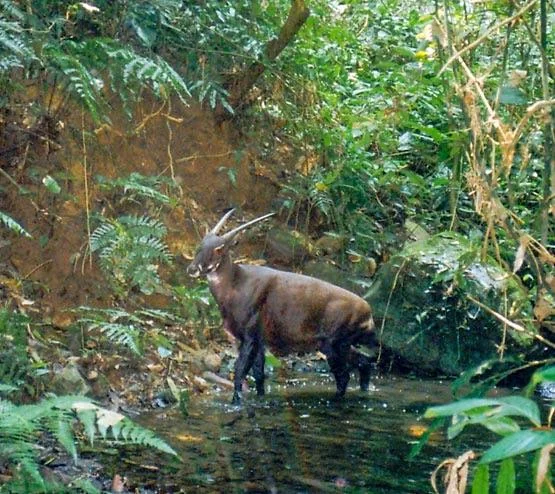
The saola is often nicknamed the Asian unicorn, not because it has a single horn, but because it is almost never seen. For decades, local communities in the Annamite Mountains knew of a shy, horned animal deep in the forest, but the wider world had no idea. Only in 1992 did scientists recognize it as a new species, after Vietnamese researchers found a set of unusual horns in a hunter’s home and realized they belonged to an animal no one had ever documented before.
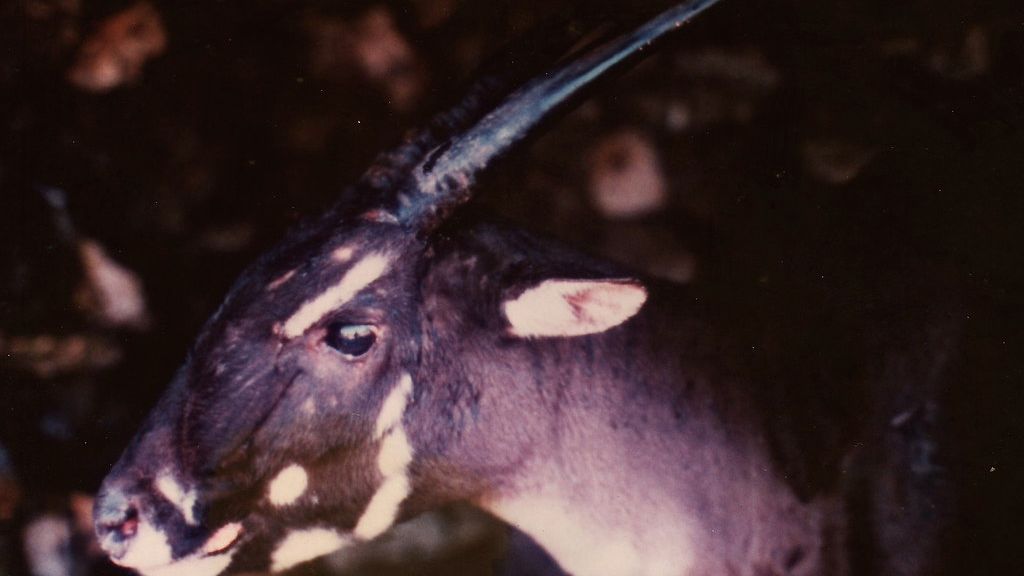
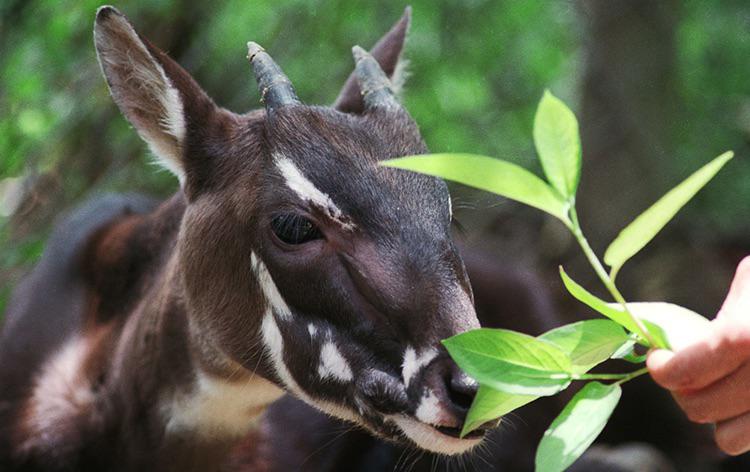
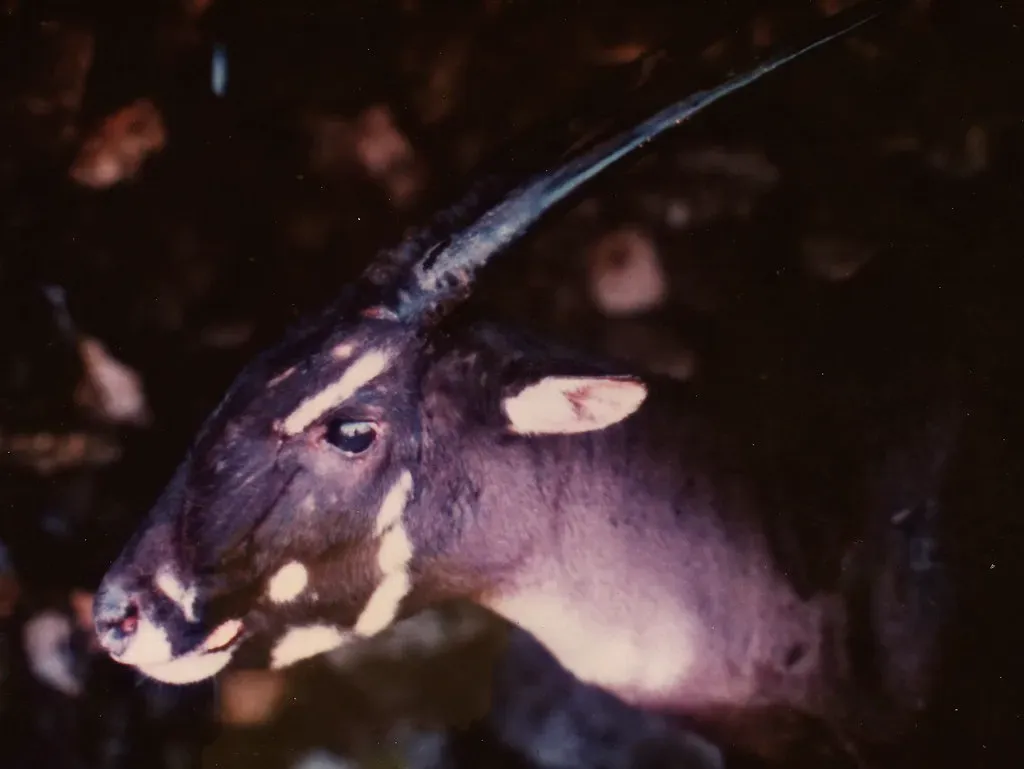
That alone would make the saola extraordinary, but the mystery only deepened from there. Adults carry a pair of long, nearly parallel horns that can reach impressive lengths, giving them a sleek, almost mythical silhouette. Camera trap photos show a smooth, dark brown coat with striking white facial markings and a calm, almost contemplative expression. The more researchers learned, the clearer it became that this was not just a new species but an evolutionary oddball, unlike anything else alive today.
Where the Saola Lives: Misty Mountains Few People Ever See
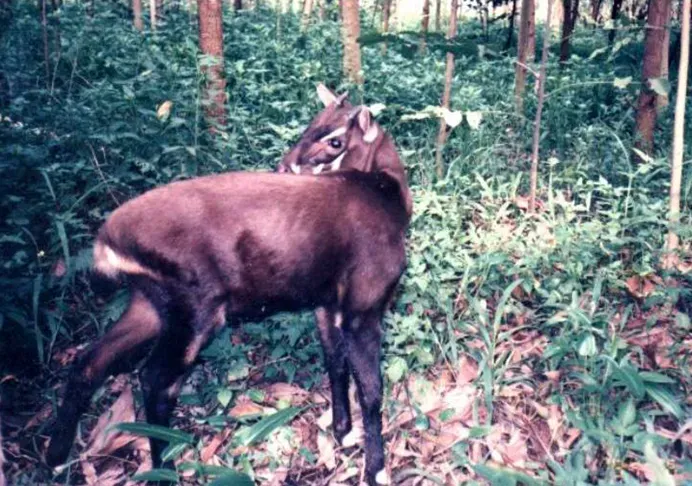
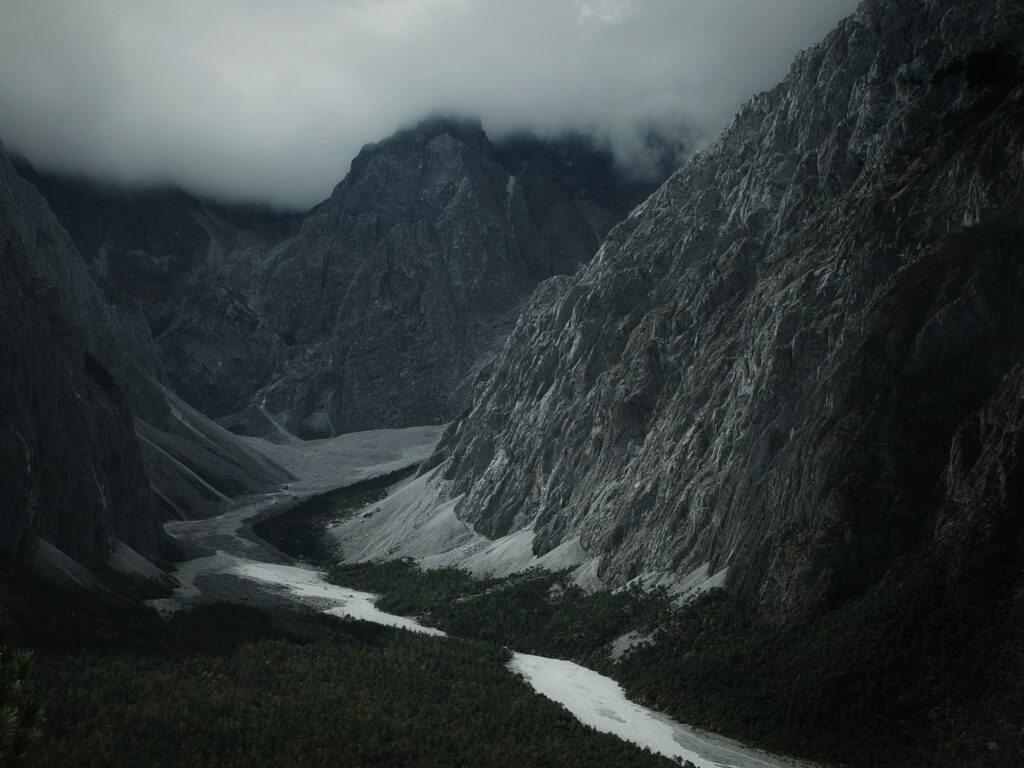
The entire known range of the saola is squeezed into a narrow stretch of rugged, forested mountains along the border between Vietnam and Laos. These Annamite Mountains are drenched in moisture, with cloud forest draped over steep slopes and deep river-cut valleys. Human travel here is slow, uncomfortable, and often downright dangerous, involving days on foot, leech-filled streams, and thick, tangled undergrowth.
This harshness is part of why the saola stayed hidden for so long. It seems to favor remote, evergreen forests near rivers, places where human presence has historically been minimal and the forest still feels primeval. Scientists rely heavily on camera traps, local knowledge, and tracks or droppings, because actually spotting an individual in the wild is almost unheard of. In a world obsessed with satellite imagery and drones, the saola’s landscape is a reminder that some places still keep their secrets.
What Makes the Saola So Special in the Animal Kingdom?
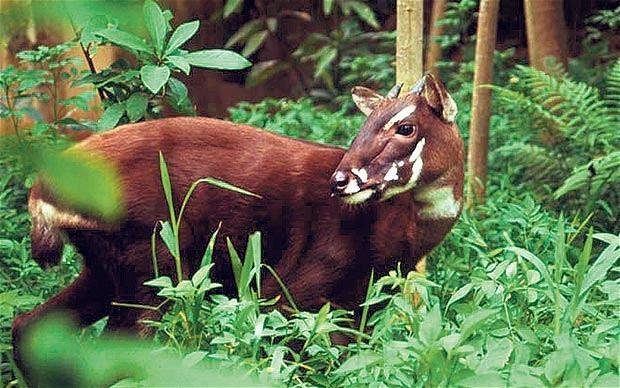
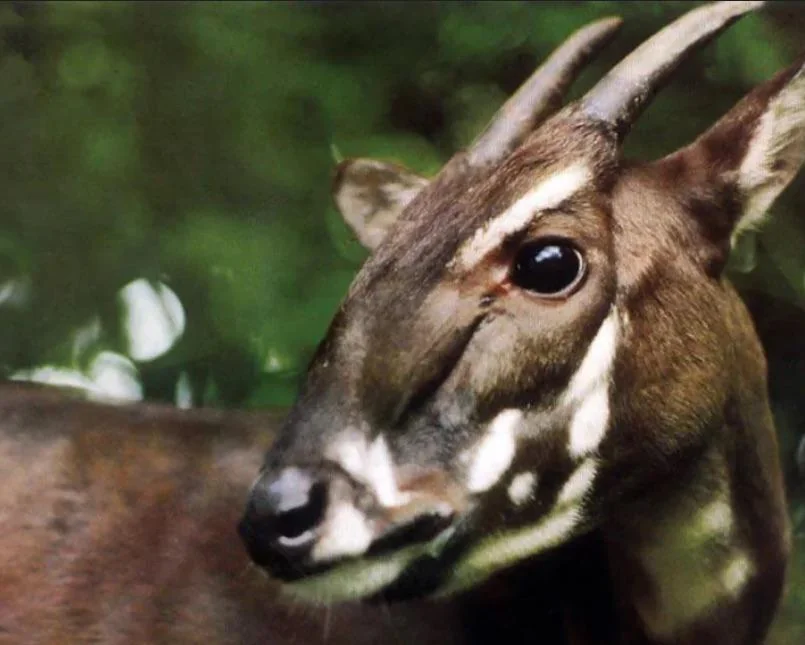
Biologically, the saola is a kind of living riddle. It is a bovine, part of the same broader family as cattle, goats, and antelopes, but it sits alone in its own genus, Pseudoryx. That lonely position on the family tree means there is no other animal quite like it; if the saola goes, an entire unique evolutionary branch vanishes with it. Its horns are slim and elegant, pointing slightly backward and nearly parallel, like dark, polished rails running over the head.
Beyond the obvious features, the saola has enlarged scent glands on its face, which it probably uses to mark territory or communicate with other saolas, a behavior biologists are still trying to understand. It is believed to be mostly a browser, feeding on leaves, shoots, and other vegetation in the dense understory of the forest, rather than grazing out in the open like cattle. The truth is that basic facts about how often it breeds, how long it lives, or how it organizes its social life remain frustratingly incomplete. From a scientific point of view, that uncertainty is fascinating; from a conservation point of view, it is terrifying, because it is hard to save what you barely know.
Why the Saola Is Vanishing: Silent Snares and Shrinking Forests
When people hear about a rare mammal, they often imagine trophy hunters or some shadowy black market specifically obsessed with that animal. With saolas, the main story is more mundane and in some ways more heartbreaking: they are often killed by simple wire snares set for other animals. Throughout the Annamites, countless snares are laid to catch wild pigs, deer, and other forest meat, and these traps do not care what species stumbles into them. A saola moving quietly through its home range can be gone in a single, unseen moment.
On top of snaring, habitat loss and fragmentation are steadily eroding the saola’s world. Logging, agricultural expansion, roads, and infrastructure carve up the forest, turning continuous habitat into isolated patches. Even if a few small groups of saolas survive, they can become stranded in pockets of forest with no safe way to move, find mates, or maintain healthy genetic diversity. The cruel irony is that people are not consistently targeting saolas, yet the species is being pushed toward extinction as collateral damage of broader human pressure on the landscape.
The Race to Save the Saola: Field Patrols, Reserves and a Bold Breeding Plan
For a long time, conservationists focused on protecting the saola by safeguarding its habitat and removing snares, and that remains absolutely essential. Community-based forest guards and park rangers now patrol several reserves in the Annamites, cutting thousands of wire traps from trees and forest floors. These patrols do not only benefit saolas; they reduce killing of many other endangered species, from small carnivores to ground-dwelling birds that share the same forests.
But given how few saolas may be left, many experts now argue that protection in the wild is not enough. A growing effort is underway to locate any remaining animals and, if possible, bring some into a carefully managed conservation breeding center in Vietnam. The idea is not a traditional zoo display but a secure, off-exhibit facility designed specifically to safeguard the last individuals and, eventually, reintroduce their offspring into safer forest areas. It is a controversial and logistically daunting plan, yet in my view it is a necessary gamble; when a species may number in the tens, playing it safe can be the riskiest option of all.
Why the Saola Matters – and What Its Future Says About Us
To some people, the saola might sound like an obscure curiosity, a rare animal tucked away on the far side of the world. But its story carries a bigger message about how we value life we do not see and will never meet. This is a large mammal, discovered only a few decades ago, that may be slipping away largely because of cheap wire snares and piecemeal forest destruction. If we allow that to happen quietly, it says something uncomfortable about our willingness to accept invisible losses as the price of doing business.
Personally, I think the saola has become a kind of moral test for our species. We have the knowledge, the resources, and the technology to give it a fighting chance, yet success will depend on choices made by governments, conservation groups, and ordinary people far from the Annamites. Supporting organizations that remove snares, strengthen protected areas, and back science-based breeding programs may feel small, but collectively these choices shape whether the Asian unicorn remains a living animal or becomes just another cautionary tale. In the end, the real question is less about whether the saola can survive and more about whether we are willing to be the kind of species that lets it. What does your gut say we should choose?