If you have ever stood in the desert and felt that odd shiver of knowing you are not the first person to be stunned by this landscape, you are already halfway to understanding the pull of the ancient Pueblo world. In the canyons and mesas of the American Southwest, entire towns still cling to cliffs, great houses sprawl across the sand, and ceremonial chambers sink into the earth, all quietly insisting that your idea of “old” might be far too small.
When you explore these places, you are not just checking off national parks or chasing pretty photos. You are stepping into a deep, living story that modern Pueblo communities still recognize as part of their heritage. These five sites do not give up their secrets easily, but if you take the time to look closely, listen humbly, and move slowly, you start to see patterns of engineering, spirituality, and community that are as sophisticated as anything you know today – just written in stone, earth, and silence.
Pueblo Bonito, Chaco Canyon: The Great House at the Center of the World
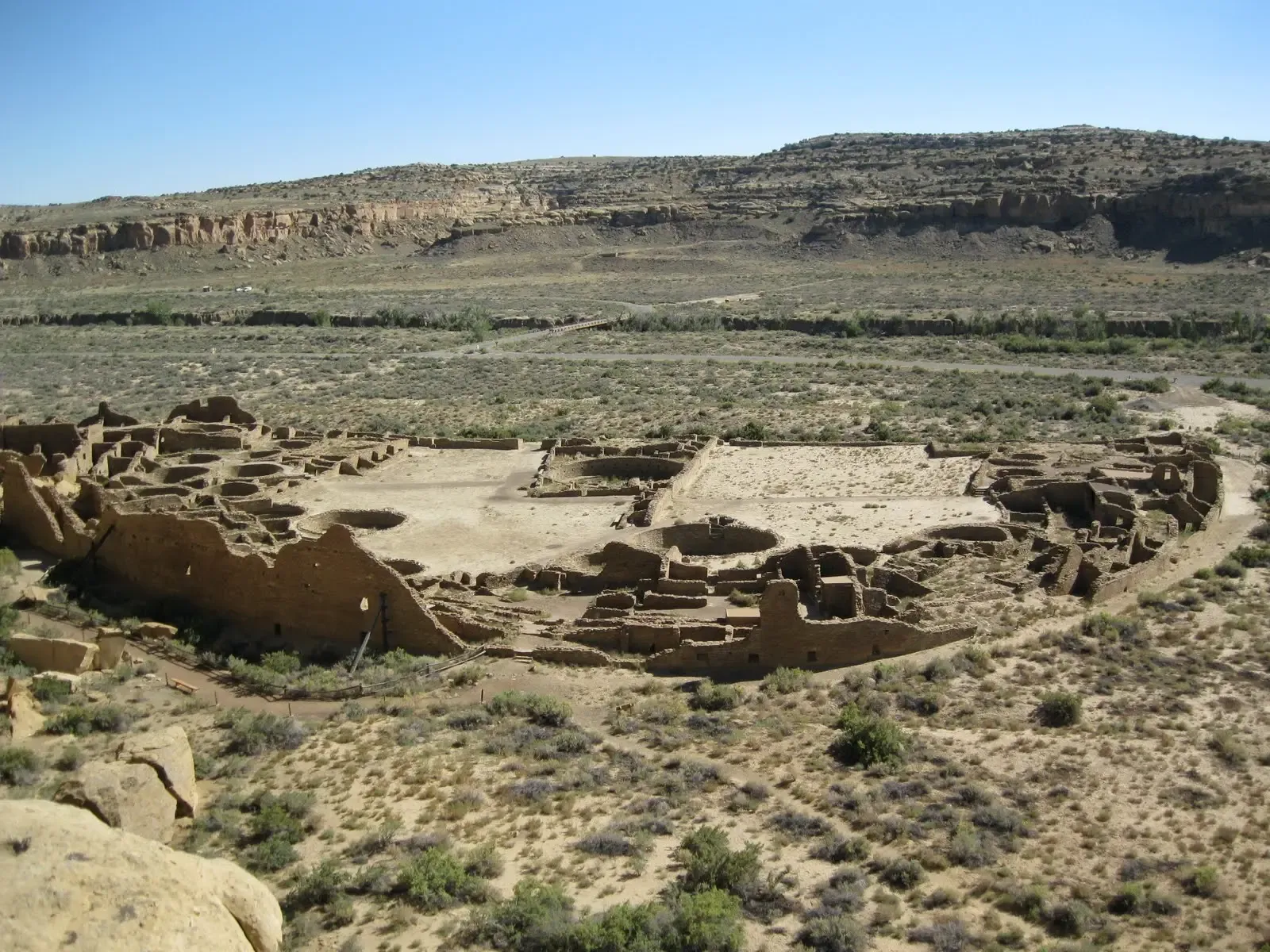
Imagine walking into a building so large and precisely planned that, even a thousand years later, you still feel like you have stepped into the capital of an invisible empire. That is the effect Pueblo Bonito in Chaco Canyon has on you. Built and expanded roughly between the ninth and twelfth centuries, this “great house” rises in a sweeping D-shape of sandstone masonry, once towering several stories high and likely containing hundreds of rooms arranged around open plazas and ceremonial kivas.
As you wander the aligned doorways and gaze down into the roofless kivas, you start noticing details that hint at a far-reaching, carefully organized society. Roads radiate out from Chaco like spokes, connecting outlying communities across what is now the Four Corners region. Building walls track solar events with an accuracy that would impress modern engineers, and the sheer volume of stone and timber that had to be moved without wheels or draft animals forces you to rethink what you assume about “advanced” civilizations. You may not know exactly what roles ceremony, trade, and governance played here, but you cannot miss that you are standing in the heart of a complex ancestral landscape, not some isolated ruin.
Cliff Palace, Mesa Verde: A Stone City Tucked into the Canyon Wall
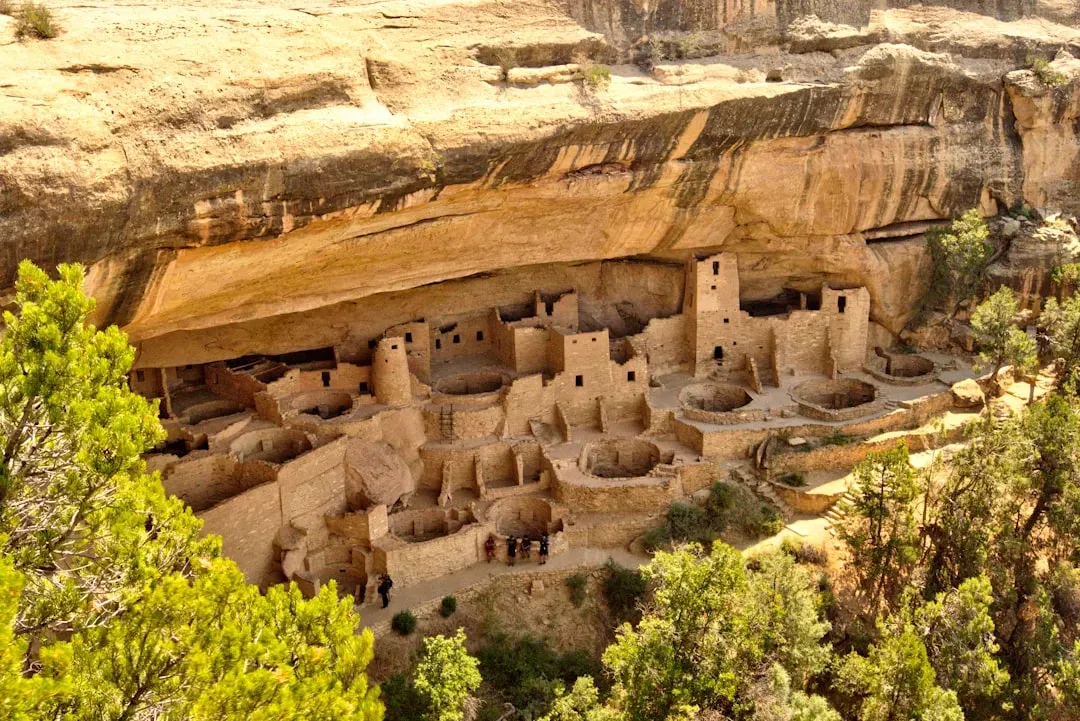
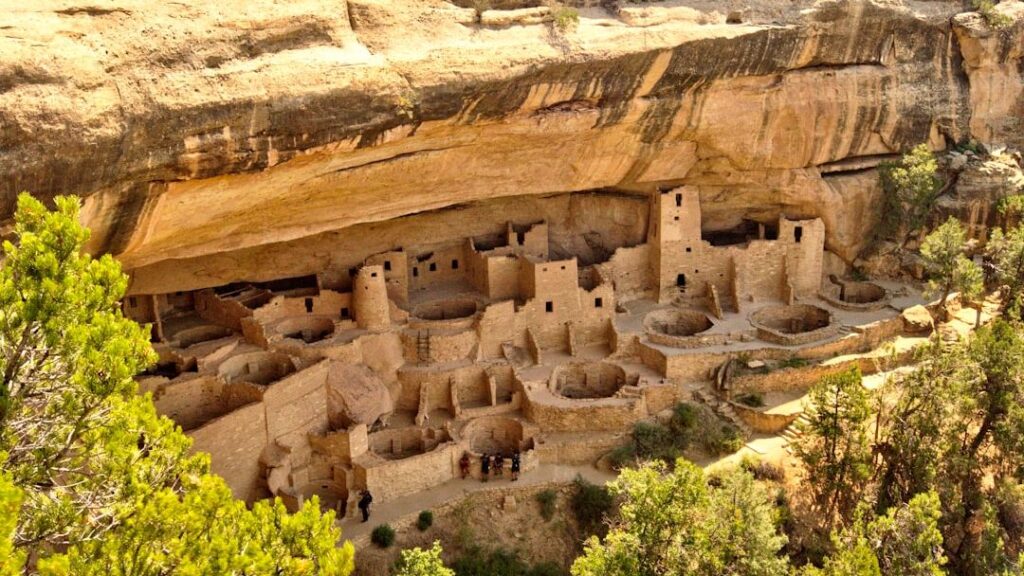
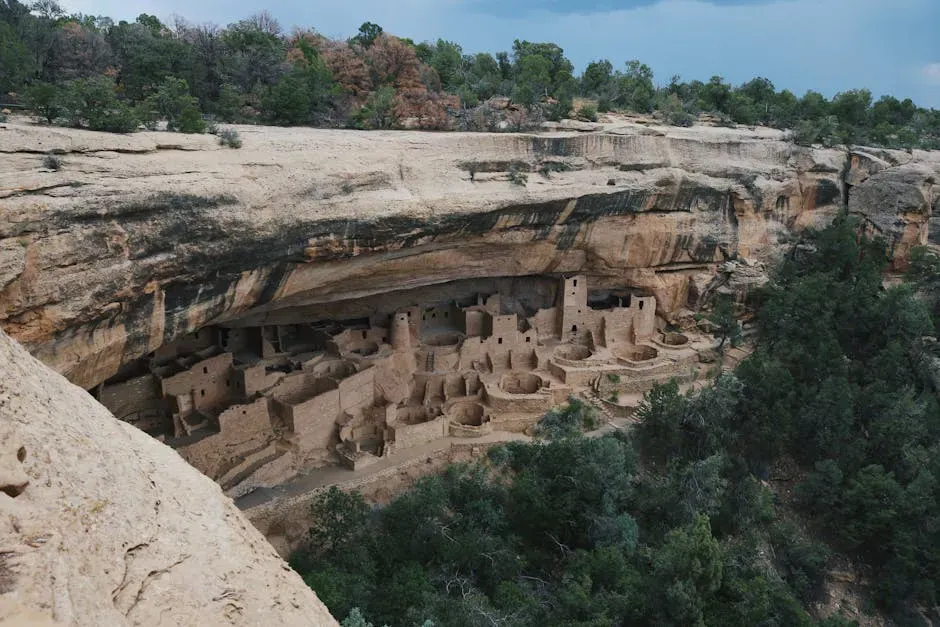
When you first see Cliff Palace in Mesa Verde, it almost looks unreal, like a movie set carved into the cliff. Then your eyes adjust, and you realize you are looking at what was once a full neighborhood stacked under a natural rock alcove: towers, clustered rooms, plazas, and circular kivas, all squeezed into a sheltered ledge. Ancestral Pueblo people moved into these cliff dwellings around the late twelfth century, after centuries of living on the open mesa tops, reshaping their environment in a way that feels both daring and deeply practical.
As you picture families climbing ladders, carrying water, tending cornfields above, and gathering in the kivas below, the site stops being a mystery and becomes a living place in your mind. Archaeologists point to changing climate, shifting resources, and social pressures as reasons for this move into more defensible, protected spaces, and when you look at the narrow entrances and tucked-away rooms, you can see why. You might be tempted to romanticize it, but when you imagine hauling wood, food, and water up and down steep routes every day, you gain a different respect for the ingenuity and endurance it took to thrive here.
Tyuonyi and the Cliff Dwellings of Bandelier: Life in a Canyon of Soft Stone
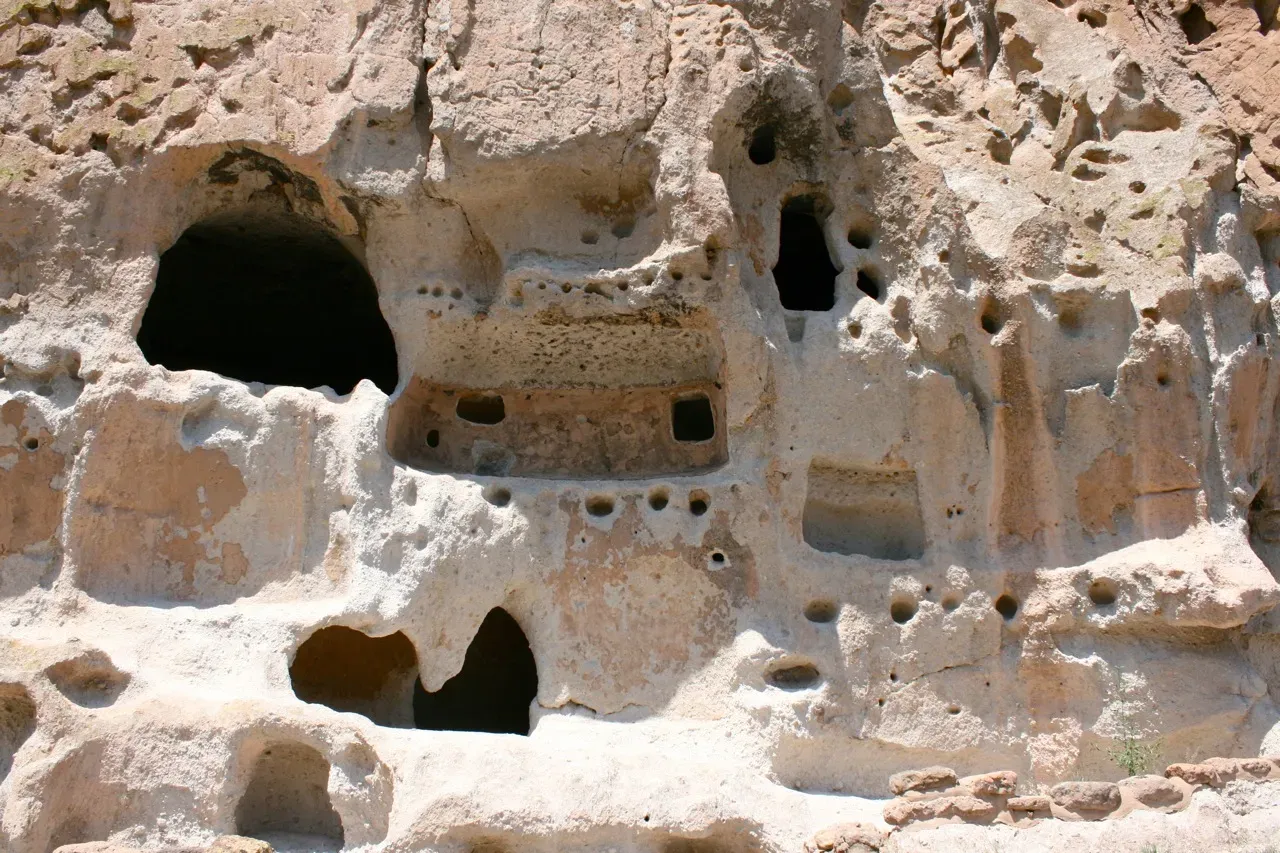
In Bandelier National Monument, near today’s Los Alamos, you walk into Frijoles Canyon and suddenly find yourself ringed by the ghost outlines of a village. On the canyon floor sits Tyuonyi, a large circular or oval pueblo that once rose multiple stories, its rooms tightly packed together around open space. Above it, carved into the soft volcanic tuff of the cliff walls, you notice small doorways and soot-blackened ceilings where people once hollowed out rooms – cavates – and built masonry structures against the rock.
Here, you get a rare chance to feel how connected architecture, landscape, and daily life really were for the ancestors of today’s Pueblo people. You can trace where people might have moved from the valley-floor village up to the cliff rooms, watch how the morning light hits different walls, and imagine smoke rising from kivas and cave rooms on a cold winter day. This canyon was not chosen at random: water, game, arable land, and workable stone all came together here. When you see how skillfully people carved and stacked the tuff, reinforced ceilings with wood, and even painted walls, you start to understand that you are looking at a carefully tuned adaptation to a very specific place, not just “ruins” in the abstract.
Spruce Tree House, Mesa Verde: A Cliff Dwelling Frozen in Time
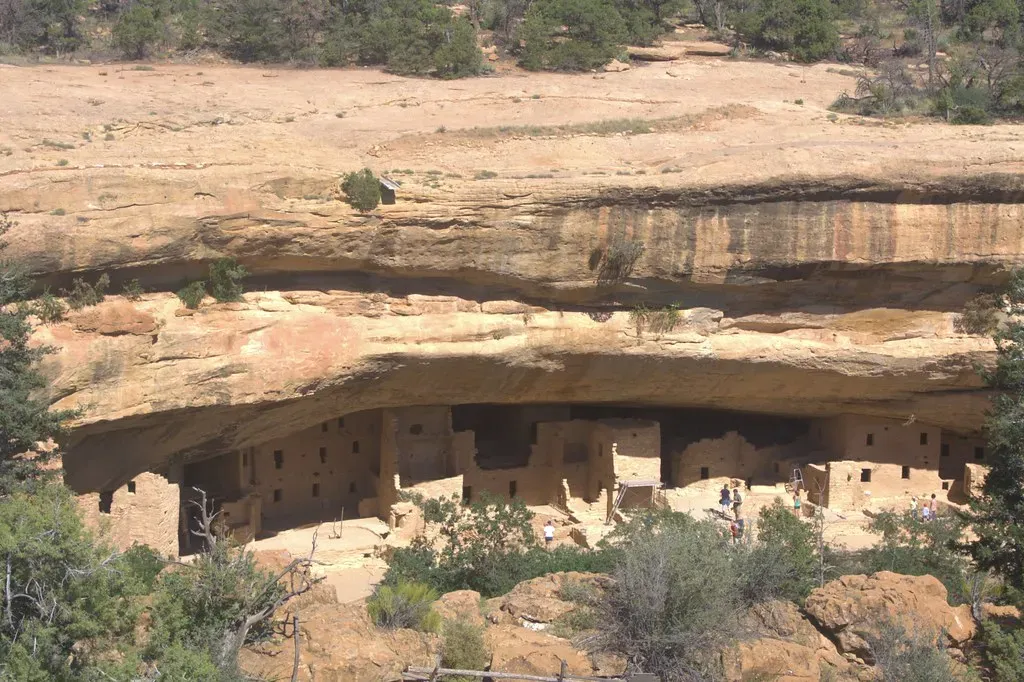
Spruce Tree House, also in Mesa Verde, hits you differently than the grand sweep of Cliff Palace. Tucked into a deep alcove and remarkably well preserved, it feels almost like you have walked into a snapshot of thirteenth-century life. Constructed in the early 1200s and home to perhaps a few dozen people, it contains many rooms and several kivas, with much of the original masonry, timbers, and plaster still visible thanks to the protective rock overhang.
As you peer into the rooms and reconstructed ceremonial spaces, you get an unusually intimate look at construction techniques: carefully shaped sandstone blocks, mud mortar, wooden lintels, and small doorways that controlled temperature and movement. You can practically picture the sound of grinding corn, the flicker of firelight against plastered walls, and children weaving through the courtyards. Modern stabilization work makes it safe for you to visit, but nearly all of what you see is genuinely ancient, which gives your visit a kind of time-bending immediacy. You are not just looking at traces; you are looking at spaces that still hold the physical imprint of the people who lived, worked, and prayed here.
Aztec Ruins: Great Houses by the Flowing Water
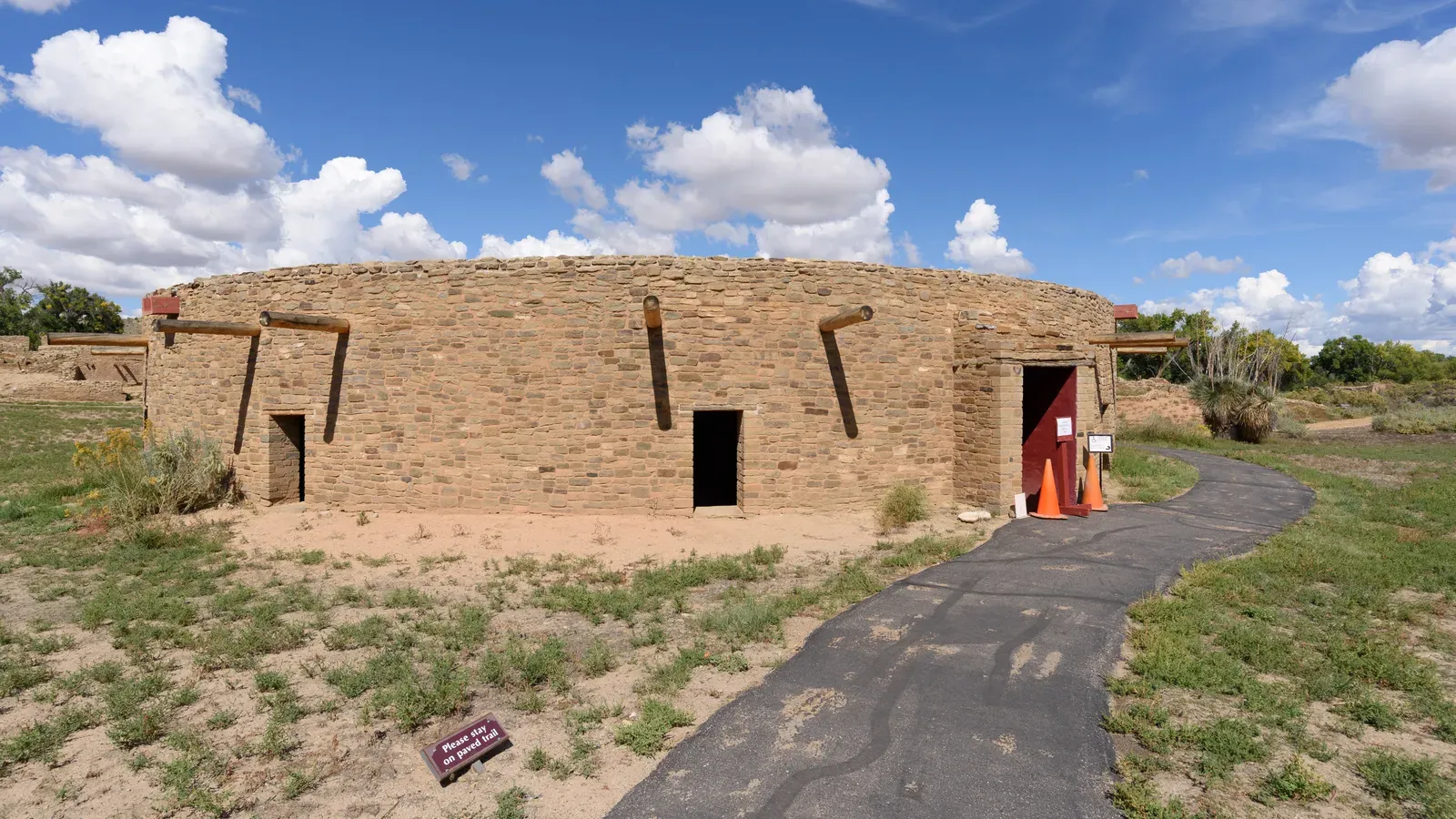
Northwest New Mexico’s Aztec Ruins National Monument sits closer to modern towns than some other sites, but that does not make it any less mysterious. Here, along a river in the San Juan Basin, you encounter another set of monumental great houses, likely influenced by the Chaco tradition but built slightly later. As you follow the pathways through multi-story masonry walls, preserved wooden beams, and the famous reconstructed Great Kiva, you begin to see how communities along waterways became hubs of movement and exchange.
Standing inside the Great Kiva, you feel the weight of engineering and ceremony merging into a single space. The layout, the carefully placed masonry, and the subterranean design all hint at complex ritual life and a finely tuned understanding of sound, light, and temperature. You can trace how knowledge, trade items, and architectural ideas moved along ancient routes, using this spot as a kind of waystation between regions. When you step back outside into the bright desert sun, you carry with you the sense that these were not isolated villages, but interconnected communities, each site a chapter in a much larger story you are only just starting to read.
Conclusion: Walking Carefully Through a Living Past
When you put these five sites together – Pueblo Bonito’s sweeping great house, Cliff Palace’s dramatic stone city in the cliffs, Bandelier’s canyon village, Spruce Tree House’s time-capsule intimacy, and Aztec Ruins’ riverside complex – you start to see a pattern. You are not just visiting scattered ruins; you are following the traces of a civilization that adapted brilliantly to different landscapes, experimented with architecture and social organization, and wove spiritual meaning into nearly every wall, plaza, and kiva. The mystery is not that these places exist; the real mystery is how much they still shape the land and the descendants who trace their roots back to them.
If you choose to visit, you are stepping into spaces that many modern Pueblo people still consider part of their living heritage, so the way you move, speak, and photograph matters. Walk lightly, read the signs, listen to Indigenous voices, and give yourself time to feel the quiet rather than just chasing the next viewpoint. In doing so, you will discover that the ruins are not really ruined at all – they are a conversation between past and present, still unfolding each time you pay attention. When you stand in the shadow of a thousand-year-old wall, what story will you let it tell you?