Every time we think the past is finally pinned down in a neat textbook, the ground disagrees. A farmer’s plow hits something hard, a construction crew slices through an old foundation, a diver spots a shape under the waves – and suddenly, whole chapters of history have to be rewritten. That’s the wild thing about buried discoveries: they don’t care about our timelines, our national myths, or what we learned in school.
I still remember the first time I read about an artifact that completely flipped a “known” date on its head – it felt like someone had quietly moved the walls of reality overnight. The more you dig into archaeology, the more you realize how fragile our timelines really are. Below are twenty‑six discoveries that did exactly that: forced historians, often grudgingly, to admit that people were earlier, smarter, more connected, or more brutal than anyone wanted to believe.
#1 Göbekli Tepe: The Temple That Shouldn’t Exist So Early
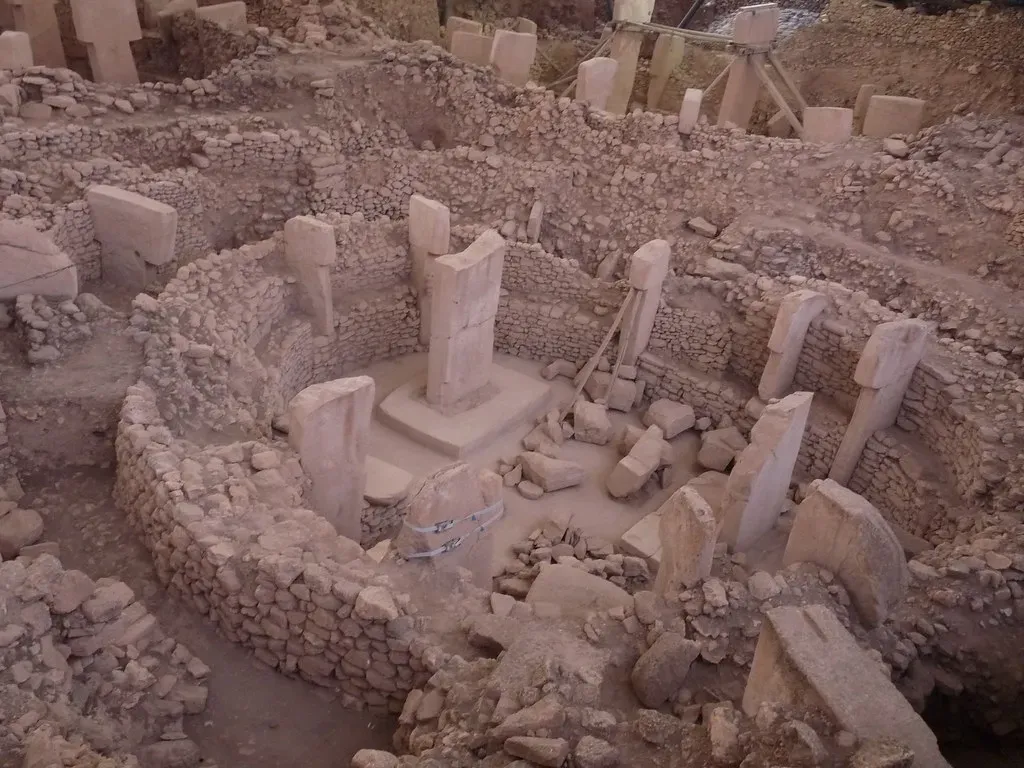
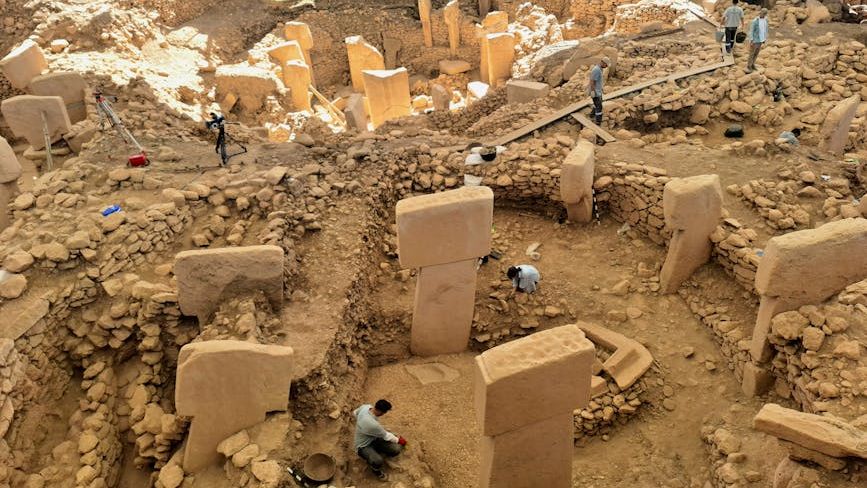
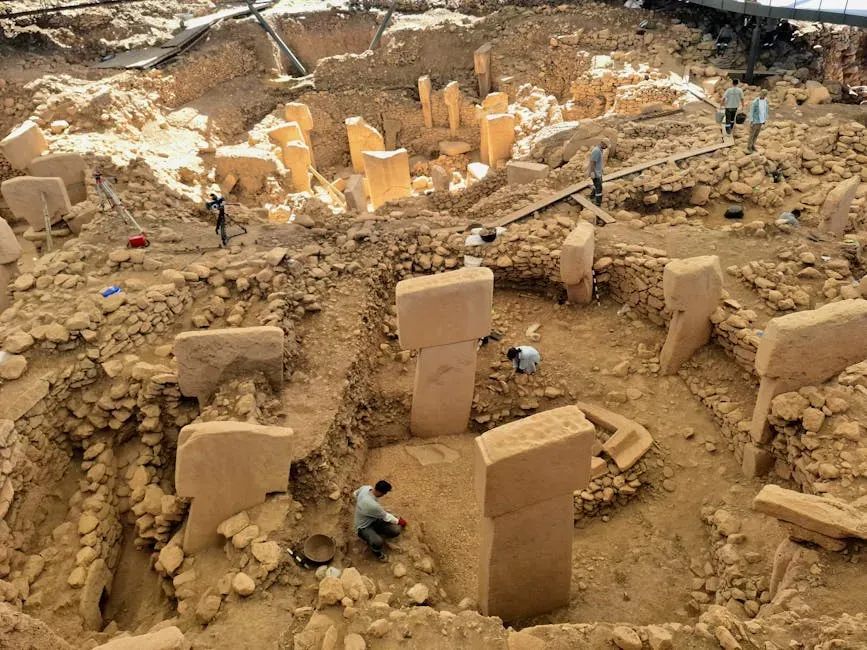
Imagine being told for years that organized religion and monumental architecture only appeared once farming took off… and then someone uncovers a vast ritual complex built by hunter‑gatherers. That’s Göbekli Tepe in southeastern Turkey, with its massive T‑shaped stone pillars and carved animal reliefs, dating back to roughly twelve thousand years ago. It is older than Stonehenge by many millennia and predates the first known cities by a huge margin. Overnight, the neat story of “first we farm, then we build temples” stopped looking so solid.
What makes Göbekli Tepe so timeline‑shattering is not just the date but the social complexity it implies. To carve and move those stones, you need coordination, shared beliefs, and some kind of leadership, even if temporary. Some archaeologists now suggest that large-scale ritual sites like this may actually have encouraged people to settle down and farm, flipping the traditional cause‑and‑effect argument on its head. In other words, religion might have helped create agriculture, not the other way around.
#2 The Clovis-First Collapse: Pre-Clovis Sites in the Americas
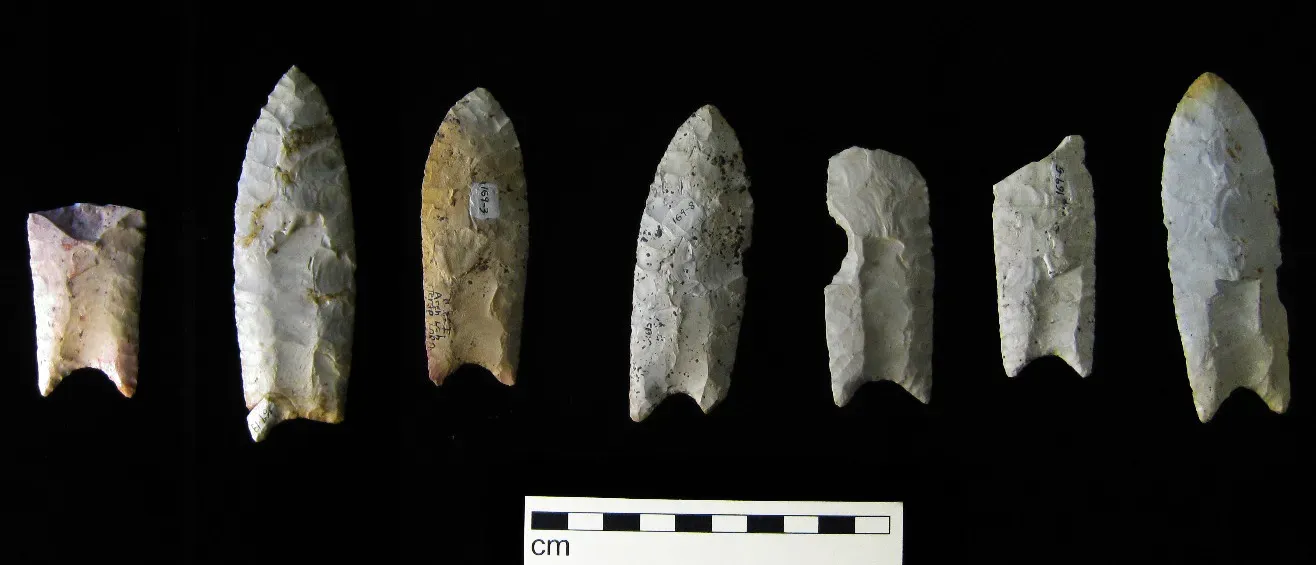
For most of the twentieth century, history books claimed that the first people arrived in the Americas around thirteen thousand years ago, known as the Clovis culture. Then sites like Monte Verde in Chile, Meadowcroft in Pennsylvania, and Page‑Ladson in Florida produced convincing evidence of human presence thousands of years earlier. These were not vague hints; they were tools, hearths, and even preserved organic remains carefully dated. The “Clovis‑first” model, once treated almost like dogma, suddenly looked outdated.
These finds forced historians to rethink how and when people reached the Americas. Instead of a single migration through an ice‑free corridor, the picture now looks like multiple waves, possibly including coastal routes along the Pacific using boats and shoreline resources. The timeline was pushed back by several thousand years, and with it, the entire story of how humans spread across the planet had to be revised. What used to be presented as a tidy, one‑route, one‑date event is now recognized as a long, complex process.
#3 The Antikythera Mechanism: An Ancient “Computer” From the Sea
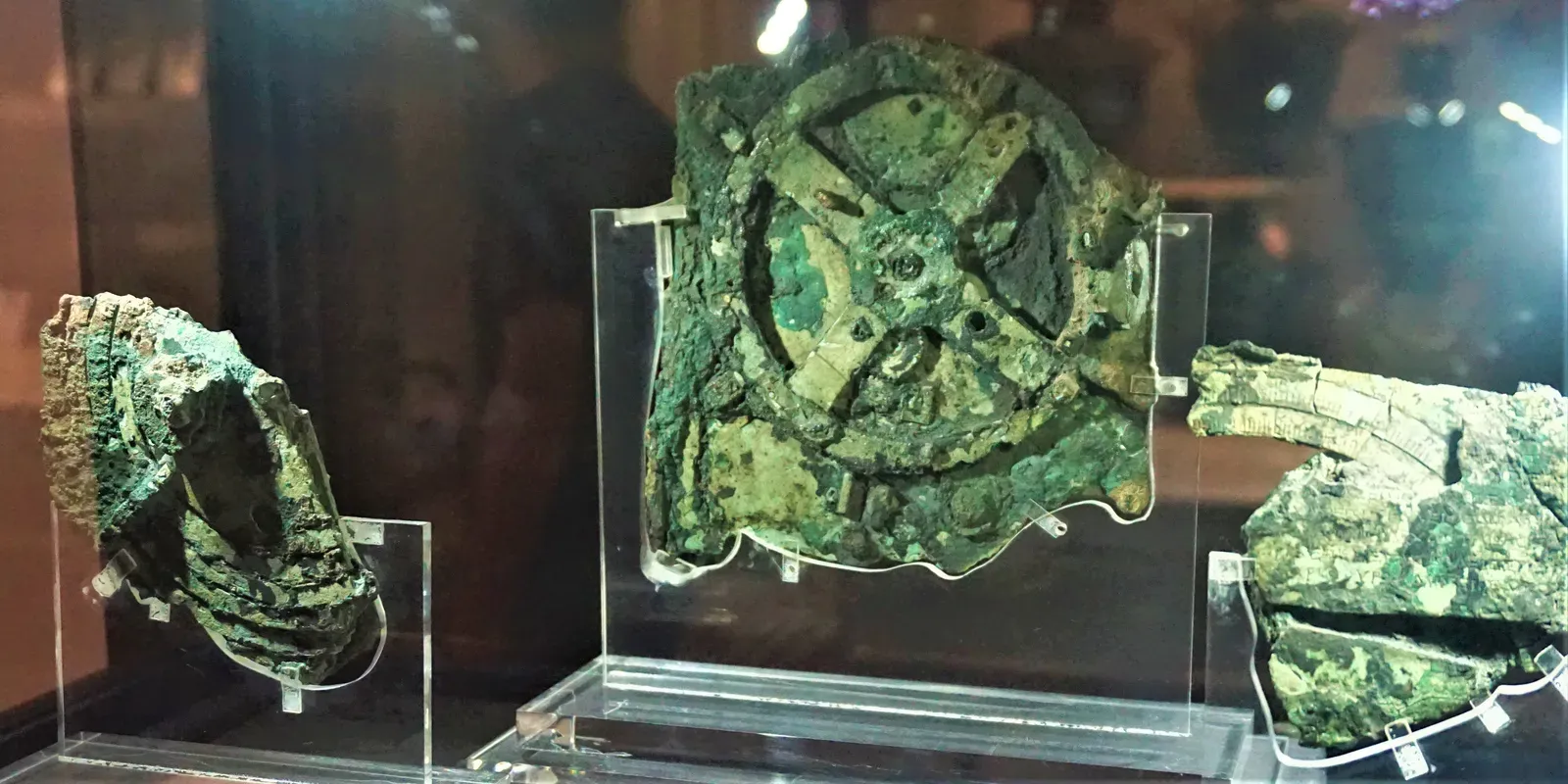
When sponge divers off the Greek island of Antikythera pulled up a corroded lump of bronze in the early twentieth century, nobody guessed it would rewrite the history of technology. Inside that encrusted mass was a gear‑driven device from around the second or first century BCE, packed with intricate gears and dials. Today we know it could predict eclipses, track planetary cycles, and model complex celestial movements with surprising accuracy. It is, in essence, an analog computer from ancient Greece.
The Antikythera mechanism shattered the idea that precise gearwork and complex mechanical calculation only emerged in the late medieval or early modern period. It showed that Hellenistic engineers had mastered a level of craftsmanship many assumed was centuries out of reach. Even more unsettling, nothing else quite like it has survived from the period, hinting at a lost tradition of high‑end engineering. Instead of a slow, steady climb in technological sophistication, history now looks more like a jagged line with peaks that were forgotten for centuries.
#4 The Dead Sea Scrolls: Lost Texts That Reframed Religious History
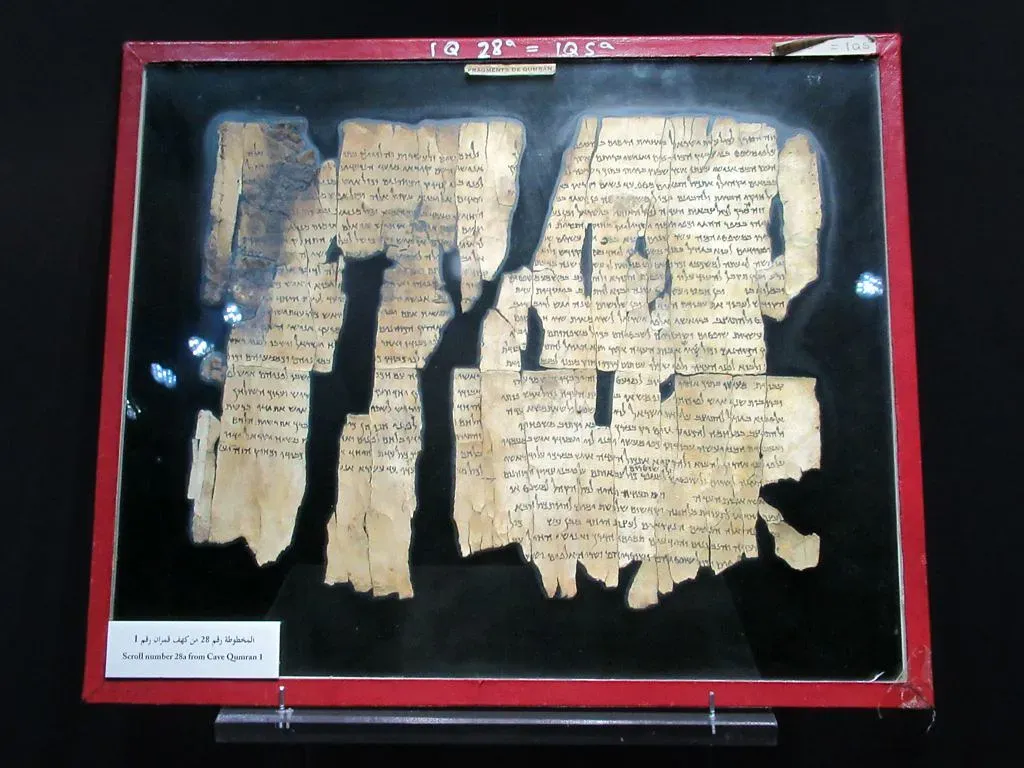
In the late 1940s, a young Bedouin herder reportedly tossed a stone into a cave near the Dead Sea and heard the sound of breaking pottery. Inside were ancient scrolls that would shake up biblical scholarship and the history of Judaism and early Christianity. Dating from the third century BCE to the first century CE, the Dead Sea Scrolls include some of the oldest known copies of biblical books, along with community rules, hymns, and apocalyptic writings.
These texts forced historians to rethink how diverse and contested religious thought was in the centuries around the time of Jesus. Instead of a simple story of one unified tradition seamlessly handing down a single text, the scrolls revealed rival groups, evolving doctrines, and competing interpretations of the same scriptures. Timelines for how certain ideas emerged and spread had to be updated, and scholars suddenly had primary evidence for beliefs that were previously reconstructed mostly from later sources.
#5 Ötzi the Iceman: A Bronze Age Life Frozen in Time
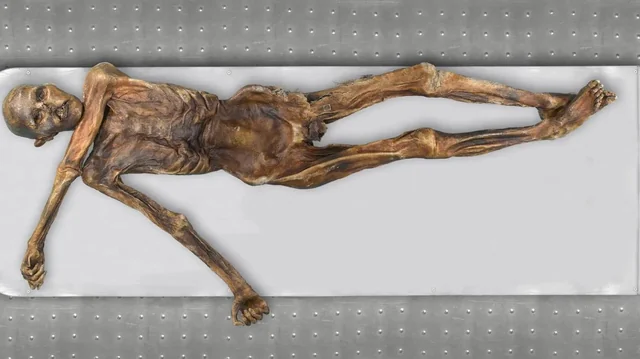
When hikers in the Alps stumbled on what they thought was a recent body in 1991, nobody imagined they had just found a man who had died more than five thousand years ago. Ötzi the Iceman, preserved by ice and snow, came with clothing, tools, and even the contents of his stomach largely intact. Detailed analysis revealed how he dressed, what he ate, what illnesses he had, and the violent circumstances of his death, complete with an arrow wound and head trauma.
Ötzi’s discovery forced historians to recalibrate their understanding of life in the late Neolithic and early Bronze Age in Europe. His copper axe, for example, showed that metalworking was more advanced and widespread than previously believed in that region at that time. His tattoos, carried along acupuncture lines, even sparked debate about the origins and spread of medicinal practices. Instead of abstract reconstructions, here was one real person’s life and death tightening and clarifying the timeline.
#6 The Rosetta Stone: Unlocking Lost Millennia of Egyptian History
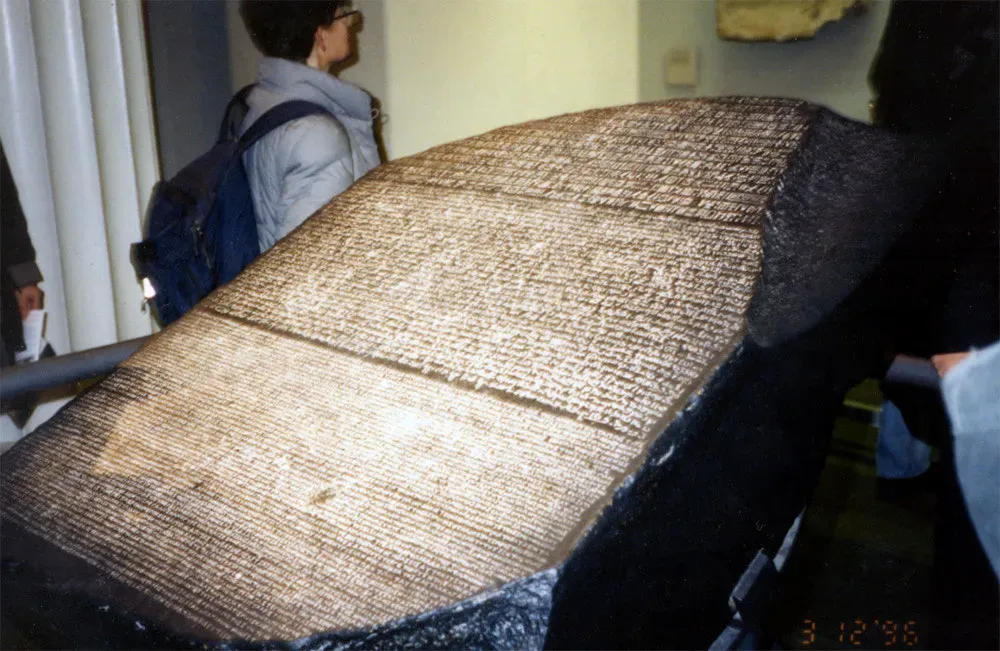
Before the discovery of the Rosetta Stone in 1799, ancient Egyptian hieroglyphs were essentially a sealed box. People could see the symbols carved on temple walls, but nobody could reliably read them. The stone, inscribed with the same decree in Greek, Demotic script, and hieroglyphs, became the key to cracking the code. When scholars finally deciphered hieroglyphs in the early nineteenth century, entire centuries of Egyptian history that had been fuzzy or legendary suddenly became readable in the Egyptians’ own words.
This breakthrough did more than just clarify a few dates. It forced historians to re‑date pharaohs, verify or challenge accounts from classical authors, and reconstruct political events that had only been guessed at. King lists, royal propaganda, and everyday inscriptions expanded and corrected the timeline of one of the world’s most iconic civilizations. It was as if someone had suddenly handed historians the missing chapters of a book they had been trying to summarize from the table of contents alone.
#7 The Staffordshire Hoard: Rethinking the “Dark” in the Dark Ages
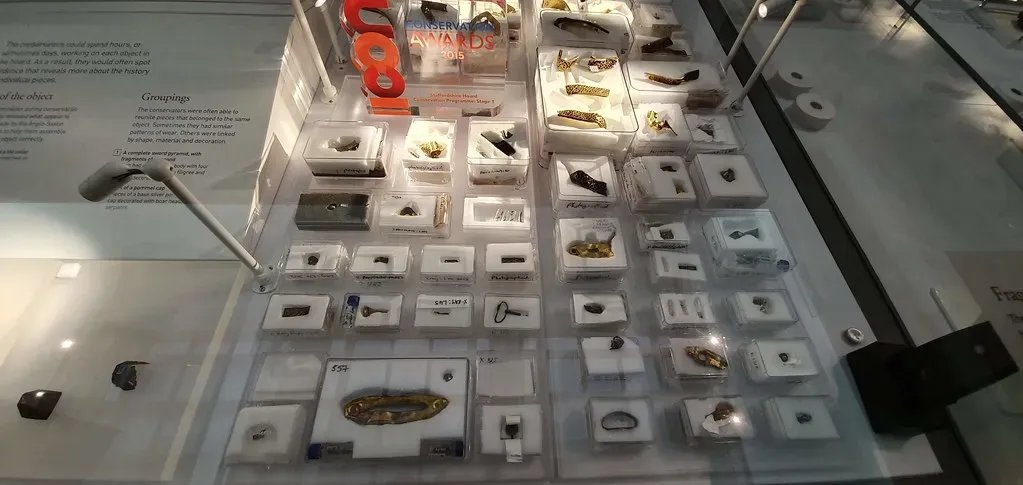
In 2009, a man with a metal detector in an English field stumbled upon the largest hoard of Anglo‑Saxon gold and silver metalwork ever found. The Staffordshire Hoard, buried around the seventh century CE, contained intricately decorated weapon fittings, religious items, and fragments of regal gear. The sheer craftsmanship and wealth condensed into that one deposit shocked specialists who had long considered the early medieval period in England relatively poor and unsophisticated.
The hoard forced a re‑evaluation of political power, warfare, and artistic skill in early Anglo‑Saxon England. The materials and styles suggested a level of elite culture and inter‑kingdom rivalry that had been underappreciated. Instead of a murky “Dark Age” in which little of note happened between Rome and the Norman Conquest, the timeline began to fill with evidence of dynamic, wealthy, and highly skilled societies. Textbook timelines of “decline and recovery” after Rome had to be softened into a more nuanced, continuous story.
#8 Çatalhöyük: An Early City Without Streets
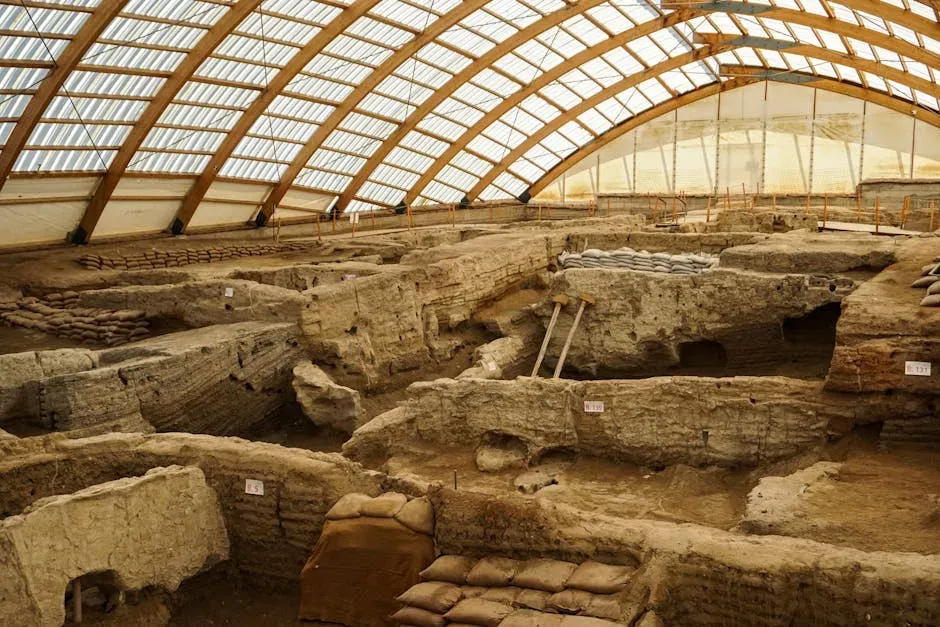
When excavations at Çatalhöyük in central Turkey revealed a massive Neolithic settlement dating to around nine thousand years ago, it immediately challenged simple ideas about when “cities” began. Thousands of closely packed mudbrick houses were built right up against each other, with people entering through the roofs instead of doors at ground level. There were no conventional streets, but there was clear evidence of long‑term settlement, complex rituals, and symbolic art.
This site pushed back the timeline for urban life and blurred the line between village and city. It showed that people were living in dense, organized communities with elaborate cultural practices much earlier than previously thought. The absence of obvious palaces or monumental buildings forced historians to reconsider the assumption that early complex societies always revolved around visible central authorities. In short, Çatalhöyük made the story of how and when urban life first emerged a lot more complicated.
#9 The Terracotta Army: An Empire’s Power Revealed Underground
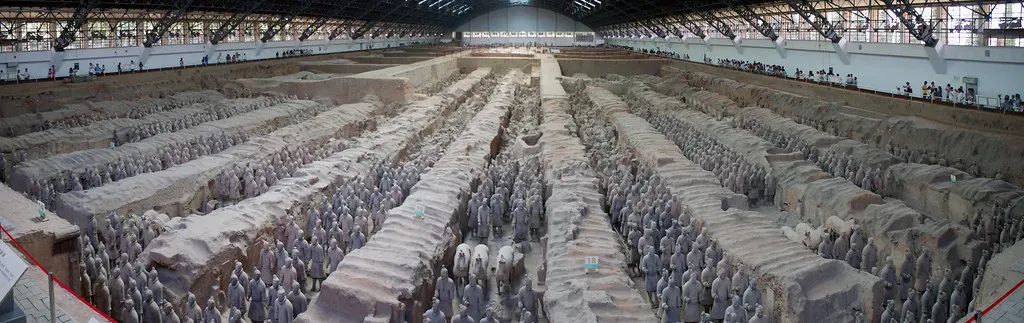
In 1974, farmers digging a well near Xi’an in China hit pottery fragments that turned out to belong to one of the most astonishing archaeological finds of the twentieth century: the Terracotta Army. Buried in massive pits near the tomb of Qin Shi Huang, the first emperor of a unified China, were thousands of life‑sized soldiers, horses, and chariots. Each warrior’s face is distinct, and the sheer scale of the project is overwhelming.
This discovery forced historians to appreciate just how centralized and resource‑rich the Qin state really was in the third century BCE. The logistics, labor organization, and artistic control required to produce and bury this army went beyond what many scholars had imagined possible at that date. It shifted perceptions of early Chinese imperial power from theoretical descriptions in ancient texts to a vivid, physical demonstration. The timelines of military, artistic, and administrative development in early China suddenly had a tangible benchmark.
#10 The Tomb of Tutankhamun: Resetting Views of Egyptian Wealth
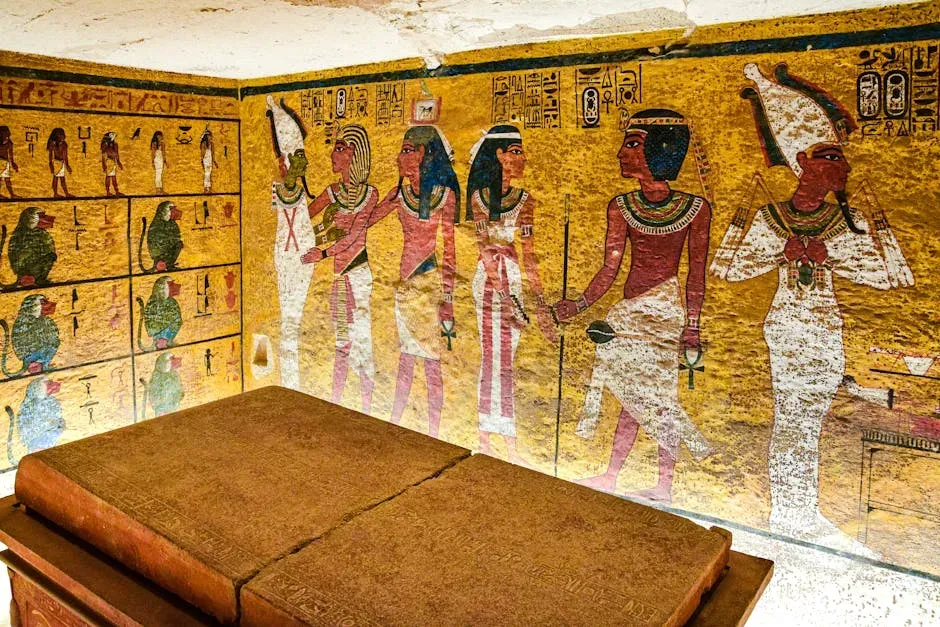
When Howard Carter’s team uncovered the almost intact tomb of Tutankhamun in 1922, it was like opening a time capsule from the fourteenth century BCE. The gold mask, nested coffins, chariots, furniture, and countless ritual items left the world stunned. What made the discovery especially wild is that Tutankhamun himself was a relatively minor pharaoh, who died young and ruled only a short time. If this was what a lesser king was buried with, what must have been placed in the tombs of truly powerful rulers?
The discovery forced historians to re‑evaluate the scale of wealth and craftsmanship in New Kingdom Egypt. It confirmed that earlier tombs, now looted, must once have been filled with comparable or even greater riches. It also helped refine the chronology of the Amarna period, including the religious revolution under Akhenaten, Tutankhamun’s probable father. The tomb’s inscriptions, objects, and burial style tied together and clarified a previously tangled stretch of Egypt’s dynastic timeline.
#11 Lascaux and Chauvet: Cave Art That Predated “Civilization”
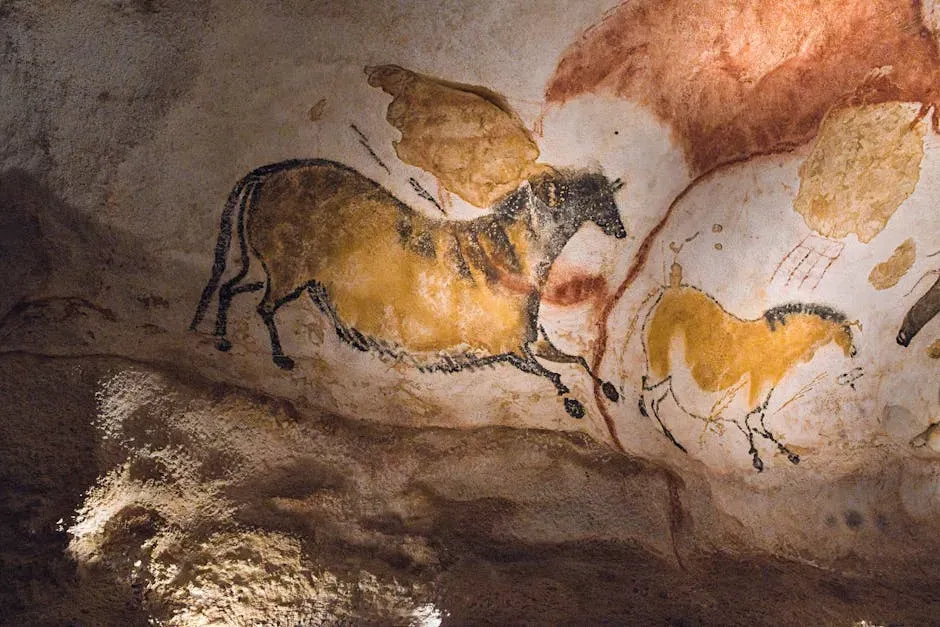
When the painted caves of Lascaux and later Chauvet in France were discovered, their age estimates shocked almost everyone. These were not rough stick figures; they were sophisticated, dynamic animal scenes with shading, composition, and symbolic complexity. Yet they dated back around twenty thousand to more than thirty thousand years, long before farming or cities. That meant humans were creating powerful, symbolic art while still living as hunter‑gatherers.
These caves demolished the idea that complex art arrived only with settled, “civilized” life. Instead, the timeline of human creativity stretched deep into the Paleolithic. Historians and anthropologists had to accept that cognitive and symbolic sophistication existed far earlier than material “progress” like agriculture. It also suggested that whatever drove people to paint those walls – ritual, storytelling, or something else – had been part of human experience for a very long time.
#12 The Sutton Hoo Ship Burial: A Royal World Beneath a Mound
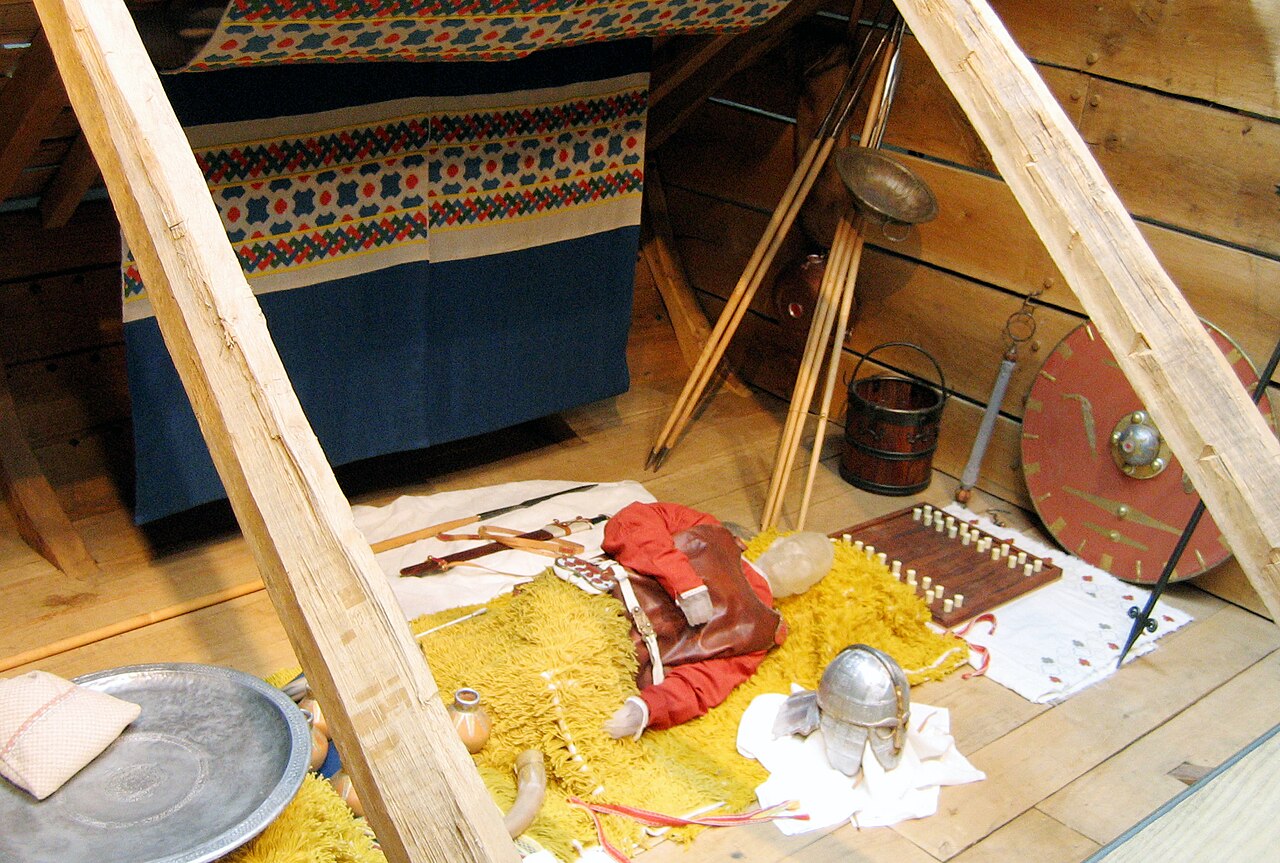
Before the excavation of the Sutton Hoo burial in eastern England in the late 1930s, early Anglo‑Saxon England was often portrayed as culturally simple and poor. The discovery of a massive ship burial, stuffed with finely worked metal, imported goods, and symbols of royal power, tore that image apart. The burial, dating to the early seventh century CE, is usually associated with a powerful East Anglian king, though the exact identity is debated.
Sutton Hoo forced a serious upgrade in how historians viewed post‑Roman Britain. It showed that elite society was plugged into long‑distance trade networks, commanded serious resources, and commissioned art of a very high order. Timelines that had treated the centuries after Rome’s withdrawal as a vague, shadowy gap had to be filled with a more vibrant picture of emerging kingdoms. The discovery gave a firm chronological anchor for political and cultural developments that had previously relied mostly on sparse written sources.
#13 The Uluburun Shipwreck: Global Trade Before Its Time
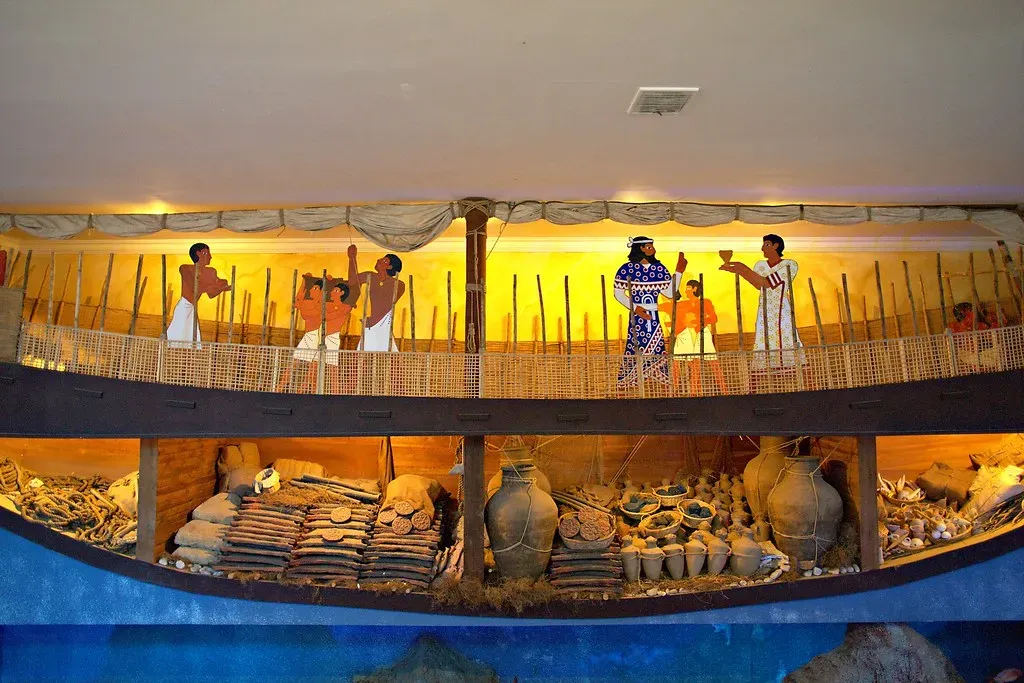
Off the coast of Turkey, near Uluburun, divers in the 1980s found a Late Bronze Age shipwreck dating to around the fourteenth century BCE. The cargo list read like a who’s who of the ancient Mediterranean and Near East: copper ingots, tin, glass, ivory, luxury goods, and artifacts from places like Egypt, Canaan, Cyprus, and the Aegean. This single ship carried physical proof that far‑flung regions were entangled in complex trade networks long before many people realized.
The Uluburun wreck forced historians to push back and deepen their understanding of Bronze Age globalization. The timeline of when trade became large‑scale and multi‑regional had to be revised to acknowledge that extensive circuits were already humming along more than three thousand years ago. Political and cultural events, like the so‑called Late Bronze Age collapse, also had to be reconsidered in light of just how interconnected these societies were. When one hub faltered, the shock waves would not have stayed local.
#14 The Denisova Cave Remains: A New Human Lineage in a Finger Bone

Sometimes a tiny fragment changes a huge story. In Denisova Cave in Siberia, a small finger bone and a few teeth led geneticists to identify a previously unknown group of ancient humans now called Denisovans. They were not simply Neanderthals or modern humans; they were a distinct lineage that interbred with both. Genetic traces of Denisovans live on today in some populations, especially in parts of Asia and Oceania.
This discovery shattered the old, tidy timeline in which modern humans replaced earlier hominins in a simple, one‑directional process. Instead, the picture now includes multiple groups overlapping in time and space, exchanging genes and possibly technologies. The appearance and disappearance of human lineages had to be redated and reframed as a branching, interwoven pattern rather than a single straight line. A sliver of bone forced historians and anthropologists to rewrite our own family tree.
#15 The Ice-Free Human Footprints at White Sands
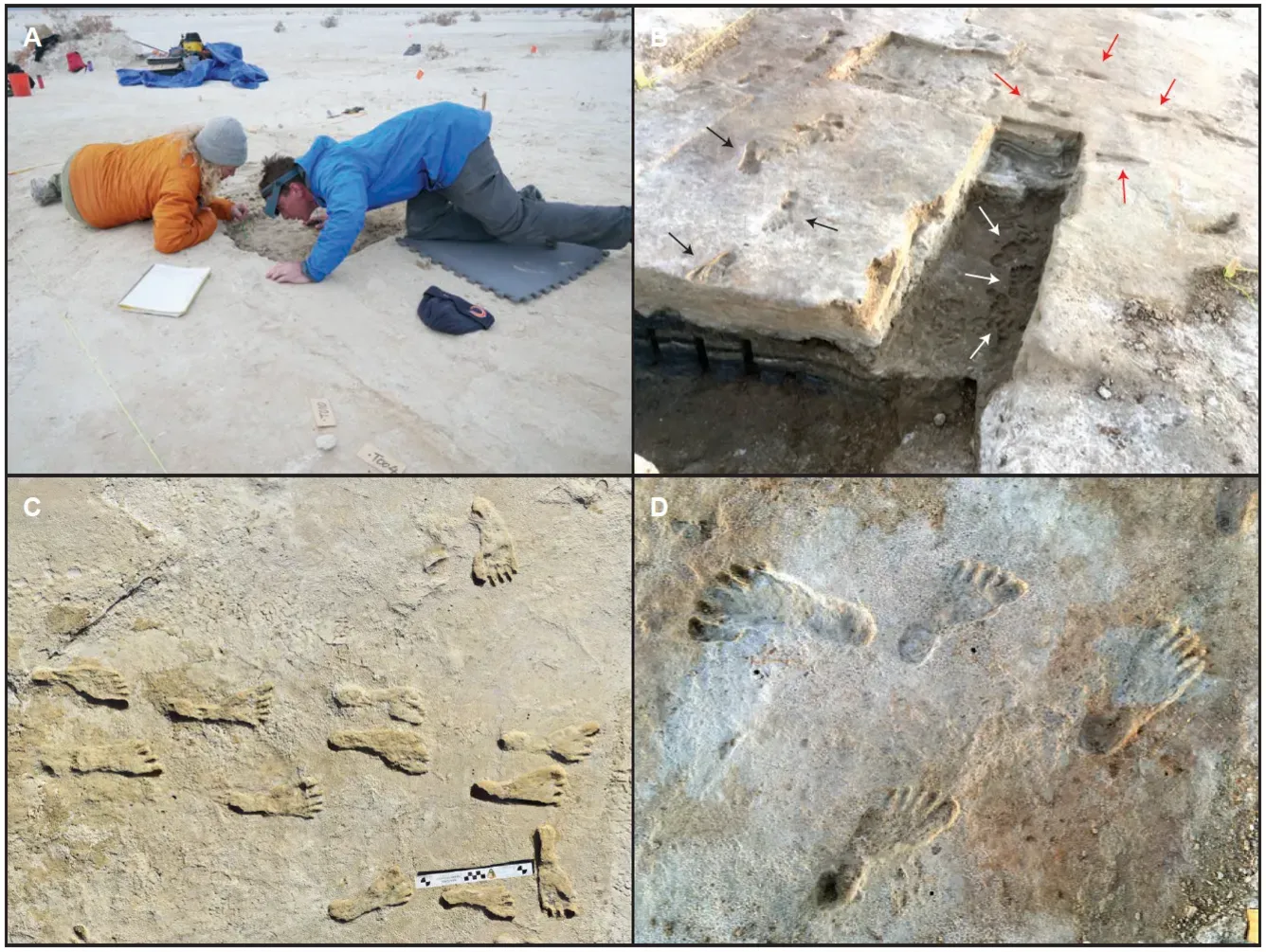
In recent years, prehistoric human footprints preserved in what is now White Sands National Park in New Mexico have pushed the story of the Americas even further back. Dating methods suggest people walked there during the last Ice Age, well before the end of the massive continental ice sheets. These prints are not just isolated impressions; they form trackways that show movement, interactions, and even what look like children’s steps alongside adults.
If the dating holds, these footprints demand another revision of when and how people first settled the Americas. They strongly support the idea that humans were present while ice still covered much of the continent, perhaps using coastal or other routes long before the classic ice‑free corridor opened. The neat textbook timelines that placed human arrival after a particular melt date have had to be redrawn in pencil, with a lot more question marks. It is one of those cases where the ground itself literally records people being there earlier than many experts were comfortable with.
#16 The Nazca Lines: Massive Designs That Question Old Assumptions
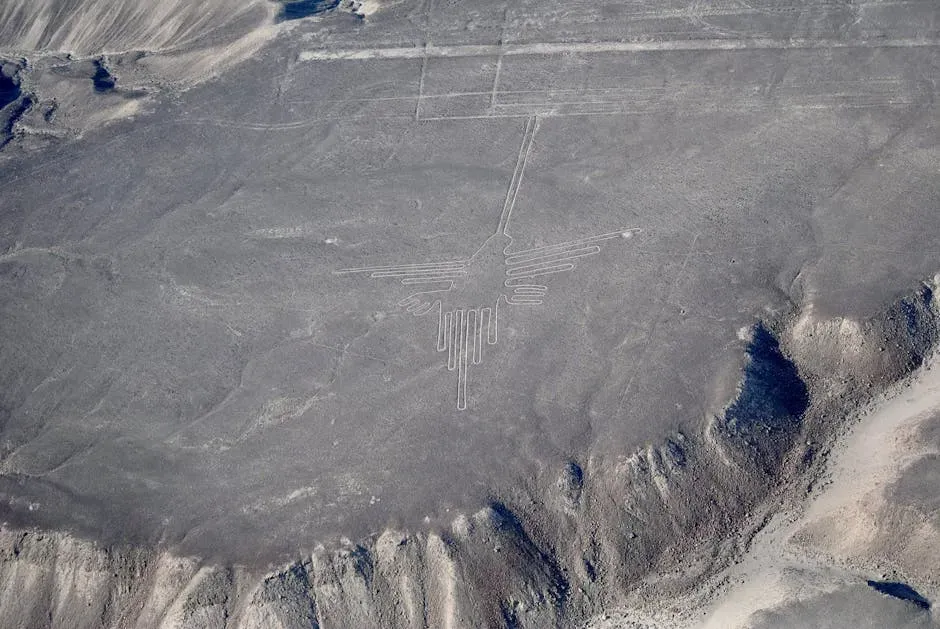
From the ground, southern Peru’s Nazca desert looks barren. From the air, enormous geoglyphs of animals, plants, and geometric shapes stretch across the landscape, scraped into the earth centuries before Europeans arrived. When pilots and researchers first documented them in the twentieth century, their scale and precision stunned the world. Many of the lines and figures date from roughly the first millennium CE, created by the Nazca culture.
The Nazca Lines forced scholars to reconsider how ancient societies organized large‑scale planning, surveying, and ritual landscapes. They showed that people without metal aircraft, modern surveying equipment, or industrial tools could still design and execute projects spanning kilometers. Timelines of Andean religious and social development had to incorporate this long‑term, landscape‑scale symbolic activity. The lines are a reminder that just because a society did not leave written records does not mean it lacked complexity.
#17 The Baghdad Battery Debate: Rethinking Ancient Technology
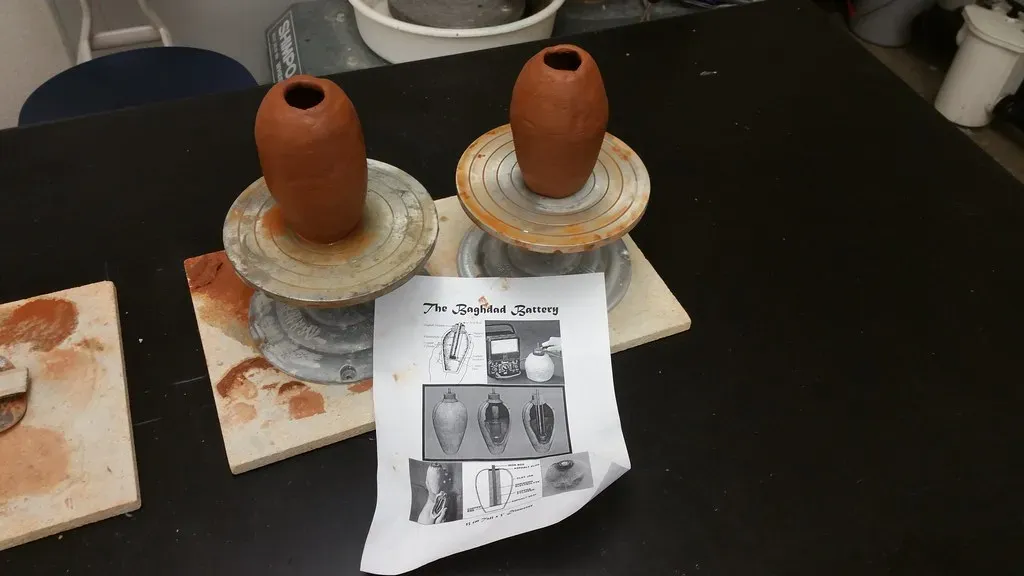
In the mid‑twentieth century, a set of small clay jars with metal components from around the first centuries BCE–CE, found near modern Baghdad, sparked a controversial idea. Some researchers proposed these “Baghdad Batteries” may have been used to generate small electric currents, perhaps for electroplating or ritual purposes. While there is still debate and no consensus that they were real batteries in the modern sense, the very possibility forced people to question their assumptions about ancient technological experimentation.
Even if these jars were not true electrical devices, their existence and the experiments they inspired nudged historians to consider that ancient craftspeople might have played with phenomena we usually think of as modern. The timeline of “discovery” for electricity, chemistry, and applied science now looks less like a sudden European awakening and more like a long, scattered set of insights across cultures. It is a reminder that our confidence about what people did or did not know in the past often rests on thin evidence.
#18 The Hohokam Canal System: Urban Engineering in Precontact America
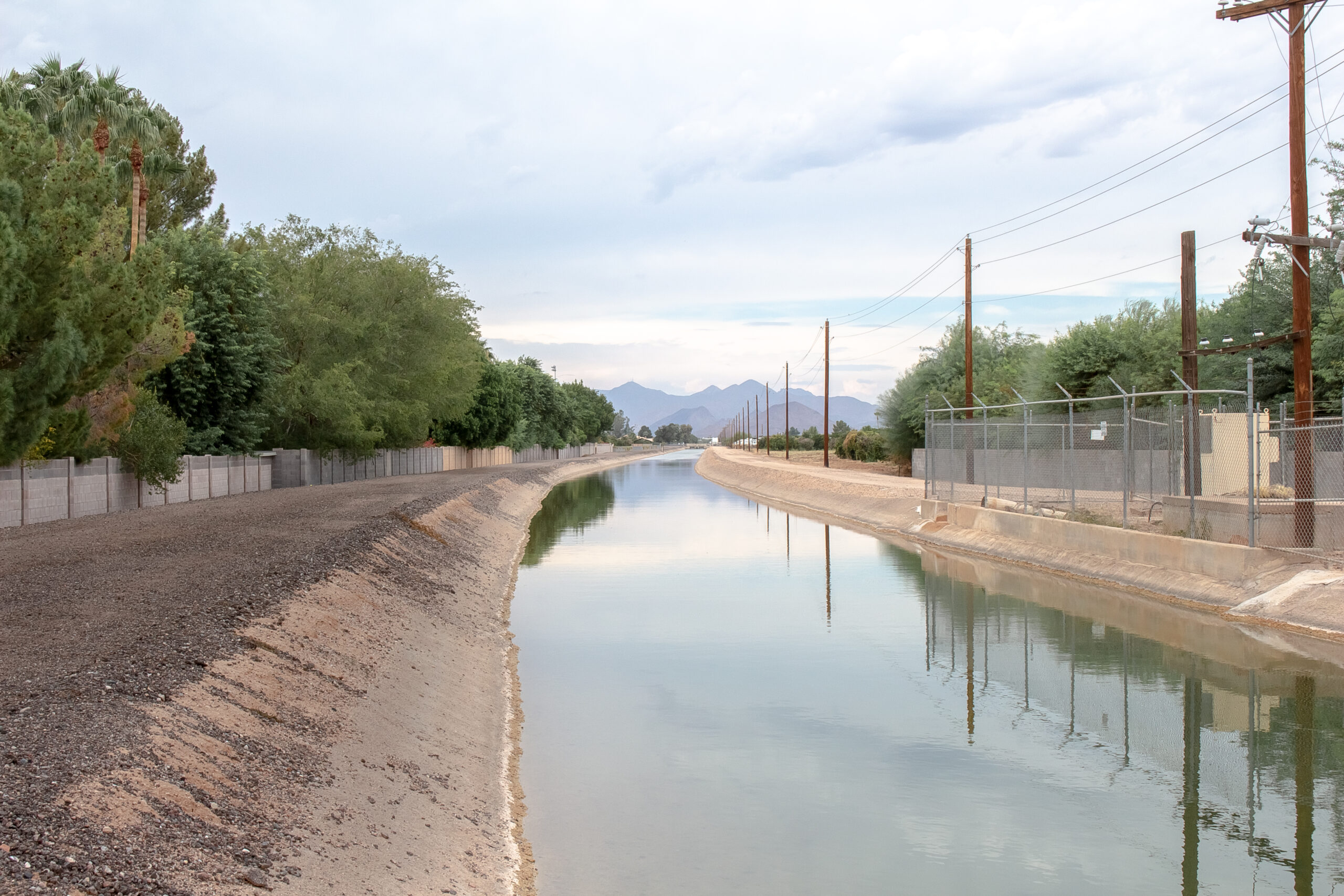
In the American Southwest, excavations around what is now Phoenix, Arizona, uncovered extensive canal systems built by the Hohokam culture centuries before European contact. These canals stretched for many kilometers, diverting river water to irrigate fields in a harsh desert environment. Some were deep, precisely graded, and required continual maintenance and coordinated labor to function.
This discovery upended the old assumption that large‑scale irrigation and urban engineering in North America began with European settlers. It pushed back the timeline of complex water management, showing that Indigenous societies had mastered and sustained it long before. The scale of Hohokam settlements supported by these canals also challenged simplistic narratives about “simple” precontact villages. The story of engineering in North America suddenly had deeper, Indigenous roots that could not be glossed over.
#19 The Bactrian Gold of Tillya Tepe: A Crossroads Reimagined
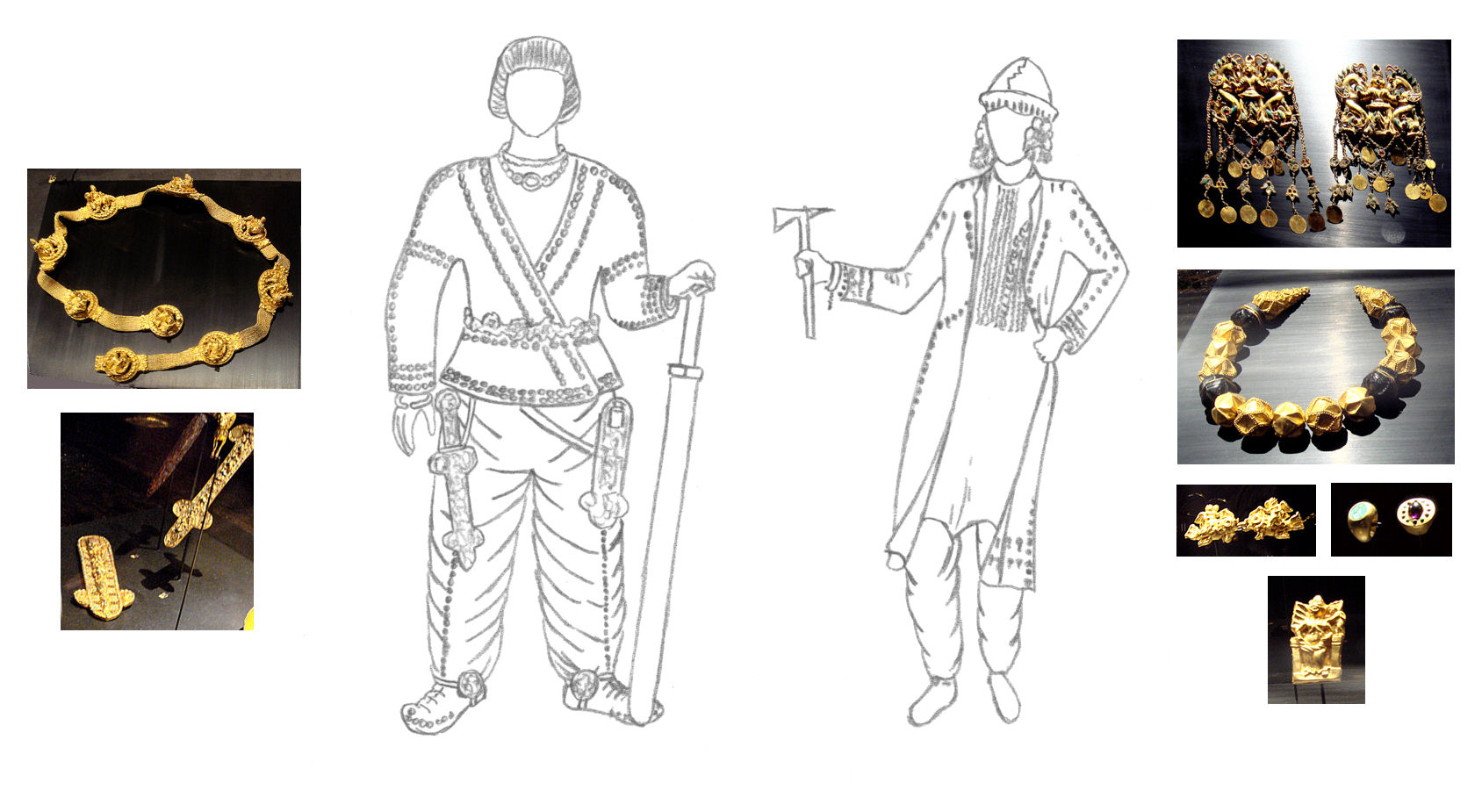
In northern Afghanistan, excavations in the late 1960s at Tillya Tepe uncovered rich burials dating to around the first centuries BCE–CE, filled with astonishing gold artifacts. The jewelry, plaques, and decorative objects showed a blend of artistic influences from Greece, Persia, India, and steppe nomads. Buried in a region once thought of mainly as a blank space between better‑known empires, these finds told a different story.
The Tillya Tepe discoveries forced historians to bump up the importance of Central Asia as a cultural and economic crossroads. Chronologies that treated the Silk Road as a later, more fully developed network had to acknowledge an earlier and more vibrant exchange. The burials showed that local elites participated in and shaped this mixing of styles and technologies. Instead of being peripheral, places like ancient Bactria were shown to be central nodes far earlier than many timelines had admitted.
#20 The Indus Valley Script and Urban Grid: Civilization Without a Deciphered Voice
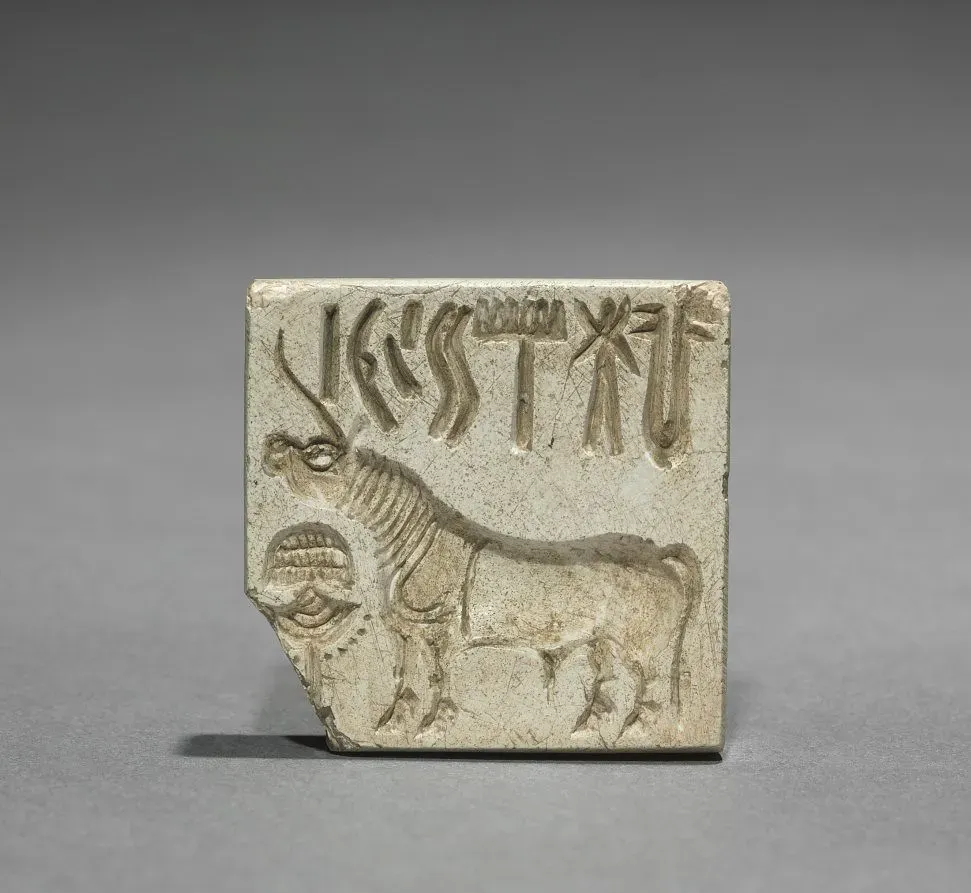
Sites like Harappa and Mohenjo‑daro in today’s Pakistan and India were known in the nineteenth and early twentieth centuries, but as excavations expanded, the full scale of the Indus Valley Civilization became harder to ignore. Dating back to roughly the third millennium BCE, these cities had sophisticated drainage, grid‑like street layouts, standardized weights and measures, and evidence of long‑distance trade. Seals bearing a still undeciphered script turned up everywhere.
These discoveries pushed back and broadened the timeline of urban civilization in South Asia. For a long time, histories of “the first civilizations” focused on Mesopotamia and Egypt, with the Indus world treated almost as an afterthought. As more was unearthed, historians had to redraw maps and timelines to place the Indus cities as equal players in the Bronze Age story. The fact that their script remains unread only adds to the sense that a major chapter of early urban history is still partially buried.
#21 The Varna Necropolis: Gold Before the Pharaohs
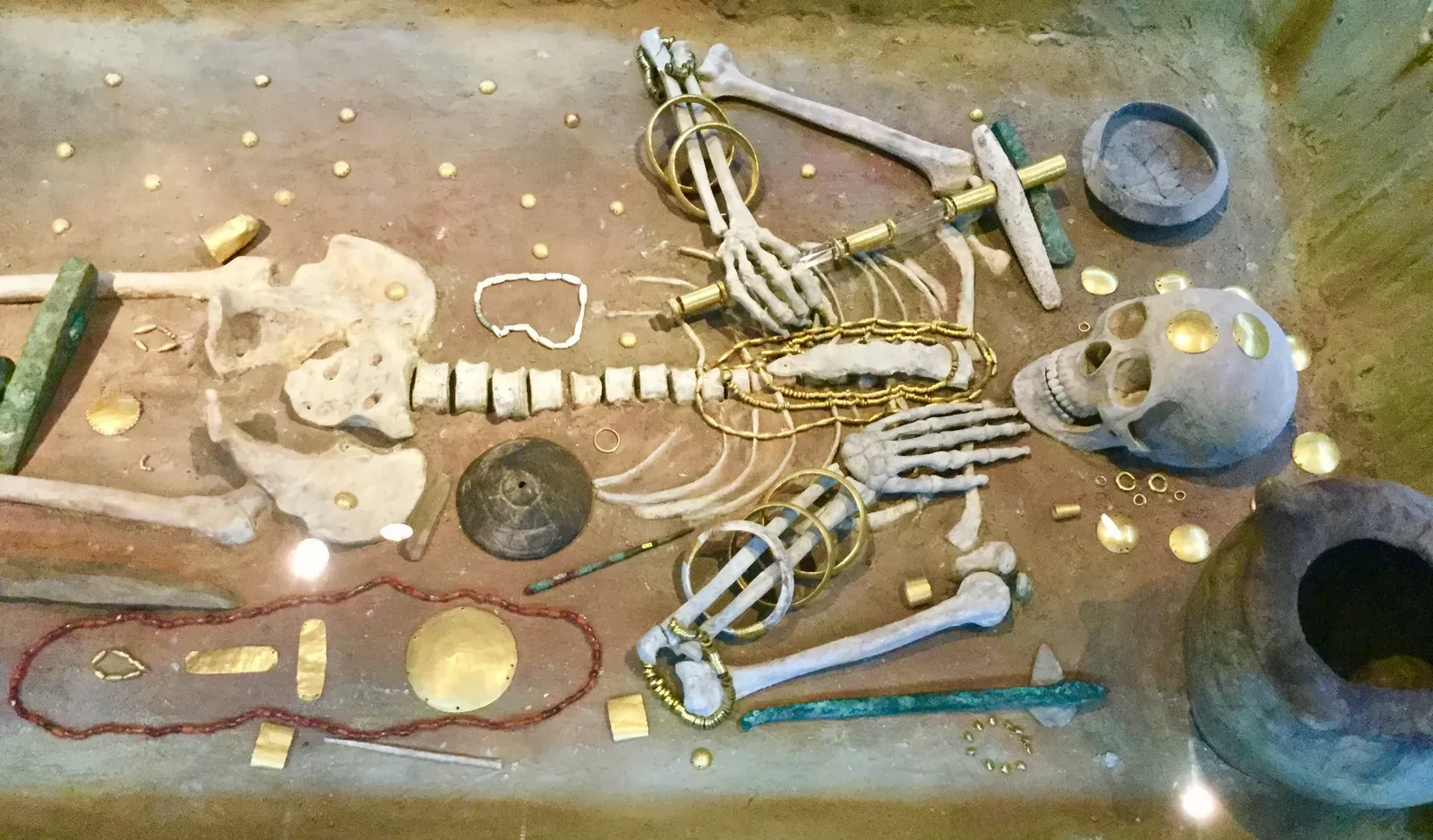
Near the Black Sea coast of Bulgaria, excavations in the 1970s at Varna revealed a cemetery dating to the fifth millennium BCE, containing some of the oldest known worked gold in the world. One grave in particular held an astonishing quantity of gold objects, along with high‑status items suggesting a powerful individual. This predated the great dynastic tombs of Egypt by many centuries, upending the usual sequence of where wealth and hierarchy first appeared.
The Varna necropolis forced historians to acknowledge that social stratification and elaborate material culture existed in southeastern Europe much earlier than they had assumed. The timeline of early metallurgy had to shift, and the idea that the earliest complex societies were confined to a small list of “cradles of civilization” became harder to defend. Suddenly, the prehistoric Balkans looked like an important center of innovation rather than a quiet backwater waiting for influence from elsewhere.
#22 The Library of Ashurbanipal: Deep Time for Written History
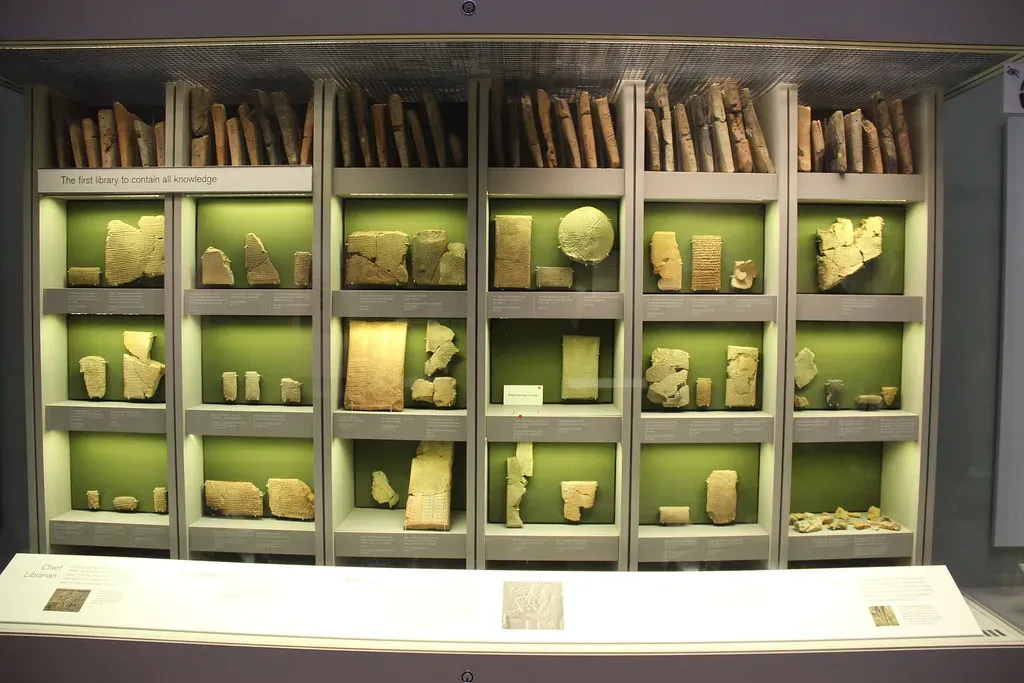
At Nineveh in modern Iraq, nineteenth‑century excavations uncovered the royal library of the Assyrian king Ashurbanipal, filled with thousands of clay tablets. These texts, dating mainly to the seventh century BCE but preserving even older copies, included myths, royal annals, scientific observations, and administrative records. Among them was the Epic of Gilgamesh, a story whose roots run far deeper than classical literature.
The discovery of this library extended the timeline of recorded history and literature in a way that still ripples through scholarship. It showed that complex, layered written traditions existed long before the familiar Greek and Roman canon. Timelines of astronomy, medicine, and law also had to be revised to take into account Babylonian and Assyrian contributions preserved on those tablets. Writing, it turned out, had been organizing and recording human thought for far longer than many Western‑centric narratives recognized.
#23 The Riace Bronzes: Recalibrating Classical Greek Sculpture
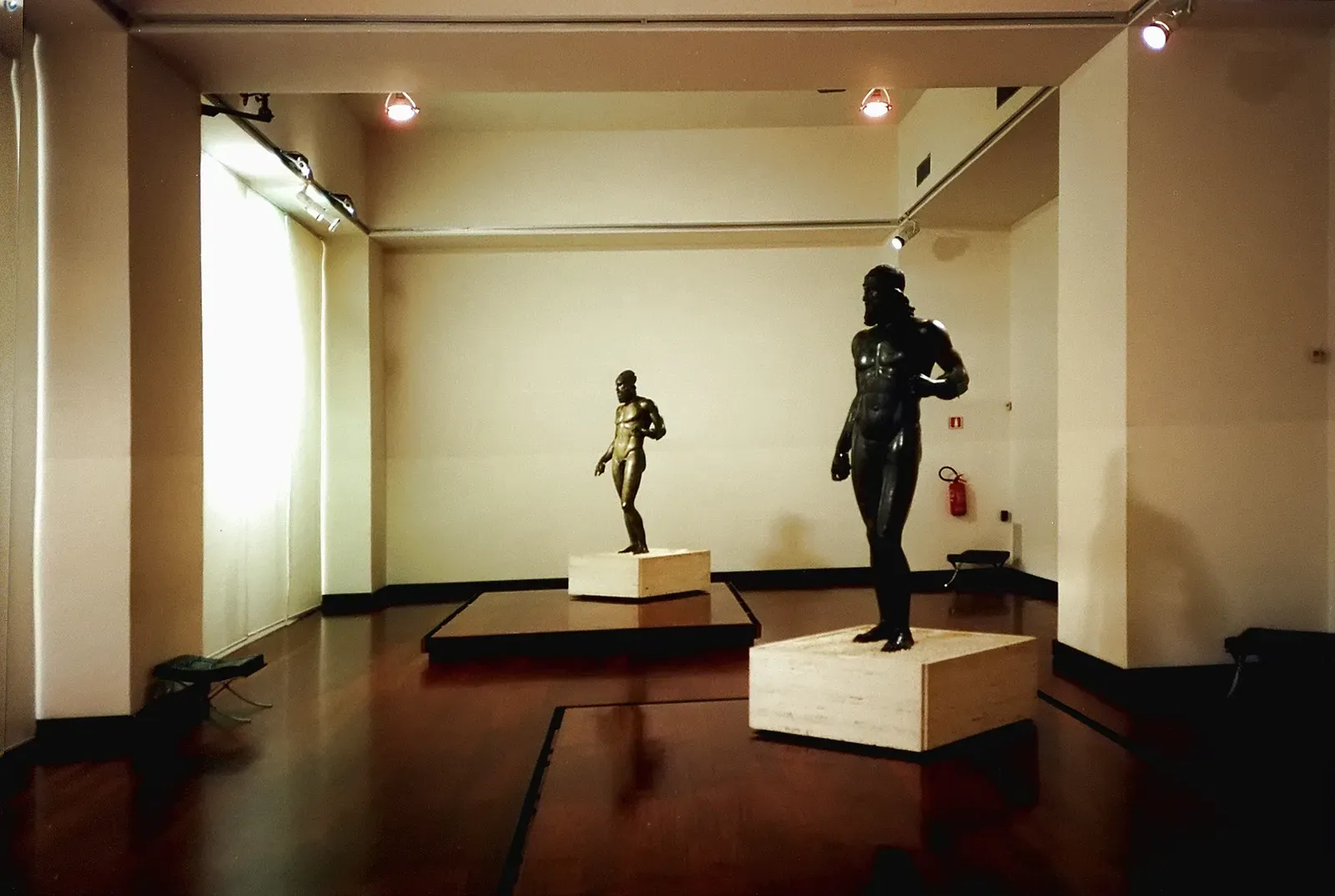
In 1972, a diver off the coast of Riace in southern Italy discovered two nearly intact bronze statues lying on the sea floor. These Riace Bronzes, dating to around the fifth century BCE, were astonishingly lifelike, capturing muscle tension, facial expression, and intricate detail in a way that surpassed most surviving works. Because bronze was often melted down and reused in antiquity, very few large bronzes had survived to show what peak classical sculpture really looked like.
The statues forced art historians to revise their sense of the timeline and quality of Greek sculpture. Marble copies from later periods could no longer be treated as perfect stand‑ins for lost originals. The level of technical and artistic sophistication suggested that peak Greek bronze work was even more advanced, and perhaps more widespread, than previously assumed. This discovery did not change dates dramatically, but it changed how we interpret and rank phases of Greek art, nudging timelines of stylistic development into sharper focus.
#24 The Dmanisi Skulls: Early Humans Leaving Africa Sooner
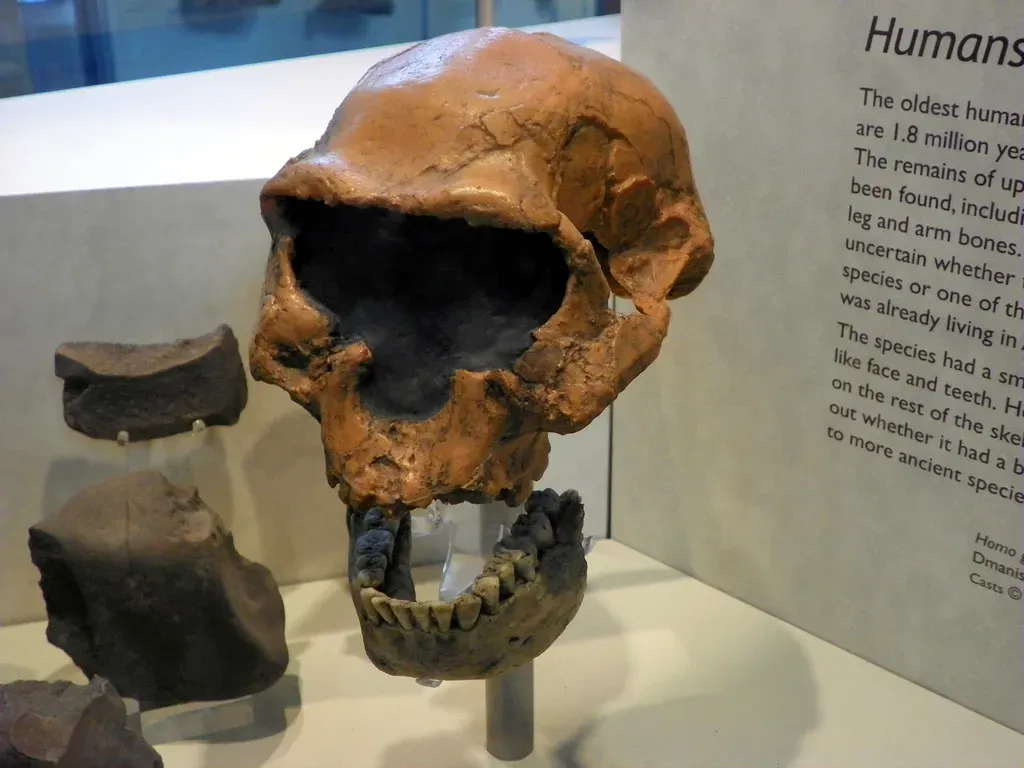
At Dmanisi in Georgia, excavations uncovered several remarkably complete hominin skulls and associated remains dating to around 1.8 million years ago. They belong to early members of the genus Homo, showing a mix of features that challenged neat species labels. More importantly for timelines, they indicated that early humans had left Africa significantly earlier than many models had suggested.
This forced paleoanthropologists to rethink the tempo of human expansion. Instead of a later, more advanced Homo species slowly radiating out, it now looked like relatively small‑brained, early forms were on the move much earlier. The timing and routes of dispersal had to be adjusted, and the assumption that only certain cognitive or technological thresholds would allow migration began to look shaky. A few skulls and tools from a hillside in Georgia quietly stretched the human story across continents sooner than expected.
#25 The Copper Scroll: A Treasure Map That Changed How We Read Texts
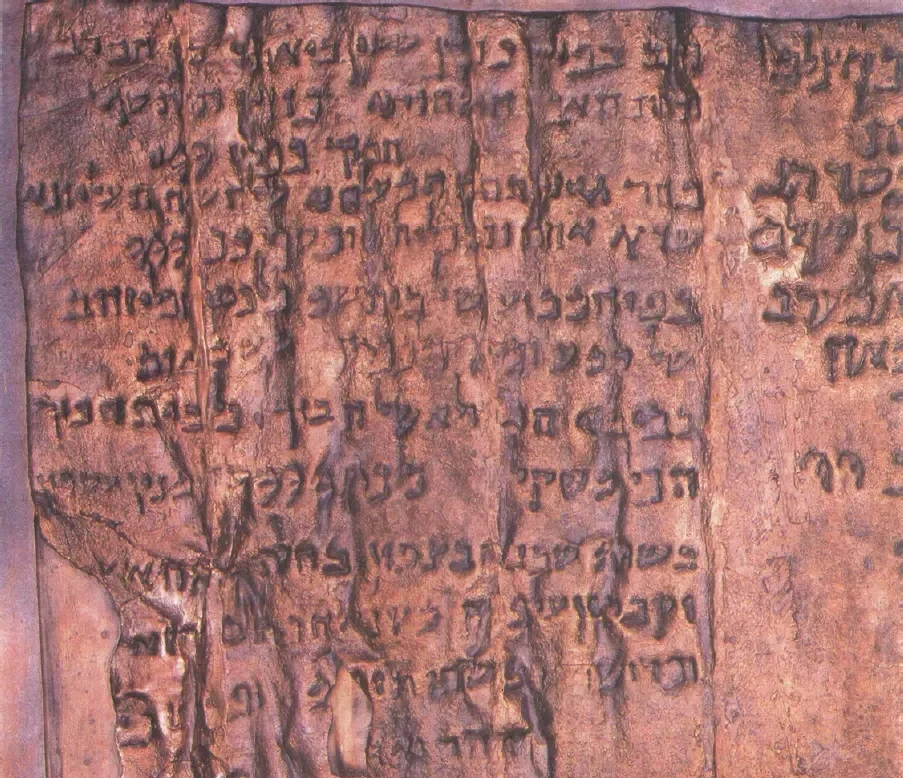
Among the Dead Sea Scrolls, one stood out as particularly odd: a text engraved on thin sheets of copper rather than written on parchment. This Copper Scroll appeared to list locations of hidden treasures, possibly temple wealth concealed during times of crisis. Whether those treasures were ever real or still exist remains debated, but the scroll’s very existence rearranged assumptions about how texts, wealth, and secrecy worked in the late Second Temple period.
The Copper Scroll nudged historians to reconsider the timeline of Jewish responses to political upheaval and war. It suggested that elaborate strategies for hiding and perhaps later reclaiming sacred or communal wealth were in play earlier and at a larger scale than many had thought. Even if it is partly idealized or symbolic, it forced a re‑reading of parallel historical accounts about conflicts with Rome and internal Jewish groups. A single metal document complicated and enriched the late chapters of ancient Judean history.
#26 The Viking Settlement at L’Anse aux Meadows: Europe Reaches America First
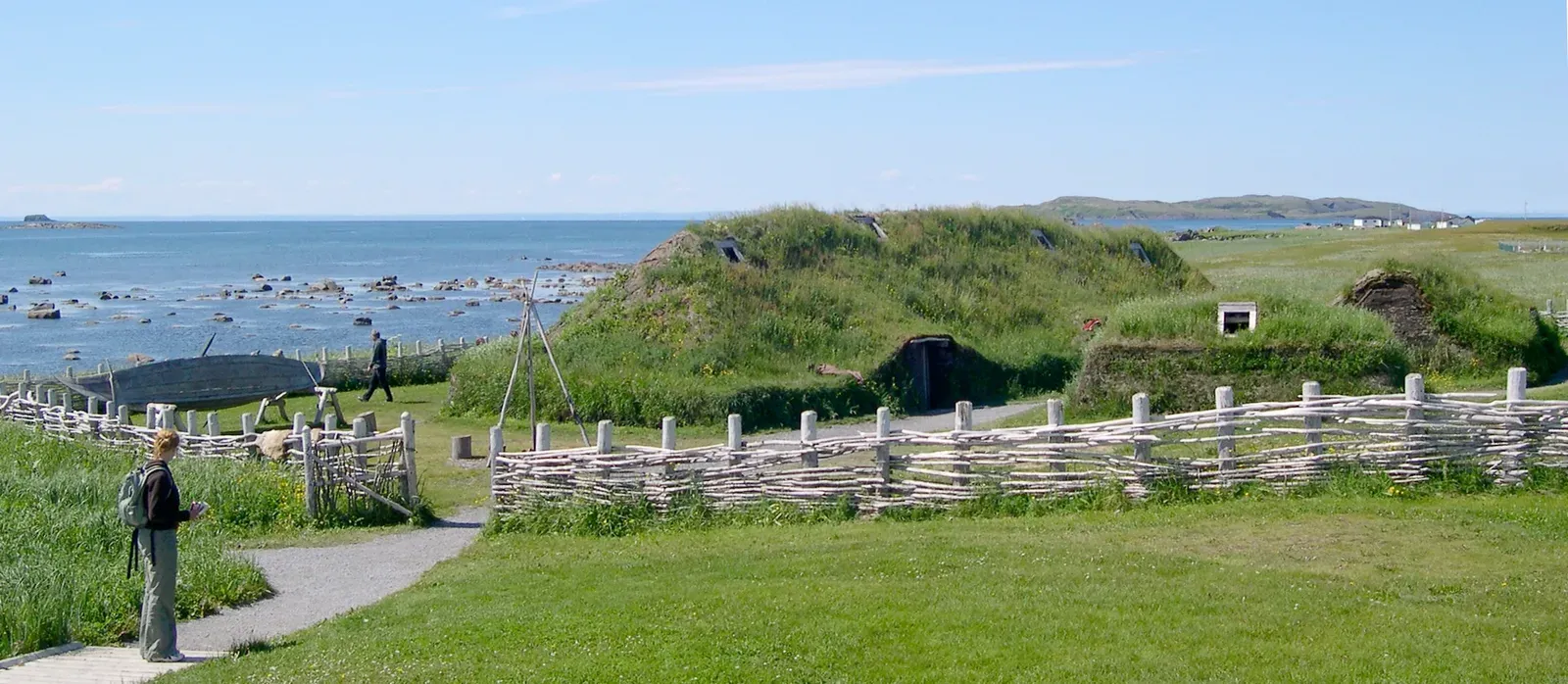
On the northern tip of Newfoundland in Canada, excavations at L’Anse aux Meadows in the 1960s revealed unmistakable remains of a Norse settlement dating to around the year 1000 CE. Turf buildings, ironworking evidence, and artifacts matched what is known from Viking sites in Greenland and Iceland. For centuries, sagas about Norse voyages to a place called Vinland had hovered between legend and possibility. Here was hard proof that people from Europe reached North America roughly five centuries before Columbus.
This discovery did more than just award Vikings the title of “first Europeans in the New World.” It forced historians to revise timelines of transatlantic contact, seafaring capability, and the limits of medieval exploration. The settlement appears to have been short‑lived, but its existence shows that cross‑ocean voyages were possible and actually attempted much earlier than traditional narratives of the Age of Discovery allowed. Suddenly, the line between the Old World and New World looked thinner and older than school maps suggested.
Conclusion: The Ground Keeps Arguing With Our Stories
Looking across these discoveries, a pattern jumps out: again and again, the earth quietly contradicted what experts thought they knew. Temples appeared before farming, cities rose without kings’ palaces, Indigenous engineers dug canals long before colonists, and unknown human cousins showed up in a Siberian cave. Every time, timelines that once felt solid turned out to be drafts. Honestly, I find that both humbling and exhilarating; it means history is less a finished painting and more a work in progress with whole sections still under the dust.
If there is a lesson here, it is that we should be suspicious of simple stories about “firsts” and tidy beginnings. The past seems to be full of false starts, forgotten peaks, and side branches that only show up when a flood, a bulldozer, or a lucky hiker reveals what was buried. My own opinion is that we are still underestimating how much we do not know, especially about people who left few or no written records. The next object caught in a plow or pulled from a cave wall might push a date back by thousands of years and prove, once again, that the ground always gets the last word. If you had to bet, where do you think the next timeline‑breaking discovery is hiding?