If you step outside on a clear night and look up, you’re staring into a galaxy that likely holds hundreds of billions of stars and an unimaginable number of planets. Statistically, it feels almost certain that some of those worlds should host life, maybe even advanced civilizations. Yet, your phone has no alien missed calls, no interstellar emails, no unambiguous signals screaming across the sky.
This uncomfortable silence is at the heart of the Fermi Paradox: if the universe is so big and old, and life seems so probable, then where is everybody? As you explore the most compelling answers scientists and thinkers have proposed, you’ll find that each one not only tries to solve the mystery of missing aliens, but also quietly forces you to ask what it really means for your own place in the cosmos.
The Heart of the Paradox: Big Galaxy, Strange Silence
You live in the Milky Way, a galaxy so vast that it can be hard to wrap your head around its scale. There are thought to be hundreds of billions of stars here, and many of those stars are now known to have planets, including Earth-sized ones in so-called habitable zones where liquid water could exist. When you combine that with the age of the galaxy – over ten billion years old – it seems like there has been plenty of time and plenty of real estate for life to appear again and again.
That’s what makes the quiet so weird. If even a tiny fraction of those potentially habitable planets produced intelligent life, and if just a tiny fraction of those civilizations developed advanced technology and space travel, you might expect the galaxy to be buzzing with signs of them. You’d anticipate strange radio signals, visible mega-structures around stars, or spacecraft visiting or at least passing through your solar system. Instead, what you see is a deafening cosmic silence, and that mismatch between expectation and reality is exactly what the Fermi Paradox is trying to explain.
The Great Filter: Is There a Wall Almost No One Gets Through?

One of the most unsettling ideas you’ll run into is something called the Great Filter. Imagine the path from lifeless rock to galaxy-spanning civilization as a series of incredibly unlikely steps: the formation of simple life, the jump to complex cells, the evolution of multicellular organisms, the rise of intelligence, the creation of technology, and finally expansion into space. The Great Filter theory suggests that at least one of these steps is so brutally improbable or destructive that almost nothing ever gets past it.
If that’s true, you have to ask where the filter sits. Maybe life itself is extremely rare, and you are lucky just to have microbes, let alone people. Or maybe the big hurdle lies in the future, in the form of self-inflicted catastrophe or natural disasters that almost always wipe out technological societies before they can expand. In that darker version, your species hasn’t hit the Great Filter yet, which means the galaxy is quiet not because others never existed, but because they did – and mostly destroyed themselves before they got very far.
Rare Earth: Maybe You Live in a Cosmic Sweet Spot
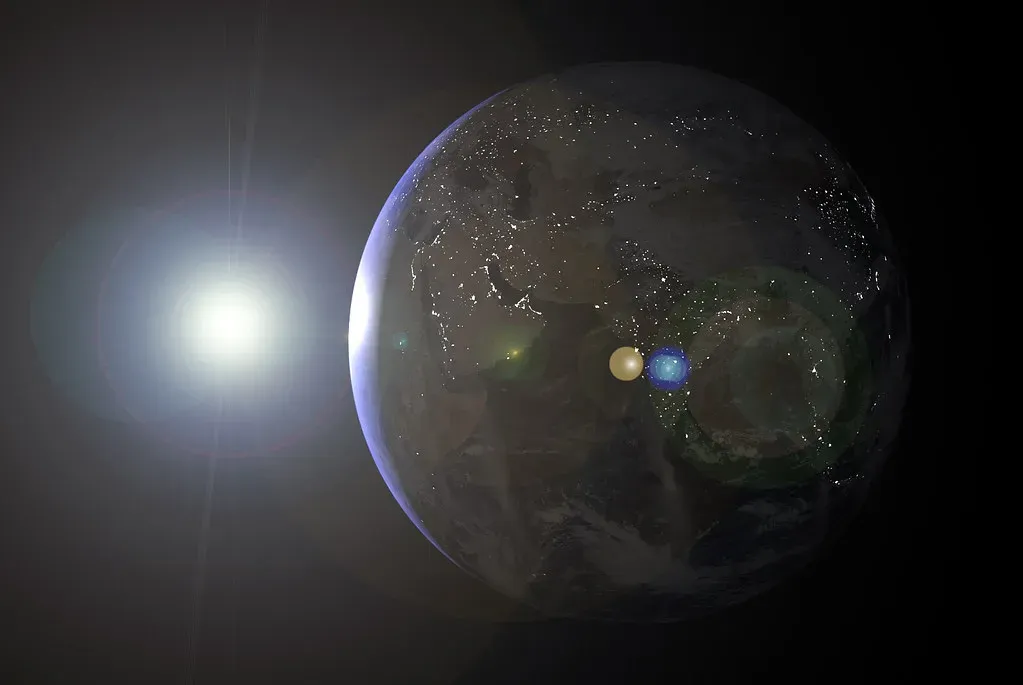
Another possibility is that life like yours is not just uncommon, but wildly special. The Rare Earth hypothesis argues that while simple life might pop up in many places, complex, intelligent, tool-making life like you see on Earth could be incredibly unusual. You might be sitting on a freakishly lucky planet with just the right mix of conditions: a stable, long-lived star, a protective magnetic field, plate tectonics recycling vital chemicals, a large moon stabilizing the planet’s tilt, and maybe even the right pattern of mass extinctions to shake up evolution at key moments.
If you buy this idea, then your situation starts to feel a bit like winning a cosmic lottery multiple times in a row. There could be lots of planets with bacteria or something like moss, but almost none with brains capable of building radio telescopes or rockets. That would mean you do not hear from aliens because, for all practical purposes, there simply are none at your level nearby. In that case, the silence of the galaxy becomes less of a puzzle and more of a reminder of how precarious and rare your existence might really be.
They’re Too Far, Too Quiet, or Too Different for You to Notice
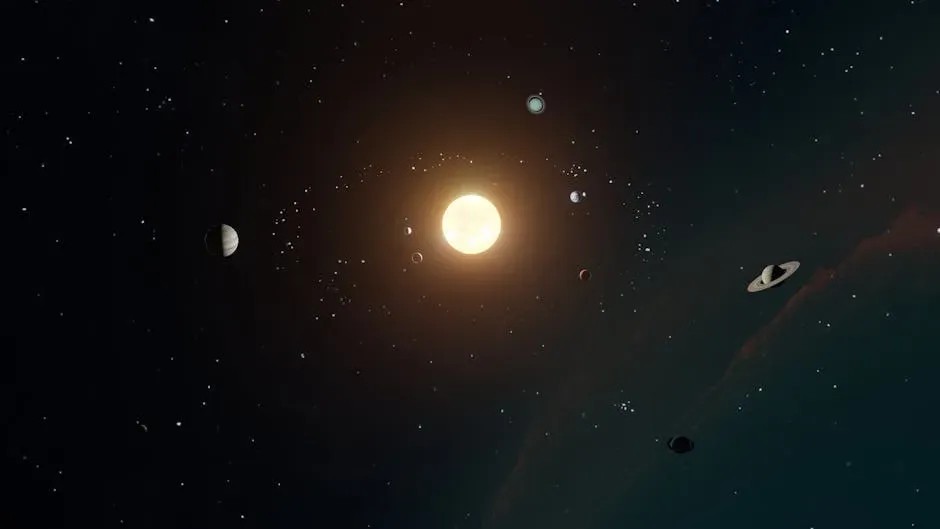
You might also be overestimating how easy it would be to spot another civilization even if it does exist. Space is unimaginably big, so any signals sent across the galaxy spread out and fade into the background noise. Your current technology can only pick up a narrow range of signal types and strengths, and you have only been listening seriously for a few decades. On a cosmic timescale, that barely registers as a blink, so you could simply be missing the rare moments when someone else tries to talk.
There’s another twist: aliens might communicate in ways you aren’t even trying to detect. You tend to imagine messages as radio waves or maybe lasers, but a much older civilization might use tightly focused, encrypted beams, exotic physics you don’t understand yet, or entirely different mediums. Their technology could be so advanced that, from your perspective, it blends in with natural phenomena. It’s like standing on a beach with a seashell pressed to your ear, listening for airplane engines – you are listening, but you’re not tuned to the right thing.
The Zoo, the Quarantine, and the Prime Directive Problem
Some explanations cut less through physics and more through psychology and ethics. The so-called Zoo hypothesis suggests you are being deliberately left alone, like animals in a protected reserve. In this picture, advanced civilizations might know you are here but have agreed not to interfere, letting your species develop on its own. If that’s the case, the silence you experience is not proof that nobody is out there, but evidence of a kind of cosmic self-control.
A related idea is that you live under a kind of quarantine, where contact is avoided because you are seen as too primitive, too unstable, or too dangerous to safely engage with. Think about how you treat dangerous biological samples in a lab: carefully contained, observed but not casually handled. If powerful civilizations see younger technological species as potential risks, they might adopt strict rules about staying hidden or minimizing detectable activity near them. Under that lens, your solitude starts to feel less like abandonment and more like being quietly monitored from behind very thick glass.
Cosmic Catastrophes and the Fragility of Civilizations
When you zoom out in time, you see that planets and life are constantly vulnerable to violent events. Supernova explosions, gamma-ray bursts, asteroid impacts, extreme climate shifts, and other disasters can reshape or wipe out ecosystems on a planetary scale. On Earth, you already know that mass extinctions have dramatically reset the evolutionary clock several times. If similar or worse events are common across the galaxy, they could regularly knock civilizations back down before they can reach for the stars.
Even without cosmic explosions, advanced civilizations might be surprisingly fragile. Once a species can manipulate powerful energy sources, engineer diseases, or build autonomous weapons, it also gains the ability to destroy itself through war, accidents, or uncontrolled technologies. You can see early hints of this risk in your own world, with nuclear weapons, environmental damage, and emerging artificial intelligence systems. If most societies eventually hit a point where they either learn to manage these dangers or vanish, the galaxy might be full of ruins and failed starts rather than thriving empires – and ruins are much harder for you to notice from light-years away.
Dark Forests, Silent Hunters, and the Fear of Being Seen
One of the more chilling ideas imagines the galaxy as a dark forest where every civilization is a hunter trying not to be hunted. In this scenario, you stay quiet because broadcasting your presence could attract something far more powerful that sees you as a threat or a resource. If other species reason the same way, everyone keeps their lights off, minimizes detectable activity, and avoids doing anything that would reveal their location to strangers. The silence you hear would then be an intentional strategy rather than an accident.
From your perspective, that possibility raises uncomfortable questions about your own behavior. By sending out radio and radar signals and broadcasting early messages into space, you may already have announced that you exist. Some people argue that you should be cautious about actively calling attention to your presence, at least until you understand more about who or what might be listening. Whether or not the galaxy is actually a dark forest, the very idea forces you to think about survival, caution, and the long-term consequences of being noticed on a cosmic stage.
What the Silence Might Be Telling You About Yourself
As you walk through all these explanations – rare life, deadly filters, cautious civilizations, or lurking dangers – you may notice that every answer to the Fermi Paradox doubles as a mirror. If intelligent life is rare, your existence becomes more precious, and your duty to protect and preserve it grows heavier. If the real threat lies in self-destruction, then your top priority might be learning how to survive your own technological adolescence without collapsing. In both cases, the absence of aliens is less about them and more about what you choose to do next.
Even the more hopeful ideas carry responsibility. If advanced civilizations are quietly watching to see what you become, then every step you take in science, ethics, and cooperation says something about your readiness to join a wider community. And if the galaxy actually is empty of peers, then you might be among the very first sparks of intelligence to have a shot at spreading life and meaning into an otherwise indifferent cosmos. In that light, the real question hiding behind the Fermi Paradox is not just where everyone else is, but what kind of civilization you want to be – because if no one is coming, it is entirely on you.
In the end, the Fermi Paradox is both a riddle about aliens and a test of your imagination. You are forced to grapple with the terrifying possibility that you are alone, the sobering thought that many civilizations might die young, and the thrilling hope that someone is out there, listening in cautious silence. Whatever the true answer is, the paradox pushes you to think bigger, act wiser, and treat your small blue world as if it really matters on a galactic scale. If the universe is waiting to see what you do next, what kind of signal do you want your civilization to send?