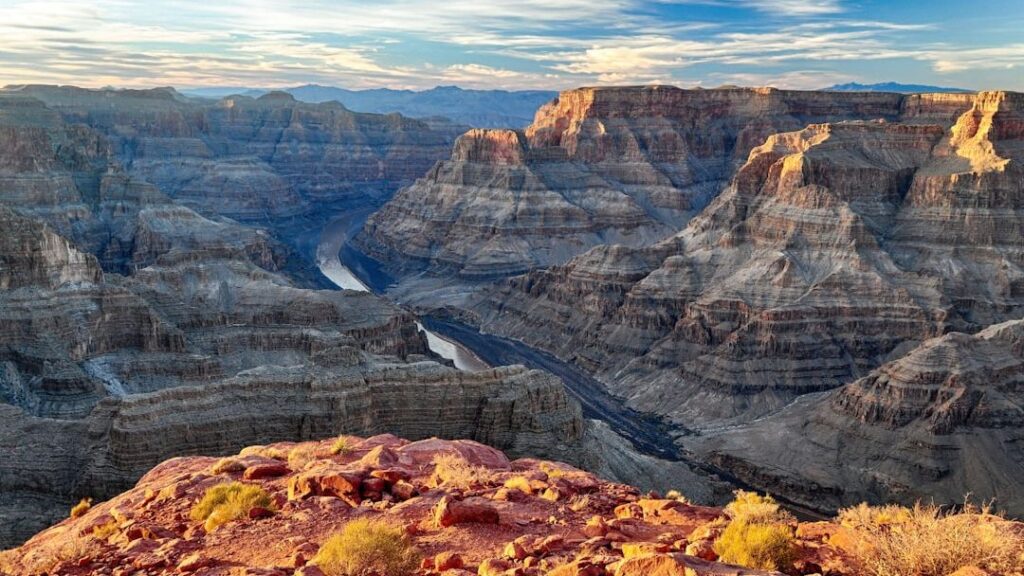
When you stand at the edge of the Grand Canyon, it does not feel like you are just looking at a landscape; it feels like you are staring straight into deep time. Every colored band of rock is a chapter in a story that began long before humans ever existed, and you are suddenly aware that your own lifetime is just a blink in comparison. This canyon is not simply a big hole in the ground; it is a vast, open archive that shows you how Earth changes, erodes, uplifts, and reshapes itself, grain by grain and drop by drop.
To really appreciate the Grand Canyon, you have to zoom out in your mind from the here and now and imagine oceans coming and going, continents colliding, and rivers steadily slicing through rising rock. You are not just sightseeing; you are reading a timeline that stretches back nearly two billion years. As you follow that story, you see how water and time worked together with almost unreasonable patience, carving one of the most famous landscapes on the planet. Once you understand that story, the canyon stops being just “pretty” and starts feeling genuinely profound.
You Are Looking at Nearly Two Billion Years of Earth’s History
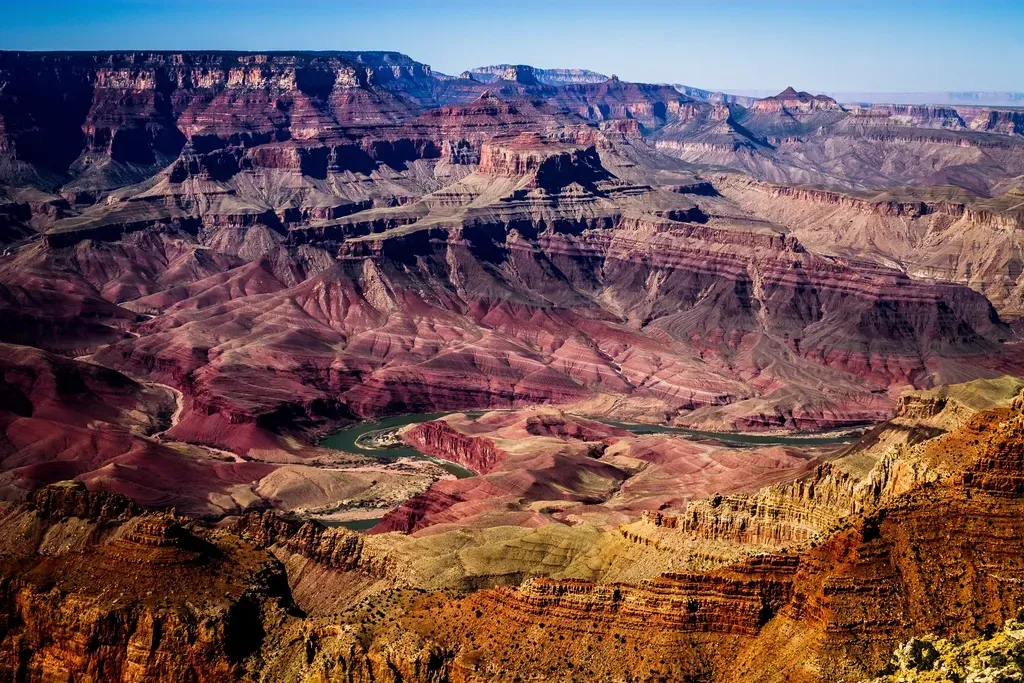
The first thing to realize is that when you look across the Grand Canyon, you are not just seeing a deep gorge; you are seeing layers of rock that were laid down over an unimaginably long span of time. Some of the oldest exposed rocks at the bottom, called the Vishnu Schist, are close to two billion years old, while the youngest layers at the top are still hundreds of millions of years ancient by human standards. You are basically standing in front of a vertical timeline, with each layer representing a different environment, climate, and chapter of Earth’s past.
If you trace the walls from rim to river with your eyes, you are moving from younger to older rock, like flipping backward through a history book. At the top, you see lighter layers that once formed beaches, coastal dunes, and shallow seas. As you go down, you move into darker, more deformed rocks that formed deep in Earth’s crust, during long-lost mountain-building events. You can think of the canyon as a cross-section of time, one that lets you see how the planet changed from ancient oceans to shifting deserts, long before there were dinosaurs, let alone people.
Ancient Seas, Shifting Sands, and Lost Landscapes Beneath Your Feet
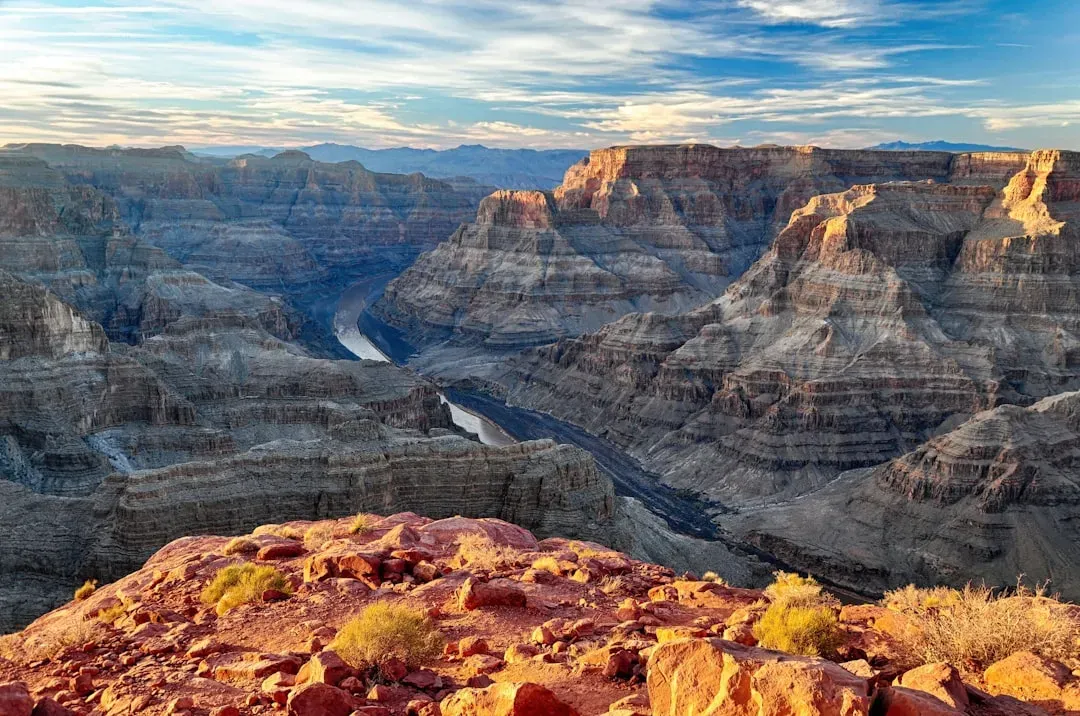
Before there was a canyon, there were stacked worlds layered right under where you now stand. For huge stretches of time, this region was covered by warm, shallow seas where mud, sand, and lime-rich shells settled on the seafloor, later hardening into limestone and sandstone. At other times, the seas retreated and left behind vast coastal plains and desert dunes, whose ripples you can still see frozen in stone if you look closely at some of the sandstone layers. You are literally walking on the remnants of long-vanished beaches, reefs, and deserts.
These changing environments left behind different types of rock, and each type tells you something about what the world looked like when it formed. Thick limestone hints at marine life thriving in clear tropical waters, while cross-bedded sandstone points to powerful winds sculpting giant dunes. When you look at the different colors – from creamy whites to deep reds and rusts – you are really seeing differences in minerals, oxygen levels, and climate. In a way, the walls around you are like old photographs of Earth’s former faces, stacked one on top of the other.
Uplift: How a Quiet Plateau Set the Stage for a Deep Canyon
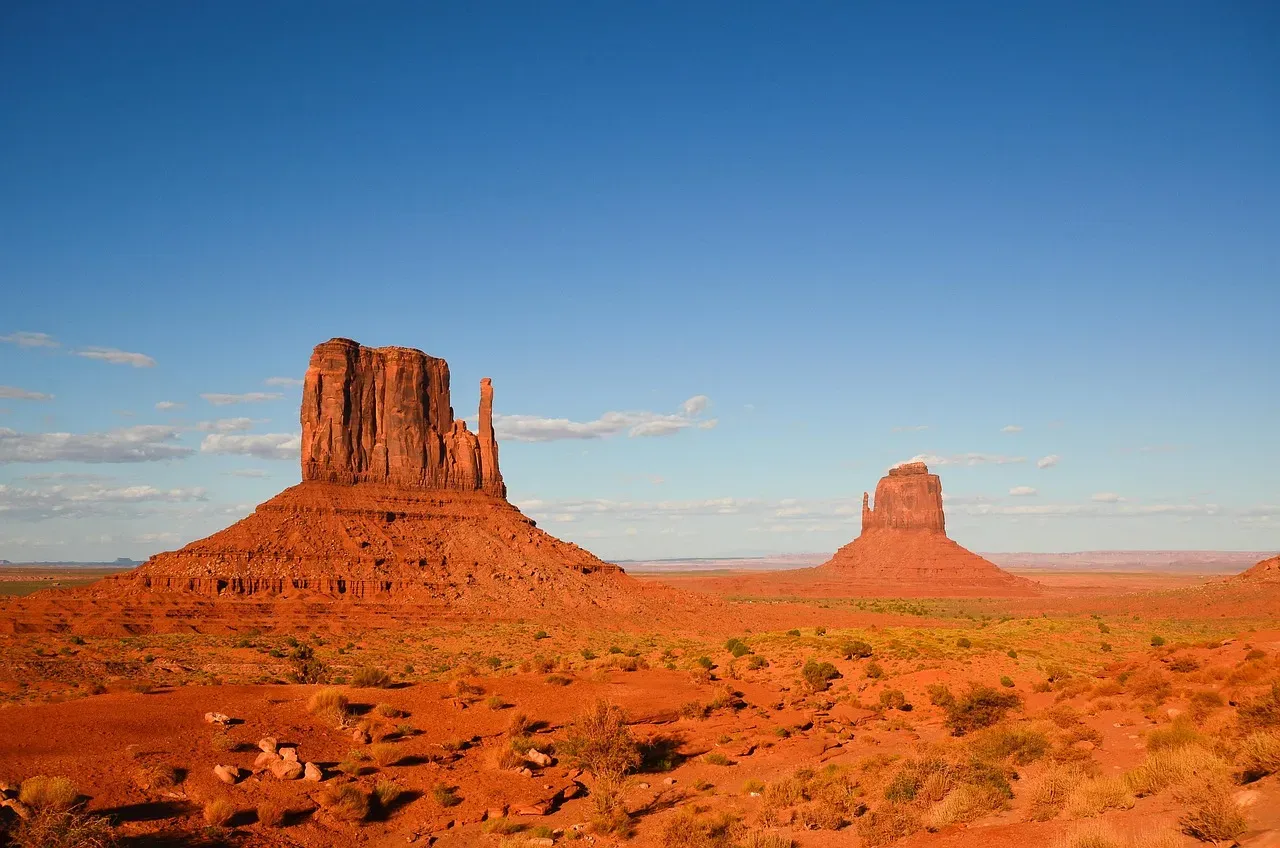
For the Grand Canyon to form, the land first had to rise. Long after those ancient seas and deserts came and went, enormous slow-motion forces inside the Earth pushed this whole region upward to create what is now called the Colorado Plateau. You might picture uplift as the land inflating like a tire, but it is more like a thick, heavy mattress being gently lifted from below over millions of years. This raised the rock layers thousands of feet above sea level, putting them in prime position for erosion to go to work.
The key detail for you is this: a higher plateau meant steeper slopes and more potential energy for any river flowing across it. When the land rose, the river that would become the Colorado did not magically appear; instead, existing streams and drainage systems gradually re-routed, cutting deeper into the rising rock to maintain their flow. Because the plateau stayed relatively intact – without being crumpled into jagged mountain ranges – you got this broad, elevated, stable stage where a single river could carve an exceptionally deep canyon right through nearly flat-lying layers.
The Colorado River: A Relentless Sculptor With a Simple Tool
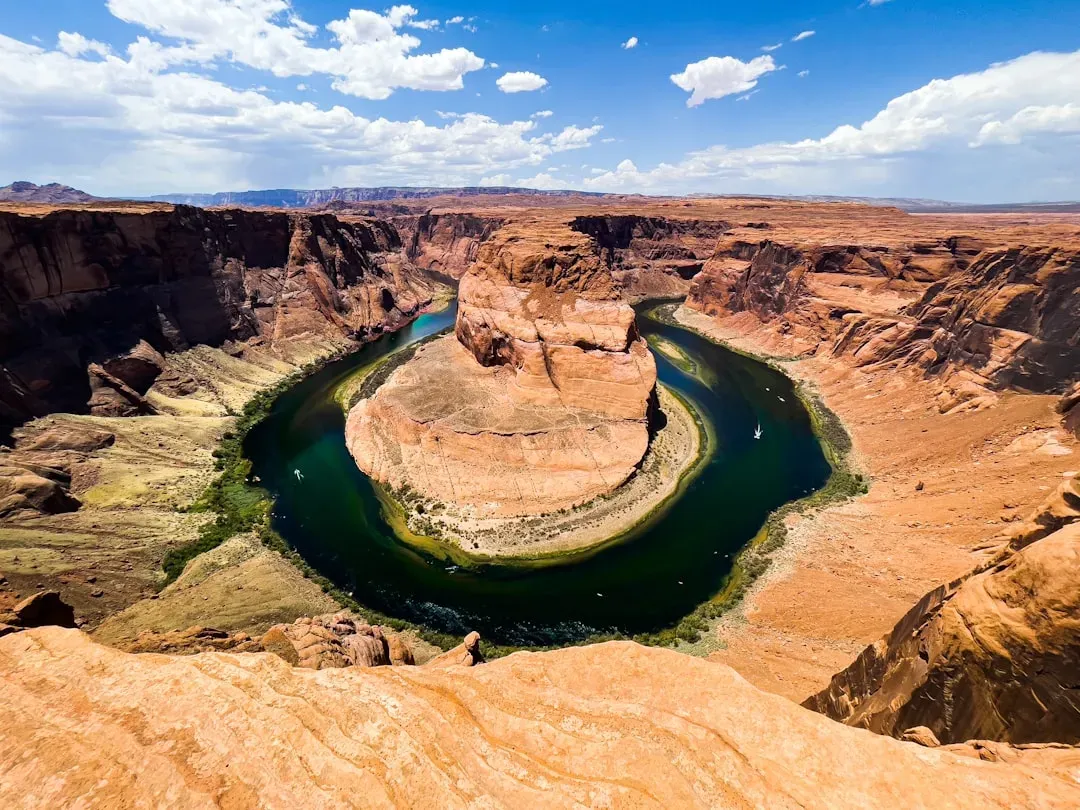
Once uplift had raised the stage, the Colorado River took over as the star of the carving show. You might imagine a dramatic torrent roaring through, but the real power of the river lies in its consistency, not in constant violent flooding. With every season and every storm, the river picked up sediment – sand, gravel, even boulders – and used that load like sandpaper grinding at the riverbed. Over millions of years, that grinding action deepened the river channel, turning a shallow valley into a steep-walled canyon.
As the river cut downward, side streams and tributaries joined in, slicing smaller canyons into the walls and expanding the whole system. You can see this today in the form of side canyons, slot canyons, and ravines feeding into the main gorge from all directions. The river’s flow was also shaped by climate shifts, volcanic activity, and changes in sea level far away from the canyon itself. So when you watch the water move below you, you are not just seeing scenery; you are watching the same basic process that, given enough time, carved more than a mile of rock out of the Earth.
Weather, Ice, and Gravity: The Everyday Forces That Deepened the Canyon
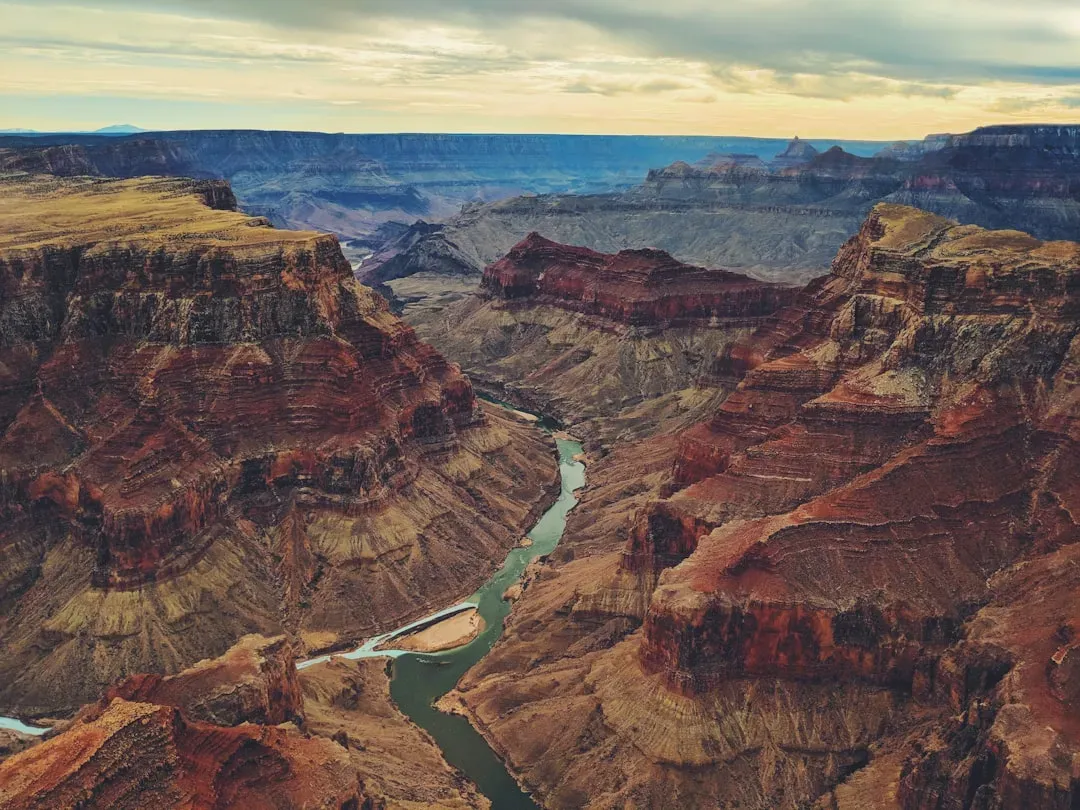
The story is not only about the river; you also have to give credit to the weather above the rim and the gravity pulling everything downward. When rain falls or snow melts, water seeps into cracks in the rock. If that water freezes, it expands and pries the cracks open a little more, eventually breaking off chunks of rock in a process you might know as frost wedging. Over countless freeze-thaw cycles, that gentle prying becomes a powerful sculpting tool, widening and steepening the canyon walls.
Once pieces of rock break loose, gravity takes over and pulls them down the slopes in rockfalls, landslides, and slow, creeping movements you barely notice in real time. Those fallen rocks accumulate as talus piles at the base of the cliffs, where they can be picked up by flash floods or slowly weathered into smaller debris. Wind and temperature swings add their own small but steady contributions. All of this means that while the river does the deep cutting, the air, ice, and gravity handle the shaping of the walls you actually see.
Why the Colors and Shapes of the Canyon Look So Dramatic to You
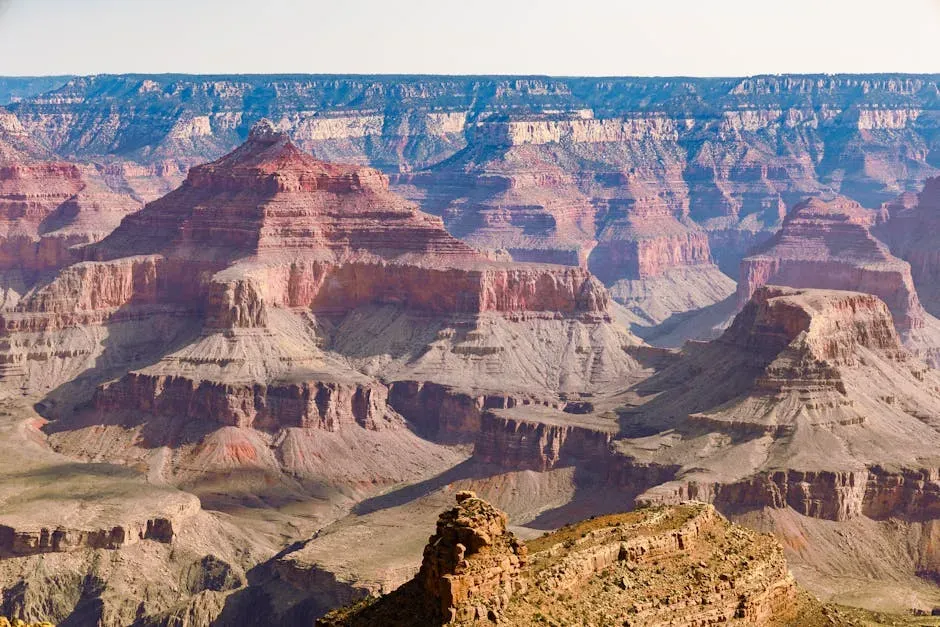
When you first look out over the Grand Canyon, what probably grabs you as much as the size is the color: bands of red, orange, cream, gray, and even purplish hues layered like some gigantic layer cake. Those colors are not just for show; they come from different minerals and iron content in each rock layer. Some layers are rich in iron that has rusted into reds and oranges, while others are made mostly of lighter limestone or pale sandstone. As sunlight changes throughout the day, you see those colors shift and glow, giving the canyon an almost unreal quality.
The shapes are just as important to the story as the colors. Harder rock layers resist erosion and form cliffs, while softer layers erode more easily and form slopes, so you get that stair-step look on the canyon walls. Mesas, buttes, towers, and pinnacles are all what remain where some blocks of rock held out longer against erosion than the rock around them. When you spot a lone spire or flat-topped mesa, you are basically seeing a stubborn remnant of an older, higher surface that used to be more continuous before water and time carved it away.
A Living Laboratory: How Scientists Read the Canyon’s Clues
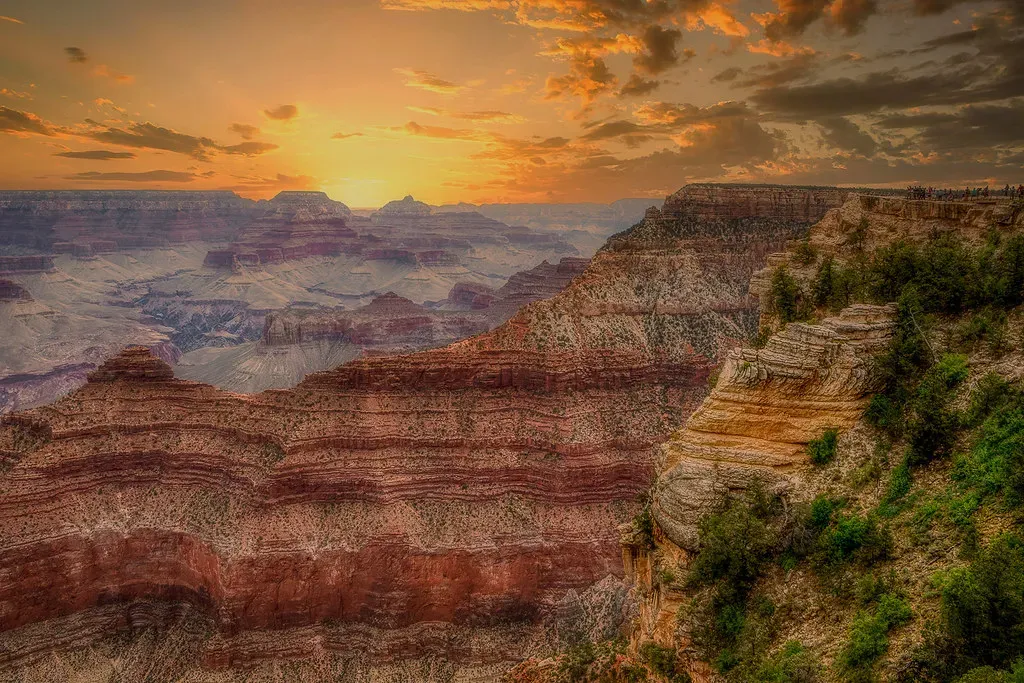
For geologists, the Grand Canyon is like a dream textbook that has had all its pages laid out on a giant shelf at once. Because so many rock layers are clearly exposed, scientists can trace them over long distances and match them with similar layers in other parts of the region. By doing this, they can reconstruct how continents shifted, how sea levels rose and fell, and how ancient climates changed. When you see someone studying rocks along a trail, they are not just admiring the view; they are pulling data from those layers to understand global Earth processes.
Scientists also use the canyon to test and refine ideas about how rivers carve landscapes, how fast erosion happens, and how tectonic uplift interacts with climate. They may measure how quickly sediment moves downstream, or how old certain terraces and river deposits are using modern dating techniques. When you read about debates over exactly when the canyon became as deep as it is today, you are seeing science in action, with new methods sometimes challenging older estimates. The canyon is not just an old relic; it is an active research site that keeps teaching you new things about how Earth works.
Time Scales That Make You Reconsider Your Own Sense of Time
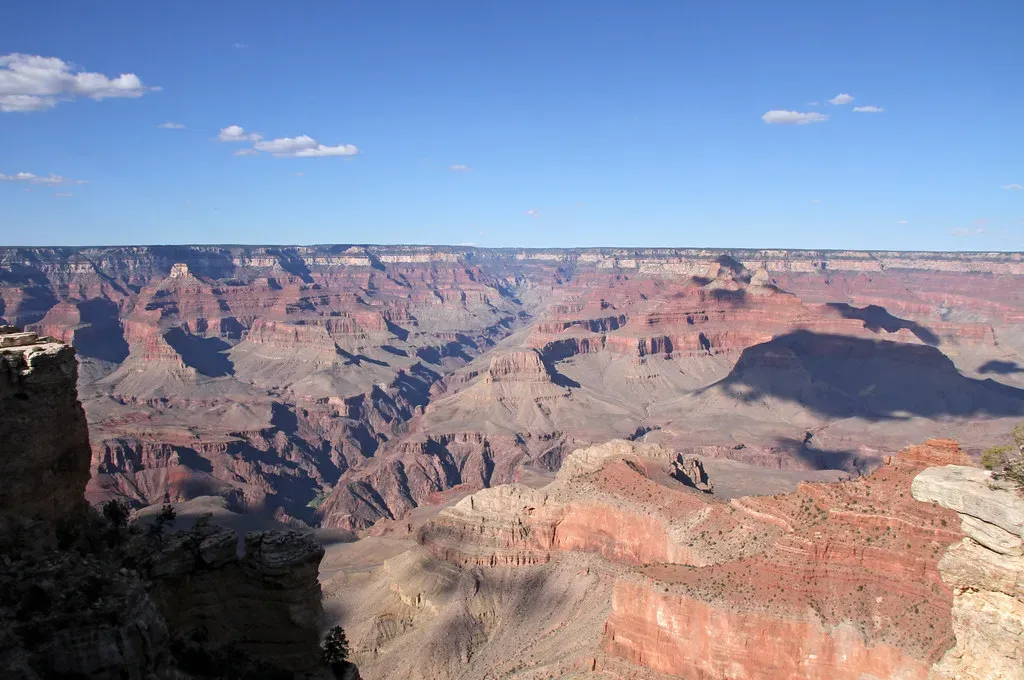
Trying to wrap your head around the timescales involved in the Grand Canyon can be almost dizzying. You are used to thinking in days, years, or maybe centuries, but here you are dealing with processes that unfold over millions of years. Rock layers that look solid and permanent to you are actually part of a slow flow of matter being lifted, eroded, and carried away. When you realize that a single storm might move more material in a day than you could lift in a lifetime, and yet still be only a tiny blip in the canyon’s story, your normal sense of time starts to feel small.
This does not make your life insignificant; if anything, it can make your time feel more precious. Knowing that the canyon took such a long time to form can change how you look at change in your own world. Short-term shifts that feel huge to you barely register on geological timescales, but they still matter deeply for human societies and ecosystems. The canyon invites you to hold two ideas at once: that you live in a fleeting moment, and that you are also part of a much bigger, older story that keeps unfolding long after you are gone.
How Your Visit Fits Into an Ongoing, Ever-Changing Story
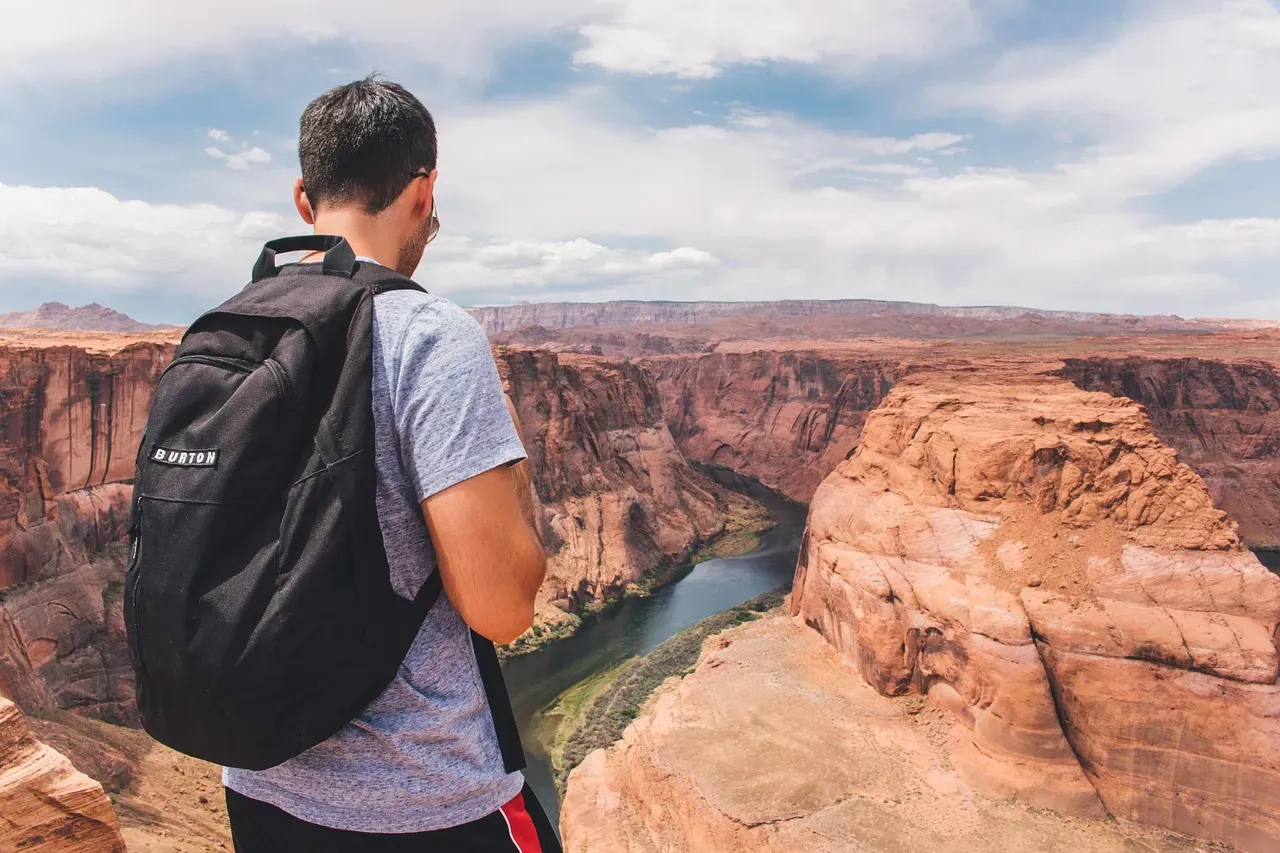
It is easy to think of the Grand Canyon as finished, like a masterpiece hanging in a gallery, but when you are standing there, you are actually watching a work still in progress. Every rainstorm that darkens the walls, every rockfall that echoes down a side canyon, and every flash flood that roars through a slot canyon is another small stroke in the ongoing carving. The river at the bottom is still carrying away bits of the plateau, grain by grain, just as it has for ages. You may not see the changes during your visit, but the canyon you are looking at is not exactly the same one someone saw a century ago, and it will not be exactly the same a century from now.
Your presence is part of that ongoing story too. The trails you walk, the viewpoints you crowd, and the protections you support or ignore all shape how this landscape will be passed on to the next generation. By learning how the canyon formed, you also learn how fragile it can be to human pressures like overuse, pollution, and development. When you leave, you carry a piece of its story with you, and ideally, you leave behind a little more respect for deep time, for patient natural processes, and for the responsibility you have to landscapes that took so long to create.
Conclusion: Letting the Canyon Change How You See the World
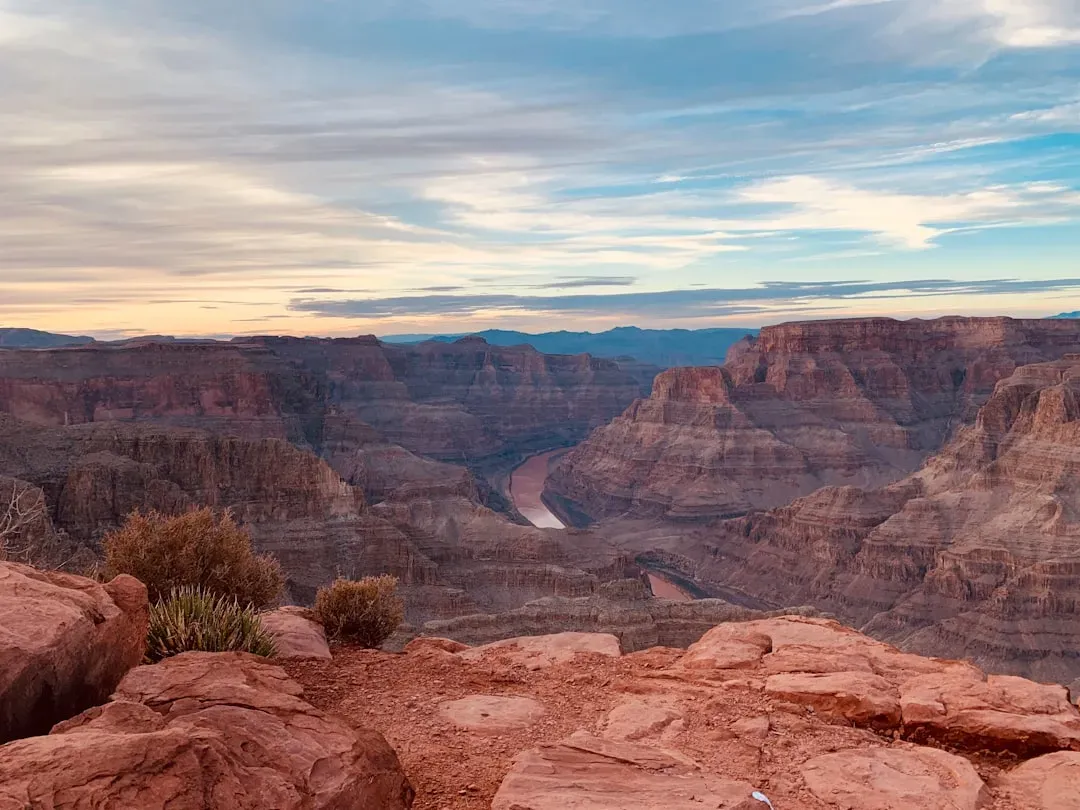
When you put all of this together – the ancient seas, the rising plateau, the persistent river, the ice and gravity, the colors and cliffs – you start to see the Grand Canyon not as a single event but as the result of layered processes stacked over staggering spans of time. You realize that what looks like a dramatic, static vista is actually a moving story, captured mid-scene. The canyon shows you that slow, steady forces can achieve results that look almost impossible, if only they are given enough time and space to work. In that sense, it becomes more than a tourist destination; it becomes a quiet, enormous teacher.
As you look out over that vast chasm, you are not just admiring a view; you are looking into the memory of the planet, where water and time wrote their story into stone. If you let it, the canyon can nudge you to think differently about your own life, your environment, and the way small, repeated actions can add up to immense change. You walk away with dusty shoes, a phone full of photos, and a slightly rearranged sense of scale – of what is big, what is small, what is fast, and what is slow. And as you leave the rim behind, you might find yourself quietly wondering: if water and time can carve this, what else, given enough patience, might be possible?