

If you follow physics even a little, you probably notice something odd: every time scientists push deeper into the nature of reality, the question of your own awareness sneaks back in. You start with particles and forces, and somehow you end up wondering who is doing the observing, and what it even means to have an experience. It feels almost unfair, like you signed up for a class on gravity and got dropped into a late-night philosophy debate.
This is not just armchair musing. From quantum mechanics to cosmology to information theory, you keep running into puzzles that make no sense without asking what a conscious observer actually is. You can try to ignore it for a while, but the more you learn, the harder it becomes to pretend that consciousness is just some minor side effect. Sooner or later, you have to face the uncomfortable possibility that your own mind is not just in the universe, but somehow part of how the universe shows up at all.
The Measurement Problem: When Observation Refuses To Be “Just Physics”
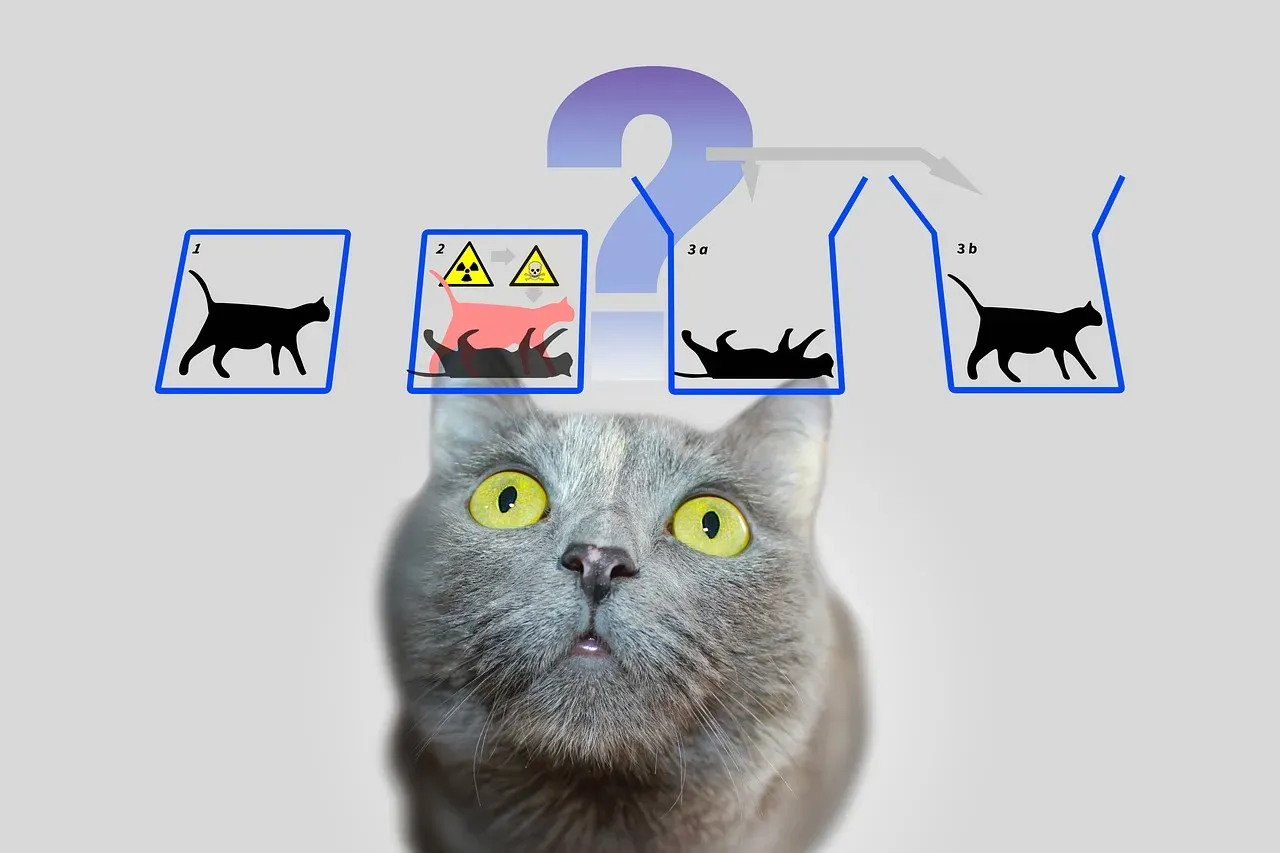
One of the reasons you keep hearing about consciousness in physics is the notorious measurement problem in quantum mechanics. On paper, a quantum system evolves smoothly according to the Schrödinger equation, spreading out into a cloud of possibilities. But the moment you measure it, that smooth cloud suddenly snaps into one definite outcome, and the theory itself does not clearly tell you what counts as a “measurement” or why it should have that special status.
When you look closely, you notice that a measuring device is just another physical system made of particles and fields. So where, exactly, does the jump from probability to reality happen? Some descriptions talk about an “observer,” which naturally makes you wonder whether your conscious experience of an outcome plays a role. Even if you believe it does not, you are still stuck explaining why the world you experience looks classical and definite, while your best equations insist it is fundamentally fuzzy and probabilistic underneath.
Wigner, von Neumann, and the Temptation To Put Mind in the Mix

You are not the first person to suspect that consciousness might matter in how quantum events become real. In the twentieth century, some of the leading architects of quantum theory explored ideas where the chain of measurement only really ends when a conscious observer becomes aware of a result. In that kind of picture, you can have particles interacting, detectors clicking, and even recorded data sitting in a computer, but nothing is finally “decided” until a conscious mind takes in the information.
Most working physicists today are uneasy with that move, partly because it seems to smuggle your mind into the laws of nature as a kind of special ingredient. Still, even if you personally dislike those older interpretations, they force you to confront a basic tension: you rely on your conscious experience to say what you observed, but your equations treat everything as mindless matter following rules. You end up in a strange loop, where you use consciousness to validate your physics, while your physics often pretends consciousness is not there.
Is Consciousness Fundamental or Emergent? Two Very Different Pictures

Once physics bumps into consciousness, you face a big fork in the road: either you treat consciousness as something fundamental, or you try to explain it as a higher-level feature of physical stuff. If you lean toward the fundamental view, you might be drawn to ideas where consciousness is as basic as space, time, and matter. In those perspectives, your experience is not something that magically appears out of neurons, but a built-in aspect of reality that physical theories have been ignoring or downplaying.
If you lean toward the emergent side, you see consciousness as what happens when information-processing systems like brains get sufficiently complex. In that case, physics does not need to change its basic rules; it just needs to be detailed enough to show how neural activity gives rise to feelings, thoughts, and awareness. The trouble is that, so far, even rich descriptions of brain activity still leave you with the so‑called “hard problem”: why any of that activity should be accompanied by an inner point of view that feels like something from the inside.
Information, Entropy, and Why “Bits” Start To Look a Lot Like “Brains”
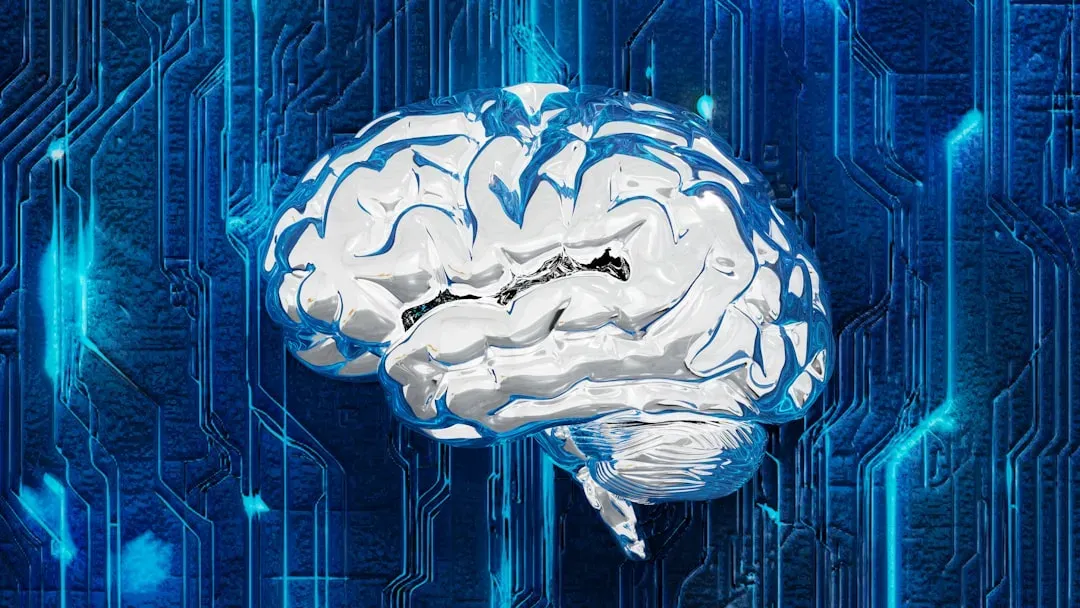
As modern physics shifts from talking only about particles and fields to talking about information, you find your mental life awkwardly close to center stage. You already describe your brain as an information-processing machine, but now you also see black holes, quantum systems, and even spacetime geometry described in terms of information and entropy. Suddenly, the gap between “what your brain does” and “what the universe does” does not feel quite as wide as it used to.
When you think of reality as information being transformed and constrained, your own conscious experience looks like a very special kind of informational process. You are not just passively receiving sensory data; you are organizing, interpreting, and compressing it into a coherent world you can act in. That makes it tempting to ask whether consciousness is tied to certain patterns of information flow, and whether the informational language of physics might eventually give you a natural bridge between matter and mind instead of treating them as two separate realms.
Quantum Brains, Free Will, and the Lure of Special Exceptions

Whenever you combine the weirdness of quantum mechanics with the mystery of consciousness, you are almost guaranteed heated debate. Some proposals suggest that your brain might exploit quantum processes in ways that matter for your conscious experience or for what you call free will. In that kind of picture, your decisions would not be fully determined by classical physics but could be linked to genuinely indeterministic quantum events, potentially giving you a sense of openness about your choices.
Critics are quick to point out that your brain is warm, wet, and noisy, which makes delicate quantum effects hard to maintain over meaningful timescales. Even if some quantum processes do play a role in neural function, it is a big leap to say they explain subjective experience or freedom. Yet the fact that this conversation keeps returning shows you something important: once physics admits that not everything is strictly predetermined and that probabilities are built-in, you cannot help wondering how that uncertainty lines up with your felt sense of choosing and experiencing.
Cosmology, Anthropic Reasoning, and the Awkward Centrality of Observers

When you scale up from atoms to the entire universe, you might expect consciousness to fade into irrelevance, but instead it sneaks back in through the side door of cosmology. The moment you ask why the constants of nature seem so finely tuned for life, you find yourself talking about observers. Some arguments lean on the idea that you can only find yourself in a universe where conditions allow beings like you to exist and notice them, which makes your presence part of the explanation for what you see.
Even if you are skeptical of those anthropic arguments, you still use observer-based reasoning in subtle ways when you interpret cosmic data. You have to remember that every measurement you make is filtered through selection effects: you see a universe compatible with your existence, not a random sample of all possible realities. That forces you, again, to admit that your status as a conscious observer is not an optional detail; it shapes which slice of the universe you can access and how you make sense of it.
The Hard Problem at the Edge of Physics: Explaining Experience Itself
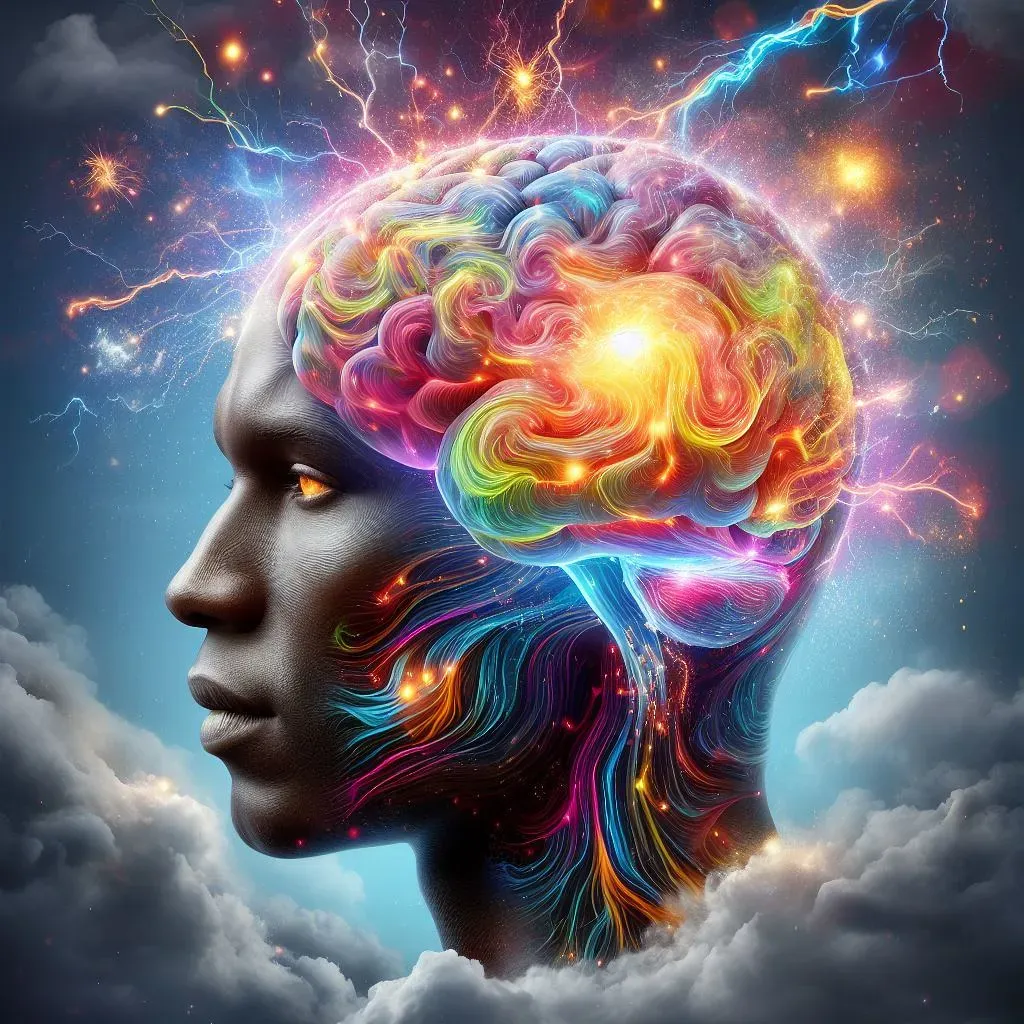
At some point, you run into a wall that many philosophers and scientists now call the hard problem of consciousness. You can map brain regions, measure electrical signals, and model neural networks, and you will learn a huge amount about the correlates of different mental states. But none of that directly tells you why a particular pattern of neural activity should feel like the taste of coffee, the color red, or the ache of loss from the inside. The raw “what it is like” aspect of experience stubbornly resists straightforward physical description.
Physics, at its core, is about structures, patterns, and relations that can be measured and predicted. Your inner life, however, is defined by qualities and meanings that are lived rather than merely described. That does not mean physics is useless for understanding consciousness, but it does suggest that you may need new conceptual tools or bridging principles. Until you can say why certain physical processes are accompanied by a point of view at all, you will keep circling back to the same haunting question: how can a universe of matter and energy produce something that feels like you?
Why You Probably Cannot Escape This Question Forever

Even if you are a very pragmatic person, it is hard to avoid the sense that consciousness and physics are on a collision course. On one side, your best physical theories describe a world of fields, symmetries, and information flows. On the other side, your only access to any of that comes through conscious experience. The two are already intertwined in practice, even if your theories try to keep them conceptually separate. As your understanding of the brain, quantum theory, and cosmology becomes more precise, that separation looks more and more like a temporary patch, not a final solution.
In your own life, you feel this tension whenever you switch from seeing yourself as a bundle of atoms obeying laws to experiencing yourself as a person with hopes, fears, and choices. Physics is incredibly successful at predicting what will happen when particles collide or stars explode, but it still has no widely accepted way to account for what it is like to be you. Whether consciousness turns out to be fundamental, emergent, or something you do not yet have the right words for, the question is not going away. And if you are honest with yourself, would you really want a final theory of the universe that leaves your own experience unexplained?
In the end, you stand at a curious crossroads: you use your conscious mind to explore the physical world, and that same exploration keeps looping back to your conscious mind. Maybe that is not a bug but a clue that any truly deep understanding of reality has to include the fact that it shows up to someone. The next time you read about a new discovery in physics, you might quietly ask yourself what it implies about the one thing you know more directly than anything else: the fact that you are aware. Did you expect the universe to keep pointing you back to that?