You grow up with a tidy story about humanity: simple hunter‑gatherers become farmers, farmers build cities, cities create civilization, and everything marches forward in a neat timeline. Then archaeology walks in like a plot twist and flips the script. Again and again, a handful of discoveries have forced you to admit that the past was stranger, more complex, and often more impressive than the story you were taught in school.
When you look closely at these finds, you are not just staring at old bones and broken stones. You are watching your idea of what it means to be human get taken apart and rebuilt. From temples that should not exist to mysterious cousins in your DNA, these discoveries remind you that history is not finished; it is still being edited. Here are ten moments when archaeologists had to grab the eraser and rewrite the timeline of human history.
1. Göbekli Tepe: The Temple That Came Before Farming
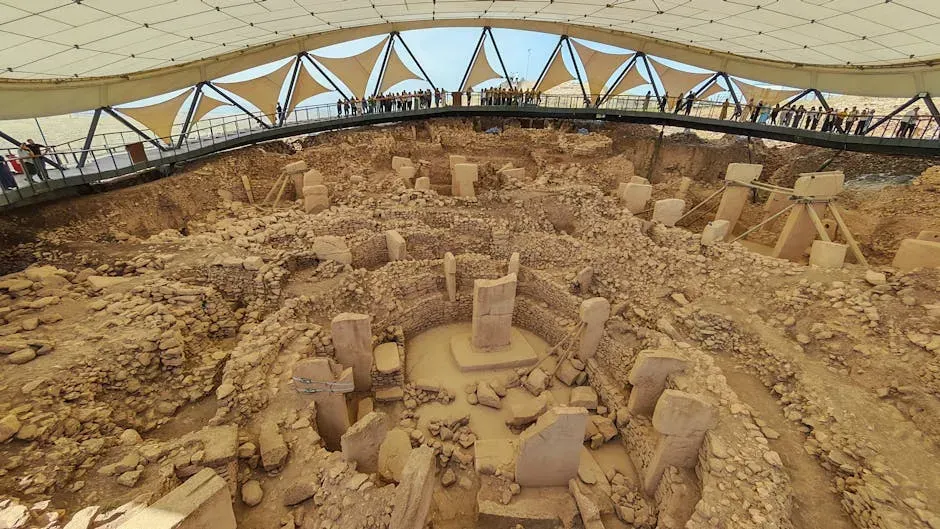
Imagine trekking across the dry hills of southeastern Turkey and suddenly realizing the stones under your boots are not random at all, but part of the oldest known monumental complex on Earth. At Göbekli Tepe, you are looking at circular enclosures built roughly eleven to twelve thousand years ago, with towering T‑shaped pillars carved with foxes, vultures, scorpions, and abstract symbols. The shocking part is the date: this place was born while humans in the region were still transitioning from hunting and gathering to settled farming, long before classic cities or states existed.
You were probably taught that large temples and monumental architecture appear only after stable agriculture and complex political systems. Göbekli Tepe quietly wrecks that idea. Here, it seems that the desire to gather, perform rituals, and build something huge may have come first, pulling people together and helping push them toward farming rather than the other way round. When you stand there mentally, you are forced to entertain a wild possibility: maybe religion, shared stories, or communal ceremonies were not products of civilization but engines that helped create it.
2. The Denisovans: A Lost Branch Hidden in Your DNA

Picture a single, nondescript fragment of finger bone and a couple of teeth from a cave in Siberia changing how you think about your own species. That is what happened at Denisova Cave in Russia’s Altai Mountains. When researchers sequenced DNA from those tiny fragments, they discovered that you were not just sharing the planet with Neanderthals in the distant past but also with another distinct group of humans now called Denisovans. They are not simply a regional variant; genetically, they form their own branch of the human family tree.
For you, the story used to be simple: modern humans leave Africa, replace more archaic forms like Neanderthals, and that is that. But Denisovan DNA is still living quietly in many people today, especially in populations across parts of Asia and Oceania, where it has even been linked to helpful traits like adaptation to high altitude. This means your ancestry is not a straight line but a braided river of groups meeting, mixing, and sometimes vanishing. That little bone chip from Denisova Cave forces you to admit you carry echoes of lost peoples you never knew existed.
3. Laetoli Footprints: When You First Walked Upright
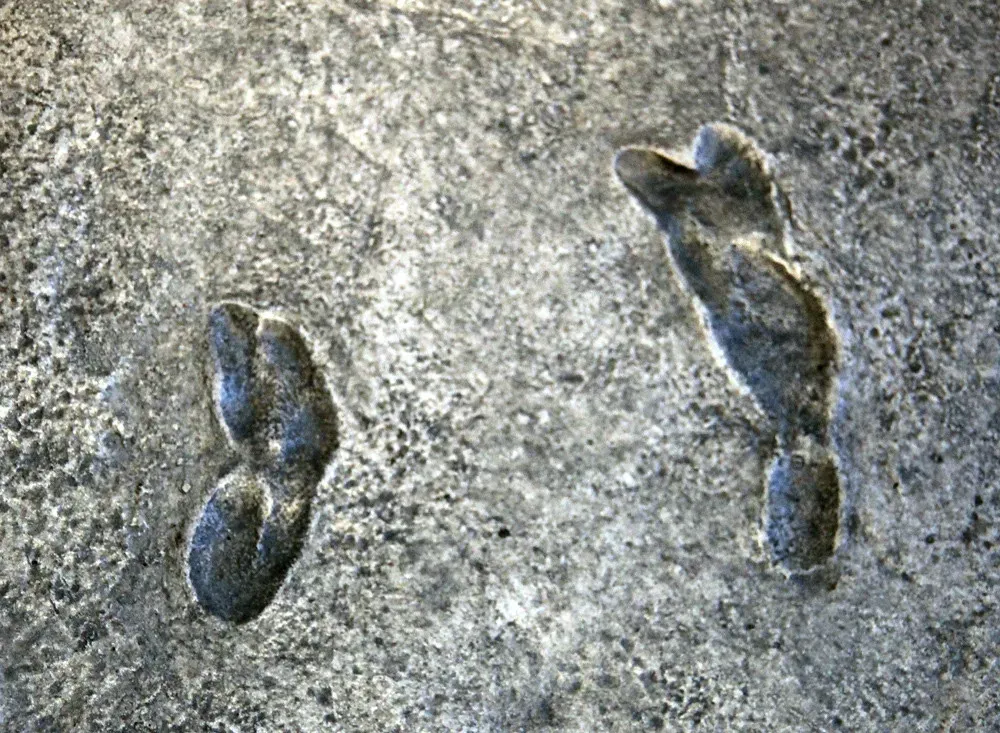
Now shift your attention to a quiet patch of ancient volcanic ash in northern Tanzania. At Laetoli, you see something incredibly intimate: a trail of footprints, made about three and a half million years ago, preserved as if someone had just walked by. These are not knuckle‑walking impressions or odd scrapes; they are clear, human‑like footprints, complete with arches and forward‑pointing big toes, left by early hominins that many researchers tie to species like Australopithecus afarensis. You are basically eavesdropping on a stroll in the deep past.
Before Laetoli, it was easy to assume that your ancestors’ brains grew big first and then you straightened up and walked. Those prints tell you the opposite: full‑time, upright walking was already in place long before the dramatic expansion of brain size. In other words, you learned to walk tall long before you learned to think in the ways you now take for granted. That forces you to rethink the order of human evolution and to see locomotion, not just intelligence, as a key early innovation that shaped who you are.
4. Lucy at Hadar: Rethinking What It Means To Be Human
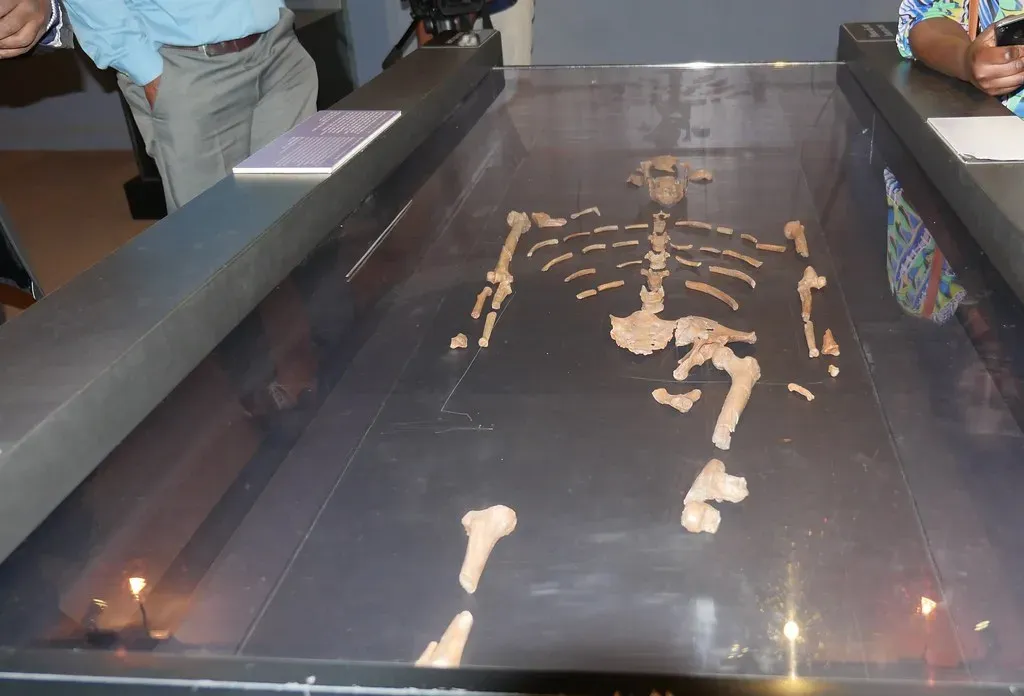
Travel in your mind to the dusty sediments of Hadar in Ethiopia, where in the 1970s a remarkably complete fossil skeleton was pulled from the ground and nicknamed Lucy. She walked the Earth about three and a half million years ago, stood only about as tall as an average child, and belonged to Australopithecus afarensis. When you look at reconstructions of her bones, you see a curious mix: hips and knees suited for upright walking, but a small brain and long arms that hint at climbing trees as well.
Lucy forces you to step away from tidy categories like “ape” and “human.” She shows you that your lineage passed through long transitional phases, where bodies experimented with new ways of moving while brains were still relatively small. Instead of a sudden leap to “modern humanity,” you are looking at a gradual, messy series of adaptations. Lucy makes it much harder for you to imagine a clean line between animals and humans; instead, you get a slow, fascinating blur where both worlds overlap inside one fragile skeleton.
5. Lascaux and Ice Age Cave Art: Minds Older Than You Assumed
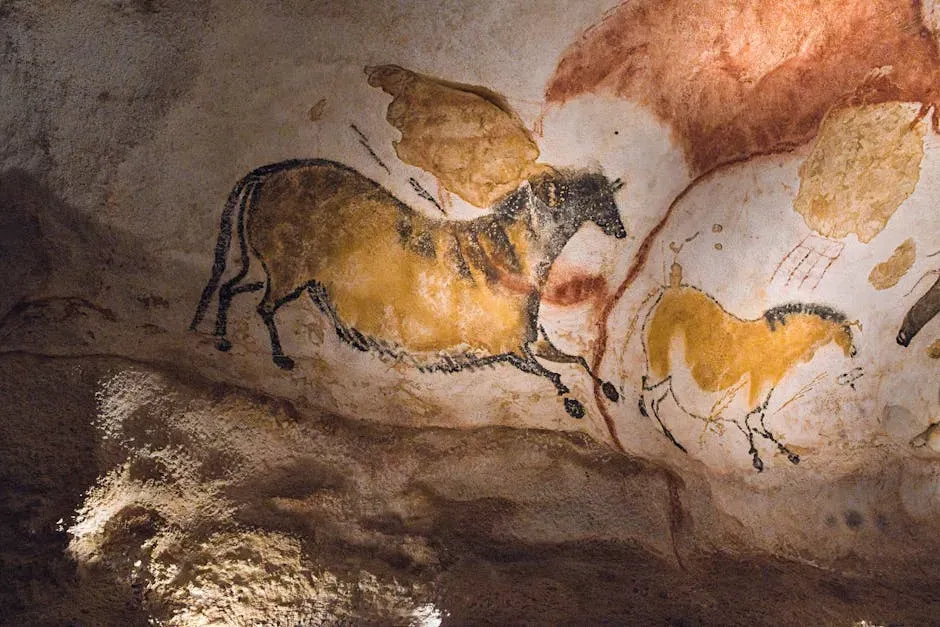
When you picture “primitive” Stone Age life, you might picture crude tools and harsh survival. Then you step inside a virtual version of the Lascaux cave in southwestern France, and the scene hits you like a revelation. On the walls, painted roughly seventeen thousand years ago, you find galloping horses, powerful bulls, deer, and strange symbols arranged with a sense of motion, perspective, and composition that feels eerily modern. Suddenly, you are not looking at simple doodles; you are staring at deliberate, complex art.
These paintings tell you that long ago, during the last Ice Age, people already had sophisticated symbolic thinking, aesthetic sense, and probably rich mythologies. You might have assumed that true art arrived with early civilizations in Mesopotamia or Egypt, but caves like Lascaux, Chauvet, and others show that your ability to imagine, to tell stories, and to represent the unseen is far older. You start to realize that your mental world – your dreams, fears, and symbols – has roots stretching far deeper into time than your history textbooks usually acknowledge.
6. The Rosetta Stone: Unlocking a Lost Civilization’s Voice
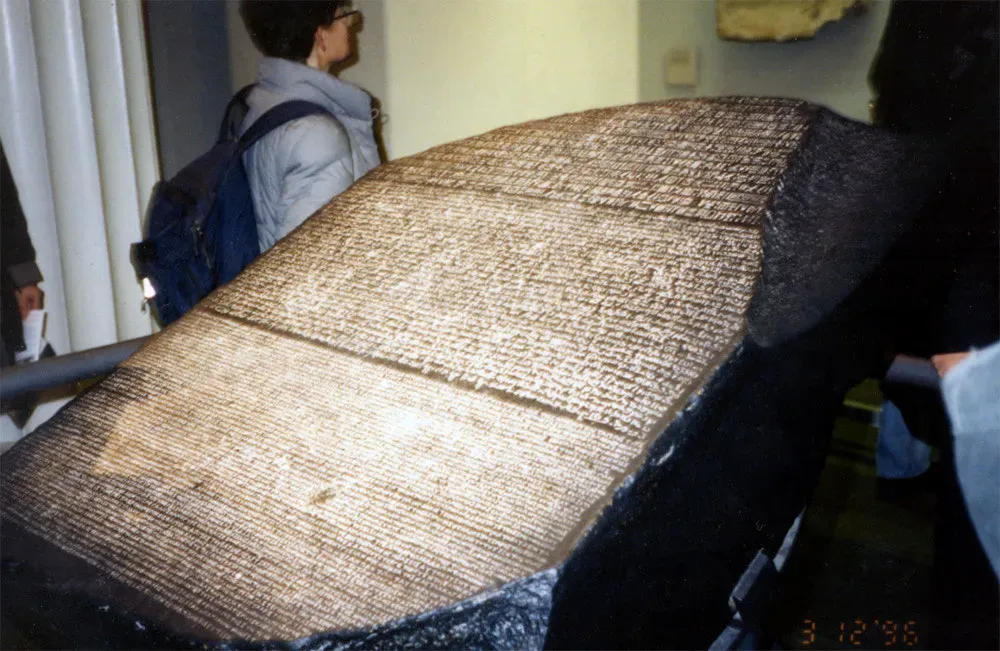
Not every discovery that rewrites history is breathtaking at first glance. The Rosetta Stone, a broken slab of dark rock discovered in Egypt at the end of the eighteenth century, looks almost disappointingly plain. But when you lean closer and notice the same decree carved in three different scripts – Greek, hieroglyphic, and demotic – you suddenly understand why it is legendary. It became the key that allowed scholars to finally read ancient Egyptian hieroglyphs after centuries of guesswork.
Once those symbols started making sense, Pharaohs and priests stopped being mute stone faces and turned into real people again, with letters, laws, and daily concerns. That shift matters to you because it shows how a single object can change the way an entire civilization is understood. The Rosetta Stone did not just decode texts; it reopened thousands of years of history, religion, literature, and science that had been locked away. It is a reminder that sometimes you do not need to dig deeper in time to rewrite history; you only need to learn how to listen to what is already there.
7. Monte Verde: Challenging the “Clovis-First” Story of the Americas
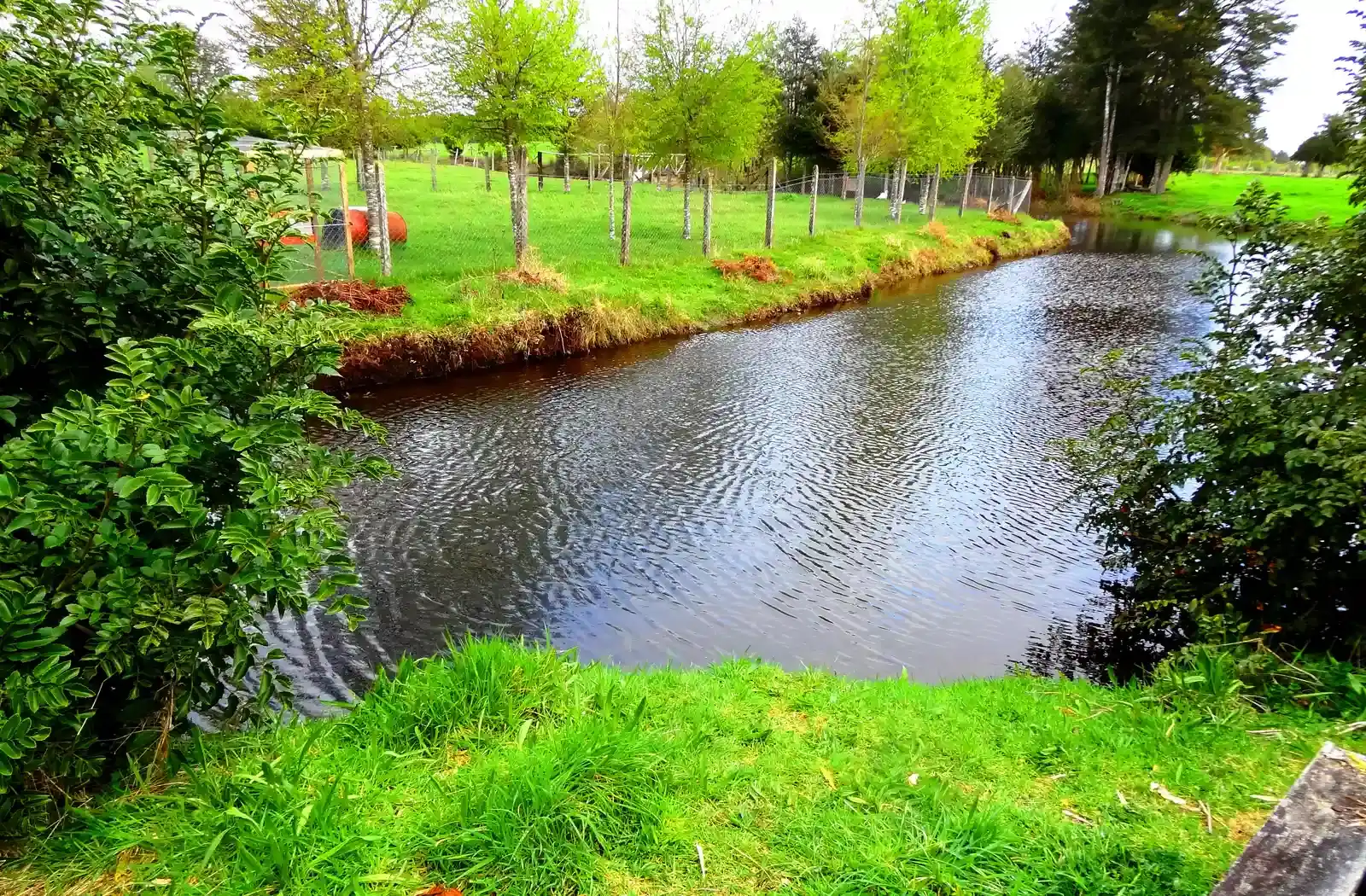
If you grew up in North America, you might have been told a simple version of how people first arrived: a group associated with the Clovis culture crossed a land bridge from Siberia into Alaska and spread southward after the last Ice Age. Then you meet Monte Verde in southern Chile, a site that produced wooden structures, hearths, stone tools, preserved plant remains, and even a possible human footprint dated to around fourteen and a half thousand years ago, or at least many centuries before classic Clovis sites. Suddenly that neat story stops working.
Monte Verde tells you that humans were already living near the southern tip of South America when, under the old model, they were barely supposed to be entering the continent. That implies earlier migrations, perhaps along the Pacific coast or in multiple waves you had not accounted for. There is still active debate around interpretations and dates, and new studies keep poking at the details, but the big takeaway for you is clear: the peopling of the Americas is more complex, older, and more diverse than the textbook tale of a single migration suggests.
8. Olduvai Gorge: The Deep Roots of Technology
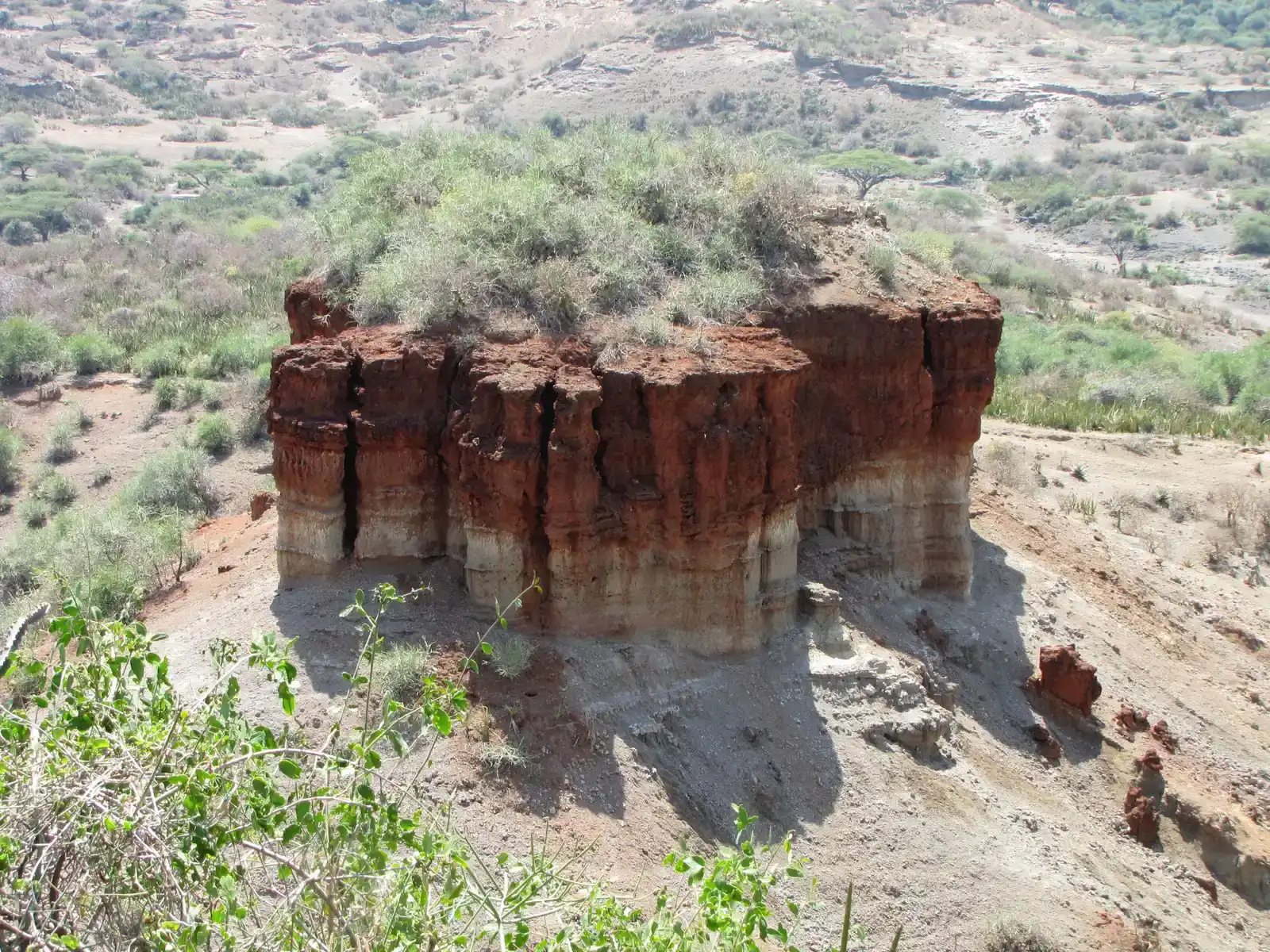
When you pick up your phone or open a laptop, you are using the tip of a technological iceberg that began in places like Olduvai Gorge in Tanzania. In this steep ravine, archaeologists discovered stone tools and fossil bones stretching back roughly two million years and more. Simple flakes, cores, and later more refined hand axes show you that long before your species, earlier hominins were already shaping stone deliberately to carve meat, crack bones, and process plants.
Olduvai forces you to drop the idea that technology is a recent explosion tied only to modern humans. Instead, you see it as an ancient habit – an ongoing conversation between brain, hand, and environment that has been running for close to two million years. Every time you see a chipped stone from Olduvai, you are looking at the same impulse that leads you to design software, build bridges, or modify genomes: a refusal to accept the world as given. It reminds you that the roots of innovation lie deep in time, in the hands of people who looked very different but solved practical problems in surprisingly familiar ways.
9. The Indus Valley Cities: Urban Life Without a Famous King
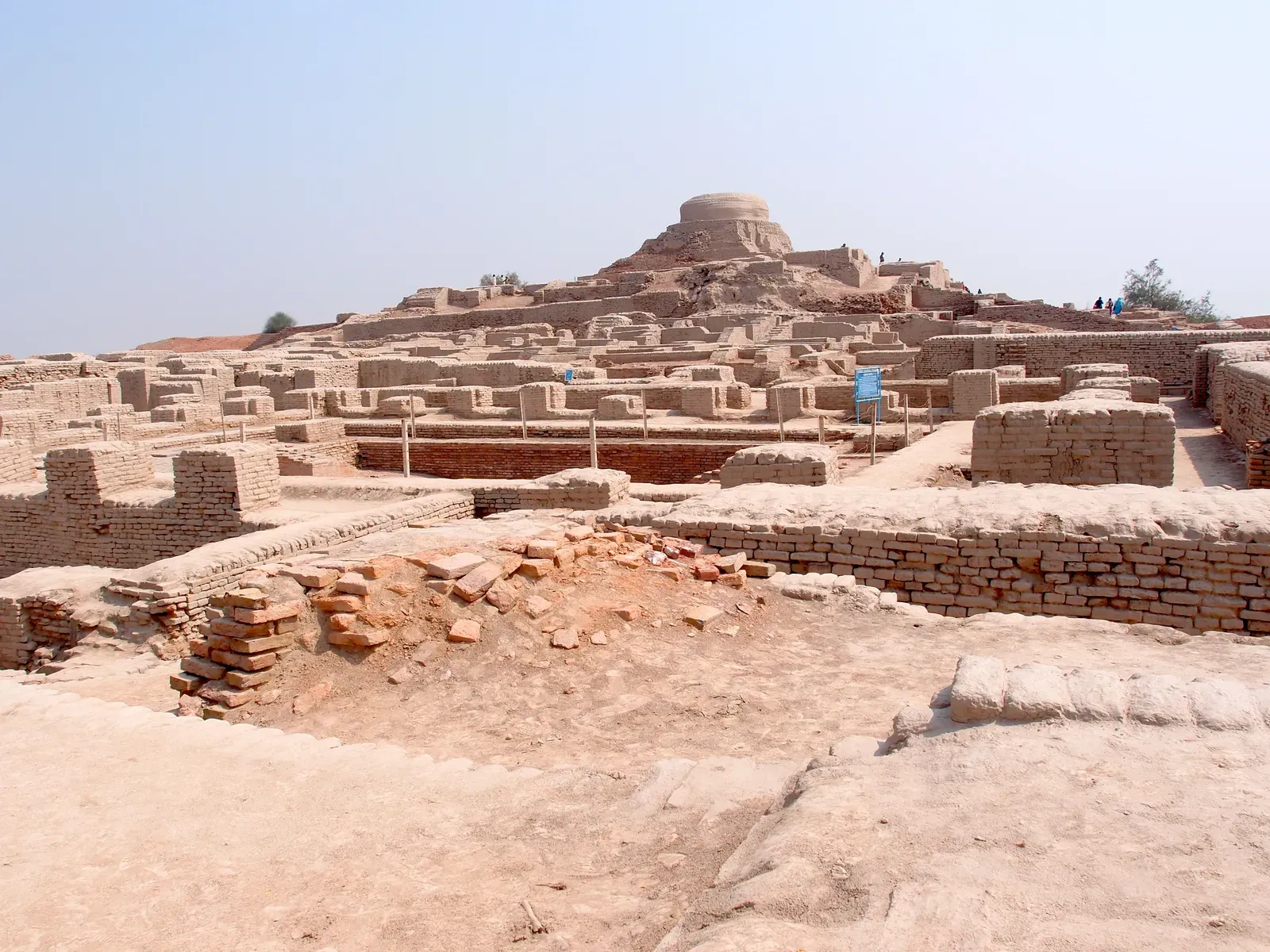
When you think about early cities, you might instinctively picture pyramids, ziggurats, and carved statues of powerful rulers. Then you look at the Indus Valley Civilization, centered in what is now Pakistan and northwest India, and the script flips. At sites like Harappa and Mohenjo‑Daro, you find carefully laid‑out streets, standardized bricks, sophisticated drainage systems, and evidence of wide‑ranging trade. Yet you do not see the same glorifying monuments to kings or the massive temples that dominate other early urban centers.
For you, this raises an unsettling but exciting question: do you really need divine kings and huge palaces to run a complex urban society? The Indus cities suggest a different model, one that might have been more decentralized, more mercantile, or at least more modest in its display of central power. Because the script used there is still undeciphered, you are left with puzzles instead of clear answers. But even that uncertainty teaches you something powerful: history is not only written by those who shout; sometimes the quiet, well‑engineered city with no obvious ruler has just as much to say about how humans can organize themselves.
10. Çatalhöyük: When Villages Became Something More
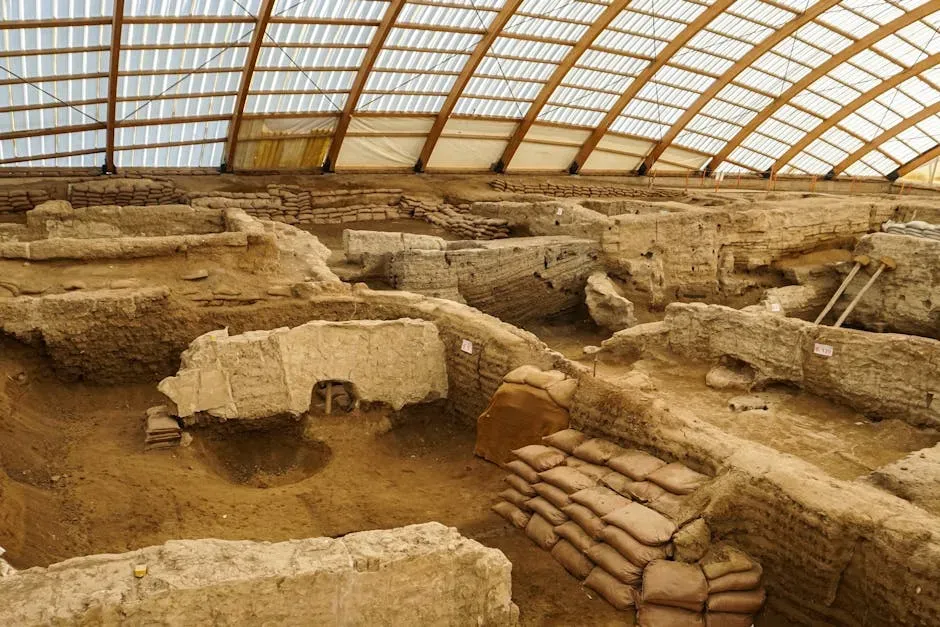
Finally, imagine walking through a Neolithic town where people enter their homes through the roof and live in houses packed tightly together like honeycomb. At Çatalhöyük in central Anatolia, inhabited roughly nine thousand years ago, you see densely clustered houses, rich wall paintings, carefully buried ancestors under floors, and evidence of long‑distance trade in obsidian and other materials. It is not quite a city in the later, formal sense, but it is much more than a simple farming village.
Çatalhöyük makes you rethink what the first “cities” actually looked like and how social complexity develops. Here you do not see huge palaces or towering temples dominating the skyline; instead, you see many households side by side, sharing walls and roofs, negotiating daily life in close quarters. That forces you to consider that early urbanism may have grown from the bottom up, through networks of families and shared spaces, rather than just top‑down control by a ruling class. In this packed settlement, you catch a glimpse of your own modern crowded neighborhoods starting to appear in a very different world.
Conclusion: A Past That Refuses To Sit Still
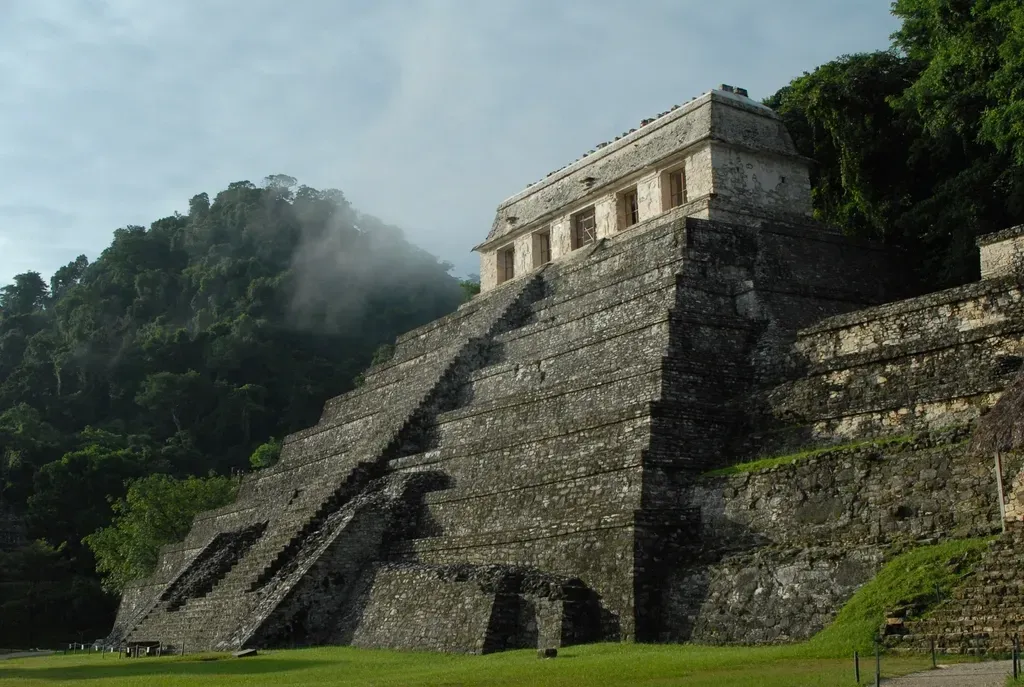
When you step back from these discoveries, a pattern jumps out at you. Each time archaeologists think they have a solid narrative, something unexpected surfaces: a temple older than farming, a new branch of the human family, footprints that walk upright long before big brains, cities without obvious kings. Every find tells you that the past is not a fixed script but a messy draft constantly being revised.
If you let these discoveries sink in, they change more than your trivia knowledge. They nudge you to see yourself differently: not as the final, inevitable result of a straight ladder of progress, but as one expression of a long, tangled story full of experiments, dead ends, and wild successes. The real lesson is simple and humbling: whenever you think you finally know how human history really went, you should probably leave some room on the page for corrections. Which of these discoveries most surprised you, and what other assumptions about the past are you suddenly not so sure about anymore?