
If time travel suddenly became real tomorrow, your entire sense of cause and effect would be up for negotiation. Everyday ideas you take for granted – like events happening in a fixed order, or your memories matching what “really” happened – would start to feel strangely fragile. You would not just be asking where or who you are, but also when you are, and whether that question even has a single, clear answer anymore.
Behind the wild movie scenes and sci‑fi novels, there’s a surprisingly serious scientific conversation about time, spacetime geometry, and whether the universe actually forbids time machines. You’re going to see that parts of time travel, especially to the future, are not just allowed by physics but already happening in small ways today. The real trouble starts when you try to circle back into the past and touch causes themselves. That’s where the paradoxes creep in and your brain starts doing somersaults.
The Physics Of Time: More Flexible Than You Think
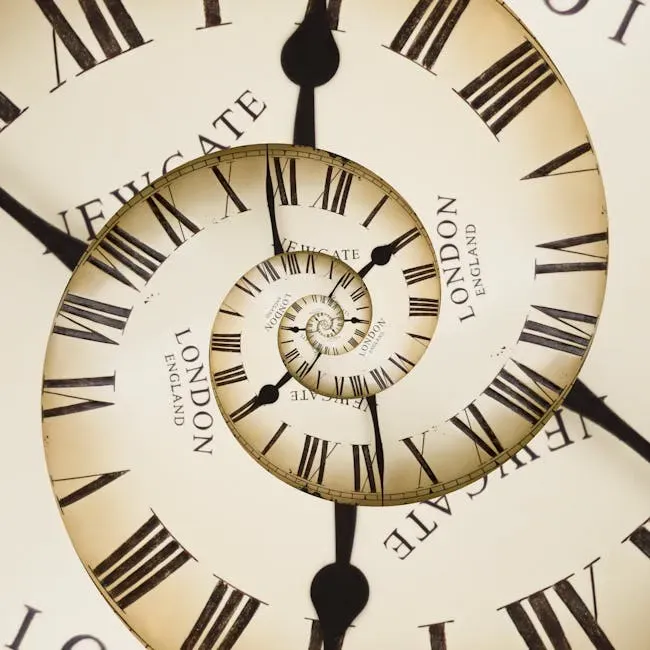
You grow up thinking of time as a simple, steady river: it flows forward, everything ages, and clocks just count off the seconds. Modern physics quietly smashes that picture. According to relativity, you don’t live in a three‑dimensional world plus time; you exist in a four‑dimensional spacetime where distances in space and durations in time are woven together. When you move faster or sit in a stronger gravitational field, your slice of that spacetime warps compared to someone else’s, and your time can literally tick at a different rate.
This is not a thought experiment you leave in a textbook; you already rely on it every time you use GPS. Satellites have to correct their clocks because they experience time slightly differently than you do on the ground, thanks to their speed and weaker gravity. In a very real sense, those satellites are “time traveling” a tiny bit into your future. The important thing you need to notice is this: once you accept that time is elastic and tied to motion and gravity, the idea of jumping around in time stops sounding like pure fantasy and starts looking like a question of engineering and limits.
Time Travel To The Future: The Part You Already Use
If someone offers you a one‑way trip to the future, physics is surprisingly generous. Special relativity shows that if you travel close to the speed of light and then slow back down, far more time can pass for people back on Earth than for you on your ship. From your point of view, maybe only a few years slipped by; to everyone else, decades could have rolled past. You would return to a future where your younger relatives are now older than you.
You do not even need a spaceship to experience this effect in a tiny way. Every time you fly on a plane or stand on a mountain, your body experiences slightly different time than someone at sea level, because of speed and gravity. It’s so small you never feel it, but sensitive clocks can measure the difference. So if you imagine time travel as at least being able to jump forward relative to other people, you are already doing that on a microscopic scale. Pushing it far enough to skip centuries would demand insane energies and technology, but in principle, the universe does not slam the door on that idea.
Can Physics Allow A Time Machine To The Past?
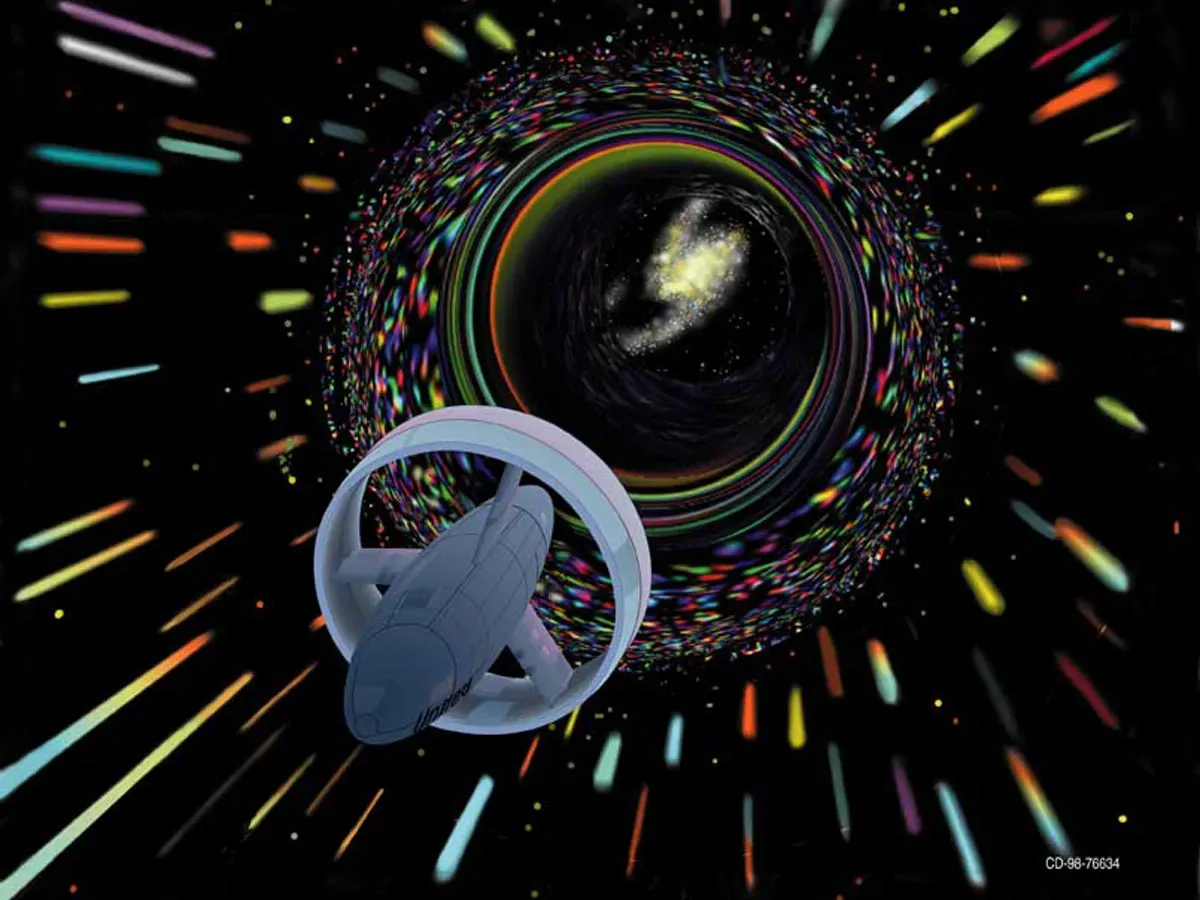
Traveling backward is where things get thorny. Einstein’s equations for general relativity describe how matter and energy curve spacetime, and some exotic solutions of those equations allow structures called closed timelike curves – paths that loop back to the same moment in time. In plain language, that is a route through the universe that could, on paper, bring you back to your own past. Wormholes, spinning universes, and other bizarre setups appear as mathematical possibilities in that framework.
Here’s the catch you need to keep in mind: just because the math allows something does not mean nature actually builds it. Many of those solutions require matter with negative energy density or weird properties you have never seen in real life, at least not in large, usable amounts. Some physicists suspect that once you add quantum effects, any attempt to create a time machine collapses under its own contradictions, like the universe quietly protecting its own timeline. So right now, going to the past sits on the edge between “devil’s in the details” and “probably not happening,” but it is not as simple as an outright ban from known laws.
The Grandfather Paradox: Can You Break Reality?

The moment you picture yourself stepping out of a time machine into your own past, your brain probably runs straight into the grandfather paradox. The classic version goes like this: you go back in time, prevent your grandparent from having children, and therefore you could never be born – which means you could never go back and interfere in the first place. You feel how the loop ties itself in knots. You are left wondering whether reality would explode, rewrite itself, or simply forbid that path altogether.
One way to think about this is to imagine the universe as a story that has to stay logically consistent, no matter what choices you believe you are making. Some physicists argue that any events you create in the past were always part of history; you just did not know it yet. In this view, if you tried to harm your ancestor, something would always stop you, not through magic but because only self‑consistent timelines are allowed to exist. You can nudge and influence, but never in a way that erases the cause of your own journey. It’s like trying to write a sentence that trips over its own words – the grammar of reality quietly refuses to let it stand.
The Bootstrap Paradox: Objects And Ideas With No Origin
There’s another kind of paradox that messes with your sense of cause even more subtly: the bootstrap paradox. Imagine you travel back with a famous book in your bag, hand it to a younger version of the author, and that person publishes it as their own work. You return to the future, where that same book inspired you to become a time traveler and bring it back. Now ask yourself: who actually wrote the book? Its information seems to appear from nowhere, floating in a closed loop.
You can run the same mental game with technology, songs, or even scientific discoveries. An object or idea that has no clear origin feels wrong because you rely on the chain of cause and effect to make sense of the world. Some approaches to physics suggest that closed causal loops like this might be allowed, as long as they do not create contradictions, only strangeness. In that case, your universe might tolerate a self‑consistent but origin‑less invention. It is deeply unsettling, though, because it means not everything you see would need a traditional beginning.
Many Worlds And Alternate Timelines: Escaping The Traps
To escape paradoxes, some thinkers point you toward a bold possibility: every time you travel to the past and make a different choice, you slide into another branch of reality. In this picture, often nicknamed a many‑worlds style view, you cannot overwrite your own history because you never actually return to it. Instead, your time machine drops you into a timeline that looks like your past but is now free to unfold differently. Your original history stays intact in its own branch, and the new version plays out in parallel.
From your perspective, that means you could save someone who originally died, prevent a disaster, or start a career in a totally different era – but those changes would not ripple back to “fix” the past you remember. You would be living in a sibling universe that shares a common starting point. This idea sounds wild, yet it mirrors how some interpretations of quantum mechanics already treat choices and measurements. The trade‑off is that you solve paradoxes by accepting a possibly endless multiplicity of realities, each with its own copy of you making different moves.
If Time Travel Existed, How Would Your Life Actually Change?
It’s easy to imagine time travel as a personal playground where you go back and correct every regret you ever had. In a world where you could really do it, though, the rules and risks would probably feel more like handling nuclear technology than booking a vacation. If changing the past were at all possible, governments and institutions would almost certainly lock it down, because even small tweaks could cascade into massive shifts in culture, history, and identity. You might not be allowed anywhere near your own timeline without a mountain of safeguards.
Even travel only to the future would reshape your choices. You could skip ahead to peek at your own life outcomes, which changes how you feel about your present in a big way. If you saw a future where you were wildly successful, you might coast on the assumption that you are guaranteed to get there, possibly undermining the very hard work that made that future happen. And if you saw a future you hated, you would carry that emotional weight back with you, trying to change course without knowing whether you were actually looking at a fixed fate or only one possible path among many.
The Ethics And Emotional Weight Of Editing Time
Even if the universe let you change the past freely, you would be stepping into an ethical minefield. Every “fix” you make for yourself could quietly erase or alter countless other lives you do not even know. Imagine rescuing one person from an accident in the past, only to discover that the companies they later helped build wiped out other opportunities you originally had. Your sense of responsibility would have to expand from your personal happiness to an enormous, tangled web of consequences.
On a more personal level, you might struggle emotionally with the versions of yourself you leave behind in different eras or branches. If you met your younger self, what would you actually say? Would you be tempted to spoil their surprises, warn them about heartbreaks, or push them away from relationships that shaped who you became? In trying to protect that past version of you from pain, you might rob them of growth. That tension between wanting to help and knowing that struggle made you who you are is something you can already feel even without a time machine, whenever you look back at your own mistakes and wish you could whisper advice into your younger ear.
Why Time Travel Still Captivates You – And What It Really Says About You
When you strip away the equations and paradoxes, your fascination with time travel often reveals something deeper: a desire to renegotiate your relationship with regret, loss, and possibility. You are drawn to stories where someone undoes a tragedy or finally says the words they never got to say, because you know what it feels like to replay moments in your mind and wish the script had gone differently. Time travel gives those longings a dramatic stage, even if you never expect to step into a literal machine.
At the same time, the scientific limits remind you that the only timeline you can reliably influence is the one unfolding right now. The future is still open, the past is still shaping you, and your choices today are the closest thing you have to rewriting anything. When you think about time travel as a metaphor rather than a gadget, it nudges you to be more deliberate with your present: to send that message, start that project, or forgive that person before the chance slides out of reach. In a way, you are always a time traveler moving forward one second at a time; the question is what kind of story you want to leave behind as you go.
In the end, maybe the most powerful version of time travel you will ever have is your own memory and imagination. You can revisit old scenes, reinterpret what happened, and let those new understandings change how you act from here on. The science of time travel challenges your ideas about reality, but the fantasy of it challenges your ideas about responsibility and meaning. If you did somehow step into a machine tomorrow, would you try to change your past, or would you use that power to protect the future instead?