
You have probably had moments that felt almost too strange to be random: thinking of someone just before they call, sensing a shift in a room before anyone speaks, or feeling deeply connected while staring at the night sky. You might brush it off as coincidence, but modern science is slowly opening the door to an idea that sounds almost mystical at first: your consciousness may be far less isolated than you think, and in some interpretations, it can be seen as interacting with the universe at large.
This does not mean you are telepathically moving planets or manifesting lottery numbers with your mind. Instead, it points to something more subtle but arguably more profound: you are not a sealed-off observer looking out at a dead, mechanical universe. You are embedded in a web of relationships, correlations, and information flows that link your mind, your body, and the cosmos. When you begin to see consciousness this way, everyday experiences can start to feel less like isolated events and more like ripples in a much larger ocean.
The Cosmic Context: You Are Literally Made of Star Stuff

Before you even get to the mind, it helps to remember what your body actually is. Every atom in your brain and nervous system was forged in the life cycle of stars: hydrogen fused into heavier elements inside stellar furnaces, exploded in supernovas, and eventually coalesced into planets, oceans, cells, and finally, you. When you think, remember, or feel, you are essentially rearranging stardust that has been traveling through cosmic history for billions of years.
This is not just poetic language; it is basic astrophysics and chemistry. The calcium in your bones, the iron in your blood, and the carbon in your neurons were all built in ancient stars. So when you sit quietly and become aware of your own awareness, that presence is riding on a physical structure that is inseparable from the larger universe. You are not a visitor who dropped into the cosmos from the outside; you are the universe temporarily looking at itself from the inside, through your particular point of view.
Quantum Measurement: How Your Choices Shape What You Observe
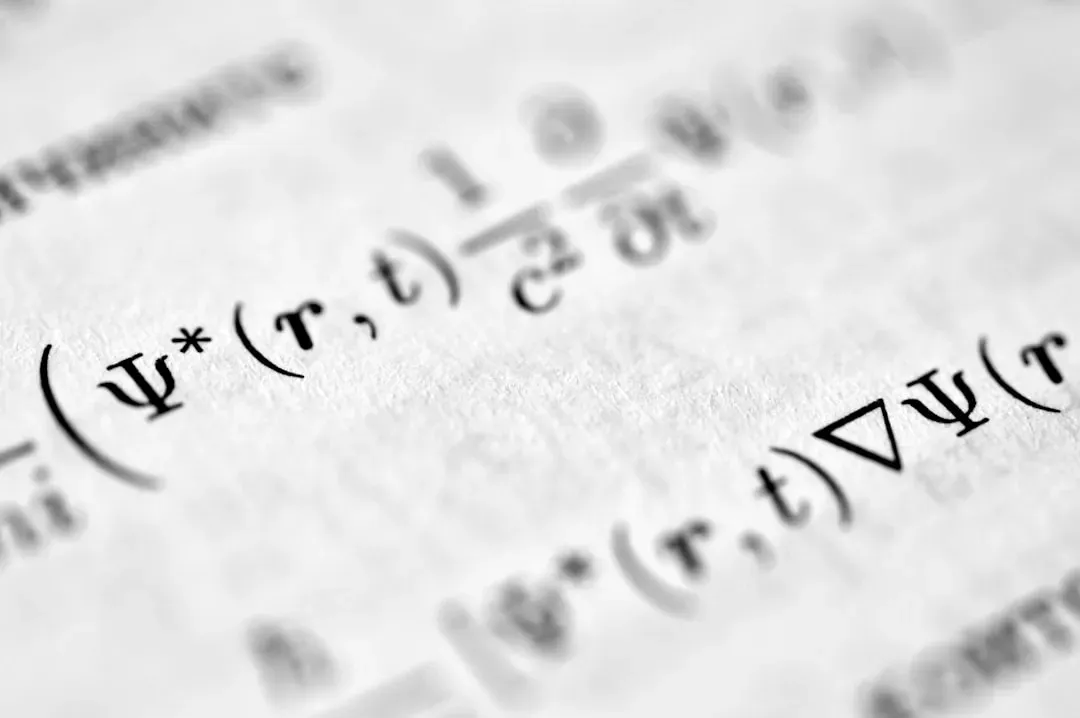
In quantum physics, the act of measuring changes what you find. When you choose how to observe a tiny particle – like deciding whether to measure its position or its momentum – you help determine which aspect of reality becomes definite. This is sometimes described as the observer effect, and while it is often exaggerated in popular culture, it still carries a genuinely strange implication: what you end up seeing at the smallest scales depends on the questions you ask and the way you ask them.
That does not mean your mind is magically conjuring particles out of thin air, but it does mean your conscious decision about how to set up an experiment is baked into the final outcome. Your choices, your intentions as an experimenter, and your interpretations all become part of the story of what reality looks like when it is measured. In that sense, your consciousness is not sitting outside the universe watching a prewritten script; it is one of the agents actively deciding which lines get read out loud.
Entanglement and Nonlocality: Why “Here” and “There” Are Less Separate Than You Think
Quantum entanglement shows you that two particles can become linked so that what happens to one is instantly correlated with what happens to the other, no matter how far apart they move. When you measure one, you immediately know something about the other, even if it is on the other side of the galaxy. This does not allow you to send messages faster than light, but it does force you to drop the comforting idea that the universe is just a collection of independent, separate pieces.
Now place yourself inside that picture. The atoms in your brain are not floating in a vacuum, cut off from everything else; they are part of a gigantic, continuously interacting quantum field. Many physicists would say that you should not think in terms of little billiard balls at all, but in terms of a single, unified field that stretches across space. From this perspective, your consciousness is emerging from an already interwoven reality, one where “here” and “there” are less like two separate rooms and more like different patterns in the same fabric.
Panpsychism and the Idea of a Conscious Universe
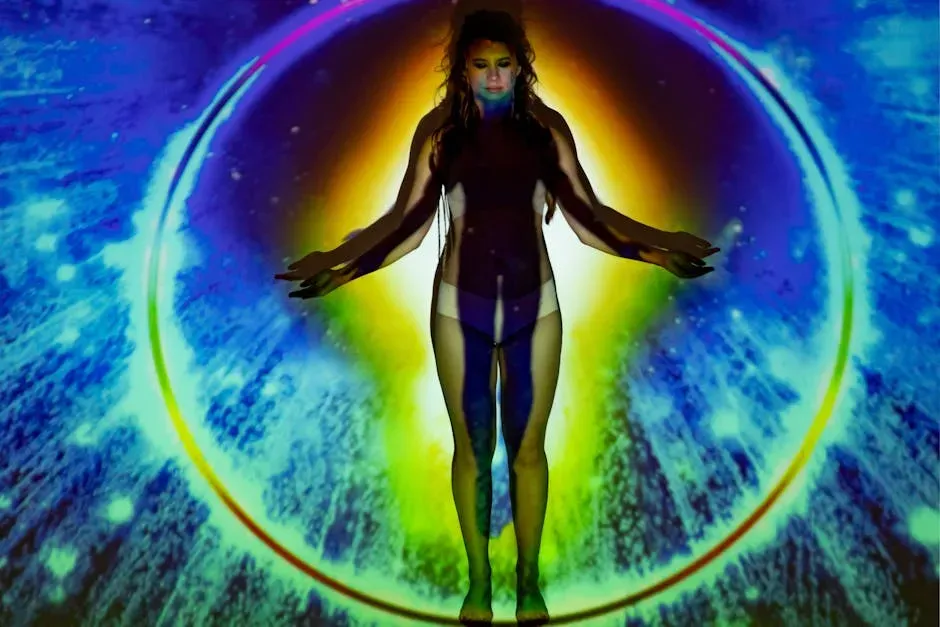
Some contemporary philosophers and a few scientists have started taking seriously the idea that consciousness might be a basic feature of reality, not a late-stage accident that shows up only in complex brains. This view, often called panpsychism, suggests that some rudimentary form of experience or proto-awareness is present in all physical systems, even if it is unimaginably simple compared to your own. In that framework, your mind is not an isolated island of awareness in an otherwise unconscious sea; it is a particularly rich and organized expression of something that is already woven into the universe.
If you adopt that lens, your consciousness is not standing apart from the cosmos trying to reach it; it is the cosmos, in one of its organized forms, becoming aware of itself. You are like a whirlpool in a river: distinct enough to point to, but not actually separate from the water flowing through you. Your thoughts, feelings, and perceptions become ways the universe can interact with itself – through you, and through every other point of view that emerges.
Information and the Mind: How You Exchange Signals With the Cosmos

Even if you take a more conservative stance and see consciousness as emerging from information processing in the brain, you are still not cut off from the rest of reality. Every second, your nervous system is flooded with signals from light, sound, temperature, gravity, and electromagnetic fields. Your senses turn this ocean of data into the world you experience, filtering and organizing it into colors, shapes, sounds, and meanings. Your conscious experience is what it looks like from the inside when the universe sends information into your particular brain and body.
At the same time, you are constantly broadcasting back into the world. Your words, gestures, decisions, and even your silence change the behavior of other people, animals, machines, and environments. You are an active node in a vast information network that spans from your immediate surroundings out to satellites, networks, and, ultimately, deep space. Your consciousness rides on this two-way flow: you take in the universe as experience, and you send out your response as action, shaping what happens next in ways you may never fully see.
Interconnected Minds: How Your Awareness Links to Other People

You do not just interact with the universe through raw physics; you do it through other minds. When you walk into a room, you can often sense tension, excitement, or calm before anyone says a word. Your brain is tuned to subtle cues in facial expressions, posture, micro-movements, and voice tone, and your own internal state shifts in response. Your consciousness is constantly syncing, mirroring, and adjusting to the inner worlds of others, even when you are not consciously trying to do it.
Think about how your mood can tilt an entire gathering toward warmth or awkwardness, or how a single person’s calm presence can make everyone feel safer. In these moments, you are not just a lone observer; you are part of a group-level field of awareness that shapes behavior, choices, and outcomes. Through social networks, media, culture, and now digital technology, your thoughts and emotions can ripple much farther than your immediate circle, subtly interacting with countless lives and, through them, with the wider world.
Practical Ways to Feel More Connected to the Universe
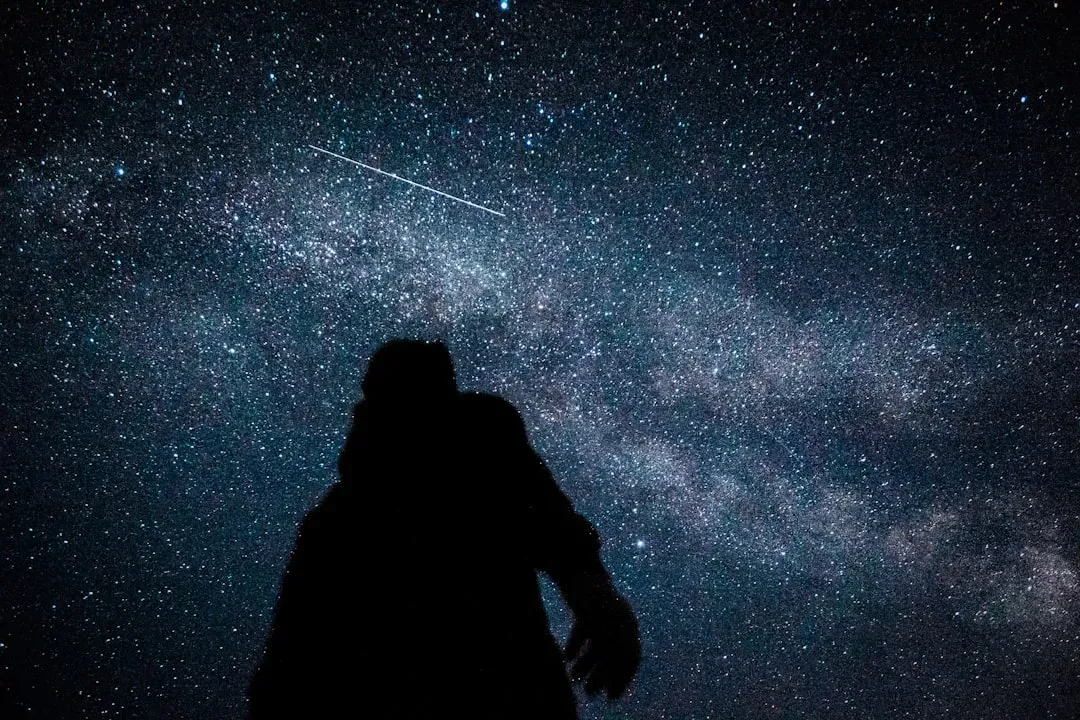
All of this can sound abstract until you bring it back down into daily life. If you want to feel how your consciousness interacts with the universe, you can start with simple practices that tune your attention. When you sit quietly under the night sky, pay close attention to the physical sensations in your body, the spaciousness of your awareness, and the fact that the same physical laws guiding distant stars are at work in the neurons firing in your brain. You are not just looking at the universe; you are a pattern inside it, becoming aware of itself.
You can also experiment with how your inner state influences your outer world. Notice how a deliberate choice to respond with patience instead of irritation changes the entire trajectory of a conversation. Watch how a single act of generosity or curiosity shifts not just your own mood, but the behavior of the people around you, who then pass that shift along. In these small, grounded ways, you can experience what it means for your consciousness to be an active participant in the unfolding story of the universe, instead of a detached spectator.
Living With Cosmic Responsibility and Wonder
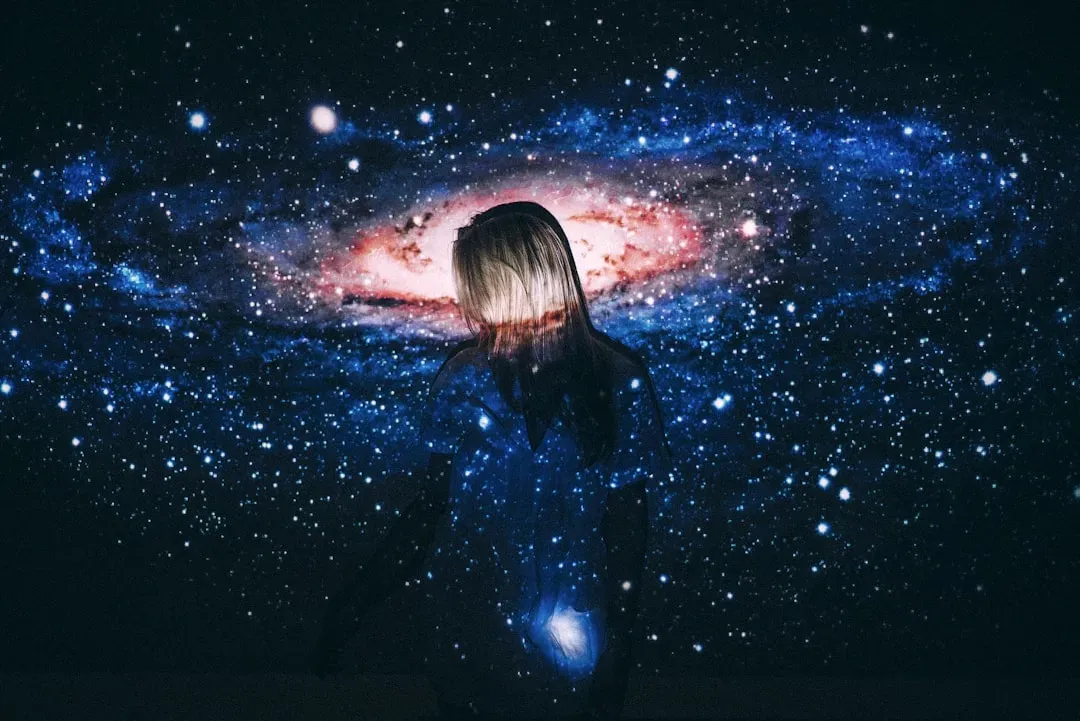
When you realize your consciousness is not separate from the universe but deeply entangled with it, your sense of responsibility can change. Your thoughts alone may not rearrange galaxies, but your choices absolutely reshape your immediate corner of reality, which then touches others in ways you may never trace. You can start to see your attention, your care, and your integrity as real forces that steer outcomes, much like a small rudder can slowly turn a large ship over time.
This view can also bring back a sense of awe that modern life often dulls. Instead of treating your mind as just a glitchy computer in a skull, you can see it as a living interface between stardust and experience, physics and meaning, matter and awareness. Every time you wake up from sleep, every time you notice a thought arise out of nowhere, you are witnessing something extraordinary: the universe becoming conscious of itself, right where you are. When you really let that sink in, you might start to ask yourself: what kind of universe do you want to help it become?
In the end, you do not need to prove that your mind literally reaches across galaxies to appreciate how deeply it is woven into the cosmos. You are made of the same elements as the stars, governed by the same laws as distant galaxies, and plugged into a web of information and relationships that spans the planet and beyond. Your consciousness is not floating above that web; it is one of its most intricate expressions. Knowing that, how differently do you want to move through your life from this moment on?