You live in a universe that still hums with the aftershock of its own birth. Every patch of night sky, every faint glow between the stars, carries a trace of the first, blinding instant when everything exploded into being. You are literally surrounded by the echo of the Big Bang, even if you cannot see it with your eyes.
When you start to dig into what happened in those first tiny fractions of a second, you realize how mind‑bending it really is. Time, space, matter, and energy all turned on like someone flipping a cosmic light switch. Yet, from those wild beginnings, a universe emerged that is calm enough for you to sit here and wonder about it. That contrast – between chaos and the quiet of your everyday life – is where the story gets truly gripping.
The First Instant: When Time Itself Switched On
Imagine pressing play on reality for the very first time. Before the Big Bang, as far as current physics can tell you, there is no meaningful “before” in the usual sense, because time itself seems to start at that moment. You are used to asking what happened earlier, but close to time zero that question stops working the way your brain expects, like trying to ask what is north of the North Pole.
In that first instant, the universe was unimaginably hot and dense, a kind of seething, featureless broth where your familiar ideas – like location, direction, and even cause and effect – start to blur. You can picture it as a cosmic pressure cooker turned to its maximum setting, except there is no kitchen, no air, no outside at all. From your perspective now, billions of years later, you are looking back at a boundary where your normal rules break down, and that is both thrilling and frustrating.
Cosmic Inflation: The Universe’s Blink‑and‑You‑Miss‑It Growth Spurt
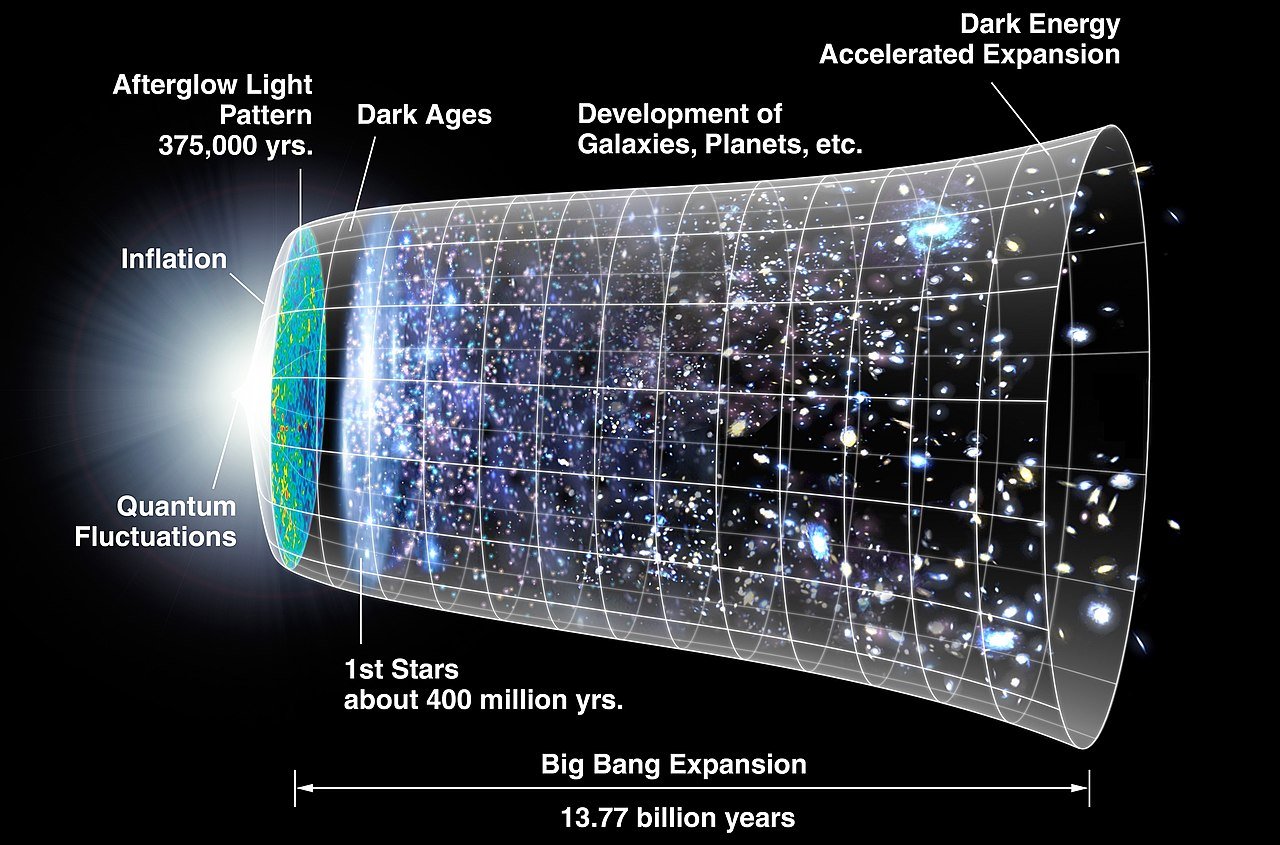
Right after that first moment, your universe seems to have gone through a wild growth spurt called inflation. In an unimaginably small fraction of a second, space itself appears to have stretched faster than any light beam could have crossed it. That does not break physics, because it is not objects moving through space faster than light; it is space itself expanding, like an elastic sheet that suddenly snaps outward.
You can think of it as if someone took a tiny, invisible balloon and puffed it up to cosmic size almost instantly. Tiny quantum jitters that were once smaller than an atom were stretched across light‑years, becoming the seeds for everything you see today. Without this brief but dramatic phase, your sky would probably look very different, and you might not be here at all to question how it started.
Quantum Fluctuations: How Randomness Drew the Universe’s First Map
During those first fractions of a second, the universe was not perfectly smooth, even if it came close. Quantum mechanics tells you that at tiny scales, energy and fields are always jittering and fluctuating. Those little ripples in density, once blown up by inflation, became the first “map” of where matter would eventually pile up.
If you could watch it in slow motion, you would see slightly denser spots tug a bit more strongly on their surroundings, pulling in more matter and deepening their own gravity wells. Over huge stretches of time, those slight preferences turned into galaxies, clusters, and vast cosmic filaments. In other words, the grand structure of the universe you live in started as tiny, random wrinkles in the earliest moments, magnified by expansion until they shaped everything.
The Cosmic Microwave Background: The Afterglow You Can Still Detect
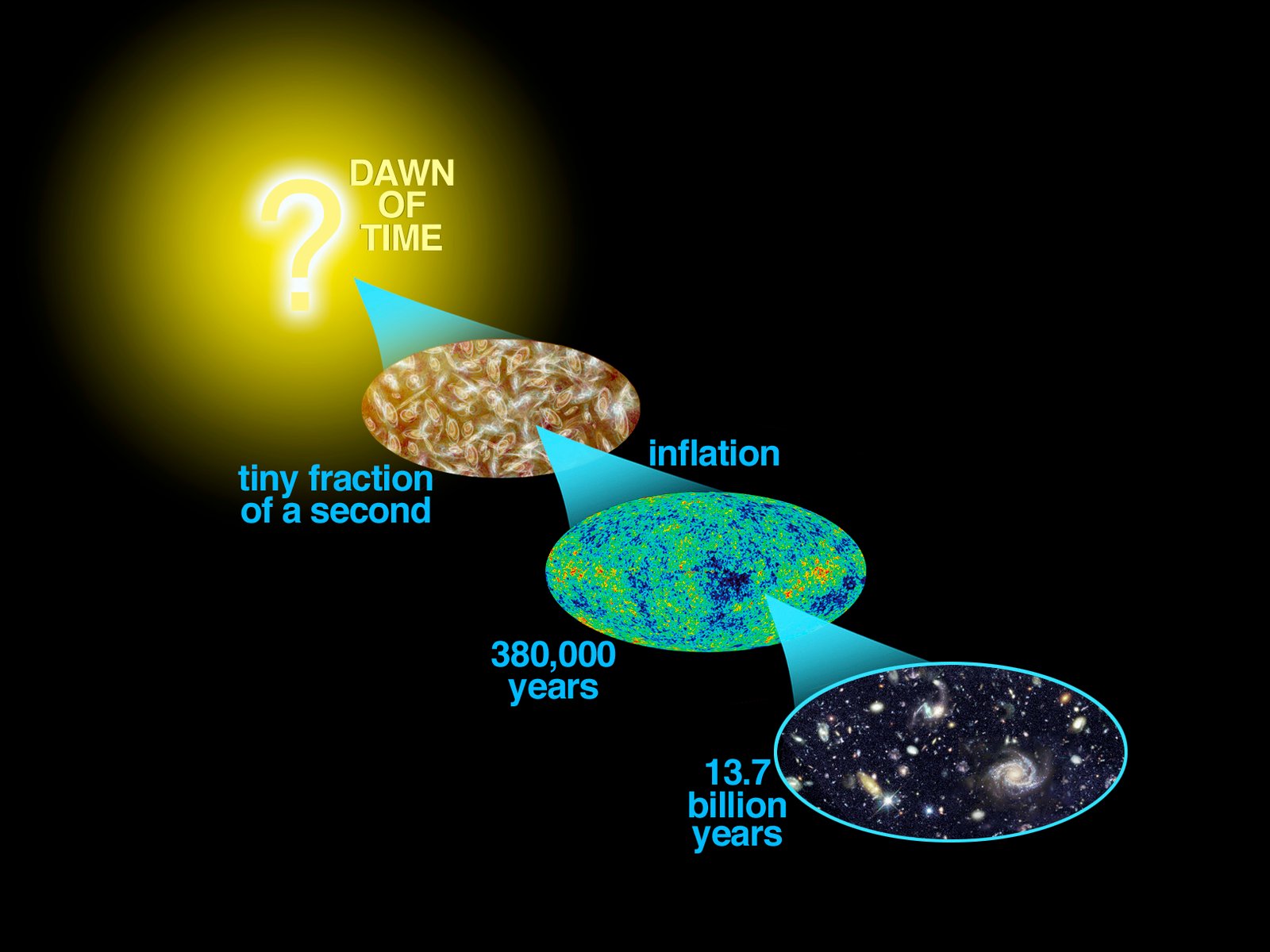
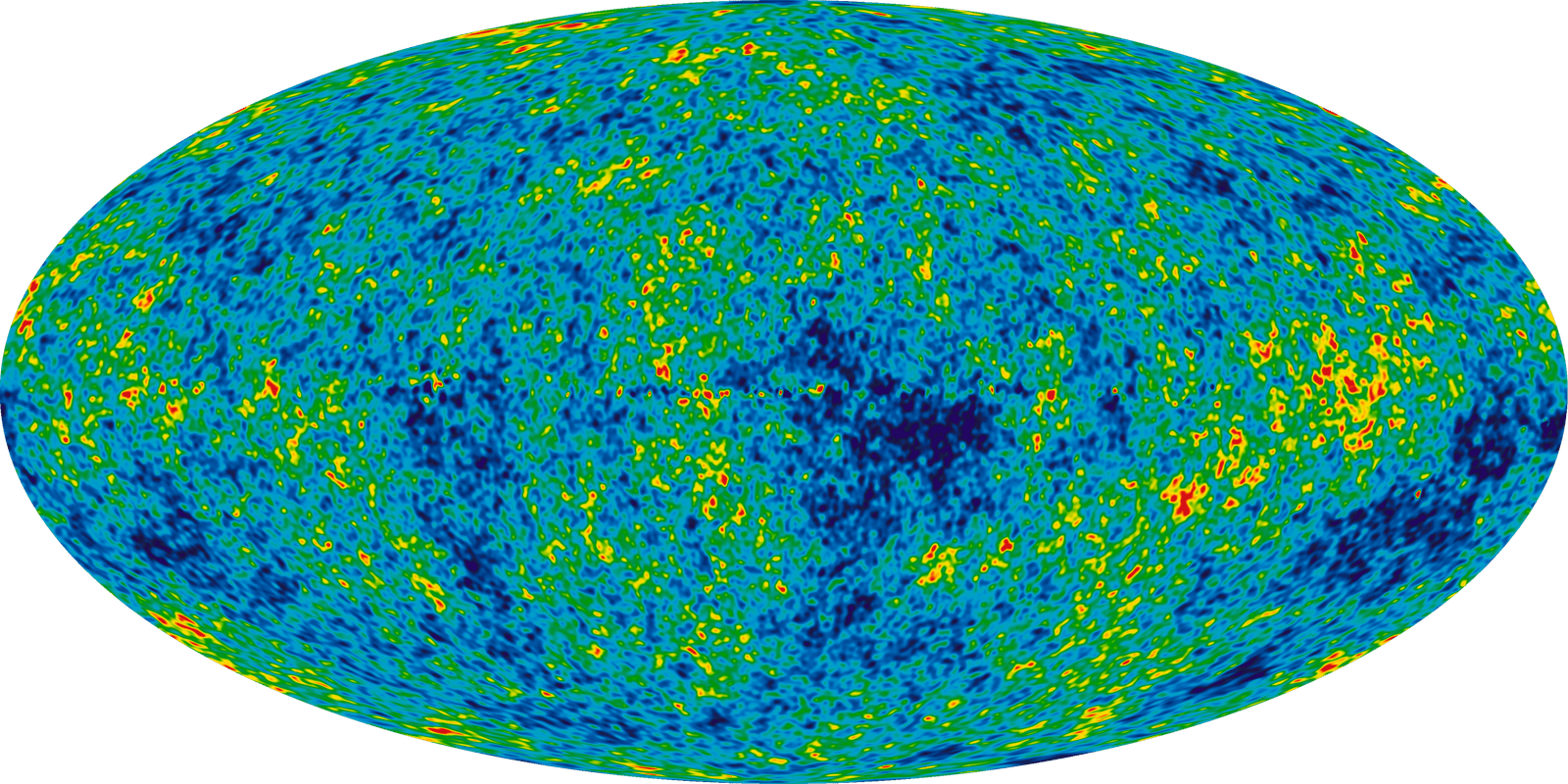
Today, if you could tune your eyes to microwaves instead of visible light, you would see the sky glowing almost evenly in every direction. That faint radiation is called the cosmic microwave background, and you are literally looking at a baby picture of the universe, taken when it was just a few hundred thousand years old. Compared to the first split seconds, that might sound old, but on the timescale of billions of years, it is like seeing an infant’s first photograph.
This afterglow is the cooled‑down light from when the universe finally became transparent and photons could travel freely. Tiny temperature variations across this glow still trace the earlier quantum ripples and the effects of inflation. When you see the colorful maps scientists produce from this signal, you are essentially reading a fossil record of the universe’s early physics written in light that has been traveling toward you for almost the entire history of time.
Primordial Elements: The First Chemistry Set of the Cosmos
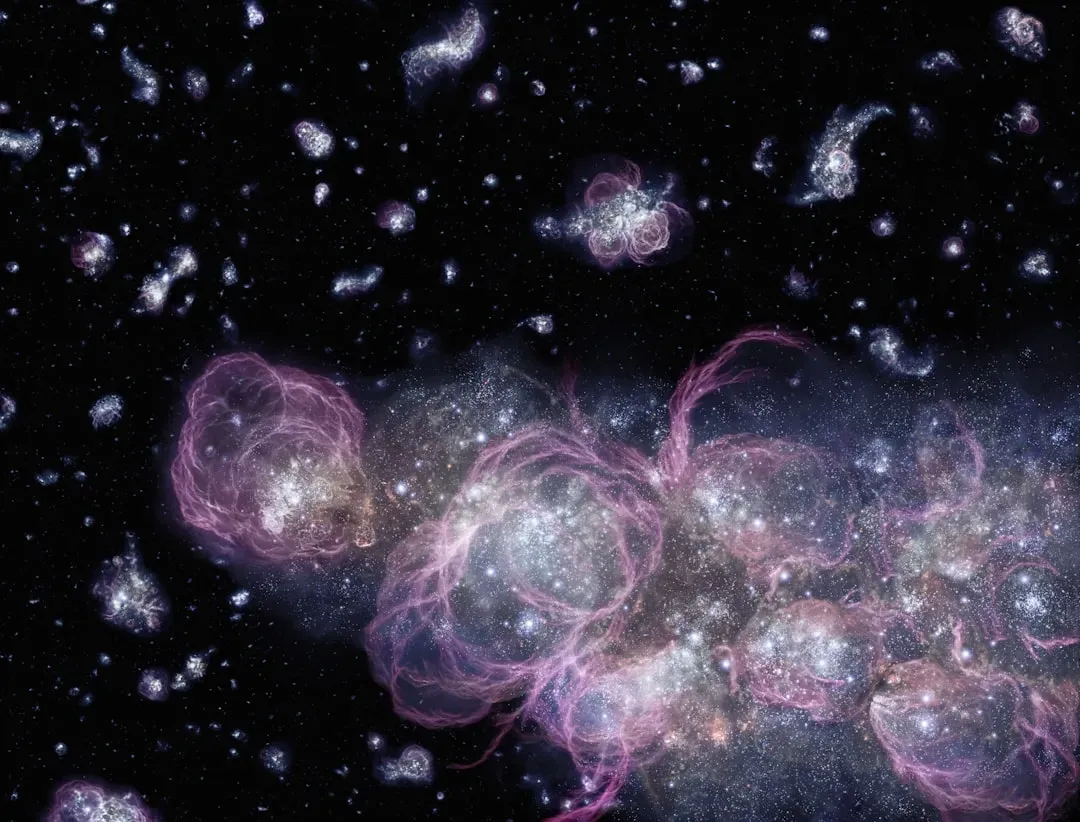
In the first few minutes after the Big Bang, your universe acted like an extreme nuclear reactor. It was hot and dense enough for protons and neutrons to smash together and form the lightest elements. Out of that intense but brief period, you ended up with mostly hydrogen, a lot of helium, and just a trace of heavier stuff like lithium and a few others.
Those first elements set the stage for everything you now take for granted – stars, planets, water, and even the atoms in your body. Later generations of stars cooked heavier elements in their cores and scattered them in explosions, but they could only start that work because the early universe handed them the right ingredients. When you drink a glass of water or look at the Sun, you are interacting with relics of those primordial nuclear reactions that unfolded in just the first minutes of cosmic history.
Gravitational Waves: The Universe’s Faintest Early Whisper
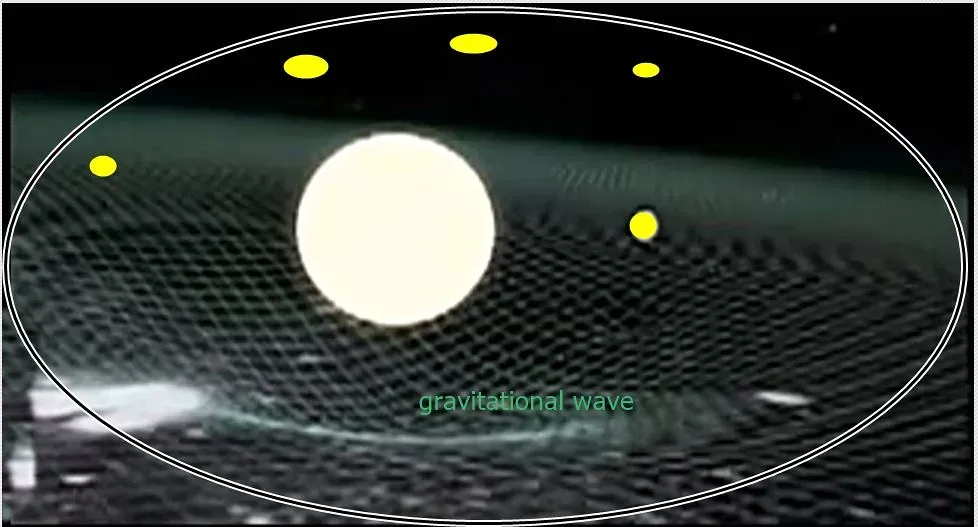
Besides light, another kind of signal may be carrying messages from the Big Bang’s first moments: gravitational waves. These are ripples in spacetime itself, produced whenever massive things accelerate and disturb the gravitational field. In the very early universe, violent processes – like inflation ending or phase transitions in fundamental fields – could have launched a background of these waves that still washes through you today.
Modern detectors have already picked up gravitational waves from colliding black holes and neutron stars, proving that you can really listen to spacetime ringing. The holy grail is to detect a primordial background of waves from the universe’s beginning, which would give you a new way to probe moments too early and too hot for light to carry clear information. If those signals can be separated from all the noise, they will be like hearing the faint echo of the universe clearing its throat right after it began to speak.
Cosmic Structure: From Tiny Ripples to Galaxies and You
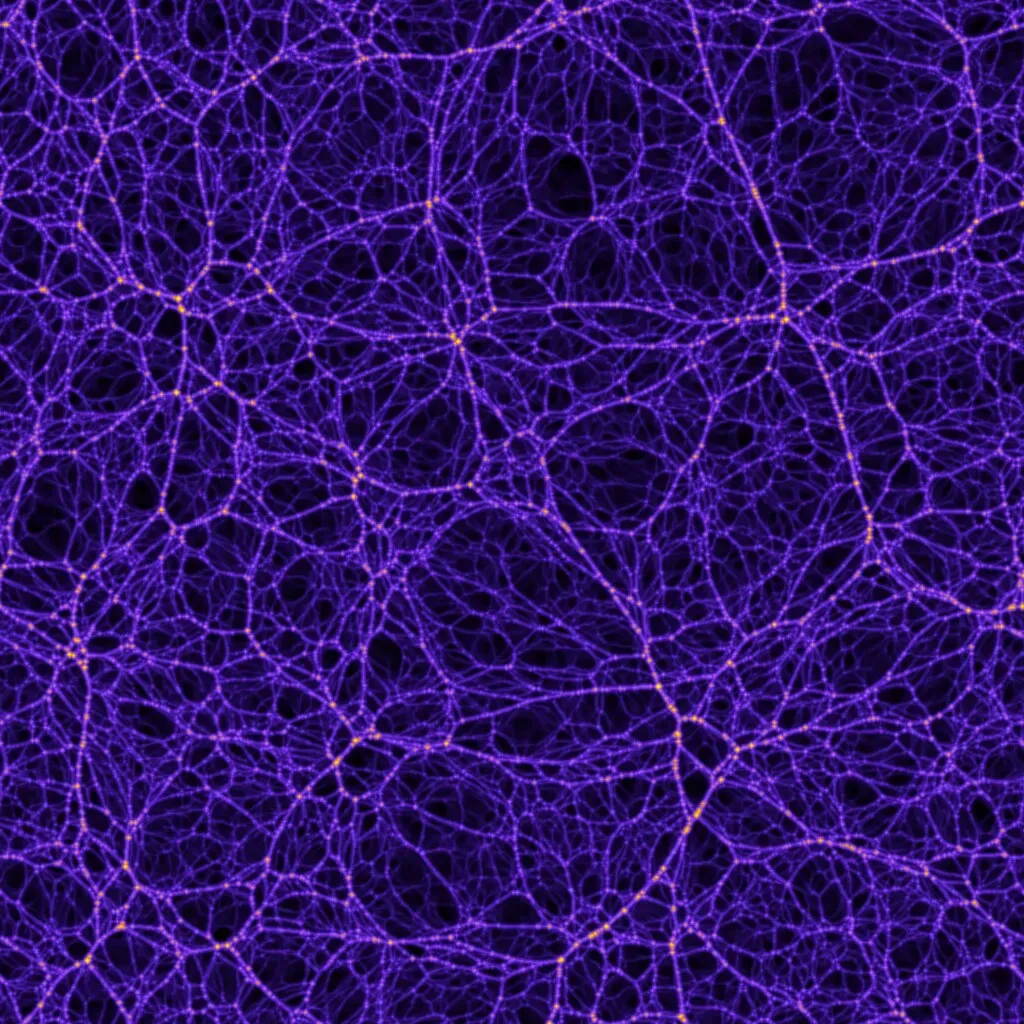
When you look at a galaxy cluster or a long exposure of a spiral galaxy, you are seeing the end result of a story that began with those early fluctuations. Gravity took the tiny differences in density written into the early universe and slowly amplified them over billions of years. What started as slight over‑densities became clouds of gas, then stars, then the intricate webs of galaxies you see today.
The pattern of structure across vast distances – the cosmic web – still reflects the physics of those first moments. When you map where galaxies are and how they cluster, you are effectively reading backward through time, decoding what the early universe was up to. In a very real way, your own existence as a thinking observer rests on those almost imperceptible ripples in the first instant not being perfectly smooth.
What the Echo Tells You About the Future of the Universe
The footprints of the Big Bang do not just tell you where you came from; they hint at where you might be going. By studying the cosmic microwave background, the distribution of galaxies, and the behavior of dark energy, you can estimate how fast the universe is expanding and how that expansion is changing. All of that traces back to the conditions set in the first moments after the Big Bang, like the opening move of a game that still shapes the endgame.
Depending on how the ingredients of the universe balance out – dark energy, dark matter, and normal matter – you get different long‑term futures, from endless expansion to more exotic possibilities. You are living in a cosmos that appears to be speeding up in its expansion, which suggests a very long, cold future where galaxies drift farther apart. Yet the details of that fate are still tied to physics you do not fully grasp from those earliest instants, which means that every bit you learn about the universe’s echo might later change how you imagine its final chapter.
When you step back, you realize you are part of a story that begins with a nearly indescribable flash and stretches across unimaginable time. The echoes of that beginning are not distant abstractions; they are in the microwave glow between galaxies, in the elements in your blood, and in the structure of the sky above you. Every measurement you make of those signals is like brushing away dust from an ancient inscription, revealing more of the plot.
You may never see the Big Bang directly, but its fingerprints are all over your reality if you know how to look. The more closely you listen to the universe’s faint echo, the more you see that your everyday world is the quiet aftermath of something profoundly wild. So the next time you gaze into the night and feel small, you might also ask yourself: how does it feel to know you are made from the very first moments of everything?