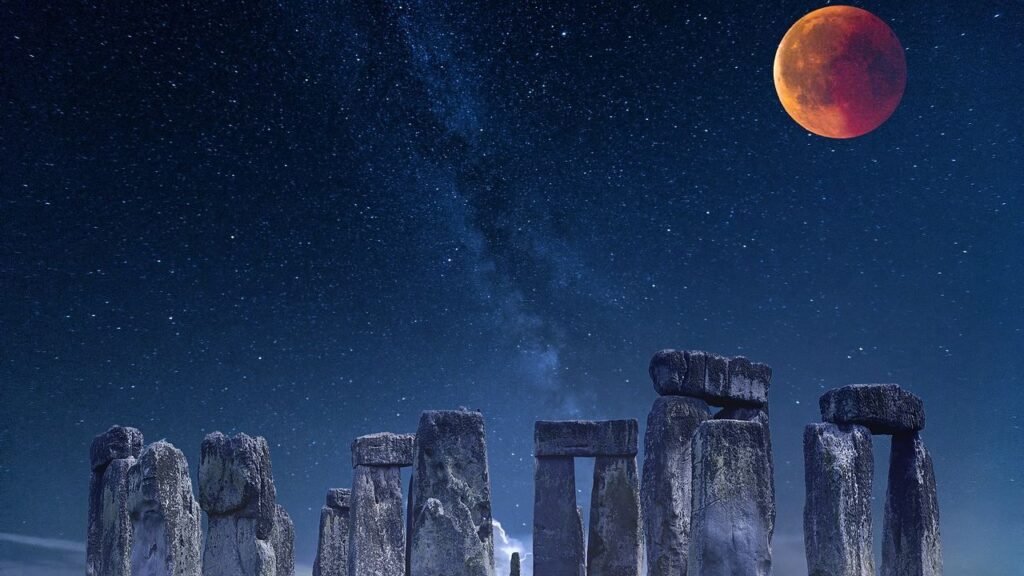
Imagine standing in a crowded ancient city as daylight suddenly bleeds away, birds fall silent, and people drop to their knees in fear. To most onlookers, a solar eclipse must have felt like the sky itself was breaking. But in several ancient cultures, a small group of sky-watchers quietly knew it was coming. They had no telescopes, no satellites, and no computers – just patient eyes, clever math, and a deep obsession with the patterns of the heavens.
That contrast is what makes this story so powerful. Eclipses terrified entire civilizations, yet the earliest astronomers slowly learned to tame them with prediction. Not perfectly, not globally, and not always for the right reasons – but well enough that rulers listened, calendars shifted, and myths bent around the quiet confidence of those who understood the sky a little better than everyone else. The real question is not just whether they could predict eclipses, but how far their wisdom truly went.
The First Eclipse Watchers: Fear, Myths, And The Birth Of Pattern-Spotting
For most ancient people, an eclipse was not an astronomical event – it was an omen. In Mesopotamia, China, Mesoamerica, and many other regions, a darkened Sun or blood-red Moon was linked to angry gods, threatened kings, or looming disasters. You can almost picture the panic: drums beating, fires lit, priests chanting, people believing the world might actually end in the middle of the day. In that emotional chaos, the few who calmly watched and took notes must have seemed almost strange.
Those early observers were not scientists in the modern sense, but they were relentless pattern-hunters. They scratched marks into tablets, carved symbols into stone, and kept long records of when eclipses happened and what else followed. Over time, they realized two shocking things: first, these sky events were not random; second, they repeated on a kind of hidden schedule. That realization – hidden order behind apparent chaos – is the real starting point of eclipse prediction, and honestly, it is one of the most human things we have ever done.
Mesopotamian Masters: Clay Tablets And The First Real Eclipse Predictions
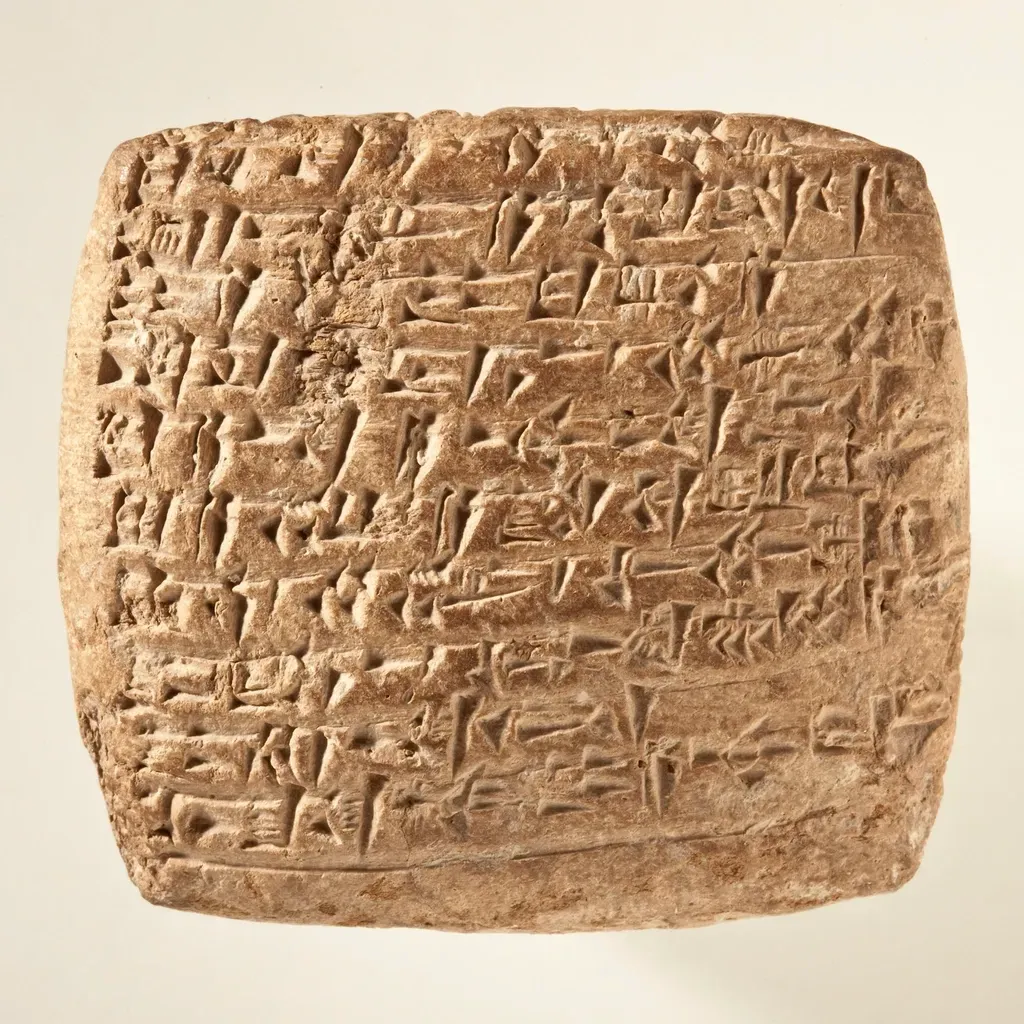
If you’re looking for the earliest solid evidence of people actually predicting eclipses, you almost always end up in ancient Mesopotamia. There, scribes working for Babylonian scholars created detailed clay tablets packed with astronomical observations. They noticed that lunar eclipses followed repeating cycles and learned that after a certain number of months, conditions for another eclipse would return. They did not know the geometry like we do today, but they knew the rhythm.
These predictions were not just for curiosity; they were political. Eclipses were seen as threats to the king, so if scribes warned that an eclipse might fall on a certain date, rituals could be performed, omens interpreted, and sometimes even a “substitute king” installed temporarily to absorb the danger. It sounds dramatic, but it shows how respected these early astronomers were. Their quiet calculations on clay could literally shape royal decisions, which is a powerful sign of just how seriously eclipse prediction was taken.
China’s Court Astronomers: Duty, Disaster, And The Price Of Getting It Wrong
In ancient China, predicting eclipses became an official responsibility tied directly to imperial power. Court astronomers were tasked with forecasting these events, not because people wanted a nice scientific forecast, but because eclipses were believed to reflect heavenly judgment on the emperor. If you ruled the land, you were supposed to be in harmony with the cosmos, and an unexpected eclipse looked like a cosmic warning flare. So, missing one was a big deal – sometimes a deadly one.
Historical records describe how officials tracked the motions of the Sun and Moon and used repeating cycles to anticipate when eclipses could occur. They did not always hit the mark, but over centuries, their methods improved. The fact that failing to predict an eclipse could cost an astronomer status, career, or even life added intense pressure. This atmosphere forced a kind of practical accuracy: you can almost feel the tension of scholars hunched over their calculations, knowing that a misstep might be seen as a failure not just of math, but of loyalty to the throne.
The Saros Cycle: How A Simple Pattern Unlocked The Sky
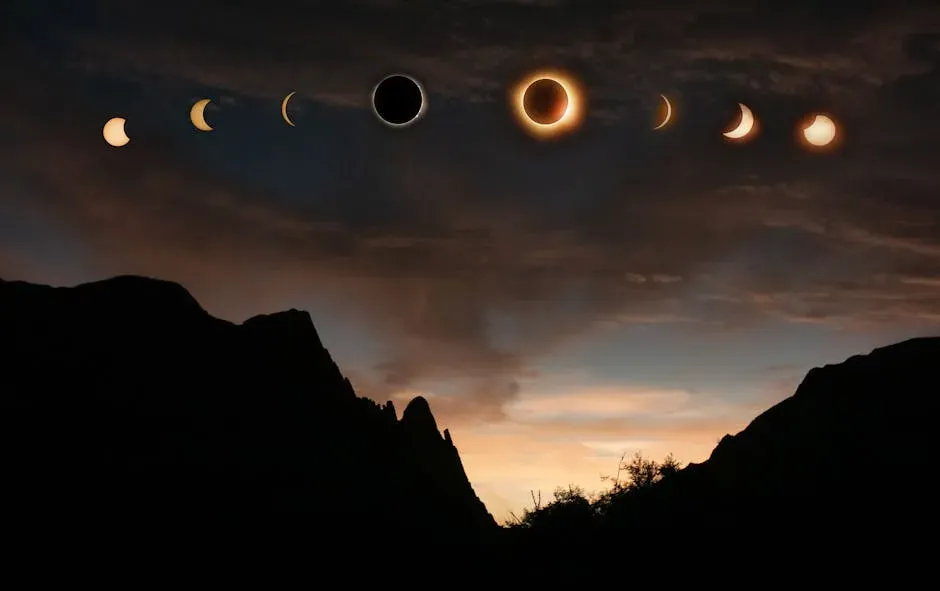
One of the most fascinating tools in the ancient eclipse toolkit is what we now call the Saros cycle. Ancient observers discovered that after a certain number of lunar months – just over eighteen years – the geometry of the Sun, Earth, and Moon lined up in nearly the same way again. That meant a similar eclipse would occur, shifted in location but recognizable in pattern. For people without modern physics, that must have felt like finding a secret code hidden in the sky.
What is remarkable is that this cycle seems to have been recognized in several traditions, especially in Mesopotamia, long before anyone fully understood why it worked. They were essentially reverse-engineering the universe from repeating shadows. Imagine generations of sky-watchers patiently comparing old records to new events and finally realizing: wait, this has happened before, almost exactly this way. That slow, stubborn, pattern-based insight is the heart of early eclipse prediction, and it shows that you do not need to understand everything to predict something well.
Greek Thinkers: From Omens To Geometry
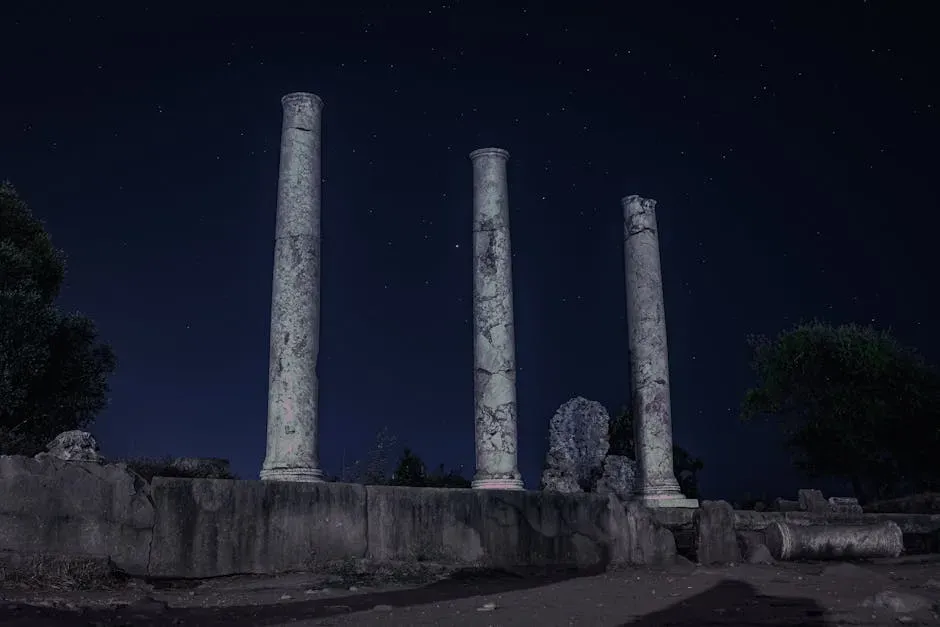
While many ancient cultures focused on practical cycles and omens, Greek astronomers started to push in a slightly different direction: explanation. They wanted not only to know that an eclipse was coming, but to understand the geometry behind it. Thinkers like those in the classical and Hellenistic periods developed models of a spherical Earth and tracked the tilted orbits of the Moon, working out why eclipses could only occur at certain points in its path. They were trying to turn the sky from a mysterious story into a logical diagram.
Did they perfectly predict every eclipse? No. Their tools and data were limited, and predictions could still be rough. But their drive to build a geometric model meant that eclipses became more than frightening signs; they became tests of theory. When an eclipse occurred as expected, it strengthened confidence that their understanding of the cosmos was on the right track. In that way, each predicted darkening of the Sun or Moon was like a small exam that the universe graded with light and shadow.
Beyond Eurasia: Mesoamerica, Myth, And Quiet Mathematical Brilliance

It is easy to focus only on Mesopotamia, China, and Greece, but that leaves out some astonishing work from the Americas. Civilizations such as the Maya kept intricate astronomical records and built complex calendars that tracked the motions of the Sun and Moon with impressive precision. Their surviving codices show careful attention to cycles that relate to eclipses, suggesting that they could anticipate when these events were likely. Even if the exact methods are still debated, the level of pattern recognition is hard to ignore.
At the same time, myth and mathematics lived side by side. Eclipses were often wrapped in powerful stories about cosmic creatures or divine struggles, and yet behind those stories, someone was counting days, marking intervals, and checking alignments. It reminds me of how people today might follow daily horoscopes while satellites quietly track the real motions of planets overhead. Different layers of belief can coexist, with a small group using bare numbers to peek behind the curtain of the sky.
Across many Indigenous traditions in North America and elsewhere, eclipses were also deeply meaningful, though clear evidence of strict numerical prediction is more limited. That does not mean observers were naïve; on the contrary, many communities preserved detailed sky lore, practical navigation, and seasonal knowledge. It is likely that in some places, people had at least a rough sense of when unusual alignments might return, even if they did not formalize it the way court astronomers did. The frustrating truth is that the farther we get from written records, the easier it is to underestimate what people knew.
The Limits Of Ancient Prediction: Impressive, Yes – But Not Magic
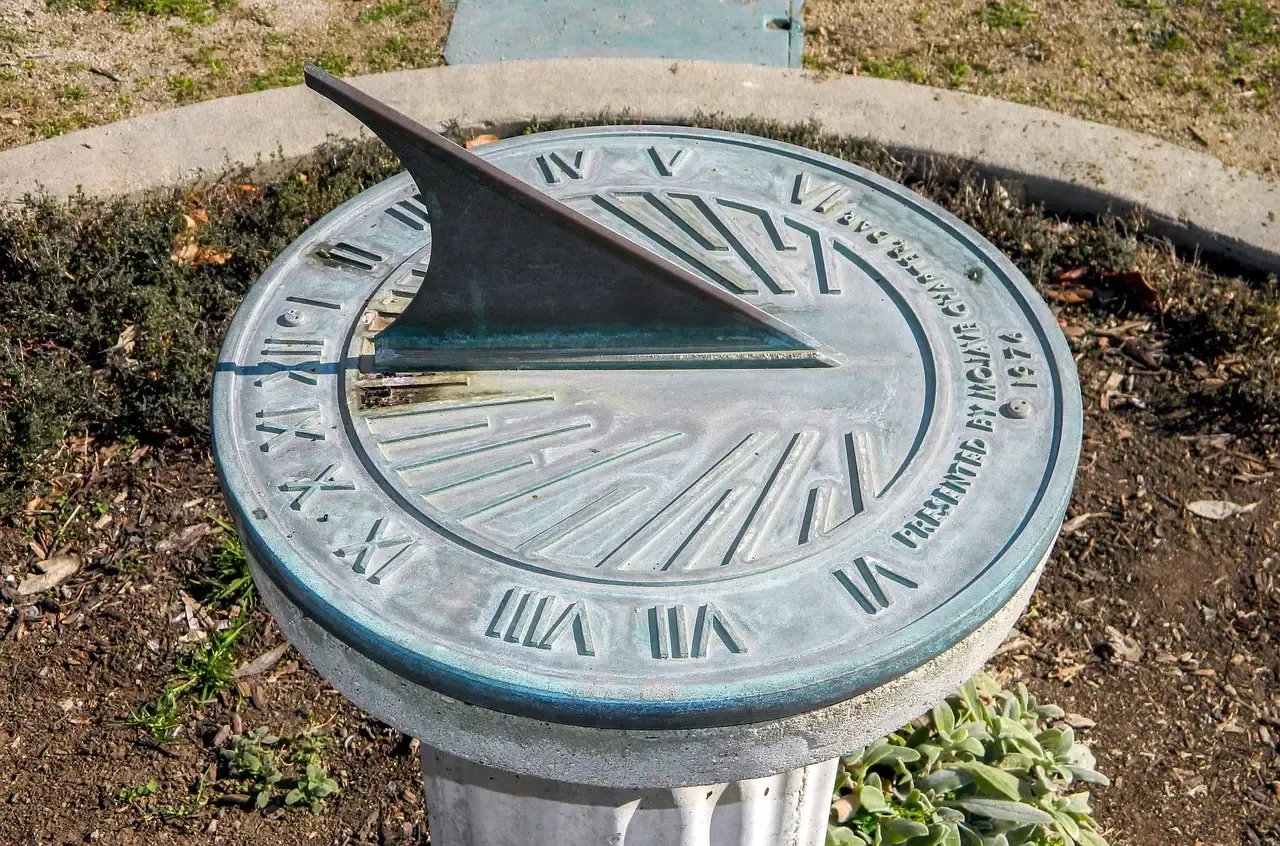
With all this talk of cycles and court astronomers, it is tempting to imagine that ancient cultures could pinpoint eclipses the way a modern observatory does: exact minute, exact location, total certainty. They could not. Most of the time, predictions were broad windows, often focused on lunar eclipses, which are easier to foresee and visible from wide regions. Solar eclipses, especially total ones, are much harder, because the shadow on Earth is narrow, and small errors shift its path dramatically. Ancient methods were impressive for their time, but they had real limits.
Personally, I find that limit strangely comforting. It keeps the story honest. Those early astronomers were not mystical geniuses with secret alien knowledge; they were human beings working with fragmentary data, imperfect tools, and a lot of patience. They got some things wrong, improved slowly, and sometimes benefited from luck. Rather than seeing them as flawless prophets, it feels more respectful to see them as stubborn learners – people who pushed as far as they could with what they had, and laid the groundwork for everything we do in astronomy today.
What Ancient Eclipse Prediction Really Tells Us About Human Wisdom
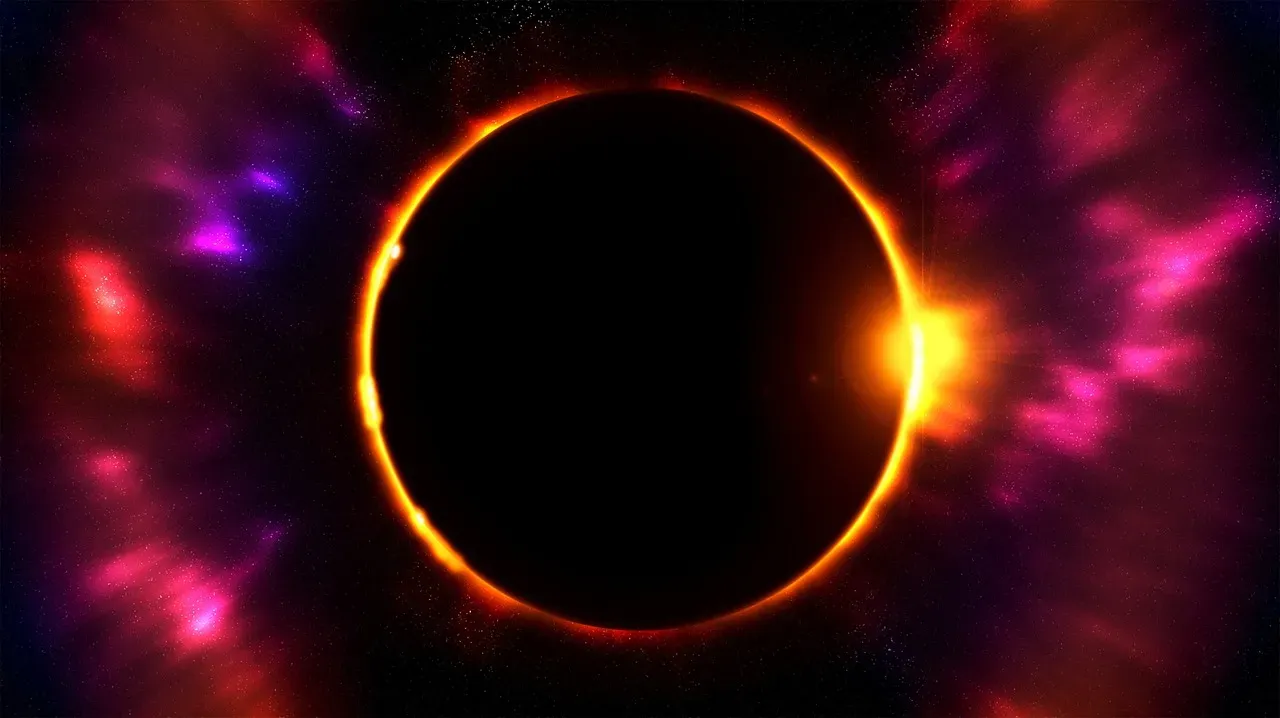
So, did ancient cultures predict eclipses? Yes – but in ways that were uneven, evolving, and often tightly bound to religion and politics. Some, like the Babylonians and Chinese court astronomers, achieved genuinely impressive forecasts, especially for lunar eclipses. Others, like the Maya, wove eclipse-relevant cycles into extraordinary calendars. Still others watched and understood the sky in ways that are harder to reconstruct today, but clearly rooted in close observation. None of them had the full picture, but many had surprisingly sharp pieces of it.
To me, the deeper lesson is this: ancient eclipse prediction is not just about technical skill, it is about stubborn curiosity. In the face of terror and superstition, a few people chose to write things down, compare notes, and trust that the universe had patterns worth learning. That quiet faith in order, tested and refined over generations, is the real wisdom of early astronomers. When the next eclipse passes over your own sky, it might be worth pausing for a moment and asking yourself: how would you have faced that same darkness without the comfort of modern science – and whose careful notes from the past are you still relying on today?