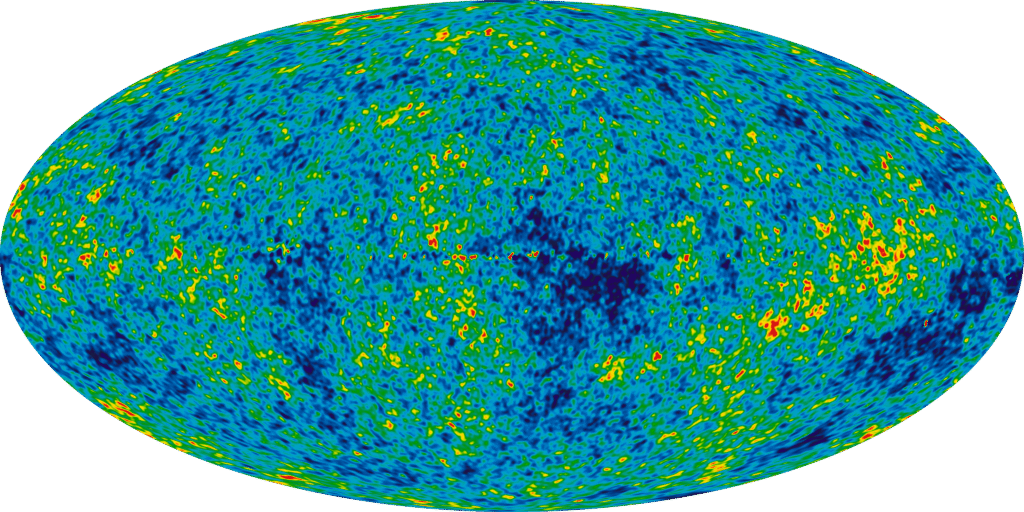
If you could tune a radio to the right kind of signal and silence all the local noise, you’d be listening to the afterglow of creation itself. That faint hiss is not science fiction; it is the cosmic microwave background, the leftover light from when the universe was only a few hundred thousand years old. You live in a cosmos that still hums with the memory of its own birth, and the astonishing part is that you can understand that story from right where you sit.
Once you start to see the cosmic microwave background as more than an abstract scientific term, it becomes a kind of time machine. It lets you look past galaxies, stars, and planets, straight into a much younger universe that was hot, dense, and shockingly simple. By the time you reach the end of this article, you’ll know how to read that ancient light, why it matters for your everyday understanding of reality, and what it quietly suggests about where everything – including you – came from.
The Moment the Universe Became Transparent
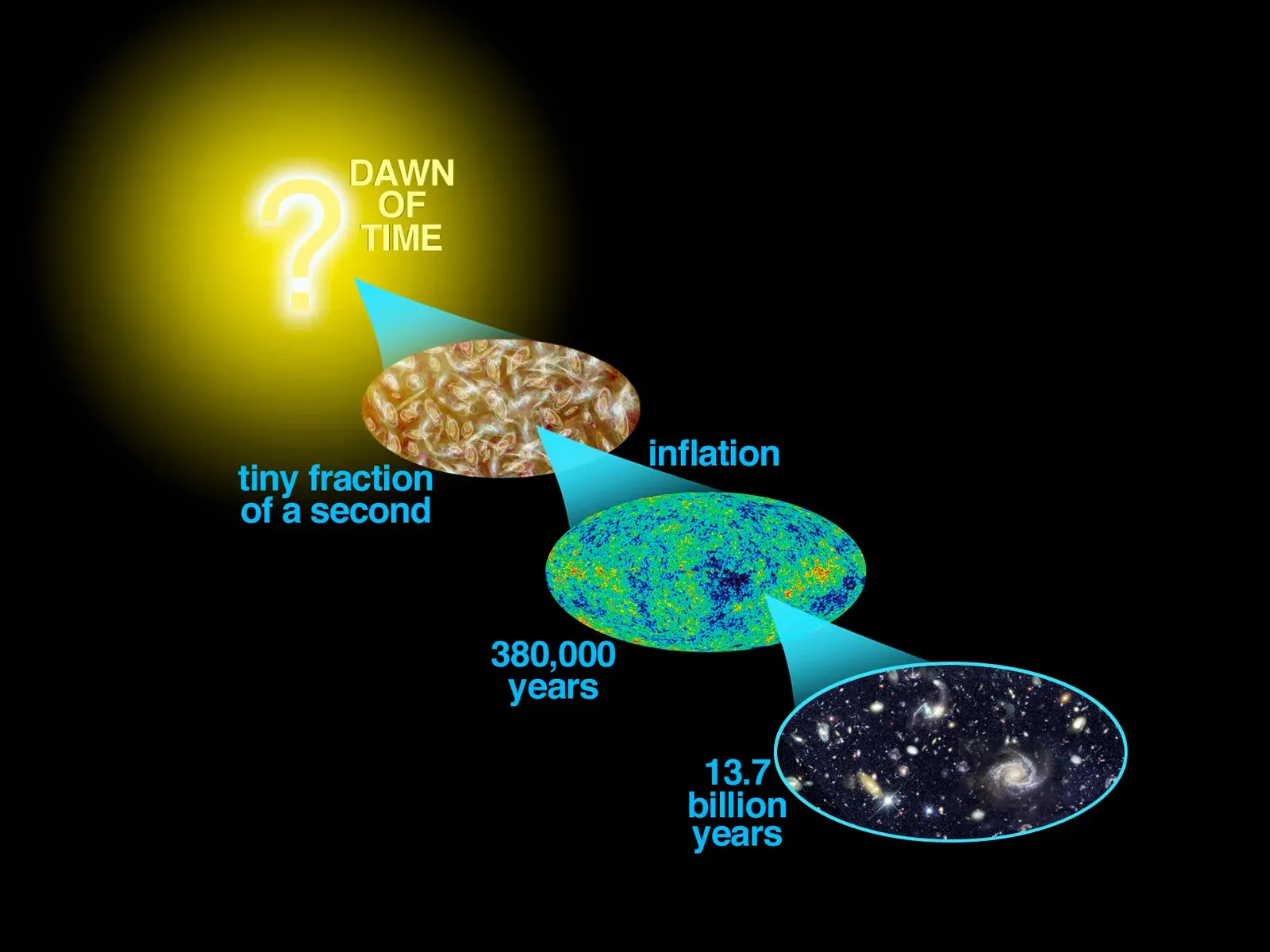
Picture the early universe as a blindingly hot fog where light could not travel freely; every photon kept slamming into charged particles, constantly scattered and absorbed. In that chaos, you would not have been able to see even a millimeter ahead, because there was no such thing as empty, transparent space – just a glowing plasma, like the inside of a star. As the universe expanded, it cooled, and after roughly about three hundred eighty thousand years, something dramatic happened: protons and electrons finally slowed down enough to combine into neutral atoms.
When that happened, the fog lifted. For the first time, light decoupled from matter and could travel mostly unimpeded across space, no longer trapped in a constant pinball game with particles. Those newly freed photons have been flying ever since, stretched and softened by billions of years of cosmic expansion, and they are what you now detect as the cosmic microwave background. When you study this background, you’re not seeing a snapshot of galaxies or stars; you are literally seeing the moment the universe became transparent for the first time.
Why This Ancient Light Is Now a Cold Microwave Glow
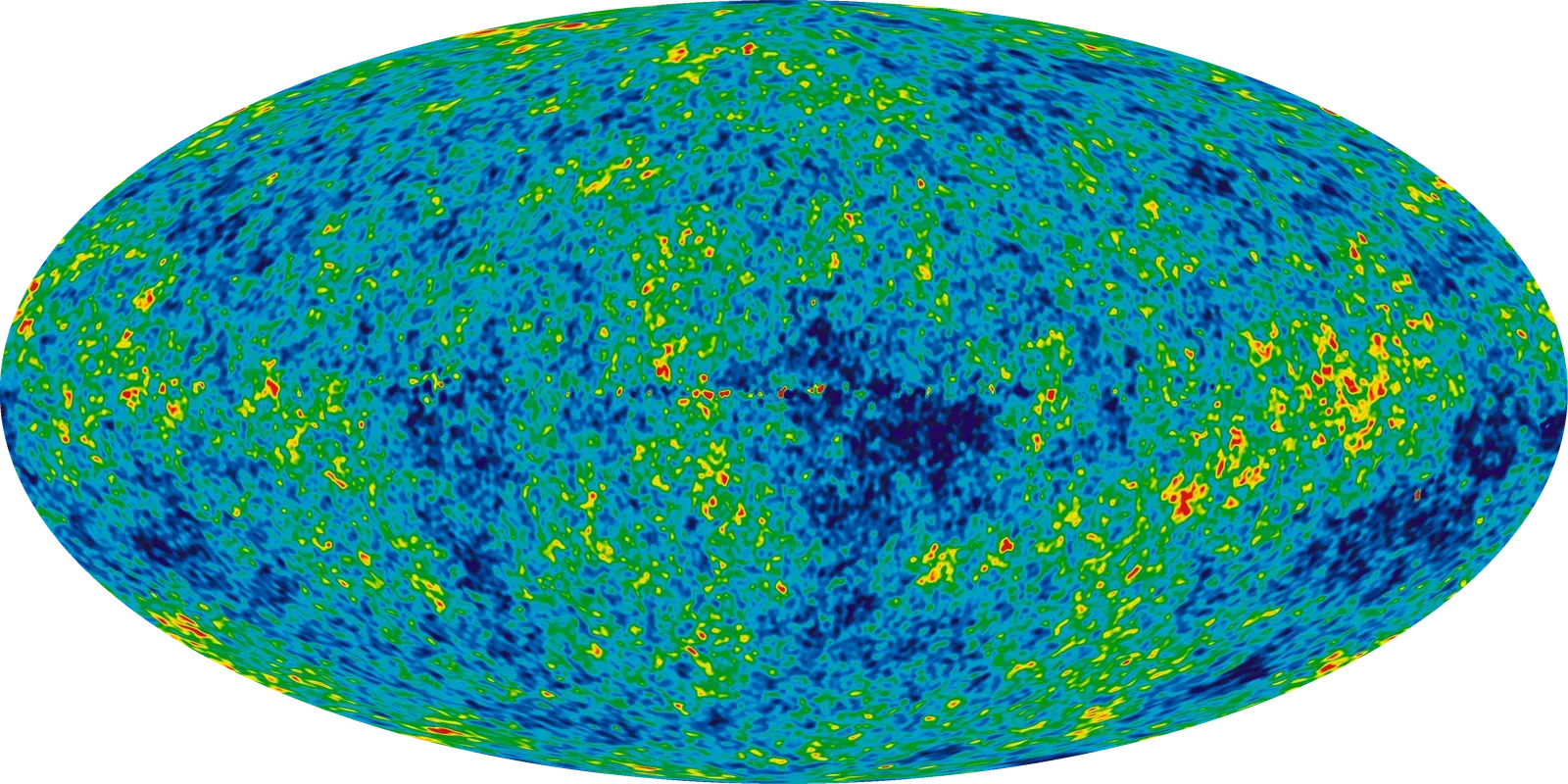
You might expect the afterglow of the Big Bang to be blisteringly hot, but when you measure the cosmic microwave background today, you find a temperature only a bit under three degrees above absolute zero. That frigid number is not a sign of a weak event; it is the result of extreme stretching. As space itself expanded over billions of years, the wavelengths of those ancient photons got pulled longer and longer, like rubber bands being slowly stretched out.
Light that once blazed in the visible or even ultraviolet range has been dragged down into the microwave part of the spectrum, where your eyes cannot see it but your instruments can. You are essentially bathing in a gentle sea of microwave radiation that fills all of space uniformly in every direction. If the universe had not expanded, that light would still be fiercely bright and hot, but instead you live in a cosmos where the original fireball has cooled into a subtle, almost ghostly glow that quietly surrounds you at all times.
How Tiny Temperature Fluctuations Encode a Whole Universe
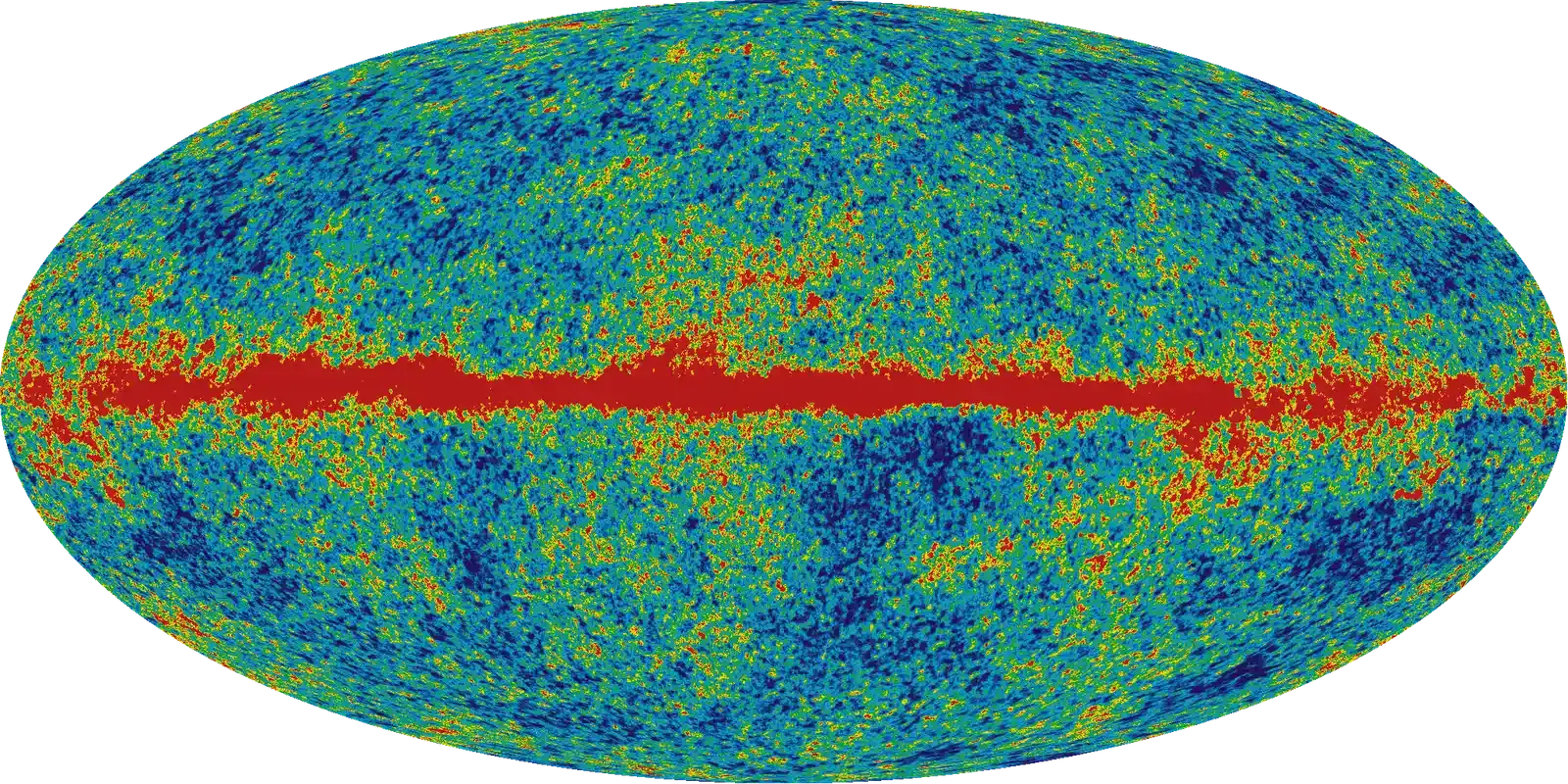
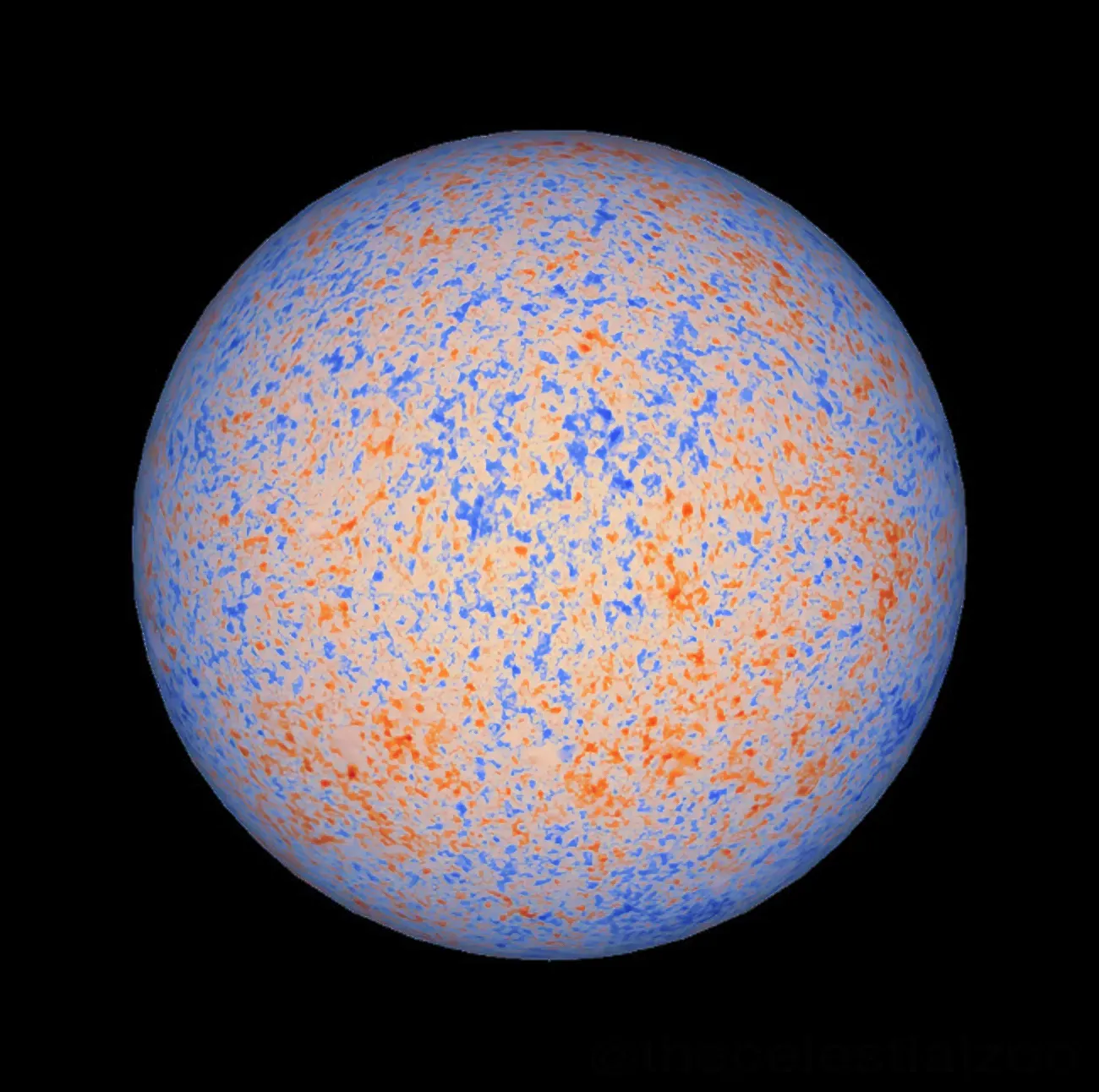
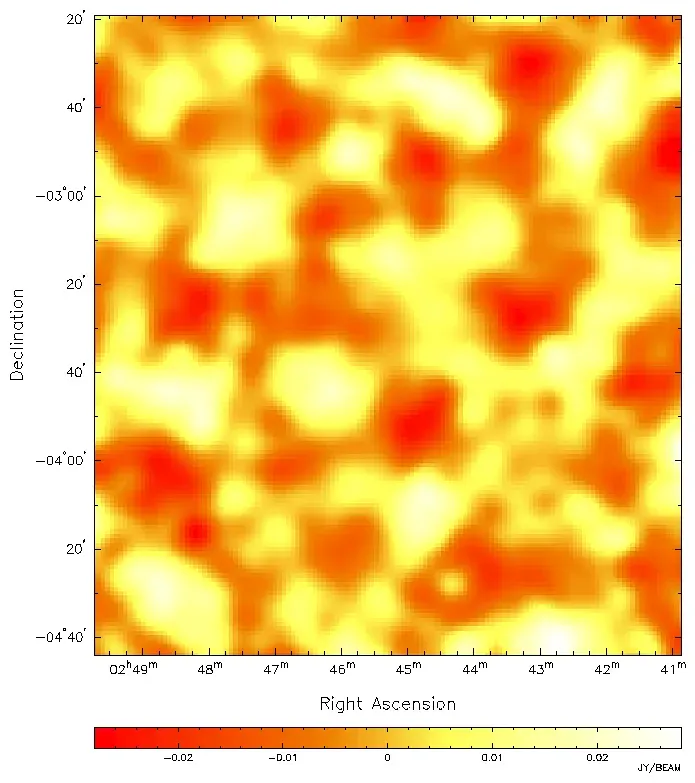
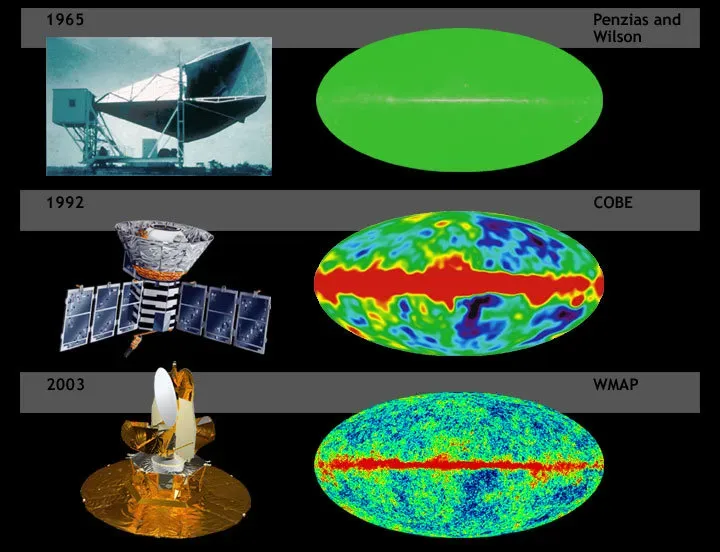
At first glance, the cosmic microwave background looks astonishingly smooth, with nearly the same temperature no matter where you look. But when you examine it carefully with sensitive instruments, you notice minuscule variations – tiny hot and cold spots differing by only a few parts in one hundred thousand. Those little ripples may sound insignificant, but for you, they are the seeds of everything: galaxies, stars, planets, and ultimately life itself trace their origins to those fluctuations.
Each warmer or cooler patch in the cosmic microwave background reflects slightly different densities in the young universe, where gravity had a little extra material in some regions and a little less in others. Over billions of years, the denser spots pulled in more matter and grew into the cosmic structures you now see through telescopes. When you look at a detailed map of these temperature variations, you are effectively looking at a blueprint of the large-scale structure of the universe, drawn when it was still a cosmic infant.
What the CMB Tells You About the Big Bang
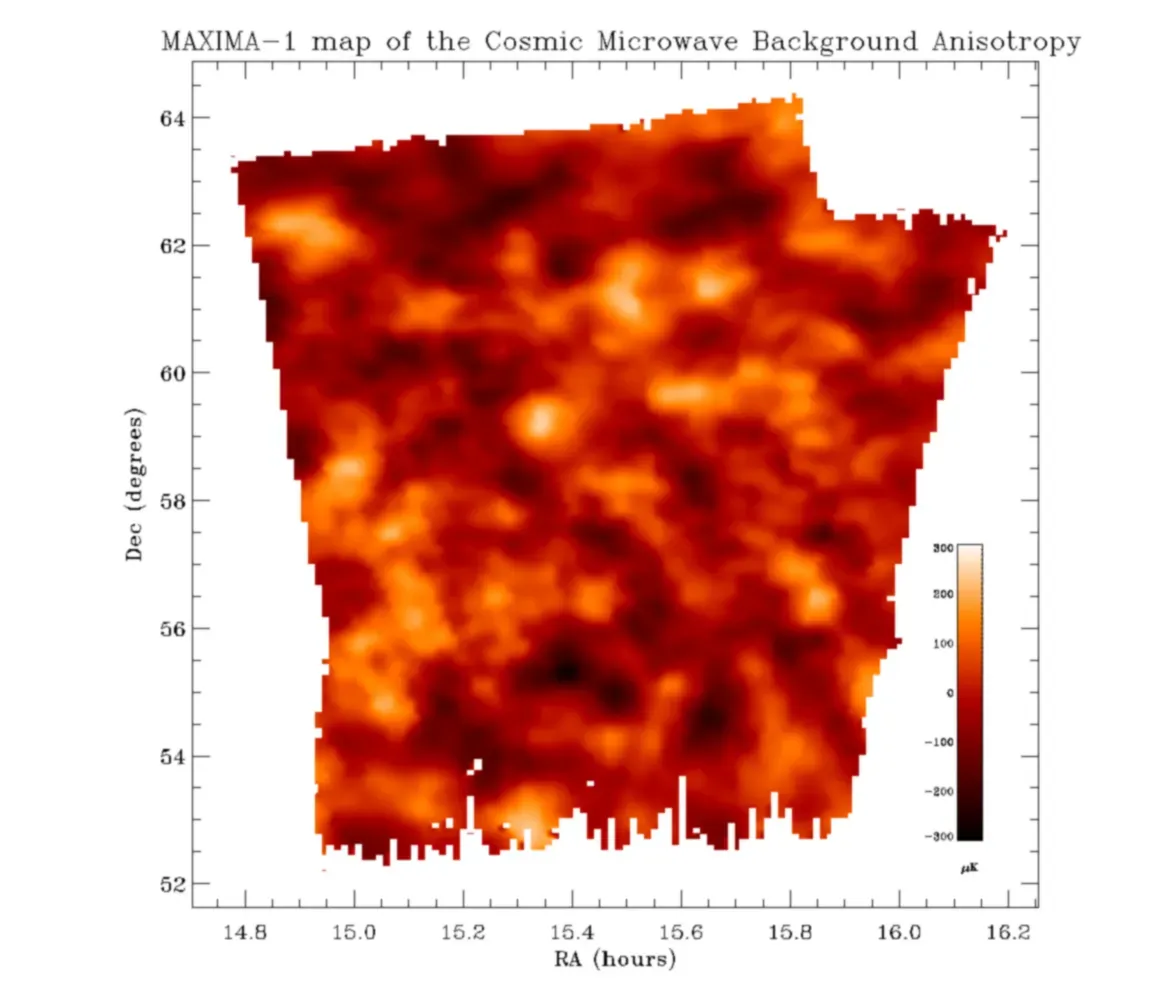
If you ever wonder whether the Big Bang is just a speculative story, the cosmic microwave background gives you a firm, observational answer. Its very existence supports the idea that the universe was once much hotter and denser than it is today, because there is no easy way to get a uniform, all-sky glow of microwave light from any local or recent source. When you measure the spectrum of this radiation, you find a nearly perfect thermal curve, exactly what you would expect from a hot early universe that has been cooling for billions of years.
Beyond that, the pattern of those temperature fluctuations lines up with predictions from Big Bang cosmology in a remarkably precise way. The sizes of the hot and cold patches, their distribution across the sky, and the way their intensities vary with angular scale all fit with a universe that expanded, cooled, and evolved from a simple, nearly uniform state. So when you hear that the Big Bang is well supported, you can know that the cosmic microwave background is one of the strongest pieces of evidence, like an old photograph confirming that the universe truly had a fiery childhood.
Measuring the Shape, Age, and Ingredients of the Cosmos
The cosmic microwave background is not just a pretty picture; it is a scientific gold mine that lets you measure the basic characteristics of the universe with impressive precision. By analyzing the detailed pattern of fluctuations across the sky, you can infer how old the universe is, how fast it has been expanding, and even what it is mostly made of. From this, you learn that ordinary matter – the stuff that makes stars, planets, and your body – is only a small fraction of the cosmic budget.
The rest is dominated by invisible components: dark matter, which clumps and helps form structures, and dark energy, which drives the accelerated expansion of space. The cosmic microwave background also tells you that, on the largest scales, the universe is very close to geometrically flat, meaning that parallel lines in space would stay parallel over vast distances. You might never think about cosmic geometry in your daily life, but thanks to this ancient light, you can know that you live in a universe whose shape, contents, and history are not just guessed at – they are measured.
Clues About Cosmic Inflation and the Very First Moments
When you look at how uniform the cosmic microwave background is across the whole sky, you run into a puzzle: regions now far apart seem to have started out with nearly identical conditions, even though they should not have had time to interact. One powerful way to resolve this is to consider cosmic inflation, a brief period of extremely rapid expansion in the universe’s earliest moments. If that happened, it would stretch tiny quantum fluctuations into the seed irregularities you now see as temperature variations in the background.
The cosmic microwave background gives you indirect but strong hints that something like inflation really occurred. The specific statistical properties of the fluctuations – their near scale-invariance and their almost perfectly random distribution – match what inflationary models predict. Researchers also search its subtle polarization patterns for signs of primordial gravitational waves that inflation might have produced. While that part of the story is still being refined, the background light you observe today is already telling you that the universe’s earliest fractions of a second were far stranger and more dramatic than everyday experience suggests.
The CMB as a Limit – and a Launchpad – for Your Cosmic Vision
When you observe the universe with visible light, radio waves, X-rays, or any other type of electromagnetic radiation, there is a hard wall you cannot see past. That wall is the surface of last scattering, the moment when the cosmic microwave background was released and the universe became transparent. Anything before that is hidden from you in light, because photons were trapped in the hot plasma and could not carry information freely. In that sense, the cosmic microwave background marks the edge of the observable universe in electromagnetic terms.
Yet instead of being just a barrier, it also acts as a launchpad for new kinds of observation and theory. To probe earlier times, you turn to other messengers like neutrinos or gravitational waves, or to careful theoretical reconstructions guided by what the background tells you. The cosmic microwave background sets the initial conditions for all later cosmic history, so every time you simulate galaxy formation or test a new cosmological model, you are implicitly starting from that ancient snapshot. In practical terms, if you want to understand where everything came from and how it evolved, you keep coming back to that faint microwave glow.
Why This Distant Echo Matters to You
It is easy to think of the cosmic microwave background as something distant and academic, but it has a surprisingly intimate connection to your existence. The tiny density variations it records are the reason there were places in the universe where stars and galaxies could form, leading eventually to planets and the chemistry of life. Without those slight imperfections, everything might have remained a perfectly smooth soup, with no clusters, no stars, and no you to wonder about any of it.
There is also a philosophical weight to realizing that you can read the universe’s baby picture from a small planet around an ordinary star. You are using instruments built by human hands to decode faint signals that have traveled for nearly the entire age of the cosmos. That means your curiosity is not just a personal quirk; it is a way in which the universe has become aware of its own past. When you look at the cosmic microwave background, you are not just learning about physics – you are recognizing that your story is woven into a much older, larger one.
Conclusion: Listening to the Faint Echo of Your Cosmic Origins
The cosmic microwave background is more than a relic; it is the quiet, persistent echo of the universe’s birth that still bathes you in ancient light. By studying its temperature, its subtle fluctuations, and its delicate patterns, you uncover a story of a hot, dense beginning, a rapid early expansion, and a long cooling journey that made stars, galaxies, and life possible. You learn that the universe has a specific age, shape, and composition, and that its earliest moments left fingerprints you can still read today.
When you pause to think about it, that faint microwave glow is a kind of cosmic heartbeat, a reminder that the universe once blazed with unimaginable energy and has been evolving ever since. You are not just a bystander to this story; you are made of the matter shaped by those early ripples and guided by the same physical laws that sculpted the first atoms. So the next time you look up at the night sky, you might quietly remember that, behind the stars, there is an almost invisible afterglow whispering the tale of how it all began. Did you ever imagine that you are literally living inside the faded light of the universe’s first dawn?