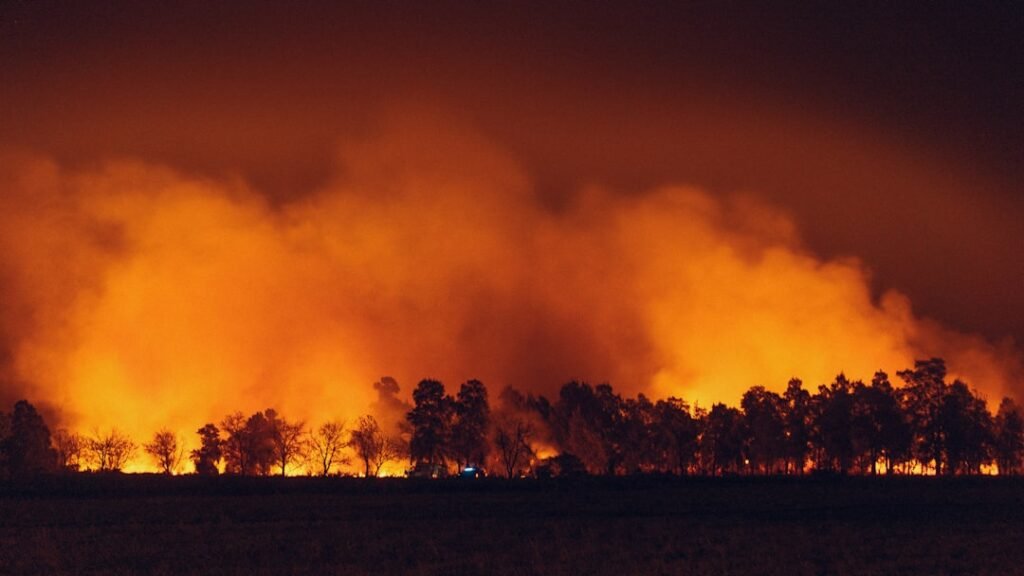
Devastation Strikes Brantley County (Image Credits: Unsplash)
Northeast Florida and southeast Georgia – Fast-spreading wildfires fueled by prolonged drought conditions tore through rural communities this week, destroying nearly 50 homes and forcing hundreds into evacuation zones. Officials issued urgent warnings as low humidity and gusty winds propelled the blazes, complicating firefighting efforts across multiple counties. Travel ground to a halt in some areas, with Amtrak passengers left stranded for over a day amid worsening smoke and chaos.[1][2]
Devastation Strikes Brantley County
The most severe damage occurred in Georgia’s Brantley County, where the Highway 82 Fire exploded to more than 5,000 acres by Wednesday, April 22, 2026. Crews achieved only 10 percent containment as the blaze leveled 47 homes in a single day.[2] Brantley County Manager Joey Cason described harrowing scenes from the front lines.
“There were literally evacuations that were taking place with people removed by our EMS service from the porch as the fire was in their backyard,” Cason stated.[1] Mandatory orders covered areas from GA-110 to Thrower Road, including Happy Hollow and Coffee County Club Road. Schools closed Thursday, and free meals distributed at local churches underscored the scale of disruption.
Major Blazes Span State Lines
Across the border in Florida, the Sargent Fire in Baker County burned 2,523 acres but reached 81 percent containment through aggressive suppression. Other hotspots included the Railroad Fire straddling Clay and Putnam Counties at 4,186 acres and 55 percent contained.[2]
In Georgia’s Clinch County, the Pineland Road Fire swelled to 16,516 acres, part of over 100 active wildfires statewide scorching more than 22,000 acres total.[3] Smaller fires dotted Nassau and Putnam Counties in Florida, with sizes ranging from 256 to 500 acres and containment above 80 percent in most cases. These outbreaks highlighted a regional crisis under red flag warnings.
| Fire Name | Location | Size (Acres) | Containment |
|---|---|---|---|
| Highway 82 | Brantley Co, GA | 5,000+ | 10% |
| Pineland Road | Clinch Co, GA | 16,516 | 10% |
| Railroad | Clay/Putnam Co, FL | 4,186 | 55% |
| Sargent | Baker Co, FL | 2,523 | 81% |
Travel Nightmares Unfold
Wildfires crippled transportation networks, particularly rail service in north Florida. Amtrak suspended the Silver Meteor route from Miami to New York City after flames encroached on tracks near DeLand. More than 200 passengers endured over 24 hours onboard with overflowing toilets, scarce food, and medical emergencies.[4]
Road closures compounded the issues in Brantley County, shutting down Highway 82 from Nahunta to Post Road and segments of Highways 110, 259, and 32. Smoke billowed toward Jacksonville, Savannah, and even Atlanta, prompting air quality alerts and hazy skies that lingered into Wednesday.[1]
- Amtrak Silver Meteor halted, stranding 200+ near DeLand.
- Highway 82 fully closed in affected Georgia zones.
- Smoke impacts reached major cities like Jacksonville and Atlanta.
- School systems in Brantley County shuttered amid hazards.
Fighters Race Against Dry Winds
Responders from the Florida Forest Service, Georgia Forestry Commission, and local agencies deployed heavy equipment and strike teams. Florida Agriculture Commissioner Wilton Simpson highlighted the unprecedented season. “Florida has got one of the worst fire seasons in maybe the last 30 or 40 years,” he noted, attributing it to an 18-month drought.[1]
Tim Lowrimore of the Georgia Forestry Association called it “a serious and evolving situation.” National Weather Service forecasts predicted continued high fire risk through Friday due to breezy conditions and single-digit humidity levels. Over 112 fires raged in Georgia alone, with restrictions in 193 areas.
Key Takeaways
- Nearly 50 homes destroyed, primarily in southeast Georgia.
- Evacuations saved lives as flames reached backyards.
- Drought and winds fueled rapid spread across 20,000+ acres.
As crews mop up hotspots and monitor weather shifts, residents face an uncertain path to recovery. The blazes served as a stark reminder of vulnerability in drought-prone regions. What steps can communities take to prepare for future outbreaks? Share your thoughts in the comments.