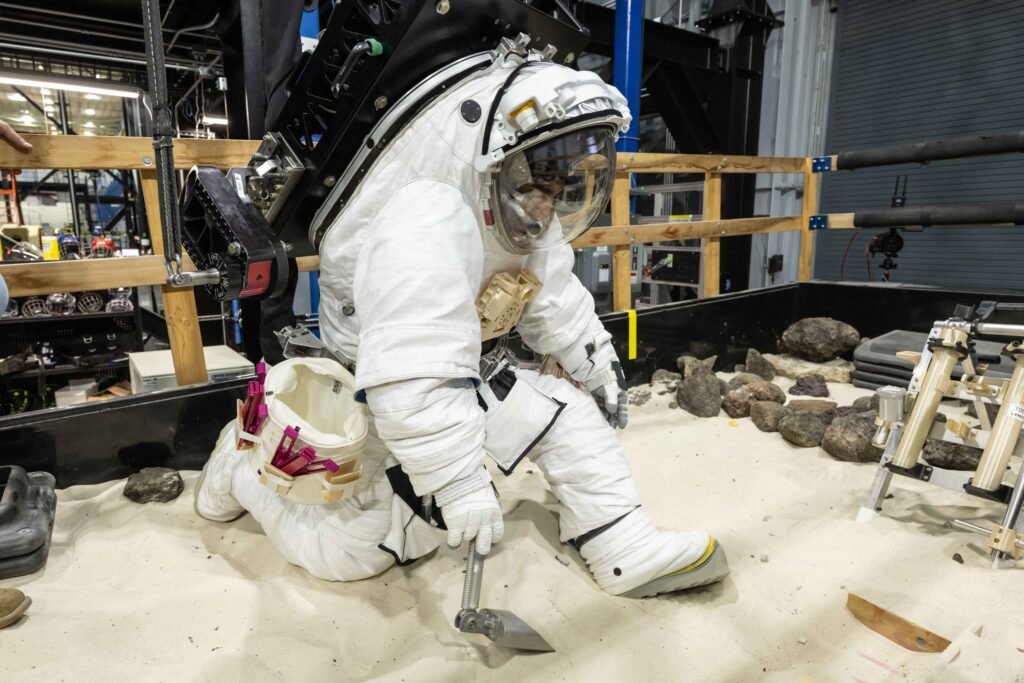

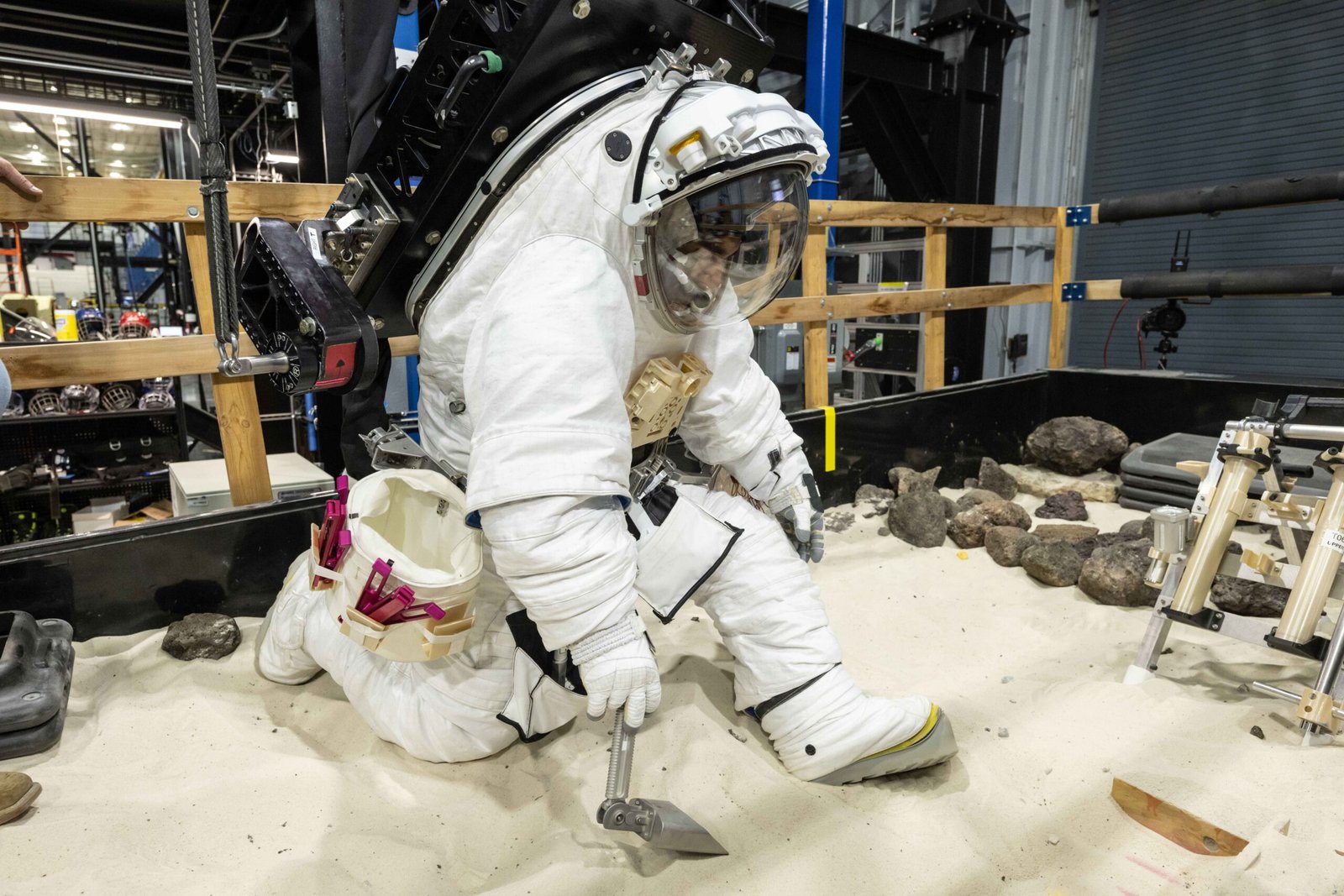
Report Flags Critical Timeline Risks (Image Credits: Upload.wikimedia.org)
A fresh audit from NASA’s internal watchdog has highlighted significant setbacks in developing next-generation spacesuits, potentially jeopardizing the timeline for America’s return to the moon. The report arrived just days ago, underscoring risks to both lunar missions and operations on the International Space Station. Despite these warnings, top agency officials maintain that astronauts will step onto the lunar surface in 2028 equipped with the necessary gear.[1][2]
Report Flags Critical Timeline Risks
The NASA Office of Inspector General released its assessment on April 20, detailing how acquisition strategies have slowed progress on spacesuits contracted in 2022. Those deals, worth up to $3.1 billion, went to Axiom Space and Collins Aerospace for lunar and microgravity suits under a service-based model. Collins Aerospace stepped away in 2024 after schedule troubles, leaving Axiom as the primary developer.[2][1]
Auditors deemed original demonstration targets – 2025 for lunar suits and 2026 for station versions – overly optimistic. Current plans point to late 2027 readiness, but historical patterns suggest slips to 2031. Such delays could force major revisions to spacewalking schedules for Artemis landings and end-of-life ISS activities through 2030.[3]
Evolution of the Spacesuit Challenge
Efforts to replace aging Extravehicular Mobility Units trace back nearly two decades, with prior audits in 2017 and 2021 noting persistent shortfalls. The current suits must handle lunar dust, extreme temperatures, and extended mobility, features absent in Apollo-era gear last used in 1972. Axiom’s AxEMU design, unveiled with Prada in 2024, incorporates modern materials from partners like Nokia and Oakley.[1]
Technical hurdles include swappable components for dual environments and supply chain issues. Fixed-price contracts aimed to control costs but proved risky for unproven technology. NASA now embeds experts at Axiom to accelerate testing and integration.[3]
| Suit Type | Original Target | Planned Demo | Potential Slip |
|---|---|---|---|
| Lunar (AxEMU) | 2025 | Late 2027 | 2031 |
| Microgravity (ISS) | 2026 | Late 2027 | 2031 |
Agency Leaders Push Back with Resolve
NASA Administrator Jared Isaacman addressed the report directly on social media. “I am confident that when NASA is ready to land on the moon in 2028, our astronauts will be wearing Axiom suits,” he posted.[1] Axiom CEO Jonathan Cirtain echoed this stance: “Our focus remains on delivering a safe, capable spacesuit that enables American astronauts to return to and explore the lunar surface in 2028.”[3]
Officials plan in-space evaluations in 2027, possibly on the ISS or Artemis III. Critical design reviews loom later this year, with increased oversight to meet milestones. The agency concurred with the OIG’s calls to refine management and explore competition via contract “on-ramps.”[2]
- Embed NASA subject matter experts at Axiom facilities.
- Review contract relief for burdensome requirements.
- Rebuild in-house expertise through new workforce initiatives.
- Assess additional providers like SpaceX or ILC Dover if needed.
Artemis Missions Adapt to Realities
The program shifted gears earlier this year. Artemis III, now slated for 2027, will test rendezvous and docking in low Earth orbit with SpaceX or Blue Origin landers, forgoing a surface visit. Artemis IV follows in 2028, sending crew to lunar orbit for a week-long stay at the south pole.[4][5]
These adjustments follow Artemis II’s successful lunar flyby. Frequent launches – every 10 months – aim to build momentum toward sustained presence. Yet budget pressures loom, with proposed 2027 cuts threatening science programs.[1]
Global Stakes and Future Horizons
Delays carry weight beyond suits. Reliance on old EMUs risks ISS operations, while China eyes a pre-2030 landing, heightening competition for lunar resources. Success here paves the way for Mars ambitions.[3]
NASA’s proactive measures signal adaptability in a complex endeavor. Partnerships with private firms have quickened pace overall, even as individual elements lag.
- NASA and Axiom target 2027 suit demos to support 2028 landing.
- OIG urges better oversight and competition to mitigate risks.
- Artemis IV marks the historic return, with south pole exploration.
Challenges like these test resolve, but steady progress keeps the dream of lunar footprints alive. What do you think about NASA’s chances for 2028? Tell us in the comments.