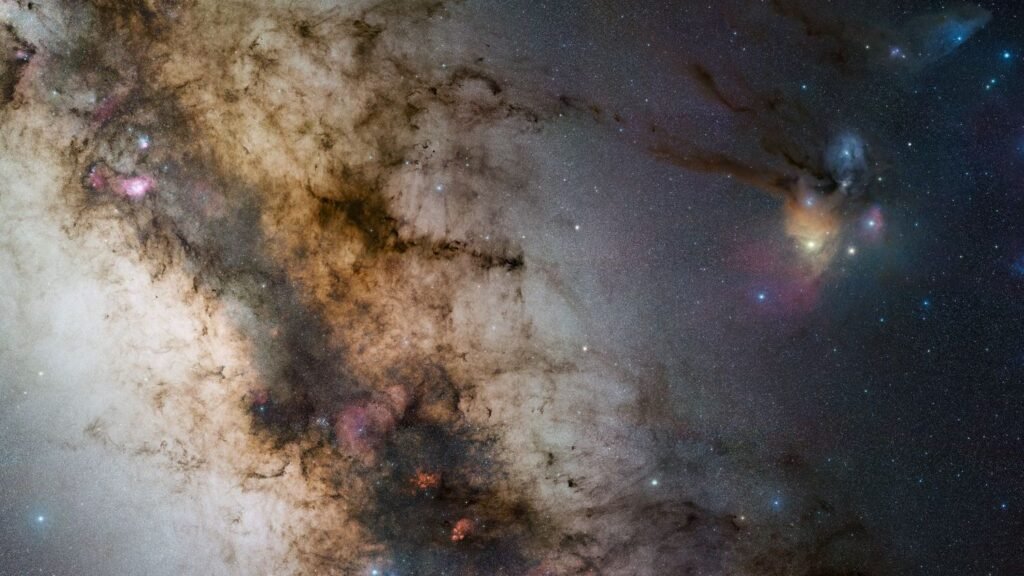
You look up at the night sky and see a calm, glittering universe. Stars, planets, and glowing clouds of gas feel like they must be everything there is. But if you could weigh the cosmos, you’d discover something deeply unsettling: almost everything you can see is just a tiny fraction of what actually exists. The rest is hidden, silent, and invisible to your eyes and even to the most powerful telescopes.
That hidden majority is what scientists call dark matter. You cannot see it, touch it, or bottle it, but you can watch what it does. It bends light, shapes galaxies, and quietly dictates how the universe evolves. If normal matter is the paint on the cosmic canvas, dark matter is the invisible frame and scaffolding holding everything in place.
The Shocking Discovery That Galaxies Should Be Falling Apart
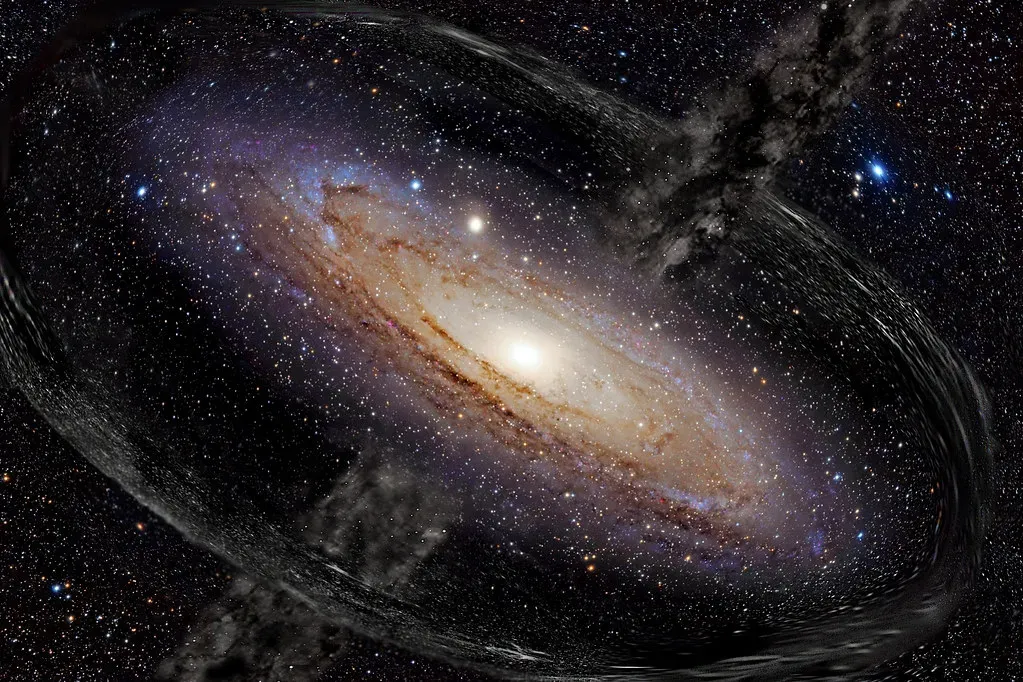
If you took basic physics, you might remember that things farther from the center of a system usually move more slowly. Planets farther from the Sun, for example, take longer to orbit because the Sun’s gravity weakens with distance. So you might expect stars at the edges of a galaxy to move slowly too. When astronomers actually measured those speeds, they got a result that felt almost like a cosmic prank.
You find that stars far from the galactic center are whipping around just as fast as the ones closer in, sometimes even faster, as though an enormous, unseen mass is holding them in a firm gravitational grip. If only the visible stars, gas, and dust were there, many galaxies should be flying apart like sparks from a firework instead of staying neatly bound. The simplest way to make the math work is to accept that there’s a lot more mass there than you can see: a huge halo of dark matter surrounding the galaxy like an invisible cocoon.
Why You Know Dark Matter Is Real Even Though You Can’t See It
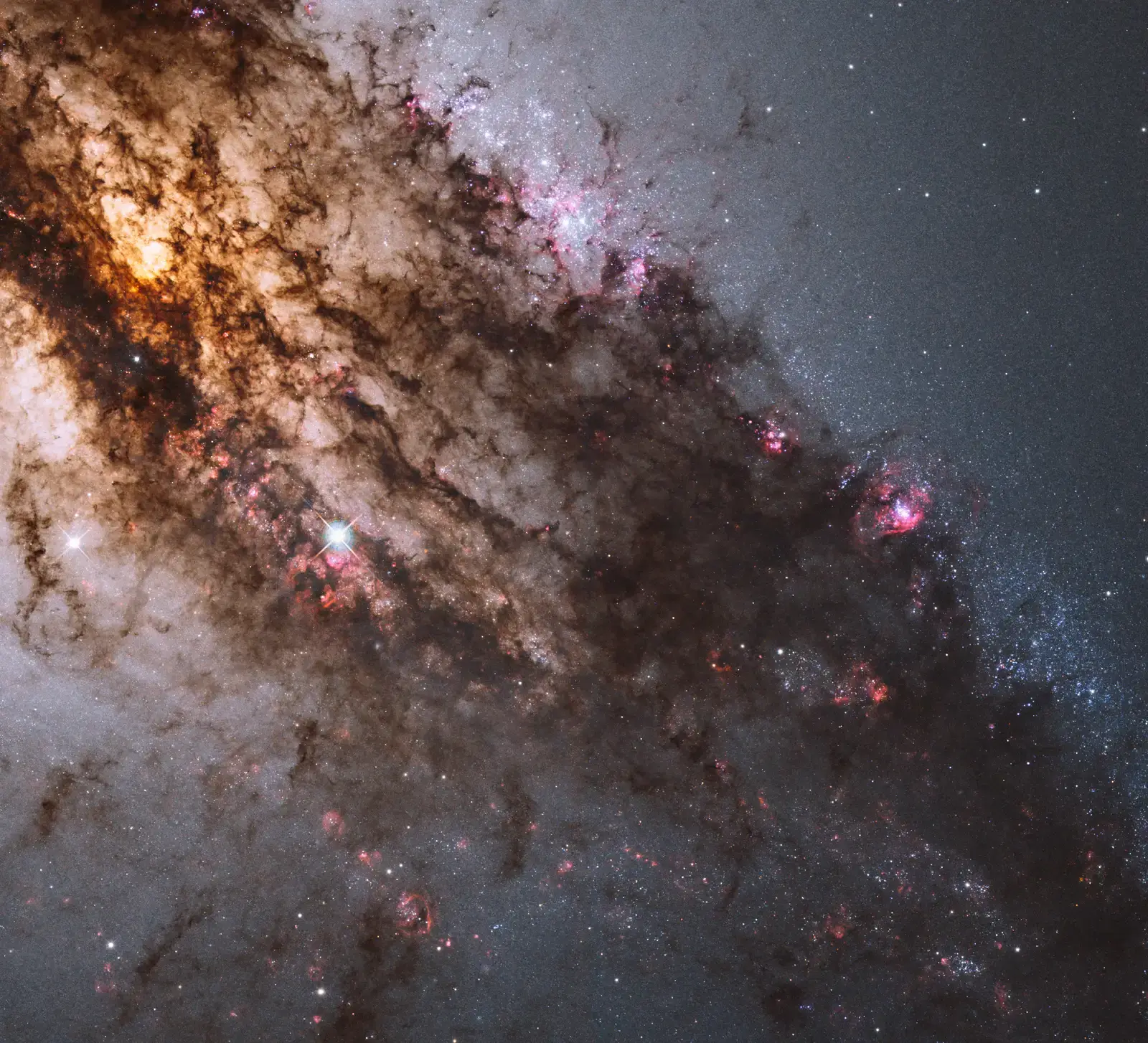
You might wonder whether dark matter is just a clever name for “stuff we don’t understand yet.” That’s a fair question. But you can test gravity, and the universe gives you several independent ways to check that something invisible really is there. One of the most striking clues shows up when you look at clusters of galaxies, where hundreds or thousands of galaxies gather in one region of space.
When you map how those galaxies move and how hot gas in the cluster behaves, you find that the visible material cannot provide enough gravity to hold everything together. On top of that, light from distant galaxies passing behind a massive cluster gets bent and distorted, a phenomenon called gravitational lensing. When you calculate how much mass you need to cause that bending, you again discover that you’re missing most of it. Different methods keep pointing you to the same conclusion: something invisible, which interacts mainly through gravity, is there in enormous amounts.
How Dark Matter Acts Like Cosmic Scaffold for Galaxies
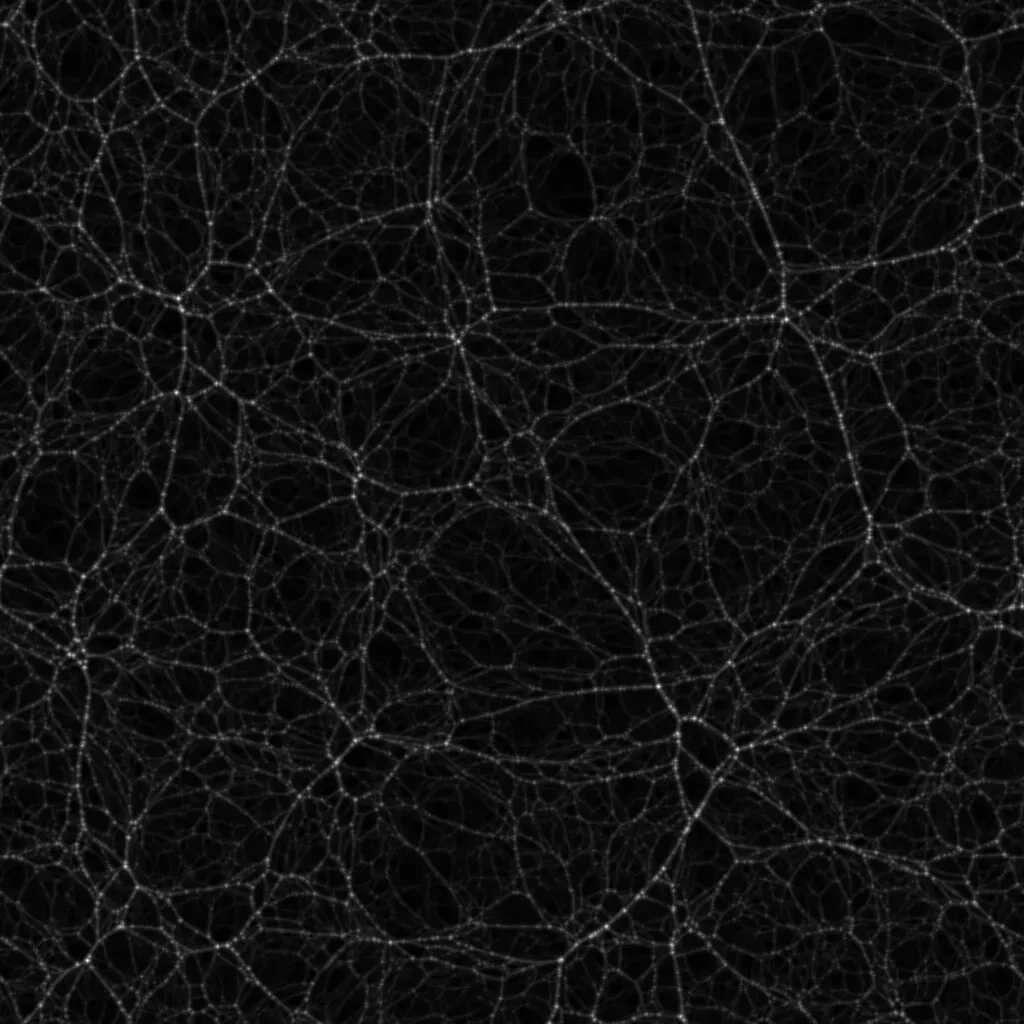
To really feel how important dark matter is, you can imagine rewinding the universe back to when it was young, hot, and almost perfectly smooth. Tiny variations in density were like subtle ripples in a calm pond. Dark matter, being invisible but massive, began to clump first, pulled together by gravity into enormous, diffuse clouds and filaments. These structures formed a kind of skeletal framework long before galaxies lit up.
Normal matter – gas that could eventually form stars – fell into these dark matter structures like dust settling into the grooves of a fingerprint. Where dark matter piled up, gravity grew stronger, and gas collected there, cooled, and formed the first galaxies. The cosmic web you sometimes see in scientific visualizations, with long strands and bright knots, is really the dark matter skeleton. The glowing galaxies you admire are just the bright frosting sitting on top of that invisible cake.
What Dark Matter Is Probably Not (And Why That Matters)
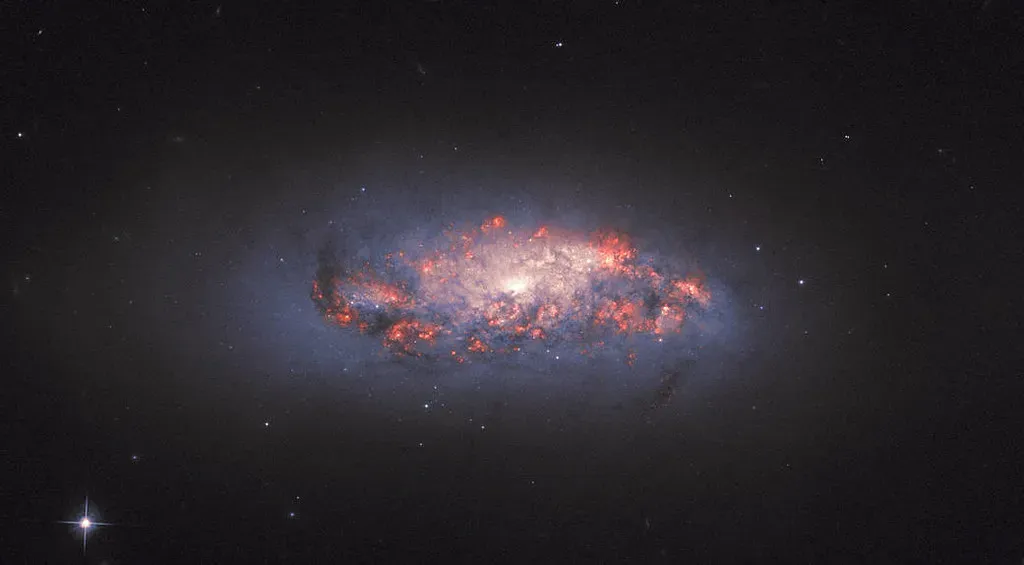
It’s tempting to reach for everyday explanations. Maybe dark matter is just “dark stuff” like black holes, cold gas, or dim stars you can’t easily see. You are not the first to think that way, and scientists took those possibilities seriously. But when you add up how much of that kind of material could reasonably be hiding out there, you still fall far short of the total mass that gravitational evidence demands.
Observations of the early universe, especially the pattern of tiny temperature variations in the cosmic microwave background, act like a detailed receipt of what kinds of matter were around. Those measurements tell you that only a smaller fraction of all matter and energy can be made of normal particles like protons and neutrons. That pushes you toward a more radical conclusion: dark matter must mostly be something else entirely, made of unknown particles that do not interact much with light or with normal matter, except through gravity.
The Leading Ideas About What Dark Matter Could Be
When you hear “unknown particles,” it can sound vague, but physicists have specific candidates in mind. One popular idea proposes heavy particles that move relatively slowly and rarely interact with regular matter; these are often referred to as weakly interacting massive particles. Another class suggests extremely light particles that act more like a field spread throughout space rather than tiny bullets. You can also find ideas that tweak gravity itself, but these have a harder time matching all the evidence together at once.
To hunt for these particles, you rely on a mix of approaches. Deep underground, detectors sit shielded from most background radiation, quietly waiting for a rare interaction between a dark matter particle and an atomic nucleus. In space and in high-energy labs, you search for unusual patterns in cosmic rays or look for hints that ordinary particles might be produced when dark matter interacts with itself. So far, you don’t have a definitive detection, but each experiment rules out certain possibilities and sharpens where you should look next, turning the mystery into a more focused chase.
Where Dark Matter Shows Up in Your Everyday-Sized Universe
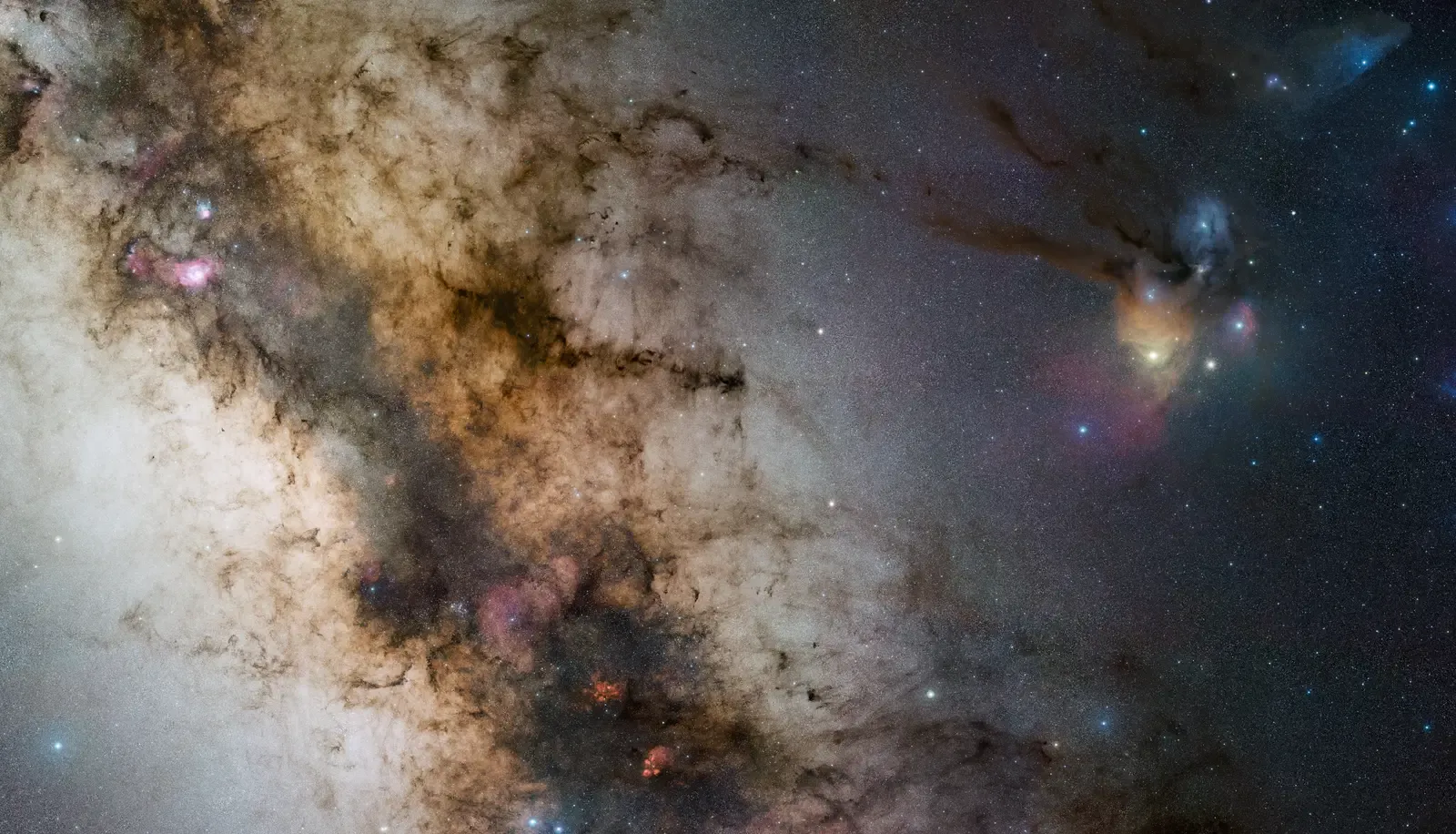
You might feel that dark matter lives only in distant galaxies and massive clusters, far removed from your daily reality. But if dark matter really fills our galaxy in a large, invisible halo, then it also passes right through your body, your home, and everything around you all the time. It does not bounce off you in a noticeable way, because it barely interacts with normal matter except gravitationally, but that quiet presence is always there.
On the scale of your life, you will never feel a direct nudge from it, yet your existence is shaped by it in a very real sense. Without the stabilizing gravity of dark matter helping galaxies form and hold together, the Milky Way might not exist in the form you see today. Without galaxies, there would be no stars like the Sun, no planets like Earth, and no chance for you to wonder about any of this. In a weird way, dark matter is like an invisible stage builder that never takes a bow but makes the whole show possible.
How Dark Matter Shapes the Future of Cosmic Storytelling
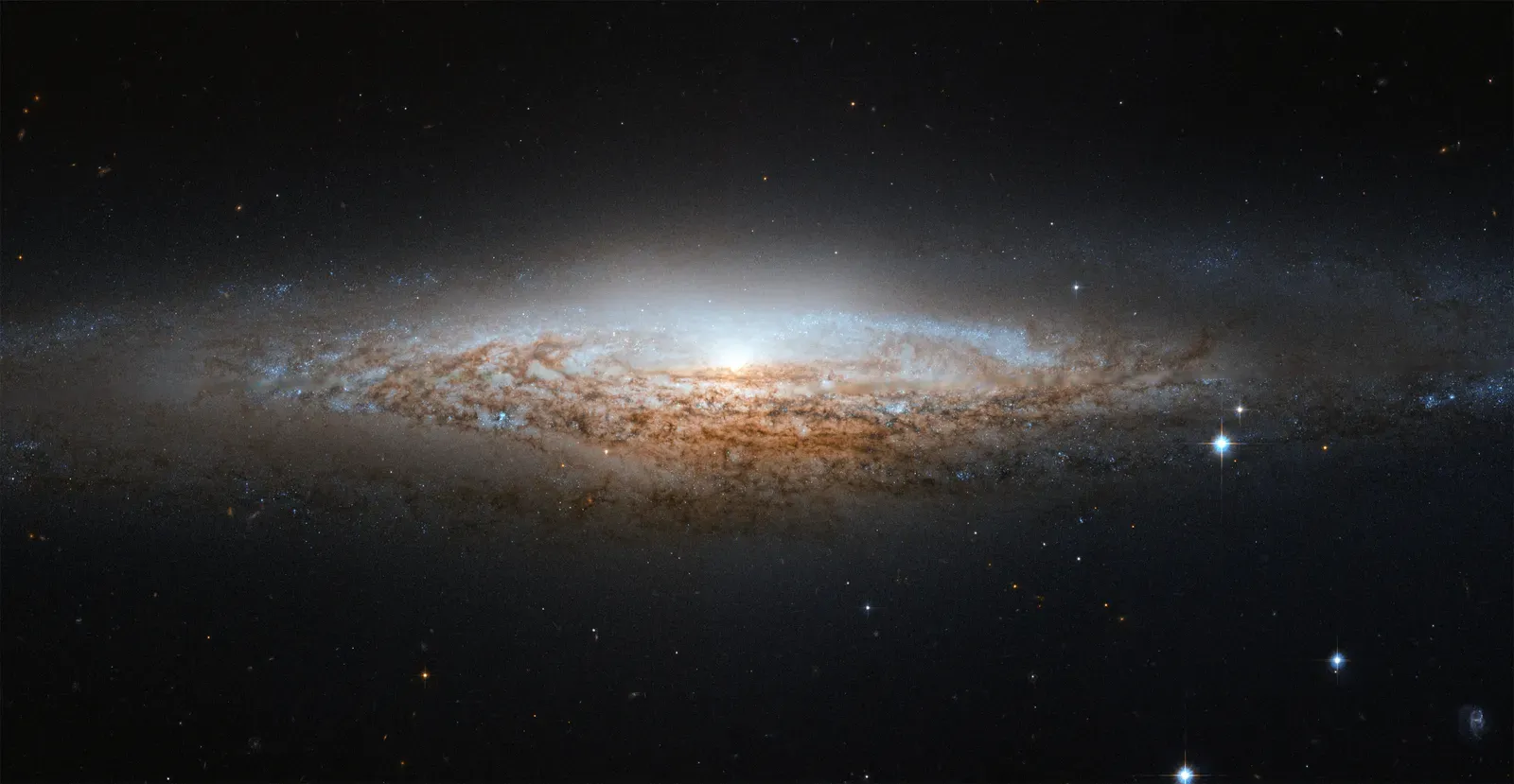
When you think about the future of astronomy and physics, dark matter sits near the top of the list of big open questions. Cracking its identity would not just tick a box; it would reshape how you understand matter, forces, and the history of the universe. Each improvement in telescopes, detectors, and simulations lets you compare theory and observation with more precision, exposing tiny mismatches that can hint at new physics.
At the same time, you live in a moment where you can map the large-scale structure of the universe with remarkable detail. Massive surveys chart how galaxies cluster over billions of light-years, and those patterns tell you how dark matter has been sculpting the cosmos over cosmic time. As those maps get better, they could reveal subtle fingerprints of what dark matter really is. You might think of this era as standing on the edge of a foggy landscape, slowly bringing it into focus with each new observation.
Why This Invisible Glue Changes How You See Everything
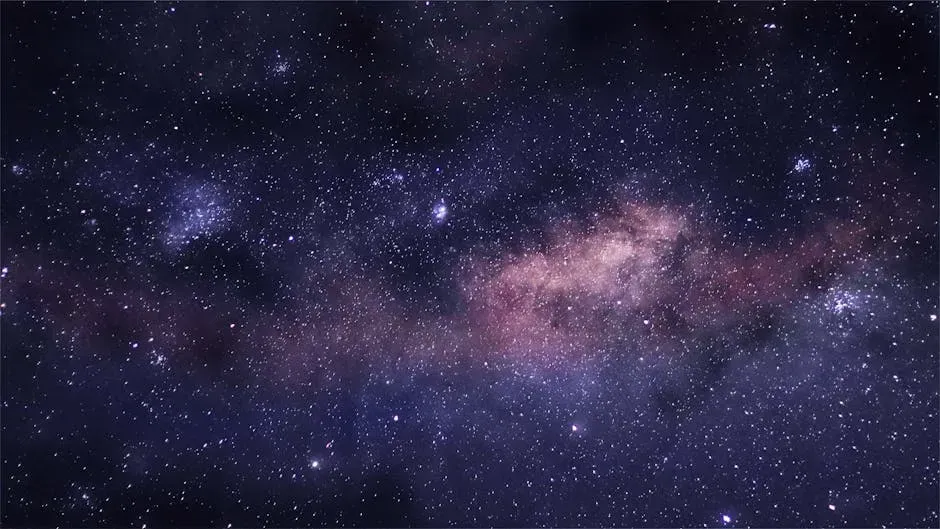
Once you accept that dark matter exists, it quietly changes the emotional feel of the universe for you. The night sky stops being just a random spray of stars and starts to look like the visible edge of a much deeper structure. You realize that most of reality is not only out of reach of your senses but also fundamental to why anything familiar exists. That can be a little unsettling, but it is also strangely comforting; the universe is richer and more layered than it first appears.
Knowing about dark matter nudges you toward humility but also curiosity. You are living in a time when this mystery is not just philosophy but an active scientific problem that people are incrementally solving. You get to watch, in real time, as clues pile up and old assumptions are tested. Maybe you will never personally detect a dark matter particle, but simply being aware of this invisible glue lets you look up at the Milky Way and see not just stars, but the unseen hands that hold them together. Did you expect so much of your universe to be made of something you can never see?