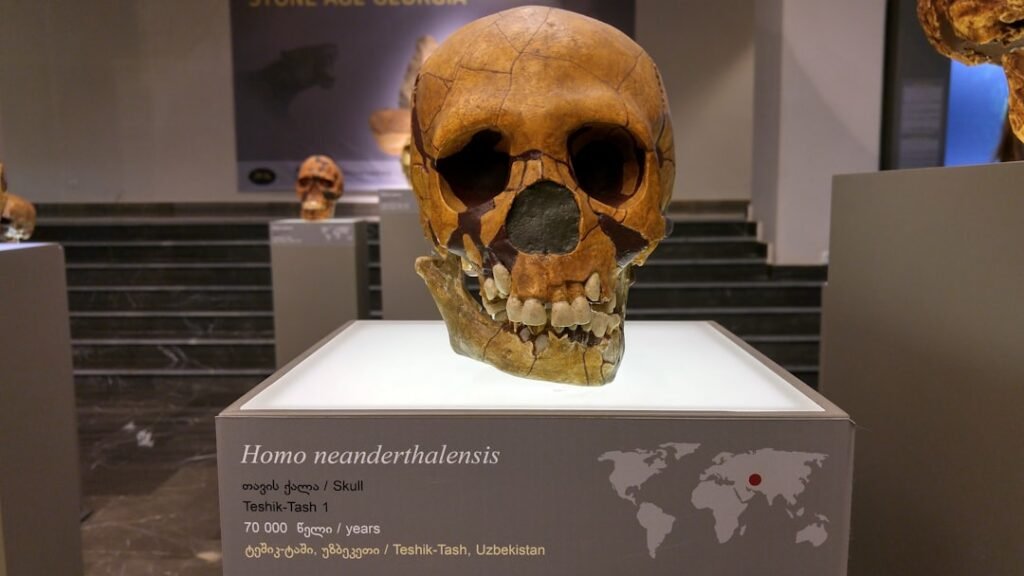
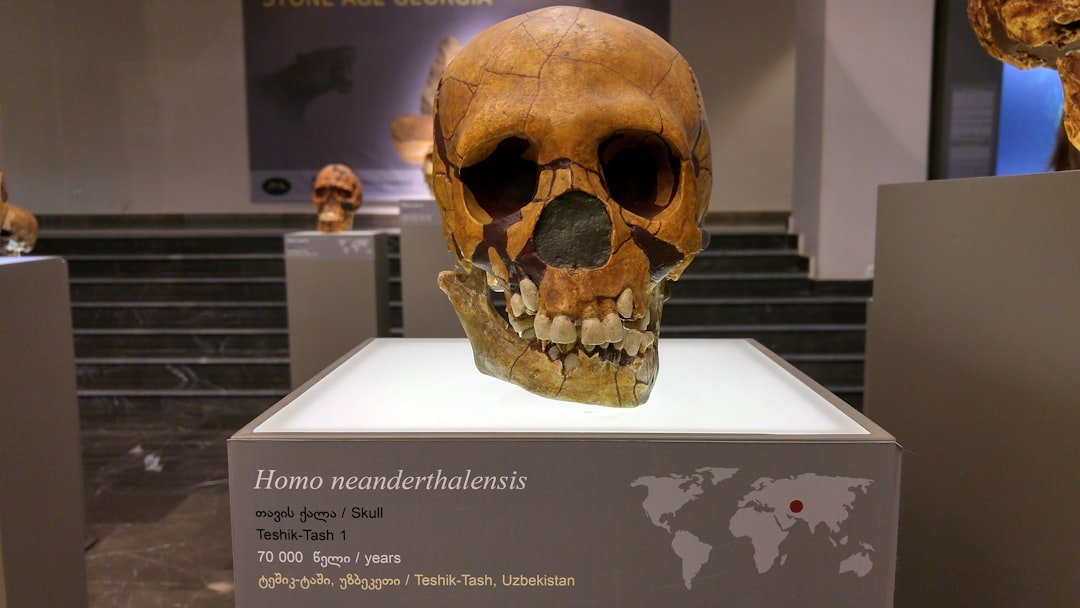
Unlocking a Family’s Ancient Legacy (Image Credits: Unsplash)
Stajnia Cave, Poland – Researchers have reconstructed the mitochondrial DNA profiles from eight Neanderthal teeth unearthed in this northern Carpathian site, painting the first coherent genetic picture of at least seven individuals who roamed the area around 100,000 years ago. This international effort marks a milestone in understanding Neanderthal communities in Central-Eastern Europe. The findings highlight a small, possibly related group whose maternal lineage connected distant regions of ancient Eurasia.[1]
Unlocking a Family’s Ancient Legacy
Imagine a tight-knit Neanderthal band navigating the harsh landscapes north of the Carpathians more than 100,000 years ago. For the first time, scientists achieved this by analyzing mitochondrial DNA from teeth belonging to at least seven individuals at a single site during the same chronological phase. Two juvenile teeth and one adult tooth shared identical mitochondrial DNA, hinting at close familial ties.[1]
Stajnia Cave emerged as a treasure trove for this discovery. Excavations there preserved exceptional Neanderthal remains, allowing archaeologists to link genetics with artifacts from the Middle Paleolithic. This group’s profile stands out because previous data often came from isolated fossils scattered across sites and eras. The coherence here offers unprecedented insight into their biology and social structure.
The Genetic Puzzle Comes Together
The team extracted ancient mitogenomes from the eight teeth, a feat requiring meticulous lab work to avoid contamination. These sequences aligned with a maternal lineage previously identified in Neanderthals from the Iberian Peninsula, southeastern France, and the northern Caucasus. This pattern suggests the lineage spread widely across western Eurasia before later variants took over.[1]
Radiocarbon dating posed challenges near its calibration limits, so researchers cross-verified with archaeological context and genetic evidence. The result confirmed the 100,000-year-old timeframe. Such integration proved essential for accuracy in probing deep prehistory.
- Mitochondrial DNA from eight teeth analyzed successfully.
- At least seven individuals represented in the group.
- Shared sequences among juveniles and an adult indicate relatedness.
- Lineage matches distant European and Caucasian sites.
- Focus on Middle Paleolithic phase at Stajnia.
Bridging Neanderthal Worlds Across Continents
Central-Eastern Europe no longer appears as a fringe in Neanderthal history. Stajnia’s evidence positions southern Poland as a hub for population movements, biological exchanges, and technological spreads. The shared maternal lineage underscores connectivity in a time of fluctuating climates.[1]
Comparisons reveal intriguing timelines. For instance, a similar mitogenome appeared in France’s Mandrin Cave around 50,000 years ago, prompting caution in dating ancient remains. Stajnia’s older context enriches the narrative of Neanderthal adaptability and dispersal.
| Site Region | Shared Mitochondrial Lineage | Approximate Age |
|---|---|---|
| Iberian Peninsula | Yes | ~100,000 years |
| Southeastern France | Yes | ~100,000 years |
| Northern Caucasus | Yes | ~100,000 years |
| Stajnia Cave, Poland | Yes | ~100,000 years |
Insights from the Scientists Involved
An international collaboration drove this breakthrough. Andrea Picin, professor at the University of Bologna and study coordinator, noted, “This is an extraordinary result because, for the first time, we are able to observe a small group of at least seven Neanderthals from Central-Eastern Europe who lived around 100,000 years ago.”[1]
Sahra Talamo, co-coordinator from the same university, emphasized methodological rigor: “Our study is a reminder that the oldest chronologies must be treated with great caution.” Contributions came from Poland’s University of Wrocław, the Polish Academy of Sciences, and Germany’s Max Planck Institute for Evolutionary Anthropology. Mateja Hajdinjak highlighted the familial clue: “A particularly fascinating aspect is that two teeth belonging to juvenile individuals and one belonging to an adult share the same mitochondrial DNA.”[1]
The full study appeared in Current Biology. Readers can access it via this link.[1]
Key Takeaways:
- First multi-individual Neanderthal mitogenomes from north of the Carpathians.
- Evidence of a small, related group ~100,000 years old.
- Confirms Central-Eastern Europe’s role in Neanderthal networks.
These findings reshape views on Neanderthal societies, revealing structured groups with far-reaching genetic ties. They invite further digs at Stajnia and similar sites to map their full story. What do you think this says about Neanderthal life? Tell us in the comments.