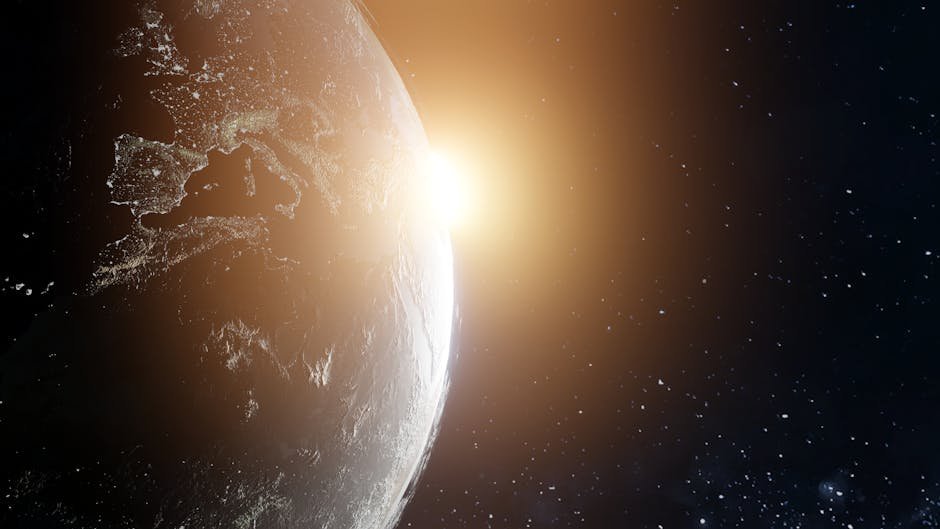
If you think we’ve already figured out how our own cosmic backyard works, you’re in for a surprise. Even after decades of robotic missions, powerful telescopes, and high-precision measurements, our solar system still behaves in ways that don’t quite add up. Some of the weirdest mysteries aren’t in distant galaxies – they’re orbiting the same star you see every day.
In this tour, you’ll walk through seven real puzzles that keep planetary scientists awake at night. You’ll see where the evidence is strong, where it’s frustratingly thin, and where multiple explanations are still on the table. Along the way, you’ll get a feel for how science actually deals with the unknown: not by pretending to have answers, but by poking, measuring, and arguing until nature finally gives up a clue.
1. The Sun’s Mysteriously Super‑Hot Corona
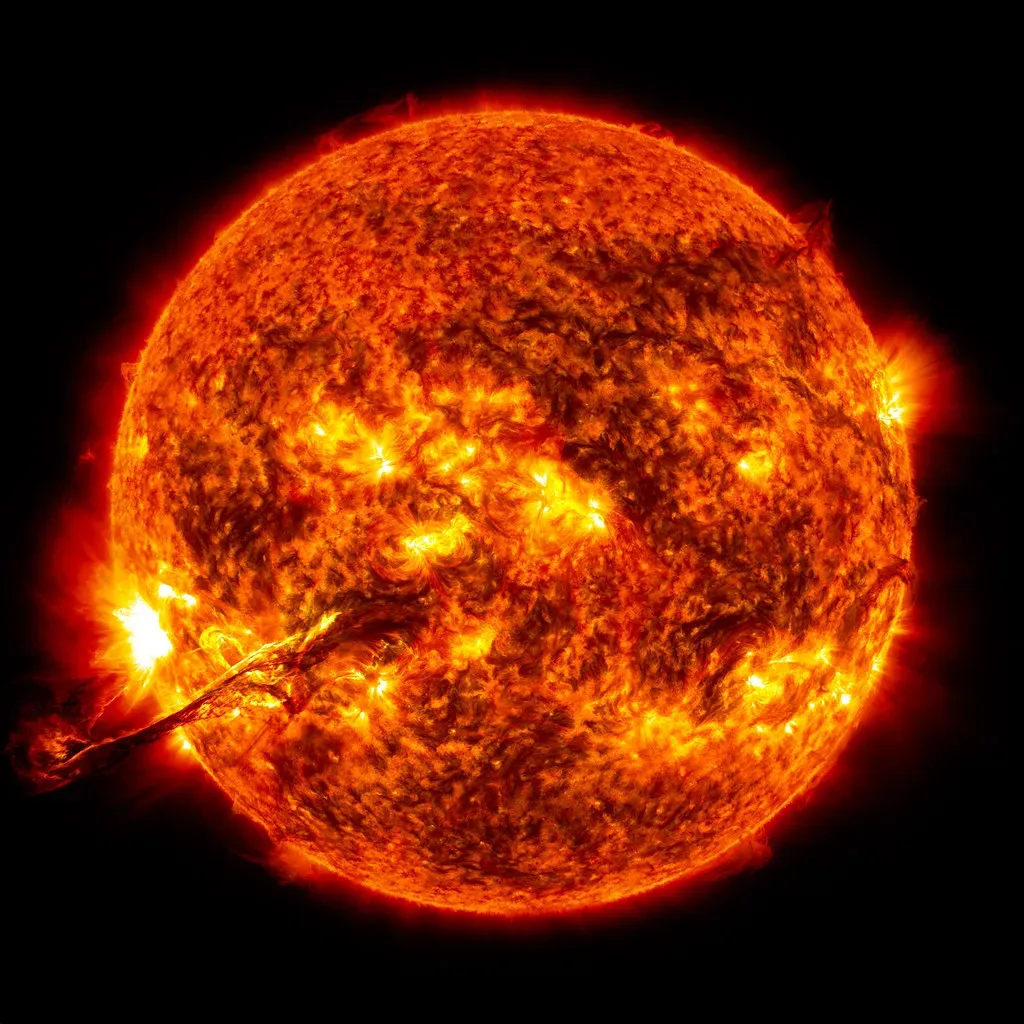
Imagine standing near a campfire and realizing the air several meters above the flames is far hotter than the fire itself. That’s basically what you’re dealing with when you look at the Sun’s outer atmosphere, called the corona. The visible surface of the Sun sits at roughly a few thousand degrees Celsius, but the corona above it soars into the millions of degrees, and you’re left with a simple but brutal question: how can a layer farther from the energy source be that much hotter?
You can think of it as an upside-down kitchen: the stove stays warm, but the ceiling vents are blisteringly hot. Space missions like the Solar Dynamics Observatory and the Parker Solar Probe are trying to catch this heating process in the act. You’ll hear about possible culprits, like twisting magnetic fields snapping and reconnecting, or tiny wave-like disturbances in the plasma that dump energy into the corona, but there’s no single, fully tested answer yet. You’re watching a live detective story play out only one star away.
2. The Pioneer Anomaly: A Tiny Push from Nowhere
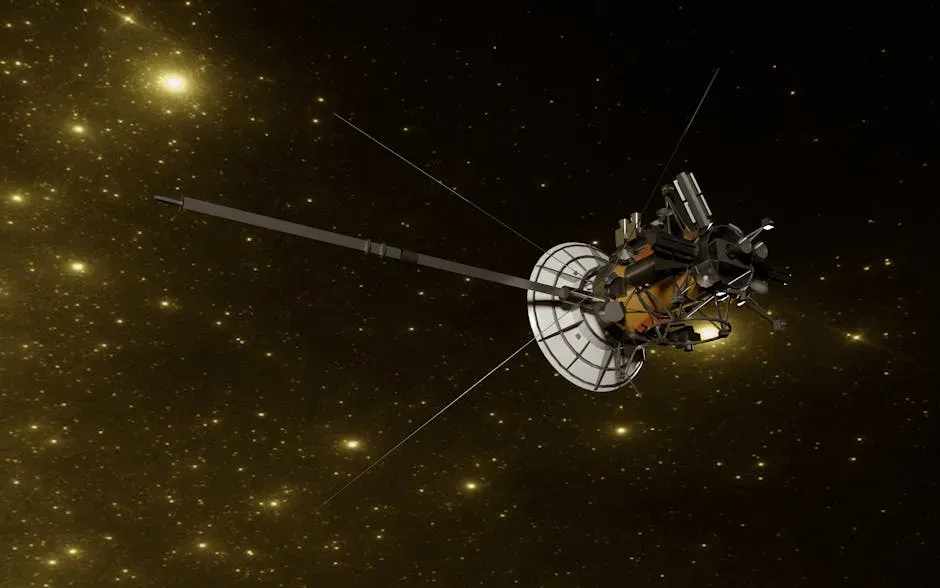
When you send a spacecraft out into the deep, you track it obsessively, because every nudge from the Sun, planets, and its own engines matters. With the Pioneer 10 and 11 probes, scientists noticed something strange: both spacecraft seemed to be experiencing a tiny, constant acceleration toward the Sun that equations didn’t predict. If you were navigating one of these probes like a long-distance sailor, it would feel like a faint, stubborn headwind that you couldn’t account for.
A lot of careful work suggested that heat from the spacecrafts’ own power systems, radiating unevenly, might act like a minuscule thruster and explain much of this effect. You can picture a warm object in space gently “pushing” itself by leaking more heat in one direction than another. Still, the whole episode is a good reminder for you that even small discrepancies in motion can set off alarm bells about gravity, dark matter, or new physics. Today, the consensus leans toward mundane thermal forces, but the anomaly trained you to look very hard at tiny deviations rather than sweeping them under the rug.
3. Saturn’s Hexagon: A Six‑Sided Storm at the Pole
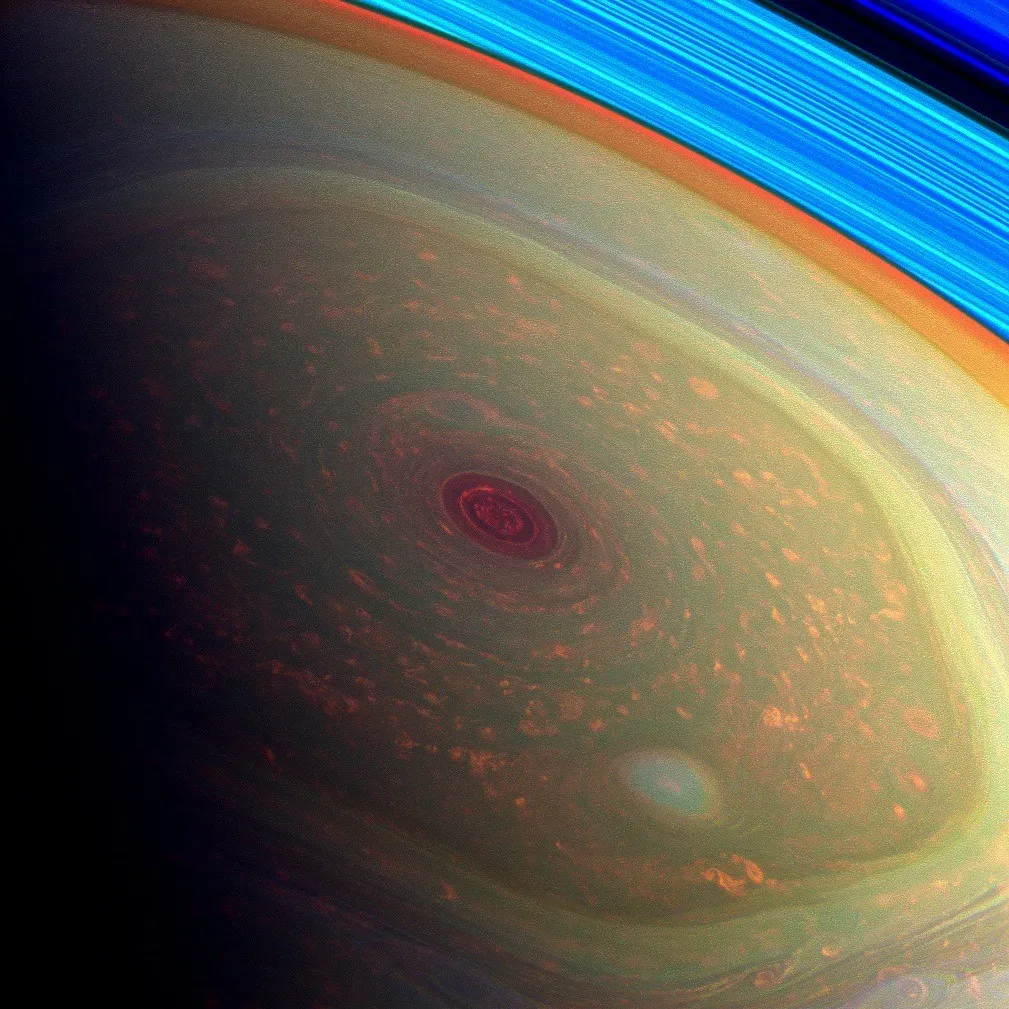
When you first see images of Saturn’s north pole, the six-sided shape almost looks fake, like a graphic designer traced a geometric pattern over the clouds. But that hexagon is real: a huge, persistent jet stream circling the pole, maintaining crisp, straight “edges” in a world where you’d normally expect swirls and curves. If you’re used to seeing hurricanes and spirals on Earth, a planetary-scale hexagon feels like nature breaking its own aesthetic rules.
Laboratory experiments and computer simulations show that under certain conditions, rotating fluids can naturally settle into polygonal shapes. That helps you understand that the hexagon is probably a consequence of fluid dynamics rather than some artificial construct. Still, the details – why it has been so stable for decades, why it’s specifically six-sided, and how it responds to Saturn’s seasons – remain open. You’re looking at weather taken to an almost architectural extreme, a storm that behaves less like a cloud and more like a giant, living gear.
4. Enceladus and Europa: Oceans That Shouldn’t Be So Alive
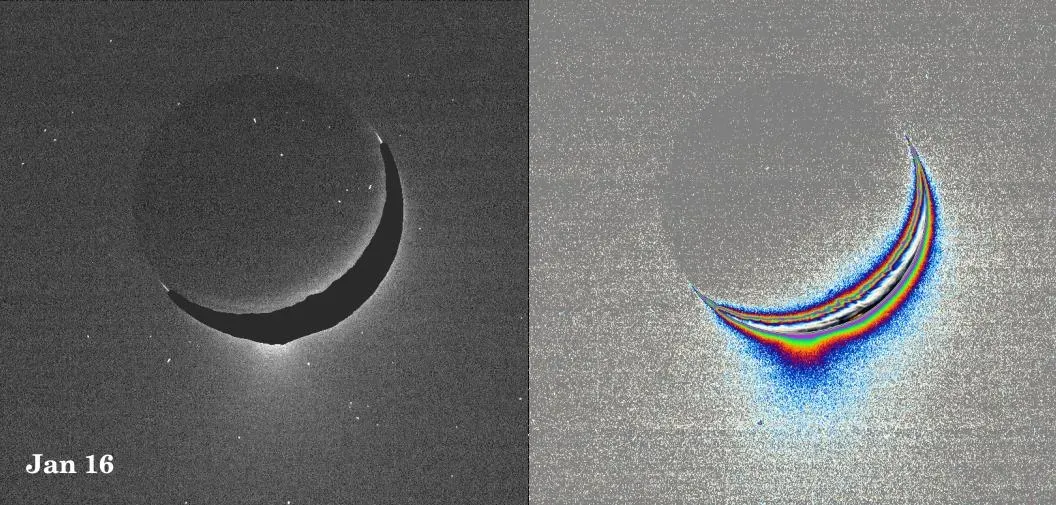
On paper, icy moons like Enceladus (around Saturn) and Europa (around Jupiter) should be cold, quiet, and geologically boring. Instead, when you look closely, you find evidence that both hide global liquid water oceans beneath thick ice shells. Enceladus even sprays water-rich plumes hundreds of kilometers into space, laced with organic molecules and tiny grains that hint at complex chemistry happening in the dark.
The mystery for you is twofold: how do these worlds stay warm enough for liquid water over billions of years, and what exactly is going on in those oceans? Tidal forces from their giant host planets, flexing and kneading their interiors, probably supply much of the heat, but the efficiency and long-term stability of this process are still tricky to pin down. When you add in signs of possible hydrothermal activity on the seafloor, you’re forced to ask an uncomfortable question: if conditions under those shells look a bit like early Earth’s oceans, are you staring at potential habitats for life that should not, by naive expectations, exist so far from the Sun?
5. Uranus: The Tipped, Featureless Oddball
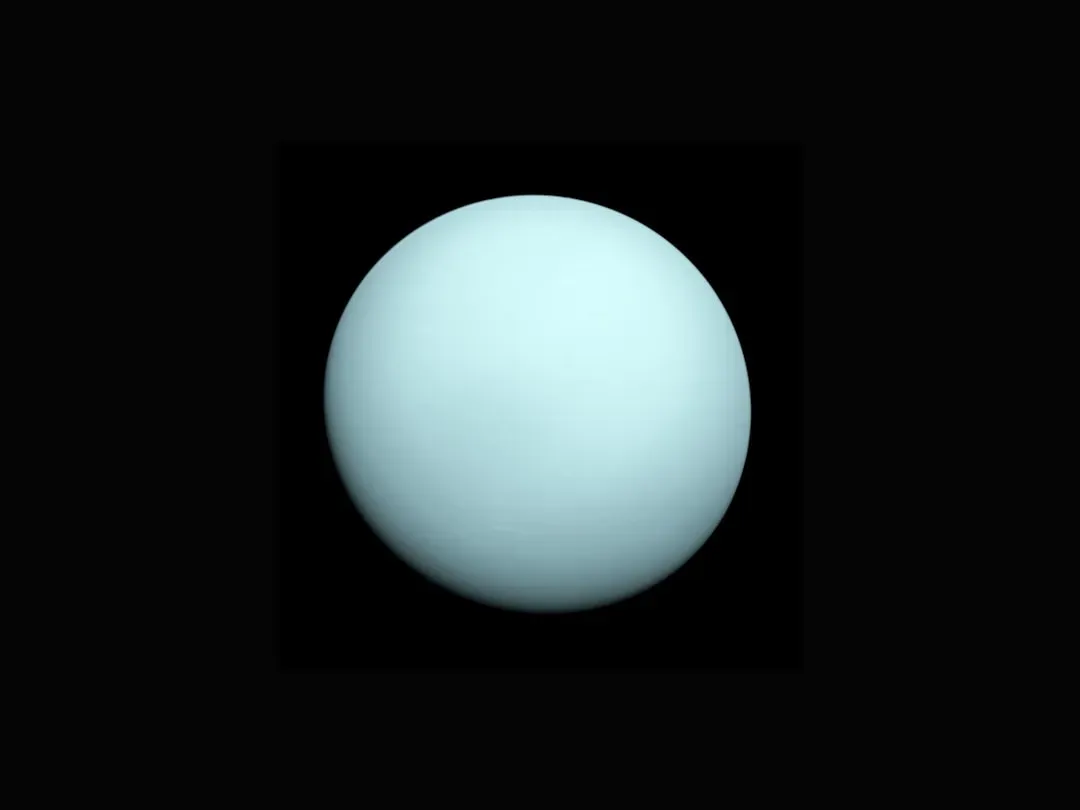
If you lined up the planets, Uranus would instantly stand out as the weird cousin. While most planets spin more or less upright relative to their orbit, Uranus is tilted so far over that it effectively rolls around the Sun on its side. One of the simplest explanations you might reach for is a massive ancient impact that knocked it over, but when you look for direct, unambiguous evidence of such a collision, things get murky very quickly.
To make things stranger, Uranus seems oddly quiet and bland compared to Neptune, which is similar in size but sports more dramatic weather and internal heat. You’re left wondering whether something about Uranus’s interior – maybe its layered structure or composition – is trapping heat in a way you don’t yet understand. Because only one spacecraft has flown by Uranus, back in the 1980s, you’re essentially trying to reconstruct a complex crime scene from a handful of grainy photos and sparse data. The planet’s tilt and muted personality advertise that something dramatic happened, but you’re still short on definitive clues.
6. Planet Nine and the Odd Orbits Beyond Neptune
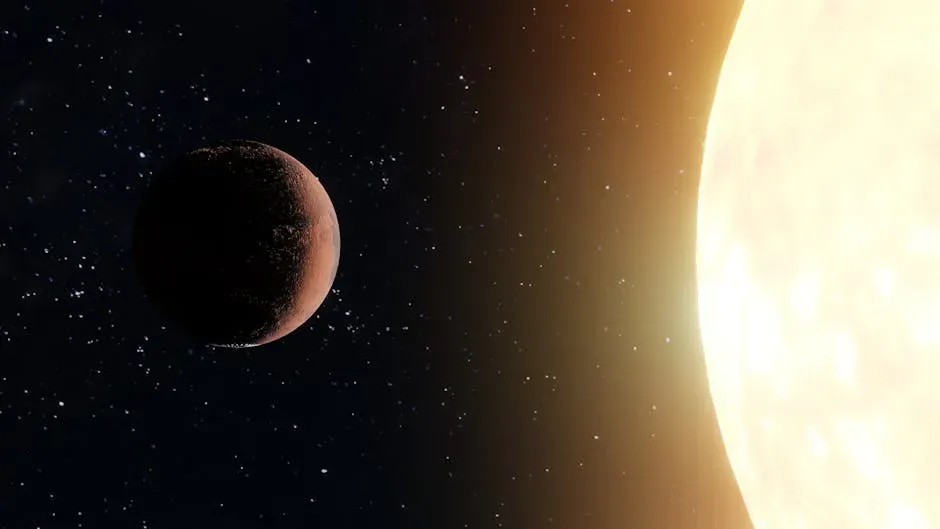
When you examine the orbits of some icy bodies far beyond Neptune, a pattern seems to peek through the chaos. Several of these distant objects have orbits that appear oddly clustered, as if some unseen hand were gently herding them into similar paths. One bold idea is that there might be an undiscovered planet, sometimes called Planet Nine, several times Earth’s mass, lurking on a distant, elongated orbit and tugging these objects over millions of years.
Here’s the catch for you: the evidence is statistical and subtle, and it’s delicate enough that it could be influenced by where and how telescopes have searched the sky. Some researchers argue that observational bias can explain much or all of the pattern, while others maintain that the clustering is too strong to dismiss that easily. Powerful surveys are still scanning the outer solar system, and you’re living through the part of the story where either a new planet will be pinned down, or a clever explanation will show you that your eyes were fooled by incomplete data. Until that happens, you have a real, unresolved tension between the math and the sky.
7. The Faint Young Sun Paradox: Early Earth Should Have Been Frozen
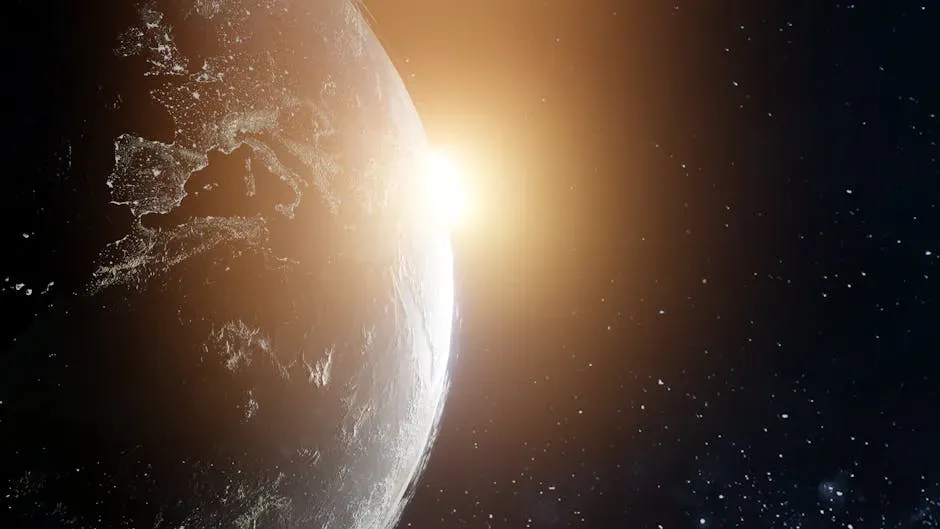
When you run the clock back billions of years and model the Sun’s evolution, you find that it should have been significantly dimmer in its youth. A weaker Sun should have meant a frozen Earth, yet the geological record tells you there was liquid water and, eventually, early life. This clash between a chilly theoretical Sun and a wet, lively early Earth is known as the faint young Sun paradox, and it forces you to juggle multiple factors at once instead of trusting any single number blindly.
You can imagine this like a dimmer light bulb somehow keeping a room comfortably warm, which means the insulation and heating in the room must have been different. Stronger greenhouse gases in Earth’s early atmosphere, changes in cloud cover, and different surface properties are all on the table as partial answers. Mars adds another twist, because it shows ancient signs of flowing water under the same faint Sun, raising more questions about how early atmospheres really behaved. You’re left piecing together clues from rocks, isotopes, and climate models, trying to reconcile a star that should have been too feeble with planets that clearly hosted liquid water anyway.
Across all these mysteries, you’re not dealing with wild speculation so much as careful frustration: there is data in hand, but the current pieces don’t yet snap into one simple picture. As new missions head to the Sun, the outer planets, and the frozen worlds at the edge of the solar system, you’ll be able to test which ideas survive and which ones quietly fade away. For now, the unanswered questions are a reminder that even after centuries of astronomy, your own cosmic neighborhood still keeps secrets. Which of these puzzles would you most like to see cracked in your lifetime?