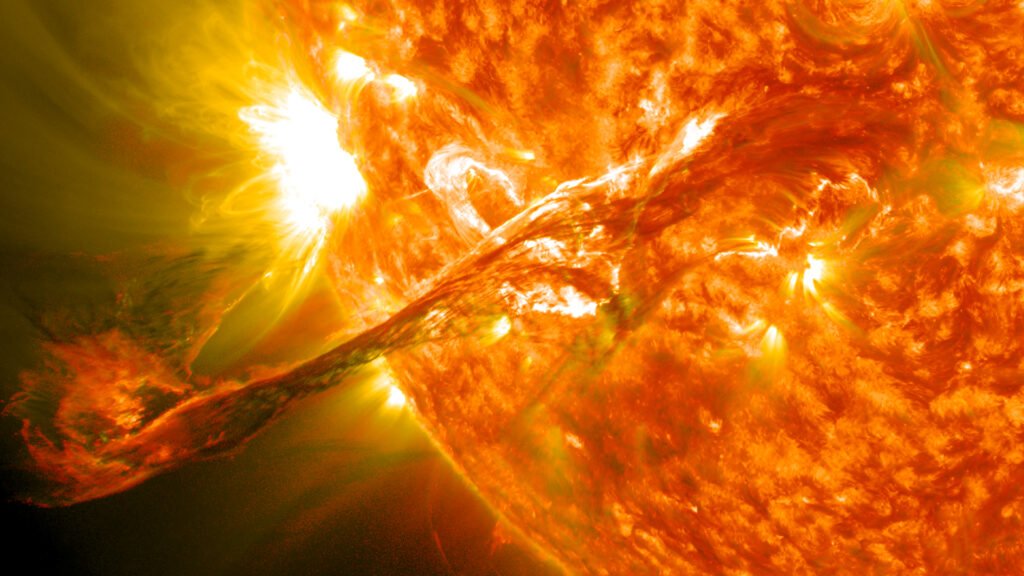
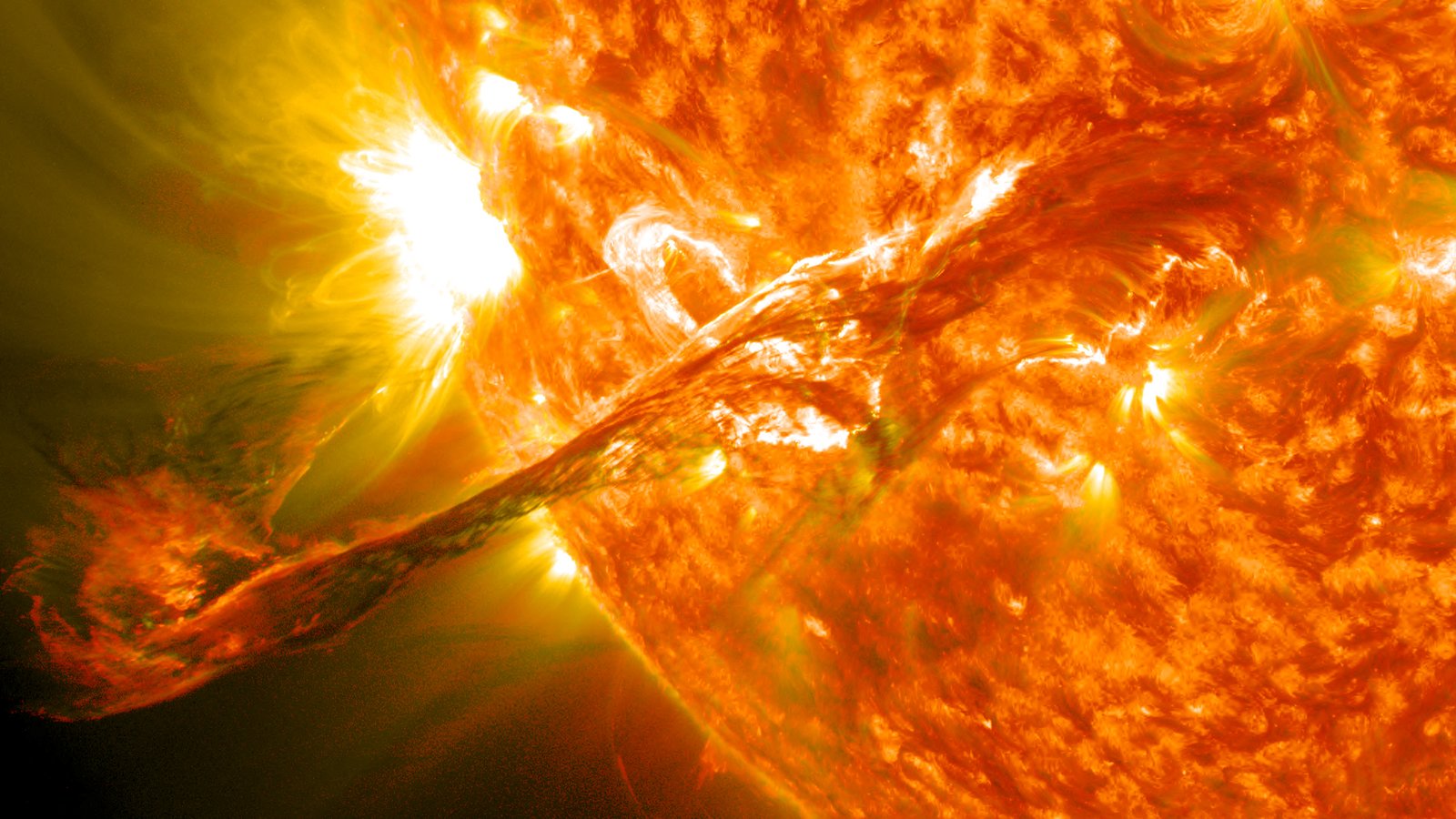
A Surprise Burst from AR4392 (Image Credits: Upload.wikimedia.org)
A routine day of solar observing transformed into an extraordinary event for a dedicated enthusiast last month. On March 18, 2026, backyard astronomer DudeLovesSpace recorded an M2.7-class solar flare bursting from sunspot region AR4392. The footage, paired with sonified radio emissions, offered a haunting soundscape that underscored the Sun’s volatile magnetic dynamics.[1][2]
A Surprise Burst from AR4392
Sunspot AR4392 emerged on March 12, 2026, and remained visible for two weeks before rotating out of Earth’s view. During that period, it generated several flares, including weaker C-class events and two prior M-class outbursts. The M2.7 flare on March 18 stood out as the region’s most intense, lasting approximately 16 minutes in real time.[1]
DudeLovesSpace described the moment vividly: “What started as a nice clear, cloudless observing day quickly turned into something special. I didn’t expect to get this lucky, but this giant flare erupted from sunspot AR4392 right in view!” Ground-based telescopes and radio instruments detected the eruption’s visual spectacle and radio wavelengths, which later formed the basis for the audio representation.[1]
This capture highlighted the accessibility of solar observation. Amateur setups, equipped with specialized filters and cameras, now rival professional tools in delivering high-resolution imagery of solar phenomena.
Decoding the ‘Sound’ Through Sonification
The eerie audio accompanying the flare video did not originate from acoustic waves traveling through space. Instead, it resulted from data sonification, a process that converts non-auditory data – here, radio emissions – into perceptible sound. Ground-based radio instruments recorded wavelengths emitted during the flare, which DudeLovesSpace transformed into an unsettling auditory track.[1]
Sonification accelerates analysis by engaging human hearing, which excels at detecting patterns. Scientists use it to uncover subtle features in complex datasets that visuals alone might miss. In this case, the sped-up audio evoked a horror-like quality, amplifying the flare’s raw energy for public appreciation.[2]
- Radio waves from flares span frequencies detectable on Earth.
- Sonification maps intensity and frequency to pitch and volume.
- The result mimics a cosmic disturbance, though the Sun’s actual ‘voice’ would resemble a constant, deafening roar if audible in vacuum.
- Amateurs increasingly contribute such data to broader solar monitoring efforts.
Sunspots and the Solar Cycle’s Rhythm
Sunspots serve as indicators of the Sun’s 11-year activity cycle. Regions like AR4392 feature intensified magnetic fields where field lines twist and reconnect, unleashing flares. The current cycle peaked at solar maximum last year, marked by frequent sunspots, flares, and coronal mass ejections. Activity has since declined as the Sun approaches minimum.[1]
Flare strength follows a logarithmic scale:
| Class | Peak Flux (W/m²) | Potential Impact |
|---|---|---|
| A | <10⁻⁷ | Minimal |
| B | 10⁻⁷ to 10⁻⁶ | Low |
| C | 10⁻⁶ to 10⁻⁵ | Moderate radio blackouts |
| M | 10⁻⁵ to 10⁻⁴ | Regional disruptions |
| X | >10⁻⁴ | Widespread effects |
The M2.7 event, while not extreme, illustrated ongoing magnetic complexity even in a waning cycle.[1]
Rising Role of Independent Observers
Backyard astronomers like DudeLovesSpace fill critical gaps in professional coverage. Their real-time captures complement satellite data from missions such as NASA’s Solar Dynamics Observatory. Independent efforts democratize solar science, providing diverse angles and rapid dissemination of observations.
This flare’s documentation underscored their value. Shared videos garnered widespread attention, sparking public interest in heliophysics. Such contributions aid in tracking space weather, which can affect satellites, power grids, and communications when Earth-directed.
Communities of enthusiasts now monitor sunspots daily, logging data that feeds into global databases. Their work reveals how citizen science propels discoveries in an era of advancing telescope technology.
Key Takeaways
- Sonification turns invisible radio bursts into audible experiences, enhancing data interpretation.
- Sunspot AR4392’s M2.7 flare on March 18 exemplified post-maximum solar behavior.
- Amateur observers increasingly drive solar monitoring alongside space agencies.
This rare audiovisual record reminds us of the Sun’s restless nature, a star whose outbursts shape space weather far beyond our atmosphere. As the solar cycle evolves, such captures will remain vital for vigilance. What are your thoughts on hearing the Sun’s ‘voice’? Share in the comments below.