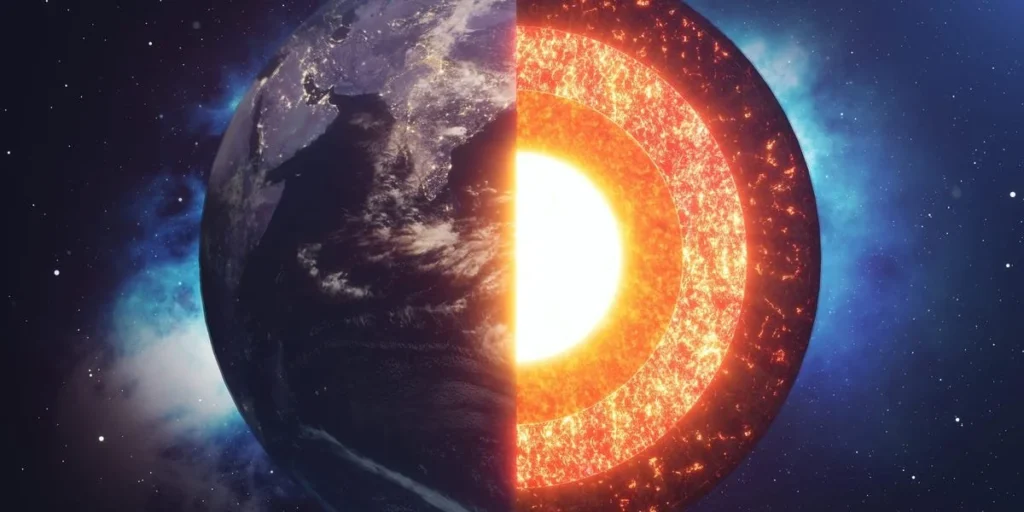

If you could peel the Earth like an orange, you’d reveal a world underneath that feels almost alien. You never see it, you never touch it, but the core is quietly running the show: driving magnetic fields, feeding volcanoes, and even nudging the length of your day. For most of human history it was pure mystery, but in the last few decades you’ve started to get a clearer, stranger picture of what is happening thousands of miles below your feet.
What makes it so exciting right now is this: every time scientists think they have the core figured out, new data says otherwise. The inner core might rotate differently from the rest of the planet, the outer core is roiling like a cosmic lava lamp, and deep structures the size of continents sit at the boundary between the core and the mantle. As you follow what researchers are uncovering, you realize the ground you stand on is not stable at all – it is part of a living, changing engine that you are only just beginning to understand.
You Live On A Metal World Wrapped In Rock
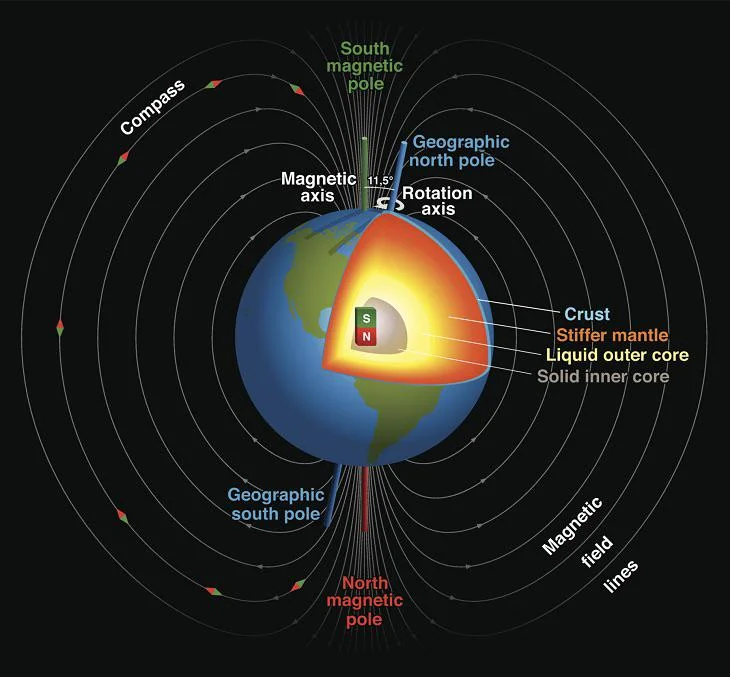
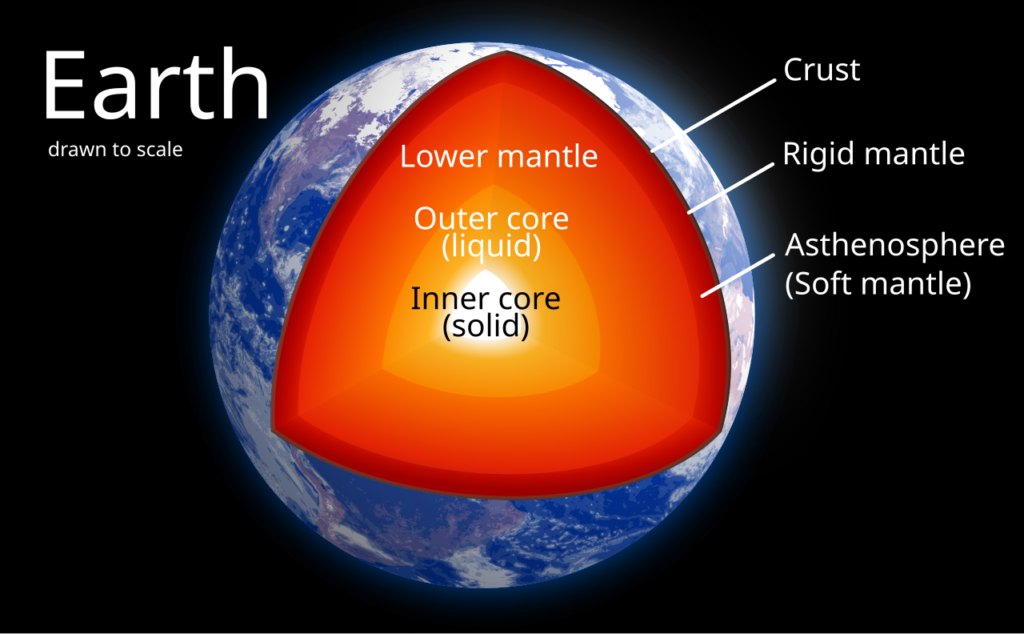
When you picture Earth, you usually imagine blue oceans and green continents, but from a planetary perspective you actually live on a metal world coated in stone. At the very center, roughly three thousand nine hundred miles under your feet, sits a solid inner core made mostly of iron and a bit of nickel. Around that is a churning outer core of molten metal, then a thick rocky mantle, and finally the thin, brittle crust you call home.
You can’t dig anywhere near the core – your deepest mines and boreholes barely scratch the crust – so everything you know about it comes from indirect clues. Seismic waves from earthquakes bend, slow, or speed up as they pass through layers with different properties, letting scientists reconstruct the inside of the planet the way a doctor reads an ultrasound. When you stand on solid ground, it feels firm and final, but in reality you are balancing on a wafer of rock floating on top of a vast, layered metal-and-stone interior that is incredibly dynamic.
The Inner Core Is Solid, But Not Simple
It is tempting to imagine the inner core as a perfect metal ball, but the more closely you look, the more complicated it becomes. At pressures millions of times higher than what you experience at the surface and at temperatures hotter than the Sun’s visible surface, iron behaves in ways that you would never expect from holding a piece of steel in your hand. You are dealing with atoms packed so tightly that they form exotic crystal structures and align in directions that change how seismic waves travel through them.
Evidence suggests the inner core is not uniform: one side might be growing faster than the other, and there may be layers within it, almost like a core inside the core. When you read that waves move faster from pole to pole than across the equator, you are seeing hints that the iron crystals line up in preferred directions. On human scales it feels like nothing is happening, but on geologic timescales the inner core is slowly changing shape, cooling, and crystallizing, and those tiny shifts ripple outward to affect the magnetic field and even the behavior of the mantle above it.
The Outer Core Flows Like A Planet-Sized Dynamo
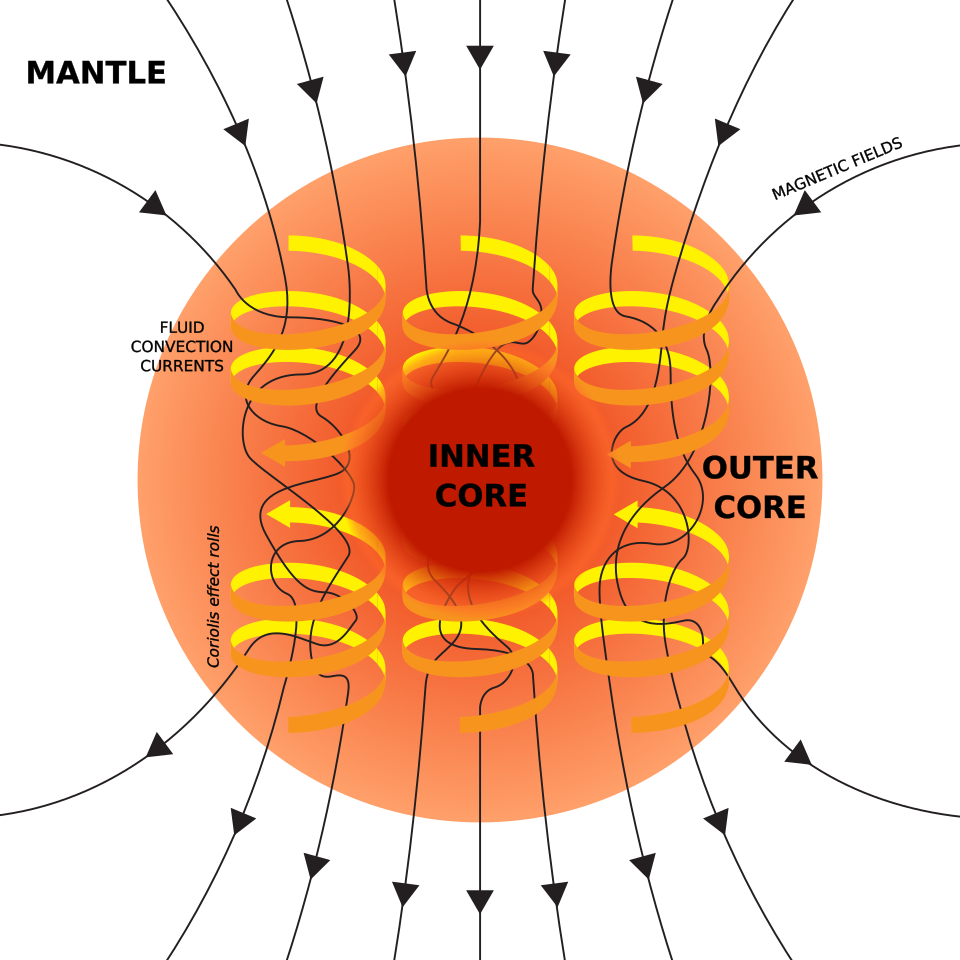
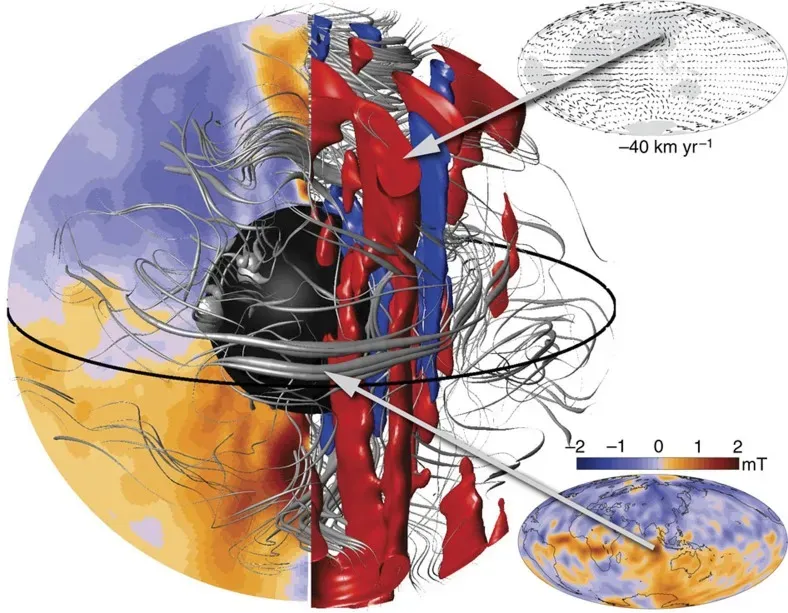
Just outside the inner core, the iron is liquid and in constant motion, and this is where things get wild. You can imagine the outer core as a gigantic ocean of molten metal, thousands of miles deep, swirling because of heat escaping from below, lighter elements rising, and the whole planet’s rotation twisting everything into spirals. This movement of electrically conducting fluid turns your planet into a dynamo, continuously generating the magnetic field that shields you from harmful solar and cosmic radiation.
You feel that field every time a compass needle points north or when auroras dance in the sky, but you rarely think about the raging metallic currents that create it. The flows in the outer core are not smooth; they form jets, vortices, and patches of stronger and weaker magnetism that drift over time. As those patterns evolve, the magnetic field flickers, wobbles, and sometimes weakens, leaving you clues that deep below, the core is reorganizing itself in ways that could eventually trigger major geomagnetic changes.
The Magnetic Field You Rely On Is Surprisingly Unstable
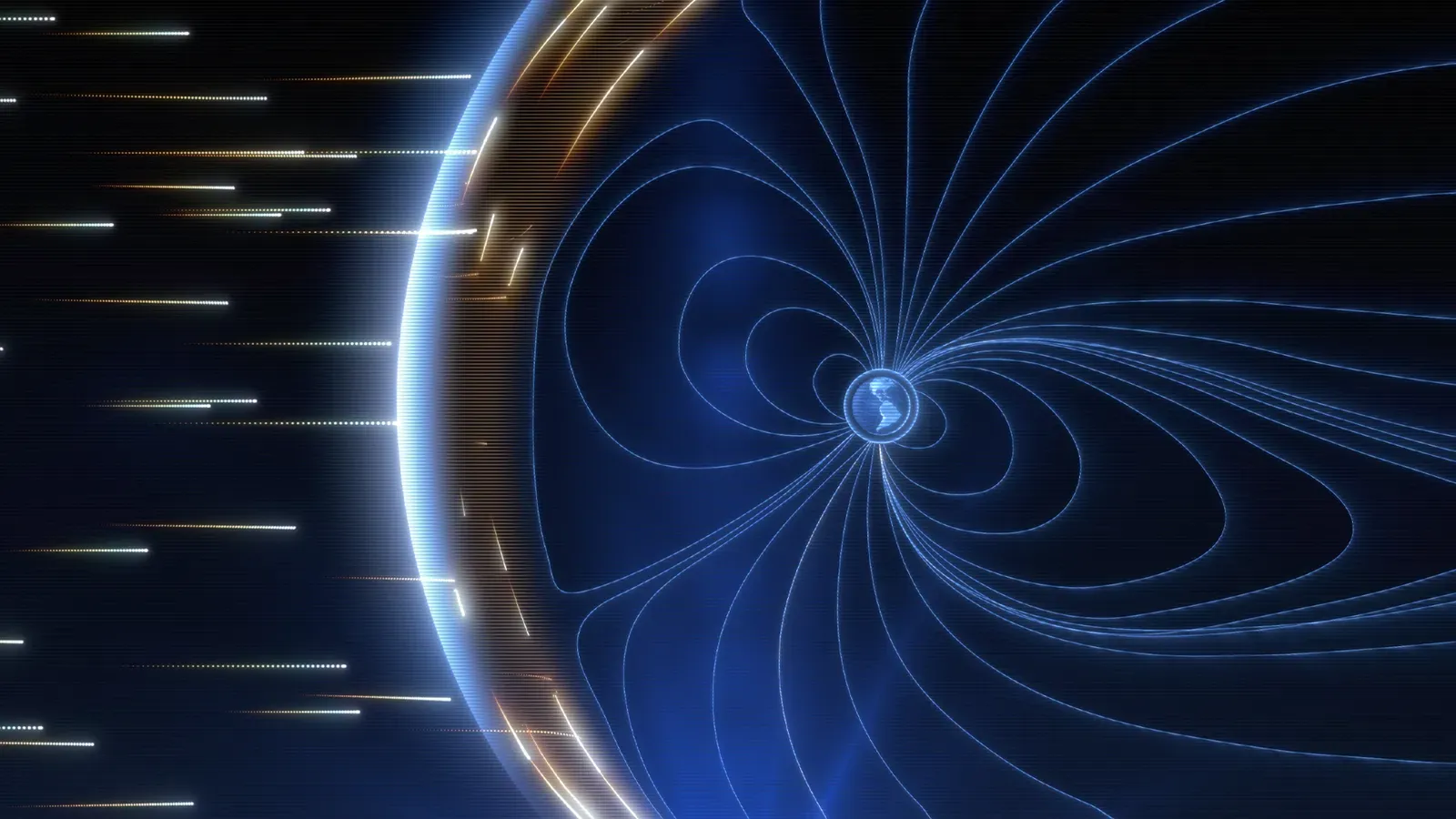
If you grew up thinking of Earth’s magnetic field as a steady, dependable force, the core has a surprise for you. Geologic records show that over many thousands of years the magnetic poles wander and sometimes even flip, with north becoming south and vice versa. When you look at volcanic rocks that cooled long ago, the tiny magnetic grains inside them often point in directions that make sense only if the field was dramatically different from today’s.
These reversals do not happen on a schedule, and they are not gentle tweaks; they are signs that the core’s dynamo can reorganize itself on a planetary scale. You live during a period where the magnetic field has been weakening compared with historical measurements, and regions like the South Atlantic show unusually low field strength. That does not mean an imminent catastrophe, but it does remind you that the shield you depend on is a by-product of a restless metallic ocean, not a permanent fixture of the planet.
Hidden Structures At The Core–Mantle Boundary Rewrite The Map
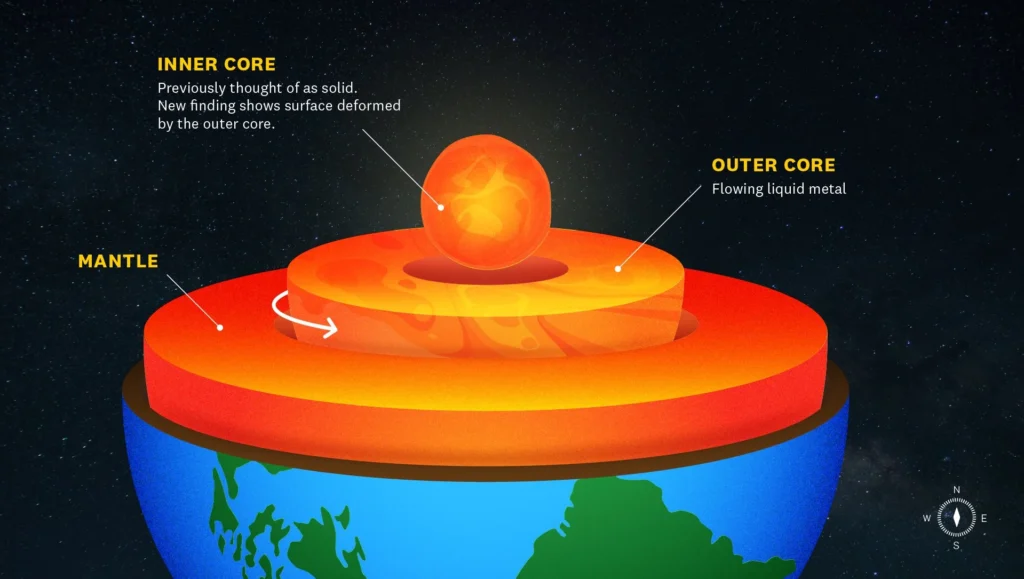
Between the flowing outer core and the overlying mantle, there is a mysterious transitional zone that is becoming one of the most intriguing frontiers in Earth science. Seismic studies keep revealing huge regions where waves slow down dramatically, suggesting strange, ultra-dense structures sitting on top of the core. Some of these blobs are comparable in size to continents, lurking thousands of miles below places like the Pacific Ocean and Africa, reshaping how you think about the internal geography of the planet.
These hidden structures might be piles of ancient oceanic crust that sank and accumulated, or they could be areas where composition and temperature differ sharply from their surroundings. Whatever they are, they likely influence how heat escapes from the core, where mantle plumes rise, and where super-volcanoes eventually appear at the surface. When you hear about a hot spot chain like Hawaii or Yellowstone, you may actually be seeing the long, slow echo of these deep features guiding molten rock from the core–mantle boundary all the way up to where you stand.
The Core May Spin At A Different Pace Than The Rest Of Earth
One of the strangest ideas to emerge in recent years is that the solid inner core might rotate slightly differently than the mantle and crust. By tracking subtle changes in the travel times of seismic waves over decades, researchers have found hints that the inner core sometimes speeds up relative to the surface and sometimes slows down, almost like a giant metal flywheel drifting in and out of sync. As someone on the surface, you do not feel this directly, but it is a reminder that your planet is not a rigid, locked-together sphere.
The forces that couple the core to the rest of Earth are complex: gravitational tugs, electromagnetic interactions, and friction at the boundary all play a role. Changes in that coupling could slightly adjust the length of your day over long periods, shifting it by tiny fractions of a second. To you, that sounds insignificant, but for a planet, it is another sign that deep internal processes can reach all the way out to the rhythms of your daily life, even if you never notice it without extremely precise instruments.
You Depend On The Core’s Heat More Than You Realize
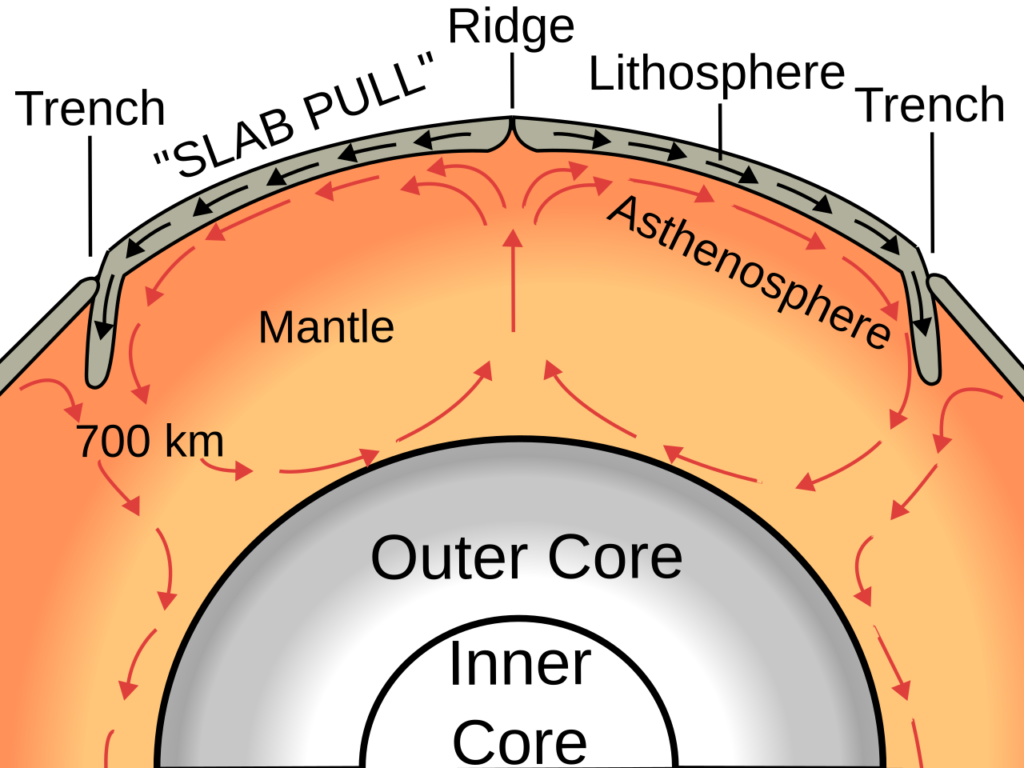
When you feel warmth on your skin, you think about sunlight, but a steady flow of heat also rises from within your planet, and much of it comes from the core. Radioactive elements in the mantle and crust contribute, but the slow cooling and crystallization of the core releases enormous amounts of energy over billions of years. That heat keeps parts of the mantle soft enough to flow, drives plate tectonics, and powers many of the volcanic and mountain-building processes that shape the surface you walk on.
If the core were already cold and dead, you would likely live on a very different world: fewer earthquakes and volcanoes, but also a weaker magnetic field, thinner atmosphere, and a much less dynamic climate over geologic timescales. You benefit from this invisible engine every time a volcanic eruption creates new land, or when plate shifts recycle carbon between the atmosphere and the deep Earth. Without the core’s long, slow burn, your planet would lose much of the creative chaos that makes it habitable.
Peering Into The Core’s Future Helps You Understand Your Own
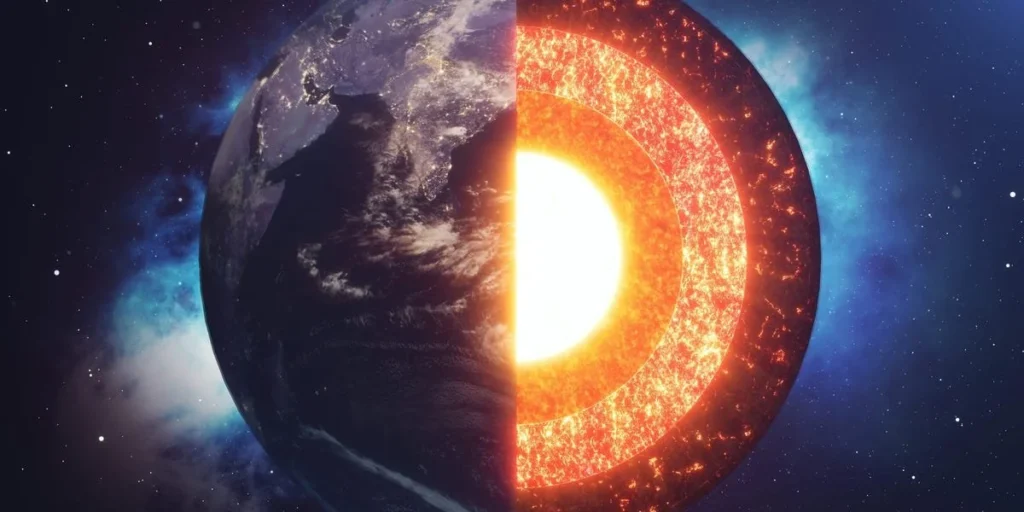
No one can drill to the core or watch it directly, so you have to rely on clever detective work: seismic tomography, lab experiments that squeeze metals to insane pressures, and computer simulations that try to mimic conditions deep inside Earth. As those methods improve, the picture you get of the core becomes more detailed, but also more surprising, raising new questions about how long the dynamo will run and how the planet will evolve. When you hear about research on exoplanets and their magnetic fields, you are really hearing echoes of the same puzzle you face at home.
Over very long timescales, the core will continue to cool and the solid inner core will grow, changing how the dynamo works and how strong your magnetic shield can be. Someday, far beyond any human lifetime, that process may slow enough that Earth’s field fades, much like what appears to have happened on Mars. Thinking about that distant future can feel unsettling, but it also gives you perspective: right now, you live at a fortunate moment on a geologically active, magnetically protected world, powered from within by a hidden engine that still has many secrets to reveal.
In the end, the most humbling part is realizing how much of your everyday life rests on something you will never see. Your compass, your auroras, your continents, even the length of your day are all downstream effects of a metal heart quietly beating at the center of the planet. The next time you feel solid ground under your feet, you might remember that, far below, the core is swirling, crystallizing, and shifting in ways you are only just starting to decode. Which of those hidden changes do you think will surprise you the most when you finally uncover them?