You have probably had a moment where you thought, if you had made one different decision, your entire life would look completely different. The multiverse theory takes that feeling and turns it into a mind-bending possibility: maybe somewhere, in another universe, another you did choose differently. Instead of just being a fun idea for science fiction, versions of the multiverse actually show up in serious physics, from quantum mechanics to cosmology, and they force you to rethink what reality might even mean.
As you explore this idea, you run into a mix of hard equations, deep philosophy, and some very humbling limits on what you can ever prove. You are not just asking whether there are other worlds; you are asking what it means to be you if there could be countless copies making different choices. The catch is that, as far as anyone knows today, the multiverse is an open question, not a confirmed fact. Still, by understanding the main scientific ideas behind it, you can separate grounded possibilities from wild exaggerations and see why so many physicists take the multiverse seriously – even if they argue fiercely about what it really implies.
How the Multiverse Idea Slipped In Through Quantum Physics
When you first hear about the multiverse, it might sound like something a novelist dreamed up, but it was quantum physics that opened the door. In quantum mechanics, particles do not behave like tiny billiard balls; they exist in fuzzy states of possibilities until you measure them. You are told that a particle can be in several possible states at once, and only when it is measured does one outcome show up for you. That strange behavior is not a side detail – it is at the heart of how the microscopic world works.
One way to deal with this weirdness is the “many-worlds” interpretation. In that picture, the universe does not pick one outcome and throw away the rest; instead, every possible outcome becomes real in its own branching version of the universe. When you measure a particle, you do not force it to choose; you just find yourself in the branch that matches that outcome, while another you finds the opposite result elsewhere. In this view, the multiverse is not an optional add-on but a direct consequence of taking quantum math literally, even though you never get to hop between those branches.
Quantum Choices and the Wild Idea of Infinite Yous
If you follow the many-worlds line of thinking, you end up with a pretty head-spinning picture of yourself. Every time you face a situation with multiple possible outcomes – down to the quantum level – the combined system of you plus the world supposedly branches. In one branch, you send that risky text; in another, you delete it. In one, you take the job offer; in another, you stay put. You do not feel the splitting, of course. In each branch, you feel like a single, continuous person with a single trail of memories.
Now stretch that forward and backward across your whole life and across all the particles around you. You get a world in which there are unimaginably many versions of you, each following different paths, from tiny differences to life-changing divergences. Some scenarios sound romantic or terrifying: somewhere, a you who never met your closest friend, or a you who never left your hometown. The important thing to remember, though, is that these versions are not ghostly doubles peeking over your shoulder; they are sealed off by the very structure of quantum theory, with no known way for you to talk to or trade places with them.
Cosmic Inflations and Bubble Universes Beyond Your Horizon
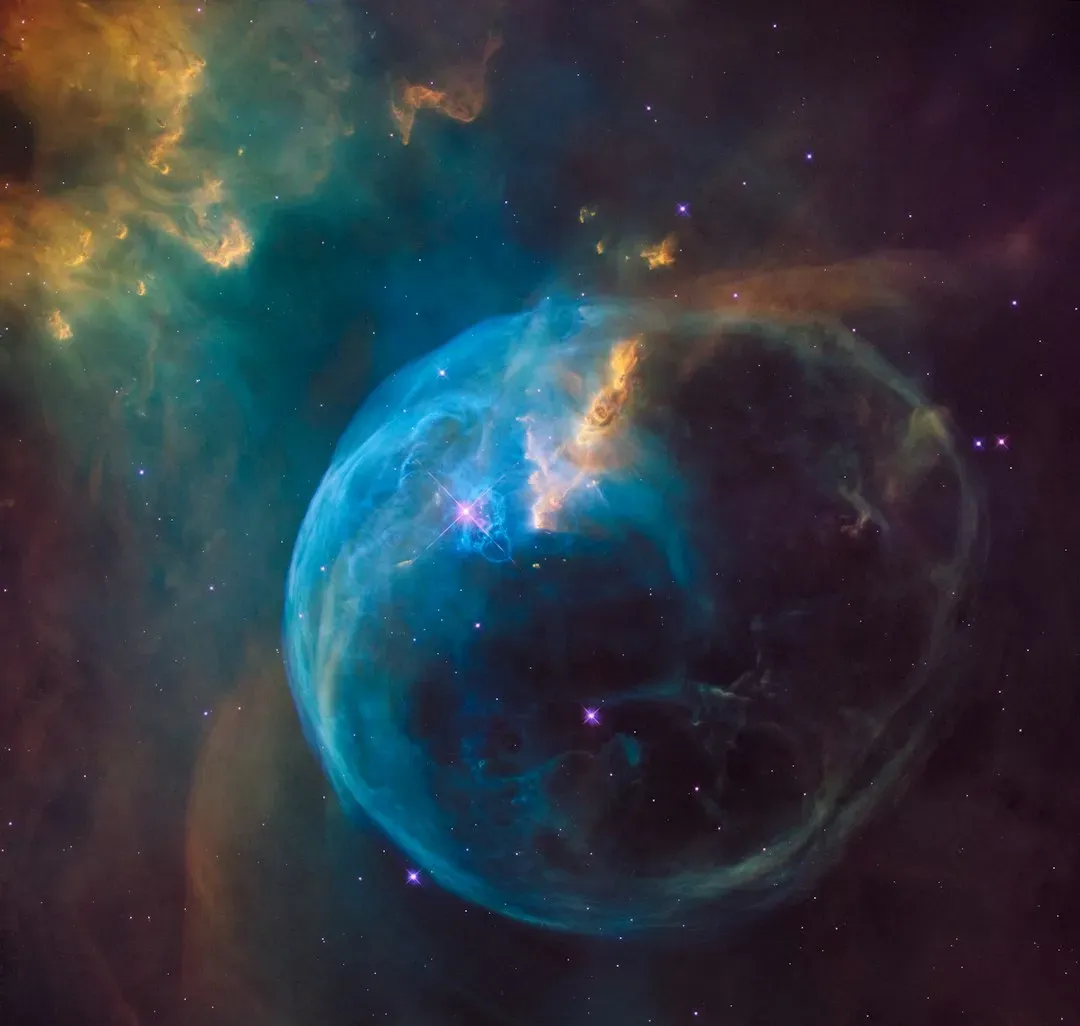
Quantum physics is not the only road to a multiverse; cosmology gives you another route. In modern models of the early universe, there is an idea called cosmic inflation, where space itself expanded at an unbelievably fast rate shortly after the Big Bang. Under some versions of this theory, inflation does not stop everywhere at once. Instead, it keeps going in different regions, producing separate “bubble” universes with their own patches of space and time. You live in one such bubble, but there could be many others beyond what you can ever see.
Each bubble universe could, in principle, have different physical conditions: slightly different particles, forces, or patterns of matter. You can picture it as foam on a cosmic scale, with your observable universe just one bubble in a much larger sea. Even if those other bubbles exist, you cannot visit them, because the space between is expanding and remains unreachable at the speeds you are limited to. So while the math behind inflation is grounded in real cosmological research, talk about other bubbles remains indirect: you infer them from the way your own universe looks, not from direct observation of any neighboring realm.
Are There Really Copies of You, Or Is That Just Science Fiction?
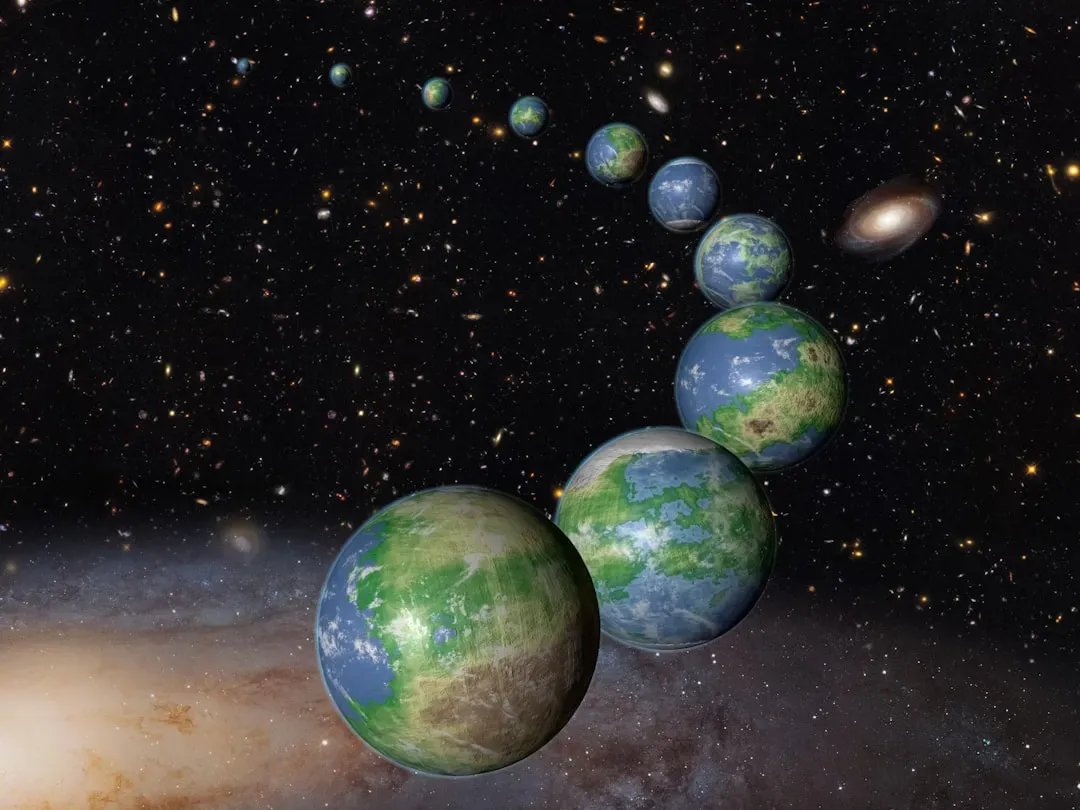
When people say there are infinite versions of you out there, they are usually blending several different multiverse ideas into one dramatic claim. One argument goes like this: if space is extremely large or even infinite, and the laws of physics are the same everywhere, then matter can only be arranged in so many ways. Eventually, far beyond what any telescope could see, regions of space would repeat. In that scenario, you might get another region where a person appears with the same DNA, same memories, maybe even the same favorite song you hum in the shower.
This is a bold extrapolation, not something you can currently confirm. You do not know for sure whether space is infinite, whether conditions repeat, or how likely it is that an identical copy of you would show up. In the quantum many-worlds picture, the “copies” arise from branching outcomes rather than repeated regions of space, but you run into another problem: you have no way to compare yourself to these other versions. So, while it is fair to say that some respected theories leave room for versions of you elsewhere, claiming there are definitely infinite copies goes far beyond the solid evidence you actually have today.
What the Evidence Really Says (And What It Doesn’t)
To keep your thinking grounded, you need to separate the parts of the multiverse story that are based on tested physics from the parts that are speculative extensions. Quantum mechanics itself is extremely well tested; the equations that underlie the many-worlds idea work fantastically well in experiments. Cosmic inflation is also supported by observations of the cosmic microwave background and large-scale structure, though details are still being refined. Those are solid foundations. Where things get much shakier is when you start saying that every possible universe is out there or that your other selves are a guaranteed fact.
Right now, you do not have direct evidence of other universes. You have mathematical models that naturally produce them and observations in your own universe that are consistent with those models, but you cannot peer outside your cosmic horizon or detect a neighboring quantum branch. Some scientists argue that if a theory that predicts a multiverse also explains data you can see better than alternatives, you should still take its unseen predictions seriously. Others worry that if you can never test those predictions directly, you are drifting away from what science does best. When you weigh all this, the honest position is that the multiverse is a serious, actively discussed possibility, not an established fact.
How the Multiverse Changes the Way You Think About “You”
Even if you never know for sure whether other versions of you exist, just considering the idea pushes you to examine what identity really means. You usually think of yourself as a single, continuous thread: one body, one mind, one life story. Multiverse thinking challenges that picture with the suggestion that your mind and history could have many branches or duplicates, each as real to themselves as you are to you. It undercuts the sense that your exact combination of experiences is uniquely guaranteed.
That can feel unsettling, but it also highlights something important: what gives your life meaning may not be its one-of-a-kind status, but the way you experience and shape it from the inside. If there were another you out there reading this same line, it still would not change the fact that only you, right here, are responsible for the choices you make. The multiverse, in that sense, shrinks your cosmic centrality but deepens your personal responsibility. You are not special because you are the only version; you are special because you are the one holding the steering wheel in this particular branch.
Living Your Life Under Multiverse Possibilities
Once you let the multiverse possibility sink in, you might be tempted to shrug and say that your choices do not matter, because in some other universe, some other you will make the opposite ones. But that attitude quietly misses the point. You only ever experience one line of events: the one you are in. Whether or not other outcomes play out elsewhere, you still feel the consequences of what you do here. If you decide to call a friend, pursue a dream, or walk away from a harmful situation, the emotional ripples of that choice affect you and the people around you in this universe, not some hypothetical copy.
In a way, the multiverse idea can sharpen your appreciation for the version of life you have. You can think of all those phantom alternatives as a backdrop that throws your actual path into sharper relief, the way imagining other careers makes you pay closer attention to the one you have. Instead of using the multiverse as an excuse to detach, you can let it act as a reminder: out of all the ways things could have gone, you are here, now, with this set of chances and relationships. What you choose still matters deeply, even in a universe that might not be alone.
When you step back from the math and the mind-bending scenarios, you are left with a simple but powerful takeaway. The multiverse remains an open scientific question, one that sits at the edge of what you can test and what you can only model. It might turn out that your universe is just one small piece of a much larger reality, or that future theories explain everything you see without needing extra universes at all. Either way, the mystery pushes you to stay curious and humble about what you think you know.
At the same time, wondering whether there are infinite versions of you is really a way of asking how much your choices, your story, and your single lived experience matter. Right now, all the evidence you have points to one undeniable fact: you get this life in this universe, whether or not others exist. So the real question is not just whether there are other yous out there, but what you are going to do with the one you know you have.