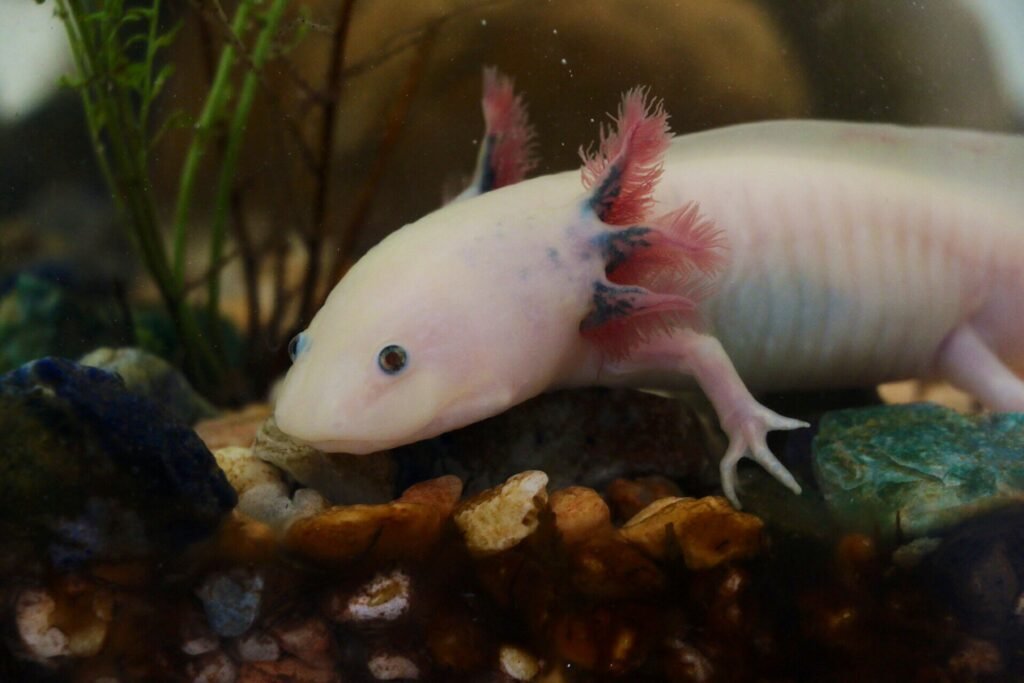
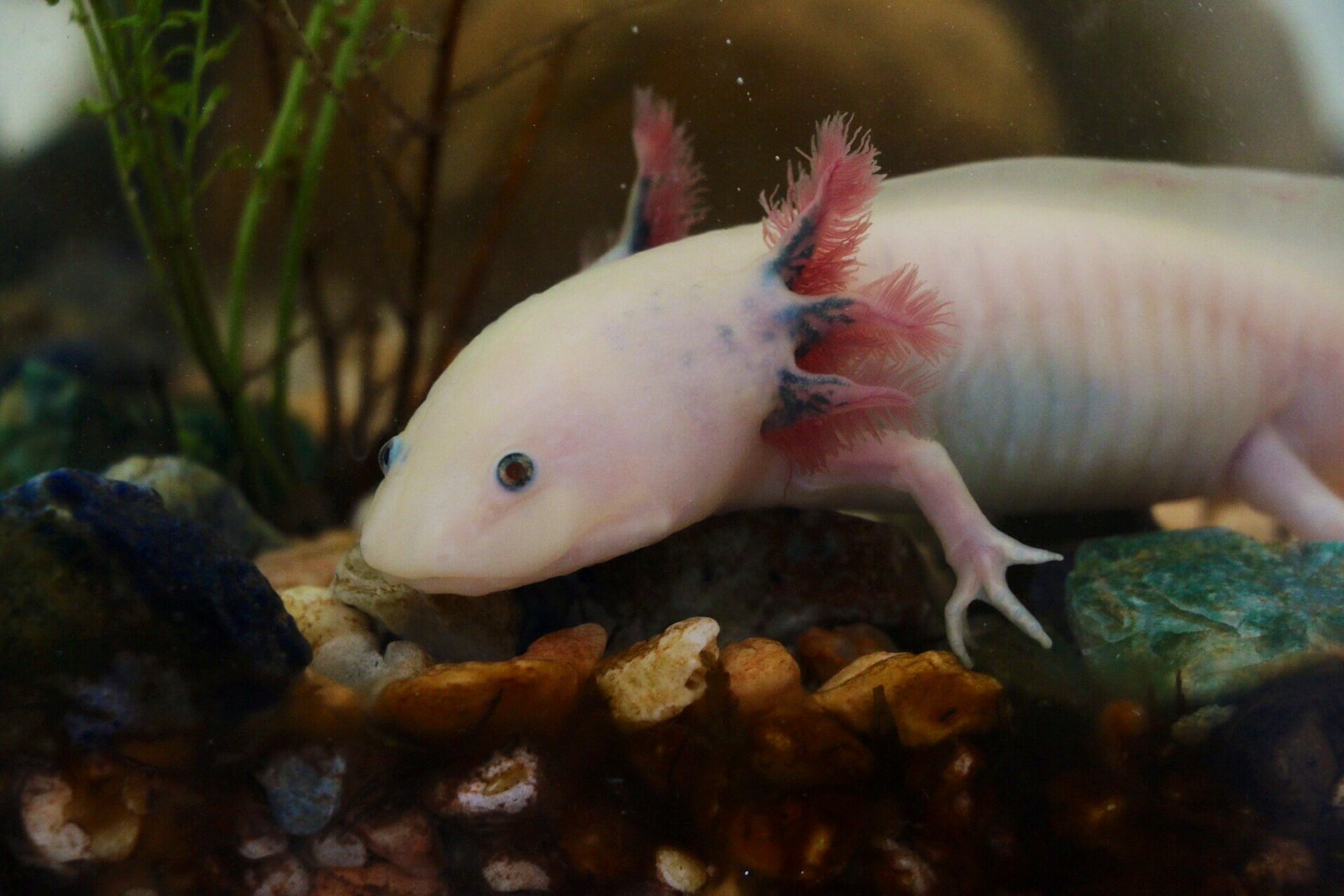
Axolotls Lead the Way in Regeneration (Image Credits: Upload.wikimedia.org)
Researchers have uncovered a critical gene shared among salamanders, zebrafish, and mice that drives limb regrowth, opening doors to innovative therapies for human amputees. A new study demonstrates how the SP8 gene orchestrates bone regeneration in axolotls and how its absence impairs the process. By developing a targeted gene therapy, scientists partially restored regrowth in mice, marking a proof-of-principle step toward clinical applications.[1][2]
Axolotls Lead the Way in Regeneration
Axolotls, a type of salamander, possess extraordinary regenerative abilities. These aquatic creatures can fully regrow limbs, tails, and even portions of their heart, brain, liver, lungs, and jaw after injury. Scientists at Wake Forest University zeroed in on the SP8 gene, which activates in the regenerating epidermis – the outermost skin layer that signals underlying tissues to rebuild.
Using CRISPR gene-editing technology, Josh Currie’s lab removed SP8 from axolotl genomes. The result proved dramatic: without SP8, the animals failed to properly regenerate limb bones. This experiment confirmed SP8’s indispensable role in coordinating the complex process of bone formation during regrowth.[1]
Universal Genetic Blueprint Emerges
The discovery extended beyond salamanders. Comparative studies across species revealed that SP genes, particularly SP6 and SP8, appear in the regenerating epidermis of zebrafish and mice as well. Zebrafish swiftly regrow tail fins and can repair hearts, spinal cords, retinas, kidneys, and pancreases. Mice, closer to humans as mammals, regenerate digit tips under certain conditions.
CRISPR knockouts in mice lacking both SP6 and SP8 showed impaired digit bone regrowth, mirroring the axolotl defects. Kenneth D. Poss’s team at the University of Wisconsin-Madison identified a zebrafish enhancer sequence active in regenerating tissues. This cross-species analysis highlighted conserved genetic programs that evolution preserved despite varying regenerative capacities.[2]
| Species | Regeneration Ability | SP Gene Effect (Knockout) |
|---|---|---|
| Axolotl | Full limbs, organs | SP8 loss impairs limb bone regrowth |
| Zebrafish | Tail fins, heart, spinal cord | SP genes in epidermis; enhancer used for therapy |
| Mouse | Digit tips | SP6/SP8 loss blocks digit bone regrowth |
Gene Therapy Restores Function in Mammals
David A. Brown’s lab at Duke University took the research further with a viral gene therapy. They harnessed the zebrafish enhancer to deliver fibroblast growth factor 8 (FGF8), a signaling molecule normally activated by SP8. Injected into SP6/SP8-deficient mice, the therapy encouraged partial regrowth of digit bones.
This approach targeted the epidermis specifically, emulating the salamander’s regenerative signaling without altering the entire genome. The partial success demonstrated that substituting SP gene functions could bypass natural limitations in mammals. Currie’s team, including Ph.D. student Tim Curtis Jr. and undergraduate Elena Singer-Freeman, contributed axolotl expertise to the multi-lab effort.[1]
- CRISPR precisely edited SP genes in animal models.
- Viral vectors used enhancers for tissue-specific delivery.
- FGF8 mimicked SP8’s downstream effects on bone formation.
- Collaboration spanned axolotls, fish, and mice for robust findings.
- Results published in Proceedings of the National Academy of Sciences.
Bridging the Gap to Human Treatments
Each year, more than one million people worldwide undergo limb amputations due to diabetes, trauma, cancer, or infections, with rates projected to climb amid aging populations. Current prosthetics restore some function but lack full sensory feedback and dexterity. Humans already regenerate fingertip tissue if the nailbed remains intact, hinting at latent potential.
“This significant research brought together three labs, working across three organisms to compare regeneration,” Currie said. “It showed us that there are universal, unifying genetic programs that are driving regeneration in very different types of organisms.”[1] He added that the gene therapy serves as “a kind of proof of principle that we might be able to deliver therapies to substitute for this regenerative style of epidermis in regrowing tissue in humans.”
Challenges remain, including scaling from mouse digits to human limbs, managing immune responses, and integrating with scaffolds or stem cells. Yet the study complements ongoing efforts in regenerative medicine and suggests multi-disciplinary solutions ahead.
Key Takeaways
- SP8 drives epidermal signaling essential for bone regrowth in salamanders.
- Gene therapy with FGF8 partially rescues regeneration in gene-deficient mice.
- Conserved mechanisms across species provide a foundation for human therapies.
This breakthrough illuminates nature’s regenerative secrets and edges closer to restoring limbs biologically. As research accelerates, it promises to transform lives for the millions affected by limb loss. What do you think about these findings? Share in the comments below.