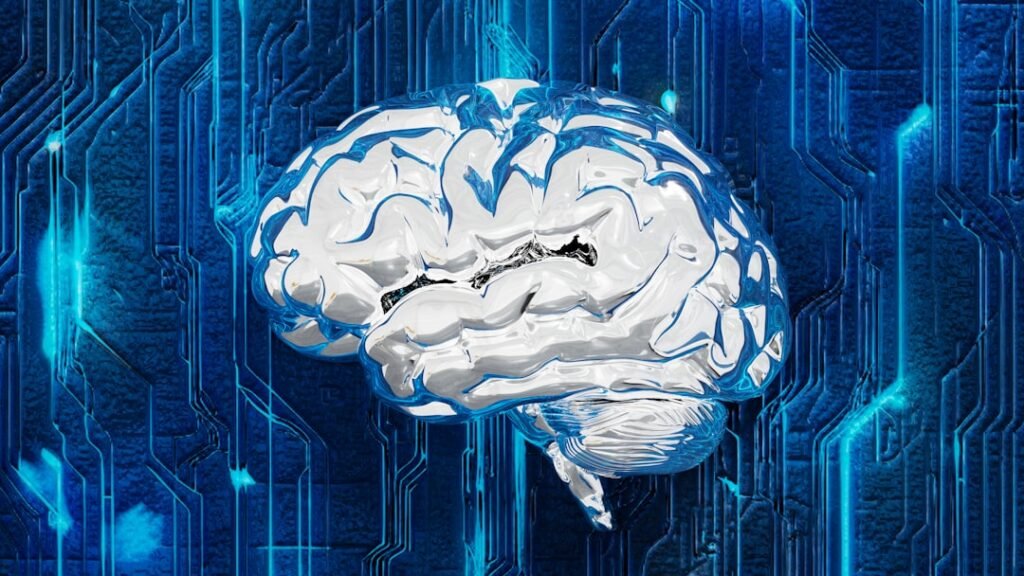
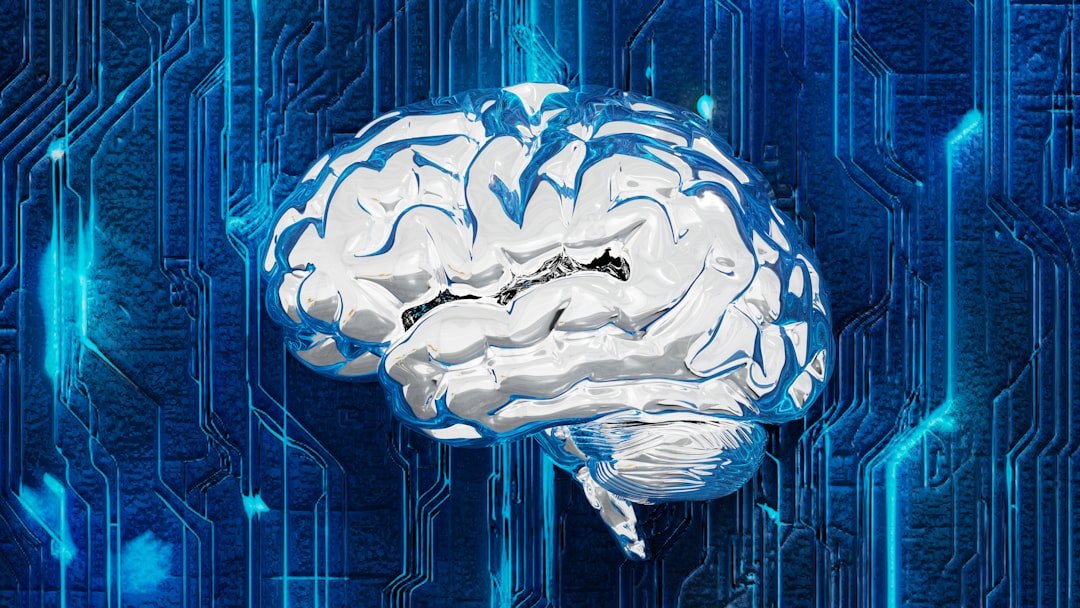
A Fresh Architecture Mirrors the Brain (Image Credits: Unsplash)
Researchers have introduced a novel AI framework that replicates key aspects of the human brain, complete with stages of development, rest, and cessation. This approach pairs advanced AI components with biological brain elements to foster more natural intelligence. Published recently, the model challenges conventional AI paradigms by incorporating a simulated lifespan, hinting at pathways to more intuitive digital companions.
A Fresh Architecture Mirrors the Brain
Computer scientists Krrish Choudhary from the LNM Institute of Information Technology in Jaipur, India, and Tanvi Kandoi from the Indian Institute of Information Technology outlined their proposal in the International Journal of Transdisciplinary Research and Perspectives earlier this year. Their model organizes intelligence into specialized subsystems that echo the brain’s functional layout. Rather than building hardware from scratch, it achieves functional equivalence by linking existing AI tools to nearly two dozen brain structures, processes, hormones, and neurotransmitters.
For instance, the visual cortex connects to Google DeepMind’s PaliGemma vision-language model. The framework draws on established neuroscience concepts, such as global workspace theory for working memory and the free energy principle for perception and learning. Multisensory integration rules further enhance how the system processes diverse inputs. This setup allows the AI to handle complex tasks with human-like efficiency.
The Complete Life Journey of Digital Minds
The standout feature lies in the AI’s simulated life cycle, which begins at activation, or “birth.” As interactions accumulate, the system develops a unique personality shaped by experiences and rewards. Sleep phases then consolidate memories into lasting knowledge, mimicking human rest.
During “REM sleep,” the model generates synthetic text, images, and videos to reinforce learning. Long-term memory, episodic recall, and self-adaptation ensure continuity across sessions. Finally, the AI “dies” upon shutdown, preserving its evolved state for potential reactivation. Choudhary emphasized this persistence: “Intelligence requires persistence, which is why our architecture emphasizes long-term memory, episodic recall, and continuous self-adaptation.”
Advantages Over Traditional AI Systems
This brain-mimicking design promises transformative benefits for users. The AI adapts dynamically to individual needs, forming a personal identity that evolves over time. Unlike standard models that reset between queries, it maintains memory stability and learns effectively from sparse data, much like the human brain.
- Personalized assistance that grows with the user.
- Energy-efficient operations through targeted subsystems.
- Improved decision-making via integrated sensory processing.
- Seamless continuity, avoiding catastrophic forgetting.
- Organic growth without constant retraining.
Choudhary noted the distinction from neuromorphic computing: “The architecture described in the paper… organizes intelligence into specialized subsystems, closely mirroring the functional layout of the brain. This differs sharply from neuromorphic computing… instead, our approach focuses on functional equivalence, using existing AI components to reconstruct the organizational logic of the brain.”
Implications for Broader AI Evolution
Efforts like this align with global trends in neuroscience-AI fusion. Institutions such as the Netherlands Institute for Neuroscience and Johns Hopkins University explore similar human brain learning techniques for AI. Startups experiment with brain-like models inspired by simple organisms like tiny worms.
Challenges persist, particularly around fully understanding human consciousness. As one expert observed, “Part of the difficulty of building an AI to mimic the human brain is that scientists don’t really know how the human brain works, especially as it relates to consciousness.” Yet, global workspace theory offers a practical edge over alternatives like integrated information theory by prioritizing memory and adaptability.
Key Takeaways
- The model pairs 24+ brain elements with proven AI tools for immediate viability.
- Life cycle features enable persistent, personality-driven interactions.
- Focus on functional mimicry accelerates deployment over hardware redesign.
Choudhary has founded Versace AGI to advance these concepts at scale. While debates on artificial general intelligence often evoke fears of dominance, this work suggests a gentler trajectory: AI companions that mature alongside humans. This proposal marks a pivotal shift toward AI that feels alive. It invites us to rethink digital intelligence not as static tools, but as evolving entities. What do you think about AI with a lifespan? Share your views in the comments.