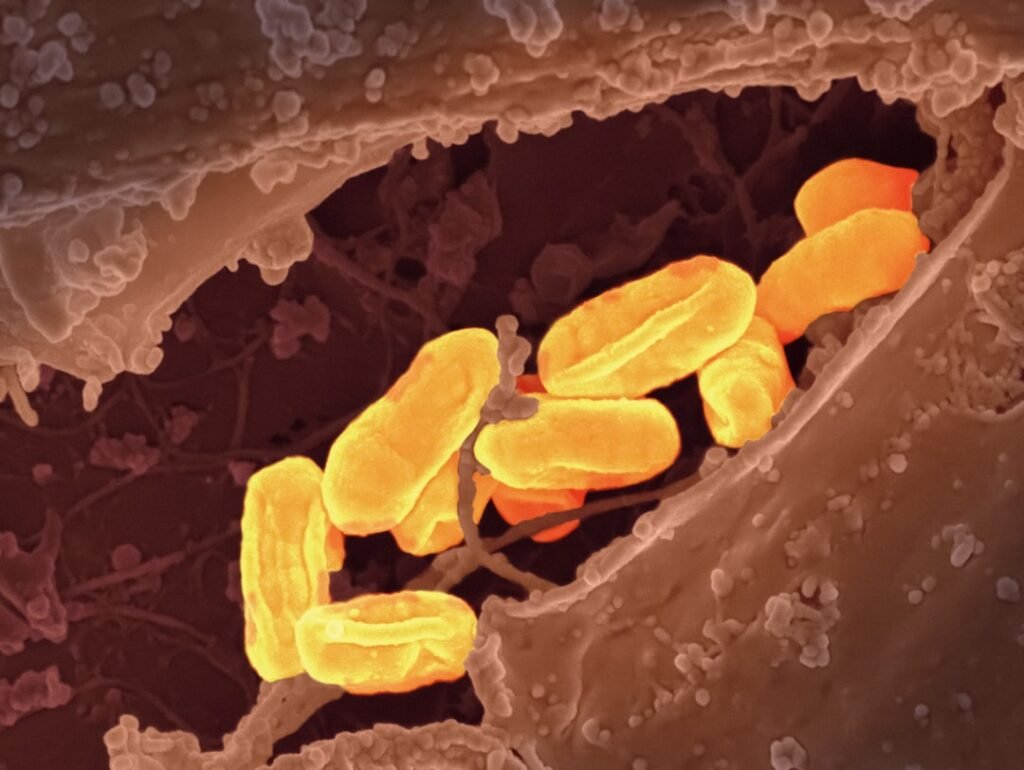
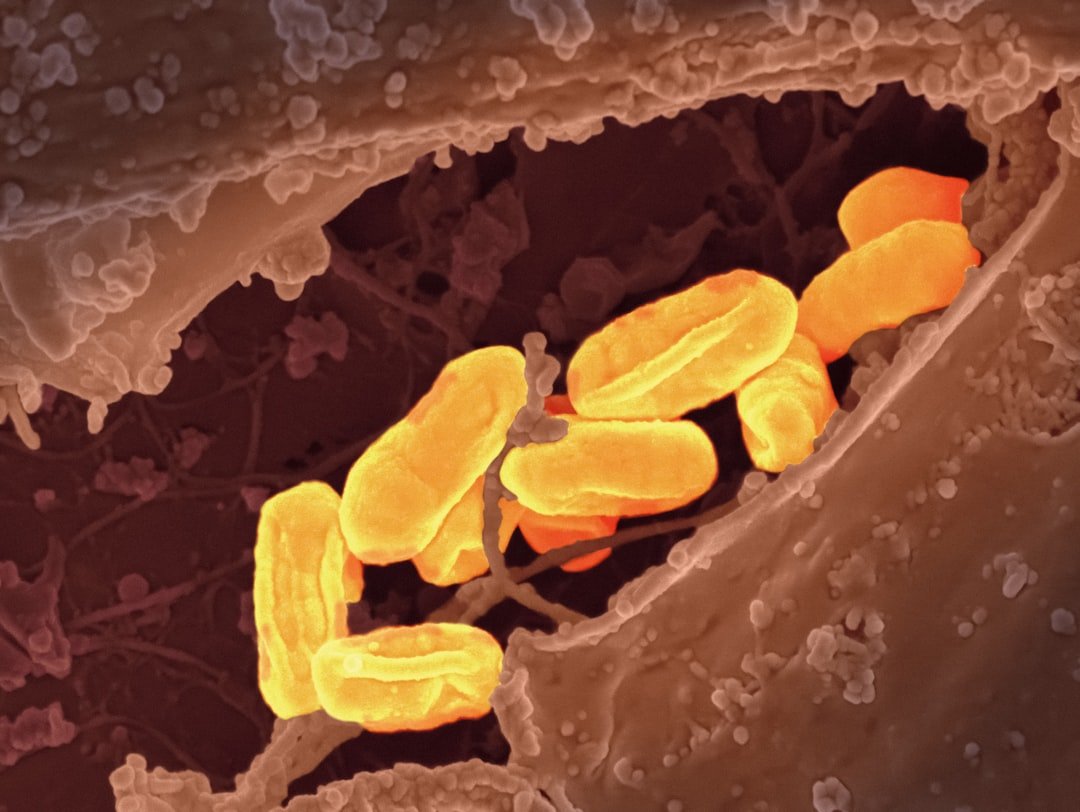
Mastering Motion at the Nanoscale (Image Credits: Unsplash)
Würzburg, Germany – Scientists at Julius-Maximilians-Universität Würzburg unveiled a groundbreaking development in nanotechnology with light-powered nanorobots capable of targeting and removing bacteria in liquid settings. These minuscule machines, measuring about 50 times smaller than a human hair, operate below one micrometer in size and harness photon recoil for movement. Led by Professor Bert Hecht, the team demonstrated their devices’ ability to navigate complex environments, selectively capture pathogens, and deposit them precisely, opening doors to advanced microscopic interventions.[1]
Mastering Motion at the Nanoscale
The core innovation lies in the nanorobots’ propulsion system, which relies on the recoil from individual photons. Up to four plasmonic nanoantennas on each robot absorb light tuned to specific colors and helicities, then re-emit it in a directed manner to generate thrust. This photon-based drive mimics the recoil effect seen in larger scales but functions efficiently at the tiniest dimensions.
Steering proves equally ingenious. Nanoscale antenna wires align automatically with the polarization of incoming light, allowing researchers to guide the robots simply by adjusting light properties. No complex onboard electronics or fuels are needed; light alone dictates direction and speed. This streamlined design enables the bots to execute sharp maneuvers, including rapid 90-degree turns, far surpassing traditional microscale propulsion methods.[1]
Demonstrating Bacterial Capture in Action
In controlled lab experiments, the nanorobots showcased remarkable agility while scanning wide areas for bacteria. They homed in on targets, latched on selectively, and transported them across aqueous landscapes without collateral disruption. Even when handling clusters of bacteria, the devices maintained control, though speeds adjusted accordingly to ensure stability.
Researchers observed the bots collecting multiple bacteria and relocating them to predetermined sites, effectively “cleaning” microscopic zones. This process unfolded in real-time under light control, highlighting the system’s precision and reliability. Lead experimental scientist Jin Qin noted, “In essence, we have built a light-driven nanorobot that can track down and collect bacteria. By simplifying the design, we reached a size at which these robots can operate directly in the microbial world – almost like microscopic cleaning devices.”[1]
Key Features Enabling Microbial Manipulation
The nanorobots’ design incorporates several critical elements that set them apart:
- Photon recoil propulsion for fuel-free, silent operation.
- Polarization-based steering for intuitive control.
- Sub-micrometer size tailored for bacterial-scale interactions.
- Plasmonic nanoantennas for efficient light absorption and directional emission.
- Robust handling of single cells or bacterial groups.
These attributes allow the devices to perform tasks previously challenging in fluid environments, such as rapid area surveys and targeted pickups. The team’s work, detailed in a study published in Nature Communications, validates these functions through extensive testing.[1]Nature Communications
Potential Impacts on Science and Medicine
Professor Bert Hecht emphasized the broader implications: “This is a striking example of how light can be used not only to observe the microscopic world, but also to actively shape it. The idea of tiny robotic cleaners may sound futuristic, but we are already demonstrating the physical principles that make it possible.”[1] Applications span microbiology, where precise bacterial management could enhance experiments, and biomedical fields, potentially aiding in targeted therapies or infection control at the cellular level.
While still in early stages, the technology promises scalable solutions for microscale cleaning and manipulation. Future refinements might integrate with diagnostic tools or expand to other microorganisms. The Würzburg team’s achievement marks a pivotal step toward practical nanorobotics in real-world settings.
Key Takeaways:
- Nanorobots use light for propulsion and steering, eliminating mechanical parts.
- They excel at hunting, capturing, and relocating bacteria in liquids.
- Published findings pave the way for microbiology and biomedical advances.
This nanoscale leap redefines how we interact with the invisible realm of microbes, blending physics and biology in elegant harmony. As these robotic cleaners evolve, they could transform routine lab work and therapeutic strategies alike. What do you think about this microscopic revolution? Tell us in the comments.