A Student-Led Hunt Yields Galactic Insights (Image Credits: Upload.wikimedia.org)
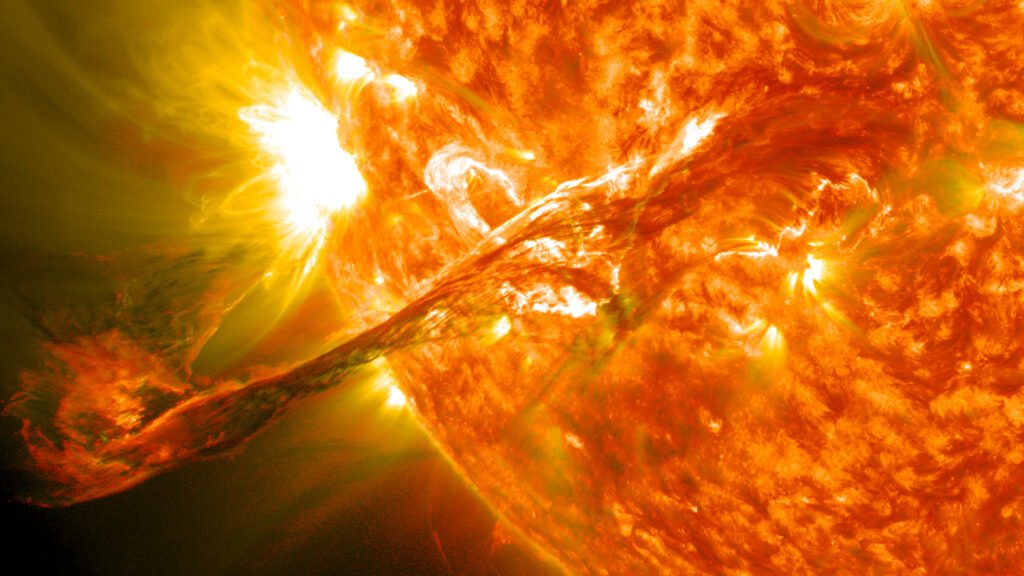
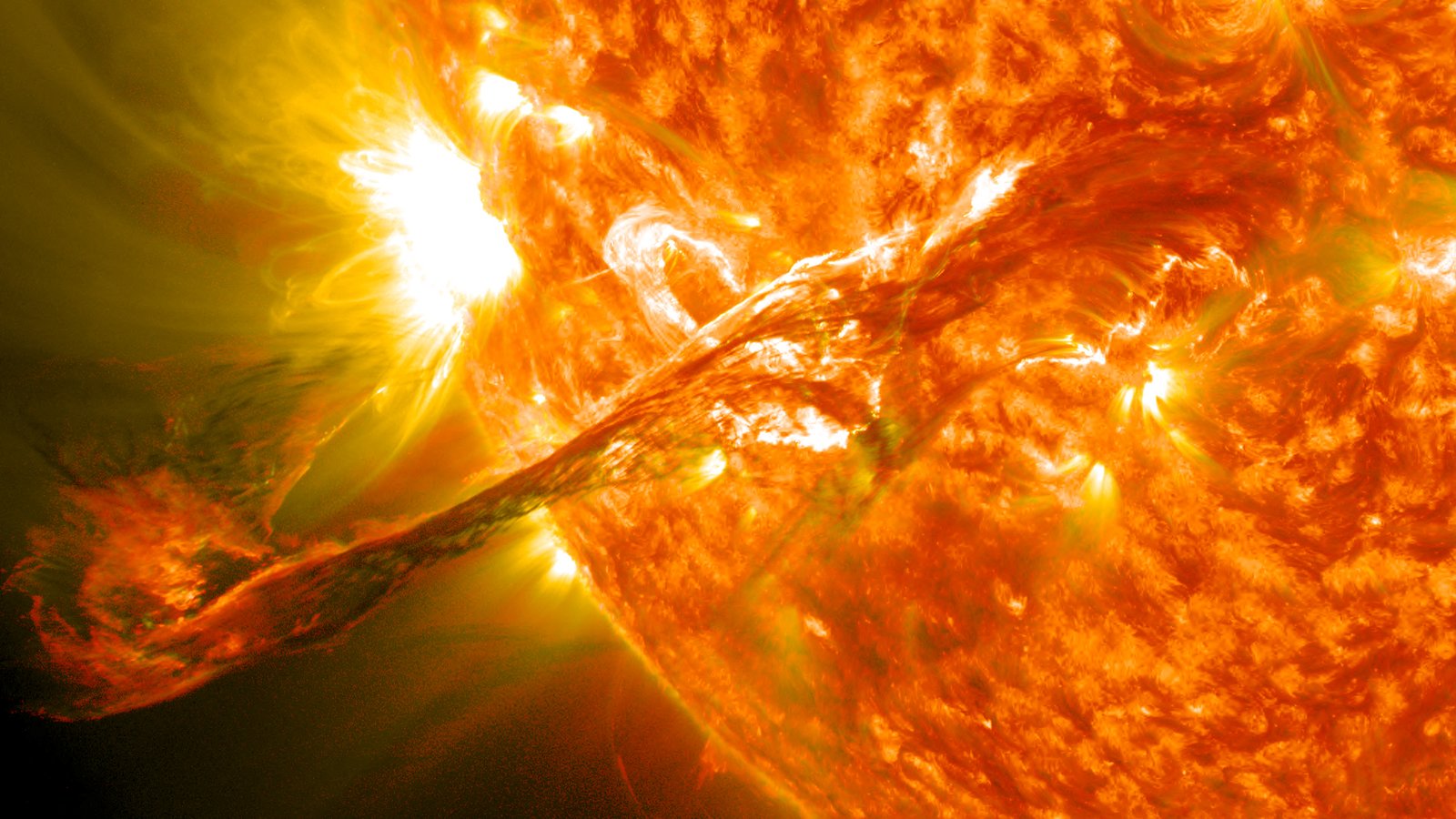
Solar flares burst from the sun’s turbulent surface, releasing plasma and radiation that ripple through space and occasionally disrupt Earth’s technology. Astrophysicists documented secondary “sympathetic” flares on the sun decades ago, where one eruption triggers another roughly 5% of the time. Researchers at Tufts University recently extended this observation beyond our solar system. Their analysis of data from NASA’s Transiting Exoplanet Survey Satellite revealed sympathetic flares on other stars, occurring at rates between 4% and 9%.
A Student-Led Hunt Yields Galactic Insights
Astronomy doctoral student Veronica Pratt initiated the project during a class assignment aimed at measuring stellar flares. Collaborators including assistant professor David Martin, Jason Reeves, and undergraduates Andy Zhang and others expanded the effort. The team examined observations from more than 16,000 stars captured by the TESS mission, which primarily hunts for exoplanets. This vast dataset contained over 200,000 individual flares ripe for scrutiny.
The discovery marked the first confirmation of sympathetic flaring outside the sun. “This is the first time that an effect well-known on the sun – sympathetic flaring – has been seen on other stars,” Martin stated. Traditional methods struggled with overlapping flare signatures, but the team’s innovative approach overcame these hurdles.
TOFFEE Unlocks Hidden Flare Patterns
The researchers devised TOFFEE, or Threshold-Optimized Flare Finding and Energy Estimation, a custom algorithm tailored for the challenge. Flares ignite rapidly yet fade slowly, often masking subsequent events in brightness dips and peaks. TOFFEE parsed these sequences using complex mathematics to differentiate random flares from sympathetic ones.
Pratt explained the difficulty: flares begin quickly but linger, complicating detection when a second emerges mid-fade. The algorithm judged relationships akin to contagious yawns in a room – response or coincidence? This tool processed the TESS data efficiently, identifying chains across diverse stars.
Patterns Echo Solar Observations
The study uncovered sympathetic flares separated by 30 minutes to 1.5 hours, closely matching solar timings. Rates hovered at 4% to 9%, aligning with the sun’s 5%. These parallels held despite analyzing thousands of distant systems.
| Feature | Sun | Other Stars (TESS Data) |
|---|---|---|
| Sympathetic Rate | ~5% | 4-9% |
| Typical Delay | Similar | 0.5-1.5 hours |
| Flares Analyzed | – | >200,000 |
- Processed data from 16,000+ stars.
- Focused on full light curves for accuracy.
- Validated against known solar behaviors.
M Dwarfs Defy Expectations in Flare Frequency
Most sympathetic events appeared on M dwarfs, the galaxy’s smallest, coolest, and most abundant stars. These red dwarfs differ sharply from the sun: half as hot, smaller in size, yet far more flare-prone. Pratt noted the surprise, given M dwarfs dominated the sample.
The consistent rates across star types point to a shared underlying process. “That implies to us that there’s a common mechanism across all stars that leads to sympathetic flaring,” Pratt said. Whatever drives these chains operates regardless of magnetic field variations or stellar scale. The findings appeared in The Astrophysical Journal.
Key Takeaways
- Sympathetic flares occur on other stars at rates similar to the sun’s 5%.
- TOFFEE algorithm enables detection amid overlapping brightness changes.
- Common mechanism likely unites diverse stellar types, including active M dwarfs.
This breakthrough reshapes understanding of stellar activity, hinting at universal physics governing flare chains. Future observations may pinpoint the exact trigger, from magnetic reconnections to plasma waves. How do these eruptions influence orbiting exoplanets or galactic habitability? Share your thoughts in the comments.