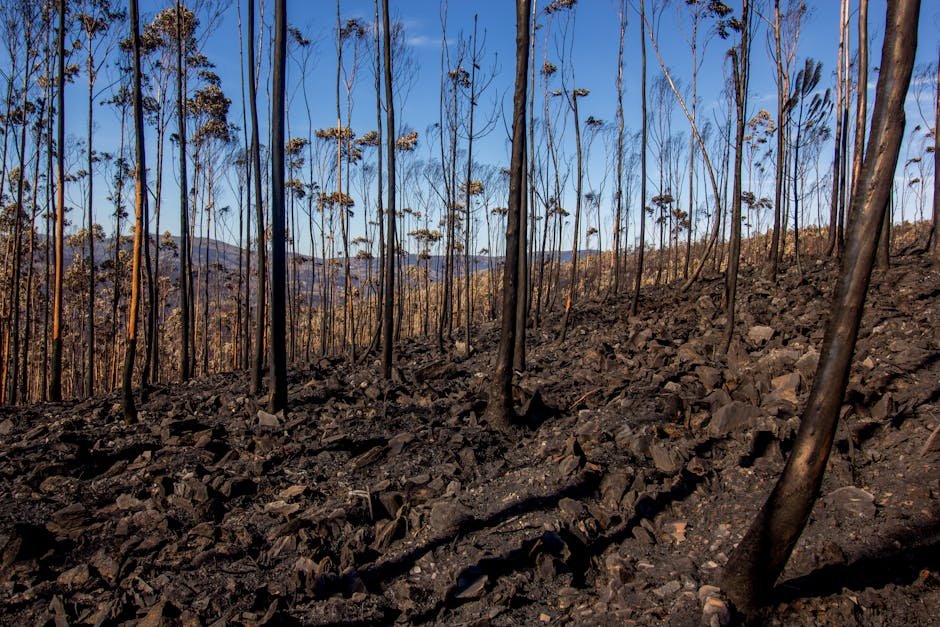
Towering Trees Locked in a Delicate Fire Balance (Image Credits: Pexels)
Southeastern Australia – The federal government listed mainland alpine ash forests as an endangered ecological community under the Environment Protection and Biodiversity Conservation Act on March 20, 2026.[1][2] Officials pointed to repeated severe bushfires and climate change as primary drivers eroding these vital high-country ecosystems. Spanning slopes in Victoria, New South Wales, and the Australian Capital Territory, the forests support rare wildlife and hold deep cultural value for First Nations peoples. The decision has split opinions, with conservation groups hailing it as a critical safeguard while forestry leaders warn of management hurdles.[3]
Towering Trees Locked in a Delicate Fire Balance
Alpine ash, or Eucalyptus delegatensis, forms vast stands of trees reaching 90 meters tall across more than 350,000 hectares at elevations of 900 to 1,500 meters.[3] These forests have coexisted with fire for tens of thousands of years in a precarious rhythm. Intense blazes kill mature trees outright, yet they trigger a prolific seed release that carpets the ground in regeneration.[3]
Young saplings, however, remain vulnerable. They require at least 20 years to mature and produce their own seeds, leaving stands defenseless against follow-up fires. Over the past two decades, this cycle has faltered as severe events struck regenerating areas repeatedly. One-third of the forests burned more than once during this critical immature phase, stunting recovery and altering species composition.[3]
Bushfires and Climate Change Fuel the Decline
The Black Summer bushfires of 2019-2020 scorched over 80,000 hectares of alpine ash, exposing the ecosystems’ fragility.[1] Climate change exacerbates the problem by intensifying fire weather, shortening intervals between blazes, and hindering regeneration. Experts forecast a potential 50% drop in forest extent within 60 years if trends persist, with cascading losses to carbon storage and biodiversity.[3]
These woodlands shelter critically endangered species like Leadbeater’s possum and greater gliders, which rely on old-growth hollows for habitat. Lyrebirds and spotted-tailed quolls also thrive here, alongside cultural practices such as the Taungurung people’s harvest of Bogong moths. More than half the forests lie within national parks, where logging bans already apply in Victoria and the ACT. Still, functional decline—not just areal loss—prompted the listing, as young regrowth dominates and lacks seed banks.[1][4]
Forestry Sector Challenges the Listing’s Science
Industry representatives questioned the decision’s foundation. Government data indicate less than 5% of pre-1750 distribution has vanished, leaving roughly 95% of communities intact across 720,000 hectares.[4] Critics argued the assessment overlooked resilience evidence and operational expertise from forest managers.
Forestry Australia President Dr. Michelle Freeman acknowledged the threats but stressed proactive steps. “These forests face real risks, particularly from repeated fire and climate change,” she stated. “Responding effectively requires the best available science, genuine engagement with those who manage these landscapes, and a practical pathway for restoration and resilience-building at scale.”[2] The group urged clearer guidelines to avoid regulatory delays in fuel reduction or hazardous tree removal. Traditional Owners and scientists, they added, deserved deeper involvement in the process.[2]
Charting a Course for Resilience and Recovery
Protection alone falls short; experts advocate active interventions. Aerial seeding programs, already tested successfully, can rescue fire-ravaged sites by deploying collected seeds swiftly.[3] Planned burns around forest edges aim to temper wildfire intensity, while selective thinning in young stands accelerates growth toward fire-resistant sizes.
- Establish long-term seed banks for emergency deployment after repeat fires.
- Implement strategic fuel management to shield old-growth remnants.
- Monitor regeneration and adapt tactics using frameworks like “Resist-Accept-Direct.”
- Protect access for rapid response teams and hazardous tree works.
- Engage Traditional Owners in culturally informed restoration.
Over 80% of the ecosystem remains structurally immature, heightening urgency. The listing mandates stricter scrutiny for developments, requiring proponents to offset impacts or prove gains. Conservation advice emphasizes safeguarding old growth and bolstering regrowth viability.[1]
Key Takeaways
- Alpine ash depends on infrequent fires but collapses under short intervals driven by climate change.
- Active management—seeding, thinning, burns—offers hope beyond passive reserves.
- Debate centers on balancing regulation with on-ground expertise for true resilience.
The endangered designation signals a pivotal moment for these iconic forests. With fires poised to reshape high-country landscapes, success hinges on blending science, Indigenous knowledge, and adaptive strategies. What steps should Australia prioritize to secure their future? Share your thoughts in the comments.