
Every so often, archeologists pull something out of the ground that quietly mutters: you’ve been getting this story wrong. It might be a skeleton that appears in the “wrong” place, a city that shouldn’t exist, or an object that demands skills we thought ancient people didn’t have. One by one, these finds chip away at neat textbook timelines and replace them with something messier, stranger, and much more human.
Some of these discoveries are controversial, others are widely accepted but still underappreciated outside specialist circles. None of them offer simple conspiracy-style answers, and that’s exactly what makes them so powerful. They show how evidence actually works: small, stubborn, and often inconvenient, but too real to ignore. Let’s dive into six of the most puzzling finds that have forced historians and archeologists to rethink what they thought they knew.
Göbekli Tepe: A Monument That Predates Civilization
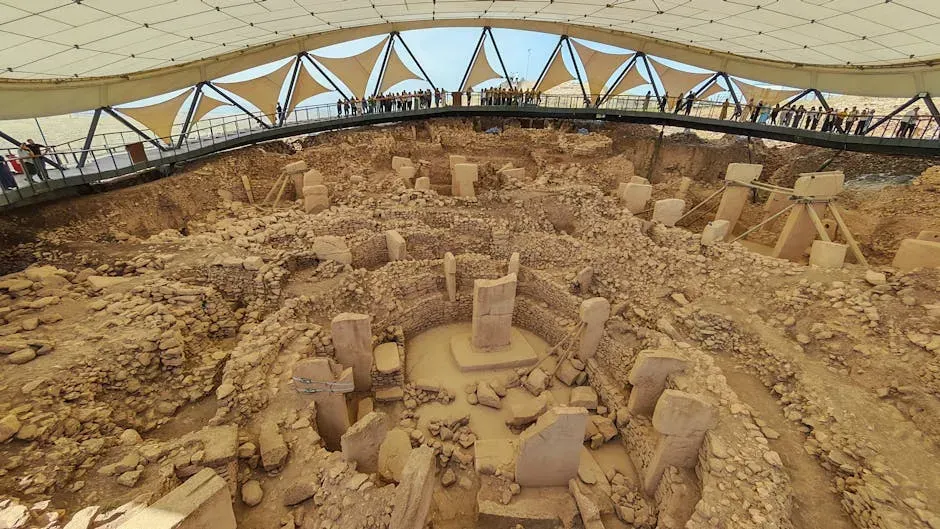
Imagine discovering a monumental stone temple that’s thousands of years older than the pyramids, older than Stonehenge, and even older than agriculture as we usually define it. That’s Göbekli Tepe in southeastern Turkey, a complex of enormous T-shaped stone pillars, some over five meters tall, carved with animals and abstract symbols. Radiocarbon dating places its earliest construction back to around eleven and a half thousand years ago, at the end of the last Ice Age, long before cities or writing.
For decades, most researchers thought large temples and organized religion came after farming and settled life. Göbekli Tepe flips that idea on its head. It suggests that the desire to gather for ritual and shared meaning may actually have driven people to organize, cooperate, and eventually farm to support these gatherings. In other words, instead of agriculture birthing religion and complex society, places like this may have helped birth agriculture. It’s a bit like discovering someone built a concert hall centuries before anyone invented towns.
Denisovan DNA: A Lost Human Lineage Hidden in Our Genes
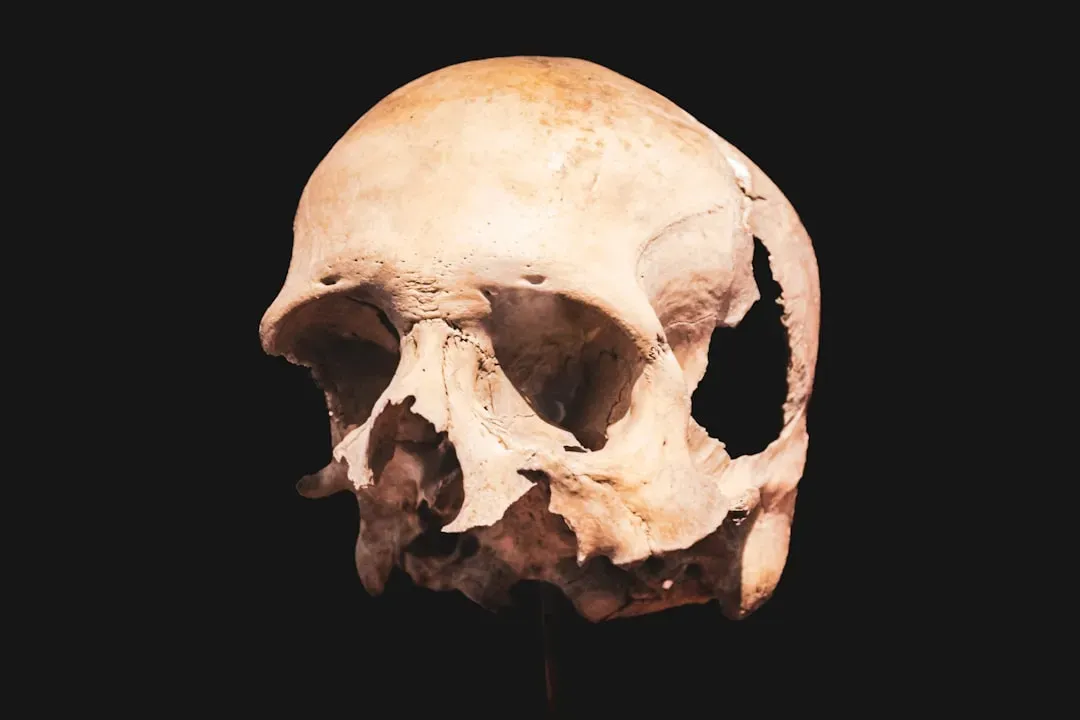
In 2010, researchers analyzed DNA from a small finger bone found in Denisova Cave in Siberia and realized they weren’t looking at a Neanderthal or a modern human. They were dealing with a previously unknown kind of ancient human, now called Denisovans. That bone, barely the size of a peanut, blew open the idea that human evolution was a simple, branching tree. Instead, it revealed a tangled web of interbreeding between multiple human groups over many thousands of years.
What’s even more astonishing is that Denisovans aren’t just a Siberian curiosity. Their genetic signatures are still present in people today, especially in populations from parts of East Asia, Melanesia, and Australia. Some of this inherited DNA seems to help with adaptation, such as high-altitude living in Tibet. Our own bodies turn out to be walking archives, carrying evidence of encounters with cousins we didn’t even know existed until recently. It’s a quiet but profound rewrite of the story of who “we” are.
Çatalhöyük: An Early City That Breaks the Rules
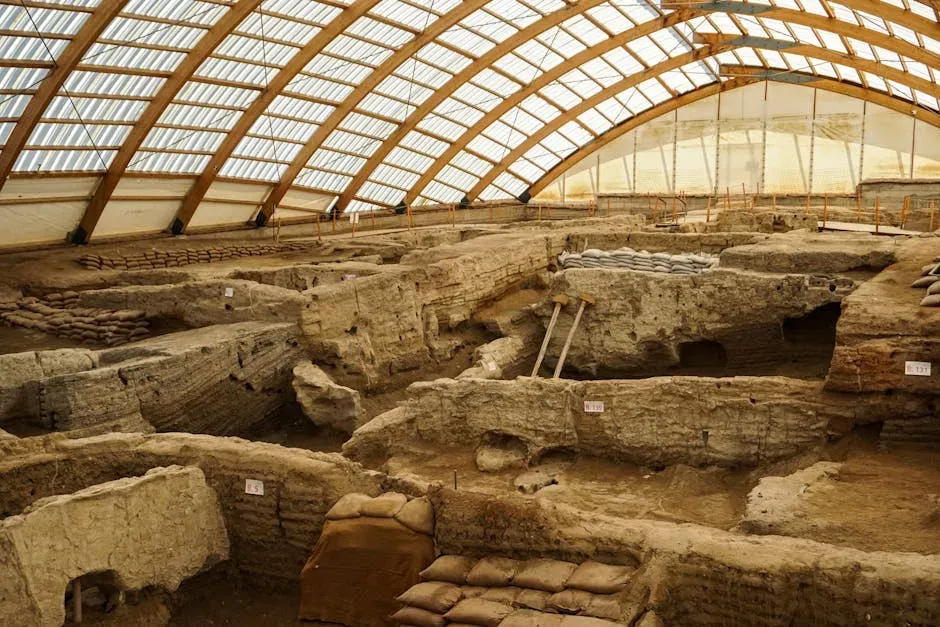
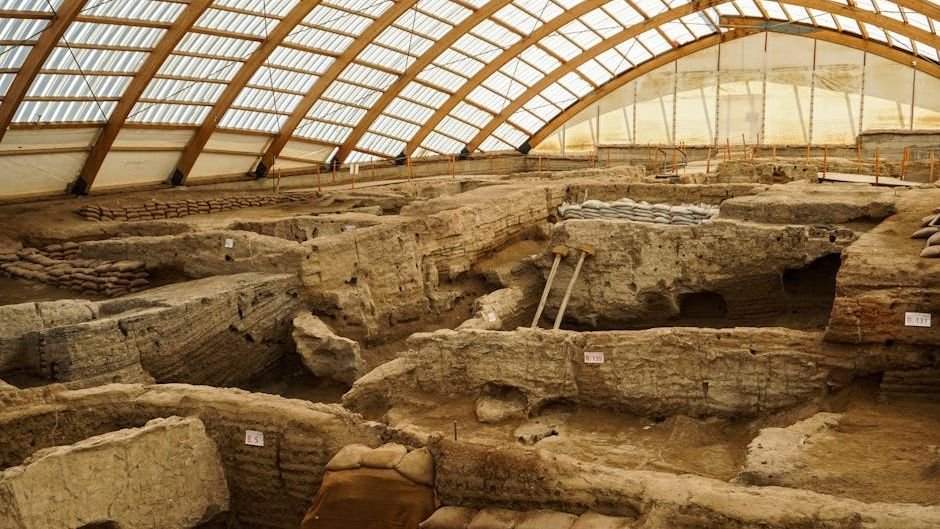
When archeologists excavated Çatalhöyük in central Turkey, they expected another simple farming village. Instead, they found one of the earliest known large settlements, dating back around nine thousand years, packed with tightly clustered houses and potentially thousands of residents. There were no streets as we’d recognize them; people walked across flat rooftops and climbed into their homes through openings in the ceiling. The whole place feels like someone flattened a modern apartment block and spread it out over a hillside.
What puzzles researchers is not just the size but the social organization. There’s little evidence of grand palaces, huge temples, or rich burials that would signal powerful elites, at least in the classic sense. Art and symbolic objects appear widely distributed, which hints at a more level social structure than we usually associate with early cities. Çatalhöyük challenges the old storyline that urban life automatically meant kings, rigid hierarchies, and top-down control. It’s as if the world’s early “city experiment” tested a more communal, tightly knit way of living before later systems of power took center stage.
Nabta Playa: A Stone Circle Older Than Stonehenge
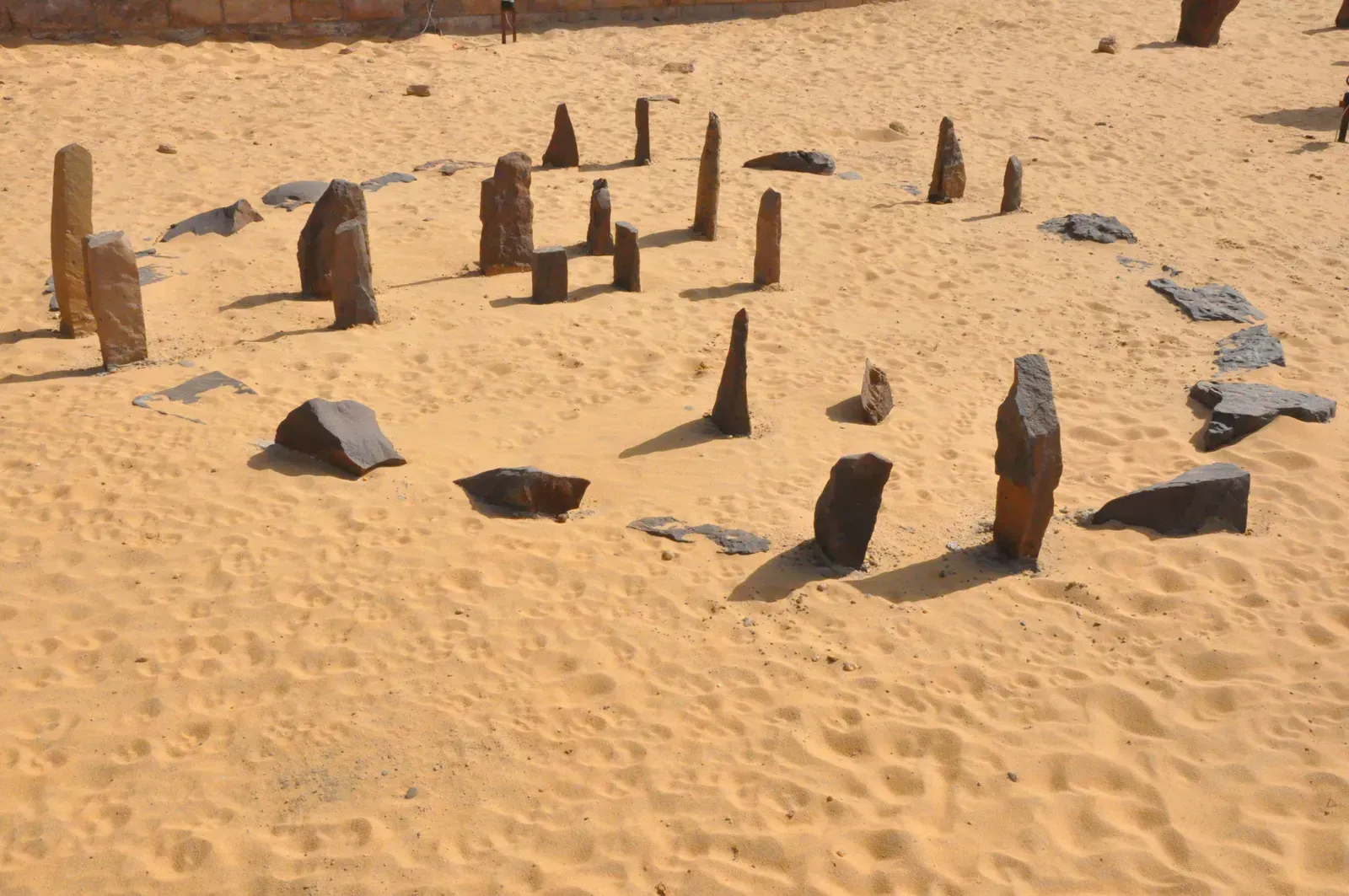
Deep in what is now the Egyptian Sahara lies Nabta Playa, an ancient seasonal lake bed where pastoral communities gathered thousands of years before the pharaohs. Here, archeologists uncovered a series of stone arrangements, including a small circle of upright slabs that may predate Stonehenge by roughly a millennium. Some of these stones appear to have been carefully aligned with the summer solstice and specific stars, hinting at surprisingly sophisticated sky-watching traditions among early herders.
This is not a giant tourist-friendly monument, and that’s partly what makes it so striking. These communities were mobile cattle herders, not urban monument-builders, yet they invested real effort to mark celestial events in stone. That suggests that careful observation of the heavens and ritual gatherings did not start with big river civilizations or massive temples. Instead, people on the move in harsh environments were already syncing their lives to the sky. Nabta Playa nudges us to widen the definition of “advanced” culture beyond cities and writing, and to recognize that serious science can grow out of need, memory, and shared tradition.
Sutton Hoo: A Burial That Redefined the “Dark Ages”
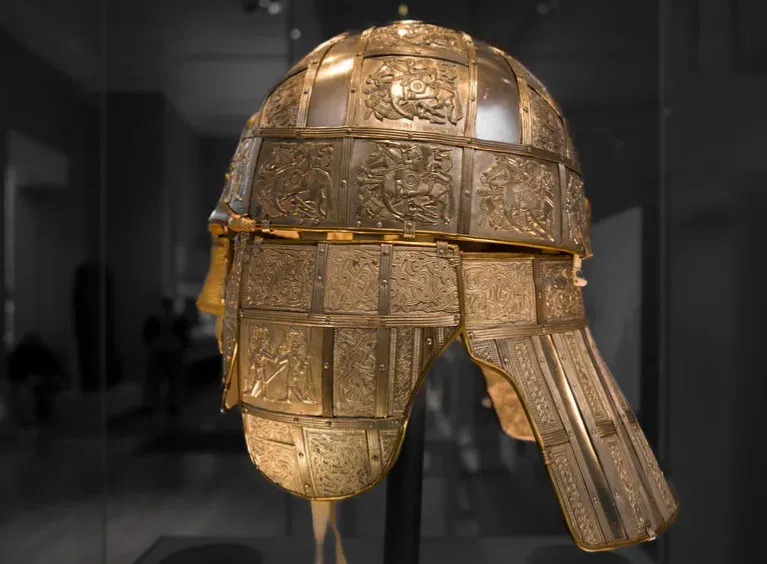
In the late 1930s, a ship burial was excavated at Sutton Hoo in eastern England, and even after decades of study it still feels like a revelation. Inside the ghostly outline of a large ship, archeologists found weapons, armor, intricate jewelry, and objects imported from across Europe and the Mediterranean, including finely worked metalware. The burial dates to the early medieval period, a time long dismissed in popular imagination as culturally poor and intellectually stagnant, the so-called “Dark Ages.”
Instead, Sutton Hoo shows us a world buzzing with craftsmanship, long-distance networks, and layered symbolism. The artistry of the gold and garnet fittings rivals anything from more famous empires, and the sheer lavishness of the burial implies complex social structures and deep ritual meaning. This single site forced historians to rethink early medieval England as a connected, sophisticated society rather than a backwater living among the ruins of Rome. It’s a reminder that calling an era “dark” often says more about our ignorance than about the people who lived through it.
Çueva de El Castillo and Other Ancient Cave Art: Rethinking Who Painted First
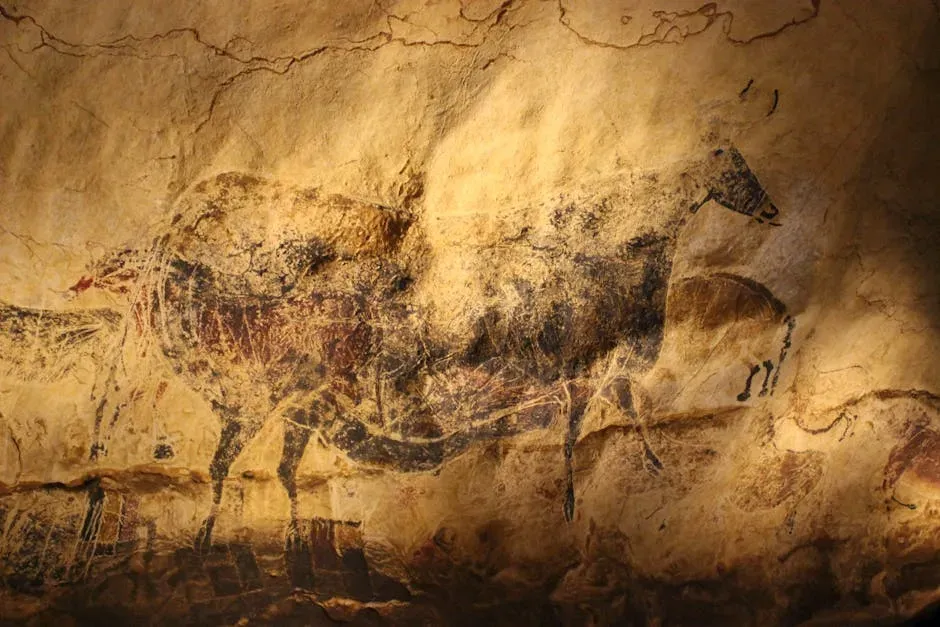
For a long time, many people assumed that complex cave art in Europe, like the famous paintings in Lascaux, was the unique hallmark of Homo sapiens shortly after arriving on the continent. But more recent work using uranium-thorium dating on the cave art at places such as El Castillo Cave in Spain has produced age estimates that push some of the oldest markings back beyond the arrival of modern humans in that region. That raises the possibility that Neanderthals may have been responsible for at least some of these early symbolic markings.
The evidence is still being debated, and researchers are careful not to jump to conclusions, but even the serious possibility is disruptive. It suggests that the mental world of Neanderthals might have included symbolic behavior, planning, and shared meaning in ways closer to us than many once believed. Other finds, like perforated shells and pigments associated with Neanderthal sites, fit into this picture of a more complex cousin. The old image of them as dull, brutish cave dwellers is steadily eroding, replaced by something more nuanced and unsettling: they may have been different, but not as far from us as we liked to think.
Conclusion: A Past That Refuses to Stay Simple
Looking at these discoveries together, a pattern emerges: every time we think we’ve drawn a clean line between “before” and “after,” the ground opens and something inconvenient appears. A temple older than farming, a buried city without clear kings, a lost human lineage inside our genes, a desert stone circle aligned with the stars, a “Dark Age” ship filled with dazzling art, and cave markings that might belong to other kinds of humans. Each find complicates the timeline, but it also makes the story of our species more interesting, more layered, and frankly more honest.
What I find most moving is how these pieces of evidence quietly argue for humility. The people who left them weren’t prototypes stumbling toward modernity; they were fully themselves, solving problems, making meaning, and building worlds with the tools they had. Our history is less a straight staircase and more a braided river, full of side channels and lost branches that still shape the main flow. As new digs, new methods, and even new genetic insights keep arriving, it’s almost certain more surprises are waiting. When the next one upends another tidy chapter in the history books, how ready do you think we’ll be to rewrite the story again?