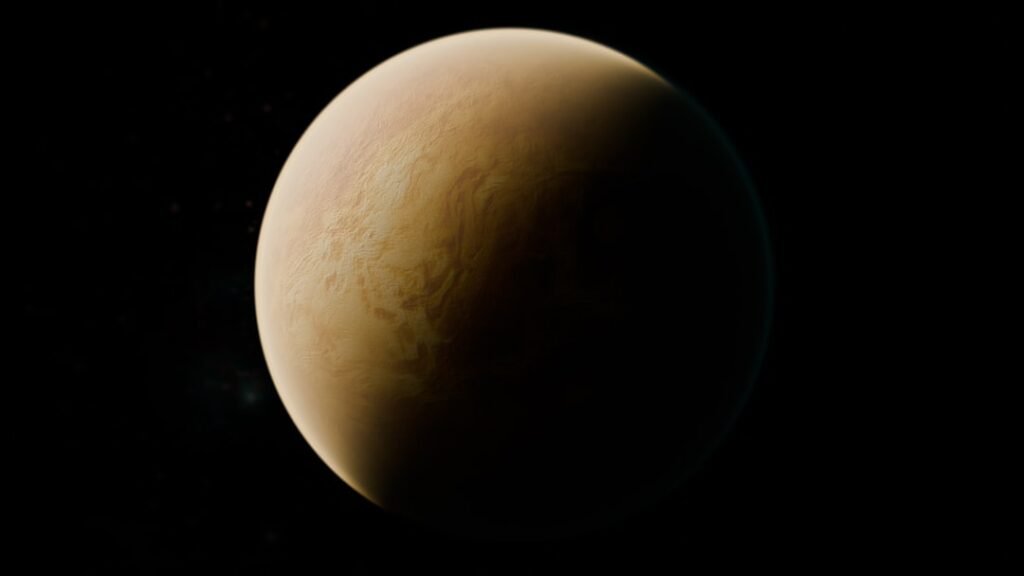
There are moons in our solar system, and then there is Titan. Saturn’s largest moon has always played by its own rules – thick atmosphere, liquid lakes, and now, scientists are suggesting something even stranger lurking beneath the surface. The findings coming out of recent planetary research are the kind that make you stop and genuinely reconsider how weird and wonderful our cosmic neighborhood really is.
What researchers have uncovered about Titan’s outer crust is not just a footnote in planetary science. It is a potential game-changer for how we understand icy worlds, the possibility of life beyond Earth, and the sheer variety of geological processes happening right now, billions of miles from where you’re sitting. Let’s dive in.
A Moon Unlike Anything Else in the Solar System
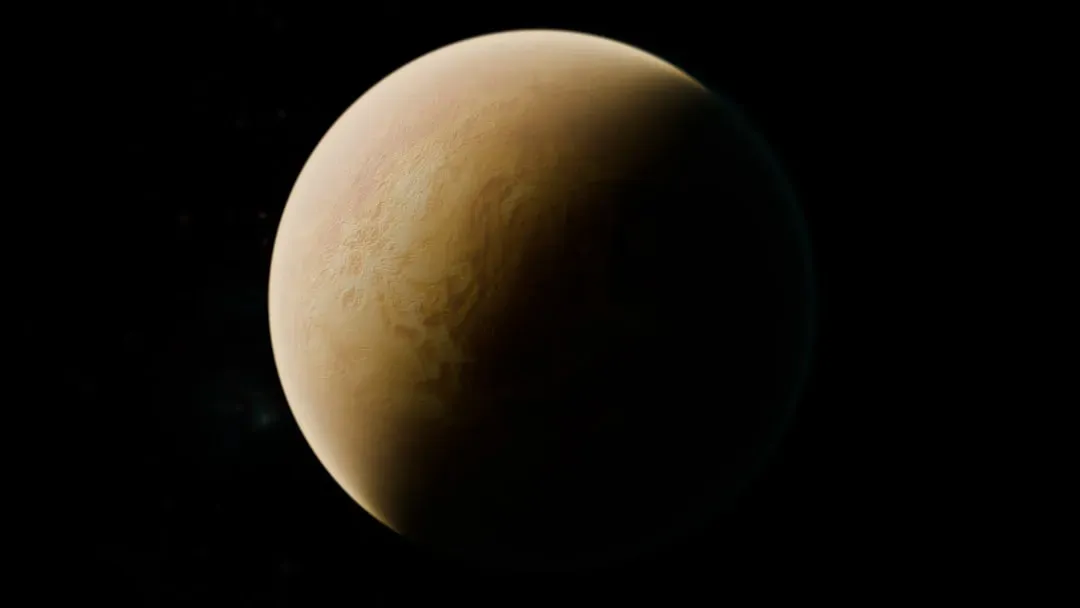
Here’s the thing about Titan – it has always been the oddball of Saturn’s moons, and honestly, that’s exactly why scientists are obsessed with it. It is the only moon in the entire solar system with a dense, nitrogen-rich atmosphere. That alone makes it wildly different from our own Moon or any of Jupiter’s moons.
Titan also hosts lakes and rivers, but not of water. These bodies of liquid are made of methane and ethane, hydrocarbons that on Earth exist only as gases or industrial fuels. Think about that for a second. There are actual methane rainstorms on Titan. It is like a bizarro version of Earth’s water cycle, just played out with completely different chemistry.
The Startling New Theory About Titan’s Crust
Scientists now believe that Titan’s outer crust may be composed largely of methane clathrates, which are essentially methane molecules trapped within a cage-like structure of water ice. This is not a tiny detail. If confirmed, it means the very ground beneath Titan’s surface is chemically and structurally unlike almost anything else we know of in planetary geology.
The research suggests that this methane-rich crust could be playing a major role in regulating the moon’s atmospheric methane levels. Titan’s atmosphere is rich in methane, but that methane should theoretically get destroyed by sunlight over millions of years. Something has to be replenishing it. A crustal reservoir could be exactly that something.
Why Methane Clathrates Matter So Much
Methane clathrates are not entirely alien to us. They exist right here on Earth, buried beneath the seafloor and under Arctic permafrost. On Earth, they have become a topic of concern in climate science because destabilizing them could release enormous amounts of greenhouse gas into the atmosphere. So we already know these structures can be incredibly powerful.
On Titan, the scale is thought to be vastly larger. Imagine an entire crust built from these compounds rather than just pockets buried in the ground. It would mean Titan has a built-in methane supply system, almost like a planet slowly breathing out its own chemical makeup over geological timescales. I find that image genuinely stunning, in a slightly unnerving way.
How This Reshapes Our Understanding of Titan’s Geology
For years, planetary scientists have puzzled over how Titan maintains such a methane-heavy atmosphere. The sun’s ultraviolet radiation breaks methane down into other compounds fairly efficiently, meaning the methane we observe today should have been depleted long ago if there were no source replenishing it. This crustal clathrate theory offers a compelling answer to that long-standing mystery.
The implications go beyond just atmospheric chemistry. If Titan’s crust is made of clathrates, it would also behave very differently under tectonic or volcanic stress compared to a rock or water-ice crust. Surface features that we have already observed through NASA’s Cassini mission could be reinterpreted entirely. Some formations that looked like ordinary icy terrain may actually be the result of methane being released from the crust in slow, dramatic bursts.
What Cassini Taught Us – And What It Left Unanswered
NASA’s Cassini spacecraft spent over a decade orbiting Saturn and made numerous close flybys of Titan before its mission ended in September 2017. The data it collected was extraordinary. Cassini gave us our first detailed maps of Titan’s surface, revealed those remarkable hydrocarbon lakes near the poles, and helped scientists understand the moon’s atmospheric layers in unprecedented detail.
Still, Cassini could only go so far. It could not land on Titan’s surface or drill into its crust. The spacecraft’s radar and infrared instruments could peer through the haze to a degree, but the deep subsurface remained largely a mystery. The current methane clathrate theory is built partly on Cassini’s legacy data, combined with newer modeling and laboratory work. It is detective work of the highest order, piecing together a picture of a world from incomplete clues.
Dragonfly: The Mission That Could Finally Confirm It All
NASA’s Dragonfly mission, a rotorcraft lander designed specifically for Titan, is currently in development and targeting a launch in the late 2020s, with arrival at Titan expected in the mid-2030s. Dragonfly is genuinely exciting because it will not just land in one spot. It will hop across Titan’s surface, covering dozens of miles and sampling different geological environments.
If the methane clathrate theory is correct, Dragonfly could potentially detect the chemical signatures of these structures directly. It would be one of the most significant confirmations in planetary science in decades. It is hard to say for sure exactly what Dragonfly will find, but it seems almost certain to rewrite at least a chapter or two of what we know about Titan. The mission has that kind of potential energy around it.
Could This Have Any Bearing on the Search for Life?
Honestly, this is the question everyone is really thinking about. Titan has long been considered one of the more intriguing candidates in the search for life beyond Earth, not because of water-based life as we know it, but because of the possibility of life using liquid methane as a solvent instead. It is a radical concept, but the chemistry is not impossible.
A crust composed of methane clathrates could actually support certain chemical reactions that are precursors to organic complexity. It would not be life as we understand it, but it might be a stepping stone toward something genuinely unprecedented. The universe has surprised us before. A frozen moon coated in methane ice, silently exhaling hydrocarbons into an orange sky, may just be the strangest and most important place we have ever pointed a telescope.
Final Thoughts: Titan Is Still Full of Surprises
Every time scientists think they have Titan figured out, it throws another curveball. The methane clathrate crust theory is one of the most structurally significant ideas to emerge about this moon in recent years, and the scientific community is taking it seriously. It ties together atmospheric chemistry, surface geology, and even the broader question of habitability in one elegant but unsettling hypothesis.
Let’s be real: we are still working with limited data, and definitive proof awaits future missions like Dragonfly. Yet even the possibility that a moon’s entire outer shell could be built from frozen methane compounds is enough to put Titan in a category all its own. Our solar system keeps revealing that the universe is far stranger and more creative than any textbook could predict. What do you think the discovery of a methane crust tells us about other icy worlds we have barely even looked at yet? Tell us in the comments.