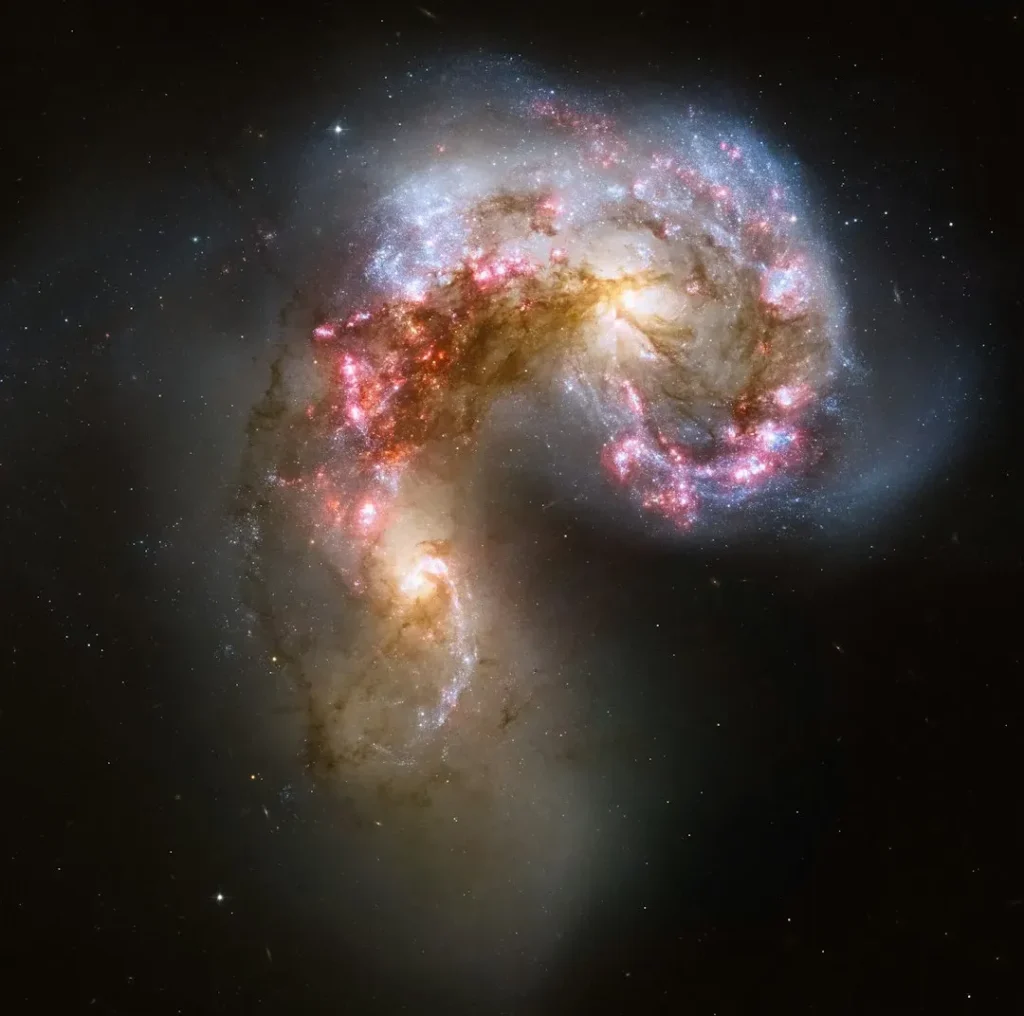

There are moments in human history when everything you thought you knew gets flipped completely upside down. Not gradually, not with warning, but suddenly and irreversibly. The cosmos has a habit of doing that to us. Every time we think we’ve figured something out, the universe casually reveals that we’ve barely scratched the surface.
From a photograph of a distant smudge of light to a sound that traveled over a billion years to reach us, these discoveries don’t just fill in the blanks of a textbook. They rewrite the textbook entirely. Buckle up, because what you’re about to read may seriously mess with your sense of place in the cosmos. Let’s dive in.
Hubble’s Revelation: The Universe Is Bigger Than Anyone Imagined
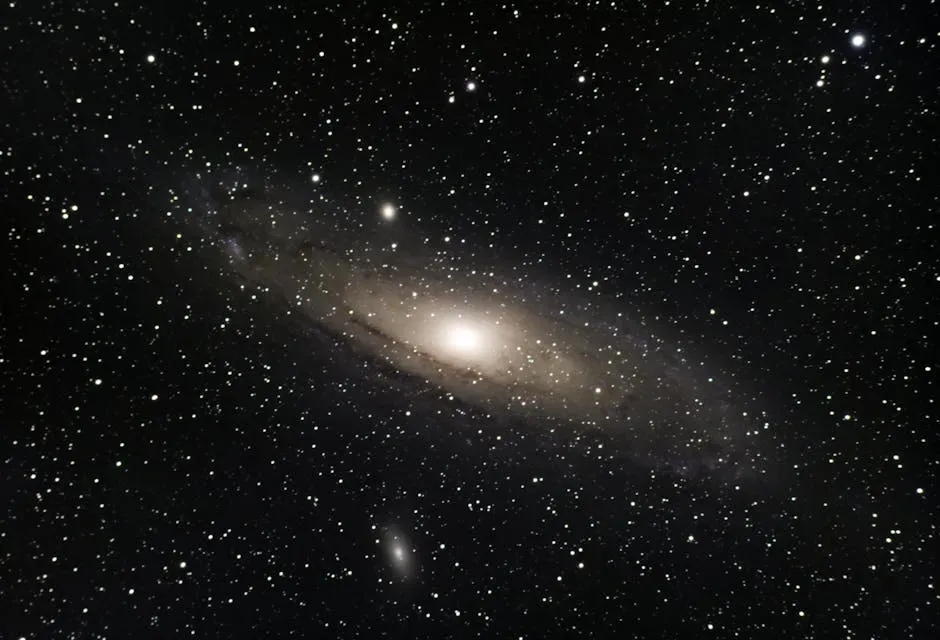
For most of human history, people assumed the Milky Way was basically the whole universe. Everything that existed, all of it, right there in one galaxy. Then a single photograph taken on October 6, 1923, shattered that assumption completely. That photographic glass plate, captured by Edwin Hubble at Carnegie’s Mount Wilson Observatory, forever and paved the way for modern astronomy.
A century ago, Hubble’s discovery opened humanity’s eyes as to how large the universe really is, revealing that our Milky Way galaxy is just one of hundreds of billions of galaxies in the universe. Think about that for a second. You can walk outside on a clear night, look up at the Milky Way, and know that every single point of faint light you see is just our tiny neighbourhood in an unfathomably vast cosmic web.
Hubble would go on to make several more major contributions to our understanding of astronomy, most significantly in 1929 when he showed that the universe is expanding, which led to the development of the Big Bang theory, one of the cornerstones of modern cosmology. Honestly, it’s hard to overstate how seismic that was. Not only is the universe enormous, it’s actively growing. Every moment, the space between galaxies is stretching outward like dough on a cosmic baking sheet.
The Big Bang’s Echo: Discovery of the Cosmic Microwave Background
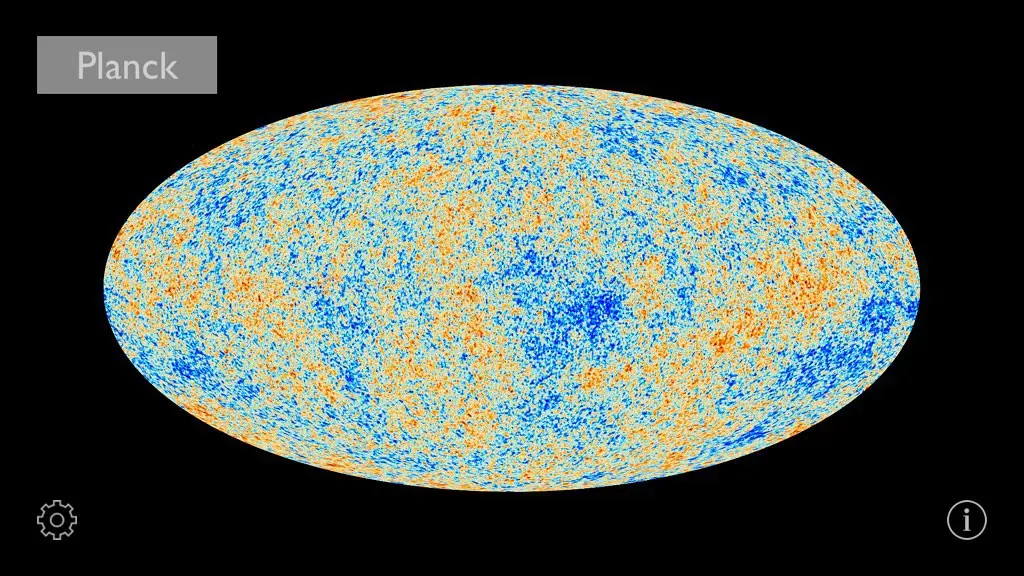
Here’s the thing about truly great scientific discoveries: some of the best ones were found completely by accident. On May 20, 1964, American radio astronomers Robert Wilson and Arno Penzias were working at the Horn Antenna in Holmdel, New Jersey. When they pointed the antenna at empty patches of sky, the researchers stumbled on a low-level hiss. The constant noise would turn out to be cosmic radiation – the cosmic microwave background, evidence for the Big Bang theory of the beginning of the universe.
For the first 380,000 years or so after the Big Bang, the entire universe was a hot soup of particles and photons, too dense for light to travel very far. However, as the cosmos expanded, it cooled and became transparent. Light from that transition could now travel freely, and we see a lot of it today. This light is called the cosmic microwave background, and it carries information about the very early universe.
The CMB is the key experimental evidence of the Big Bang theory for the origin of the universe. Penzias and Wilson received the 1978 Nobel Prize in Physics for their discovery. What blows my mind is that two scientists essentially heard the leftover whisper of creation itself while trying to eliminate what they thought was radio interference. The universe had been calling out this whole time, waiting for someone patient enough to listen.
The Expanding Universe Is Accelerating – and Nobody Expected That
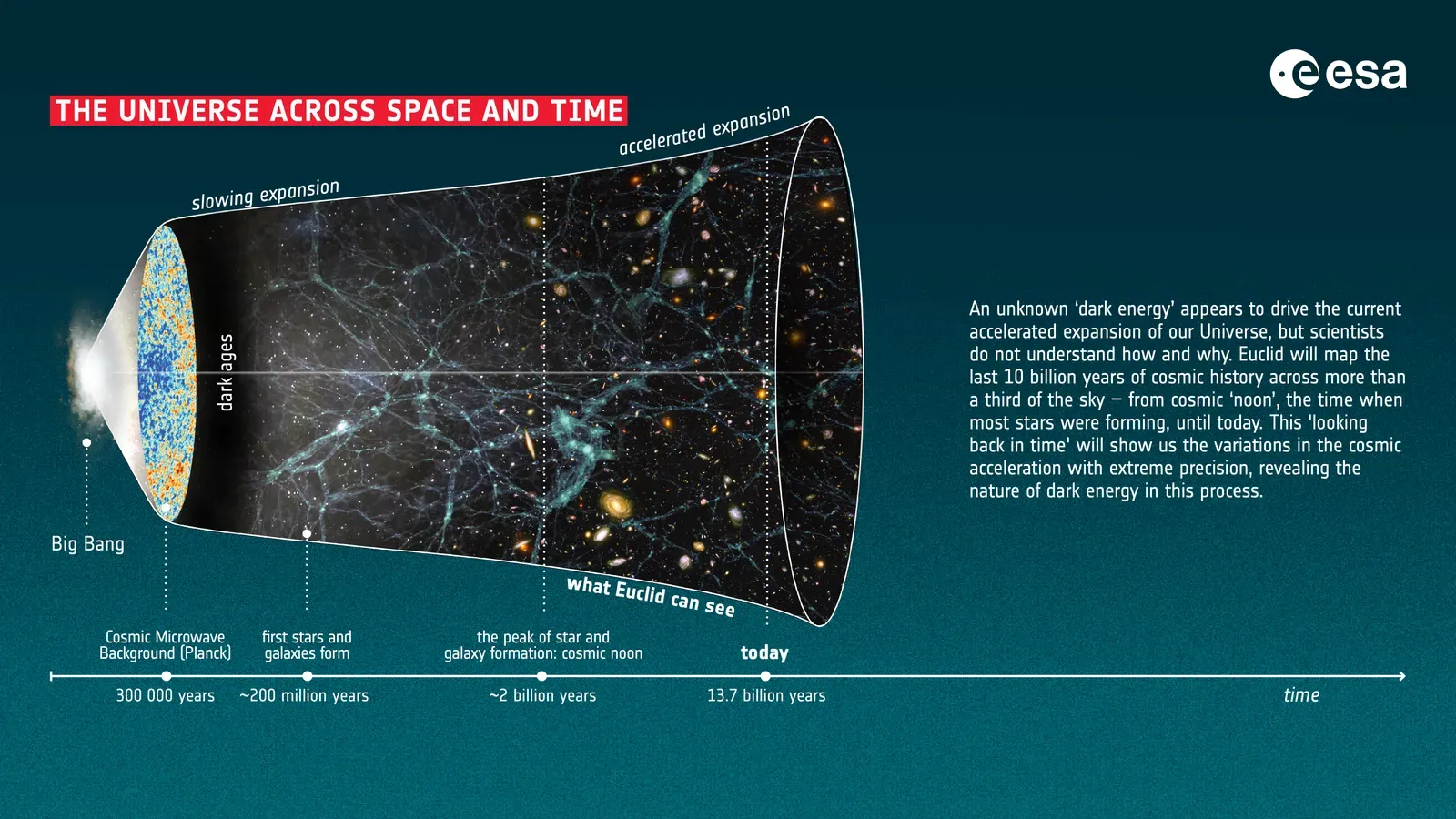
Scientists knew for decades that the universe was expanding. That part wasn’t new. What was shocking was what happened in 1998, when observations completely overturned everything physicists thought they understood about gravity and cosmic fate. In 1998, the scientific community was stunned to discover that the universe is not only expanding, but expanding at an accelerating rate. Conventional wisdom dictated that gravitational attraction by matter should be slowing the expansion, but careful observations of a special type of supernova revealed the opposite.
The idea of “dark energy” was born, a strange form of energy thought to permeate the universe and exert a repulsive force on all large-scale structures, driving them farther apart at an ever-faster rate. Though its nature remains largely unknown, it is estimated that at least roughly two thirds of the universe’s overall composition is made up of dark energy. Two thirds! We live in a universe whose dominant ingredient is something we cannot see, touch, or even properly define.
The unexpected discovery led to the concept of dark energy, and contributed to the 2011 Nobel Prize in Physics to its discoverers. I think what makes this discovery so unsettling, in the best possible way, is what it implies about the future. Billions of years from now, galaxies will accelerate away from each other until the sky goes completely dark, each galaxy an island alone in the void. That’s a profound consequence of a discovery made by watching dying stars.
First Photograph of a Black Hole: Seeing the Unseeable
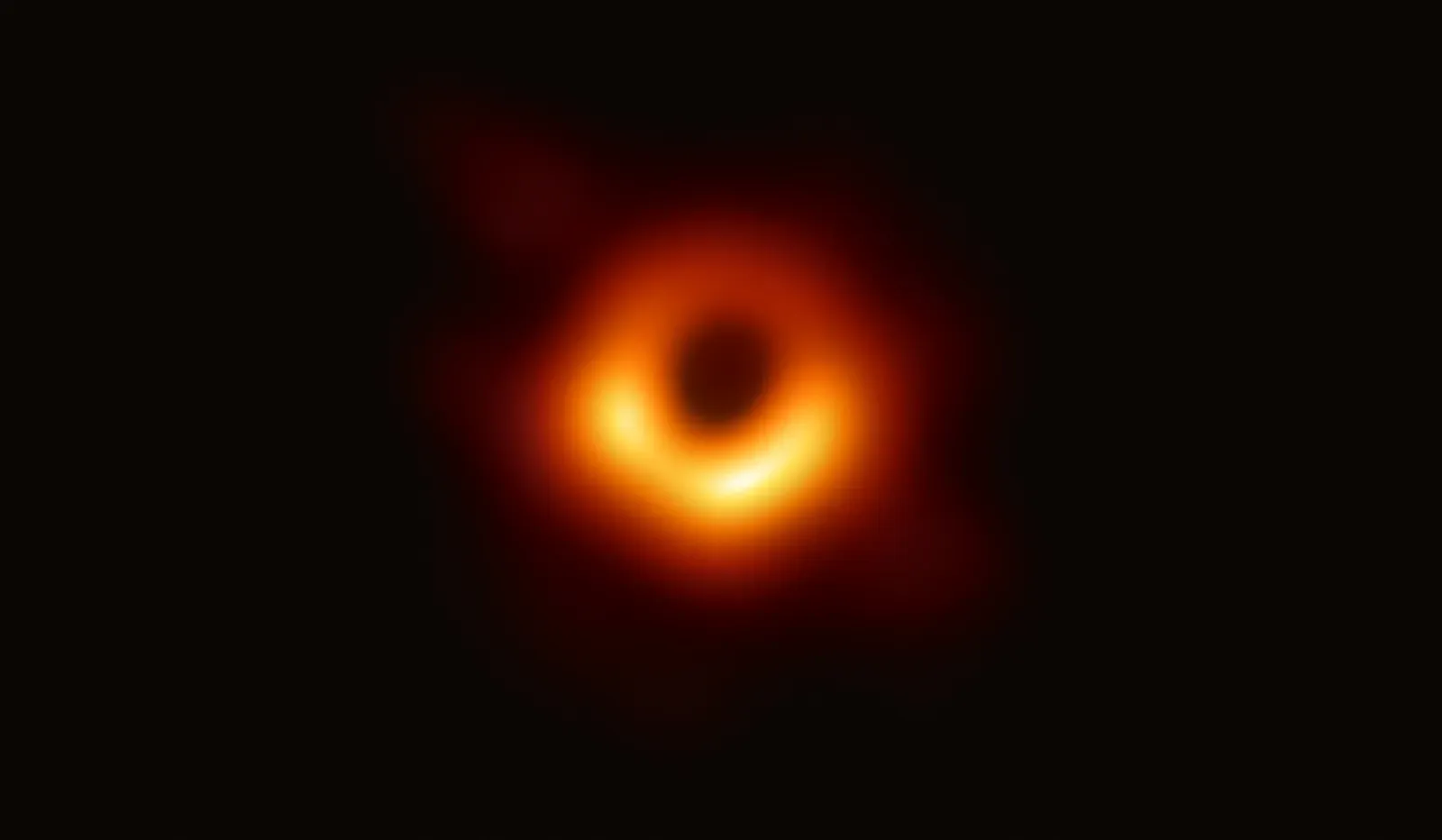
For most of modern physics, black holes were a prediction, an inevitable mathematical consequence of Einstein’s general relativity. You could calculate them. You could infer them from their effects on nearby stars. But actually seeing one? That was considered essentially impossible, a bit like trying to photograph your own shadow in total darkness. In 2019, an international array of coordinated telescopes, collectively called the Event Horizon Telescope, achieved what was conventionally thought to be impossible: it captured an image of the silhouette of a black hole. The supermassive black hole caught on camera lies 53 million light years away, at the heart of the galaxy Messier 87, and contains the equivalent mass of 6.5 billion stars the size of our sun.
Organizing a photoshoot for a black hole is no easy feat, but the global collaboration that created the Event Horizon Telescope got it done. By synchronizing radio telescopes all around the world, essentially creating one Earth-sized observatory, the team was able to capture incredible visuals of the supermassive black hole at the center of the Messier 87 galaxy some 55 million light-years from our solar system.
The image itself, a glowing orange ring with a dark shadow at its center, became one of the most iconic scientific photographs ever taken. It confirmed general relativity in an extreme environment and proved that these cosmic monsters are real. Not theory. Not metaphor. Real. That orange glow is superheated gas swirling at the edge of oblivion, and now you’ve seen it with your own eyes.
Gravitational Waves: We Finally Heard the Universe Speak
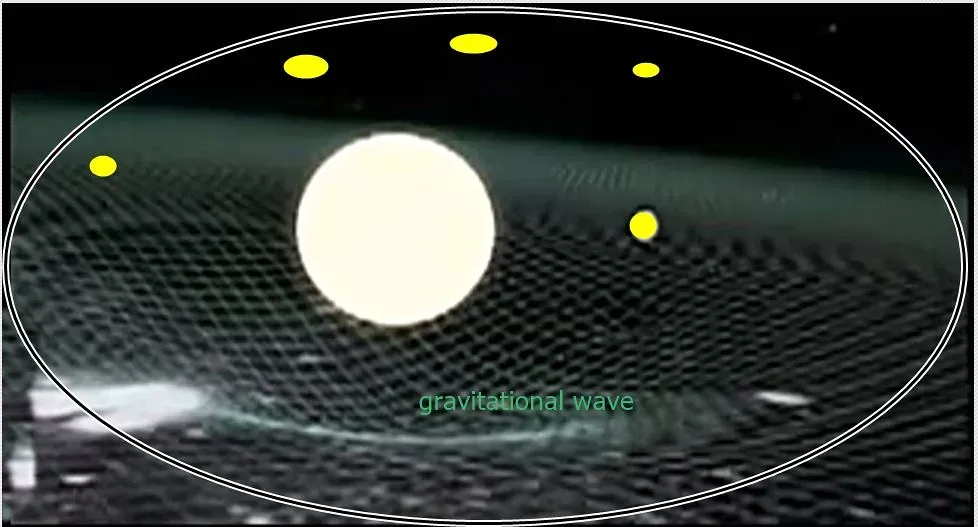
Albert Einstein predicted gravitational waves back in 1916 as a consequence of his general theory of relativity. A century later, scientists finally heard them. On September 14, 2015, the twin Laser Interferometer Gravitational-wave Observatory detectors, located in Livingston, Louisiana, and Hanford, Washington, both measured ripples in the fabric of spacetime arriving at the Earth from a cataclysmic event in the distant universe.
About 1.3 billion years earlier, two massive black holes had collided. The collision released massive amounts of energy in a fraction of a second and sent gravitational waves in all directions. On September 14, 2015, those waves reached Earth and were detected by researchers at LIGO. It took 1.3 billion years for that signal to arrive. The sheer scale of that patience, the universe sending us a message written in the fabric of space and time, crossing an unimaginable distance, is enough to make your head spin.
For the first time, scientists had observed ripples in the fabric of spacetime called gravitational waves, arriving at the Earth from a cataclysmic event in the distant universe. This confirmed a major prediction of Albert Einstein’s 1915 general theory of relativity and opened an unprecedented new window onto the cosmos. Thanks to LIGO’s discovery, a new field of science has been born: gravitational wave astronomy. We’re no longer limited to observing light. We can now listen to the universe itself.
Exoplanets Everywhere: You Are Not Living on the Only World
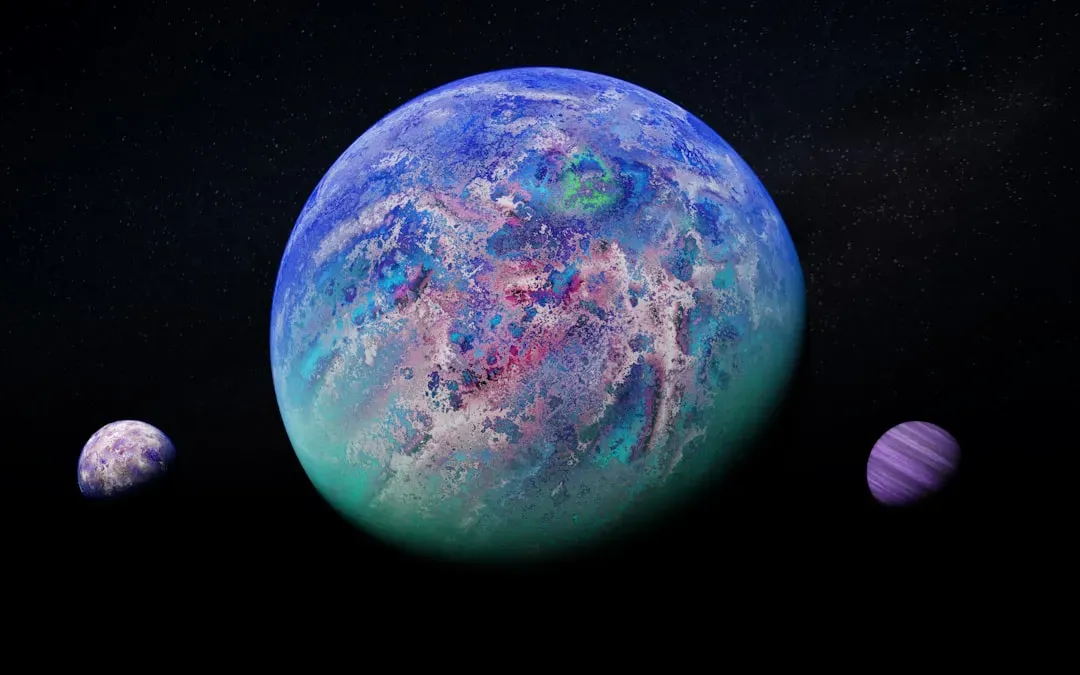
For most of human history, there was only one confirmed solar system in existence: ours. The idea that other stars might host their own planets was considered plausible but entirely unproven. Then came a wave of discoveries so prolific they permanently redefined our place in the galaxy. A slow-burning scientific revolution has been underway throughout the past few decades, transforming how we view the universe. Thanks to the incredible precision achieved by instruments both on Earth and in space, we now know that exoplanets are common around the stars of the Milky Way, and presumably throughout the universe.
Over its nearly decade-long run, the Kepler space telescope discovered over 2,600 exoplanets, an astonishing haul that confirmed, at last, that planets of all kinds are common around stars in our galaxy. Let that number sink in. Over 2,600 confirmed worlds from a single telescope. That’s not a handful of cosmic outliers. That’s a pattern. Planets are the rule, not the exception, scattered across the galaxy in staggering abundance.
Astronomers have found a system of seven Earth-sized planets just 40 light-years away. Using ground and space telescopes, the planets were all detected as they passed in front of their parent star. This system has both the largest number of Earth-sized planets yet found and the largest number of worlds that could support liquid water on their surfaces. Seven Earth-sized planets around a single star, some potentially holding liquid water. It’s hard to think about that and not feel something shift inside you.
Dark Matter: The Invisible Scaffolding of the Universe
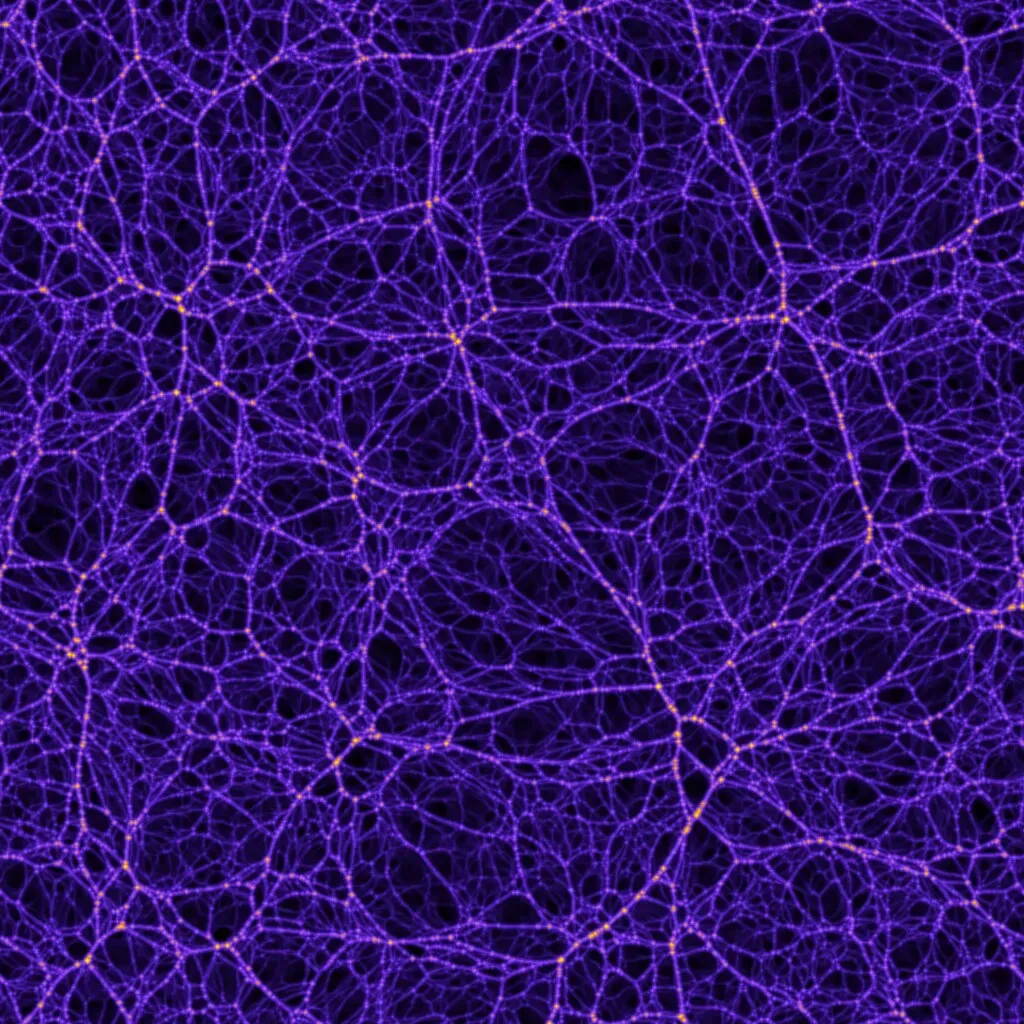
Here’s something that might genuinely unsettle you. The atoms, stars, planets, and galaxies we can see and measure make up only a small fraction of everything that actually exists. The rest, the vast majority of the universe’s mass, is something we cannot detect, cannot see, and cannot directly interact with. From appearances, galaxies are entirely embedded in a form of matter that is currently unknown and undetectable. Nonetheless, the existence of this form of matter is the only explanation for the observed behavior of galaxies, unless there are some undiscovered properties of gravity that still elude science.
Astronomers Vera C. Rubin and W. Kent Ford used telescope observations to determine the rotation curve of the Andromeda Galaxy, providing important evidence that contradicted expectations of how matter is distributed inside a spiral galaxy. Subsequent observations confirmed the existence of dark matter. Rubin’s work was pioneering. She showed that stars at the outer edges of galaxies spin faster than they should, given the visible mass present. Something invisible had to be holding them in place. It was a discovery hiding in plain sight within the motion of the stars themselves.
NASA telescopes have helped us better understand this mysterious, invisible matter that is five times the mass of regular matter. The first direct detection of dark matter was made in 2007 through observations of the Bullet Cluster of galaxies by the Chandra X-ray telescope. Five times the mass of everything we can observe. The universe you see when you look up at the night sky is like the tip of an iceberg floating in a dark, invisible ocean. Everything visible is the minority. It’s humbling, a little disorienting, and incredibly fascinating all at once.
Conclusion: The Universe Keeps Surprising Us
What connects all seven of these discoveries is something surprisingly human. Curiosity. Stubbornness. A refusal to accept “we don’t know” as a final answer. In every case, these breakthroughs came from people willing to question what everyone else assumed was settled.
The universe is not a static backdrop. It’s dynamic, expanding, rippling, full of invisible forces, unseen matter, and echoes of its own violent birth. Each revelation has not only expanded our knowledge but also inspired further exploration, sparking curiosity and paving the way for future astronomical revelations that await us in the boundless universe.
We live in a genuinely astonishing era of science. The tools are better, the collaboration is global, and the discoveries are coming faster than ever. As you look at the night sky, you’re not just looking at stars. You’re looking at the visible edge of a mystery that is still very much being solved. Which of these discoveries surprises you the most? Drop your thoughts in the comments below.