
For all our rockets, AI, and quantum computers, there are ancient objects quietly sitting in museums and storerooms that still outsmart us. We can scan them, measure them, chemically test them – but when it comes to truly recreating how they were made, with the tools and knowledge of their time, we keep hitting a wall. That gap between what we think we know and what they clearly could do is where things start to feel a little unsettling.
I remember standing in front of a tiny carved object in a museum once, staring at it for way too long, thinking: there is no way someone did this with stone tools in dim light. And yet, they did. That mix of awe and discomfort – realizing the people we call “ancient” could pull off things we still struggle to reverse engineer – is exactly what makes the following artifacts so hauntingly fascinating.
Antikythera Mechanism – The Ancient Greek “Computer”
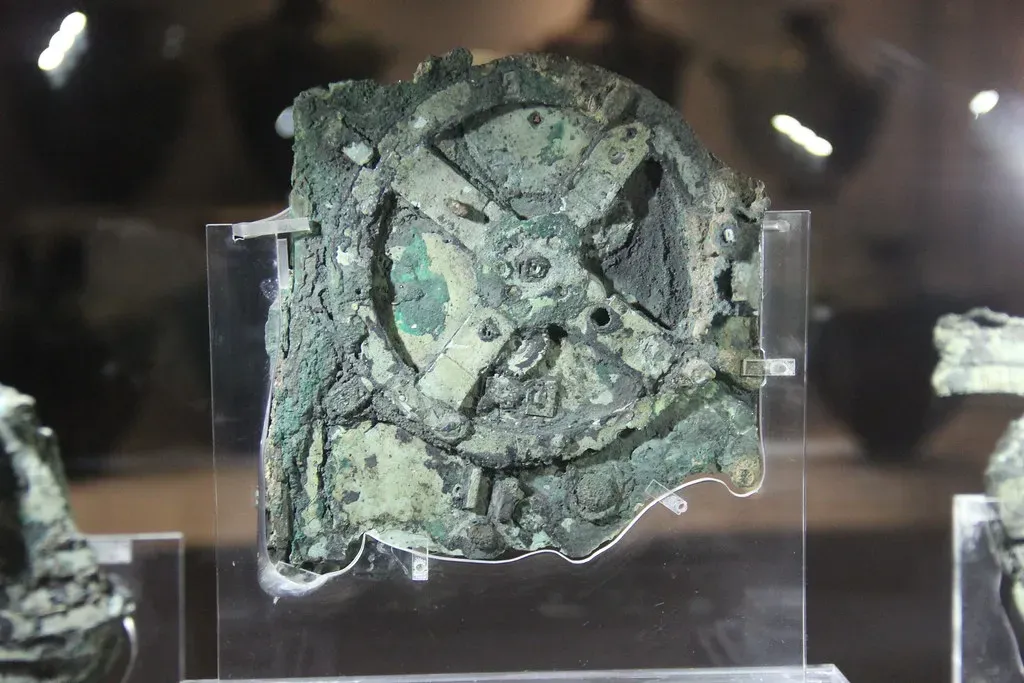
The Antikythera Mechanism was pulled from a Roman-era shipwreck off a Greek island in the early twentieth century, and it instantly broke every assumption about ancient technology. Corroded and fragmented, it turned out to be a complex clockwork device with dozens of finely cut bronze gears designed to predict eclipses, track planetary motions, and follow multiple calendars. For its time, it’s as if someone slipped a mechanical laptop into the ancient world and then tossed it overboard.
Modern engineers have built reconstructions, but they’ve done it with advanced tools, precise machining, digital modeling, and a century of trial and error. What we still can’t fully replicate is the whole chain: how ancient artisans conceived, designed, and then cut such precise, interlocking gears with hand tools and almost no margin for error. The knowledge network, workshop practices, and step‑by‑step methods behind the original remain an unsolved puzzle that feels far bigger than the corroded lump of metal on display.
Roman Concrete – The Self-Healing Stone That Outlived Empires
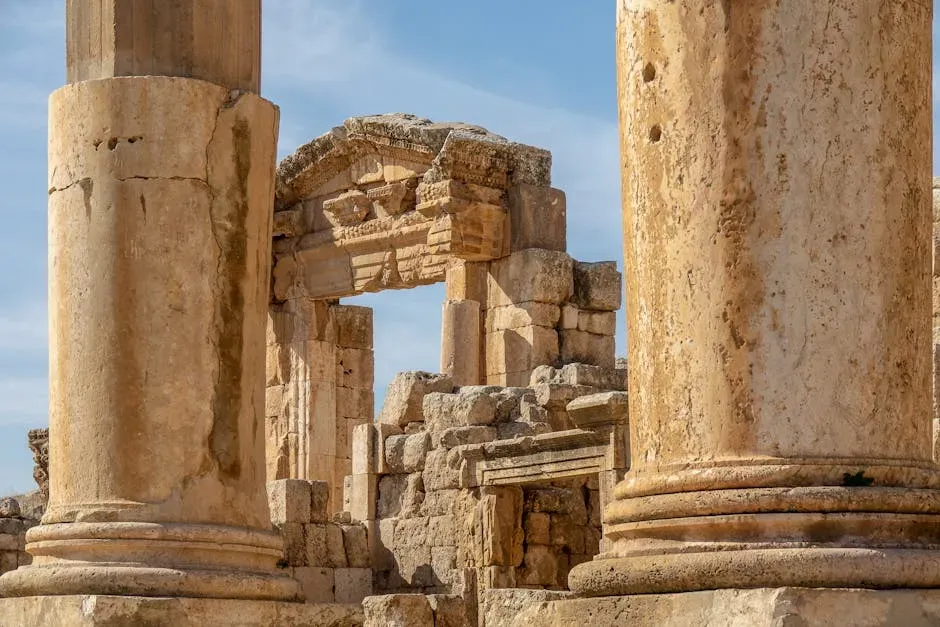
Walk around the ruins of Rome and you’ll notice something quiet but outrageous: a lot of their concrete is still holding up after nearly two thousand years, especially in harbors and coastal structures that should have been pulverized by the sea long ago. Modern concrete, by comparison, often starts cracking badly within a human lifetime. That alone is a little embarrassing. Recent studies show Roman builders used volcanic ash, lime, and clever mixing techniques that created crystals and structures we’re only now beginning to interpret.
Engineers today can create very durable concretes, even fiber-reinforced and high-performance mixes, but reproducing Roman concrete exactly – from raw materials to mixing methods – is still not fully nailed down. The way their material seems to “self-heal” when tiny cracks form, reactivating lime and minerals in the presence of water, is only partially understood in practical, scalable terms. We can approximate their recipes in laboratories, sure, but the full craft – handed down, adapted to different local materials, and proven over centuries – is still just out of reach.
Damascus Steel Blades – Legendary Swords With Lost Microstructures
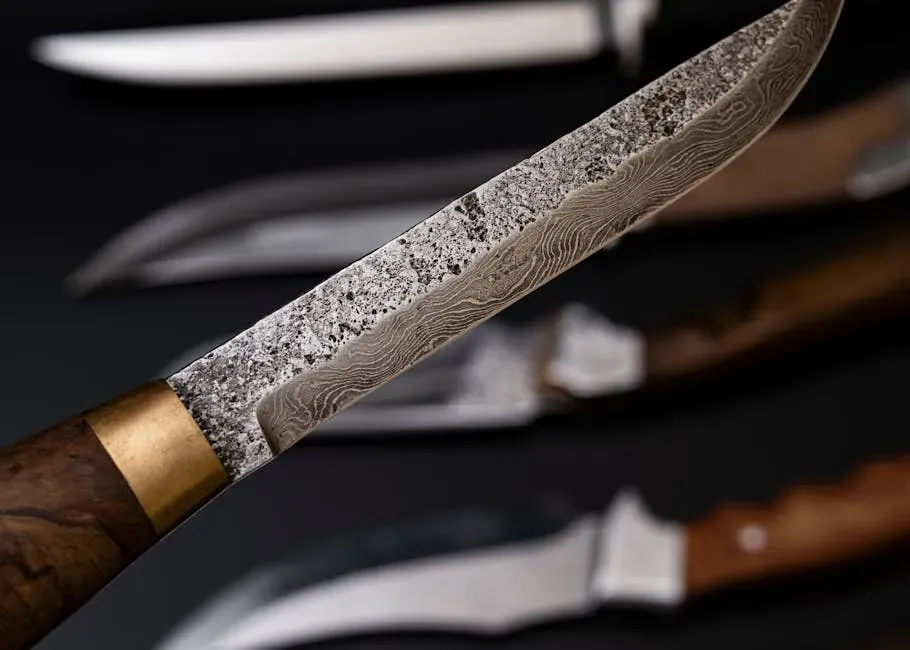
Damascus steel became famous for blades that were strangely beautiful and brutally effective: rippling waterlike patterns on the surface, incredible sharpness, and a reputation for cutting through lesser swords. These weapons, likely made from specialized crucible steels traded across regions, gained near-mythic status. When examined under modern microscopes, some historical blades show intricate microstructures, including tiny carbides and sometimes even nanometer-scale features that seem to enhance toughness and edge retention.
Today, metalworkers can make “Damascus-style” patterns and high-end steels that perform superbly, but that’s not the same as fully reproducing the original process. The exact combination of ore composition, smelting conditions, impurities, forging temperature cycles, and repeated craftsmanship has been lost. Modern attempts either get the performance without the same internal structures or the look without the original properties, and that stubborn gap is why the real process behind classical Damascus steel still feels like a vanished spell.
Egyptian Pyramid Masonry – Precision in Stone at Monumental Scale

Everyone knows the pyramids are big; that’s almost boring at this point. What’s more shocking is the precision: enormous limestone and granite blocks fitted so tightly that in many places you can barely slip a blade between them. Some internal passages and chambers are aligned with surprising astronomical accuracy, cut through hard stone with a straightness and smoothness that continue to puzzle engineers. The overall tolerances, especially given the number of blocks involved, are staggering.
Modern construction can achieve astonishing precision, but we do it with lasers, cranes, standardized tools, and complex logistics software. Reproducing the pyramids the way the Egyptians did – with their tools, their organizational systems, their methods for moving and fitting stone – is what we cannot fully replicate. We can guess at ramps, levers, sleds, and teams, but a fully convincing, practically tested, large-scale method that matches their speed, accuracy, and finish is still missing. The stones remain mute, and so does the workflow that made them a seamless mountain of geometry.
Phaistos Disc – An Inexplicable Masterclass in Early Mass Production
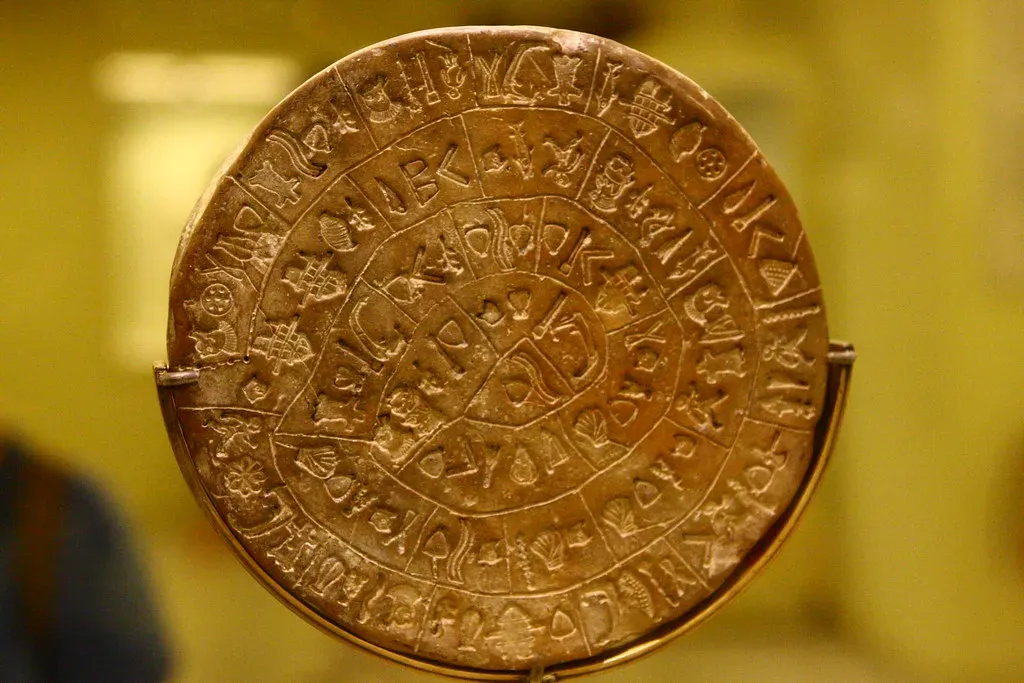
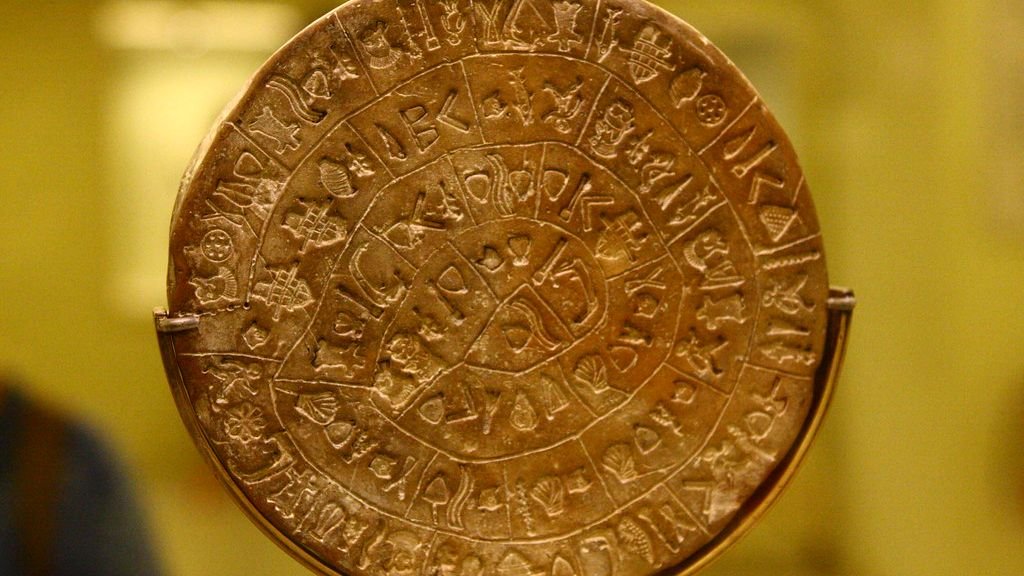
The Phaistos Disc, found in Crete, looks at first like a simple clay object with spiraling symbols stamped into it. But look closer and it becomes stranger: those symbols appear to have been pressed in with reusable stamps, making it one of the earliest known uses of something like movable type. That idea of treating writing as a repeatable, mechanically applied system is a huge conceptual leap, one we usually associate with printing presses many centuries later.
We’ve managed to reproduce the disc’s appearance with modern tools, but what we can’t fully replicate is the original production environment and intent. No other confirmed artifacts from that culture show the same clear use of symbol stamps, and we still haven’t definitively deciphered the script or the purpose of the disc. It’s like finding a single page of mass-printed text in a world that otherwise only carved by hand, and having no idea who built the press, where the rest of the pages went, or why no one else copied the trick.
Lycurgus Cup – Ancient Roman Nanotechnology in Glass
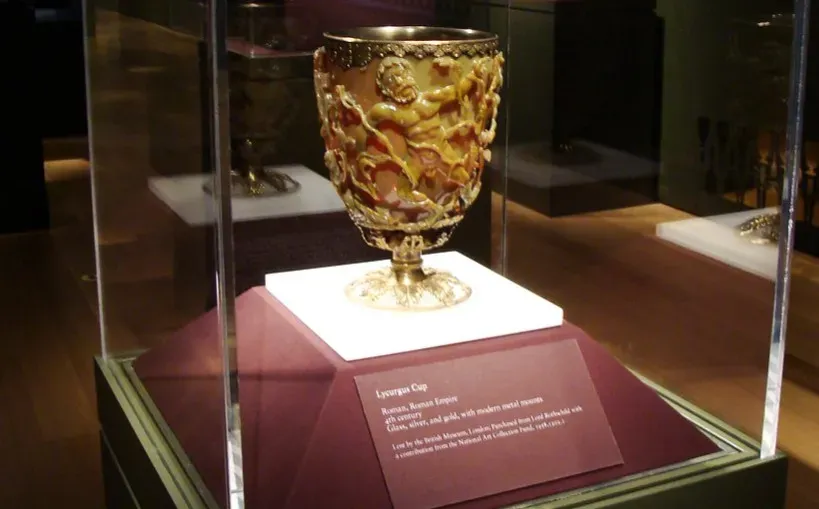
The Lycurgus Cup, a Roman glass cage cup, has a party trick that feels suspiciously modern: it changes color depending on the light. Lit from the front, it looks one color; lit from behind, it shifts dramatically. Scientists have discovered that this effect comes from tiny particles of gold and silver embedded in the glass at a scale comparable to modern nanotechnology. That careful distribution of nanoparticles alters how light is scattered, creating the dramatic color shift.
We can recreate the effect in controlled laboratory settings using modern equipment, but fully reproducing the original Roman process from raw materials and hand techniques remains uncertain. Did they understand what they were doing in conceptual terms, or was it a masterful empirical tradition, refined through trial and error across workshops? We don’t know exactly how they consistently controlled particle size and dispersion with such finesse. That combination of art, chemistry, and microscopic precision, achieved without microscopes, still feels like a magic trick science hasn’t fully deconstructed.
Chinese Han Dynasty Formula for Flexible, Brilliant Lacquerware
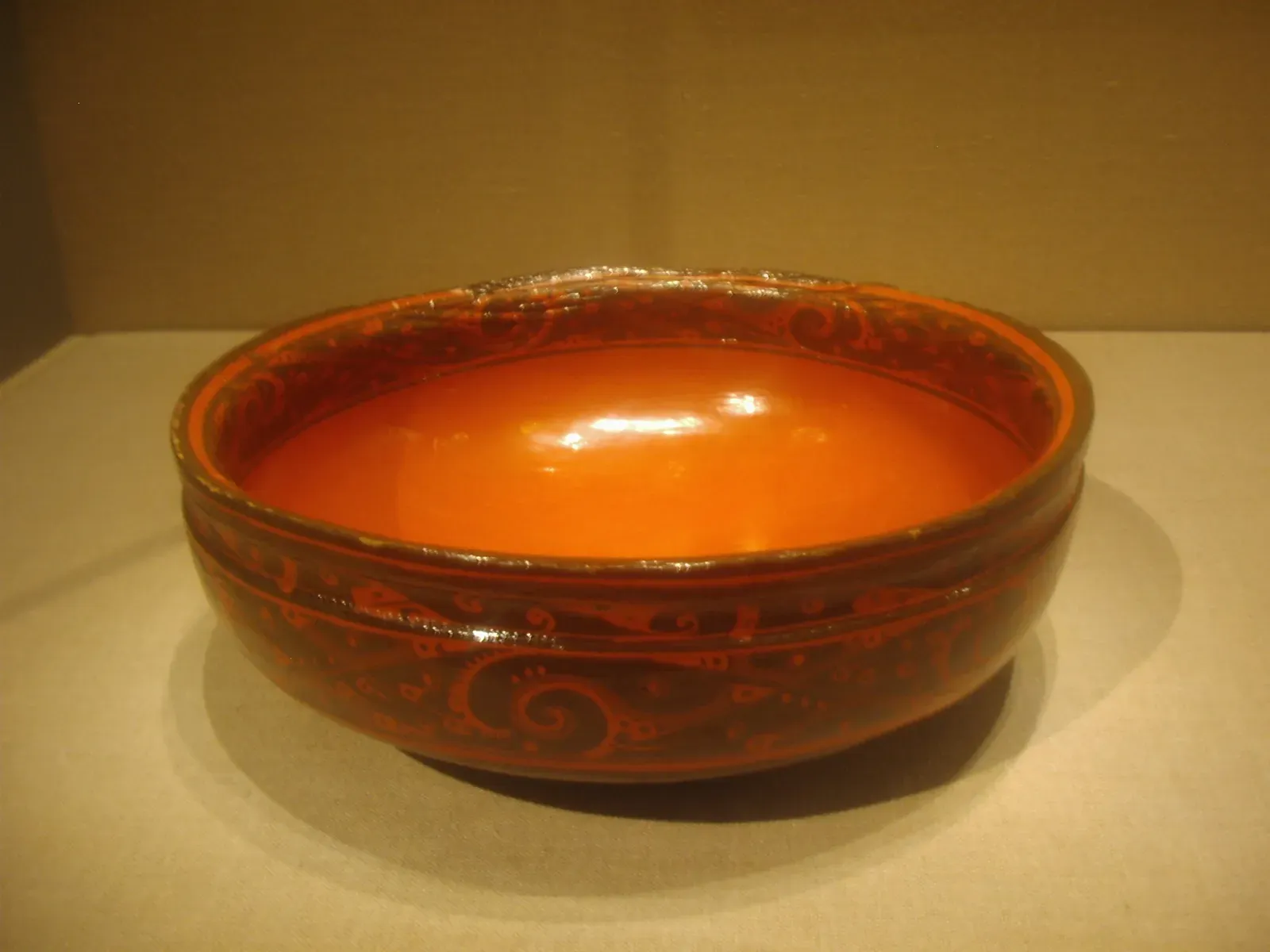
Ancient Chinese lacquerware, especially from the Han Dynasty and later periods, has a strange resilience that continues to frustrate restorers. These objects – bowls, screens, boxes, sometimes built up with dozens of layers of sap-based lacquer – can remain glossy, richly colored, and surprisingly flexible after centuries. That durability comes from a messy, reactive process involving tree sap, humidity, pigments, and meticulously staged drying that our modern materials science only partly mirrors.
Contemporary lacquer products and synthetic coatings can be tough and beautiful, but duplicating the exact chemical composition, layer structure, and long-term performance of some historical pieces is still elusive. Ancient artisans worked within tight temperature and humidity ranges and guarded workshop secrets for generations, tweaking recipes that we now mostly see as a finished surface. It’s one thing to make something that looks similar today; it’s another to confidently recreate an object that will behave the same way five hundred years from now.
Greek and Roman Polished Marble Sculptures – Mirror-Smooth Without Power Tools
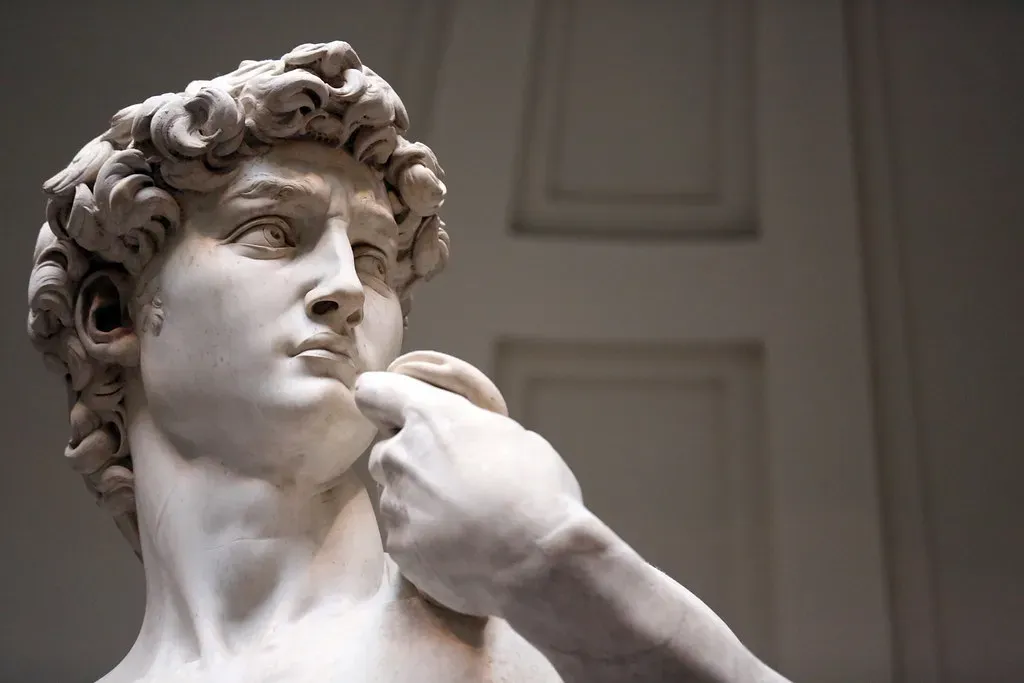
Many ancient marble statues and architectural surfaces weren’t just carved; they were polished to an almost eerie smoothness. When you see them in person, there’s a sense of impossible skin-like softness in the stone, achieved with nothing resembling our powered grinders or sanders. Some surfaces are so regular and reflective that modern sculptors, even with electric tools, struggle to reach that level of uniform finish over large areas without subtle ripples and imperfections.
We can technically recreate the effect in small patches or under ideal workshop conditions, but systematically reproducing the entire chain of quarrying, rough shaping, fine carving, and step-wise polishing the way they did remains only partly understood. Their abrasive choices, tool maintenance, labor organization, and quality control across multiple workshops form a missing manual we’d love to read. Right now, we simply reverse engineer bits and pieces, while the statues calmly remind us that someone already solved this problem two thousand years ago.
Inca Polygonal Stone Walls – Jigsaw Masonry That Needs No Mortar
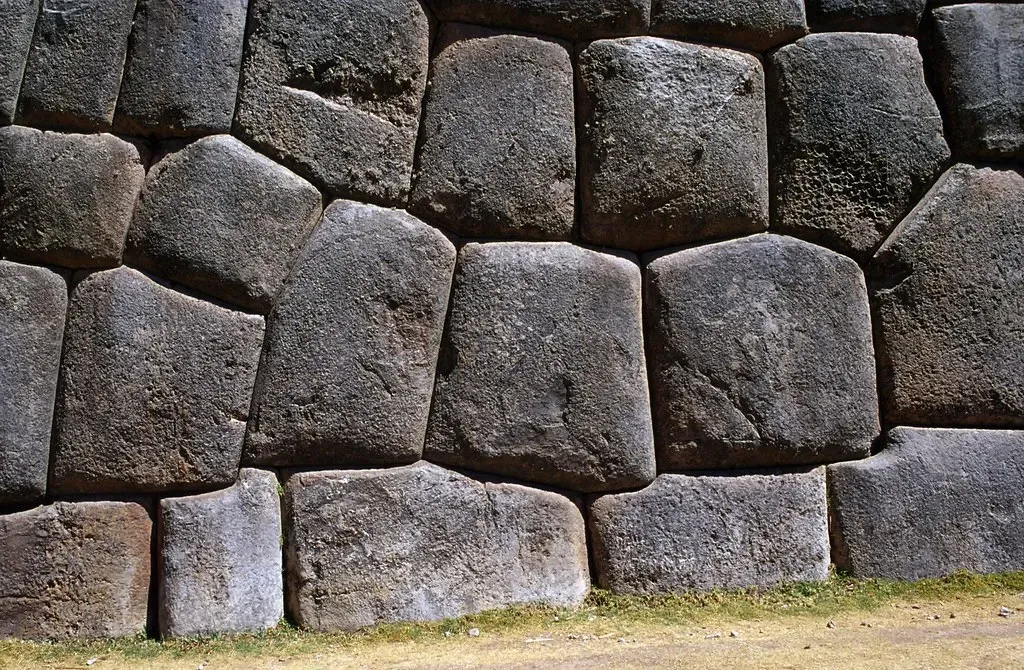
The Inca and related Andean cultures built walls out of irregular, multi-sided stones that interlock like three-dimensional puzzles. These blocks, some enormous, are fitted so closely that not even a sheet of paper can slip between them, and they do it without mortar. Even more impressively, these walls have survived centuries of earthquakes, often remaining intact when more modern masonry collapses nearby. Their geometry and stability are not accidental.
Modern engineers can design earthquake-resistant structures, but typically by using standardized materials and digital modeling. The Incas achieved comparable resilience using eyeballing, hand tools, and an approach we still don’t fully grasp in practice. We’ve never convincingly rebuilt a large-scale, true-to-method Inca polygonal wall from raw stone using only period-appropriate tools and techniques, with the same precision and speed. Until we can, their masonry remains less a solved technique and more a standing riddle in rock.
Japanese Samurai Swords (Katana) – Metallurgy as Ritual and Mystery
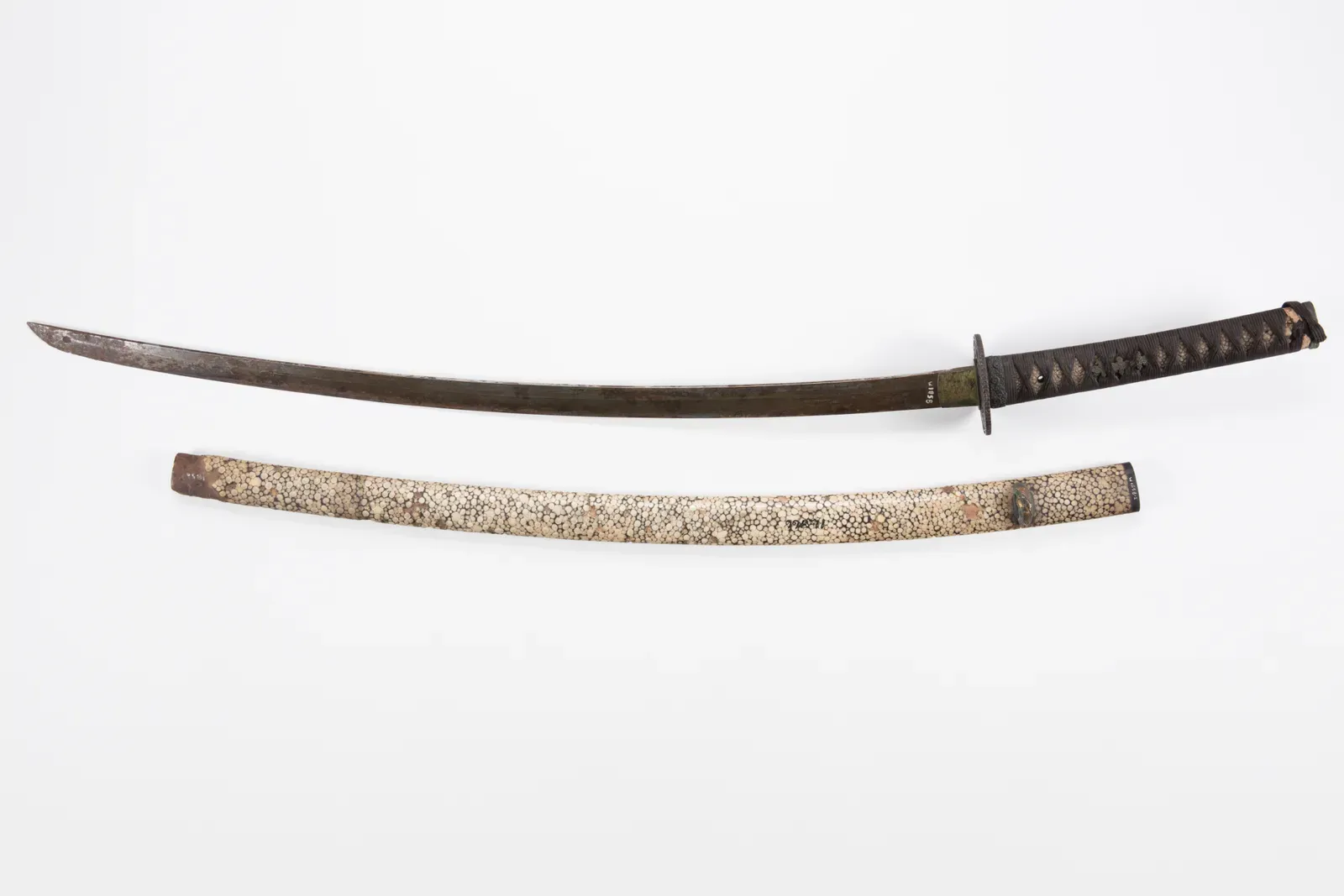
Katana are wrapped in so much myth that it’s hard to separate legend from physics, but the blades themselves really are extraordinary feats of controlled metallurgy. Traditional smiths folded and welded steel repeatedly, managing carbon content, impurities, and gradients of hardness in a way that turned brittle raw material into a balanced weapon. The combination of hard cutting edge and tougher spine, produced through differential heat treatment and clay application, created blades praised for their cutting ability and resilience.
Today, modern steels and industrial processes can exceed many of the katana’s properties on paper, and contemporary smiths can create excellent replicas. What we still haven’t fully replicated, though, is the complete traditional system: from raw tamahagane steel production to forging, heat treatment, and finishing that consistently reproduces every microscopic detail and long-term behavior of the finest historical blades. So much of that process was embodied knowledge, ritualized practice, and hyper-local material selection. You can follow the recipes, but there’s still an intangible gap between copying the steps and truly remaking what the old masters did.
These artifacts all share a common thread: they’re not just beautiful or old, they expose blind spots in our confidence about progress. Modern science can analyze composition, simulate stresses, and propose clever hypotheses, but there’s a difference between describing an object and actually making another one under the same constraints. In that difference lives a quiet kind of humility that’s easy to forget when we’re busy patting ourselves on the back for our latest breakthroughs.
Maybe that’s why these objects feel so magnetic. They suggest that human ingenuity doesn’t follow a straight, ever-rising line – it comes in brilliant pockets, sometimes flaring up and then vanishing, leaving only stubborn, enigmatic artifacts behind. Standing in front of them, you can almost feel a parallel conversation across time: they’re proof that people long ago were asking hard questions and solving them with a depth we still respect, and sometimes envy. Which of today’s everyday objects do you think will baffle people a thousand years from now?