
Imagine the first time a human-like voice cut through the night, not as a scream or growl, but as something more: a shared signal with meaning. That moment, whenever it happened, changed everything. Language turned a scattered species of clever primates into storytellers, planners, conspirators, and caregivers who could pass knowledge across generations instead of losing it with each death.
We don’t have fossils of words, no ancient bones of syllables. What we have are clues scattered across genetics, archaeology, anthropology, and the way our brains and mouths work today. When you stitch those clues together, a picture emerges that’s both humbling and thrilling: language didn’t just appear; it was slowly carved out of grunts, gestures, emotions, and problem-solving, over hundreds of thousands of years.
The Silent World Before Words

Before anyone spoke a structured language, our ancestors still had a lot to say. Early hominins likely relied on a mix of facial expressions, body posture, touch, and instinctive cries the way other primates still do today. If you’ve ever watched a group of chimpanzees communicate through screeches, arm movements, and intense eye contact, you’ve probably seen a rough sketch of our own deep past.
This pre-linguistic world wasn’t truly silent, but it was limited. You could warn someone of danger, comfort a crying infant, or express anger or fear, yet describing where the best fruit trees were, or how to carve a better spear, was nearly impossible. Communication was more like a set of emotional alarms than a flexible toolbox. Language, as we know it, would eventually let humans move far beyond the here-and-now, but first it had to grow out of these raw emotional signals.
From Gestures to Grunts: The First Building Blocks
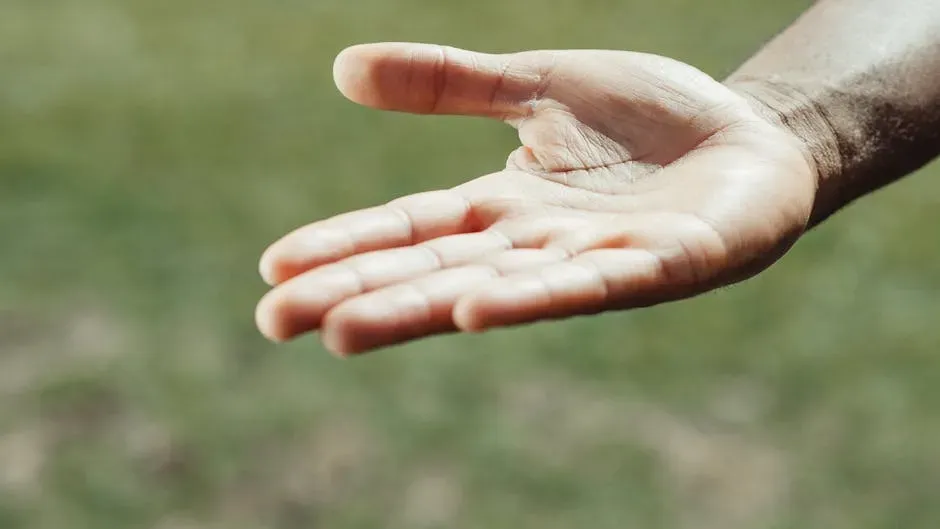
Many researchers think that early communication was heavily gestural: pointing, waving, miming actions, and using the hands the way we often still do when words fail us. Picture a small group around a carcass: someone points, someone mimics cutting, someone gestures “over there.” Even before speech was fully developed, a kind of shared meaning could spread through hand movements and gaze. Our shoulders, arms, and hands became the first “speaking” instruments.
Over time, vocal sounds likely began to hitch a ride on these gestures – simple calls that highlighted or reinforced what the hands were already doing. Grunts, hums, and small changes in pitch could signal question, urgency, or approval. Gradually, some sounds may have taken on stable meanings, like a specific call used only for a particular predator or type of food. At some point, gestures and sounds started to merge into a richer system, one that freed humans from needing constant eye contact or clear line of sight, and that quiet merger set the stage for full-blown speech.
The Anatomy of a Voice: Evolving to Speak
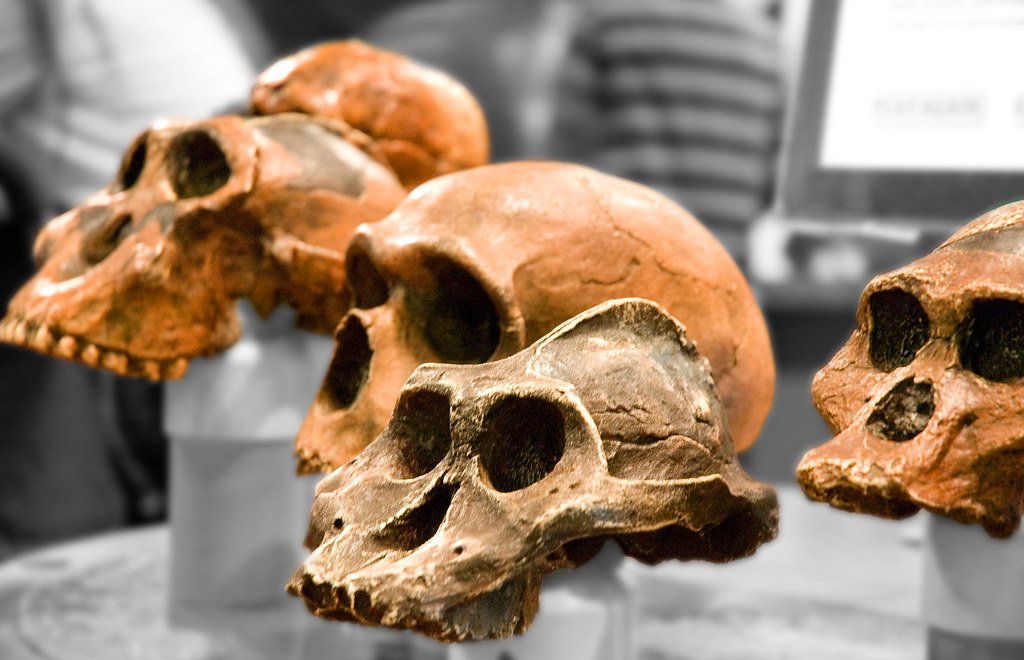
Language isn’t just in the brain; it’s also in the throat, mouth, and face. Compared to other primates, humans have a uniquely shaped vocal tract: a descended larynx, a flexible tongue, and fine motor control over lips and jaw. These changes allowed a huge variety of sounds – vowels like “a” and “i,” and consonants like “p,” “t,” and “k.” Some of those anatomical shifts come with risks; a lower larynx, for example, makes choking more likely.
That trade-off is powerful evidence that being able to speak clearly was worth the danger. Over many generations, individuals who could produce more distinct sounds had an advantage in coordinating hunts, forming alliances, and teaching children. Even the shape of the skull and the position of the base of the tongue reflect an evolutionary investment in speech. Our bodies literally bent themselves around the need to talk, which says a lot about just how valuable language became to survival.
The Brain’s Leap: From Simple Signals to Complex Grammar
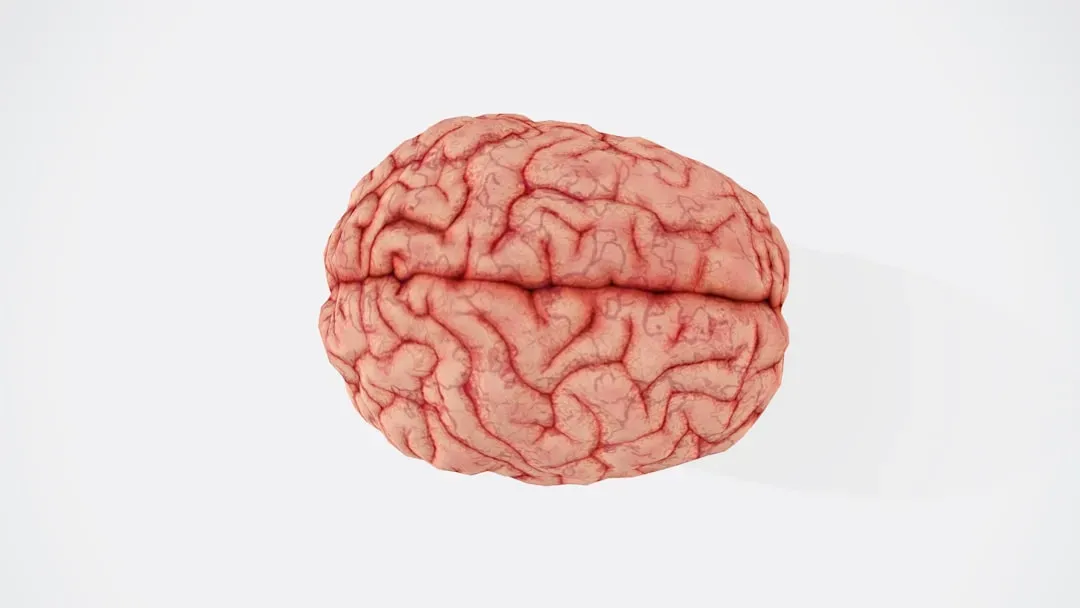
Speech is just noise unless there’s a brain capable of structuring it, and that’s where things get wild. Human brains didn’t just grow bigger; they changed in how they connect and specialize. Certain regions are heavily involved in language processing, like the areas at the side and front of the brain that help us understand and produce sentences. When these areas are damaged, people can lose the ability to speak or understand language while still thinking clearly in other ways, which shows just how specialized they are.
But the real leap wasn’t just about naming objects; it was about combining words into rules – grammar. Grammar lets a small set of sounds and words explode into near-infinite combinations. Instead of just “food there,” you get “we should go there tomorrow because the food will be ripe.” There’s ongoing debate about whether grammar evolved slowly, layer by layer, or emerged more rapidly once the brain architecture was in place. Either way, once complex structure took hold, language turned into a precision tool for sharing ideas far beyond immediate experience.
Cooperation, Gossip, and Survival: Why Language Took Off

Why did language evolve at all, when grunts and gestures might seem “good enough”? One compelling idea is that language was our species’ solution to living in increasingly complex social groups. Instead of grooming each other’s fur like many primates do to build bonds, humans could “groom” each other with conversation. Talking lets you maintain relationships with many more people at once, spreading trust, stories, and norms through a whole group much faster.
Gossip – often dismissed as trivial – may actually have been a powerful engine for language. Being able to say who cheated, who shared, who lied, and who was generous helped groups reward cooperators and punish free riders, keeping communities more stable. On top of that, language turned planning and teaching into superpowers: how to make tools, where to migrate, when the animals usually move. Once language reliably improved survival and reproduction, it didn’t just stick around; it exploded.
When Did Speech Really Begin? Clues from Bones and Genes
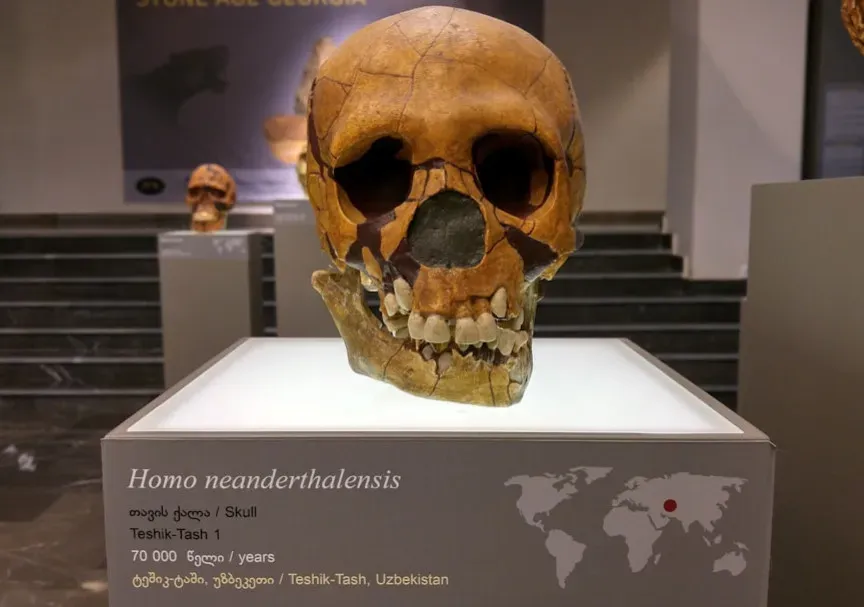
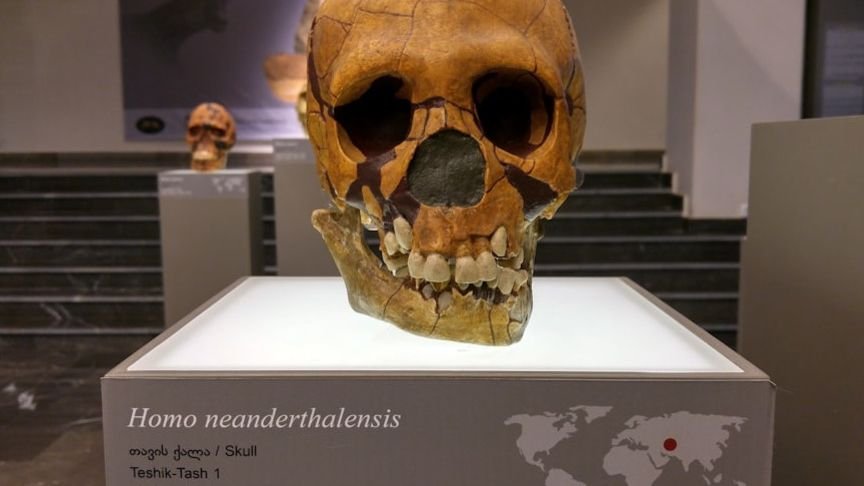
We don’t know the exact moment when our ancestors started speaking in something we’d recognize as language, but we do have boundaries. Fossil skulls and inner ear bones suggest that by several hundred thousand years ago, some hominins were already adapted to hearing and possibly producing complex sounds. Similarities in the vocal tract between modern humans and some ancient relatives hint that the capacity for a wide range of speech sounds existed long before recorded history.
Genetics adds another piece to the puzzle. Certain genes are strongly linked with speech and language abilities in humans, and their evolution points to changes that likely supported more precise vocal learning and control. Archaeological finds, like symbolic objects and sophisticated tools from tens of thousands of years ago, also imply that people were communicating ideas in detailed ways. While we can’t pin down a specific “start date,” the evidence suggests that language emerged gradually, with roots deep in the distant past and major refinement over the last hundred thousand years or so.
The First Stories: Language Becomes Culture
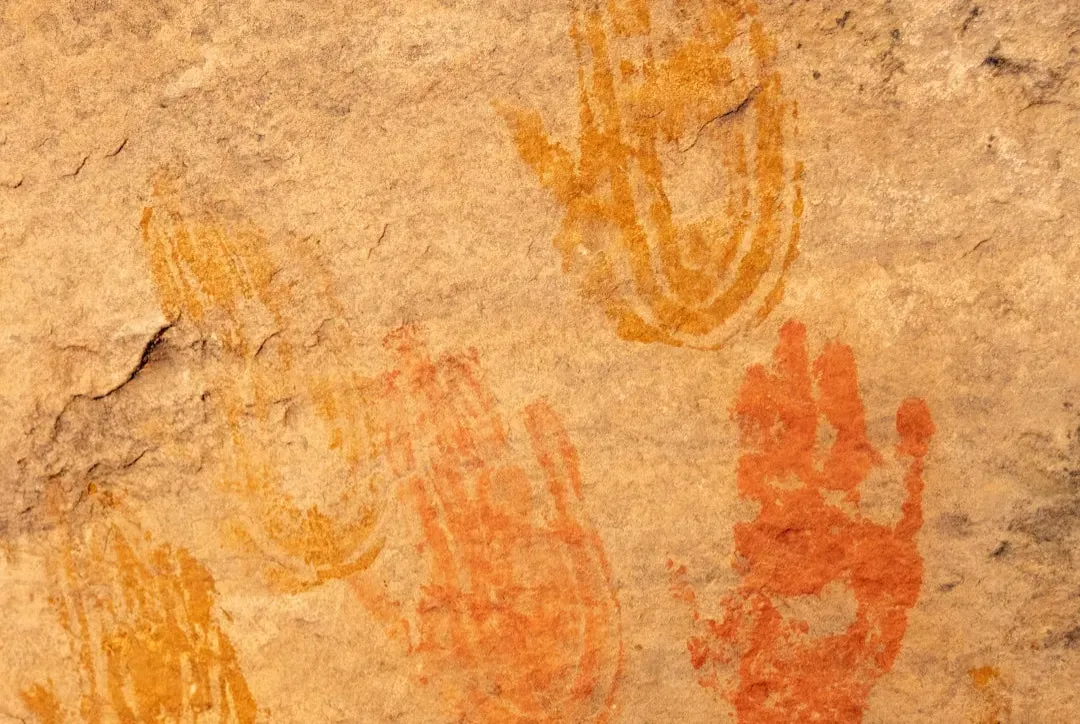
Once our ancestors could string together detailed sentences, something profound happened: they began to tell stories. Storytelling allowed people to transmit lessons, warnings, hopes, and identities in memorable, emotionally charged ways. A story about a dangerous river crossing or a clever hunt could outlive the person who first told it, shaping the behavior of children and grandchildren who had never seen the original event.
Language and culture started to spiral upwards together. Myths, rituals, songs, and shared histories bound groups tightly and created invisible worlds of meaning layered over the physical landscape. Over many generations, different communities developed distinct languages and traditions, each with its own way of slicing reality into words. In a sense, every language became a different lens on the world, shaped by the problems and dreams of the people who spoke it.
Even though no one alive has ever heard the first human languages, traces of that deep past still show up in how we communicate right now. The fact that every known human culture, no matter how isolated, has a complex language suggests that the capacity for language is a built-in feature of our species. Children, given even a rough or incomplete input, will spontaneously create structure and rules, as if their brains are hungry for grammar.
Many languages share oddly similar patterns, like favoring certain word orders or relying on pitch, rhythm, and repetition to clarify meaning. Our heavy use of metaphor, our instinct to gesture while speaking, and our emotional reactions to tone and rhythm all feel like living fossils of earlier communication systems. Next time you catch yourself talking with your hands, or sensing a friend’s mood from their voice alone, you’re leaning on skills that were being sharpened long before anyone had a word for “language” at all.