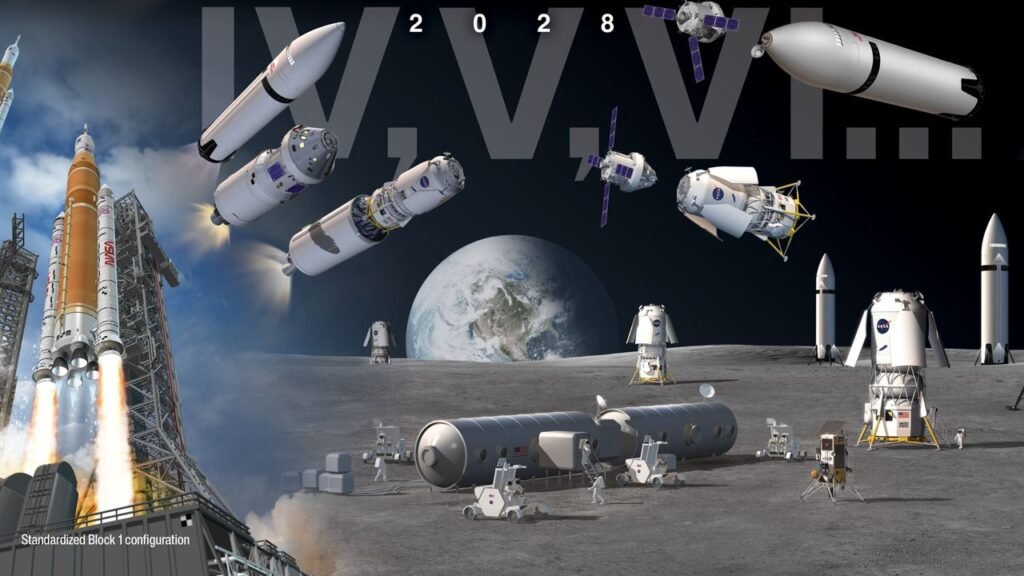
A ‘Back to Basics’ Approach Reshapes Lunar Ambitions (Image Credits: Cdn.mos.cms.futurecdn.net)
NASA unveiled a restructured Artemis program that inserts additional missions to hasten astronaut returns to the lunar surface.[1][2]
A ‘Back to Basics’ Approach Reshapes Lunar Ambitions
Officials likened the revisions to the Apollo era’s methodical progression, prioritizing reliability over rushed leaps. NASA Administrator Jared Isaacman emphasized the need for steady advances amid rising competition.[1]
The agency shifted Artemis III from a planned lunar landing to a critical low-Earth orbit demonstration in 2027. This mission will verify docking procedures with commercial landers and test essential systems like life support and spacesuits. Such steps aim to mitigate risks exposed by prior delays in rocket development and hardware issues.[2]
Artemis II remains on track for a launch in coming months, sending four astronauts on a lunar flyby to validate the SLS rocket and Orion spacecraft.[1]
Updated Timeline Builds Momentum Step by Step
The revised schedule introduces a new mission cadence designed for sustainability. Here is the outline of forthcoming flights:
- Artemis II (2026): Crewed lunar orbit test flight lasting about 10 days.
- Artemis III (2027): Low-Earth orbit rendezvous and docking with SpaceX or Blue Origin landers, plus integrated system checks.
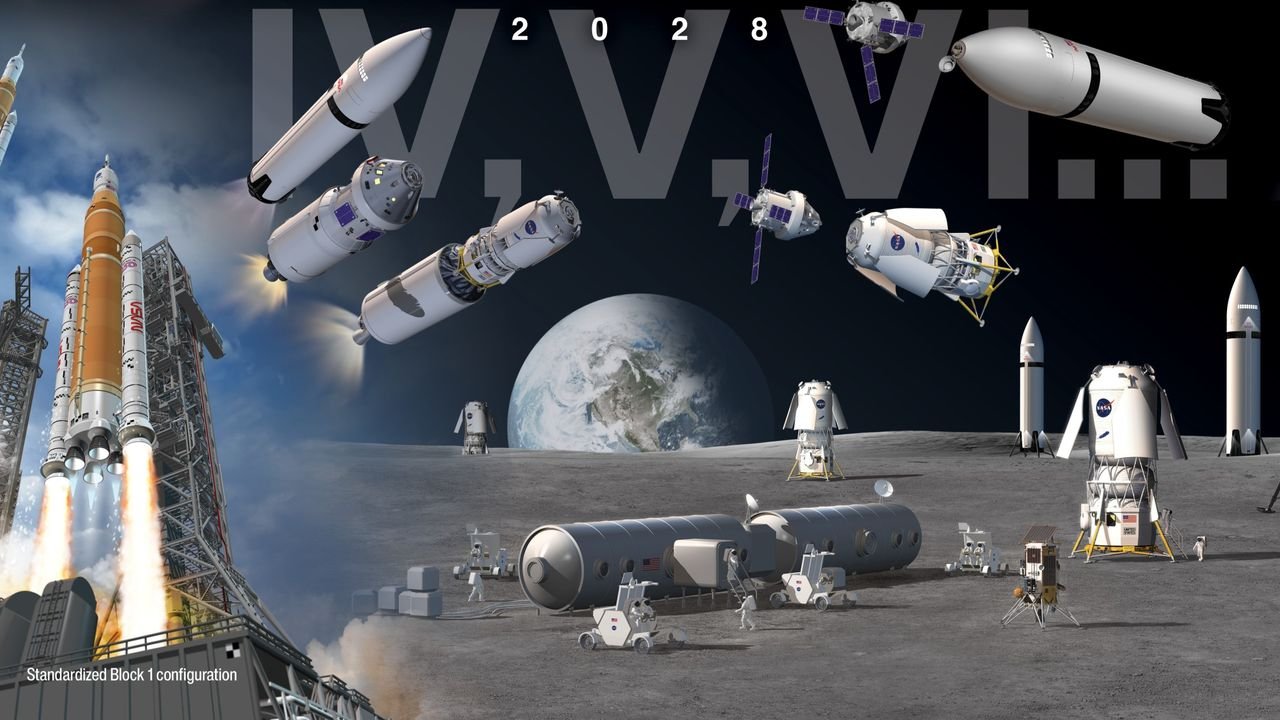
- Artemis IV (2028): First crewed lunar landing near the south pole.
- Artemis V (late 2028): Potential second landing to establish rhythm.
Subsequent years target at least one landing annually, fostering a sustained presence.[1]
Teams addressed recent setbacks, including helium flow problems in the Interim Cryogenic Propulsion Stage, to keep Artemis II prepared.[3]
Standardization and Partnerships Drive Efficiency
NASA committed to a uniform “Block 1” configuration for the SLS rocket and Orion capsule across early missions. This decision scraps complex upgrades, like Boeing’s Exploration Upper Stage, to streamline production and cut development risks.[2]
Commercial collaborators play pivotal roles. SpaceX and Blue Origin will supply landers for docking trials, while Boeing ramps up core stage manufacturing at NASA’s Michoud facility. Associate Administrator Amit Kshatriya noted that this phased buildup echoes Apollo’s focus on crew safety and system maturity.[1]
The strategy rebuilds workforce expertise through frequent launches, targeting intervals as short as 10 months between flights.
Geopolitical Pressures and Long-Term Vision
Administrators cited intensifying global rivalry, particularly from China, as a catalyst for acceleration. Isaacman declared, “With credible competition from our greatest geopolitical adversary increasing by the day, we need to move faster, eliminate delays, and achieve our objectives.”[1]
Previous hurdles, such as hydrogen leaks and supply chain strains, prompted this pivot. The overhaul positions Artemis to deliver scientific gains, economic opportunities, and a foundation for Mars exploration.[3]
Key Takeaways
- Artemis III shifts to 2027 Earth-orbit tests, enabling safer 2028 landings.
- Annual lunar missions planned post-2028 for enduring presence.
- Standardized hardware and partner integration minimize risks.
This restructuring signals a pragmatic surge toward lunar dominance, blending proven methods with modern partnerships. What steps should NASA prioritize next to secure these milestones? Share your thoughts in the comments.