
You feel it every time you step out of bed. You take it completely for granted when an apple falls to the ground or when a skyscraper stands impossibly tall against the sky. Gravity is perhaps the most immediate and personal force in your daily life – and yet, when you dig into the science, you quickly discover that no one truly knows what it is. That might sound like an exaggeration, but it isn’t.
Despite centuries of brilliant minds working on the problem, from Newton to Einstein and beyond, gravity remains stubbornly resistant to full understanding. It defies every attempt to fold it neatly into the same framework as the other forces of nature. So buckle up, because what you’re about to discover might genuinely surprise you.
Newton Gave You the Formula, But Not the Answer
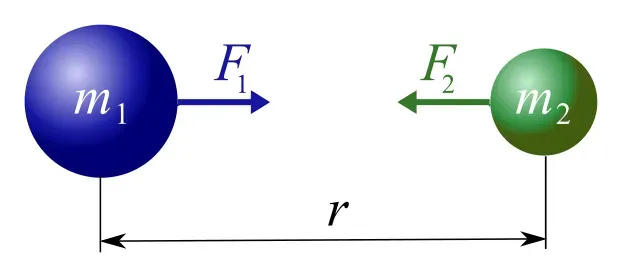
When Isaac Newton described gravity in the 17th century, he gave the world something extraordinary – a precise mathematical rule for calculating how objects attract each other. You could use his law of universal gravitation to predict the motion of planets with extraordinary accuracy. It was revolutionary, and it held up magnificently for more than two hundred years.
Here’s the thing though: Newton himself never actually claimed to know what gravity was. He could tell you how it behaved, but not what it fundamentally is or how it works across empty space. Think of it like knowing the rules of chess perfectly, but having absolutely no idea how the pieces physically move when no one is looking. Newton’s framework was a description, not an explanation.
Einstein Rewrote the Rules – and It Still Wasn’t Enough
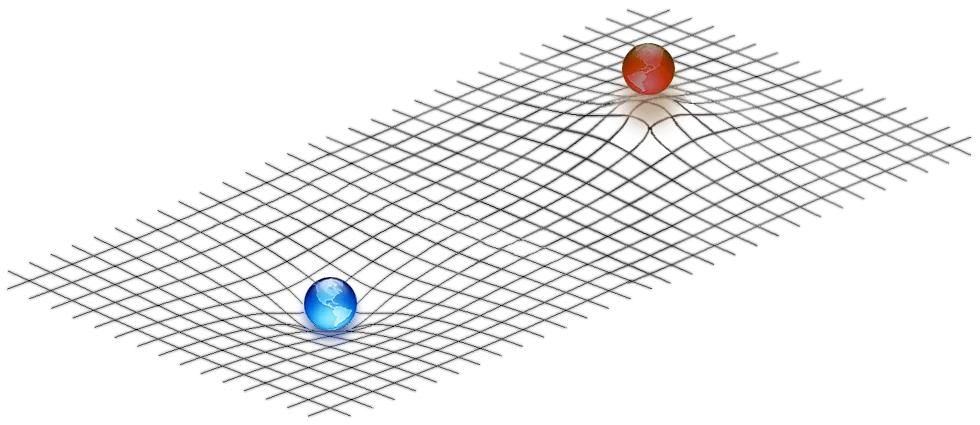
General relativity models gravity as curvature of spacetime – in the famous slogan of physicist John Archibald Wheeler, “Spacetime tells matter how to move; matter tells spacetime how to curve.” This was a genuinely shocking idea. Gravity is not a force pulling you down in the traditional sense. Instead, you’re following the natural curved geometry of spacetime itself, shaped by mass and energy all around you.
Physicists already suspect that general relativity cannot be the final word on gravity, since the theory does not explain phenomena such as dark energy and dark matter, and it fails when scientists try to reconcile it with the laws that govern the quantum world. So Einstein’s masterpiece – as breathtakingly beautiful as it is – remains incomplete. It’s like having a map that’s perfect for continents but completely wrong for city streets.
Gravitational Waves Confirmed Einstein but Deepened the Mystery
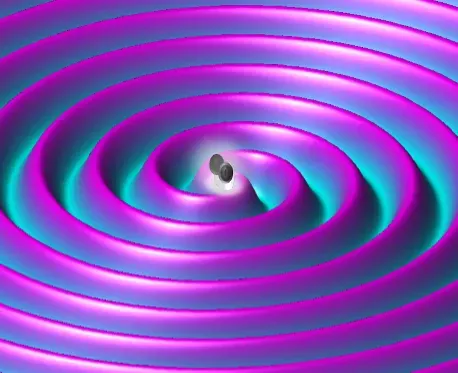
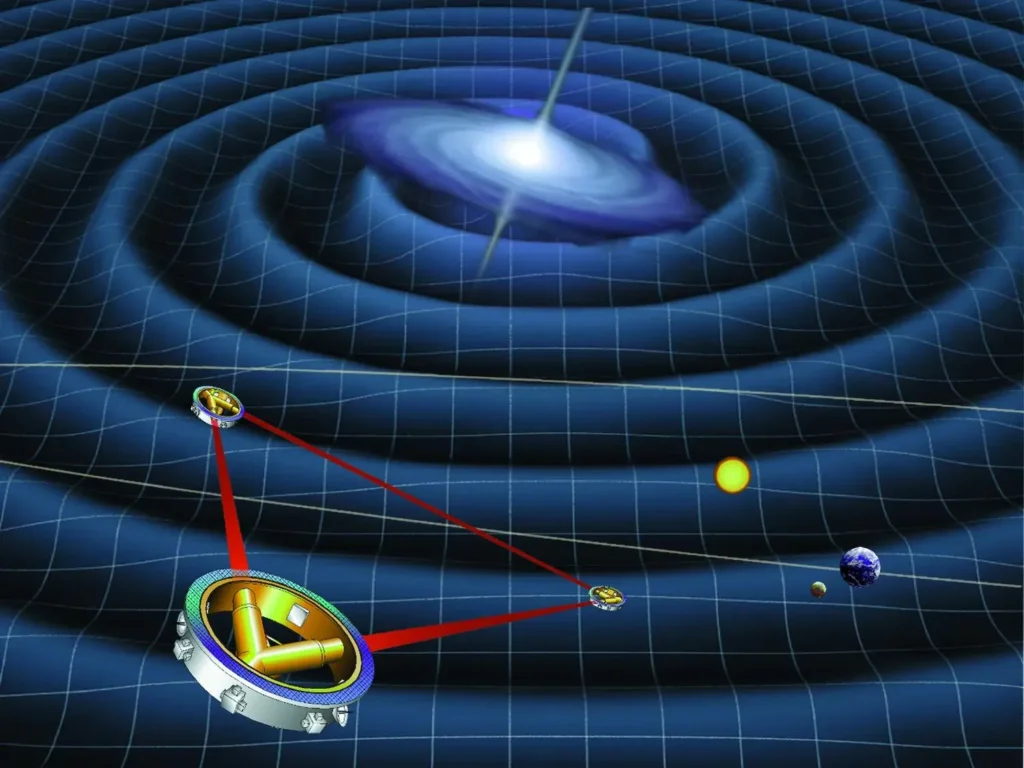
Gravitational waves are ripples in spacetime caused by some of the most violent and energetic processes in the universe. Albert Einstein predicted their existence in 1916 in his general theory of relativity. His mathematics showed that massive accelerating objects, like neutron stars or black holes orbiting each other, would disrupt spacetime in such a way that waves of undulating spacetime would propagate in all directions away from the source. Remarkably, he doubted they could ever actually be detected.
Everything changed on September 14, 2015, when the U.S. National Science Foundation Laser Interferometer Gravitational-Wave Observatory physically sensed the undulations in spacetime caused by gravitational waves generated by two colliding black holes 1.3 billion light-years away. By the time those gravitational waves from that first detection reached us, the amount of spacetime wobbling they generated was 10,000 times smaller than the nucleus of an atom. The precision required to catch that signal was, honestly, mind-bending. Yet even this triumph only confirmed what we already suspected from Einstein’s equations – it didn’t tell us what gravity truly is at its core.
The Graviton: Physics’ Most Wanted Particle That May Never Be Found
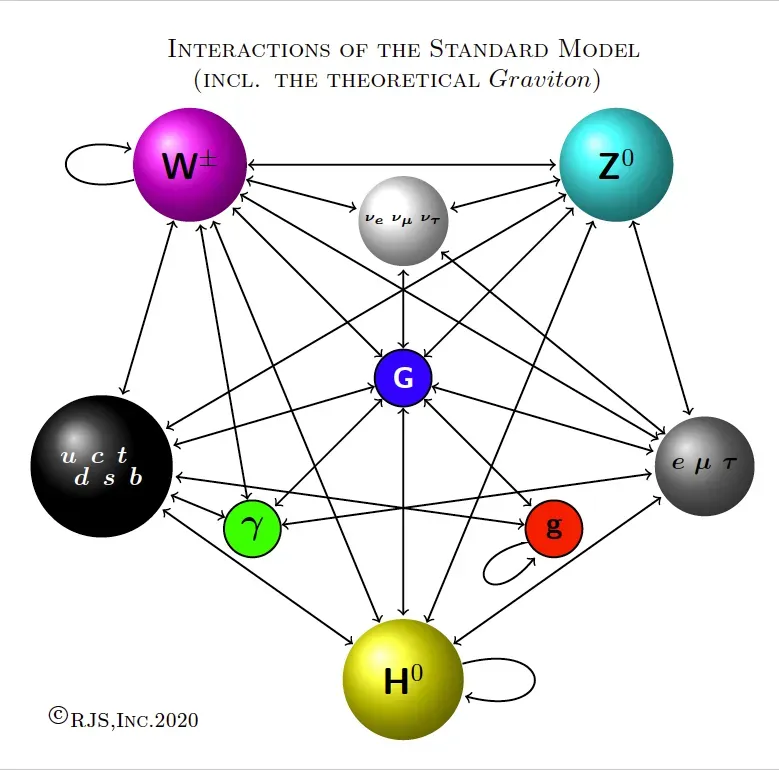
The graviton should exist. Every other fundamental force has its quantum messenger – photons carry electromagnetism, gluons bind the strong force, and W and Z bosons mediate the weak force. Logic would suggest gravity must have its own messenger particle too. The observation that all fundamental forces except gravity have one or more known messenger particles leads researchers to believe that at least one must exist for gravity. This hypothetical particle is known as the graviton.
Gravitons interact with themselves. Unlike photons, which don’t directly interact electromagnetically, gravitons spawn more virtual gravitons in an endless cascade. This creates infinite self-energy loops that can’t be mathematically tamed through renormalization – the technique that makes other quantum field theories work. In other words, the math breaks down catastrophically. Finding a single graviton would require a solar system-sized particle accelerator. So you can see why patience is required here.
The Catastrophic Clash Between Quantum Mechanics and General Relativity
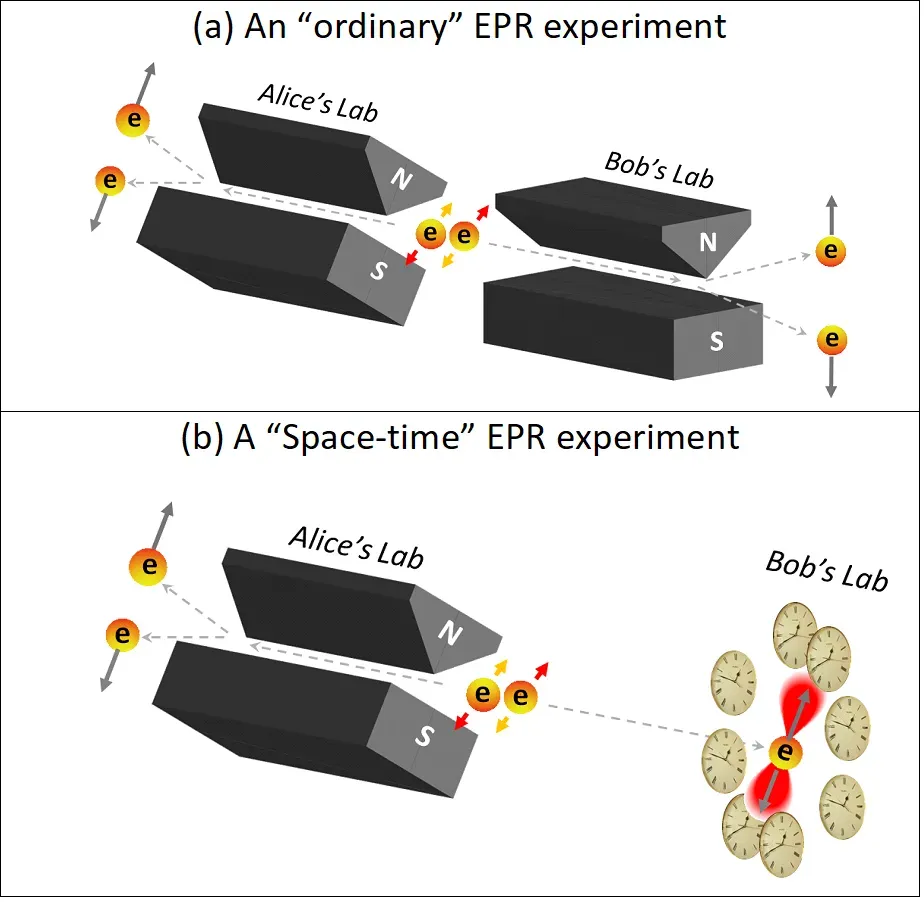
The difficulties in reconciling quantum theory and gravity into some form of quantum gravity come from the prima facie incompatibility of general relativity, Einstein’s relativistic theory of gravitation, and quantum field theory, the framework for the description of the other three forces. This is arguably the most embarrassing open wound in all of physics. You have two theories, each brilliantly confirmed by experiments in their own domain, yet they fundamentally cannot coexist without breaking down.
Three of the four fundamental forces of nature are described within the framework of quantum mechanics and quantum field theory: the electromagnetic interaction, the strong force, and the weak force – this leaves gravity as the only interaction that has not been fully accommodated. These two theories both work well, but they are incompatible. Einstein spent the last years of his life trying to combine them, and the world’s smartest physicists have tried ever since without success. That’s not a short list of people who failed at this. It includes some of the most towering intellects in human history.
String Theory and Loop Quantum Gravity: Two Rival Roads to the Same Destination
The main candidate framework for a theory of everything is string theory, which describes all forces and particles including gravity. String theory proposes that the building blocks of nature are not point-like particles like quarks but vibrating strings. It suggests that, if you could look deep inside electrons, you would see loops of strings vibrating just like those on a violin. Different patterns of string vibrations correspond to different particles. It’s an almost poetic idea – the universe as a vast cosmic instrument.
One of the most active alternative approaches is loop quantum gravity, a mathematically well-defined, non-perturbative, and background-independent quantization of general relativity, with its conventional matter couplings. String theory and loop quantum gravity differ not only because they explore distinct physical hypotheses, but also because they are expressions of two separate communities of scientists who have sharply distinct views and approaches to the problem of quantum gravity. It’s a bit like two groups of explorers who are trying to map the same unmapped territory, but insisting on completely different starting points. As of 2026, neither camp has definitively won.
New Experiments Are Finally Closing In – and the Results Are Fascinating
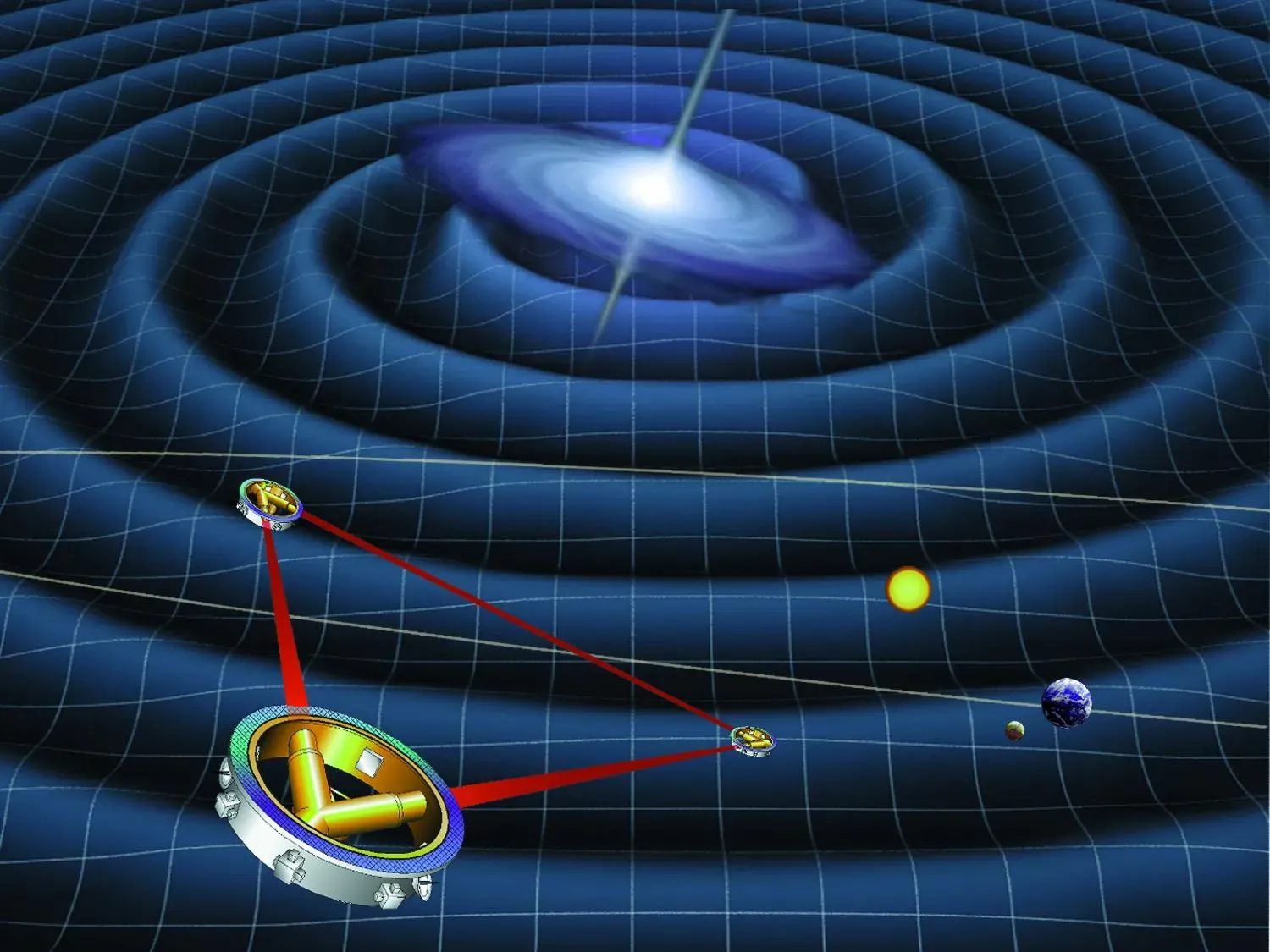
A physicist has proposed a bold experiment that could allow gravitational waves to be manipulated using laser light. By transferring minute amounts of energy between light and gravity, the interaction would leave behind faint but detectable fingerprints. The setup resembles advanced gravitational-wave detectors like LIGO but pushes them further into quantum territory. Success could hint at the long-sought quantum nature of gravity. I think this is one of the most genuinely exciting developments in recent physics. You’re not just observing gravity anymore – you’re attempting to poke it.
A newly detected gravitational wave, GW250114, is giving scientists their clearest look yet at a black hole collision and a powerful way to test Einstein’s theory of gravity. Its clarity allowed scientists to measure multiple “tones” from the collision, all matching Einstein’s predictions. That confirmation is exciting, but so is the possibility that future signals won’t behave so neatly. Any deviation could point to new physics beyond our current understanding of gravity. Meanwhile, researchers at Aalto University have developed a new quantum theory of gravity which describes gravity in a way that’s compatible with the standard model of particle physics, opening the door to an improved understanding of how the universe began. Progress is slow. Yet each year, the frontier moves – even if only by a millimeter.
Conclusion: The Humble and Thrilling Reality of Not Knowing
Here’s what’s genuinely remarkable about all of this. You live inside a universe held together, shaped, and driven by a force that humanity cannot yet fully explain. Gravity is not some obscure corner of physics reserved for specialists. It governs the orbit of every planet, the formation of every star, and the beat of your own pulse as blood flows through your body under its influence.
The fact that we don’t have the final answer is not a failure of science. Honestly, it’s the very thing that makes science thrilling. The nature of gravity, and whether it can be reconciled with quantum mechanics, is one of the biggest mysteries in physics. Most researchers think that at a fundamental level, all phenomena follow the principles of quantum physics, but those principles do not seem to be compatible with the accepted theory of gravity. Every experiment, every new gravitational wave signal, every clever theoretical proposal is another step toward an answer that will, when it comes, reshape our entire understanding of reality.
The universe kept this secret from Newton. It kept it from Einstein. It may keep it for a little longer yet. What do you find more astonishing: that gravity shaped everything around you, or that after all this time, no one can fully tell you what it actually is?